


North America Denim Market Size
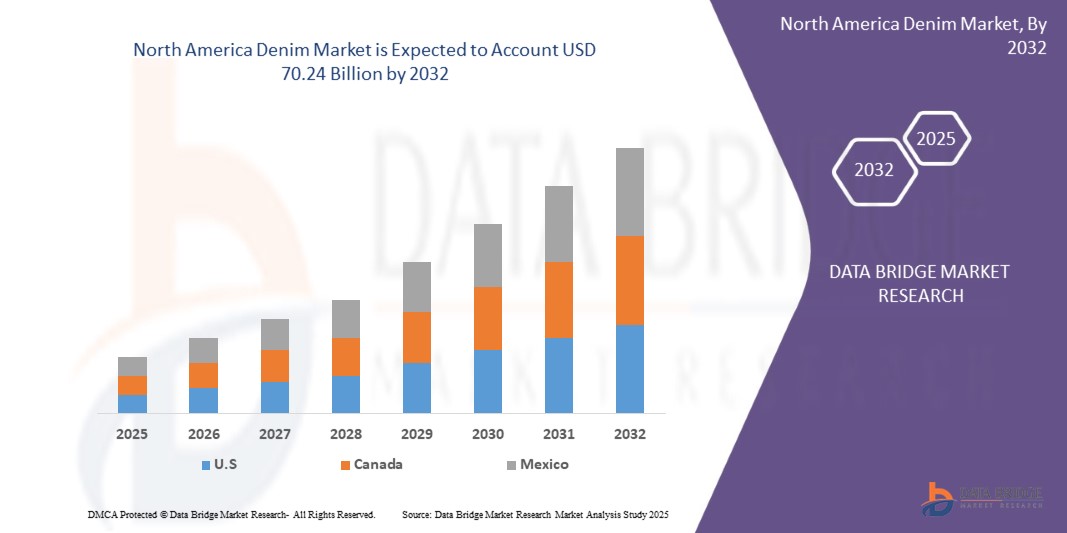
- The North America denim market size was valued at USD 45.08 billion in 2024 and is expected to reach USD 70.24 billion by 2032, at a CAGR of 5.7% during the forecast period
- The market growth is largely fuelled by the increasing demand for versatile and fashionable casual wear, growing popularity of denim across diverse age groups, and a surge in premium and sustainable denim products
- Rising adoption of e-commerce platforms and direct-to-consumer channels is further driving denim sales, offering consumers convenience, wider variety, and access to exclusive online collections across the region
North America Denim Market Analysis
- The region’s expanding fashion-conscious population, especially among millennials and Generation Z, continues to influence denim consumption patterns, pushing brands toward trend-forward, size-inclusive, and stretchable offerings
- The market is also benefiting from strong retail presence—both online and offline—alongside frequent product launches, celebrity endorsements, and growing investment in sustainable and eco-friendly manufacturing techniques
- U.S. denim market dominated the North America region with the largest revenue share of 78.3% in 2024, driven by a strong consumer preference for versatile and fashionable denim apparel
- Canada is expected to witness the highest compound annual growth rate (CAGR) in the North America denim market due to increasing urbanization, rising fashion consciousness among younger demographics, and expanding e-commerce platforms that improve accessibility to diverse denim styles and brands across the country
- The stretch denim segment accounted for the largest revenue share in 2024 due to its comfort, body-contouring fit, and growing demand across both casual and workwear categories. It has become a preferred choice among consumers for its flexibility and fashionable appeal. The widespread use of elastane blends in denim fabric is driving its adoption across men’s and women’s fashion segments
Report Scope and North America Denim Market Segmentation
|
Attributes |
North America Denim Key Market Insights |
|
Segments Covered |
|
|
Countries Covered |
North America
|
|
Key Market Players |
|
|
Market Opportunities |
|
|
Value Added Data Infosets |
In addition to the insights on market scenarios such as market value, growth rate, segmentation, geographical coverage, and major players, the market reports curated by the Data Bridge Market Research also include in-depth expert analysis, pricing analysis, brand share analysis, consumer survey, demography analysis, supply chain analysis, value chain analysis, raw material/consumables overview, vendor selection criteria, PESTLE Analysis, Porter Analysis, and regulatory framework. |
North America Denim Market Trends
“Shift Toward Sustainable And Circular Fashion Practices”
- Leading denim brands are transitioning toward circular fashion by launching recycling programs and designing jeans with biodegradable or fully recyclable materials which appeals to environmentally conscious consumers and helps reduce landfill waste while promoting closed-loop production cycles that extend the life of garments and reduce virgin resource use
- Consumer preference is shifting from fast fashion to long-lasting, ethically made denim with a traceable supply chain encouraging brands to emphasize transparency and sustainable certifications such as OEKO-TEX and GOTS as shoppers demand products that align with their personal values and environmental concerns
- Innovations in sustainable denim production such as waterless dyeing and laser distressing techniques are gaining momentum as manufacturers look to minimize their environmental footprint and reduce operational costs while maintaining style and fabric integrity for a competitive edge
- For instance, Levi’s “Buy Better, Wear Longer” campaign and Madewell’s denim trade-in program have successfully tapped into this eco-aware segment boosting consumer trust and repeat purchases by reinforcing a commitment to social responsibility and extending product life cycles
- Overall the shift toward sustainability is not only transforming manufacturing but also positioning eco-friendly denim collections as a premium offering in the competitive fashion landscape while inspiring industry-wide change and long-term investments in green innovation
North America Denim Market Dynamics
Driver
“High Consumer Demand For Casual And Functional Apparel”
- Leading denim brands are transitioning toward circular fashion by launching recycling programs and designing jeans with biodegradable or fully recyclable materials which appeals to environmentally conscious consumers and helps reduce landfill waste while promoting long-term sustainability in the apparel supply chain
- Consumer preference is shifting from fast fashion to long-lasting, ethically made denim with a traceable supply chain encouraging brands to emphasize transparency and sustainable certifications such as OEKO-TEX and GOTS which help build credibility and attract value-driven shoppers
- Innovations in sustainable denim production such as waterless dyeing and laser distressing techniques are gaining momentum as manufacturers look to minimize their environmental footprint and reduce operational costs while meeting growing regulatory and consumer expectations for eco-friendly practices
- For instance, Levi’s “Buy Better, Wear Longer” campaign and Madewell’s denim trade-in program have successfully tapped into this eco-aware segment boosting consumer trust and repeat purchases by demonstrating environmental responsibility and community engagement
- Overall the shift toward sustainability is not only transforming manufacturing but also positioning eco-friendly denim collections as a premium offering in the competitive fashion landscape while influencing mainstream trends and redefining consumer standards across North America
Restraint/Challenge
“Fluctuating Raw Material Costs And Supply Chain Disruptions”
- Volatile cotton prices caused by unpredictable harvests, geopolitical tensions, and increased transportation costs are putting pressure on denim manufacturers’ profit margins and pricing strategies as they struggle to maintain stable product costs in a fluctuating global market
- Global supply chain disruptions, particularly in fabric sourcing and chemical dye procurement, are leading to production delays which can reduce inventory turnover and brand responsiveness to trends especially for fast-moving or seasonal denim collections
- Smaller and mid-sized players with limited negotiating power face higher risks due to these challenges and may struggle to maintain competitive pricing amid market uncertainty leading to potential loss of market share to larger vertically integrated brands
- For instance, in 2022 global cotton prices spiked due to climate-related crop failures in India and the U.S. prompting several denim brands to raise product prices and rethink sourcing strategies in an effort to mitigate further cost volatility
- Unless brands diversify sourcing and invest in local production capabilities cost instability and delays may continue to limit growth and innovation in the denim industry impacting their ability to adapt quickly to consumer demand and global fashion cycles
North America Denim Market Scope
The North America denim market is segmented on the basis of type, distribution channel, and end user.
• By Type
On the basis of type, the North America denim market is segmented into cotton denim/100% cotton denim, stretch denim, raw denim/dry denim, crushed denim, cotton serge denim, waxed reverse denim, printed denim, washed denim/acid wash denim, coloured denim, selvedge denim, ecru denim, sanforized denim, bubble-gum denim, poly denim, bull denim, thermo denim, ramie cotton denim, slub denim, vintage denim, fox fiber denim, marble denim, reverse denim, ring spun denim/dual ring spun denim, and others. The stretch denim segment accounted for the largest revenue share in 2024 due to its comfort, body-contouring fit, and growing demand across both casual and workwear categories. It has become a preferred choice among consumers for its flexibility and fashionable appeal. The widespread use of elastane blends in denim fabric is driving its adoption across men’s and women’s fashion segments.
The raw denim segment is expected to witness the fastest growth rate from 2025 to 2032, spurred by rising interest in artisanal and unprocessed denim products. Enthusiasts prefer raw denim for its personalization over time and durability, which enhances its desirability among premium and niche customer groups. This segment is also gaining traction due to the growing emphasis on slow fashion and eco-conscious consumption.
• By Distribution Channel
On the basis of distribution channel, the denim market is segmented into direct sales/B2B, supermarket/hypermarket, e-commerce, specialty stores, convenience stores, and others. The e-commerce segment dominated the market in 2024, driven by convenience, availability of a wide variety of styles, and increasing consumer preference for online shopping platforms. Online platforms offer easy size comparisons, reviews, and home delivery options that enhance customer satisfaction. Many leading brands have also expanded their direct-to-consumer online presence to increase margins and control brand experience.
The specialty stores segment is expected to witness the fastest growth rate from 2025 to 2032, due to personalized service, curated collections, and customer loyalty programs. Specialty stores are popular among fashion-forward consumers seeking premium or unique denim designs, often unavailable in larger chain outlets. Their knowledgeable staff and immersive in-store experience continue to influence denim purchases significantly.
• By End User
On the basis of end user, the denim market is segmented into apparel, accessories, homewares, and others. The apparel segment emerged as the largest contributor to market revenue in 2024, driven by consistent demand for denim jeans, jackets, and shirts among all age groups. Denim apparel remains a staple across casual, semi-formal, and workwear categories due to its durability and versatility. Continuous innovation in fabric treatment, wash effects, and design also keeps consumer interest strong.
The accessories segment is expected to witness the fastest growth rate from 2025 to 2032, supported by rising popularity of denim-based products such as bags, hats, belts, and shoes. As denim expands beyond traditional garments, fashion brands are leveraging the material’s rugged and stylish appeal to introduce trend-forward accessories. The rising focus on casual fashion and personal expression is expected to continue driving this segment.
North America Denim Market Regional Analysis
- U.S. denim market dominated the North America region with the largest revenue share of 78.3% in 2024, driven by a strong consumer preference for versatile and fashionable denim apparel
- The presence of major brands, rapid product innovations, and a culture that embraces both casual and premium denim styles have strengthened market growth
- Increasing awareness around sustainable and ethically sourced denim is also shaping buying decisions, with many consumers favoring eco-conscious brands
- The high purchasing power of U.S. consumers further supports demand across diverse product lines, including jeans, jackets, and accessories
- In addition, digital retail platforms and influencer-driven fashion trends continue to elevate the market’s performance across the country
Canada Denim Market Insight
The Canada denim market is expected to witness the fastest growth rate from 2025 to 2032, fueled by rising interest in premium denim and sustainable fashion choices. Canadian consumers are embracing quality over quantity, seeking durable, responsibly manufactured denim garments for both everyday wear and seasonal fashion. The growing availability of global and local brands across online and physical retail spaces is improving access and variety for denim shoppers. Fashion-forward youth demographics and a preference for functional yet stylish clothing are supporting demand across both men’s and women’s categories. Government-led environmental awareness campaigns are also encouraging consumers to shift toward eco-friendly denim options, further propelling market growth.
North America Denim Market Share
The North America Denim industry is primarily led by well-established companies, including:
- Levi Strauss & Co. (U.S.)
- Kontoor Brands, Inc. (U.S.)
- VF Corporation (U.S.)
- American Eagle Outfitters, Inc. (U.S.)
- Guess?, Inc. (U.S.)
- PVH Corp. (U.S.)
- AG Adriano Goldschmied (U.S.)
- Lucky Brand LLC (U.S.)
- Ralph Lauren Corporation (U.S.)
- Joe’s Jeans (U.S.)
Latest Developments in North America Denim Market
- In March 2022, Marks & Spencer launched its first capsule collection under The Jeans Redesign initiative as part of a sustainability collaboration with the Ellen MacArthur Foundation. The collection, developed with input from over 80 denim experts, aims to promote circular fashion and reduce environmental impact. This move strengthens M&S’s commitment to sustainable manufacturing and sets an industry benchmark for responsibly produced denim
- In December 2021, U.S. Polo Assn. entered into a strategic partnership with Alpar do Brasil to expand its footprint in the denim and lifestyle apparel market across Latin America. This collaboration, centered around apparel, footwear, and sporting goods, is designed to enhance market penetration and boost revenue through localized offerings. The partnership supports U.S. Polo Assn.’s global growth strategy and increases its customer reach
- In May 2021, Levi Strauss & Co. participated in the Stifel Sustainable Lifestyle Brands Conference to highlight its advancements in eco-friendly denim manufacturing. By showcasing its sustainability initiatives, the company aims to attract environmentally conscious consumers and encourage broader industry adoption of responsible practices. This effort reinforces Levi’s leadership in the ethical fashion movement and aligns with long-term brand positioning goals
- In March 2021, H&M extended its partnership with WWF to further its commitment to sustainability in the fashion and denim sectors. The collaboration focuses on developing innovative, eco-friendly products and practices that reduce environmental impact. This joint initiative underscores H&M’s effort to transform fast fashion into a more sustainable model and influence industry-wide change

- Interactive Data Analysis Dashboard
- Company Analysis Dashboard for high growth potential opportunities
- Research Analyst Access for customization & queries
- Competitor Analysis with Interactive dashboard
- Latest News, Updates & Trend analysis
- Harness the Power of Benchmark Analysis for Comprehensive Competitor Tracking
Data collection and base year analysis are done using data collection modules with large sample sizes. The stage includes obtaining market information or related data through various sources and strategies. It includes examining and planning all the data acquired from the past in advance. It likewise envelops the examination of information inconsistencies seen across different information sources. The market data is analysed and estimated using market statistical and coherent models. Also, market share analysis and key trend analysis are the major success factors in the market report. To know more, please request an analyst call or drop down your inquiry.
The key research methodology used by DBMR research team is data triangulation which involves data mining, analysis of the impact of data variables on the market and primary (industry expert) validation. Data models include Vendor Positioning Grid, Market Time Line Analysis, Market Overview and Guide, Company Positioning Grid, Patent Analysis, Pricing Analysis, Company Market Share Analysis, Standards of Measurement, Global versus Regional and Vendor Share Analysis. To know more about the research methodology, drop in an inquiry to speak to our industry experts.
Data Bridge Market Research is a leader in advanced formative research. We take pride in servicing our existing and new customers with data and analysis that match and suits their goal. The report can be customized to include price trend analysis of target brands understanding the market for additional countries (ask for the list of countries), clinical trial results data, literature review, refurbished market and product base analysis. Market analysis of target competitors can be analyzed from technology-based analysis to market portfolio strategies. We can add as many competitors that you require data about in the format and data style you are looking for. Our team of analysts can also provide you data in crude raw excel files pivot tables (Fact book) or can assist you in creating presentations from the data sets available in the report.













