


North America Elderly Monitors Market Size
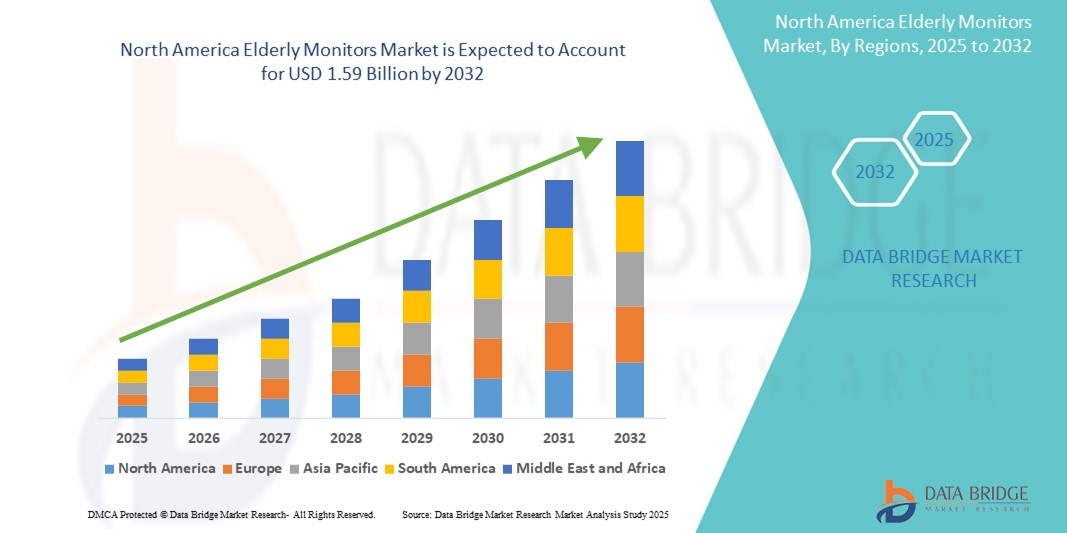
- The North America elderly monitors market size was valued at USD 1.02 billion in 2024 and is expected to reach USD 1.59 billion by 2032, at a CAGR of 5.70% during the forecast period
- The market growth is largely fueled by the growing aging population worldwide, coupled with advancements in healthcare technology and elder-focused services, leading to a surge in demand for products and solutions tailored to the unique needs of elderly individuals across residential and institutional care settings
- Furthermore, rising consumer demand for safe, accessible, and quality healthcare, along with the expansion of assistive living technologies, remote monitoring devices, and elderly-friendly infrastructure, is establishing elderly care as a critical component of global healthcare systems. These converging factors are accelerating the uptake of elderly care solutions, thereby significantly boosting the industry's growth
North America Elderly Monitors Market Analysis
- Elderly monitors, offering remote health and safety monitoring capabilities, are becoming vital components in modern geriatric care across both residential and assisted living settings due to their enhanced convenience, real-time data tracking, and seamless integration with telehealth ecosystems
- The escalating demand for elderly monitoring systems is primarily fueled by the growing aging population, increased prevalence of chronic diseases, and a rising preference for aging-in-place solutions that provide peace of mind to both patients and caregivers
- U.S. dominated in the North America elderly monitors market, propelled by the rapid adoption of connected healthcare devices, a high elderly population base, and strong presence of major market players like Philips, Medtronic, and Abbott
- Canada is expected to witness the highest CAGR in the North America elderly monitors market, driven by a rapidly aging population, increasing focus on elderly independence, and government support for telehealth services
- The female segment dominated the North America elderly monitors market with a market share of 56.4% in 2024, as women constitute a larger proportion of the aging population. This demographic trend is driven by higher life expectancy among women, leading to greater demand for elderly monitoring solutions tailored to their specific health and safety needs
Report Scope and North America Elderly Monitors Market Segmentation
|
Attributes |
North America Elderly Monitors Market Insights |
|
Segments Covered |
|
|
Countries Covered |
North America
|
|
Key Market Players |
|
|
Market Opportunities |
|
|
Value Added Data Infosets |
In addition to the insights on market scenarios such as market value, growth rate, segmentation, geographical coverage, and major players, the market reports curated by the Data Bridge Market Research also include in-depth expert analysis, pricing analysis, brand share analysis, consumer survey, demography analysis, supply chain analysis, value chain analysis, raw material/consumables overview, vendor selection criteria, PESTLE Analysis, Porter Analysis, and regulatory framework. |
North America Elderly Monitors Market Trends
“Adoption of AI-Powered Predictive Analytics”
- A notable and growing trend in the North America elderly monitors market is the adoption of AI-powered predictive analytics to anticipate health events before they occur, improving preventive care and reducing emergency interventions
- For instance, elderly monitoring systems now utilize machine learning algorithms to analyze real-time and historical health data—like sleep disturbances, gait abnormalities, or irregular heart rates—to predict potential risks such as falls, cardiac issues, or respiratory distress
- These predictive models are embedded in wearable sensors, smart bed systems, and ambient monitoring tools, enabling continuous, non-intrusive assessment of elderly individuals’ well-being
- Integration with cloud-based platforms ensures that alerts and risk assessments are instantly available to caregivers, physicians, or family members, promoting timely medical response and personalized care plans
- Manufacturers are prioritizing solutions that combine predictive analytics with user-friendly dashboards and remote access, making them suitable for both institutional care settings and independent aging-in-place models
- The increasing emphasis on proactive intervention—rather than reactive care—is being driven by the growing elderly population, rising healthcare costs, and a shift toward value-based care across North America
North America Elderly Monitors Market Dynamics
Driver
“Growing Need Due to Rising Elderly Population and Demand for Remote Monitoring”
- The increasing aging population in North America, combined with a growing preference for independent living among seniors, is significantly driving the demand for elderly monitoring solutions across the region
- For instance, in February 2024, Philips Healthcare launched an upgraded remote monitoring platform with integrated fall detection and vitals tracking, aimed at enhancing senior care in both home and assisted living environments. Such innovations by key companies are expected to accelerate market growth over the forecast period
- As families seek to ensure the safety and health of elderly loved ones while maintaining their independence, elderly monitors offer advanced features such as continuous health tracking, emergency alert systems, and location monitoring, making them a compelling alternative to constant in-person care
- Furthermore, the rise of digital health technologies and the proliferation of smart home ecosystems are making elderly monitoring systems more accessible and easier to integrate into existing healthcare and lifestyle infrastructure
- The convenience of remote check-ins, real-time notifications for caregivers, and the ability to track parameters such as heart rate, activity, or sleep through mobile apps are major drivers behind the growing adoption of these solutions in both residential and long-term care settings
- The increasing trend towards personalized healthcare, alongside government support for aging-in-place initiatives and telehealth reimbursement programs, continues to support the expansion of the elderly monitors market in North America
Restraint/Challenge
“Concerns Regarding Data Privacy and High Implementation Costs”
- Concerns related to data privacy and the high initial cost of monitoring systems remain significant barriers to broader market adoption. Devices that track health and movement require constant connectivity and data collection, which raises fears of unauthorized access or misuse of sensitive health data
- For instance, widely publicized breaches in healthcare and IoT devices have raised caution among consumers and providers about the security of remote patient data
- To address this, manufacturers are increasingly focusing on incorporating end-to-end encryption, HIPAA-compliant data management practices, and multi-factor authentication systems to reassure users and ensure secure handling of personal health information
- In addition, the upfront costs of comprehensive elderly monitoring systems—including sensors, wearables, and cloud-based software platforms—can be prohibitive, particularly for smaller care facilities and lower-income households
- While basic wearable devices and alert systems have become more affordable, advanced platforms with real-time vitals monitoring, video surveillance, and AI-powered analytics often come with a premium price tag
- To overcome these barriers, efforts toward public reimbursement support, bundled service packages, and affordable modular solutions are critical for encouraging adoption across all income groups and care settings in the North American market
North America Elderly Monitors Market Scope
The market is segmented on the basis of product, modality, monitoring type, acuity scale, age, gender, end user, application, and distribution channel.
- By Product
On the basis of product, the North America elderly monitors market is segmented into safety monitoring devices, pads, communication aids, activity monitors, location monitors, caregiver call systems, wearable devices, network video monitoring system, and others. The wearable devices segment dominated the market with a revenue share of 28.6% in 2024, driven by increased usage of smart wearable technologies for real-time health and safety tracking.
The network video monitoring system segment is expected to grow at the fastest CAGR of 21.9% from 2025 to 2032, fueled by the demand for 24/7 remote surveillance.
- By Modality
On the basis of modality, the North America elderly monitors market is segmented into portable and fixed. The portable segment accounted for the largest share of 65.1% in 2024, owing to the flexibility and usability in home-based care settings.
The fixed segment is projected to grow at a CAGR of 13.4% from 2025 to 2032, supported by investments in nursing home and hospital monitoring infrastructure.
- By Monitoring Type
On the basis of monitoring type, the North America elderly monitors market is segmented into weight monitoring, telemedicine, temperature monitoring, patient engagement, digital diabetes management, home tele-health, and others. Telemedicine led the market with a 2024 share of 23.8%, due to the expansion of virtual consultations and remote diagnostics.
Digital diabetes management is projected to register the fastest CAGR of 20.3% from 2025 to 2032, driven by rising diabetes prevalence among the elderly.
- By Acuity Scale
On the basis of acuity scale, the North America elderly monitors market is segmented into high acuity scale, medium acuity scale, and low acuity scale. The medium acuity scale segment captured the largest share of 47.5% in 2024, due to the high proportion of elderly individuals requiring moderate monitoring.
The high acuity scale segment is expected to expand at fastest CAGR of 17.6% from 2025 to 2032, reflecting growth in the critically ill geriatric population.
- By Age
On the basis of age, the North America elderly monitors market is segmented into 65 to 74, 75 to 84, and 85 and Older. The 75 to 84 age group held the largest share of 45.2% in 2024, owing to the rising incidence of chronic conditions.
The 85 and Older group is expected to witness the fastest CAGR of 18.1% from 2025 to 2032, due to higher life expectancy and increasing need for intensive monitoring.
- By Gender
On the basis of gender, the North America elderly monitors market is segmented into male and female. The female segment dominated with a share of 56.4% in 2024, as women represent a larger share of the elderly population.
The male segment is anticipated to grow at a CAGR of 14.9% from 2025 to 2032, driven by rising health awareness and improved longevity among elderly men.
- By End User
On the basis of end user, the North America elderly monitors market is segmented into hospitals, nursing homes, home care organizations, homecare setting, elderly care facilities, and others. The homecare setting segment held the largest share at 31.7% in 2024, due to growing preference for in-home aging support.
The elderly care facilities segment is projected to grow at the fastest CAGR of 20.7% from 2025 to 2032, fueled by expansion of senior care institutions.
- By Application
On the basis of application, the North America elderly monitors market is segmented into fall prevention and detection, health monitoring, and others. Fall prevention and detection dominated the market with a 44.5% share in 2024, due to high fall risk among the elderly.
Health monitoring is expected to grow at a CAGR of 19.2% from 2025 to 2032, driven by demand for chronic condition tracking and personalized care.
- By Distribution Channel
On the basis of distribution channel, the North America elderly monitors market is segmented into direct tender, retail sales, and others. Direct tender accounted for the highest share of 52.8% in 2024, reflecting procurement by institutional buyers.
Retail sales is forecasted to grow at the fastest CAGR of 22.4% from 2025 to 2032, supported by increased online availability and consumer-driven purchases.
North America Elderly Monitors Market Regional Analysis
- North America dominated the elderly monitors market with the largest revenue share of 41.7% in 2024, driven by the increasing geriatric population, rising chronic illness burden, and expanding adoption of telehealth and home-based care models
- Consumers in the region highly value the safety, convenience, and health insights offered by elderly monitors, which include fall detection systems, remote vital sign monitoring, and location tracking devices
- This strong demand is further supported by high healthcare expenditure, a well-established digital health infrastructure, and favorable government initiatives encouraging aging-in-place and remote care
U.S. Elderly Monitors Market Insight
The U.S. elderly monitors market captured the largest revenue share of 83.5% in 2024 within North America, propelled by the rapid adoption of connected healthcare devices, a high elderly population base, and strong presence of major market players like Philips, Medtronic, and Abbott. The increasing popularity of home care settings, growing prevalence of chronic conditions such as dementia, and rising availability of user-friendly wearable health monitors are fueling market expansion. Moreover, integration with AI and mobile apps enhances real-time caregiver support, thereby improving patient outcomes and compliance.
Canada Elderly Monitors Market Insight
The Canada elderly monitors Market is expected to grow at a promising CAGR over the forecast period, driven by a rapidly aging population, increasing focus on elderly independence, and government support for telehealth services. The country’s healthcare system is investing in technology-assisted monitoring tools to manage patient loads in hospitals and improve homecare efficiency. The demand for fall prevention systems, medication adherence monitors, and alert systems is rising notably in residential care and long-term care facilities.
Mexico Elderly Monitors Market Insight
The Mexico Elderly Monitors Market is projected to expand at a steady CAGR during the forecast period, fueled by a growing elderly population, increasing awareness about aging-related health conditions, and rising adoption of home-based healthcare solutions. Government initiatives to strengthen primary care and digital health infrastructure—particularly through public-private partnerships—are accelerating the adoption of elderly monitoring technologies in both urban and semi-urban areas.
North America Elderly Monitors Market Share
The North America elderly monitors industry is primarily led by well-established companies, including:
- Koninklijke Philips N.V. (Netherlands)
- Wansview (China)
- Smart Care Giver Corporation (U.S.)
- Resideo Technologies, Inc. (U.S.)
- Care Innovations, LLC (U.S.)
- Boston Scientific Corporation (U.S.)
- Biotronik (Germany)
- Abbott (U.S.)
- Medtronic (Ireland)
- Reolink (Hong Kong)
- Arlo (U.S.)
- AlertONE (U.S.)
- Alive Technologies (Australia)
- EarlySense (Israel)
- Kwido (Ideable Solutions) (Spain)
- Emfit (Finland)
- Withings (France)
- Omron Healthcare, Inc. (Japan)
- AMC Health (U.S.)
- General Electric (U.S.)
Latest Developments in North America Elderly Monitors market
- In September 2023, Google revealed plans for a new entry into the elderly monitors market – a wearable device designed to monitor health in the elderly. Anticipated features include medication reminders, vital signs monitoring, and fall detection. While still in development, this innovation aligns with the industry's continuous efforts to enhance elderly care through advanced and comprehensive monitoring solutions
- In August 2022, Samsung Electronics Co Ltd entered the elderly monitors market with the Galaxy Watch4, mirroring Apple's fall detection advancements. Boasting diverse health monitoring functions, including blood oxygen, ECG, and heart rate monitoring, the Galaxy Watch4 is poised for competition with Apple's latest smartwatch, reflecting the industry's continuous focus on innovative and comprehensive elderly monitoring solutions
- In October 2021, GENERAL ELECTRIC partnered with Verizon Business to establish a cross-country testbed utilizing Verizon's 5G ultra-wideband. This collaboration enhanced GENERAL ELECTRIC's product portfolio by incorporating cutting-edge technology. The utilization of 5G technology enabled the company to innovate and deliver advanced solutions, contributing to the evolution of its offerings
- In June 2021, Koninklijke Philips N.V. collaborated with Dutch development bank FMO to enhance access to quality primary care in Africa. This strategic partnership increased healthcare spending in the region and facilitated Philips' business expansion, enabling the company to contribute to improved healthcare infrastructure and services in African communities
- In September 2021, Apple Inc. launched the Apple Watch Series 6 with an autonomous fall detection feature, indicative of advancements in the elderly monitors market. The device's sophisticated health monitoring and real-time tracking have boosted its appeal. This aligns with the growing demand for innovative solutions, reflecting a broader trend in the elderly monitoring sector

- Interactive Data Analysis Dashboard
- Company Analysis Dashboard for high growth potential opportunities
- Research Analyst Access for customization & queries
- Competitor Analysis with Interactive dashboard
- Latest News, Updates & Trend analysis
- Harness the Power of Benchmark Analysis for Comprehensive Competitor Tracking
Data collection and base year analysis are done using data collection modules with large sample sizes. The stage includes obtaining market information or related data through various sources and strategies. It includes examining and planning all the data acquired from the past in advance. It likewise envelops the examination of information inconsistencies seen across different information sources. The market data is analysed and estimated using market statistical and coherent models. Also, market share analysis and key trend analysis are the major success factors in the market report. To know more, please request an analyst call or drop down your inquiry.
The key research methodology used by DBMR research team is data triangulation which involves data mining, analysis of the impact of data variables on the market and primary (industry expert) validation. Data models include Vendor Positioning Grid, Market Time Line Analysis, Market Overview and Guide, Company Positioning Grid, Patent Analysis, Pricing Analysis, Company Market Share Analysis, Standards of Measurement, Global versus Regional and Vendor Share Analysis. To know more about the research methodology, drop in an inquiry to speak to our industry experts.
Data Bridge Market Research is a leader in advanced formative research. We take pride in servicing our existing and new customers with data and analysis that match and suits their goal. The report can be customized to include price trend analysis of target brands understanding the market for additional countries (ask for the list of countries), clinical trial results data, literature review, refurbished market and product base analysis. Market analysis of target competitors can be analyzed from technology-based analysis to market portfolio strategies. We can add as many competitors that you require data about in the format and data style you are looking for. Our team of analysts can also provide you data in crude raw excel files pivot tables (Fact book) or can assist you in creating presentations from the data sets available in the report.












