


What is the Espresso Coffee Market Size and Growth Rate?
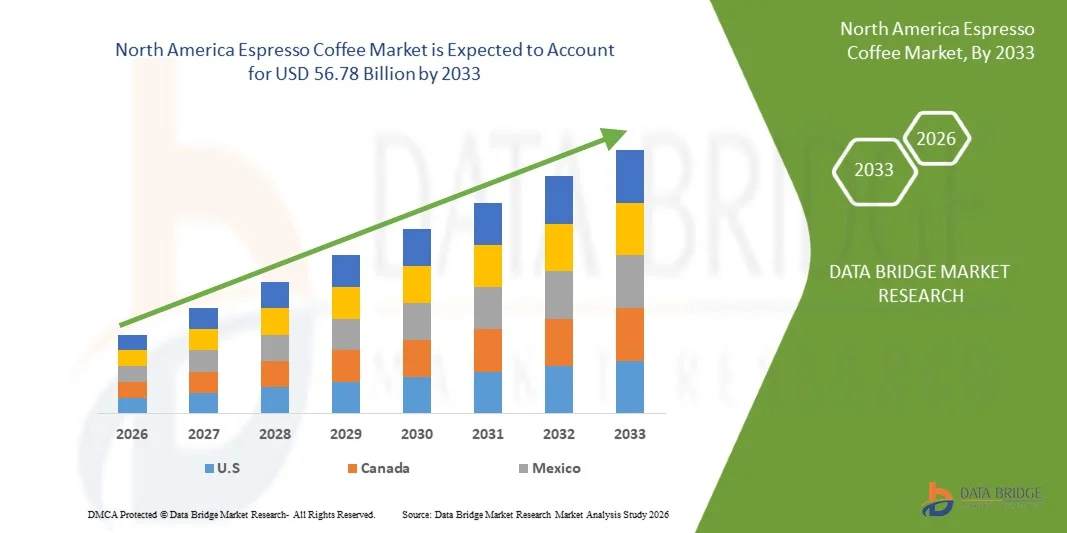
- As per Data Bridge Market Research analysis, the espresso Coffee market was valued at USD 41.96 Billion in 2025 and is projected to reach USD 56.78 Billion by 2033, growing at a CAGR of 5.17% from 2026 to 2033.
- The market is experiencing consistent growth driven by growing coffee culture, rising consumer preference for premium and specialty coffee experiences, expanding café and bar establishments, and increasing demand for espresso-based beverages across North America. Changing consumer lifestyles and preferences for coffee houses are further supporting market expansion, with cafes and bars accounting for the largest end-use segment.
- The increasing adoption of premium espresso beverages, specialty coffee products, and at-home espresso preparation, combined with the expansion of coffee chains and advancements in convenient brewing solutions, is supporting greater consumption of espresso coffee across the region. The growing preference for high-quality coffee experiences and increasing availability of diverse espresso-based beverages are further contributing to market growth.
Market Size & Forecast
- North America Market Value (2025): USD 41.96 Billion
- Expected Market Value (2033): USD 56.78 Billion
- Forecast CAGR (2026–2033): 5.17%
- Leading State in 2025: U.S.
- Fastest Growing State: Mexico
What are the Major Takeaways of the Espresso Coffee Market?
- U.S. dominated the North America espresso coffee market with a 71.37% revenue share in 2025, supported by high consumption of espresso coffee products, a well-established coffee culture, strong presence of major coffee companies, and increasing demand for premium and specialty coffee beverages.
- Cafes and Restaurants led the end-user category with a 32.72% revenue share in 2025, supported by changing consumer lifestyles, increasing preference for coffee houses, and rising demand for espresso-based beverages across cafes, restaurants, and coffee shops.
- Specialty Stores dominated the distribution channel category with a 40.21% revenue share in 2025, supported by growing consumer preference for premium coffee products, specialized coffee offerings, and convenient access to high-quality espresso coffee products.
- Medium Roast led the roast category with a 55.70% revenue share in 2025, driven by its balanced flavor profile and broad consumer acceptance across espresso coffee products and specialty coffee applications.
- Coffee Arabica dominated the beans category with a 60.44% revenue share in 2025, supported by its smoother flavor profile, premium perception, and widespread use across specialty coffee products and espresso beverages.
- Cappuccino led the type category with a 30.84% revenue share in 2025, supported by its widespread popularity among consumers and strong presence across cafes, restaurants, and other coffee-serving establishments. The Mocha segment is expected to witness the fastest growth, registering a 4.87% CAGR from 2026 to 2033, driven by increasing preference for indulgent coffee beverages combining chocolate and espresso.
Report Scope and Espresso Coffee Market Segmentation
|
Attributes |
Espresso Coffee Key Market Insights |
|
Segments Covered |
|
|
Countries Covered |
North America
|
|
Key Market Players |
|
|
Market Opportunities |
|
|
Value Added Data Infosets |
In addition to the insights on market scenarios such as market value, growth rate, segmentation, geographical coverage, and major players, the market reports curated by the Data Bridge Market Research also include in-depth expert analysis, pricing analysis, brand share analysis, consumer survey, demography analysis, supply chain analysis, value chain analysis, raw material/consumables overview, vendor selection criteria, PESTLE Analysis, Porter Analysis, and regulatory framework. |
What is the Key Trend in the Espresso Coffee Market?
- Specialty and premium espresso coffee consumption is increasingly gaining traction across North America, supported by rising consumer preference for high-quality coffee, premium beans, distinctive flavors, and specialty café experiences. In 2026, 47% of U.S. adults consumed specialty coffee on the previous day, while espresso-based beverages such as lattes, cappuccinos, espressos, mochas, macchiatos, flat whites, and Americanos are included within the specialty coffee category.
- Espresso-based beverages are increasingly being diversified through new flavors and beverage combinations, as consumers seek greater variety in their coffee choices. Manufacturers and café operators are expanding offerings across beverages such as cappuccino, latte, mocha, macchiato, and Americano, while chocolate, caramel, brown sugar, vanilla, and nutty flavors are among the leading flavor preferences among specialty coffee consumers.
- For instance, in January 2026 National Coffee Data Trends report shows that 60% of past-day specialty coffee drinkers consumed cold coffee, while the report separately tracks cold espresso-based beverages, creating opportunities for cafés and manufacturers to expand cold espresso, iced latte, and other chilled espresso-based offerings
- At-home espresso preparation is increasingly gaining popularity in North America, as consumers seek convenient access to premium coffee without compromising on quality. The strong coffee culture in the U.S., rising specialty coffee consumption, and increasing adoption of home-use espresso machines are supporting demand for espresso coffee products and related brewing solutions. Cold and iced espresso-based beverages are emerging as an important product trend, particularly among specialty coffee consumers and younger demographics.
What are the Key Drivers of the Espresso Coffee Market?
- Growing consumer preference for specialty and premium coffee is driving demand for espresso-based beverages across North America, particularly among younger consumers seeking higher-quality and diverse coffee experiences. In June 2026, the National Coffee Association reported that 47% of American adults consumed specialty coffee in the past day, while 69% of adults aged 25–39 had specialty coffee during the past week, supporting continued demand for premium espresso beverages.
- Increasing consumption of espresso-based beverages and product innovation is encouraging coffee companies to expand their espresso portfolios with new formats, flavors, and customized beverages. In January 2025, Starbucks introduced Cortado and Brown Sugar Oatmilk Cortado across participating U.S. stores, adding new espresso-forward offerings to its core beverage portfolio.
- For instance, In January 2025, Nestlé expanded Nescafé Espresso Concentrate into the U.S., offering consumers a customizable cold espresso beverage that can be prepared at home without additional espresso equipment.
- Expansion of out-of-home coffee consumption and café culture is supporting the North America Espresso Coffee market as consumers increasingly purchase specialty and espresso-based beverages through cafés, restaurants, drive-through outlets, and digital ordering channels.
Which Factors are Challenging the Growth of the Espresso Coffee Market?
- Specialty coffee consumption is increasingly driving demand for espresso-based beverages across North America, as consumers show growing preference for premium coffee experiences, distinctive flavors, and specialty preparation methods. According to the National Coffee Association, 46% of American adults consumed specialty coffee in the past day in 2025, while 43% consumed an espresso-based beverage in the past week, highlighting the growing importance of espresso within the specialty coffee category.
- Premiumization and product innovation are becoming prominent trends in the espresso coffee market, with coffee companies introducing new espresso-forward beverages to attract consumers seeking differentiated and higher-quality coffee experiences.
- For instance, in May 2025, Starbucks Reserve introduced the Ube Espresso Martini alongside other seasonal beverages, demonstrating continued experimentation with espresso-based flavor profiles.
- At-home coffee preparation continues to influence the North America espresso coffee market, supported by consumers seeking convenient access to premium coffee experiences outside cafés.
- Espresso-based beverages are gaining momentum among younger consumers, supporting continued expansion of specialty coffee and café consumption.
How is the Espresso Coffee Market Segmented?
The North America Espresso Coffee market is segmented on the basis of type, beans, roast, distribution channel, and end user
- By Type
On the basis of type, the North America espresso coffee market is segmented into Pure Espresso, Double Espresso, Ristretto, Cappuccino, Latte, Mocha Macchiato, Americano, and Others. The Cappuccino segment dominated the market with a 30.84% revenue share in 2025, supported by its widespread popularity among consumers and strong availability across cafes, restaurants, coffee shops, and other foodservice establishments. The continued introduction of cappuccino-based beverages and increasing consumer preference for specialty coffee are further supporting segment growth.
The Mocha segment is expected to be the fastest-growing type segment during the forecast period, registering a CAGR of 4.87% from 2026 to 2033, driven by increasing consumer preference for indulgent coffee beverages that combine espresso with chocolate flavors. Product innovation and the expansion of flavored espresso offerings are further supporting demand for mocha-based beverages.
- By Beans
On the basis of beans, the North America espresso coffee market is segmented into Coffee Arabica, Coffee Robusta, Wild Coffee Beans, Brazilian Coffee Beans, Coffee Liberica, Coffee Charrieriana, Coffee Magnistipula, and Others. The Coffee Arabica segment dominated the market with a 60.44% revenue share in 2025, supported by its smoother flavor profile, premium perception, and widespread utilization in specialty coffee and espresso products. Growing consumer preference for high-quality and specialty coffee is further contributing to the dominance of Arabica beans.
The Coffee Arabica segment is also expected to register the fastest growth during the forecast period, with a CAGR of 4.55% from 2026 to 2033, driven by increasing demand for premium coffee, specialty café products, and high-quality espresso beverages.
- By Roast
On the basis of roast, the North America espresso coffee market is segmented into Light, Medium, Dark, Extra Dark, and Others. The Medium roast segment dominated the market with a 55.70% revenue share in 2025, supported by its balanced flavor, aroma, acidity, and bitterness, making it suitable for a broad range of espresso applications and consumer preferences.
The Dark roast segment is expected to be the fastest-growing roast segment during the forecast period, registering a CAGR of 4.21% from 2026 to 2033, driven by consumer demand for stronger and bolder coffee flavors and the continued popularity of intense espresso profiles.
- By Distribution Channel
On the basis of distribution channel, the North America Espresso Coffee market is segmented into E-Commerce, Super Markets/Hyper Markets, Convenience Stores, Specialty Stores, and Others. The Specialty Stores segment dominated the market with a 40.21% revenue share in 2025, supported by increasing consumer preference for premium coffee products, specialized coffee selections, and personalized purchasing experiences. Specialty stores also provide access to high-quality and differentiated espresso coffee products, supporting their leading position.
The Specialty Stores segment is expected to remain the fastest-growing distribution channel during the forecast period, registering a CAGR of 5.33% from 2026 to 2033, driven by increasing demand for premium and specialty coffee products and growing consumer interest in diverse coffee varieties and high-quality espresso offerings.
- By End-User
On the basis of end-user, the North America espresso coffee market is segmented into Hotels and Restaurants, Offices, Cafes and Bars, Home, Educational Institutes, Hospitals, Airports, and Others. The Cafes and Restaurants segment dominated the market with a 32.72% revenue share in 2025, supported by changing consumer lifestyles, increasing preference for coffee houses, and strong demand for espresso-based beverages across cafes and restaurants.
The Offices segment is expected to be the fastest-growing end-user segment during the forecast period, registering a CAGR of 3.74% from 2026 to 2033, driven by increasing workplace coffee consumption, growing availability of espresso preparation facilities in offices, and rising demand for convenient premium coffee beverages in professional environments.
Which State Holds the Largest Share of the Espresso Coffee Market?
- U.S. dominated the North America espresso coffee market with the largest revenue share of 71.36% in 2025, supported by high consumption of espresso coffee products, a strong and established coffee culture, growing demand for premium and specialty coffee beverages, and the presence of major coffee companies and coffee chains. The increasing adoption of at-home espresso machines and growing consumer interest in high-quality coffee are further supporting market growth.
- Mexico is expected to witness significant growth in the North America Espresso Coffee market, supported by growing consumer awareness of the health benefits and good taste of coffee, increasing coffee consumption, and expanding coffee culture. The market has the forecast period of 6.45% of 2026 to 2033 on its North America Espresso Coffee Market page; therefore, a CAGR should not be inserted without the underlying DBMR dataset
U.S. Espresso Coffee Market Insight
The U.S. espresso coffee market is supported by a strong and established coffee culture, high consumer consumption, and growing demand for premium and specialty coffee beverages. Increasing preference for café-style drinks, including cappuccino, latte, mocha, and Americano, is encouraging espresso consumption across cafés, restaurants, and foodservice outlets. The expansion of specialty coffee chains and rising adoption of home espresso machines are further supporting market development. Product innovation, premium blends, convenient brewing formats, and growing interest in high-quality coffee are expected to continue creating opportunities for market participants in the U.S.
Mexico Espresso Coffee Market Insight
Mexico represents a growing market for espresso coffee, supported by increasing coffee consumption, expanding café culture, and rising consumer interest in premium and specialty coffee. Demand for high-quality, single-origin beans and specialty beverages is gaining traction, particularly in major urban areas. The expansion of cafés and coffee bars is also supporting wider adoption of espresso-based beverages. In addition, online platforms, supermarkets, and specialty retailers are improving consumer access to roasted coffee, capsules, and specialty products. Growing interest in premium coffee experiences and convenient formats is expected to create further opportunities for espresso coffee brands in Mexico.
Canada Espresso Coffee Market Insight
The Canada Espresso Coffee Market is witnessing steady growth, supported by increasing consumer preference for premium coffee experiences, specialty beverages, and café culture. Rising demand for espresso-based drinks such as cappuccino, latte, mocha, and Americano is encouraging product diversification across cafés, restaurants, and retail channels. Growing interest in high-quality and specialty coffee, along with the expansion of convenient at-home brewing, is further supporting market development. E-commerce and specialty stores are also improving consumer access to diverse espresso coffee products, while changing lifestyles and younger consumers’ interest in customized beverages continue to create opportunities for market participants.
Which are the Top Companies in Espresso Coffee Market?
The Espresso Coffee industry is primarily led by well-established companies, including:
- Starbucks Coffee Company (U.S.)
- Nestlé S.A. (Switzerland)
- Luigi Lavazza S.p.A. (Italy)
- La Prima Espresso Company (U.S.)
- illycaffè S.p.A. (Italy)
- Gloria Jean's Gourmet Coffees (Australia)
- Coffee Beanery (U.S.)
- Café Coffee Day (India)
- McDonald's Corporation (U.S.)
- Massimo Zanetti Beverage Group S.p.A. (Italy)
- Caribou Coffee Operating Company, Inc. (U.S.)
- Keurig Dr Pepper Inc. (U.S.)
- ARCO COFFEE COMPANY (U.S.)
- The J.M. Smucker Company (U.S.)
- The Kraft Heinz Company (U.S.)
What are Latest Developments in Espresso Coffee Market?
- In June 2026, Blue Bottle Coffee introduced Kyoto-Style Espresso, using cold-water extraction specifically for iced espresso beverages. The innovation is being rolled out across its cafés globally and reflects growing experimentation with cold espresso formats.
- In February 2026, Starbucks announced a new line of ready-to-drink Coffee & Protein beverages combining coffee with 22 grams of complete protein and 5 grams of prebiotic fiber. The products are being introduced through grocery, convenience, and online channels in North America.
- In August 2025, Keurig Dr Pepper announced an agreement to acquire JDE Peet’s for USD 18 billion, strengthening its position in the global coffee industry and expanding its portfolio of coffee brands and formats.
- In January 2025, Nestlé expanded Nescafé Espresso Concentrate into the U.S. market, offering consumers a customizable liquid espresso product for preparing cold coffee beverages at home. The product is made with 100% Arabica beans and launched in Black and Sweet Vanilla variants.
- In January 2025, Starbucks introduced Cortado and Brown Sugar Oatmilk Cortado across participating U.S. stores. The beverages use ristretto shots and expand the company's espresso-focused beverage portfolio with both traditional and plant-based options.

- Interactive Data Analysis Dashboard
- Company Analysis Dashboard for high growth potential opportunities
- Research Analyst Access for customization & queries
- Competitor Analysis with Interactive dashboard
- Latest News, Updates & Trend analysis
- Harness the Power of Benchmark Analysis for Comprehensive Competitor Tracking
North America Espresso Coffee Market, Supply Chain Analysis and Ecosystem Framework
To support market growth and help clients navigate the impact of geopolitical shifts, DBMR has integrated in-depth supply chain analysis into its North America Espresso Coffee Market research reports. This addition empowers clients to respond effectively to global changes affecting their industries. The supply chain analysis section includes detailed insights such as North America Espresso Coffee Market consumption and production by country, price trend analysis, the impact of tariffs and geopolitical developments, and import and export trends by country and HSN code. It also highlights major suppliers with data on production capacity and company profiles, as well as key importers and exporters. In addition to research, DBMR offers specialized supply chain consulting services backed by over a decade of experience, providing solutions like supplier discovery, supplier risk assessment, price trend analysis, impact evaluation of inflation and trade route changes, and comprehensive market trend analysis.
Data collection and base year analysis are done using data collection modules with large sample sizes. The stage includes obtaining market information or related data through various sources and strategies. It includes examining and planning all the data acquired from the past in advance. It likewise envelops the examination of information inconsistencies seen across different information sources. The market data is analysed and estimated using market statistical and coherent models. Also, market share analysis and key trend analysis are the major success factors in the market report. To know more, please request an analyst call or drop down your inquiry.
The key research methodology used by DBMR research team is data triangulation which involves data mining, analysis of the impact of data variables on the market and primary (industry expert) validation. Data models include Vendor Positioning Grid, Market Time Line Analysis, Market Overview and Guide, Company Positioning Grid, Patent Analysis, Pricing Analysis, Company Market Share Analysis, Standards of Measurement, Global versus Regional and Vendor Share Analysis. To know more about the research methodology, drop in an inquiry to speak to our industry experts.
Data Bridge Market Research is a leader in advanced formative research. We take pride in servicing our existing and new customers with data and analysis that match and suits their goal. The report can be customized to include price trend analysis of target brands understanding the market for additional countries (ask for the list of countries), clinical trial results data, literature review, refurbished market and product base analysis. Market analysis of target competitors can be analyzed from technology-based analysis to market portfolio strategies. We can add as many competitors that you require data about in the format and data style you are looking for. Our team of analysts can also provide you data in crude raw excel files pivot tables (Fact book) or can assist you in creating presentations from the data sets available in the report.













