



Global Acute Myeloid Testing Market Segmentation, By Biomarker Type (Genetic AML Biomarker, Epigenetic AML Biomarker, and Proteomic AML Biomarker), Product and Service (Services and Assay Kits), Technology (PCR, IHC, NGS, Cytogenetics, and Others), End User (Clinical Laboratories, Hospitals, Academic and Research Institutes, Cancer Diagnostic Institutes, and Others)- Industry Trends and Forecast to 2033
Каков размер рынка и темпы роста миелоидного тестирования
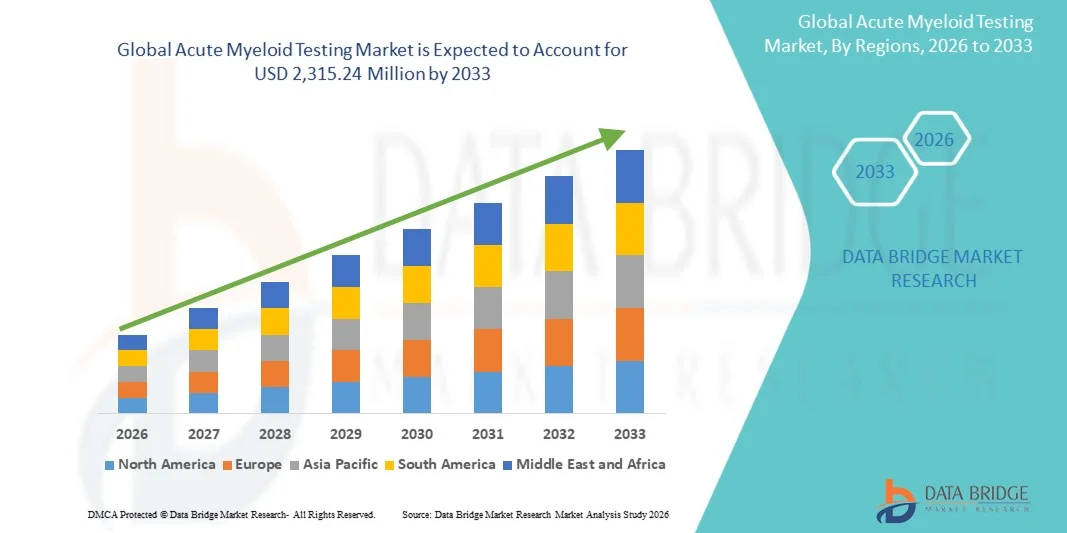
- Согласно анализу рынка Data Bridge Market Research, глобальный объем рынка острого миелоидного тестирования был оценен как828,92 млн долларов США в 2025 годуОжидается, что он достигнет2 315,24 млн долларов США к 2033 году, вCAGR 13,70%в течение прогнозируемого периода
- Рост рынка в значительной степени подпитывается растущей распространенностью острого миелоидного лейкоза (ОМЛ) и достижениями в молекулярной диагностике, генетическом профилировании.биомаркерИдентификация, позволяющая проводить более точное и быстрое тестирование
- Кроме того, растущий спрос со стороны поставщиков медицинских услуг и научно-исследовательских учреждений на раннее выявление, персонализированные стратегии лечения и улучшение результатов лечения пациентов позиционирует острое миелоидное тестирование как важный компонент современной гематологической диагностики. Эти сходящиеся факторы ускоряют принятие решений для тестирования AML, тем самым значительно повышая рост отрасли.
Размер рынка и прогноз
- Глобальная рыночная стоимость (2025):828,92 млн. долларов США
- Ожидаемая рыночная стоимость (2033):$2315,24 млн.
- Прогноз CAGR (2026–2033):13.70%
Каковы основные выводы рынка острого миелоидного тестирования
- Острое миелоидное тестирование, охватывающее молекулярные, цитогенетические и иммунофенотипические анализы для диагностики и мониторинга острого миелоидного лейкоза (ОМЛ), становится все более важным в современной гематологии и онкологической помощи из-за его способности направлять целевую терапию, стратификацию риска и мониторинг лечения как в клинических, так и в исследовательских условиях.
- Растущий спрос на острое миелоидное тестирование в первую очередь обусловлен растущей распространенностью ОМЛ, растущей осведомленностью о преимуществах ранней диагностики и растущим внедрением подходов точной медицины, основанных на генетическом и биомаркерном тестировании.
- Северная Америка доминировала на остром рынке миелоидного тестирования с самой большой долей выручки в 38,7% в 2025 году, поддерживаемой передовой инфраструктурой здравоохранения, высоким внедрением молекулярной диагностики и присутствием ведущих диагностических компаний, при этом в США наблюдался существенный рост тестирования на ОМЛ из-за инвестиций в исследования.секвенирование следующего поколения,персонализированные стратегии лечения и расширение клинических испытаний
- Ожидается, что Азиатско-Тихоокеанский регион станет самым быстрорастущим регионом на рынке острого миелоидного тестирования в течение прогнозируемого периода из-за увеличения расходов на здравоохранение, расширения лабораторных сетей и повышения осведомленности о диагностике и управлении ОМЛ.
- Сегмент генетических биомаркеров ОМЛ доминировал на рынке острого миелоидного тестирования с долей рынка 45,3% в 2025 году, что обусловлено его критической ролью в выявлении мутаций, вызывающих заболевания, руководстве целевой терапией и обеспечении раннего выявления и прогноза ОМЛ.
Сфера охвата и острая сегментация рынка миелоидных тестов
|
Атрибуты |
Острое миелоидное тестирование ключевых рыночных идей |
|
Сегменты покрыты |
|
|
Страны, охваченные |
Северная Америка
Европа
Азиатско-Тихоокеанский регион
Ближний Восток и Африка
Южная Америка
|
|
Ключевые игроки рынка |
|
|
Рыночные возможности |
|
|
Информационные наборы данных с добавленной стоимостью |
В дополнение к информации о рыночных сценариях, таких как рыночная стоимость, темпы роста, сегментация, географический охват и основные игроки, рыночные отчеты, курируемые Data Bridge Market Research, также включают углубленный экспертный анализ, эпидемиологию пациентов, анализ трубопроводов, анализ цен и нормативную базу. |
Каковы основные тенденции рынка миелоидного тестирования
«Достижения в области диагностики на основе ИИ и интеграции NGS»
- Значительной и ускоряющейся тенденцией на мировом рынке острых миелоидных тестов является интеграция миелоидных тестов.искусственный интеллект(AI) с платформами секвенирования следующего поколения (NGS), позволяющими более точную, быструю и прогнозирующую диагностику ОМЛ
- Например, платформа Sophia Genetics с искусственным интеллектом анализирует геномные данные для выявления мутаций, связанных с ОМЛ, помогая клиницистам в выборе целевой терапии и прогнозировании результатов лечения пациентов.
- Интеграция ИИ облегчает автоматическую интерпретацию сложных генетических и биомаркерных профилей, уменьшая человеческие ошибки и улучшая диагностическую точность для персонализированных стратегий лечения.
- Включение NGS и AI позволяет одновременно обнаруживать несколько генетических и эпигенетических биомаркеров ОМЛ, обеспечивая всестороннюю информацию о болезни из одного анализа.
- Эта тенденция к более интеллектуальным, основанным на данных и интегративным решениям тестирования меняет ожидания в отношении диагностики ОМЛ, а такие компании, как Illumina, разрабатывают платформы с поддержкой ИИ, способные к быстрому профилированию мутаций.Прогнозная аналитика
- Спрос на решения для тестирования AML, которые объединяют аналитику ИИ, NGS и биомаркеров, быстро растет как в клинических, так и в исследовательских условиях, поскольку поставщики медицинских услуг стремятся к точному, персонализированному и своевременному управлению пациентами.
- Сотрудничество между диагностическими компаниями и фармацевтическими фирмами для совместной разработки сопутствующей диагностики создает новые возможности для тестирования AML на основе ИИ, выравнивая диагностику с новыми целевыми методами лечения.
Острое миелоидное тестирование динамики рынка
водитель
«Повышение распространенности ОМЛ и принятие точной медицины»
- Растущая заболеваемость острым миелоидным лейкозом (ОМЛ) в сочетании с растущим внедрением методов точной медицины и таргетной терапии является основным фактором для рынка острого миелоидного тестирования.
- Например, в марте 2025 года Thermo Fisher Scientific расширила панель Oncomine AML для тестирования на основе NGS, улучшив обнаружение действенных мутаций и поддержав персонализированные терапевтические решения.
- Поскольку клиницисты все больше полагаются на планы лечения с использованием биомаркеров, спрос на молекулярное, генетическое и эпигенетическое тестирование ОМЛ ускоряется в больницах, диагностических лабораториях и научно-исследовательских учреждениях.
- Кроме того, повышение осведомленности о преимуществах раннего выявления, стратификации риска и мониторинга минимальных остаточных заболеваний (MRD) способствует более широкому внедрению решений для тестирования ОМЛ.
- Удобство и точность передовых анализов в сочетании с возможностью направлять выбор терапии и контролировать реакцию на лечение способствуют росту рынка в клинических и исследовательских приложениях.
- Инвестиции в передовую диагностическую инфраструктуру и расширение лабораторных сетей еще больше усиливают траекторию роста рынка, что делает тестирование AML неотъемлемой частью современной онкологической помощи.
- Например, партнерские отношения между больницами и диагностическими фирмами облегчают интеграцию тестирования на ОМЛ в рутинные клинические рабочие процессы, улучшая раннюю диагностику и планирование лечения.
- Увеличение правительственных инициатив и финансирования исследований геномики рака способствуют более широкому внедрению тестирования на ОМЛ, особенно в государственных больницах и научно-исследовательских учреждениях.
Сдержанность/вызов
«Высокие издержки и нарушения нормативных требований»
- Относительно высокая стоимость передового тестирования ПОД в сочетании со строгими нормативными требованиями представляет собой серьезную проблему для более широкого внедрения на рынке.
- Например, задержки в одобрении со стороны регулирующих органов, таких как FDA или EMA, могут замедлить запуск новых панелей биомаркеров и наборов для анализа, что влияет на проникновение на рынок.
- Поставщики медицинских услуг в развивающихся регионах могут столкнуться с бюджетными ограничениями, ограничивающими доступ к диагностике ОМЛ на основе НГС или ИИ, в то время как политика возмещения остается непоследовательной в разных странах.
- Обеспечение соблюдения сложных диагностических правил, законов о конфиденциальности данных и лабораторных стандартов имеет решающее значение, требуя значительных инвестиций в управление качеством и документацию.
- В то время как затраты на анализ постепенно снижаются, премия за высокопроизводительное или мультиплексное тестирование все еще может ограничить принятие среди небольших клиник или исследовательских лабораторий.
- Преодоление этих проблем с помощью стратегий сокращения расходов, гармонизации регулирования и более широкого страхового покрытия будет иметь жизненно важное значение для устойчивого расширения рынка.
- Например, отсутствие стандартизированных протоколов в лабораториях может привести к изменчивости результатов тестов, снижению доверия врачей и ограничению принятия.
- Нехватка квалифицированных специалистов по молекулярной диагностике на развивающихся рынках еще больше ограничивает быстрое развертывание решений для тестирования ОМЛ, подчеркивая необходимость специализированных учебных программ.
Как сегментируется рынок острого миелоидного тестирования
Рынок сегментирован на основе типа биомаркера, продукта и услуги, технологии и конечного пользователя.
- Тип биомаркера
На основе типа биомаркера рынок острого миелоидного тестирования сегментирован на генетический биомаркер AML, эпигенетический биомаркер AML и протеомный биомаркер AML. Сегмент генетических биомаркеров AML доминировал на рынке с самой большой долей рынка в 45,3% в 2025 году, что обусловлено его критической ролью в выявлении мутаций, вызывающих заболевания, и руководстве целевыми методами лечения. Генетические биомаркеры, такие как мутации FLT3, NPM1 и CEBPA, широко используются для стратификации риска и выбора терапии, что делает их краеугольным камнем диагностики ОМЛ. Высокая чувствительность, воспроизводимость и клиническая значимость генетических биомаркеров сделали их предпочтительным выбором для рутинного тестирования на ОМЛ. Кроме того, продолжающиеся достижения в платформах секвенирования следующего поколения (NGS) еще больше улучшили обнаружение и интерпретацию генетических биомаркеров ОМЛ, поддерживая раннюю диагностику и персонализированные стратегии лечения.
Ожидается, что эпигенетический сегмент биомаркеров AML будет наблюдать самые быстрые темпы роста с 2026 по 2033 год из-за растущего внимания к исследованиям метилирования ДНК и моделей модификации гистонов для мониторинга прогноза и ответа на терапию. Эпигенетические биомаркеры дают представление о прогрессировании заболевания и эффективности лечения, дополняя генетические данные для более полного понимания ОМЛ. Растущее внедрение в клинических испытаниях и исследованиях в сочетании с технологическими улучшениями в ПЦР и секвенировании, специфичных для метилирования, подпитывает их быстрое использование как в диагностических, так и в терапевтических приложениях.
- По продуктам и услугам
На основе продуктов и услуг рынок острого миелоидного тестирования подразделяется на наборы для анализа и услуги. Сегмент аналитических наборов доминировал на рынке в 2025 году благодаря удобству стандартизированного тестирования, простоте использования в клинических лабораториях и совместимости с высокопроизводительными платформами молекулярной диагностики. Наборы для анализа ПЦР, NGS и иммунофенотипирования позволяют быстро обнаруживать специфические биомаркеры AML с постоянным качеством, облегчая рутинное тестирование и крупномасштабный скрининг. Наличие предварительно проверенных комплектов от ведущих компаний обеспечивает надежность, точность и соответствие нормативным требованиям, что способствует широкому распространению.
Ожидается, что в сегменте услуг будет наблюдаться самый быстрый рост с 2026 по 2033 год, поскольку больницы, исследовательские учреждения и специализированные диагностические центры все чаще передают на аутсорсинг сложные процедуры тестирования на ОМЛ. Сервисные модели предлагают доступ к передовым технологиям без необходимости в собственной инфраструктуре, включая анализ NGS, цитогенетики и биоинформатики. Гибкость, масштабируемость и экономическая эффективность услуг по тестированию на ОМЛ делают их очень привлекательными для академических исследований, клинических испытаний и больниц в развивающихся регионах.
- По технологии
На основе технологии рынок острого миелоидного тестирования сегментирован на ПЦР, IHC, NGS, цитогенетику и другие. Сегмент NGS доминировал на рынке с самой большой долей выручки в 2025 году из-за его высокой пропускной способности, точности обнаружения нескольких мутаций одновременно и растущего внедрения в персонализированной медицине. Платформы NGS позволяют проводить комплексное геномное профилирование пациентов с ОМЛ, обеспечивая стратификацию риска, мониторинг минимального остаточного заболевания (МРТ) и руководство по терапии. Постоянные технологические достижения и снижение затрат на секвенирование привели к дальнейшему внедрению NGS в клинических и исследовательских лабораториях по всему миру.
Ожидается, что сегмент ПЦР станет свидетелем самого быстрого CAGR с 2026 по 2033 год, что обусловлено его экономической эффективностью, быстрым временем обращения и пригодностью для целенаправленного обнаружения мутаций. Анализы AML на основе ПЦР особенно полезны для рутинной диагностики, мониторинга МРТ и подтверждения известных генетических мутаций. Их совместимость с существующей лабораторной инфраструктурой, простота автоматизации и надежность делают ПЦР предпочтительным выбором как на развивающихся, так и на развитых рынках.
- Конечный пользователь
На основе конечного пользователя рынок острого миелоидного тестирования сегментирован на клинические лаборатории, больницы, академические и исследовательские институты, институты диагностики рака и другие. Сегмент больниц доминировал на рынке с самой большой долей доходов в 2025 году из-за растущей интеграции тестирования на ОМЛ в обычные программы ухода за пациентами и персонализированной терапии. Больницы пользуются возможностями тестирования на месте и немедленным доступом к результатам, что позволяет клиницистам принимать своевременные решения о лечении. Повышение осведомленности среди медицинских работников и пациентов о раннем обнаружении ОМЛ способствует дальнейшему внедрению в больницах.
Ожидается, что сегмент академических и исследовательских институтов будет наблюдать самый быстрый рост с 2026 по 2033 год, чему будет способствовать расширение исследовательских программ AML, клинических испытаний и сотрудничества с диагностическими компаниями. Эти учреждения все больше полагаются на передовые технологии тестирования, такие как NGS, цитогенетика и биоинформатика для моделирования заболеваний, разработки лекарств и открытия биомаркеров. Растущее государственное финансирование исследований в области гематологии и геномики также ускоряет внедрение тестирования AML в академических условиях.
В каком регионе находится рынок острого миелоидного тестирования
- Северная Америка доминировала на остром рынке миелоидного тестирования с самой большой долей дохода 38,7% в 2025 году, поддерживаемой передовой инфраструктурой здравоохранения, высоким внедрением молекулярной диагностики и присутствием ведущих диагностических компаний.
- Медицинские работники в регионе отдают приоритет ранней диагностике, стратификации рисков и персонализированным планам лечения, используя тестирование на ОМЛ для более точного выбора терапии и улучшения результатов лечения пациентов.
- Это сильное внедрение поддерживается передовой инфраструктурой здравоохранения, высокими инвестициями в НИОКР и присутствием ключевых диагностических компаний, устанавливающих тестирование AML в качестве стандартного компонента клинической помощи в больницах, научно-исследовательских институтах и специализированных лабораториях.
Острый миелоидный анализ рынка США
Рынок острого миелоидного тестирования в США занял самую большую долю дохода в 82% в 2025 году в Северной Америке, чему способствовал рост заболеваемости ОМЛ и широкое распространение передовой молекулярной, генетической и биомаркерной диагностики. Медицинские работники отдают приоритет раннему выявлению, мониторингу минимальных остаточных заболеваний (MRD) и персонализированным подходам к лечению, используя такие технологии, как NGS, ПЦР и цитогенетика. Растущее предпочтение больничных и специализированных услуг тестирования в сочетании с устойчивым спросом на сопутствующую диагностику и анализ данных на основе ИИ еще больше стимулирует индустрию тестирования AML. Кроме того, постоянные инвестиции в прецизионную медицину, расширение клинических испытаний и НИОКР для целевой терапии вносят значительный вклад в рост рынка. Совместные инициативы между диагностическими компаниями и фармацевтическими фирмами также способствуют внедрению ОМЛ-тестирования в обычную клиническую помощь.
Европа Острое миелоидное тестирование Market Insight
Европейский рынок острого миелоидного тестирования, по прогнозам, будет расширяться при существенном CAGR в течение прогнозируемого периода, в основном за счет роста распространенности ОМЛ, повышения осведомленности о ранней диагностике и строгих правил здравоохранения. Принятие передовых диагностических технологий, включая анализы на основе ПЦР, поддерживается урбанизированной инфраструктурой здравоохранения и правительственными программами, способствующими диагностике рака. Европейские больницы, исследовательские институты и специализированные диагностические лаборатории все чаще интегрируют тестирование на ОМЛ в клинические рабочие процессы для поддержки персонализированных терапевтических решений. Растущее участие в многоцентровых испытаниях и научных исследованиях еще больше расширяет рынок. Пациенты и поставщики услуг все чаще предпочитают подходы к раннему выявлению и стратификации риска, которые способствуют внедрению в жилых, коммерческих и институциональных медицинских учреждениях.
Острое миелоидное тестирование Market Insight
Ожидается, что в течение прогнозируемого периода рынок острого миелоидного тестирования в Великобритании будет расти с заметным CAGR, что обусловлено повышением осведомленности о ОМЛ, растущим спросом на биомаркерные методы лечения и интеграцией точной медицины в больницах. Опасения относительно эффективности лечения, показателей выживаемости пациентов и раннего выявления побуждают больницы, диагностические лаборатории и онкологические центры принимать передовые решения для тестирования на ОМЛ. Надежная система здравоохранения Великобритании, сильные сети клинических исследований и поддерживающая государственная политика способствуют быстрому внедрению услуг тестирования и наборов анализов. Усыновление также поддерживается акцентом на раннюю диагностику, персонализированный мониторинг терапии и участие в клинических испытаниях. Растущая интеграция NGS и аналитических платформ на основе ИИ также способствует расширению рынка.
Германия Острый миелоидный анализ рынка
Ожидается, что в течение прогнозируемого периода рынок острого миелоидного тестирования в Германии будет расширяться при значительном CAGR, чему будет способствовать хорошо развитая инфраструктура здравоохранения, сильный акцент на персонализированную онкологию и повышение осведомленности об управлении ОМЛ. Немецкие поставщики медицинских услуг подчеркивают молекулярное и генетическое тестирование на ОМЛ для ранней диагностики, оценки риска и выбора лечения. Интеграция диагностики ОМЛ в рабочие процессы больниц, наряду с участием в многоцентровых исследованиях, поддерживает постоянный спрос. Кроме того, акцент страны на инновации, точную медицину и соблюдение строгих нормативных стандартов способствует принятию высококачественных, проверенных биомаркеров. Предпочтение надежных, ориентированных на конфиденциальность и технологически продвинутых решений для тестирования еще больше усиливает рост рынка как в клинических, так и в исследовательских условиях.
Азиатско-тихоокеанское исследование рынка острых миелоидов
Азиатско-тихоокеанский рынок острого миелоидного тестирования будет расти на самом быстром CAGR в 23% в течение прогнозируемого периода с 2026 по 2033 год, что обусловлено увеличением заболеваемости ОМЛ, улучшением инфраструктуры здравоохранения и повышением осведомленности в таких странах, как Китай, Япония и Индия. Растущие правительственные инициативы, способствующие диагностике рака, цифровому здоровью и точной медицине, поддерживают внедрение передовых технологий тестирования. Больницы, академические учреждения и исследовательские центры все чаще используют NGS, ПЦР и цитогенетические анализы для диагностики ОМЛ, руководства по терапии и мониторинга заболеваний. Более того, появление APAC в качестве центра для разработки диагностических технологий и тестирования услуг улучшает доступность и доступность тестирования на ОМЛ, расширяя базу пациентов. Растущие располагаемые доходы, урбанизация и информационно-просветительские кампании способствуют дальнейшему внедрению как в частном, так и в государственном секторах здравоохранения.
Япония Острый миелоидный анализ рынка
Японский рынок острого миелоидного тестирования набирает обороты благодаря высокоразвитой системе здравоохранения страны, растущей осведомленности о ОМЛ и акценту на точную онкологию. Больницы и исследовательские учреждения отдают приоритет раннему выявлению и всестороннему генетическому профилированию, чтобы направлять решения о лечении и контролировать результаты терапии. Интеграция платформ с поддержкой ИИ и диагностики на основе NGS повышает эффективность, скорость и точность тестирования AML. Старение населения в Японии также стимулирует спрос на удобные, надежные и своевременные решения для диагностики ОМЛ. Кроме того, государственные программы, поддерживающие исследования рака и профилактическую помощь, в сочетании с высокой осведомленностью пациентов, ускоряют внедрение как в клинических условиях, так и в больницах.
Индия Острое миелоидное тестирование Market Insight
На индийский рынок острого миелоидного тестирования приходится наибольшая доля доходов рынка в Азиатско-Тихоокеанском регионе в 2025 году, что объясняется расширением инфраструктуры здравоохранения, ростом среднего класса и повышением осведомленности о гематологических раковых заболеваниях. Больницы, диагностические лаборатории и исследовательские центры все чаще принимают молекулярную диагностику и тестирование на ОМЛ на основе биомаркеров. Правительственные инициативы, способствующие раннему выявлению рака, интеллектуальным решениям в области здравоохранения и доступной диагностике, ускоряют внедрение. Отечественные поставщики диагностических услуг Индии, наряду с партнерскими отношениями с международными технологическими фирмами, улучшают доступность и доступность тестирования на ОМЛ. Быстрая урбанизация, увеличение располагаемых доходов и повышение осведомленности о преимуществах персонализированной терапии являются ключевыми факторами, стимулирующими рост рынка в жилых, коммерческих и институциональных приложениях здравоохранения.
Какие компании находятся на рынке острого миелоидного тестирования
Индустрия острого миелоидного тестирования в основном возглавляется хорошо зарекомендовавшими себя компаниями, в том числе:
- Thermo Fisher Scientific Inc. (США)
- Illumina, Inc. (США)
- QIAGEN (Нидерланды)
- Эбботт (США)
- F. Hoffmann-La Roche Ltd (Швейцария)
- Bio-Rad Laboratories, Inc. (США)
- Agilent Technologies, Inc. (США)
- NeoGenomics Laboratories, Inc. (США)
- Данаер (США)
- Цефеид (США)
- Guardant Health, Inc. (США)
- BIOMÉRIEUX (Франция)
- Sysmex Corporation (Япония)
- ArcherDX, Inc. (США)
- Cancer Genetics, Inc. (США)
- Epigenomics AG (Германия)
- SkylineDX B.V. (Нидерланды)
- Precipio, Inc. (США)
- BD (США)
- PerkinElmer, Inc. (США)
Каковы последние события на рынке острого миелоидного тестирования
- В ноябре 2025 года на AMP 2025 были представлены инновационные диагностические исследования, в которых были представлены передовые методы генетического и РНК-тестирования на синтез, которые улучшают обнаружение скрытых слияний генов и минимального остаточного заболевания в ОМЛ, предлагая более точные и чувствительные диагностические данные.
- В ноябре 2025 года NeoGenomics представила новые данные геномного профилирования в реальном мире на ASH 2025, показывающие, как комплексные панели геномного профилирования (CGP) могут улучшить диагностику ОМЛ путем обнаружения действенных слияний и мутаций, которые в противном случае могут быть пропущены, помогая решениям о лечении.
- В июне 2025 года был опубликован проект по улучшению качества, повышающий эффективность геномного тестирования ОМЛ, в котором алгоритм геномного тестирования с проточной цитометрией и автоматизированные рабочие процессы значительно сократили время разворота для ключевой диагностики ОМЛ, поддерживая более быстрые решения о лечении и персонализированную терапию.
- В октябре 2024 года NeoGenomics запустила свой анализ секвенирования следующего поколения «AML Express» (NGS), предназначенный для обеспечения быстрого и всестороннего генетического профилирования пациентов с острым миелоидным лейкозом, обеспечивая результаты через 3-4 дня, чтобы помочь клиницистам принимать более быстрые решения о лечении и улучшать персонализированный уход.
- В мае 2023 года корпорация Sysmex представила свою систему цитометрии клинических потоков, сочетающую усовершенствованную автоматизированную проточную цитометрию с получением образцов и реагентов, повышая эффективность и стандартизацию диагностических рабочих процессов лейкемии в клинических лабораториях по всему миру.
SKU-
Получите онлайн-доступ к отчету на первой в мире облачной платформе рыночной аналитики

- Интерактивная панель анализа данных
- Панель анализа компании для возможностей с высоким потенциалом роста
- Доступ аналитика-исследователя для настройки и запросов
- Анализ конкурентов с помощью интерактивной панели
- Последние новости, обновления и анализ тенденций
- Используйте возможности сравнительного анализа для комплексного отслеживания конкурентов
Методология исследования
Сбор данных и анализ базового года выполняются с использованием модулей сбора данных с большими размерами выборки. Этап включает получение рыночной информации или связанных данных из различных источников и стратегий. Он включает изучение и планирование всех данных, полученных из прошлого заранее. Он также охватывает изучение несоответствий информации, наблюдаемых в различных источниках информации. Рыночные данные анализируются и оцениваются с использованием статистических и последовательных моделей рынка. Кроме того, анализ доли рынка и анализ ключевых тенденций являются основными факторами успеха в отчете о рынке. Чтобы узнать больше, пожалуйста, запросите звонок аналитика или оставьте свой запрос.
Ключевой методологией исследования, используемой исследовательской группой DBMR, является триангуляция данных, которая включает в себя интеллектуальный анализ данных, анализ влияния переменных данных на рынок и первичную (отраслевую экспертную) проверку. Модели данных включают сетку позиционирования поставщиков, анализ временной линии рынка, обзор рынка и руководство, сетку позиционирования компании, патентный анализ, анализ цен, анализ доли рынка компании, стандарты измерения, глобальный и региональный анализ и анализ доли поставщика. Чтобы узнать больше о методологии исследования, отправьте запрос, чтобы поговорить с нашими отраслевыми экспертами.
Доступна настройка
Data Bridge Market Research является лидером в области передовых формативных исследований. Мы гордимся тем, что предоставляем нашим существующим и новым клиентам данные и анализ, которые соответствуют и подходят их целям. Отчет можно настроить, включив в него анализ ценовых тенденций целевых брендов, понимание рынка для дополнительных стран (запросите список стран), данные о результатах клинических испытаний, обзор литературы, обновленный анализ рынка и продуктовой базы. Анализ рынка целевых конкурентов можно проанализировать от анализа на основе технологий до стратегий портфеля рынка. Мы можем добавить столько конкурентов, о которых вам нужны данные в нужном вам формате и стиле данных. Наша команда аналитиков также может предоставить вам данные в сырых файлах Excel, сводных таблицах (книга фактов) или помочь вам в создании презентаций из наборов данных, доступных в отчете.











