


Global Blue Green Algae Fertilizers Market Segmentation, By Technology Type (Carrier Enriched Biofertilizers, Liquid Biofertilizers, and Other Technology Types), Application (Soil Treatment, Seed Treatment, and Others), Type (Nitrogen-Fixing Biofertilizers, Phosphate Solubilizing and Mobilizing Biofertilizers, Potash Solubilizing and Mobilizing Biofertilizers, and Others), Crop Type (Cereals and Grains, Oilseeds and Pulses, Fruits and Vegetables, and Other Crops) - Industry Trends and Forecast to 2033
Каков размер и темпы роста мирового рынка синих зеленых водорослей
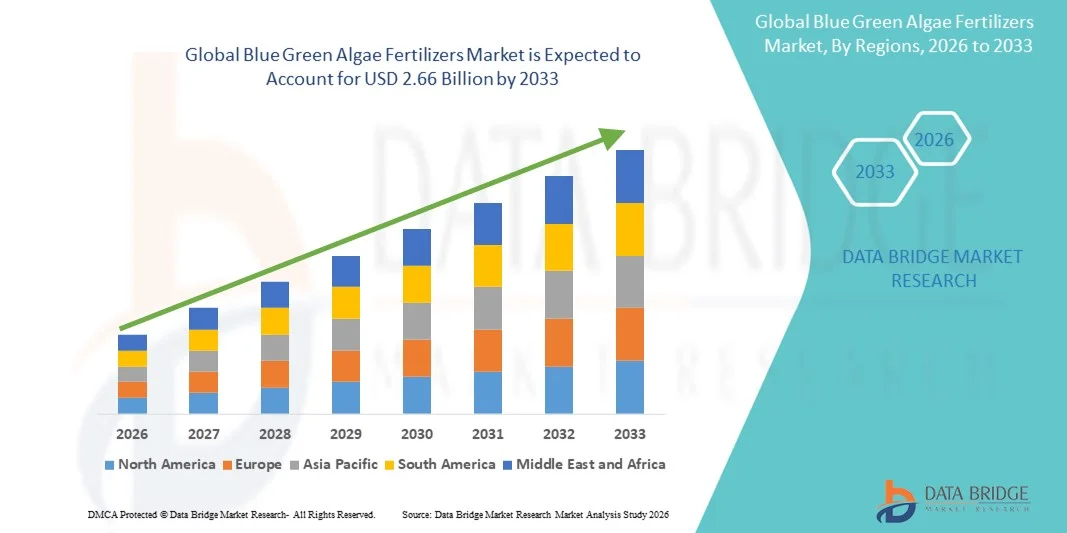
- Согласно анализу рынка Data Bridge Market Research, размер мирового рынка сине-зеленых водорослей оценивался в разы.1,02 млрд долларов в 2025 годуОжидается, что он достигнет2,66 млрд долларов к 2033 году, вCAGR 12,60%в течение прогнозируемого периода
- Основными факторами, которые, как ожидается, будут стимулировать рост рынка сине-зеленых водорослей в прогнозируемый период, являются рост органической пищевой промышленности. Кроме того, ожидается, что повышение осведомленности об использовании химических удобрений будет способствовать росту рынка сине-зеленых водорослей.
- Кроме того, рост использованиябиоудобренияВ ранчо и частных фермах, по оценкам, также будет добавлен рост рынка сине-зеленых водорослей.
Размер рынка и прогноз
- Глобальная рыночная стоимость (2025):$1,02 млрд.
- Ожидаемая рыночная стоимость (2033):$2,66 млрд.
- Прогноз CAGR (2026–2033):12.60%
Каковы основные рынки удобрений сине-зеленых водорослей
- Озабоченность по поводу экологических и технологических ограничений, а также плохой инфраструктуры и роста первоначальных инвестиций, по прогнозам, будут препятствовать росту рынка сине-зеленых водорослей.
- Кроме того, в ближайшие годы развивающиеся страны предоставят потенциальные возможности для роста рынка сине-зеленых водорослей. Тем не менее, отсутствие бдительности и снижение скорости приема биоудобрений могут еще больше бросить вызов росту рынка сине-зеленых водорослей в ближайшем будущем.
- Северная Америка доминировала на рынке сине-зеленых водорослей с долей выручки в 43,32% в 2025 году, что обусловлено сильным внедрением устойчивых методов ведения сельского хозяйства, ростом спроса на органические продукты питания и увеличением нормативной поддержки био-удобрений в США и Канаде.
- Ожидается, что Азиатско-Тихоокеанский регион зарегистрирует самый быстрый CAGR в размере около 10,5% с 2026 по 2033 год, что обусловлено быстрым расширением сельскохозяйственного производства, ростом спроса на продовольствие, обусловленного населением, и растущим внедрением экологически чистых методов ведения сельского хозяйства в Китае, Индии, Японии, Юго-Восточной Азии и Австралии.
- Сегмент обогащенных биоудобрений Carrier доминировал на рынке с долей в 46,3% в 2025 году, благодаря более длительному сроку хранения, простоте обработки, экономической эффективности и широкому признанию среди фермеров в развивающихся странах.
Сегментация рынка удобрений для голубых и зеленых водорослей
|
Атрибуты |
Удобрения сине-зеленых водорослей ключевые рыночные идеи |
|
Сегменты покрыты |
|
|
Страны, охваченные |
Северная Америка
Европа
Азиатско-Тихоокеанский регион
Ближний Восток и Африка
Южная Америка
|
|
Ключевые игроки рынка |
|
|
Рыночные возможности |
|
|
Информационные наборы данных с добавленной стоимостью |
В дополнение к информации о рыночных сценариях, таких как рыночная стоимость, темпы роста, сегментация, географическое покрытие и основные игроки, рыночные отчеты, курируемые Data Bridge Market Research, также включают углубленный экспертный анализ, анализ цен, анализ доли бренда, опрос потребителей, анализ демографии, анализ цепочки поставок, анализ цепочки создания стоимости, обзор сырья / расходных материалов, критерии выбора поставщиков, анализ PESTLE, анализ Porter и нормативную базу. |
Какова ключевая тенденция на рынке удобрений сине-зеленых водорослей
Растущий переход к устойчивым, био- и почвообогащающим сельскохозяйственным затратам
- Рынок сине-зеленых водорослей становится свидетелем все более широкого внедрения экологически чистых, азотфиксирующих биоудобрений, которые повышают плодородие почвы при одновременном снижении зависимости от синтетических химических удобрений.
- Производители сосредоточены на высокоэффективных штаммах цианобактерий, улучшенной стабильности состава и более длительном сроке хранения для поддержки крупномасштабного развертывания сельского хозяйства.
- Упор на органическое сельское хозяйство,Регенеративное сельское хозяйствои устойчивая производительность сельскохозяйственных культур ускоряет внедрение зерновых, зернобобовых, масличных культур и садоводческих культур
- Например, такие компании, как Novozymes, Agrinos, Symborg и Kan Biosys, расширяют портфели биоудобрений с помощью решений на основе водорослей, нацеленных на здоровье почвы и повышение урожайности.
- Повышение осведомленности о восстановлении углерода в почве, микробном балансе и уменьшении воздействия на окружающую среду усиливает спрос среди фермеров и дистрибьюторов сельскохозяйственной продукции.
- По мере того, как устойчивое сельское хозяйство приобретает приоритет во всем мире, ожидается, что удобрения из сине-зеленых водорослей будут играть решающую роль в повышении производительности сельскохозяйственных культур при сохранении долгосрочного здоровья почв.
Каковы основные драйверы рынка удобрений сине-зеленых водорослей
- Растущий спрос на устойчивые и экономически эффективные питательные решения, которые уменьшают использование химических удобрений и улучшают структуру почвы
- Например, в 2024-2025 годах несколько сельскохозяйственных компаний расширили инвестиции в микробные и водорослевые удобрения, чтобы соответствовать стандартам производства органических и безвредных пищевых продуктов.
- Растущее внедрение органического сельского хозяйства, точного земледелия и поддерживаемых правительством программ биовхода в Азиатско-Тихоокеанском регионе, Европе и Латинской Америке стимулирует рост рынка.
- Достижения в технологиях выращивания водорослей, оптимизации штаммов и технологии приготовления улучшили эффективность продукта и принятие фермерами.
- Растущее давление для сокращения выбросов парниковых газов, вымывания нитратов и деградации почв ускоряет переход к биологическим удобрениям.
- При поддержке благоприятной регуляторной политики, растущей осведомленности фермеров и устойчивых инициатив в области сельского хозяйства рынок удобрений для синих зеленых водорослей готов к устойчивому долгосрочному росту.
Какой фактор влияет на рост рынка удобрений сине-зеленых водорослей
- Ограниченная осведомленность фермеров и отсутствие технических знаний относительно правильных методов применения ограничивают принятие в некоторых регионах.
- Например, в течение 2023–2024 годов непоследовательные показатели на местах из-за неправильного хранения и обработки повлияли на принятие на чувствительных к цене рынках.
- Вариабельность эффективности продукта в различных типах почв, климатических условиях и сортах сельскохозяйственных культур создает проблемы принятия.
- Более короткий срок хранения и чувствительность к температуре и влаге по сравнению с химическими удобрениями добавляют логистических сложностей.
- Конкуренция со стороны субсидируемых химических удобрений и быстродействующих синтетических питательных веществ продолжает влиять на показатели проникновения.
- Чтобы преодолеть эти проблемы, компании инвестируют в программы обучения фермеров, улучшенные составы и сильные распределительные сети для расширения глобального внедрения удобрения из синих зеленых водорослей.
Как сегментируется рынок синих зеленых водорослей
Рынок сегментирован на основеТип технологии, применение, тип и тип урожая.
- Тип технологии
На основе типа технологии рынок сине-зеленых водорослей подразделяется на обогащенные биоудобрения, жидкие биоудобрения и другие типы технологий. Сегмент Carrier Enriched Biofertilizers доминировал на рынке с долей 46,3% в 2025 году, благодаря более длительному сроку хранения, простоте обработки, экономической эффективности и широкому признанию среди фермеров в развивающихся странах. Эти продукты поддерживают стабильную микробную активность и широко используются в крупномасштабных программах почвенного применения.
Ожидается, что сегмент жидких биоудобрений будет расти самыми быстрыми темпами с 2026 по 2033 год, что обусловлено более высокой эффективностью питательных веществ, более быстрым микробным действием, однородным применением и растущим внедрением в точное и органическое земледелие. Повышение осведомленности об устойчивых факторах производства и достижениях в области технологий жидкостного состава ускоряет рост.
- С помощью приложения
На основе применения рынок сегментирован на обработку почвы, обработку семян и другие. Theобработка почвыСегмент доминировал на рынке с долей 51,8% в 2025 году, чему способствовало широкое использование удобрений сине-зеленых водорослей для улучшения плодородия почвы, повышения доступности азота и восстановления микробного баланса. Применение почвы остается наиболее распространенной практикой в выращивании зерновых, бобовых и масличных культур.
Сегмент обработки семян, по прогнозам, будет расти самыми быстрыми темпами CAGR с 2026 по 2033 год, что обусловлено растущим внедрением предпосевных биологических методов лечения, которые повышают скорость прорастания, раннее развитие корней и урожайность. Повышение внимания к точному сельскому хозяйству и экономичному управлению питательными веществами также способствует росту сегмента.
- По типу
На основе типа рынок сине-зеленых водорослей подразделяется на азотфиксирующие биоудобрения, фосфатные солюбилирующие и мобилизующие биоудобрения, растворяющие и мобилизующие биоудобрения и другие. Сегмент азотфиксирующих биоудобрений доминировал на рынке с долей 48,6% в 2025 году, поскольку сине-зеленые водоросли играют решающую роль в фиксации атмосферного азота, снижая зависимость от синтетических азотных удобрений.
Ожидается, что сегмент фосфатосолюбилирующих и мобилизующих биоудобрений будет регистрировать самый быстрый CAGR с 2026 по 2033 год, что обусловлено увеличением дефицита фосфора в почвах и растущим спросом на улучшенную эффективность поглощения питательных веществ. Устойчивые методы управления питательными веществами ускоряют внедрение.
- По типу Crop
Исходя из типа урожая, рынок сегментирован на зерновые и зерновые, масличные и зерновые, фрукты и овощи и другие культуры. Сегмент зерновых и зерновых доминировал на рынке с долей 44,9% в 2025 году, чему способствовало широкое выращивание риса, пшеницы и кукурузы, где сине-зеленые удобрения водорослей широко используются для улучшения урожайности и здоровья почвы.
Ожидается, что сегмент фруктов и овощей будет расти самыми быстрыми темпами с 2026 по 2033 год, что обусловлено растущим спросом на органические продукты, высокоценные культуры и методы ведения сельского хозяйства без остатков. Растущее внедрение биоудобрений в садоводство способствует дальнейшему расширению рынка.
В каком регионе находится наибольшая доля рынка удобрения сине-зеленых водорослей
- Северная Америка доминировала на рынке сине-зеленых водорослей с долей выручки в 43,32% в 2025 году, что обусловлено сильным внедрением устойчивых методов ведения сельского хозяйства, ростом спроса на органические продукты питания и увеличением нормативной поддержки био-удобрений в США и Канаде. Высокая осведомленность фермеров об улучшении состояния почв, фиксации азота и сокращении использования химических удобрений продолжает стимулировать спрос на рынке в крупных коммерческих фермах и системах органического культивирования.
- Ведущие компании в Северной Америке сосредоточены на передовых биоудобрениях, улучшении микробной стабильности и крупномасштабных партнерских распределений, укрепляя лидирующие позиции региона. Постоянные инвестиции в устойчивое сельское хозяйство, регенеративное сельское хозяйство и экологически чистые сельскохозяйственные ресурсы поддерживают долгосрочный рост рынка.
- Сильная инфраструктура НИОКР, хорошо развитые агропромышленные распределительные сети и благоприятная государственная политика, продвигающая биологические альтернативы, еще больше укрепляют доминирование Северной Америки на рынке.
Американский рынок синих зеленых водорослей Insight
США являются крупнейшим донором в Северной Америке, чему способствуют увеличение органических площадей, высокий спрос на культуры без остатков и широкое распространение биоудобрений в зерновых, масличных, фруктов и овощей. Федеральные и государственные инициативы, способствующие управлению углеродом в почве и устойчивому использованию питательных веществ, еще больше ускоряют рост рынка. Присутствие ведущих производителей биоудобрений и агротехнических стартапов укрепляет отечественное внедрение.
Канада Blue Green Algae Fertilizers Market Insight
Канада вносит значительный вклад в региональный рост, что обусловлено повышением внимания к устойчивому сельскому хозяйству, улучшением плодородия почв в регионах, производящих зерно, и увеличением принятия биологических факторов в выращивании зерновых и масличных культур. Поддерживаемые правительством программы устойчивого развития и растущий спрос на органические продукты питания поддерживают расширение рынка.
Азиатско-Тихоокеанский рынок синих зеленых водорослей
Ожидается, что Азиатско-Тихоокеанский регион зарегистрирует самый быстрый CAGR в размере около 10,5% с 2026 по 2033 год, что обусловлено быстрым расширением сельского хозяйства, растущим спросом на продовольствие, обусловленным ростом населения, и растущим внедрением экологически чистых методов ведения сельского хозяйства в Китае, Индии, Японии, Юго-Восточной Азии и Австралии. Сильные правительственные инициативы, способствующие биоудобрениям и снижению химической зависимости, являются ключевыми факторами роста.
China Blue Green Algae Fertilizers Market Insight (недоступная ссылка)
Китай является крупнейшим поставщиком в Азиатско-Тихоокеанском регионе из-за обширного культивирования сельскохозяйственных культур, сильной государственной поддержки зеленого сельского хозяйства и увеличения использования биоудобрений для восстановления плодородия почв и повышения урожайности. Масштабные сельскохозяйственные операции и возможности внутреннего производства способствуют росту рынка.
Индия Blue Green Algae Fertilizers Market Insight
Индия становится крупным центром роста, движимым государственными программами продвижения биоудобрений, расширением органического сельского хозяйства и повышением осведомленности фермеров о экономически эффективном управлении питательными веществами. Увеличение использования в рисе, зерновых и бобовых ускоряет принятие.
Япония и Южная Корея: рынок сине-зеленых удобрений
Япония и Южная Корея демонстрируют устойчивый рост, поддерживаемый высокоточными методами ведения сельского хозяйства, сильным акцентом на устойчивые ресурсы и растущим внедрением высокоценных культур и садоводства. Технологические инновации и экологически сознательные методы ведения сельского хозяйства способствуют долгосрочному расширению рынка.
Какие компании занимают ведущие позиции на рынке удобрения сине-зеленых водорослей
Индустрию сине-зеленых водорослей в основном возглавляют хорошо зарекомендовавшие себя компании, в том числе:
- Новозимы (Дания)
- GSFC Ltd (Индия)
- Rashtriya Chemicals & Fertilizers Limited (Индия)
- T. STANES & COMPANY LIMITED
- National Fertilizers Limited (Индия)
- MADRAS FERTILIZERS LIMITED
- International Panaacea Limited (Индия)
- Lallemand, Inc. (Канада)
- Кан Биосис (Индия)
- Kiwa Bio-Tech (Китай)
- Симборг (Испания)
- Som Phytopharma India Ltd.
- Mapleton Agri Biotec Pty Ltd. (Австралия)
- ASB Grünland Helmut Aurenz GmbH (Германия)
- Ficosterra, SL. (Испания)
- Агринос (Нидерланды)
- Australian Bio Fert Pty Ltd. (Австралия)
- BioAg Pty Ltd. (Австралия)
- Algae Systems LLC (США)
Каковы последние события на мировом рынке удобрений из сине-зеленых водорослей
- В октябре 2025 года SIG в партнерстве с Nutrition from Water (NXW) представила белковые напитки на основе водорослей, поддерживаемые передовыми асептическими упаковочными решениями, уделяя особое внимание улучшению доступа к питательным напиткам в странах с низким уровнем обслуживания.
- В сентябре 2025 года GNT представила водоросли Exberry Carotenes, полученные из Dunaliella salina, предлагая натуральные желтые пищевые красители в жидком, порошковом и масляно-растворимом форматах для различных пищевых применений, усиливая переход к экологически чистым и растительным пищевым ингредиентам.
- В июле 2025 года Corbion получила одобрение регулирующих органов от GACC Китая для своих продуктов омега-3 DHA, полученных из водорослей, AlgaPrim DHA и AlgaVi DHA для рынков питания людей и животных, укрепив свое присутствие в быстрорастущем секторе питания в Азиатско-Тихоокеанском регионе.
SKU-
Получите онлайн-доступ к отчету на первой в мире облачной платформе рыночной аналитики

- Интерактивная панель анализа данных
- Панель анализа компании для возможностей с высоким потенциалом роста
- Доступ аналитика-исследователя для настройки и запросов
- Анализ конкурентов с помощью интерактивной панели
- Последние новости, обновления и анализ тенденций
- Используйте возможности сравнительного анализа для комплексного отслеживания конкурентов
Методология исследования
Сбор данных и анализ базового года выполняются с использованием модулей сбора данных с большими размерами выборки. Этап включает получение рыночной информации или связанных данных из различных источников и стратегий. Он включает изучение и планирование всех данных, полученных из прошлого заранее. Он также охватывает изучение несоответствий информации, наблюдаемых в различных источниках информации. Рыночные данные анализируются и оцениваются с использованием статистических и последовательных моделей рынка. Кроме того, анализ доли рынка и анализ ключевых тенденций являются основными факторами успеха в отчете о рынке. Чтобы узнать больше, пожалуйста, запросите звонок аналитика или оставьте свой запрос.
Ключевой методологией исследования, используемой исследовательской группой DBMR, является триангуляция данных, которая включает в себя интеллектуальный анализ данных, анализ влияния переменных данных на рынок и первичную (отраслевую экспертную) проверку. Модели данных включают сетку позиционирования поставщиков, анализ временной линии рынка, обзор рынка и руководство, сетку позиционирования компании, патентный анализ, анализ цен, анализ доли рынка компании, стандарты измерения, глобальный и региональный анализ и анализ доли поставщика. Чтобы узнать больше о методологии исследования, отправьте запрос, чтобы поговорить с нашими отраслевыми экспертами.
Доступна настройка
Data Bridge Market Research является лидером в области передовых формативных исследований. Мы гордимся тем, что предоставляем нашим существующим и новым клиентам данные и анализ, которые соответствуют и подходят их целям. Отчет можно настроить, включив в него анализ ценовых тенденций целевых брендов, понимание рынка для дополнительных стран (запросите список стран), данные о результатах клинических испытаний, обзор литературы, обновленный анализ рынка и продуктовой базы. Анализ рынка целевых конкурентов можно проанализировать от анализа на основе технологий до стратегий портфеля рынка. Мы можем добавить столько конкурентов, о которых вам нужны данные в нужном вам формате и стиле данных. Наша команда аналитиков также может предоставить вам данные в сырых файлах Excel, сводных таблицах (книга фактов) или помочь вам в создании презентаций из наборов данных, доступных в отчете.











