



Сегментация мирового рынка нефти и газа по нисходящему потоку за счет процессов переработки (гидрократизация, дистилляция, каталитический крекинг и реформирование), типа продукта (бензин, дизельное топливо, реактивное топливо и сжиженный нефтяной газ), канала распределения (прямые продажи, дистрибьюторы и розничная торговля), сектора конечного использования (транспорт, жилые и промышленные) - отраслевые тенденции и прогноз до 2033 года
Каков размер рынка нефти и газа ниже по течению и темпы роста
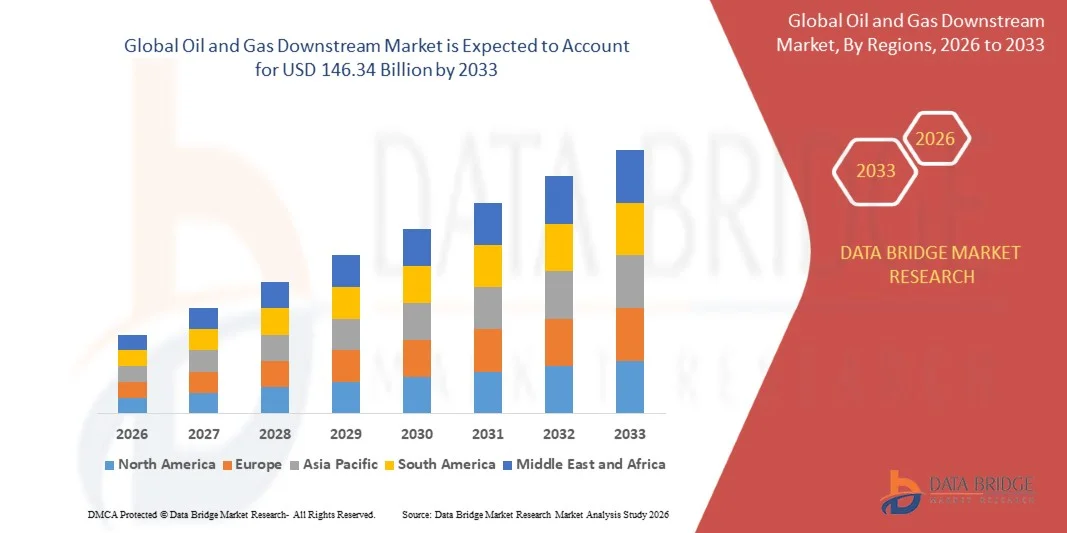
- Согласно анализу рынка Data Bridge Market Research, объем рынка нефти и газа ниже по течению был оценен как105,3 млрд долларов в 2025 годуОжидается, что он достигнет146,34 млрд долларов к 2033 году, вCAGR 4,20%в течение прогнозируемого периода
- Увеличение глобального спроса на нефтепродукты, рост потребления топлива в транспортном и промышленном секторах, расширение нефтехимического производства, увеличение мощностей на нефтеперерабатывающих заводах и увеличение инвестиций в модернизацию инфраструктуры переработки и переработки являются ключевыми факторами, стимулирующими рост рынка нефти и газа.
Размер рынка и прогноз
- Глобальная рыночная стоимость (2025) USD105,3 млрд.
- Ожидаемая рыночная стоимость (2033): USD146,34 млрд.
- Прогноз CAGR (2026–2033):4.20%
Каковы основные выводы рынка нефти и газа вниз по течению
- Растущий спрос на энергию со стороны стран с развивающейся экономикой, расширение нефтеперерабатывающих и нефтехимических комплексов, увеличение производства более чистых видов топлива и растущие инвестиции в проекты модернизации и повышения эффективности создают значительные возможности роста на рынке нефти и газа.
- Ожидается, что высокие требования к капиталовложениям, колебания цен на сырую нефть, строгие экологические правила и операционные сложности, связанные с переработкой и распределением, будут выступать в качестве ключевых ограничений для роста рынка нефти и газа.
- Азиатско-Тихоокеанский регион доминировал на рынке нефти и газа в 2025 году с долей доходов в 44,2%, что обусловлено быстрым расширением мощностей по переработке, сильным ростом потребления топлива и крупномасштабными инвестициями в нефтехимическую и нефтеперерабатывающую инфраструктуру в Китае, Индии, Японии, Южной Корее и Юго-Восточной Азии.
- Согласно прогнозам, Северная Америка зарегистрирует самый быстрый CAGR в 6,95% с 2026 по 2033 год, что обусловлено модернизацией НПЗ, растущими инвестициями в нефтехимическую промышленность и растущим спросом на более чистые и дополнительные продукты переработки.
- Сегмент дистилляции доминировал на рынке с предполагаемой долей выручки 42,6% в 2025 году, поскольку он является основополагающим шагом в переработке сырой нефти и имеет важное значение для разделения нефти на полезные фракции, такие как нафта, керосин и газойль.
Сфера охвата и сегментация рынка нефти и газа вниз по течению
|
Атрибуты |
Нефть и газ вниз по течению ключевые рыночные идеи |
|
Сегменты покрыты |
|
|
Страны, охваченные |
Северная Америка
Европа
Азиатско-Тихоокеанский регион
Ближний Восток и Африка
Южная Америка
|
|
Ключевые игроки рынка |
|
|
Рыночные возможности |
|
|
Информационные наборы данных с добавленной стоимостью |
В дополнение к информации о рыночных сценариях, таких как рыночная стоимость, темпы роста, сегментация, географическое покрытие и основные игроки, рыночные отчеты, курируемые Data Bridge Market Research, также включают углубленный экспертный анализ, анализ цен, анализ доли бренда, опрос потребителей, анализ демографии, анализ цепочки поставок, анализ цепочки создания стоимости, обзор сырья / расходных материалов, критерии выбора поставщиков, анализ PESTLE, анализ Porter и нормативную базу. |
Каковы основные тенденции на рынке нефти и газа вниз по течению
"Увеличение перехода к цифровизации, энергоэффективности и низкоуглеродной нефтепереработке"
- Рынок нефти и газа переживает сильный сдвиг в сторону цифровых операций НПЗ, обусловленный внедрением ИИ, IoT, расширенной аналитики и мониторинга в режиме реального времени для оптимизации деятельности по переработке, дистрибуции и маркетингу.
- Переработчики все чаще внедряют интеллектуальные системы управления процессами, инструменты предиктивного обслуживания и цифровые двойники для повышения операционной эффективности, сокращения незапланированных простоев и увеличения использования активов.
- Растущее давление по сокращению выбросов и эксплуатационных расходов ускоряет инвестиции в энергоэффективные технологии переработки, интеграцию водорода и решения по улавливанию углерода.
- Например, крупные игроки, такие как Saudi Aramco, Shell, BP, ExxonMobil и Reliance Industries, инвестируют в цифровые нефтеперерабатывающие заводы, передовую автоматизацию процессов и производство низкоуглеродного топлива.
- Растущее внимание к биотопливу, устойчивому авиационному топливу (SAF) и более чистым топливным смесям меняет глобальные портфели.
- По мере усиления контроля со стороны регулирующих органов и усилий по переходу к энергетике цифровые и низкоэмиссионные операции будут оставаться основным стратегическим направлением.
Каковы основные движущие силы рынка нефти и газа вниз по течению
- Растущий мировой спрос на транспортное топливо, нефтехимические и рафинированные продукты, особенно в странах с развивающейся экономикой, поддерживает устойчивое расширение добычи.
- Например, в течение 2024–2025 годов ведущие нефтеперерабатывающие заводы увеличили мощности и проекты нефтехимической интеграции для удовлетворения растущего спроса на пластмассы и специализированные химические вещества.
- Увеличение инвестиций в модернизацию НПЗ, модернизацию мощностей и комплексные установки по переработке улучшают гибкость урожайности и качество продукции
- Сильный рост урбанизации, индустриализации и владения транспортными средствами в Азиатско-Тихоокеанском регионе и на Ближнем Востоке продолжает увеличивать потребление топлива.
- Достижения в оптимизации процессов, технологиях катализаторов и интеграции нефтеперерабатывающих заводов повышают маржу и эффективность работы
- Ожидается, что благодаря долгосрочному спросу на энергию и росту нефтехимии рынок нефти и газа в нижнем течении сохранит стабильный темп роста.
Какой фактор препятствует росту рынка нефти и газа
- Волатильность цен на сырую нефть существенно влияет на рентабельность переработки и рентабельность ниже по течению
- Например, в течение 2024-2025 годов колебания цен на сырье и геополитическая напряженность увеличили неопределенность затрат для операторов нисходящего потока.
- Строгие экологические нормы и нормы выбросов повышают требования к соблюдению и капитальным расходам.
- Высокие затраты, связанные с модернизацией НПЗ, технологиями декарбонизации и проблемами технического обслуживания мелких и средних нефтеперерабатывающих заводов
- Растущая конкуренция со стороны возобновляемых источников энергии, электромобилей и альтернативных видов топлива постепенно влияет на долгосрочные перспективы спроса на топливо.
- Чтобы смягчить эти проблемы, нижестоящие игроки сосредоточены на диверсификации в нефтехимии, более чистом топливе, цифровой оптимизации и экономически эффективных операциях.
Как сегментируется рынок нефти и газа вниз по течению
Рынок сегментирован на основепроцессы переработки, тип продукта, канал распределения и сектор конечного использования.
• путем уточнения процессов
На основе процессов нефтепереработки рынок нефти и газа подразделяется на гидрокрекинг, дистилляцию, каталитический крекинг и реформирование. Сегмент дистилляции доминировал на рынке с долей выручки в 42,6% в 2025 году, поскольку он является основополагающим шагом в переработке сырой нефти и имеет важное значение для разделения нефти на полезные фракции, такие как нафта, керосин и газойль. Его широкое распространение во всех конфигурациях НПЗ и относительно низкая эксплуатационная сложность поддерживают его доминирование.
Ожидается, что в сегменте гидрокрекинга будет зарегистрирован самый быстрый рост с 2026 по 2033 год, обусловленный растущим спросом на более чистые виды топлива, более высокой средней урожайностью дистиллятов и гибкостью в переработке тяжелых и кислых сырых масел. Растущее нормативное давление на низкосернистые виды топлива и растущие инвестиции в проекты модернизации НПЗ ускоряют увеличение мощности гидрокрекинга во всем мире.
• По типу продукции
Исходя из типа продукта, рынок сегментирован на бензин, дизельное топливо, реактивное топливо и сжиженный нефтяной газ (LPG). Сегмент дизельного топлива занимал наибольшую долю рынка в размере около 38,9% в 2025 году, чему способствовал высокий спрос со стороны коммерческого транспорта, промышленного оборудования, сельского хозяйства и сектора производства электроэнергии. Высокая плотность энергии и широкое использование дизельного топлива в развивающихся странах продолжают поддерживать его доминирование.
Сегмент авиатоплива, по прогнозам, станет самым быстрым CAGR в течение 2026–2033 годов, что обусловлено восстановлением и расширением глобальных авиаперевозок, ростом грузовой авиации и ростом инвестиций в инфраструктуру аэропортов. Усиление внимания к устойчивым авиационным топливным смесям еще больше способствует долгосрочным перспективам роста этого сегмента.
• Распределительный канал
На основе канала распределения рынок нефти и газа сегментируется на прямые продажи, дистрибьюторов и розничную торговлю. Розничный сегмент доминировал на рынке с долей 44,3% в 2025 году благодаря обширным сетям АЗС, высокой потребительской зависимости от транспортных топлив и постоянному спросу со стороны индивидуальных и коммерческих владельцев транспортных средств. Розничные магазины также получают выгоду от дополнительных услуг и преимуществ брендинга.
Ожидается, что сегмент прямых продаж будет расти самыми быстрыми темпами в течение прогнозируемого периода, поддерживаемый долгосрочными контрактами на поставку с промышленными пользователями, авиакомпаниями, судоходными компаниями и крупными операторами флота. Крупные соглашения о поставках, прозрачность ценообразования и снижение затрат на посредников являются ключевыми факторами, стимулирующими рост прямых продаж.
• Сектор конечного использования
Основываясь на секторе конечного использования, рынок сегментирован на транспорт, жилой и промышленный. Сегмент транспорта доминировал на рынке с долей дохода в 46,7% в 2025 году, что обусловлено высоким потреблением бензина, дизельного топлива и реактивного топлива на автомобильном, авиационном и морском транспорте. Растущее владение транспортными средствами и движение грузов продолжают поддерживать спрос.
Ожидается, что в промышленном сегменте будет наблюдаться самый быстрый рост с 2026 по 2033 год, чему способствует увеличение использования рафинированных продуктов в производстве, нефтехимии, производстве электроэнергии и строительстве. Расширение индустриализации в странах с развивающейся экономикой является ключевым фактором этой траектории роста.
В каком регионе находится наибольшая доля рынка нефти и газа
- Азиатско-Тихоокеанский регион доминировал на рынке нефти и газа в 2025 году с долей доходов в 44,2%, что обусловлено быстрым расширением мощностей по переработке, сильным ростом потребления топлива и крупномасштабными инвестициями в нефтехимическую и нефтеперерабатывающую инфраструктуру в Китае, Индии, Японии, Южной Корее и Юго-Восточной Азии. Рост спроса на транспортное топливо, промышленную энергию и нефтехимическое сырье продолжает поддерживать устойчивый рост рынка.
- Широкое присутствие крупных нефтеперерабатывающих хабов, интегрированных нефтехимических комплексов и поддерживаемых правительством инициатив в области энергетической безопасности ускоряют расширение добычи по всему региону. Растущая урбанизация, проникновение транспортных средств и индустриализация еще больше укрепляют лидерство Азиатско-Тихоокеанского региона.
- Повышение внимания к модернизации мощностей, более чистому производству топлива и интеграции цифровых технологий нефтеперерабатывающих заводов усиливает долгосрочный рост в Азиатско-Тихоокеанском регионе.
Нефть и газ Китая ниже рыночного понимания
Китай является крупнейшим поставщиком в Азиатско-Тихоокеанском регионе, чему способствуют огромные мощности по переработке, сильная нефтехимическая интеграция и растущий внутренний спрос на топливо. Постоянные инвестиции в модернизацию нефтеперерабатывающих заводов, производство топлива с низким содержанием серы и химическое сырье стимулируют устойчивое расширение рынка.
Индия Нефть и газ Downstream Market Insight
В Индии наблюдается сильный рост, обусловленный расширением мощностей НПЗ, ростом потребления топлива и правительственными инициативами, поддерживающими развитие энергетической инфраструктуры. Рост транспорта, промышленной активности и нефтехимического спроса поддерживает расширение добычи.
Японская нефть и газ ниже по течению рынка
Япония демонстрирует устойчивый рост, поддерживаемый передовыми технологиями переработки, сильным акцентом на топливную экономичность и постоянный спрос со стороны транспортного и промышленного секторов.
Нефть и газ Северной Америки вниз по течению
По прогнозам, Северная Америка зарегистрирует самый быстрый CAGR в 6,95% с 2026 по 2033 год, что обусловлено модернизацией НПЗ, растущими инвестициями в нефтехимию и растущим спросом на более чистые и дополнительные продукты переработки. Усиленное внимание к операционной эффективности, цифровым решениям для НПЗ и экспортно-ориентированному производству топлива способствует ускоренному росту.
Нефть и газ США Downstream Market Insight
США лидируют в региональном росте с развитой инфраструктурой нефтепереработки, сильной доступностью сланцевого сырья и увеличением экспорта нефтепродуктов. Инвестиции в модернизацию НПЗ и нефтехимическую интеграцию продолжают стимулировать расширение рынка.
Нефть и газ Канады Downstream Market Insight
Канада вносит устойчивый вклад, поддерживаемый интеграцией вниз по течению с ресурсами вверх по течению, развитием инфраструктуры и растущим спросом со стороны промышленного и транспортного секторов.
Каковы основные компании на рынке нефти и газа
Нефтегазовая промышленность в основном возглавляется хорошо зарекомендовавшими себя компаниями, в том числе:
- Reliance Industries Limited (Индия)
- BP Plc (Великобритания)
- Saudi Aramco (Саудовская Аравия)
- Китайская национальная нефтяная корпорация (Китай)
- Chevron Corporation (США)
- Indian Oil Corporation Limited (Индия)
- Royal Dutch Shell Plc.
- ExxonMobil (США)
- Delek U.S. Holdings (США)
- Valero Energy Corporation (США)
- Marathon Petroleum Corporation (США)
Каковы последние события на рынке нефти и газа
- В октябре 2025 года Chevron Corporation завершила сделку по приобретению Hess Corporation за 53 миллиарда долларов США, значительно расширив свой портфель, интеграцию переработки и глобальное операционное присутствие, укрепив свою долгосрочную конкурентоспособность и масштаб на рынке нефти и газа.
- В сентябре 2025 года Energy Transfer LP завершила сделку по приобретению WTG Midstream за 2,3 миллиарда долларов, увеличив логистику сырой нефти и нефтепродуктов в ключевых сланцевых бассейнах, повысив эффективность цепочки поставок и возможности распределения ниже по течению.
- В августе 2025 года Veren Inc. объединилась с Whitecap Resources в сделке на сумму 15 миллиардов долларов США, увеличив доступность поставок тяжелой нефти для североамериканских нефтеперерабатывающих заводов, поддерживая безопасность сырья и стабильность переработки.
- В июле 2025 года Saudi Aramco объявила о проекте расширения на 8 миллиардов долларов США, добавив 250 000 баррелей в день мощности на своем заводе в Мотиве, штат Техас, с сильным акцентом на нефтехимическую интеграцию, усиливая диверсификацию вниз по течению и рост производства с добавленной стоимостью.
SKU-
Получите онлайн-доступ к отчету на первой в мире облачной платформе рыночной аналитики

- Интерактивная панель анализа данных
- Панель анализа компании для возможностей с высоким потенциалом роста
- Доступ аналитика-исследователя для настройки и запросов
- Анализ конкурентов с помощью интерактивной панели
- Последние новости, обновления и анализ тенденций
- Используйте возможности сравнительного анализа для комплексного отслеживания конкурентов
Методология исследования
Сбор данных и анализ базового года выполняются с использованием модулей сбора данных с большими размерами выборки. Этап включает получение рыночной информации или связанных данных из различных источников и стратегий. Он включает изучение и планирование всех данных, полученных из прошлого заранее. Он также охватывает изучение несоответствий информации, наблюдаемых в различных источниках информации. Рыночные данные анализируются и оцениваются с использованием статистических и последовательных моделей рынка. Кроме того, анализ доли рынка и анализ ключевых тенденций являются основными факторами успеха в отчете о рынке. Чтобы узнать больше, пожалуйста, запросите звонок аналитика или оставьте свой запрос.
Ключевой методологией исследования, используемой исследовательской группой DBMR, является триангуляция данных, которая включает в себя интеллектуальный анализ данных, анализ влияния переменных данных на рынок и первичную (отраслевую экспертную) проверку. Модели данных включают сетку позиционирования поставщиков, анализ временной линии рынка, обзор рынка и руководство, сетку позиционирования компании, патентный анализ, анализ цен, анализ доли рынка компании, стандарты измерения, глобальный и региональный анализ и анализ доли поставщика. Чтобы узнать больше о методологии исследования, отправьте запрос, чтобы поговорить с нашими отраслевыми экспертами.
Доступна настройка
Data Bridge Market Research является лидером в области передовых формативных исследований. Мы гордимся тем, что предоставляем нашим существующим и новым клиентам данные и анализ, которые соответствуют и подходят их целям. Отчет можно настроить, включив в него анализ ценовых тенденций целевых брендов, понимание рынка для дополнительных стран (запросите список стран), данные о результатах клинических испытаний, обзор литературы, обновленный анализ рынка и продуктовой базы. Анализ рынка целевых конкурентов можно проанализировать от анализа на основе технологий до стратегий портфеля рынка. Мы можем добавить столько конкурентов, о которых вам нужны данные в нужном вам формате и стиле данных. Наша команда аналитиков также может предоставить вам данные в сырых файлах Excel, сводных таблицах (книга фактов) или помочь вам в создании презентаций из наборов данных, доступных в отчете.











