



Global Rapeseed Protein Market Segmentation, By Type (Concentrates, Isolates, and Hydrolysates), By Form (Powder and Liquid), By Source (Conventional and Organic), By Application (Food and Beverages, Animal Feed, Nutraceuticals, and Cosmetics and Personal Care)- Industry Trends and Forecast to 2033
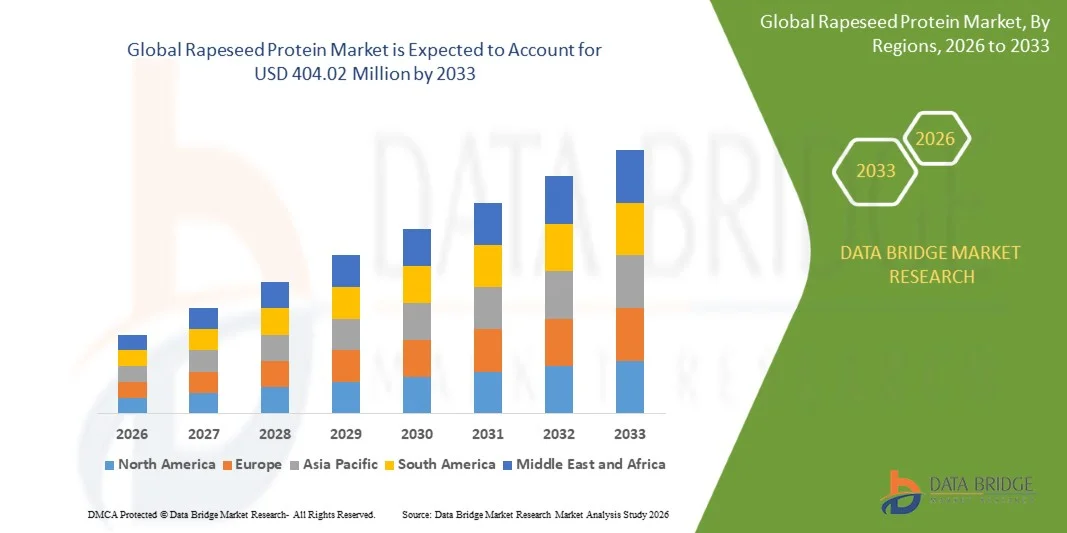
Rapeseed Protein Market Size
- The global rapeseed protein market size was valued at USD 242.30 million in 2025 and is expected to reach USD 404.02 million by 2033, at a CAGR of 6.60% during the forecast period
- The market growth is largely fuelled by the rising demand for plant-based protein ingredients across food, beverage, and nutraceutical applications
- Increasing consumer inclination toward clean-label, allergen-free, and sustainable protein sources
Rapeseed Protein Market Analysis
- Growing utilization of rapeseed protein in functional foods, sports nutrition, and dairy alternatives is strengthening market expansion
- Continuous advancements in extraction technologies and product innovation are enhancing rapeseed protein's nutritional profile and broadening its industrial applications
- North America rapeseed protein market held the largest market revenue share in 2025, supported by strong consumer awareness of healthy and plant-based diets. The region shows increasing demand for non-soy, non-dairy protein sources, particularly among health-conscious, vegan, and lactose-intolerant populations
- Asia-Pacific region is expected to witness the highest growth rate in the global rapeseed protein market, driven by expanding food processing sectors, rising health-conscious consumer base, and strong demand for affordable, sustainable protein alternatives
- The concentrates segment held the largest market revenue share in 2025, driven by its cost-effectiveness, balanced nutritional profile, and wide applicability across food, feed, and supplement industries. Rapeseed protein concentrates are increasingly favored for their functional properties such as emulsification, water-binding, and texture enhancement, supporting their strong adoption in plant-based food formulations
Report Scope and Rapeseed Protein Market Segmentation
|
Attributes |
Rapeseed Protein Key Market Insights |
|
Segments Covered |
|
|
Countries Covered |
North America
Europe
Asia-Pacific
Middle East and Africa
South America
|
|
Key Market Players |
|
|
Market Opportunities |
|
|
Value Added Data Infosets |
In addition to the insights on market scenarios such as market value, growth rate, segmentation, geographical coverage, and major players, the market reports curated by the Data Bridge Market Research also include in-depth expert analysis, pricing analysis, brand share analysis, consumer survey, demography analysis, supply chain analysis, value chain analysis, raw material/consumables overview, vendor selection criteria, PESTLE Analysis, Porter Analysis, and regulatory framework. |
Rapeseed Protein Market Trends
“Growing Use of Rapeseed Protein in Plant-Based and Functional Food Applications”
- The rising consumption of plant-based foods is accelerating the adoption of rapeseed protein due to its balanced amino acid profile, high digestibility, and allergen-friendly nature. Manufacturers are increasingly using rapeseed protein in meat alternatives, dairy substitutes, and fortified foods, supporting its expanding relevance in modern diets
- The strong demand for clean-label and non-GMO ingredients is propelling food producers to replace synthetic additives with natural, sustainable protein sources. Rapeseed protein fits well within this shift, offering functional benefits such as emulsification, gelling, and water-binding across bakery, beverages, and nutritional products
- Growing innovation in food processing technologies is enabling improved texture, flavor, and solubility of rapeseed protein, making it more suitable for widespread food and beverage formulations. Enhanced processing techniques are also helping reduce bitterness, increasing consumer acceptance
- For instance, in 2024, several European food manufacturers adopted enzymatically processed rapeseed protein concentrates for plant-based yogurt and cheese formulations, significantly improving taste and stability while maintaining clean-label status
- While food and beverage adoption is rising steadily, future uptake depends on continuous R&D, cost optimization, and expanded production capacity to meet surging global demand for high-quality plant-based proteins
Rapeseed Protein Market Dynamics
Driver
“Growing Preference for Sustainable, Plant-Based, and Allergen-Friendly Protein Sources”
- The shift toward sustainable and health-focused diets is strengthening demand for rapeseed protein as consumers increasingly choose plant-based alternatives over traditional animal-derived proteins. Environmental benefits, including lower carbon footprint and efficient land use, are further supporting this transition. The growing emphasis on eco-conscious consumption is pushing manufacturers to adopt rapeseed protein as a reliable and scalable ingredient
- Rising awareness of soy and dairy allergies is encouraging consumers and manufacturers to adopt rapeseed protein as a safe and compatible alternative. Its high nutritional value and functional versatility are motivating broader usage across sports nutrition, infant formulas, and dietary supplements. The market is benefiting from increasing consumer preference for hypoallergenic and clean-label protein sources
- Governments and regulatory bodies are promoting plant-based food innovation through funding, research support, and sustainability programs, enabling greater commercialization of rapeseed protein ingredients. Policy-driven initiatives focused on lowering environmental impact are accelerating R&D across food-grade rapeseed protein. These efforts are enhancing production quality and expanding its industrial adoption
- For instance, in 2023, the U.K. government launched a plant-protein innovation initiative aimed at scaling local production of non-soy proteins, including rapeseed-derived ingredients, boosting market development in the region. The initiative also supported food companies in product formulation and commercialization. Such structured investments are strengthening Europe’s leadership in novel protein development
- While demand drivers are strong, scaling production efficiency and addressing formulation challenges remain important for ensuring long-term competitiveness of rapeseed protein in the global market. Continued investment in improving sensory attributes and reducing processing costs is essential for wider acceptance. Manufacturers must focus on innovation to compete effectively with established plant proteins
Restraint/Challenge
“High Processing Costs and Limited Functional Performance Compared to Pea and Soy Protein”
- High extraction and purification costs remain a major challenge, as rapeseed protein requires advanced processing to remove bitter compounds and achieve acceptable sensory profiles. This results in higher prices relative to more established plant proteins. The financial burden limits adoption among cost-sensitive industries and small-scale producers
- Limited solubility and flavor challenges reduce its suitability for certain applications, leading manufacturers to favor alternative proteins such as pea and soy for smoother formulation and consumer-friendly tastes. Despite ongoing research, overcoming bitterness and improving texture remain significant hurdles. These limitations restrict rapeseed protein's penetration into mainstream food and beverage markets
- In several developing regions, limited production facilities and a lack of advanced processing infrastructure hinder large-scale commercialization. Supply constraints and inconsistent quality further restrict adoption. These structural gaps slow down market expansion and reduce the competitiveness of rapeseed protein against more widely available ingredients
- For instance, in 2024, food research institutes in South America noted that over 60% of local processors lacked the equipment needed to refine rapeseed protein to food-grade purity, reducing its availability across regional markets. This has led to dependence on imported plant proteins, increasing overall production costs. The absence of efficient regional supply chains continues to limit growth opportunities
- While technological advancements continue, overcoming cost, flavor, and performance barriers remains essential for strengthening rapeseed protein's global market positioning. Scaling innovations such as enzyme-based refining and improved extraction technologies will be critical. Market growth will depend on delivering high-quality protein at competitive price points
Rapeseed Protein Market Scope
The market is segmented on the basis of type, form, source, and application.
• By Type
On the basis of type, the rapeseed protein market is segmented into concentrates, isolates, and hydrolysates. The concentrates segment held the largest market revenue share in 2025, driven by its cost-effectiveness, balanced nutritional profile, and wide applicability across food, feed, and supplement industries. Rapeseed protein concentrates are increasingly favored for their functional properties such as emulsification, water-binding, and texture enhancement, supporting their strong adoption in plant-based food formulations.
The isolates segment is expected to witness the fastest growth rate from 2026 to 2033, attributed to rising demand for high-purity, allergen-friendly proteins used in sports nutrition, premium dietary products, and specialized formulations. Rapeseed protein isolates also appeal to manufacturers seeking clean-label, high-protein alternatives to soy and dairy, further accelerating segment expansion
• By Form
On the basis of form, the rapeseed protein market is segmented into powder and liquid. The powder segment held the largest market revenue share in 2025, supported by its superior stability, longer shelf life, and ease of transportation and storage for large-scale industrial usage. Powdered rapeseed protein remains widely preferred for its versatility in dry mixes, functional beverages, bakery applications, and nutritional supplements.
The liquid segment is expected to witness the fastest growth rate from 2026 to 2033, driven by rising interest in ready-to-use formulations and improved functional performance in beverages and emulsified products. Its compatibility with liquid food systems and growing application in clean-label plant-based drinks are fueling segment growth.
• By Source
On the basis of source, the rapeseed protein market is segmented into conventional and organic. The conventional segment held the largest market revenue share in 2025 due to widespread availability, established processing infrastructure, and cost-efficient production. Conventional rapeseed protein continues to dominate industrial applications such as animal feed and mainstream food manufacturing.
The organic segment is expected to witness the fastest growth rate from 2026 to 2033, fuelled by increasing consumer preference for chemical-free, sustainably produced proteins and stricter clean-label purchasing trends. The expansion of organic farming practices and premium demand in infant nutrition, supplements, and health foods is further driving this segment.
• By Application
On the basis of application, the rapeseed protein market is segmented into food and beverages, animal feed, nutraceuticals, and cosmetics and personal care. The food and beverages segment held the largest market revenue share in 2025, driven by rising adoption of plant-based diets and the incorporation of rapeseed protein into meat analogues, bakery goods, dairy alternatives, and protein-enriched foods. Manufacturers value its clean-label positioning and functional properties for product formulation.
The nutraceuticals segment is expected to witness the fastest growth rate from 2026 to 2033, propelled by increasing demand for high-quality, non-allergenic protein supplements and the growing focus on wellness, sports nutrition, and preventive health. Rapeseed protein’s amino acid profile and digestibility make it an emerging ingredient in functional nutrition solutions.
Rapeseed Protein Market Regional Analysis
- North America rapeseed protein market held the largest market revenue share in 2025, supported by strong consumer awareness of healthy and plant-based diets. The region shows increasing demand for non-soy, non-dairy protein sources, particularly among health-conscious, vegan, and lactose-intolerant populations
- Expanding use of rapeseed protein in sports nutrition, fortified foods, and functional beverages, along with innovation-led investments from ingredient manufacturers, is accelerating market expansion across the U.S. and Canada
U.S. Rapeseed Protein Market Insight
The U.S. rapeseed protein market dominated the North American region in 2025, driven by high consumer adoption of plant-based nutrition and clean-label ingredients. Manufacturers are incorporating rapeseed protein into protein bars, RTD beverages, meat alternatives, bakery products, and dietary supplements to meet rising demand for allergen-friendly formulations. Growing interest in sustainable protein production and investments in plant-based food technologies are further strengthening the market outlook in the U.S.
Europe Rapeseed Protein Market Insight
The Europe rapeseed protein market is expected to witness notable growth from 2026 to 2033, supported by the region’s strong rapeseed cultivation, stringent sustainability standards, and the rising shift toward alternative proteins. European consumers increasingly prefer non-GMO and allergen-friendly protein ingredients, driving adoption across bakery, dairy alternatives, sports nutrition, and premium food products. Government-backed plant-protein research initiatives and the rapid expansion of vegan and vegetarian product portfolios continue to boost market growth.
U.K. Rapeseed Protein Market Insight
The U.K. rapeseed protein market is expected to witness one of the fastest growth rates from 2026 to 2033, propelled by the country’s growing plant-based food industry and increasing consumer awareness of sustainable proteins. The rise of flexitarian diets, along with manufacturer efforts to innovate in meat analogues, beverages, and fortified foods, is supporting widespread adoption. The U.K.’s strong agricultural base and ongoing investments in alternative protein processing infrastructure further stimulate market expansion.
Germany Rapeseed Protein Market Insight
The Germany rapeseed protein market is projected to grow rapidly from 2026 to 2033, driven by strong demand for high-quality, sustainably sourced proteins. German consumers are increasingly adopting plant-based diets, boosting usage across functional foods, vegan meat alternatives, and dietary supplements. The country’s emphasis on innovation, clean-label production, and eco-efficient processing technologies positions Germany as a key contributor to rapeseed protein development in Europe.
Asia-Pacific Rapeseed Protein Market Insight
The Asia-Pacific rapeseed protein market is expected to witness the fastest growth rate from 2026 to 2033, supported by increasing health awareness, rising disposable incomes, and expanding demand for plant-based foods in countries such as China, Japan, and India. Rapid urbanization and government-backed initiatives promoting food innovation are boosting adoption across food and beverage applications. Growing regional manufacturing capabilities and the increasing availability of cost-effective rapeseed protein products further support market penetration.
Japan Rapeseed Protein Market Insight
The Japan rapeseed protein market is expected to grow significantly from 2026 to 2033 due to the country’s strong focus on health, nutrition, and technological advancement. The rising elderly population, demand for easily digestible proteins, and expanding use in functional foods and beverages support rapid adoption. Japan’s integration of high-quality plant proteins into nutraceuticals and fortified foods continues to drive market growth, supported by advanced processing technologies.
China Rapeseed Protein Market Insight
The China rapeseed protein market accounted for the largest share in Asia-Pacific in 2025, driven by the country’s extensive rapeseed production, strong innovation ecosystem, and rising consumer acceptance of plant-based nutrition. The increasing incorporation of rapeseed protein into packaged foods, beverages, and animal feed, along with widespread government support for plant-based food manufacturing, is strengthening market expansion. China’s strong domestic processing and large-scale manufacturing capacity continue to enhance product availability and affordability.
Rapeseed Protein Market Share
The Rapeseed Protein industry is primarily led by well-established companies, including:
- DSM (Netherlands)
- TEUTEXX (Germany)
- Europa Crown Ltd. (U.K.)
- GP Feeds (U.K.)
- NapiFeryn Biotech (Poland)
- Borregaard (Norway)
- Cargill (U.S.)
- Archer Daniels Midland Company (U.S.)
- Bioriginal Food & Science Corp (Canada)
- Canadian Oils Ltd. (Canada)
- Lallemand Inc. (Canada)
Latest Developments in Global Rapeseed Protein Market
- In January 2023, NapiFeryn BioTech Sp. Zo.o. announced a funding round, securing USD 2.5 million led by Icos Capital to advance its patented technology for rapeseed and canola protein extraction. This development aims to strengthen the company’s capacity to recover high-value protein from large oil processing side streams, enhancing overall production efficiency. The investment is expected to accelerate commercialization efforts, support scale-up activities, and improve the availability of sustainable plant-based protein ingredients. This advancement is poised to benefit food, feed, and nutraceutical manufacturers seeking clean-label protein alternatives, ultimately contributing to the broader growth and innovation within the global rapeseed protein market
SKU-
Получите онлайн-доступ к отчету на первой в мире облачной платформе рыночной аналитики

- Интерактивная панель анализа данных
- Панель анализа компании для возможностей с высоким потенциалом роста
- Доступ аналитика-исследователя для настройки и запросов
- Анализ конкурентов с помощью интерактивной панели
- Последние новости, обновления и анализ тенденций
- Используйте возможности сравнительного анализа для комплексного отслеживания конкурентов
Методология исследования
Сбор данных и анализ базового года выполняются с использованием модулей сбора данных с большими размерами выборки. Этап включает получение рыночной информации или связанных данных из различных источников и стратегий. Он включает изучение и планирование всех данных, полученных из прошлого заранее. Он также охватывает изучение несоответствий информации, наблюдаемых в различных источниках информации. Рыночные данные анализируются и оцениваются с использованием статистических и последовательных моделей рынка. Кроме того, анализ доли рынка и анализ ключевых тенденций являются основными факторами успеха в отчете о рынке. Чтобы узнать больше, пожалуйста, запросите звонок аналитика или оставьте свой запрос.
Ключевой методологией исследования, используемой исследовательской группой DBMR, является триангуляция данных, которая включает в себя интеллектуальный анализ данных, анализ влияния переменных данных на рынок и первичную (отраслевую экспертную) проверку. Модели данных включают сетку позиционирования поставщиков, анализ временной линии рынка, обзор рынка и руководство, сетку позиционирования компании, патентный анализ, анализ цен, анализ доли рынка компании, стандарты измерения, глобальный и региональный анализ и анализ доли поставщика. Чтобы узнать больше о методологии исследования, отправьте запрос, чтобы поговорить с нашими отраслевыми экспертами.
Доступна настройка
Data Bridge Market Research является лидером в области передовых формативных исследований. Мы гордимся тем, что предоставляем нашим существующим и новым клиентам данные и анализ, которые соответствуют и подходят их целям. Отчет можно настроить, включив в него анализ ценовых тенденций целевых брендов, понимание рынка для дополнительных стран (запросите список стран), данные о результатах клинических испытаний, обзор литературы, обновленный анализ рынка и продуктовой базы. Анализ рынка целевых конкурентов можно проанализировать от анализа на основе технологий до стратегий портфеля рынка. Мы можем добавить столько конкурентов, о которых вам нужны данные в нужном вам формате и стиле данных. Наша команда аналитиков также может предоставить вам данные в сырых файлах Excel, сводных таблицах (книга фактов) или помочь вам в создании презентаций из наборов данных, доступных в отчете.











