



Глобальная сегментация рынка одежды в западном стиле по типу продукции (топы и рубашки, платья и юбки, брюки и джинсы, куртки и пальто), конечным потребителям (мужчины, женщины и дети), каналам сбыта (онлайн-торговля, специализированные магазины, универмаги, супермаркеты/гипермаркеты и прямые продажи) — отраслевые тенденции и прогноз до 2033 года.
Каков размер западного рынка одежды и темпы роста
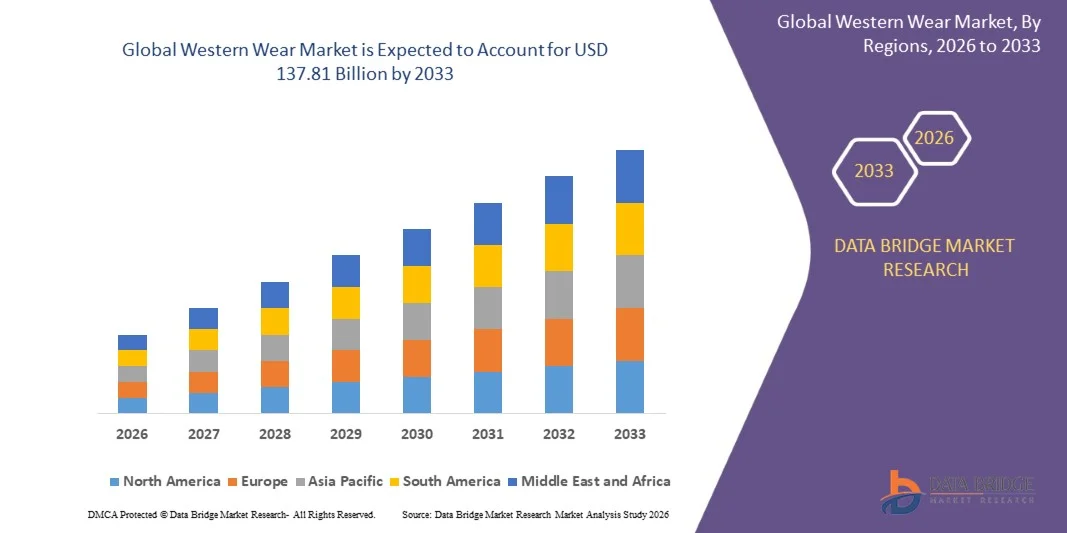
- По данным Data Bridge Market Research Analysis Мировой объем западного рынка одежды оценивается в85,17 млрд долларов в 2025 годуОжидается, что он достигнет$137,81 млрд к 2033 году, вCAGR 6,20%в течение прогнозируемого периода
- Кроме того, расширение платформ электронной коммерции, рост располагаемых доходов и повышение узнаваемости бренда поддерживают общий рост рынка.
- Кроме того, сотрудничество между модными брендами и дизайнерами, а также внедрение инновационных тканей и устойчивых материалов еще больше повышают привлекательность рынка.
Размер рынка и прогноз
- Глобальная рыночная стоимость (2025)$ 85,17 млрд.
- Ожидаемая рыночная стоимость (2033)$137,81 млрд.
- Прогноз CAGR (2026–2033): 6.20%
Каковы основные направления западного рынка одежды
- Западный рынок одежды демонстрирует устойчивый рост из-за меняющихся тенденций моды, растущего принятия одежды в западном стиле в повседневной одежде и растущего влияния средств массовой информации и одобрения знаменитостей.
- Склонность потребителей к персонализированной и премиальной одежде, наряду с быстрой цифровизацией розничных каналов, стимулирует инновации в продуктах и улучшает опыт покупок, стимулируя расширение рынка.
- Северная Америка доминировала на западном рынке одежды с самой большой долей дохода в 32,45% в 2025 году, что обусловлено ростом потребительских предпочтений в повседневной и стильной одежде, увеличением располагаемых доходов и сильным присутствием бренда в регионе.
- Ожидается, что в Азиатско-Тихоокеанском регионе будут наблюдаться самые высокие темпы роста в мире.западная одеждарынок, обусловленный растущим сознанием моды, расширением каналов розничной торговли и электронной коммерции, растущим молодежным населением и растущим влиянием глобальных и знаменитых тенденций моды
- Сегмент Tops & Shirts занимал самую большую долю рынка в 2025 году, чему способствовал высокий потребительский спрос на повседневную и универсальную одежду, подходящую для повседневной носки и офисных настроек. Топы и рубашки популярны из-за их комфорта, разнообразия стиля и способности сочетаться с несколькими нарядами, что делает их основным продуктом как в мужских, так и в женских шкафах.
Сфера охвата и сегментация западного рынка одежды
|
Атрибуты |
Ключевые рыночные идеи Western Wear |
|
Сегменты покрыты |
|
|
Страны, охваченные |
Северная Америка
Европа
Азиатско-Тихоокеанский регион
Ближний Восток и Африка
Южная Америка
|
|
Ключевые игроки рынка |
|
|
Рыночные возможности |
Растущий спрос на устойчивое и экологичное западное платье |
|
Информационные наборы данных с добавленной стоимостью |
В дополнение к информации о рыночных сценариях, таких как рыночная стоимость, темпы роста, сегментация, географическое покрытие и основные игроки, рыночные отчеты, курируемые Data Bridge Market Research, также включают углубленный экспертный анализ, анализ цен, анализ доли бренда, опрос потребителей, анализ демографии, анализ цепочки поставок, анализ цепочки создания стоимости, обзор сырья / расходных материалов, критерии выбора поставщиков, анализ PESTLE, анализ Porter и нормативную базу. |
Каковы основные тенденции на западном рынке одежды
«Восход случайной и устойчивой моды»
Растущий сдвиг в сторону повседневной и устойчивой моды трансформирует западный рынок одежды, поощряя внедрение экологически чистых тканей и универсальной одежды. Потребители все чаще предпочитают стильную, но удобную одежду, подходящую для нескольких случаев, что стимулирует инновации в продуктах и расширяет привлекательность рынка. Кроме того, сертификация устойчивости и этическая практика производства становятся ключевыми факторами, влияющими на принятие решений о покупке.
Высокий спрос на этически производимую и устойчивую одежду ускоряет внедрение органических тканей, переработанных материалов и экологически сознательных методов производства. Бренды, использующие устойчивость, приобретают более сильную лояльность потребителей, особенно среди экологически осведомленных миллениалов и покупателей поколения Z. Акцент на сокращение углеродного следа и экологически ответственное производство также поддерживает позиционирование бренда и долгосрочный рост рынка.
Доступность и доступность массового производства повседневной западной одежды делают ее привлекательной для повседневного использования, что приводит к увеличению частоты покупок. Потребители получают выгоду от модной, долговечной и многофункциональной одежды, которая соответствует их потребностям в образе жизни, в конечном итоге поддерживая рост рынка. Розничные торговцы все чаще предлагают гибкие цены, скидки и опции пакетов, чтобы стимулировать повторные покупки и улучшить проникновение на рынок.
Например, в 2024 году несколько мировых модных брендов выпустили экологически чистые коллекции денима и западной одежды на основе хлопка, которые были хорошо приняты за сочетание стиля, комфорта и устойчивости. Эти запуски укрепили узнаваемость бренда и способствовали повторным покупкам. Стратегические маркетинговые кампании, посвященные учетным данным в области устойчивого развития и интеграции образа жизни, еще больше увеличили вовлеченность потребителей
В то время как устойчивые и случайные тенденции стимулируют расширение рынка, дальнейший рост зависит от инноваций, дифференциации бренда и эффективных маркетинговых стратегий для удовлетворения меняющихся потребительских предпочтений. Бренды также должны сосредоточиться на прозрачности цепочки поставок, долговечности и разнообразии стилей, чтобы сохранить интерес клиентов и эффективно конкурировать на переполненном рынке.
Динамика западного рынка одежды
водитель
«Растущее влияние модных тенденций и одобрения знаменитостей»
Растущее влияние модных тенденций и одобрения знаменитостей мотивирует потребителей принимать западную одежду как для случайных, так и для полуформальных случаев. Разоблачение СМИ, социальные платформы и поп-культура значительно влияют на покупательское поведение, ускоряя принятие рынка. Сотрудничество с влиятельными лицами и дизайнерами помогает брендам поддерживать видимость и привлекательность для потребителей, осознающих тенденции.
Потребителей все больше привлекает премиальная и фирменная западная одежда из-за воспринимаемого качества, стиля и социального статуса. Это побуждает бренды инвестировать в инновационные проекты и сотрудничество с дизайнерами и знаменитостями, укрепляя присутствие на рынке. Восприятие эксклюзивности и ограниченных тиражей еще больше стимулирует спрос среди состоятельных и стремящихся покупателей.
Рост платформ быстрой моды и онлайн-ритейла способствует быстрому внедрению тенденций и легкой доступности, позволяя потребителям удобно приобретать новейшие стили. Эта тенденция расширяет клиентскую базу по возрастным группам и сегментам доходов. Бесшовный цифровой опыт, виртуальные инструменты и персонализированные рекомендации повышают вовлеченность потребителей и увеличивают продажи.
Например, в 2023 году несколько модных брендов сотрудничали с влиятельными лицами в социальных сетях, чтобы запустить западные линии одежды с ограниченным тиражом, что привело к высокой вовлеченности и продажам. Эти кампании усилили узнаваемость бренда и повлияли на более широкое внедрение современных стилей. Маркетинговая интеграция на разных платформах укрепила идентичность бренда и способствовала вирусному продвижению.
В то время как влияние тенденций продолжает стимулировать рост рынка, бренды должны поддерживать качество продукции, стандарты устойчивости и своевременную доставку для поддержания доверия потребителей и долгосрочной лояльности. Поддержание инновационных трубопроводов и реагирование на сезонные колебания спроса имеют важное значение для привлечения новых потребителей и сохранения актуальности рынка.
Сдержанность/вызов
«Высокая конкуренция и цены на сырье»
Высокая конкуренция между мировыми и региональными модными брендами ограничивает гибкость цен и оказывает давление на прибыль. Бренды должны постоянно внедрять инновации в дизайн, маркетинговые стратегии и операции цепочки поставок, чтобы оставаться конкурентоспособными. Кроме того, частые запуски продуктов и агрессивные рекламные кампании увеличивают эксплуатационные расходы и требуют тщательного планирования.
Волатильность цен на сырье, включая хлопок, деним и синтетические ткани, влияет на производственные затраты и общую стабильность рынка. Внезапные колебания цен могут повлиять на доступность и ограничить принятие в чувствительных к цене сегментах. Компании также могут столкнуться с проблемами в поиске качественных материалов, которые могут повлиять на долговечность продукта и удовлетворенность потребителей.
Проникновение на рынок также затруднено изменением потребительских предпочтений, контрафактной продукции и региональных изменений в модных тенденциях, которые требуют гибких производственных и маркетинговых стратегий. Бренды должны быстро адаптироваться, чтобы сохранить актуальность и долю рынка. Необходимость сильной дифференциации бренда и защиты интеллектуальной собственности становится решающей на насыщенных рынках.
Например, в 2023 году несколько компаний по производству одежды сообщили о давлении на стоимость из-за роста цен на хлопок и синтетические ткани, что повлияло на ценообразование продукции и планирование запасов. Такие проблемы подчеркивают необходимость эффективного поиска и управления цепочками поставок. Компании все чаще используют стратегические партнерства и диверсифицированные источники для снижения рисков поставок.
В то время как инновации в дизайне и дистрибуции помогают брендам оставаться конкурентоспособными, устранение давления на стоимость и дифференциация остаются критически важными для устойчивого роста на западном рынке одежды. Акцент на цифровом маркетинге, омниканальной розничной торговле и программах лояльности клиентов может повысить устойчивость бренда и обеспечить долгосрочную прибыльность
Сфера западного рынка одежды
Рынок сегментируется на основе типа продукта, конечного пользователя и канала распределения.
• По типу продукции
На основе типа продукта западный рынок одежды подразделяется на топы и рубашки, платья и юбки, брюки и джинсы и куртки и пальто. Сегмент Tops & Shirts занимал самую большую долю рынка в 2025 году, чему способствовал высокий потребительский спрос на повседневную и универсальную одежду, подходящую для повседневной носки и офисных настроек. Топы и рубашки популярны из-за их комфорта, разнообразия стиля и способности сочетаться с несколькими нарядами, что делает их основным продуктом как в мужских, так и в женских шкафах.
Ожидается, что в сегменте куртки и пальто будут наблюдаться самые быстрые темпы роста с 2026 по 2033 год, чему способствуют растущие потребительские предпочтения в модной верхней одежде, растущий спрос на одежду в холодную погоду и растущее влияние сезонных тенденций моды. Куртки и пальто также используются в премиальных и фирменных коллекциях, повышая их привлекательность среди потребителей, ориентированных на стиль.
• Конечный пользователь
На основе конечного пользователя западный рынок одежды разделен на мужчин, женщин и детей. Сегмент «Женщины» занимал самую большую долю на рынке в 2025 году, чему способствовали более высокая осведомленность о моде, более высокие располагаемые доходы и более широкий спектр западных стилей одежды, доступных для женщин-потребителей. Женская западная одежда предлагает разнообразные дизайны, ткани и случаи, поддерживая сильное принятие рынка.
Ожидается, что в сегменте «Дети» будут наблюдаться самые быстрые темпы роста с 2026 по 2033 год, обусловленные ростом осведомленности среди родителей о стильной и удобной одежде для детей. Расширение семей с двойным доходом и расширение детских модных брендов также способствуют росту в этом сегменте.
• Распределительный канал
На основе канала дистрибуции западный рынок одежды сегментируется на онлайн-ритейл, специализированные магазины, ведомственные магазины, супермаркеты / гипермаркеты и прямые продажи. Онлайн-сегмент розничной торговли занимал самую большую долю рынка в 2025 году, что обусловлено удобством платформ электронной коммерции, широким разнообразием продуктов и растущими предпочтениями потребителей в отношении цифровых покупок. Онлайн-каналы предлагают легкий доступ к мировым брендам и облегчают покупки по конкурентоспособным ценам.
Ожидается, что в сегменте специализированных магазинов будут наблюдаться самые быстрые темпы роста с 2026 по 2033 год, чему способствуют персонализированные покупки, эксклюзивные предложения продуктов и улучшенное обслуживание клиентов. Специализированные магазины позволяют потребителям исследовать кураторские коллекции, ткани премиум-класса и нишевые западные бренды одежды, стимулируя рост в этом канале.
Региональный анализ западного рынка одежды
Северная Америка доминировала на западном рынке одежды с самой большой долей дохода в 32,45% в 2025 году, что обусловлено ростом потребительских предпочтений в повседневной и стильной одежде, увеличением располагаемых доходов и сильным присутствием бренда в регионе.
Потребители в регионе высоко ценят комфорт, универсальность и модный дизайн, предлагаемый западной одеждой, что делает его подходящим для повседневной одежды, офисной одежды и социальных мероприятий.
Это широкое распространение также поддерживается расширением розничных сетей, онлайн-платформ и усилением влияния модных СМИ, что делает западную одежду предпочтительным выбором среди различных возрастных групп.
Американский рынок одежды Insight
Западный рынок одежды в США занял самую большую долю дохода в 2025 году в Северной Америке, чему способствовало растущее сознание моды, растущий спрос на повседневную и удобную одежду и сильное присутствие мировых и отечественных брендов. Потребители все чаще ищут универсальную одежду, которая сочетает в себе стиль и функциональность. Рост электронной коммерции, продвижение бренда и сотрудничество с влиятельными лицами моды еще больше продвигает рынок. Кроме того, интеграция западной одежды в образ жизни и фитнес-тренды значительно способствует расширению рынка.
Западный рынок одежды в Европе
Ожидается, что европейский западный рынок одежды будет наблюдать самые быстрые темпы роста с 2026 по 2033 год, в основном за счет растущей урбанизации, растущего внедрения западной моды и растущего спроса на премиальную и фирменную одежду. Потребителей привлекают современные проекты, устойчивые ткани и универсальные стили, подходящие для нескольких случаев. Рынок расширяется в казуальном, полуформальном и премиальном сегментах, а бренды внедряют инновационные коллекции для удовлетворения меняющихся предпочтений.
Западный рынок одежды Великобритании Insight
Ожидается, что на западном рынке одежды в Великобритании будут наблюдаться самые быстрые темпы роста с 2026 по 2033 год, обусловленные повышением осведомленности о моде, предпочтением фирменной одежды и растущим внедрением повседневной и полуофициальной одежды. Потребителей привлекают модные, устойчивые и удобные варианты одежды. Ожидается, что развитая инфраструктура розничной торговли и электронной коммерции в Великобритании будет способствовать дальнейшему росту рынка.
Западный рынок одежды Германии Insight
Ожидается, что западный рынок одежды в Германии будет расти с 2026 по 2033 год, чему способствует растущая склонность потребителей к премиальной и устойчивой моде, рост располагаемого дохода и сильное присутствие местных и международных брендов. Внимание Германии к качеству, стилю и экологически сознательным материалам способствует принятию западной одежды. Интеграция западной одежды в повседневные, корпоративные и развлекательные сегменты также становится все более распространенной, а потребители предпочитают универсальную и долговечную одежду.
Азиатско-Тихоокеанский Западный рынок одежды
Ожидается, что на западном рынке одежды Азиатско-Тихоокеанского региона будут наблюдаться самые быстрые темпы роста с 2026 по 2033 год, обусловленные ростом располагаемых доходов, урбанизацией и растущим влиянием западной моды в таких странах, как Китай, Индия и Япония. Растущее проникновение онлайн-ритейла и принятие глобальных тенденций моды повышают спрос на рынке. Кроме того, расширение производственных центров и увеличение доступности доступной западной одежды повышают доступность и принятие потребителей.
Японский рынок одежды Insight
Ожидается, что западный рынок одежды в Японии будет заметно расти с 2026 по 2033 год из-за высокой осведомленности о моде, принятия городского образа жизни и растущего спроса на удобную и стильную одежду. Потребители все чаще принимают западную одежду для повседневных, рабочих и социальных условий. Интеграция модных тенденций, сотрудничество с дизайнерами и акцент на качество и устойчивость способствуют расширению рынка.
Китайский рынок одежды Insight
На западный рынок одежды в Китае в 2025 году пришлась самая большая доля доходов рынка в Азиатско-Тихоокеанском регионе, что связано с быстрой урбанизацией, ростом населения среднего класса и повышением осведомленности о моде. Китай является одним из крупнейших рынков одежды в западном стиле, с растущим спросом в повседневных, полуформальных и премиальных сегментах. Расширение онлайн-ритейла, правительственные инициативы, способствующие развитию индустрии моды, и сильные внутренние производственные возможности являются ключевыми факторами, стимулирующими рынок.
Доля западного рынка одежды
Индустрией Western Wear в первую очередь руководят хорошо зарекомендовавшие себя компании, среди которых:
- Levi Strauss & Co. (США)
- VF Corporation (США)
- Ralph Lauren Corporation (США)
- H&M Group (Швеция)
- Zara (Inditex) (Испания)
- Uniqlo (Fast Retailing Co., Ltd.) (Япония)
- Gap Inc. (США)
- Tommy Hilfiger (PVH Corp.)
- Diesel S.p.A. (Италия)
- Wrangler (Kontoor Brands, Inc.)
- Lee (Kontoor Brands, Inc.)
- Манго (Испания)
- Burberry Group plc (Великобритания)
- Superdry plc (Великобритания)
- Benetton Group (Италия)
SKU-
Получите онлайн-доступ к отчету на первой в мире облачной платформе рыночной аналитики

- Интерактивная панель анализа данных
- Панель анализа компании для возможностей с высоким потенциалом роста
- Доступ аналитика-исследователя для настройки и запросов
- Анализ конкурентов с помощью интерактивной панели
- Последние новости, обновления и анализ тенденций
- Используйте возможности сравнительного анализа для комплексного отслеживания конкурентов
Методология исследования
Сбор данных и анализ базового года выполняются с использованием модулей сбора данных с большими размерами выборки. Этап включает получение рыночной информации или связанных данных из различных источников и стратегий. Он включает изучение и планирование всех данных, полученных из прошлого заранее. Он также охватывает изучение несоответствий информации, наблюдаемых в различных источниках информации. Рыночные данные анализируются и оцениваются с использованием статистических и последовательных моделей рынка. Кроме того, анализ доли рынка и анализ ключевых тенденций являются основными факторами успеха в отчете о рынке. Чтобы узнать больше, пожалуйста, запросите звонок аналитика или оставьте свой запрос.
Ключевой методологией исследования, используемой исследовательской группой DBMR, является триангуляция данных, которая включает в себя интеллектуальный анализ данных, анализ влияния переменных данных на рынок и первичную (отраслевую экспертную) проверку. Модели данных включают сетку позиционирования поставщиков, анализ временной линии рынка, обзор рынка и руководство, сетку позиционирования компании, патентный анализ, анализ цен, анализ доли рынка компании, стандарты измерения, глобальный и региональный анализ и анализ доли поставщика. Чтобы узнать больше о методологии исследования, отправьте запрос, чтобы поговорить с нашими отраслевыми экспертами.
Доступна настройка
Data Bridge Market Research является лидером в области передовых формативных исследований. Мы гордимся тем, что предоставляем нашим существующим и новым клиентам данные и анализ, которые соответствуют и подходят их целям. Отчет можно настроить, включив в него анализ ценовых тенденций целевых брендов, понимание рынка для дополнительных стран (запросите список стран), данные о результатах клинических испытаний, обзор литературы, обновленный анализ рынка и продуктовой базы. Анализ рынка целевых конкурентов можно проанализировать от анализа на основе технологий до стратегий портфеля рынка. Мы можем добавить столько конкурентов, о которых вам нужны данные в нужном вам формате и стиле данных. Наша команда аналитиков также может предоставить вам данные в сырых файлах Excel, сводных таблицах (книга фактов) или помочь вам в создании презентаций из наборов данных, доступных в отчете.











