



North America Japanese Restaurant Market Segmentation, By Cuisine Type(Traditional Japanese Cuisine, Specialty Japanese Cuisine, and Modern Japanese Cuisine), Service Type (Quick Service Restaurants (QSR), Full Service Restaurants, and Take-Out Counters/Outlets), Restaurant Category (Standalone Restaurants and Chain/Franchise Model), Restaurant Model (Takeaway, Home Delivery, and Dine-In), Sales Channel (Physical Outlets and Delivery Online Restaurants/Ghost Kitchen) - Industry Trends and Forecast to 2031
North America Japanese Restaurant Market Analysis
Increasing awareness of health benefits related to Japanese food is driving the market growth. Innovation in menu offerings provides opportunities in the market. Moreover, increase in popularity of the dish sushi is driving market growth.
North America Japanese Restaurant Market Size
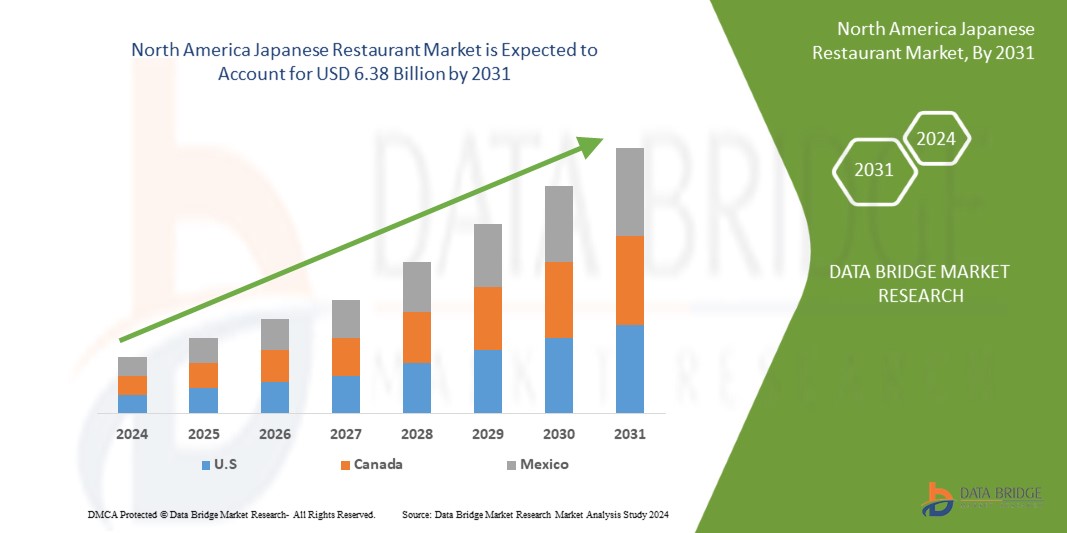
The North America market is expected to reach USD 6.38 billion by 2031 from USD 4.97 billion in 2023, growing with a substantial CAGR of 3.23% in the forecast period of 2024 to 2031.
North America Market Trends
“Increasing Awareness of Health Benefits Related to Japanese Food Drives the North America Japanese Restaurant Market”
The North America Japanese restaurant market is experiencing significant growth, driven by the increasing awareness of the health benefits associated with Japanese cuisine. Japanese cuisine, renowned for its emphasis on fresh, high-quality ingredients and balanced nutrition, aligns well with the growing North America focus on health and wellness. Traditional dishes such as sushi, sashimi, and miso soup are not only flavorful but also low in fat and high in essential nutrients. Sushi, for example, features lean proteins like fish and nutrient-rich vegetables, while miso soup provides probiotics beneficial for digestive health. The health benefits of these foods are becoming more widely recognized, leading to a surge in consumer interest. The growing awareness of Japanese cuisine's health benefits also contributes to its appeal in diverse markets. Consumers in various regions are exploring Japanese food not only for its taste but also for its positive impact on overall health. This shift is particularly evident in regions where there is a rising trend of health-oriented eating habits, such as North America and Europe. Japanese restaurants in these areas are seeing increased patronage as they cater to the demand for healthier dining options.
As more people become health-conscious, they are increasingly seeking out dining options that align with their wellness goals. Japanese restaurants are capitalizing on this trend by highlighting the nutritional advantages of their menus. Many establishments like Sushi Gen Enterprises, Sushi Nozawa Group RE&S and others now emphasize their use of fresh, natural ingredients and traditional cooking methods that retain the maximum nutritional value of the food. This focus on health is not just limited to traditional dishes but extends to modern interpretations and fusion cuisines that integrate Japanese principles with other healthy culinary traditions.
Report Scope and Market Segmentation
|
Attributes |
North America Key Market Insights |
|
Segmentation |
By Cuisine Type: Traditional Japanese Cuisine, Specialty Japanese Cuisine, and Modern Japanese Cuisine By Service Type: Quick Service Restaurants (QSR), Full Service Restaurants, and Take-Out Counters/Outlets By Restaurant Category: Standalone Restaurants and Chain/Franchise Model By Restaurant Model: Takeaway, Home Delivery, and Dine-In By Sales Channel: Physical Outlets and Delivery Online Restaurants/Ghost Kitchen |
|
Countries Covered |
U.S., Canada and Mexico |
|
Key Market Players |
Katsu-Ya Group, Inc (U.S.), Wokcano Asian Restaurant & Bar.(U.S.), 893 Ryōtei Berlin (Germany), Chiba Japanese Restaurant (U.S.), Tsujita Artisan Noodle (Japan), Sushi Den (U.S.), Florilège (Japan), Kaiten Zushi (U.S.), Kura Sushi USA (U.S.), Narisawa (Japan), RE&S (Singapore), Sazenka (Japan), Sushi A Go (U.S.), Sushi Gen Enterprises (U.S.), Sushi Nozawa Group (U.S.), Sushiya (India), Takami Sushi & Robata Restaurant (U.S.), Tatsu Ramen LLC (U.S.), Yamashiro Hollywood (U.S.), among others |
|
Market Opportunities |
|
|
Value Added Data Infosets |
In addition to the insights on market scenarios such as market value, growth rate, segmentation, geographical coverage, and major players, the market reports curated by the Data Bridge Market Research also include in-depth expert analysis, pricing analysis, brand share analysis, consumer survey, demography analysis, supply chain analysis, value chain analysis, raw material/consumables overview, vendor selection criteria, PESTLE Analysis, Porter Analysis, and regulatory framework. |
Japanese Restaurant Market Definition
A Japanese restaurant is an establishment that specializes in serving traditional Japanese cuisine, characterized by its emphasis on fresh, high-quality ingredients and meticulous preparation techniques. The menu typically features a variety of dishes, including sushi, sashimi, tempura, ramen, and other items that reflect Japan's diverse culinary heritage. Japanese restaurants often prioritize authenticity, incorporating traditional cooking methods and presentation styles, such as sushi rolls and bento boxes, to deliver a genuine dining experience. The ambiance of these restaurants often reflects Japanese aesthetics, with a focus on simplicity, elegance, and attention to detail. Service in Japanese restaurants is generally attentive and respectful, aiming to enhance the overall dining experience. In recent years, many Japanese restaurants have also embraced modern innovations, such as online ordering and sustainable practices, to meet the evolving preferences of North America consumers.
Japanese Restaurant Market Dynamics
Drivers
- The Increase in Popularity of the Dish Sushi
The rising popularity of sushi is a significant factors for the North America Japanese restaurant market, influencing consumer preferences and expanding market reach. Sushi, a staple of Japanese cuisine, has experienced a surge in North America popularity due to its alignment with health trends, versatility, and integration into mainstream food culture. One of the primary factors driving this trend is sushi’s reputation as a healthy and convenient food option. With its emphasis on fresh fish, vegetables, and rice, sushi is often perceived as a nutritious choice. The growing awareness of health and wellness has led many consumers to seek out healthier alternatives to traditional fast food. Sushi’s low-calorie, high-protein, and omega-3-rich profile aligns well with these dietary preferences, making it an attractive option for health-conscious diners. As a result, sushi has become an essential in many diets around the world, driving increased demand for Japanese restaurants. Along with it the rise of sushi's popularity is also supported by its versatility and adaptability. Sushi can be customized to suit various tastes and dietary needs, including vegetarian and gluten-free options. This flexibility allows sushi to cater to a wide range of consumer preferences, further enhancing its appeal. The introduction of innovative sushi rolls and fusion creations has also helped to attract a diverse audience, from traditionalists to those seeking novel culinary experiences. This adaptability has facilitated the expansion of sushi offerings in both traditional Japanese restaurants and new, contemporary dining establishments. In addition the mainstream acceptance of sushi has also played a crucial role in its market influence. Sushi has become a common fixture in cities around the world, from New York and London to Sydney and Tokyo. Its presence in popular media, including television shows, social media, and food blogs, has elevated sushi to a prominent position in North America food culture. This increased visibility has led to a broader acceptance of sushi as a mainstream dining option, attracting customers who may not have previously considered Japanese cuisine.
For Instance,
- In 2024, according to World Metrics, the North America sushi market has experienced substantial growth, with the industry valued at over USD 27 billion. This surge highlights the increasing popularity of sushi, driving a significant rise in the number of Japanese restaurants and contributing to the expansion of Japanese dining experiences worldwide
The Recognition of Japanese Cuisine as a UNESCO Intangible Cultural Heritage
The designation of Japanese cuisine as a UNESCO intangible cultural heritage highlights its traditional practices, unique preparation methods, and cultural significance. This acknowledgment not only elevates the profile of Japanese food but also generates heightened North America interest. Consumers are increasingly drawn to Japanese cuisine due to its rich history, authenticity, and the craftsmanship associated with its preparation. As a result, there is a growing demand for authentic Japanese dining experiences, which directly benefits Japanese restaurants worldwide.
The UNESCO recognition also enhances the North America appeal of Japanese cuisine by positioning it as a symbol of cultural sophistication and culinary excellence. This status attracts food enthusiasts and cultural tourists who seek to experience the authentic flavors and traditional techniques that are now internationally celebrated. Japanese restaurants, therefore, benefit from increased foot traffic and consumer interest driven by this prestigious endorsement. Furthermore, the North America focus on preserving intangible cultural heritage aligns with broader trends in cultural tourism and experiential dining. As travelers become more interested in immersing themselves in local traditions and cultural practices, Japanese cuisine’s UNESCO status makes it a compelling choice. Restaurants that offer traditional Japanese dishes and emphasize their heritage connection are likely to attract both international tourists and local consumers who are eager to engage with culturally significant culinary experiences.
For instance,
- In February 2024, according to an article published by the Star Advertiser, the North America interest in Japan’s traditional cuisine, recognized as a UNESCO intangible cultural heritage, continues to rise. The recognition of Japanese cuisine by UNESCO enhances its prestige and appeal, encouraging more diners to explore and appreciate its cultural and historical significance, which in turn fuels the growth and popularity of Japanese dining establishments across the globe
Opportunities
- Innovation in Menu Offerings
Innovation in menu offerings presents a significant opportunity for the North America Japanese restaurant market, possessing growth and capturing new customer segments. As the dining landscape evolves, Japanese restaurants have the chance to differentiate themselves by embracing creative and diverse menu options that appeal to modern consumers. One of the key opportunities lies in the adaptation of traditional Japanese dishes to contemporary tastes and dietary preferences. For example sushi, traditionally consisting of raw fish and rice, has evolved to include a variety of ingredients and styles, such as vegetarian rolls, fusion creations, and even sushi burritos. This innovation allows Japanese restaurants to cater to a broader audience, including those with dietary restrictions or a preference for unique flavor combinations. By offering diverse and inventive menu items, restaurants can attract a wider range of customers and increase their market appeal.
Another opportunity for menu innovation is the integration of North America culinary trends with Japanese cuisine. Japanese restaurants are increasingly incorporating elements from other culinary traditions, resulting in exciting new dishes that blend flavors and techniques. For instance the fusion of Japanese and Mediterranean ingredients can create unique dishes like sushi with hummus or miso-glazed lamb. These cross-cultural innovations not only attract adventurous eaters but also position Japanese restaurants as trendsetters in the North America dining scene.
For instance,
- In 2018, according to the Economic Times, the Japanese restaurant market saw significant innovation with the introduction of sushi doughnuts and sushi burritos. These novel creations, which blend traditional sushi ingredients with new formats, such as a doughnut-shaped sushi or a burrito-style wrap, reflect a growing trend towards inventive menu offerings
Collaboration With Local Cultural Events and Festivals
Collaboration with local cultural events and festivals represents a significant opportunity for the North America Japanese restaurant market, fostering growth and expanding market reach. These collaborations allow Japanese restaurants to enhance their visibility, engage with diverse audiences, and strengthen their brand presence in both established and emerging markets.
Participating in cultural events and festivals enables Japanese restaurants to introduce their cuisine to new customer segments. Events such as food festivals, cultural fairs, and community celebrations attract large and varied audiences, providing a platform for restaurants to showcase their offerings. For instance, a Japanese restaurant setting up a booth at a multicultural food festival can reach attendees who may be unfamiliar with Japanese cuisine. By offering sample dishes or special event menus, restaurants can attract potential customers, generate interest, and encourage them to visit the restaurant for a full dining experience. These collaborations help Japanese restaurants build brand recognition and establish a positive reputation within the community. When restaurants align themselves with popular local events, they benefit from the event's promotional efforts, including marketing materials, social media mentions, and local media coverage. This association can boost the restaurant's visibility and credibility, leading to increased interest and foot traffic. For instance, a Japanese restaurant partnering with a prominent local cultural festival may be featured in event advertisements and receive mentions in local news outlets, boosting its profile among potential diners.
Restraints/Challenges
- High Cost of Ingredients for Japanese Cuisine
Japanese cuisine, known for its emphasis on fresh and high-quality ingredients, often relies on specialized items such as premium-grade sushi-grade fish, rare vegetables, and imported condiments. Such as, ingredients like bluefin tuna, used in high-end sushi, and seasonal items such as Matsutake mushrooms, are not only expensive but also subject to fluctuations in availability and price. The high cost of these ingredients impacts the overall cost structure of Japanese restaurants, leading to increased menu prices and potentially reduced consumer demand. The high costs of ingredients can particularly strain smaller or independent Japanese restaurants. These establishments may struggle to absorb the cost increases without significantly raising menu prices, which could discourage budget-conscious customers. Additionally, the volatility in ingredient prices can lead to inconsistent menu pricing and availability. For instance, fluctuations in the North America market for seafood due to overfishing, environmental changes, or supply chain disruptions can cause sudden increases in costs.
The impact of high ingredient costs extends beyond the restaurant level to affect consumer perceptions and behavior. When menu prices rise due to increased ingredient costs, consumers may perceive the restaurant as less affordable or value-for-money. This perception can lead to decreased support and lower overall sales. Moreover, the high cost of authentic Japanese ingredients can limit the ability of restaurants to offer a diverse menu, potentially reducing their appeal to a broader audience.
- Острая конкуренция со стороны итальянской и китайской кухни
Рынок японских ресторанов Северной Америки сталкивается со значительными проблемами из-за интенсивной конкуренции со стороны итальянской и китайской кухни. Как итальянские, так и китайские рестораны глубоко укоренились в культуре питания Северной Америки, представляя грозных конкурентов японским ресторанам в борьбе за внимание потребителей и долю рынка. Одной из основных проблем является насыщение рынка ресторанов Северной Америки итальянской и китайской кухней. Итальянская кухня с ее разнообразным ассортиментом блюд, таких как паста, пицца и ризотто, и китайская кухня, известная своим обширным разнообразием, включая димсам, лапшу и жаркое, широко доступны и глубоко укоренились во многих странах. Такая широкая доступность создает высокий уровень конкуренции для японских ресторанов, которые должны отличаться
сами по себе, чтобы захватить интерес потребителей. Распространенность этих кухонь означает, что японским ресторанам трудно выделиться на переполненном рынке, где доминируют знакомые и популярные варианты.
Наряду с этим, стоимость входа и операционные проблемы, связанные с поддержанием японского ресторана, могут быть значительными проблемами. Итальянские и китайские рестораны часто выигрывают от экономии масштаба из-за их большего присутствия и налаженных цепочек поставок. Напротив, японские рестораны могут столкнуться с более высокими затратами на закупку аутентичных ингредиентов и специализированного оборудования, что может повлиять на их ценообразование и прибыльность. Например, высококачественная рыба для суши и премиальные соевые соусы стоят дорого и требуют осторожного обращения, что может увеличить операционные расходы. Это неравенство в операционной эффективности может затруднить для японских
ресторанам приходится конкурировать по цене, особенно на рынках, где стоимость является ключевым фактором для потребителей.
Влияние и текущий рыночный сценарий нехватки сырья и задержек поставок
Data Bridge Market Research предлагает высокоуровневый анализ рынка и предоставляет информацию, учитывая влияние и текущую рыночную среду нехватки сырья и задержек поставок. Это приводит к оценке стратегических возможностей, созданию эффективных планов действий и оказанию помощи предприятиям в принятии важных решений.
Помимо стандартного отчета, мы также предлагаем углубленный анализ уровня закупок на основе прогнозируемых задержек поставок, картирования дистрибьюторов по регионам, анализа товаров, анализа производства, тенденций ценового картирования, поиска поставщиков, анализа эффективности категорий, решений по управлению рисками в цепочке поставок, расширенного сравнительного анализа и других услуг по закупкам и стратегической поддержке.
Ожидаемое влияние экономического спада на ценообразование и доступность продукции
Когда экономическая активность замедляется, отрасли начинают страдать. Прогнозируемое влияние экономического спада на ценообразование и доступность продуктов учитывается в отчетах по анализу рынка и услугах по разведке, предоставляемых DBMR. Благодаря этому наши клиенты обычно могут быть на шаг впереди своих конкурентов, прогнозировать свои продажи и доходы, а также оценивать свои расходы на прибыль и убытки.
Охват рынка Северной Америки
Рынок сегментирован на пять заметных сегментов на основе типа кухни, типа обслуживания, категории ресторана, модели ресторана и канала продаж. Рост среди этих сегментов поможет вам проанализировать сегменты с незначительным ростом в отраслях и предоставить пользователям ценный обзор рынка и рыночные идеи, которые помогут им принимать стратегические решения для определения основных рыночных приложений.
Региональный анализ рынка Северной Америки
Рынок разделен на пять основных сегментов в зависимости от типа кухни, типа обслуживания, категории ресторана, модели ресторана и канала продаж .
Страны, охваченные рынком: США, Канада и Мексика.
США доминируют на рынке благодаря своей хорошо развитой инфраструктуре, передовым технологиям переработки и более высокому уровню инвестиций в сектор по сравнению с другими регионами, что, как ожидается, будет способствовать дальнейшему росту рынка.
Раздел отчета по странам также содержит отдельные факторы, влияющие на рынок, и изменения в регулировании на внутреннем рынке, которые влияют на текущие и будущие тенденции рынка. Такие данные, как анализ цепочки создания стоимости вверх и вниз по течению, технические тенденции и анализ пяти сил Портера, тематические исследования — вот некоторые из указателей, используемых для прогнозирования рыночного сценария для отдельных стран. Кроме того, присутствие и доступность брендов Северной Америки и их проблемы, с которыми они сталкиваются из-за большой или малой конкуренции со стороны местных и внутренних брендов, им
Традиционная японская кухня
- Традиционная японская кухня, по типу кухни
- Суши
- Суши, по типу
- Ленточный конвейер
- Без конвейера
- Суши, по сети
- Местные рестораны
- Международная Сеть
- Суши, по заведению
- Быстрое обслуживание
- Рестораны с полным спектром услуг
- Стойки/точки выдачи еды на вынос
- Суши, по типу
- Рамен
- Рамен, по версии Restaurant Mode
- Еда на вынос
- Доставка на дом
- Пообедать в ресторане
- Рамен, по заведению
- Быстрое обслуживание
- Рестораны с полным спектром услуг
- Стойки/точки выдачи еды на вынос
- Рамен, по версии Restaurant Mode
- Темпура
- Темпура, по ресторанному режиму
- Еда на вынос
- Доставка на дом
- Пообедать в ресторане
- Темпура, по заведению
- Быстрое обслуживание
- Рестораны с полным спектром услуг
- Стойки/точки выдачи еды на вынос
- Темпура, по ресторанному режиму
- Сашими
- Сашими, по ресторанному режиму
- Еда на вынос
- Доставка на дом
- Пообедать в ресторане
- Сашими, по заведению
- Быстрое обслуживание
- Рестораны с полным спектром услуг
- Стойки/точки выдачи еды на вынос
- Сашими, по ресторанному режиму
- Кайсэки
- Кайсэки, по ресторанному режиму
- Еда на вынос
- Доставка на дом
- Пообедать в ресторане
- Кайсэки, по заведению
- Быстрое обслуживание
- Рестораны с полным спектром услуг
- Стойки/точки выдачи еды на вынос
- Кайсэки, по ресторанному режиму
- Удон/Соба
- Удон/Соба, по ресторанному режиму
- Еда на вынос
- Доставка на дом
- Пообедать в ресторане
- Удон/Соба, по заведению
- Быстрое обслуживание
- Рестораны с полным спектром услуг
- Стойки/точки выдачи еды на вынос
- Удон/Соба, по ресторанному режиму
- Другие
- Другие, по ресторанному режиму
- Еда на вынос
- Доставка на дом
- Пообедать в ресторане
- Другие, по заведению
- Быстрое обслуживание
- Рестораны с полным спектром услуг
- Стойки/точки выдачи еды на вынос
- Другие, по ресторанному режиму
- Суши
Фирменная японская кухня
- Специализированная японская кухня, по типу
- Якитори
- Теппаньяки
- Другие
- Фирменная японская кухня, по ресторанному режиму
- Еда на вынос
- Доставка на дом
- Пообедать в ресторане
- Фирменная японская кухня, по ресторанному режиму
- Быстрое обслуживание
- Рестораны с полным спектром услуг
- Стойки/точки выдачи еды на вынос
- Современная японская кухня
- Современная японская кухня, по типу
- Фьюжн Японский
- Современные японские блюда
- Современная японская кухня, по типу
- Современная японская кухня, от Restaurant Mode
- Еда на вынос
- Доставка на дом
- Пообедать в ресторане
- Современная японская кухня, по заведению
- Быстрое обслуживание
- Рестораны с полным спектром услуг
- Стойки/точки выдачи еды на вынос
Тип услуги
- Quick Service Restaurants (QSR)
- Full Service Restaurants
- Take-Out Counters/Outlets
Restaurant Category
- Standalone Restaurants
- Chain/Franchise Model
Restaurant Model
- Takeaway
- Home Delivery
- Dine-In
Sales Channel
- Physical Outlets
- Delivery Online Restaurants/Ghost Kitchen
pact of domestic tariffs and trade routes are considered while providing forecast analysis of the country data.
North America Japanese Restaurant Market Share
The market competitive landscape provides details by competitors. Details included are company overview, company financials, revenue generated, market potential, investment in research and development, new market initiatives, North America presence, production sites and facilities, production capacities, company strengths and weaknesses, product launch, product width and breadth, application dominance. The above data points provided are only related to the companies' focus related to market.
North America Japanese Restaurant Market Leaders Operating in the Market Are:
- Katsu-Ya Group, Inc (U.S.)
- Wokcano Asian Restaurant & Bar.(U.S.),
- 893 Ryōtei Berlin (Germany),
- Chiba Japanese Restaurant (U.S.)
- Tsujita Artisan Noodle (Japan)
- Sushi Den (U.S.)
- Florilège (Japan)
- Kaiten Zushi (U.S.)
- Kura Sushi USA (U.S.)
- Narisawa (Japan)
- RE&S (Singapore)
- Sazenka (Japan)
- Sushi A Go (U.S.)
- Sushi Gen Enterprises (U.S.)
- Sushi Nozawa Group (U.S.)
- Sushiya (India)
- Takami Sushi & Robata Restaurant (U.S.)
- Tatsu Ramen LLC (U.S.)
- Yamashiro Hollywood (U.S.)
Latest Developments in North America Japanese Restaurant Market
- In May 2024, Sushi Den has announced the relaunch of its highly anticipated lunch service. In addition, OTOTO, a latest addition to the Sushi Den and Izakaya Den, has launched a delightful Sunday Brunch starting from 11:00 AM to 2:00 PM. The company look forward to sharing this new chapter with their customer’s and enjoying the season’s fresh offerings together
- In May 2024, Kura Sushi USA launched a Dragon Ball Super-themed Bikkura Pon promotion from May 1 to June 30, 2024. The collaboration featured exclusive Dragon Ball Super prizes, including limited-edition acrylic stand keychains and enamel pins. A rare glow-in-the-dark Goku keychain was available in limited quantities. From June 5-9, Rewards Members received a Dragon Ball Super graphic tee with a $70 in-restaurant spend. A Dragon Ball Super Bottle Set with a straw and lanyard was available for $16.00 starting June 1. The Bikkura Pon Prize System rewarded diners with Dragon Ball Super-themed prizes for every 15 plates enjoyed
- In December 2023, Kura Sushi USA, Inc. has introduced ecopon, the world’s first plastic-free, biodegradable paper capsule, for its Bikkura Pon prizes. Developed by K2 Station Co., Ltd., Rengo Co., Ltd., and Daiho Industrial Co., Ltd., ecopon capsules are made from starch and paper pulp, reducing CO2 emissions by a third compared to polypropylene. The new capsules will debut with a Peanuts® Bikkura Pon collaboration from Dec. 1, 2024, to Jan. 31, 2025. This initiative reflects Kura Sushi’s commitment to sustainability, following their transition to paper straws and other eco-friendly practices. For more information, visit kurasushi.com/sustainability
- In October 2023, Kura Sushi USA, Inc. has partnered with Peanuts Worldwide LLC for a special Bikkura Pon promotion running from Dec. 1, 2024, to Jan. 31, 2025. Diners can enjoy exclusive Peanuts-themed prizes, including figurine keychains, can badges, and microfiber cloths featuring characters like Snoopy and Charlie Brown. For every 15 sushi plates, guests will receive a Peanuts x Kura Sushi prize, with a rare Snoopy Figurine Keychain available only through the prize system. Rewards Members spending $70 from Jan. 3-7, 2024, will get a Peanuts-inspired cup set. Kura Sushi is also using ecopon’s biodegradable capsules for this promotion
SKU-
Получите онлайн-доступ к отчету на первой в мире облачной платформе рыночной аналитики

- Интерактивная панель анализа данных
- Панель анализа компании для возможностей с высоким потенциалом роста
- Доступ аналитика-исследователя для настройки и запросов
- Анализ конкурентов с помощью интерактивной панели
- Последние новости, обновления и анализ тенденций
- Используйте возможности сравнительного анализа для комплексного отслеживания конкурентов
Методология исследования
Сбор данных и анализ базового года выполняются с использованием модулей сбора данных с большими размерами выборки. Этап включает получение рыночной информации или связанных данных из различных источников и стратегий. Он включает изучение и планирование всех данных, полученных из прошлого заранее. Он также охватывает изучение несоответствий информации, наблюдаемых в различных источниках информации. Рыночные данные анализируются и оцениваются с использованием статистических и последовательных моделей рынка. Кроме того, анализ доли рынка и анализ ключевых тенденций являются основными факторами успеха в отчете о рынке. Чтобы узнать больше, пожалуйста, запросите звонок аналитика или оставьте свой запрос.
Ключевой методологией исследования, используемой исследовательской группой DBMR, является триангуляция данных, которая включает в себя интеллектуальный анализ данных, анализ влияния переменных данных на рынок и первичную (отраслевую экспертную) проверку. Модели данных включают сетку позиционирования поставщиков, анализ временной линии рынка, обзор рынка и руководство, сетку позиционирования компании, патентный анализ, анализ цен, анализ доли рынка компании, стандарты измерения, глобальный и региональный анализ и анализ доли поставщика. Чтобы узнать больше о методологии исследования, отправьте запрос, чтобы поговорить с нашими отраслевыми экспертами.
Доступна настройка
Data Bridge Market Research является лидером в области передовых формативных исследований. Мы гордимся тем, что предоставляем нашим существующим и новым клиентам данные и анализ, которые соответствуют и подходят их целям. Отчет можно настроить, включив в него анализ ценовых тенденций целевых брендов, понимание рынка для дополнительных стран (запросите список стран), данные о результатах клинических испытаний, обзор литературы, обновленный анализ рынка и продуктовой базы. Анализ рынка целевых конкурентов можно проанализировать от анализа на основе технологий до стратегий портфеля рынка. Мы можем добавить столько конкурентов, о которых вам нужны данные в нужном вам формате и стиле данных. Наша команда аналитиков также может предоставить вам данные в сырых файлах Excel, сводных таблицах (книга фактов) или помочь вам в создании презентаций из наборов данных, доступных в отчете.











