


Global Advanced Glycation End Products (AGEs) Market Segmentation, By Type (Non-fluorescent AGEs, Fluorescent AGE, and Others), Indication (Diabetes, Neoplasm, Orthopedic Disorder, Neurodegenerative Disorder, and Others), End User (Hospitals, Homecare, Specialty Clinics, and Others) – Industry Trends and Forecast to 2032
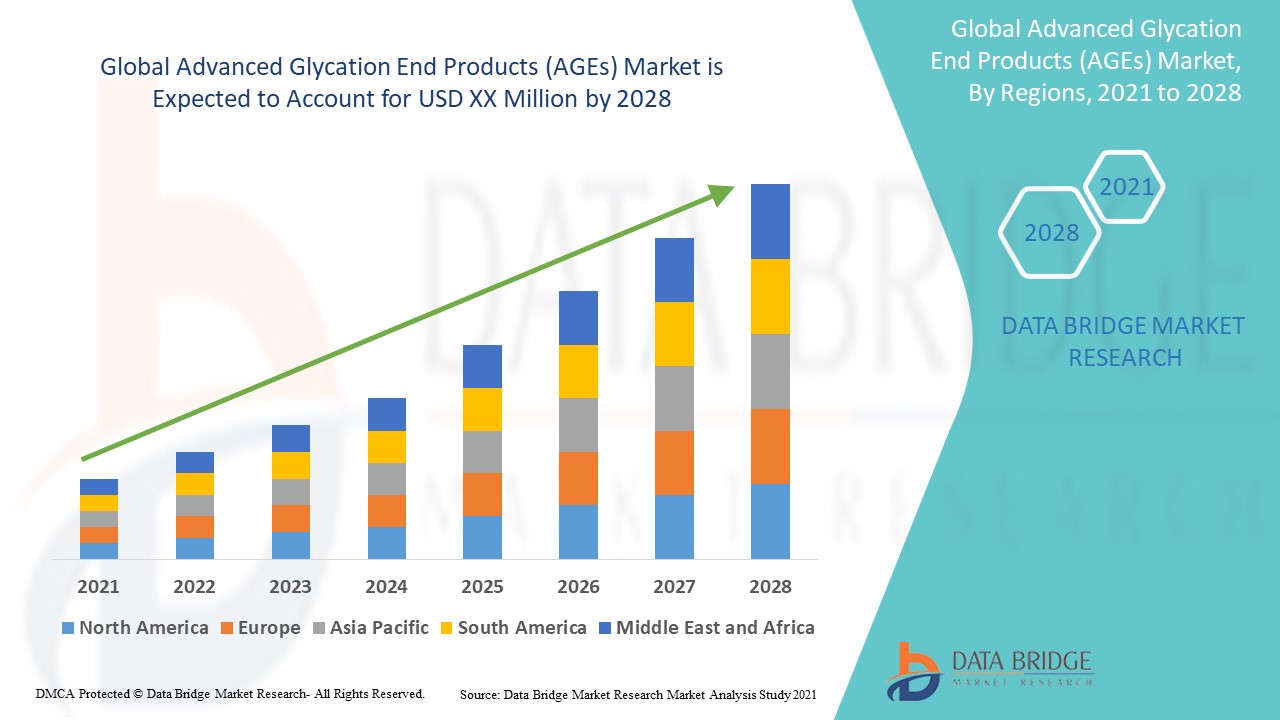
Advanced Glycation End Products (AGEs) Market Analysis
The advanced glycation end products (AGEs) market is experiencing significant growth, driven by the increasing prevalence of chronic diseases such as diabetes, cardiovascular disorders, and neurodegenerative disorder therapeutics conditions. AGEs are formed when proteins or lipids combine with sugars in the body, leading to harmful compounds that contribute to various diseases. The growing awareness of the role AGEs play in aging and disease progression is propelling research and development in this market. Recent advancements include the development of diagnostic tools to measure AGEs and the introduction of therapeutic agents aimed at reducing their accumulation. Companies are also focusing on the creation of dietary supplements and skincare products to mitigate AGE formation. The market benefits from rising healthcare awareness, technological advancements, and a shift towards preventive care. As healthcare systems focus more on managing chronic diseases and aging-related conditions, the AGEs market is poised for continued expansion with innovative solutions catering to diverse consumer needs.
Advanced Glycation End Products (AGEs) Market Size
The global advanced glycation end products (AGEs) market size was valued at USD 1.70 billion in 2024 and is projected to reach USD 2.96 billion by 2032, with a CAGR of 7.20% during the forecast period of 2025 to 2032. In addition to the insights on market scenarios such as market value, growth rate, segmentation, geographical coverage, and major players, the market reports curated by the Data Bridge Market Research also include depth expert analysis, patient epidemiology, pipeline analysis, pricing analysis, and regulatory framework.
Advanced Glycation End Products (AGEs) Market Trends
“Innovations in Diagnostic Technologies”
The advanced glycation end products (AGEs) market is evolving with increasing recognition of their role in chronic diseases and aging. Innovations in diagnostic technologies are enabling early detection of AGEs, fueling demand for targeted treatments and preventive care. One significant trend is the development of therapeutic agents and supplements that aim to reduce AGE accumulation in the body, particularly in managing conditions such as diabetes and cardiovascular diseases. In addition, skincare products formulated to combat the effects of AGEs are gaining popularity as part of anti-aging regimens. With advancements in research and consumer awareness, the AGEs market is expanding, offering a range of solutions that address both medical and aesthetic concerns associated with AGE buildup.
Report Scope and Advanced Glycation End Products (AGEs) Market Segmentation
|
Attributes |
Advanced Glycation End Products (AGEs) Key Market Insights |
|
Segments Covered |
|
|
Countries Covered |
U.S., Canada and Mexico in North America, Germany, France, U.K., Netherlands, Switzerland, Belgium, Russia, Italy, Spain, Turkey, Rest of Europe in Europe, China, Japan, India, South Korea, Singapore, Malaysia, Australia, Thailand, Indonesia, Philippines, Rest of Asia-Pacific (APAC) in the Asia-Pacific (APAC), Saudi Arabia, U.A.E., South Africa, Egypt, Israel, Rest of Middle East and Africa (MEA) as a part of Middle East and Africa (MEA), Brazil, Argentina and Rest of South America as part of South America. |
|
Key Market Players |
Johnson & Johnson Services, Inc. (U.S.), Merck & Co., Inc. (U.S.), F. Hoffmann-La Roche Ltd (Switzerland), GSK plc (U.K.), Viatris Inc. (U.S.), Novartis AG (Switzerland), Sanofi (France), Takeda Pharmaceutical Company Limited (Japan), Pfizer Inc. (U.S.), GLENMARK PHARMACEUTICALS LTD. (India), Glyscend, Inc. (U.S.), AbbVie (U.S.), Shiseido Company, Limited (Japan), Beiersdorf (Germany), L'Oréal (France), NuFACE (U.S.), Ostium Cosmetiques (France), PhotoMedex (U.S.), Alma Lasers (Israel), and Rodan & Fields (U.S.) |
|
Market Opportunities |
|
|
Value Added Data Infosets |
In addition to the insights on market scenarios such as market value, growth rate, segmentation, geographical coverage, and major players, the market reports curated by the Data Bridge Market Research also include depth expert analysis, patient epidemiology, pipeline analysis, pricing analysis, and regulatory framework. |
Advanced Glycation End Products (AGEs) Market Definition
Advanced glycation end products (AGEs) are harmful compounds formed when proteins, lipids, or nucleic acids react with sugars in the body through a process called glycation. This non-enzymatic reaction leads to the accumulation of AGEs over time, which can impair normal cellular function and contribute to the development of various diseases, including diabetes, cardiovascular disorders, and neurodegenerative diseases. AGEs are also associated with aging and skin damage, as they can affect collagen and elastin, leading to wrinkles and reduced skin elasticity.
Advanced Glycation End Products (AGEs) Market Dynamics
Drivers
- Increasing Prevalence of Diabetes
The increasing prevalence of diabetes, cardiovascular diseases, and neurodegenerative disorders is a major driver for the growth of the advanced glycation end products (AGEs) market. These chronic conditions are closely associated with the accumulation of AGEs, which play a key role in the development and progression of complications such as vascular damage, nerve dysfunction, and tissue stiffening. As the global burden of these diseases rises, there is a growing demand for diagnostic tools and therapeutic interventions aimed at managing AGE buildup. This trend is fueling the market, as healthcare providers and patients seek solutions to reduce AGE-related health risks.
- Rising Focus on Preventive Healthcare
A shift toward preventive healthcare is significantly driving the growth of the advanced glycation end products (AGEs) market, especially in managing chronic diseases and age-related conditions. As consumers and healthcare providers focus on proactive health management, there is a growing demand for products designed to reduce AGE accumulation, such as dietary supplements and skincare treatments. These products aim to prevent the onset of chronic conditions such as diabetes, cardiovascular diseases, and age-related skin damage, all of which are linked to AGEs. This trend is encouraging the development of innovative solutions, making AGE reduction an integral part of modern preventive healthcare strategies.
Opportunities
- Development of Therapeutic Agents
There is a significant opportunity for pharmaceutical companies to develop treatments that specifically target AGE accumulation, which plays a crucial role in the progression of chronic diseases such as diabetes, cardiovascular conditions, and neurodegenerative disorders. By creating drugs or compounds that can break down AGEs or inhibit their formation, pharmaceutical companies can provide new solutions to manage these health conditions more effectively. Such innovations would improve patient outcomes and open up new revenue streams in the growing market for AGE-related therapeutics. This presents a promising opportunity for companies to capitalize on the increasing demand for treatments addressing AGE-related health risks.
- Skincare and Anti-Aging Products
The rising demand for skincare products that address the effects of AGEs presents a significant market opportunity, particularly as consumers seek solutions for premature aging and skin damage. AGEs contribute to the deterioration of collagen and elastin in the skin, leading to wrinkles, sagging, and reduced elasticity. As awareness grows about the link between AGEs and skin aging, there is an increasing market for skincare lines specifically formulated to target and reduce AGE buildup. Developing products that incorporate AGE-fighting ingredients could be highly profitable, especially within the rapidly expanding anti-aging market. This offers companies an avenue to meet growing consumer demand for effective, preventive skincare solutions.
Restraints/Challenges
- Competition from Other Anti-Aging Solutions
In the anti-aging market, products targeting advanced glycation end products (AGEs) face strong competition from other well-established skincare solutions. Popular ingredients such as collagen, hyaluronic acid, and antioxidants have long been recognized for their anti-aging benefits, making them the go-to options for consumers. As a result, AGE-specific products may struggle to gain traction in the market, despite their potential benefits. This intense competition creates a challenge for companies aiming to introduce AGE-focused skincare lines, as they must differentiate their products and effectively communicate their unique advantages to consumers already familiar with other anti-aging solutions.
- High Costs of Development
The research and development of advanced glycation end products (AGEs)-targeted products, particularly pharmaceutical drugs and advanced diagnostic tools, require substantial financial investment. This high cost can be a significant barrier for smaller companies with limited resources, preventing them from competing with larger, more established players in the market. The lengthy development timelines and the need for extensive clinical trials further increase the financial burden. As a result, smaller companies may struggle to innovate or bring new AGE-targeted solutions to market, potentially limiting the overall growth and diversity of the AGEs market.
This market report provides details of new recent developments, trade regulations, import-export analysis, production analysis, value chain optimization, market share, impact of domestic and localized market players, analyses opportunities in terms of emerging revenue pockets, changes in market regulations, strategic market growth analysis, market size, category market growths, application niches and dominance, product approvals, product launches, geographic expansions, technological innovations in the market. To gain more info on the market contact Data Bridge Market Research for an Analyst Brief, our team will help you take an informed market decision to achieve market growth.
Advanced Glycation End Products (AGEs) Market Scope
The market is segmented on the basis of type, indication, and end user. The growth amongst these segments will help you analyse meagre growth segments in the industries and provide the users with a valuable market overview and market insights to help them make strategic decisions for identifying core market applications.
Type
- Non-fluorescent AGEs
- Fluorescent AGE
- Others
Indication
- Diabetes
- Neoplasm
- Orthopedic Disorder
- Neurodegenerative Disorder
- Others
End User
- Hospitals
- Homecare
- Specialty Clinics
- Others
Advanced Glycation End Products (AGEs) Market Regional Analysis
The market is analysed and market size insights and trends are provided by country, type, indication, and end user as referenced above.
The countries covered in the market report are U.S., Canada and Mexico in North America, Germany, France, U.K., Netherlands, Switzerland, Belgium, Russia, Italy, Spain, Turkey, Rest of Europe in Europe, China, Japan, India, South Korea, Singapore, Malaysia, Australia, Thailand, Indonesia, Philippines, Rest of Asia-Pacific (APAC) in the Asia-Pacific (APAC), Saudi Arabia, U.A.E., South Africa, Egypt, Israel, Rest of Middle East and Africa (MEA) as a part of Middle East and Africa (MEA), Brazil, Argentina and Rest of South America as part of South America.
North America region dominates the advanced glycation end products (AGEs) market due to significant technological advancements and the growing need to manage large volumes of data generated by hospitals and healthcare facilities. The region's robust healthcare infrastructure and adoption of innovative solutions drive the demand for more efficient care management. In addition, the shift toward value-based care models in North America further accelerates the adoption of Advanced Glycation End Products (AGEs).
The Asia-Pacific region is projected to experience significant growth in the advanced glycation end products (AGEs) market from 2025 to 2032, driven by the rapid expansion of pharmaceutical and biopharmaceutical industries. The growing healthcare infrastructure and increasing investment in research and development will support this growth. Additionally, the rising demand for advanced medical treatments and diagnostic tools in the region further fuels market potential.
The country section of the report also provides individual market impacting factors and changes in regulation in the market domestically that impacts the current and future trends of the market. Data points such as down-stream and upstream value chain analysis, technical trends and porter's five forces analysis, case studies are some of the pointers used to forecast the market scenario for individual countries. Also, the presence and availability of global brands and their challenges faced due to large or scarce competition from local and domestic brands, impact of domestic tariffs and trade routes are considered while providing forecast analysis of the country data.
Advanced Glycation End Products (AGEs) Market Share
The market competitive landscape provides details by competitor. Details included are company overview, company financials, revenue generated, market potential, investment in research and development, new market initiatives, global presence, production sites and facilities, production capacities, company strengths and weaknesses, product launch, product width and breadth, application dominance. The above data points provided are only related to the companies' focus related to market.
Advanced Glycation End Products (AGEs) Market Leaders Operating in the Market Are:
- Johnson & Johnson Services, Inc. (U.S.)
- Merck & Co., Inc. (U.S.)
- F. Hoffmann-La Roche Ltd (Switzerland)
- GSK plc (U.K.)
- Viatris Inc. (U.S.)
- Novartis AG (Switzerland)
- Sanofi (France)
- Takeda Pharmaceutical Company Limited (Japan)
- Pfizer Inc. (U.S.)
- GLENMARK PHARMACEUTICALS LTD. (India)
- Glyscend, Inc. (U.S.)
- AbbVie (U.S.)
- Shiseido Company, Limited (Japan)
- Beiersdorf (Germany)
- L'Oréal (France)
- NuFACE (U.S.)
- Ostium Cosmetiques (France)
- PhotoMedex (U.S.)
- Alma Lasers (Israel)
- Rodan & Fields (U.S.)
Latest Developments in Advanced Glycation End Products (AGEs) Market
- In April 2024, Beiersdorf, the German multinational known for its personal-care products, announced a major research breakthrough revealing that glycation accelerates skin aging by reducing elasticity and promoting wrinkles. After a decade of intensive research and testing over 1,700 active ingredients, Beiersdorf developed a patented anti-aging compound designed to protect collagen from this "sugar damage." This innovative compound promises to advance anti-aging skincare solutions by addressing the harmful effects of glycation on the skin
- In July 2023, L’Oréal S.A. acquired Youth Sciences International (YSI), enhancing its portfolio with advanced anti-aging skincare ingredients and technologies, particularly those focused on targeting AGEs. This acquisition strengthens L’Oréal’s research and development efforts, enabling the creation of more innovative anti-aging products. The move underscores L’Oréal’s commitment to expanding its expertise in AGE-related skincare solutions and advancing its position in the competitive beauty industry
- In April 2023, Shiseido Company launched the WASO Bihada Lock Moisturizer, formulated with ingredients specifically designed to prevent the formation of AGEs and protect the skin from damage. The lightweight, non-greasy formula makes it suitable for all skin types. This product exemplifies Shiseido’s commitment to offering skincare solutions that address aging concerns and support skin health
- In March 2023, Beiersdorf AG introduced the NIVEA Hyaluron Cellular Filler Anti-Age Day Cream, designed to reduce wrinkles and fine lines. The cream contains hyaluronic acid along with other key ingredients that help protect the skin from AGE-related damage. This launch highlights Beiersdorf’s focus on combining advanced skincare technology with anti-aging benefits for healthier, more youthful-looking skin
- In August 2022, a multinational study conducted by researchers from IARC, University of Vienna, and Maastricht University analyzed data from over 450,000 participants across Europe. The study concluded that higher dietary intake of advanced glycation end products (AGEs) is not associated with an increased risk of overall cancer or most specific cancer types examined. This finding challenges previous assumptions, offering new insights into the potential health impacts of AGEs in the diet
SKU-
研究方法
数据收集和基准年分析是使用具有大样本量的数据收集模块完成的。该阶段包括通过各种来源和策略获取市场信息或相关数据。它包括提前检查和规划从过去获得的所有数据。它同样包括检查不同信息源中出现的信息不一致。使用市场统计和连贯模型分析和估计市场数据。此外,市场份额分析和关键趋势分析是市场报告中的主要成功因素。要了解更多信息,请请求分析师致电或下拉您的询问。
DBMR 研究团队使用的关键研究方法是数据三角测量,其中包括数据挖掘、数据变量对市场影响的分析和主要(行业专家)验证。数据模型包括供应商定位网格、市场时间线分析、市场概览和指南、公司定位网格、专利分析、定价分析、公司市场份额分析、测量标准、全球与区域和供应商份额分析。要了解有关研究方法的更多信息,请向我们的行业专家咨询。
可定制
Data Bridge Market Research 是高级形成性研究领域的领导者。我们为向现有和新客户提供符合其目标的数据和分析而感到自豪。报告可定制,包括目标品牌的价格趋势分析、了解其他国家的市场(索取国家列表)、临床试验结果数据、文献综述、翻新市场和产品基础分析。目标竞争对手的市场分析可以从基于技术的分析到市场组合策略进行分析。我们可以按照您所需的格式和数据样式添加您需要的任意数量的竞争对手数据。我们的分析师团队还可以为您提供原始 Excel 文件数据透视表(事实手册)中的数据,或者可以帮助您根据报告中的数据集创建演示文稿。











