



Global Non-GMO Animal Feed Market Segmentation, By Product (Poultry, Swine, Ruminant, Aquaculture, and Others), Distribution Channel (Offline and Online) – Industry Trends and Forecast to 2032
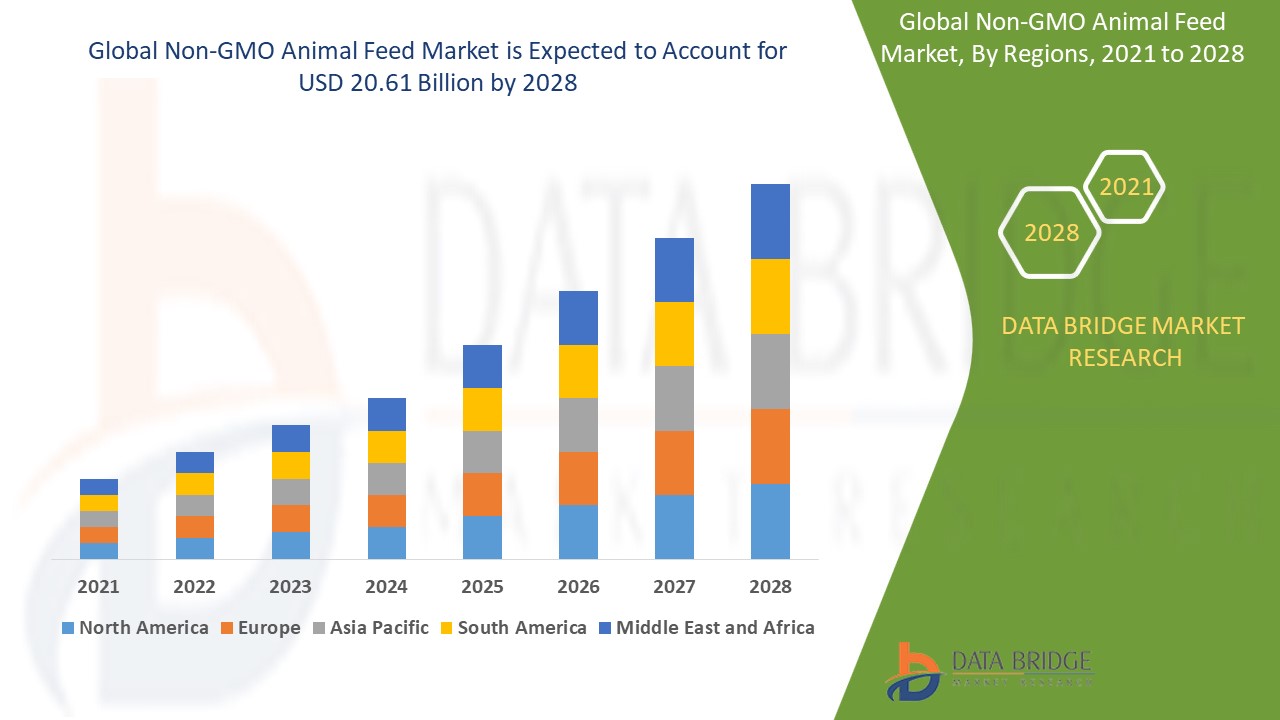
Non-GMO Animal Feed Market Analysis
The non-GMO animal feed market has seen significant growth due to technological advancements and the increasing demand for natural and organic products. One of the latest methods driving growth is the use of precision nutrition technologies, which optimize animal feed formulations based on individual needs. This improves feed efficiency, reduces waste, and enhances animal health, leading to increased demand for non-GMO food.
Advanced processing technologies, such as enzymatic treatments and fermentation techniques, have also played a role in improving the digestibility and nutritional value of non-GMO feed. These technologies help to maximize the bioavailability of nutrients, promoting better growth rates in livestock. In addition, the use of plant-based protein sources, such as soy and peas, has gained momentum in the non-GMO feed market as they align with consumer preferences for sustainable, non-GMO diets.
The market is also benefiting from innovations in feed additives and supplements, such as probiotics and prebiotics, which improve the gut health of animals and reduce reliance on antibiotics. As consumers increasingly seek non-GMO, sustainable, and organic products, the non-GMO animal feed market is expected to continue expanding, driven by these technologies and growing awareness about the benefits of non-GMO diets for livestock.
Non-GMO Animal Feed Market Size
The global non-GMO animal feed market size was valued at USD 15.72 billion in 2024 and is projected to reach USD 27.02 billion by 2032, with a CAGR of 7.00% during the forecast period of 2025 to 2032. In addition to the insights on market scenarios such as market value, growth rate, segmentation, geographical coverage, and major players, the market reports curated by the Data Bridge Market Research also include in-depth expert analysis, pricing analysis, brand share analysis, consumer survey, demography analysis, supply chain analysis, value chain analysis, raw material/consumables overview, vendor selection criteria, PESTLE Analysis, Porter Analysis, and regulatory framework.
Non-GMO Animal Feed Market Trends
“Shift Towards Plant-Based Proteins”
A significant trend driving growth in the non-GMO animal feed market is the shift towards plant-based protein alternatives. As consumer demand for plant-based products rises, animal feed producers are incorporating more plant-derived ingredients such as peas, lentils, and soybean meal into feed formulations. This reduces reliance on genetically modified crops while aligning with the growing preference for sustainable and natural products. For instance, companies such as Cargill and ADM are adopting non-GMO soybeans in their animal feed products to meet consumer expectations for transparency and sustainability. This trend is not only responding to market demand but also addressing concerns about environmental impact and animal health, enhancing market appeal.
Report Scope and Non-GMO Animal Feed Market Segmentation
|
Attributes |
Non-GMO Animal Feed Key Market Insights |
|
Segments Covered |
|
|
Countries Covered |
U.S., Canada and Mexico in North America, Germany, France, U.K., Netherlands, Switzerland, Belgium, Russia, Italy, Spain, Turkey, Rest of Europe in Europe, China, Japan, India, South Korea, Singapore, Malaysia, Australia, Thailand, Indonesia, Philippines, Rest of Asia-Pacific (APAC) in the Asia-Pacific (APAC), Saudi Arabia, U.A.E, South Africa, Egypt, Israel, Rest of Middle East and Africa (MEA) as a part of Middle East and Africa (MEA), Brazil, Argentina and Rest of South America as part of South America |
|
Key Market Players |
ADM (U.S.), Canadian Organic Feeds Limited (Canada), SunOpta (Canada), Texas Natural Feeds (U.S.), Zeeland Farm Services (U.S.), Bunge Limited (U.S.), Ernst Grain & Livestock (U.S.), Hiland Naturals (U.S.), Modesto Milling Inc. (U.S.), and Sunrise Farms (Canada) |
|
Market Opportunities |
|
|
Value Added Data Infosets |
In addition to the insights on market scenarios such as market value, growth rate, segmentation, geographical coverage, and major players, the market reports curated by the Data Bridge Market Research also include in-depth expert analysis, pricing analysis, brand share analysis, consumer survey, demography analysis, supply chain analysis, value chain analysis, raw material/consumables overview, vendor selection criteria, PESTLE Analysis, Porter Analysis, and regulatory framework |
Non-GMO Animal Feed Market Definition
Non-GMO animal feed refers to feed products for livestock that do not contain genetically modified organisms (GMOs). These feeds are made from ingredients sourced from non-GMO crops, such as corn, soybeans, and grains, ensuring they are free from genetic engineering. Non-GMO animal feed is sought after by farmers who aim to produce animals and animal products that meet consumer demand for natural and organic food options. This type of feed is also perceived as a safer, more sustainable option, as it avoids potential risks associated with GMO crops, such as pesticide resistance and long-term environmental impact.
Non-GMO Animal Feed Market Dynamics
Drivers
- Rising Consumer Preference for Non-GMO Products
Rising consumer preference for non-GMO products is a significant driver of the non-GMO animal feed market. As awareness grows about potential health risks associated with GMOs, consumers increasingly seek animal products free from genetically modified ingredients. This trend is particularly evident in the organic meat and dairy sector, where animals are required to be fed non-GMO feed to meet organic certification standards. For instance, in the U.S., sales of organic meat and dairy products have seen steady growth, with consumers willing to pay premium prices for non-GMO-fed products. This shift is pushing farmers to adopt non-GMO animal feed to cater to the increasing demand for healthier, more natural food options.
- Rising Demand for Organic Animal Products
The growing popularity of organic food has significantly impacted the demand for non-GMO animal feed. Organic certification standards, particularly in regions such as the EU and the U.S., mandate that animals be fed non-GMO feed to qualify for organic labeling. As consumers increasingly seek organic meat, dairy, and eggs due to perceived health and environmental benefits, the demand for non-GMO feed rises. For instance, major retailers such as Whole Foods and Costco have seen a surge in organic product sales, which encourages farmers to adopt non-GMO feed to meet these market preferences. This trend drives growth in the non-GMO animal feed market, aligning with consumer demand for more natural, sustainable food options.
Opportunities
- Global Trade and Export Opportunities
The strict GMO regulations in regions such as the European Union (EU) create significant export opportunities for non-GMO animal feed. As the EU imposes rigorous standards on animal feed, there is a growing demand for non-GMO products, both for local consumption and export to markets with similar regulations. For instance, non-GMO-fed poultry and livestock are increasingly sought after in markets such as Germany, France, and Italy, where consumers prioritize non-GMO products. This demand is driving global producers to expand non-GMO feed production to meet export needs, creating a thriving market for non-GMO animal feed globally and offering economic opportunities for suppliers in non-GMO certified regions.
- Market Premiums for Non-GMO Products
Non-GMO-fed products, such as meat, eggs, and dairy, often command premium prices due to rising consumer demand for natural and healthier alternatives. This price differential provides a significant opportunity for farmers and feed producers to capitalize on a growing market segment. For instance, organic meat producers can charge higher prices for non-GMO-fed products, as seen in the U.S. and EU markets, where consumers are willing to pay more for non-GMO certified products. As consumer preference shifts towards sustainability and health, producers who invest in non-GMO animal feed can not only cater to this demand but also enhance their profitability through premium product pricing.
Restraints/Challenges
- Higher Production Costs
Higher production costs are a significant restraint in the non-GMO animal feed market. Non-GMO crops are generally less abundant and require specialized farming practices, leading to higher raw material costs. As a result, animal feed manufacturers face increased production expenses, which are often passed on to farmers in the form of higher feed prices. In cost-sensitive markets, this makes non-GMO feed less appealing, especially when compared to traditional GMO feed, which is more affordable and readily available. The price disparity between non-GMO and GMO feeds limits the widespread adoption of non-GMO feed, restricting the market’s growth potential and challenging its competitive viability in the global feed industry.
- Limited Availability of Ingredients
The limited availability of non-GMO certified ingredients significantly hampers the growth of the non-GMO animal feed market. As non-GMO crops constitute a smaller portion of overall agricultural production, sourcing these ingredients becomes a major challenge for feed manufacturers. This scarcity creates supply chain bottlenecks, making it difficult for producers to meet the increasing demand for non-GMO animal products. Furthermore, the competition for non-GMO ingredients can drive up prices, further straining the supply chain. These constraints affect manufacturers' ability to scale production, leading to shortages and delays in meeting market demands. The limited ingredient pool presents a continuous obstacle to the widespread adoption of non-GMO animal feed.
This market report provides details of new recent developments, trade regulations, import-export analysis, production analysis, value chain optimization, market share, impact of domestic and localized market players, analyses opportunities in terms of emerging revenue pockets, changes in market regulations, strategic market growth analysis, market size, category market growths, application niches and dominance, product approvals, product launches, geographic expansions, technological innovations in the market. To gain more info on the market contact Data Bridge Market Research for an Analyst Brief, our team will help you take an informed market decision to achieve market growth.
Impact and Current Market Scenario of Raw Material Shortage and Shipping Delays
Data Bridge Market Research offers a high-level analysis of the market and delivers information by keeping in account the impact and current market environment of raw material shortage and shipping delays. This translates into assessing strategic possibilities, creating effective action plans, and assisting businesses in making important decisions.
Apart from the standard report, we also offer in-depth analysis of the procurement level from forecasted shipping delays, distributor mapping by region, commodity analysis, production analysis, price mapping trends, sourcing, category performance analysis, supply chain risk management solutions, advanced benchmarking, and other services for procurement and strategic support.
Expected Impact of Economic Slowdown on the Pricing and Availability of Products
When economic activity slows, industries begin to suffer. The forecasted effects of the economic downturn on the pricing and accessibility of the products are taken into account in the market insight reports and intelligence services provided by DBMR. With this, our clients can typically keep one step ahead of their competitors, project their sales and revenue, and estimate their profit and loss expenditures.
Non-GMO Animal Feed Market Scope
The market is segmented on the basis of product and distribution channel. The growth amongst these segments will help you analyze meagre growth segments in the industries and provide the users with a valuable market overview and market insights to help them make strategic decisions for identifying core market applications.
Product
- Poultry
- Swine
- Ruminant
- Aquaculture
- Others
Distribution Channel
- Offline
- Online
Non-GMO Animal Feed Market Regional Analysis
The market is analysed and market size insights and trends are provided by country, product and distribution channel as referenced above.
The countries covered in the market report are U.S., Canada, Mexico in North America, Germany, Sweden, Poland, Denmark, Italy, U.K., France, Spain, Netherland, Belgium, Switzerland, Turkey, Russia, Rest of Europe in Europe, Japan, China, India, South Korea, New Zealand, Vietnam, Australia, Singapore, Malaysia, Thailand, Indonesia, Philippines, Rest of Asia-Pacific (APAC) in Asia-Pacific (APAC), Brazil, Argentina, Rest of South America as a part of South America, U.A.E, Saudi Arabia, Oman, Qatar, Kuwait, South Africa, Rest of Middle East and Africa (MEA) as a part of Middle East and Africa (MEA)
North America is expected to dominate the non-GMO animal feed market, driven by the growing demand for non-GMO products and increasing awareness of the negative impacts of genetically modified organisms (GMOs) on health and the environment. Consumers in the region are becoming more conscious of the food they consume, leading to a shift towards non-GMO and organic options. In addition, stringent regulations regarding the use of genetically modified ingredients in animal feed further support the market's growth. This trend is anticipated to continue, with North America holding a significant share of the global market in the coming years.
Asia Pacific is expected to show lucrative growth in the non-GMO animal feed market due to its high production of feed crops such as soy and corn, which are essential ingredients for animal feed. The region's agricultural strength enables the availability of non-GMO raw materials at competitive prices, lowering production costs. In addition, increasing awareness about the benefits of non-GMO feed and a growing demand for organic meat products further drive market growth. With a robust agricultural infrastructure, Asia Pacific is positioned to be a key player in the global non-GMO animal feed market.
The country section of the report also provides individual market impacting factors and changes in regulation in the market domestically that impacts the current and future trends of the market. Data points such as down-stream and upstream value chain analysis, technical trends and porter's five forces analysis, case studies are some of the pointers used to forecast the market scenario for individual countries. Also, the presence and availability of global brands and their challenges faced due to large or scarce competition from local and domestic brands, impact of domestic tariffs and trade routes are considered while providing forecast analysis of the country data.
Non-GMO Animal Feed Market Share
The market competitive landscape provides details by competitor. Details included are company overview, company financials, revenue generated, market potential, investment in research and development, new market initiatives, global presence, production sites and facilities, production capacities, company strengths and weaknesses, product launch, product width and breadth, application dominance. The above data points provided are only related to the companies' focus related to market.
Non-GMO Animal Feed Market Leaders Operating in the Market Are:
- ADM (U.S.)
- Canadian Organic Feeds Limited (Canada)
- SunOpta (Canada)
- Texas Natural Feeds (U.S.)
- Zeeland Farm Services (U.S.)
- Bunge Limited (U.S.)
- Ernst Grain & Livestock (U.S.)
- Hiland Naturals (U.S.)
- Modesto Milling Inc. (U.S.)
- Sunrise Farms (Canada)
Latest Developments in Non-GMO Animal Feed Market
- In May 2023, Evonik unveiled plans to introduce an enhanced version of Biolys, a reliable lysine source for animal feed. This upgraded formulation aims to help customers meet the specific L-lysine requirements of their animals more effectively. The new version of Biolys offers a more efficient way to improve livestock nutrition, addressing growing demands for high-quality amino acid supplementation in animal feeds
- In February 2023, SKUAST launched two innovative products for animal nutrition, including Kashmir’s research-based animal feed supplement, KashMin, and a Region-Specific Mineral Mixture for Livestock. Both products were developed to cater to the distinct mineral needs of the region’s animals. The aim is to enhance livestock health and productivity by ensuring they receive the optimal balance of nutrients specific to Kashmir's agricultural environment
SKU-

研究方法
数据收集和基准年分析是使用具有大样本量的数据收集模块完成的。该阶段包括通过各种来源和策略获取市场信息或相关数据。它包括提前检查和规划从过去获得的所有数据。它同样包括检查不同信息源中出现的信息不一致。使用市场统计和连贯模型分析和估计市场数据。此外,市场份额分析和关键趋势分析是市场报告中的主要成功因素。要了解更多信息,请请求分析师致电或下拉您的询问。
DBMR 研究团队使用的关键研究方法是数据三角测量,其中包括数据挖掘、数据变量对市场影响的分析和主要(行业专家)验证。数据模型包括供应商定位网格、市场时间线分析、市场概览和指南、公司定位网格、专利分析、定价分析、公司市场份额分析、测量标准、全球与区域和供应商份额分析。要了解有关研究方法的更多信息,请向我们的行业专家咨询。
可定制
Data Bridge Market Research 是高级形成性研究领域的领导者。我们为向现有和新客户提供符合其目标的数据和分析而感到自豪。报告可定制,包括目标品牌的价格趋势分析、了解其他国家的市场(索取国家列表)、临床试验结果数据、文献综述、翻新市场和产品基础分析。目标竞争对手的市场分析可以从基于技术的分析到市场组合策略进行分析。我们可以按照您所需的格式和数据样式添加您需要的任意数量的竞争对手数据。我们的分析师团队还可以为您提供原始 Excel 文件数据透视表(事实手册)中的数据,或者可以帮助您根据报告中的数据集创建演示文稿。











