



全球豌豆蛋白市場細分,按產品類型(黃豌豆和綠豌豆)、性質(有機和常規)、加工類型(乾式加工和濕法加工)、最終用途(食品加工、動物飼料、營養保健品、運動營養、嬰幼兒營養以及化妝品和個人護理)劃分——行業趨勢及至2033年的預測
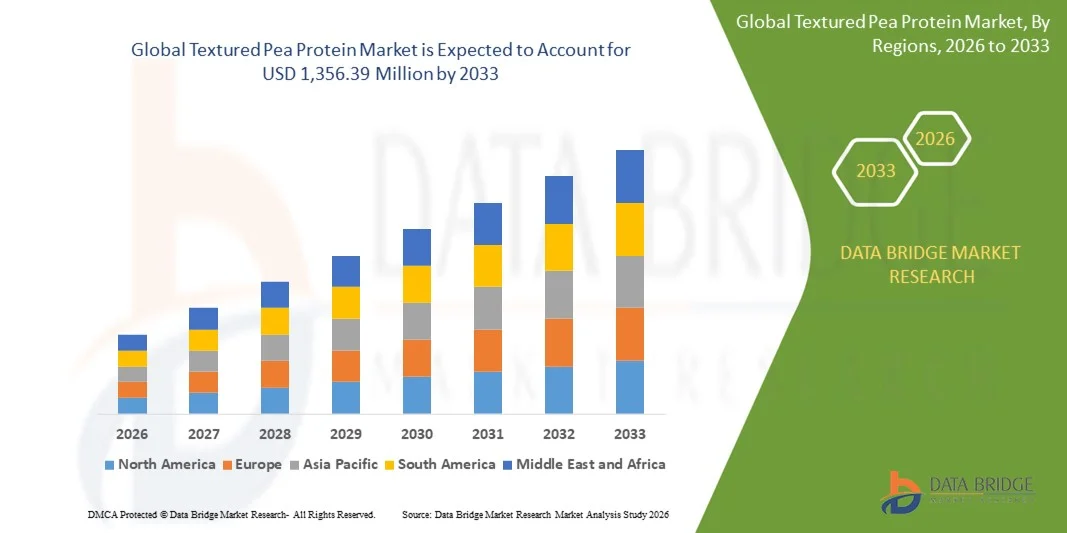
豌豆蛋白市場規模
- 2025年全球豌豆組織蛋白市場規模為8.1957億美元 ,預計 2033年將達13.5639億美元,預測期內 複合年增長率為6.50%。
- 市場成長主要得益於食品領域(例如肉類替代品、零食和烘焙食品)對植物蛋白原料需求的不斷增長,以及消費者對清潔標籤、無過敏原和可持續蛋白來源的偏好日益增強。
- 由於豌豆蛋白用途廣泛、成本效益高且營養成分優良,其在加工食品中的應用日益廣泛,這進一步推動了市場擴張。
豌豆蛋白市場分析
- 由於人們越來越傾向於彈性素食,以及對環境永續食品生產的日益重視,市場呈現強勁成長動能。
- 為了滿足快速成長的植物肉和即食食品市場的需求,製造商們正在拓展產品組合,以改進產品的質地、風味和功能。
- 2025年,北美地區在豌豆蛋白市場佔據主導地位,收入份額最大,這主要得益於對植物性食品、清潔標籤成分和可持續蛋白質替代品的強勁需求。
- 受快速城市化、飲食偏好變化以及植物蛋白在主流食品中日益普及等因素的推動,亞太地區預計將成為全球豌豆蛋白市場成長最快的地區。
- 預計到2025年,黃豌豆將佔據最大的市場份額,這主要得益於其較高的蛋白質含量、中性的風味以及在肉類替代品、烘焙產品和零食等領域的廣泛適用性。此外,黃豌豆還具有更高的加工效率,使其成為大規模組織蛋白生產的首選原料。
報告範圍及豌豆蛋白市場細分
|
屬性 |
豌豆蛋白市場關鍵洞察 |
|
涵蓋部分 |
|
|
覆蓋國家/地區 |
北美洲
歐洲
亞太
中東和非洲
南美洲
|
|
主要市場參與者 |
•英聯食品公司(美國) |
|
市場機遇 |
|
|
加值資料資訊集 |
除了對市場狀況(如市場價值、成長率、細分、地理覆蓋範圍和主要參與者)的洞察之外,Data Bridge Market Research 精心編制的市場報告還包括深入的專家分析、定價分析、品牌份額分析、消費者調查、人口統計分析、供應鏈分析、價值鏈分析、原材料/消耗品概述、供應商選擇標準、PESTLE 分析、波特五力分析和監管框架。 |
豌豆蛋白市場趨勢
清潔標籤和植物基配方的興起
- 隨著消費者對清潔標籤和低加工成分的需求日益增長,豌豆蛋白市場正經歷重塑,製造商正致力於開發質地、風味和營養價值更佳的產品。這一趨勢與消費者對植物性飲食、永續性和無過敏原蛋白質來源的日益青睞相契合,從而提升了肉類替代品和功能性食品的需求。
- 豌豆蛋白在方便食品(例如即食餐和零食)中的應用日益廣泛,正在加速其市場滲透。豌豆蛋白用途廣泛、成本效益高,且能夠模擬肉類般的口感,因此在配方食品中廣泛應用,尤其是在彈性素食消費者群體中。
- 人們健康意識的不斷提高進一步推動了對豌豆蛋白的需求,因為豌豆蛋白具有易消化、氨基酸含量均衡、不含大豆、麩質和基因改造成分等優點。這促使食品生產商利用豌豆蛋白改良產品配方,以吸引更廣泛的消費族群。
- 例如,2024年,歐洲多家植物肉品牌擴大了產品線,使用豌豆蛋白增強產品口感,減少對大豆成分的依賴,進而提高產品接受度和貨架佔有率。
- 創新固然提升了產品品質,但市場的長期成長仍取決於感官屬性的持續改進、供應鏈的穩定性以及成本競爭力,以滿足不斷變化的消費者期望。
豌豆蛋白市場動態
司機
植物性飲食日益普及,對永續蛋白質來源的需求不斷增長
- 人們越來越傾向於植物性飲食,這促使食品生產商將豌豆蛋白作為核心成分,因為它具有可持續性優勢和環保的生產過程。這鞏固了豌豆蛋白作為動物性蛋白質和大豆蛋白的理想替代品的地位。
- 消費者越來越意識到植物性蛋白質帶來的健康益處,例如改善消化、降低過敏風險和提升營養均衡。這種轉變推動了植物肉、植物乳製品和富含蛋白質零食的日常消費,從而提振了整體市場需求。
- 政府措施、食品科技投資以及主要食品生產商的永續發展承諾,正進一步推動豌豆蛋白的普及應用。這些項目支持植物源性成分的研究、產品開發和商業化。
- 例如,2023年,北美食品公司報告稱,為支持零售和餐飲服務管道中不斷增長的植物肉市場,增加了豌豆蛋白濃縮物和組織化豌豆蛋白的採購量。
- 儘管消費者意識的提高和行業投資正在擴大市場,但要實現更廣泛的應用,還需要改進感官特性、保持價格穩定,並持續創新以滿足高性能配方的需求。
克制/挑戰
豌豆蛋白生產相關的價格波動和供應限制
- 豌豆種植原料價格波動和供應限制影響了組織化豌豆蛋白的整體成本,使其難以被中小型生產者所接受。作物供應有限和產量不穩定給整個價值鏈帶來了價格壓力。這些波動也會影響食品生產商的合約定價,導致生產成本不穩定,並在價格敏感型市場中降低競爭力。
- 生產優質豌豆蛋白需要先進的加工技術,這會增加營運成本,尤其對於產能有限的公司更是如此。這限制了規模化生產,並減緩了新興地區的市場擴張。小型生產商往往面臨高額的資本支出壁壘,限制了創新,並降低了其滿足不斷增長的需求的能力。
- 供應鏈面臨的挑戰,例如加工設施有限以及對特定地理區域的依賴,降低了豌豆衍生原料的穩定供應。這些因素阻礙了產品標準化,並造成食品生產商的供應缺口。季節性變化進一步加劇了採購週期的複雜性,導致產品上市延遲和配方調整。
- 例如,2023年,亞太地區多家食品加工企業報告稱,由於北美和歐洲豌豆供應中斷,導致交貨延遲和價格上漲。這些中斷加劇了依賴進口原材料的製造商的庫存壓力。因此,許多公司被迫暫時調整產品配方,以維持生產的連續性。
- 儘管技術進步提高了加工效率,但解決供應穩定性、生產成本和原材料供應問題對於實現長期市場規模化仍然至關重要。更強大的區域生產中心和多元化的採購策略對於降低脆弱性至關重要。投資永續農業實踐對於穩定產量和保障未來供應也變得越來越重要。
豌豆蛋白市場範圍
市場按產品類型、性質、加工類型和最終用途進行細分。
- 依產品類型
根據產品類型,豌豆組織蛋白市場可分為黃豌豆和綠豌豆。預計到2025年,黃豌豆組織蛋白將佔據最大的市場份額,這主要得益於其更高的蛋白質濃度、中性的風味以及在肉類替代品、烘焙產品和休閒食品等領域的廣泛適用性。此外,黃豌豆還具有更高的加工效率,使其成為大規模組織蛋白生產的首選原料。
預計2026年至2033年間,青豌豆市場將顯著成長,這主要得益於消費者對加工最少、天然植物蛋白來源的需求不斷增長。由於青豌豆具有清潔標籤的特性和良好的可持續性優勢,因此在有機營養產品和高端功能性食品等特殊應用領域越來越受歡迎。
- 自然
根據產品特性,市場可分為有機產品和傳統產品。由於其供應廣泛、生產成本較低,且在即食食品和肉類替代品等主流食品加工領域應用廣泛,傳統產品預計在2025年將佔據最大的市場份額。製造商通常依賴傳統產品來實現具有競爭力的價格和充足的供應量。
由於消費者越來越傾向選擇不含化學物質、非基因改造且可持續來源的原料,預計2026年至2033年間,有機食品市場將顯著成長。有機豌豆蛋白越來越多地應用於高端營養產品、植物肉以及面向健康意識消費者的清潔標籤配方中。
- 按處理類型
根據加工方式,市場可分為乾式加工和濕式加工。預計到2025年,乾式加工將佔據主導地位,這主要得益於其成本效益高、能耗低,以及能夠生產出適合肉餅和肉塊等肉類替代品的理想纖維質地。此外,乾式加工技術也支援大規模生產,並將對環境的影響降至最低。
預計2026年至2033年間,濕式加工領域將實現顯著成長,因為食品製造商越來越多地採用濕式加工技術來滿足產品對功能性、質地和蛋白質純度的要求。濕式加工的豌豆組織蛋白正日益廣泛地應用於高性能配方中,例如乳製品替代品、強化飲料和特殊營養產品。
- 按最終用途
根據最終用途,豌豆蛋白市場可細分為食品加工、動物飼料、營養保健品、運動營養、嬰幼兒營養以及化妝品和個人護理。由於消費者對可持續且富含蛋白質的配料需求強勁,植物肉製品、方便食品和烘焙食品中大量添加了豌豆蛋白,預計到2025年,食品加工領域將佔據最大市場份額。
預計從2026年到2033年,營養保健品市場將出現顯著增長,因為豌豆蛋白因其不含過敏原且易於消化,越來越受到尋求替代乳清蛋白和大豆蛋白等傳統蛋白質來源的消費者的青睞。此外,在動物飼料、嬰幼兒營養以及化妝品和個人護理領域,豌豆蛋白也正穩步發展,這得益於其清潔標籤的吸引力、營養價值以及在各種配方中的功能多樣性。
豌豆蛋白市場區域分析
- 2025年,北美地區在豌豆蛋白市場佔據主導地位,收入份額最大,這主要得益於對植物性食品、清潔標籤成分和可持續蛋白質替代品的強勁需求。
- 該地區的消費者越來越傾向於選擇高蛋白、不含過敏原且對環境友善的成分,這推動了豌豆蛋白在肉類替代品、零食和營養產品中的應用。
- 這種廣泛的認可度還得益於成熟的食品加工業、不斷增長的彈性素食人群以及持續的產品創新,這些因素共同促成了豌豆蛋白的廣泛應用,使其成為主流食品和特種食品製造商的關鍵原料。
美國豌豆蛋白市場洞察
2025年,美國豌豆蛋白市場在北美佔據最大的市場份額,這主要得益於植物肉品牌的快速擴張、消費者對替代蛋白的濃厚興趣以及人們對永續食品選擇的日益關注。食品製造商正越來越多地使用豌豆蛋白改良產品配方,以改善營養成分並減少對大豆的依賴。純素食、素食和彈性素食飲食的日益普及,以及對食品科技創新的持續投入,都將繼續推動市場成長。
歐洲豌豆蛋白市場洞察
受嚴格的可持續發展法規、對環保蛋白日益增長的需求以及植物性飲食普及率不斷提高的推動,預計2026年至2033年間,歐洲豌豆蛋白市場將迎來最快的增長速度。歐洲消費者對清潔標籤和加工最少的產品接受度很高,促進了豌豆蛋白在肉類替代品、烘焙食品和即食食品等領域的應用。此外,在以健康為中心的消費模式和不斷擴大的純素產品組合的推動下,該地區在餐飲服務業的應用也呈現強勁成長動能。
英國豌豆蛋白市場洞察
受消費者日益增強的健康、永續性和道德飲食意識的推動,英國豌豆蛋白市場預計將在2026年至2033年間保持強勁成長。植物性食品的日益普及,以及消費者對過敏原和加工成分的擔憂,促使生產商採用豌豆蛋白解決方案。此外,英國蓬勃發展的零售和餐飲服務業,以及快速的產品創新,也進一步推動了市場擴張。
德國豌豆蛋白市場洞察
受德國對永續食品體系的重視、先進的生產能力以及對優質植物蛋白原料的強勁需求的推動,德國豌豆蛋白市場預計將在2026年至2033年間實現顯著成長。德國消費者高度重視天然、營養豐富且環保的產品,促進了豌豆蛋白在植物肉、運動營養品和特色食品中的快速應用。自動化和食品科技創新技術的日益普及也進一步加速了市場發展。
亞太地區豌豆蛋白市場洞察
受城市化進程加快、可支配收入增加以及人們對健康飲食日益增長的需求等因素的推動,亞太地區豌豆蛋白市場預計將在2026年至2033年間實現最快增長。在政府大力推動永續農業和蛋白質多樣化的背景下,該地區的植物性食品製造業正經歷快速擴張。隨著亞太地區作為主要食品原料生產中心的地位日益鞏固,豌豆蛋白的可及性和價格優勢也將持續提升。
日本豌豆蛋白市場洞察
由於日本消費者偏好健康、優質且加工最少的食材,預計2026年至2033年間,日本豌豆蛋白市場將呈現強勁成長。城市地區植物性食品的日益普及,以及創新蛋白質解決方案在傳統和現代烹飪中的應用,正在推動市場擴張。此外,日本人口老化預計也將支撐對易消化、營養豐富且成分純淨的蛋白質的需求。
中國豌豆蛋白市場洞察
到2025年,中國豌豆蛋白市場預計將佔據亞太地區最大的市場份額,這主要得益於快速的城市化進程、不斷壯大的中產階級消費以及消費者對營養食品和植物性食品日益增長的需求。中國是植物基原料的主要生產中心,具備大規模生產和價格競爭力。政府對永續食品體系的高度重視,以及植物肉和功能性食品滲透率的不斷提高,都持續推動著中國豌豆蛋白市場的發展。
豌豆蛋白市佔率
豌豆蛋白組織產業主要由一些成熟企業主導,其中包括:
• 英聯食品公司(美國)
• 羅蓋特兄弟公司(法國)
• 普瑞斯公司(美國)
• 埃姆斯蘭集團(德國)
• 芬康公司(中國)
• 綠實驗室有限責任公司(美國)
• 杜邦公司(美國)
• A&B配料公司(美國)
• 格蘭比亞公司(愛爾蘭)
• 山東源集團(中國) •
愛爾蘭食材公司
(愛爾蘭) • 庫拉(愛爾蘭)
庫拉工業公司(美國)
。公理食品公司(美國) •
伯康公司(加拿大)
• 科蘇克拉公司(比利時)
• 索泰克斯普羅公司(法國)
• 煙台雙塔食品有限公司(中國)
• AGT食品配料公司(加拿大)
• 植物療法有限公司(澳大利亞)
SKU-

研究方法
数据收集和基准年分析是使用具有大样本量的数据收集模块完成的。该阶段包括通过各种来源和策略获取市场信息或相关数据。它包括提前检查和规划从过去获得的所有数据。它同样包括检查不同信息源中出现的信息不一致。使用市场统计和连贯模型分析和估计市场数据。此外,市场份额分析和关键趋势分析是市场报告中的主要成功因素。要了解更多信息,请请求分析师致电或下拉您的询问。
DBMR 研究团队使用的关键研究方法是数据三角测量,其中包括数据挖掘、数据变量对市场影响的分析和主要(行业专家)验证。数据模型包括供应商定位网格、市场时间线分析、市场概览和指南、公司定位网格、专利分析、定价分析、公司市场份额分析、测量标准、全球与区域和供应商份额分析。要了解有关研究方法的更多信息,请向我们的行业专家咨询。
可定制
Data Bridge Market Research 是高级形成性研究领域的领导者。我们为向现有和新客户提供符合其目标的数据和分析而感到自豪。报告可定制,包括目标品牌的价格趋势分析、了解其他国家的市场(索取国家列表)、临床试验结果数据、文献综述、翻新市场和产品基础分析。目标竞争对手的市场分析可以从基于技术的分析到市场组合策略进行分析。我们可以按照您所需的格式和数据样式添加您需要的任意数量的竞争对手数据。我们的分析师团队还可以为您提供原始 Excel 文件数据透视表(事实手册)中的数据,或者可以帮助您根据报告中的数据集创建演示文稿。











