



北美数字借贷平台市场分割,按构成部分(结构和服务)、部署模式(房地、云)、贷款数额(减少7,000美元、7,001美元至20,000美元和20,001美元以上)、订阅类型(免费和有偿)、贷款类型(贷款、中小企业融资贷款、个人贷款、住房贷款、耐用消费者贷款等)、纵向(银行、金融服务、保险公司、P2P(Peer-to-Peer)放款人、信用社、储蓄和贷款协会)----2033年行业趋势和预测
北美数字借贷平台市场概况.
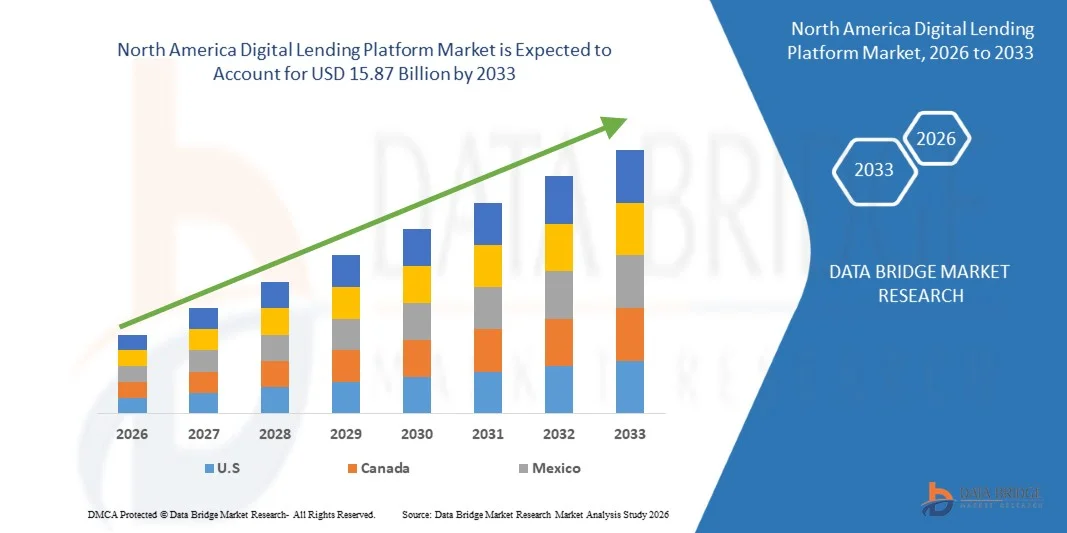
根据数据桥市场研究分析,北美数字借贷平台市场的价值为:2025年36.2亿美元预计将达到至2033年15.87亿美元,生长在一个2026年至2033年CAGR为20.30%市场正在经历强劲增长,其驱动力是金融服务数字化程度不断提高,对更快和无纸贷款处理的需求不断增加,人工智能、机器学习和云基借贷技术不断进步。 金融机构、金融技术公司和非银行金融公司(NBFCs)越来越多地采用数字借贷平台,使贷款来源、信用评估、承销、支付和贷款服务自动化,从而能够更快地获得批准,提高业务效率并增强客户经验。 越来越多地使用替代数据来源、人工智能功率信用评分、电子 " 了解你的客户 " (e-KYC)和数字身份核查,在扩大金融包容性的同时进一步提高出借准确性。
智能手机、互联网连接和数字支付生态系统日益普及,加上消费者越来越喜欢远程和无联系的金融服务,鼓励银行、信用社、金融技术供应商和贷款机构投资于先进的数字借贷平台。 AI驱动的风险评估工具,自动决策引擎,开放银行一体化,并嵌入式融资解决方案正越来越多地取而代之地取代传统的人工放贷流程,实现实时借款人评价,个性化放贷,发现欺诈,遵守监管,无缝贷款管理. 此外,云计算、应用编程接口(API)、区块链技术和数据分析的整合,正在进一步加快在发达和新兴市场采用数字借贷平台解决方案。
市场大小和预测
- 市场价值(2025):362亿美元
- 预期市场价值(2033年):15.87亿美元
- CAGR(2026-2033年):20.30%
- 2025年领导大区:S.
- 快速增长区域:加拿大
主要市场趋势和见解
- 美国主导了北美数字出借平台市场,2025年收入份额估计为82.4%,其驱动力是高度发达的银行业和金融科技生态系统,广泛采用数字银行服务,加大实施AI授权信贷决策,金融创新支持性监管举措,以及领先数字出贷人和技术供应商的强大出行. 我国金融基础设施先进,智能手机普及率高,对即时数字贷款审批的需求不断增长等,继续加强了对北美数字出借平台市场的领导.
- 2025年,由于对提供高级自动化、AI驱动的信用评估、欺诈侦查、监管合规、贷款服务以及客户关系管理能力的企业级贷款平台的需求不断增加,付费部分在市场上占据了大约74.8%的份额。
- 加拿大预计将看到北美数字贷款平台市场增长最快,估计2026-2033年期间CAGR增长率为17.8%,并得到了各金融机构快速数字化转型的支持,越来越多地采用以云为基础的贷款平台,增加金融技术投资,扩大对数字消费者和中小企业贷款解决方案的需求,以及支持政府促进金融创新的举措。 开放银行业务、人工智能代理承销和自动贷款技术的日益推广,正在进一步加快整个加拿大的市场增长。
- P2P(对等)放款人部分预计将见证最快的CAGR2026年至2033年占3%由通过数字平台将借款人与个人和机构投资者直接联系起来的替代贷款模式越来越受欢迎所驱动。
- 中小企业融资贷款部分预计将登记为:2026年至2033年占1%由对数字周转资金、企业扩张融资、设备采购和中小企业现金流量管理的需求增加所驱动。
报告范围和数字借贷平台市场分割
|
属性 |
数字借贷平台关键市场透视 |
|
覆盖部分 |
|
|
涵盖国家 |
北美
|
|
关键市场玩家 |
|
|
市场机会 |
|
|
添加数据信息集的值 |
除了对市场价值,增长率,分化,地域覆盖,主要角色等市场情景的深刻认识外,由"数据桥市场研究"负责的市场报告还包括深入的专家分析,地域代表性的公司生产和能力,经销商和合作伙伴的网络布局,详细更新的价格趋势分析和供应链和需求赤字分析等. |
数字借贷平台市场趋势
趋势 :AI授权贷款来源和嵌入式融资平台日益被采用
银行、金融科技公司、信用社和非银行金融机构越来越多地采用人工智能、机器学习和嵌入式金融技术,使借贷业务现代化,提供更快、更个性化的借贷经验。 AI能动数字出借平台利用实时财务和行为数据自动将客户登机,身份验证,信用分数,欺诈侦测,文件处理,贷款承销,风险评估等. 云内贷款平台、开放的银行业API和替代信用评分模式的日益采用,使放款人能够缩短贷款批准时间,同时提高业务效率和信用准确性。 嵌入式借贷能力也正在融入电子商务平台、企业资源规划系统、会计软件和数字市场,使消费者和企业在采购过程中能够无缝地获得融资。 例如,在2024年6月, Salesforce在金融服务云上为印度启动了数字借贷,这是一个专门设计的数字借贷平台,使银行和金融机构能够通过统一的云平台实现客户登机自动化、KYC验证、贷款来源、承销、文件管理和贷款支付。 采用这一解决方案是为了加快数字贷款转型,提高各金融机构的业务效率。
北美数字借贷平台市场动态
关键市场驱动程序 :增加采用AI、开放银行和自动信贷决定
人工智能、开放式银行框架和自动信贷决策解决方案日益被采用,是全球数字借贷平台市场的一个主要驱动力。 金融机构越来越多地用智能贷款平台取代人工贷款处理,这些平台能够使借款人自动登入、数字身份核查、信用评分、文件核查、贷款承销和欺诈侦查。 AI和机器学习技术使放款人能够分析大量结构化和可替代的金融数据,提高放款的准确性,同时将批准时间从几天缩短到几分钟. 数字银行,智能手机使用,云计算,API金融生态系统的快速扩展正在进一步加快采用. 此外,对即时个人贷款、中小企业融资、Buy Now Pay Later(BNPL)和嵌入式贷款服务的需求不断增加,继续增强市场增长。 金融机构正在大力投资AI驱动的放款技术,以改善客户经验,并降低运营成本. 例如,2022年9月,轴心银行成为印度最早通过账户汇总框架引入数字贷款的银行之一,使客户能够安全分享金融信息,并获得更快的无纸贷款批准。 该倡议表明,人们越来越多地利用开放的银行基础设施来简化数字贷款和改善客户经验。
关键限制/挑战:网络安全风险增加和监管合规要求增加
全球数字借贷平台市场面临的一个主要挑战是保护敏感的金融信息,同时遵守不断发展的数据隐私和金融条例。 数字借贷平台处理大量个人可识别的信息、银行记录、收入细节和信用历史,使它们对网络罪犯具有吸引力。 金融机构要不断投资加密技术,身份核查系统,防欺诈平台,保障云基础设施安全,保障客户数据安全. 与此同时,世界各地的监管机构正在对基于AI的信用决策、算法透明度、模型可解释性以及消费者数据的负责任使用实行更严格的治理要求。 这些监管义务增加了在多个法域部署AI驱动出借平台的出贷人的执行成本和业务复杂性. 例如,2023年10月,消费者金融保护局(CFPB)发布了指导意见,澄清使用复杂AI或算法模型的放款人仍必须根据《平等信贷机会法》提供准确的不利行动通知,加强AI驱动的放款决定的透明度和公平性要求。
主要市场机会:扩大嵌入式金融、中小企业借贷和API-Driven银行生态系统
嵌入式金融、服务银行(BaaS)和API驱动的金融生态系统的迅速扩展,为全球数字借贷平台市场提供了重要的长期机会。 企业越来越多地将借贷能力直接纳入电子商务平台、支付应用程序、企业软件和数字市场,使客户无需访问传统银行即可获得融资。 AI的能动信用评估、替代数据分析以及开放的银行技术正在改善服务不足的消费者和小企业获得信用的机会,同时降低出贷风险。 银行、金融技术公司、云供应商和支付网络之间日益加强的合作正在加速嵌入式贷款解决方案的创新。 增加对云内借贷基础设施、API连接和实时金融数据共享的投资,预计将推动全球下一代借贷平台的发展。 例如,在2024年1月,Mastercard扩展了其开放金融解决方案,使金融机构和金融技术公司能够通过利用消费者允许的金融工具,提供更快、安全、基于同意的贷款和信贷决策。(单位:千美元)支持更广泛地采用嵌入式金融和数字借贷服务。
数字借贷平台市场范围
数字出借平台市场按照组件,部署模式,出借金额规模,订阅类型,出借类型,垂直划分.
- 按构成部分
在组成部分的基础上,全球数字借贷平台市场被分割成解决方案和服务. 2025年,由于银行、金融科技公司、非银行金融公司和信用社越来越多地采用端到端数字借贷软件,解决方案部分在市场上占据了大约69.3%的份额。 这些平台通过一个单一的综合平台,自动提供贷款来源、借款人登机、身份核查、信用评分、承销、文件管理和贷款服务。 全球数字贷款平台市场正在目睹对AI驱动决策引擎的强劲需求,这些引擎能够更快地核准贷款,同时提高业务效率并降低处理成本. 金融机构正在越来越多地将云计算、开放银行业的API、机器学习和欺诈侦查能力纳入贷款平台,以提高客户经验。 对即时数字贷款和嵌入式融资的需求日益增加,进一步支持采用。 移动银行业务和数字金融服务的扩展继续加强了软件解决方案的主导地位. 预测分析和自动风险评估的持续创新正在提高贷款的准确性。 金融机构增加对数字转型的投资,预计将在整个预测期间保持解决方案部分的领导地位。
2026至2033年,由于对咨询、执行、云层迁移、定制、整合、管理服务以及平台维护的需求不断增加,预计服务部分将最快达到19.2%的CAGR。 金融机构需要专门知识,以便将数字借贷平台与现有的核心银行系统和第三方金融应用相结合。 全球数字出借平台市场正在经历对AI模型优化,网络安全咨询,监管合规,以及开放银行实施服务的需求不断增长. 区域银行和金融技术公司越来越多地采用这种技术,这正在加速对专业支助服务的需求。 软件的不断升级和监管变化进一步增加了服务需求。 金融机构越来越多地外包平台管理,以提高效率并减少业务复杂性。 扩大云吸收也支持管理服务的增长。 这些因素预计将在整个预测期间加速服务部分。
- 按部署模式
根据部署模式,全球数字出借平台市场被分割入房地和云上. 云层部分在2025年占据了市场主导地位,其份额估计为64.8%,原因是其可扩展性、基础设施成本较低、部署更快、与数字银行生态系统无缝结合。 金融机构越来越偏好云端出借平台,因为它们支持实时信用评估,远程访问,自动软件更新,以及增强灾后恢复能力. 全球数字借贷平台市场继续从快速向 " 服务软件 " (SaaS)借贷解决方案过渡中受益。 云层部署使各组织能够迅速推出新的数字借贷产品,同时保持监管合规和业务灵活性。 AI动力承销,开放银行API,并嵌入式融资解决方案日益被采用,进一步加强了云部署. 银行和金融技术公司正在利用云基础设施处理高贷款量,同时保持系统可靠性。 云提供商增加投资支持平台创新. 这些因素继续强化了云段的主导地位.
房地部分预计将在需要在特定受管制环境中严格数据控制的组织中最快通过,2026至2033年登记为16.8%的CAGR。 处理高度敏感的客户信息的大型金融机构继续投资于房地基础设施,以保持对数据安全和遵守监管的更大控制。 全球数字借贷平台市场继续目睹在严格内部治理政策下运作的组织的需求。 金融机构倾向于根据具体情况部署复杂的贷款工作流程和遗留系统。 对网络安全和混合信息技术基础设施的持续投资正在支持扩大市场。 先进的加密技术和安全的内部网络进一步改善了采纳. 需要定制贷款环境的组织继续对房地解决方案进行投资。 预计这些因素将支持预测期间的稳定增长。
- 按贷款金额
根据贷款数额,全球数字借贷平台市场被分割为不足7,000美元、7,001美元至20,000美元以及20,001美元以上。 由于对个人贷款、教育融资、医疗费用、小企业融资和债务合并的强劲需求,7,001美元至20,000美元部分在2025年的市场中占了大约43.9%。 这一贷款类别是借款人承受能力与金融机构可控贷款风险之间的平衡。 由于审批程序高度自动化,全球数字贷款平台市场继续受益于在这一范围内增加数字贷款应用。 基于AI的信用评分和替代数据分析大大地提高了中贷贷款的效率. 银行和金融技术贷款人正在扩大灵活的还款选择,以吸引借款人。 数字银行的采用和移动贷款应用日益增多,进一步支持了市场增长。 薪酬专业人员和中小企业的需求不断增加,这继续强化这一部门。 这些因素预计将在整个预测期间保持其支配地位。
20 001美元以上的部分预计将在2026至2033年达到18.6%的最快CAGR, 其动力是数字住房贷款增加、企业扩张融资、商业贷款和高价值消费者融资。 金融机构越来越多地利用AI驱动的承销模式来加快核准高价值贷款,同时改进风险管理. 全球数字贷款平台市场越来越多地采用自动收入核实、数字文件处理和对大额贷款的预测性信用评估。 扩大抵押数字化和中小企业融资方案正在支持需求。 对数字贷款技术的信心日益增强,这正在鼓励借款人通过在线平台寻求更大的贷款。 金融机构继续着力提高先进风险评估能力,提高贷款准确性. 预计在预测期间,这些事态发展将大大加快较高贷款价值部分的增长。
- 通过订阅类型
根据订阅类型,全球数字出借平台市场被分割为免费付费. 付费部分在市场上占主导地位,估计2025年占74.8%的比例由于对提供高级自动化、AI驱动的信用评估、欺诈侦查、监管合规、贷款服务和客户关系管理能力的企业级贷款平台的需求日益增加。 金融机构,银行,NBFC,和Fintech公司越来越倾向于付费平台,因为它们提供强化的安全,专用技术支持,定期软件升级,并与核心银行系统无缝地融合. 全球数字出借平台市场继续有大量投资于基于订阅的软件服务(SaaS)出借解决方案,这些解决方案既能提高业务效率又能减少人工处理. 付费平台还提供可定制的工作流程、分析仪表板、API连接和云可扩展性,支持高贷款量。 越来越多的监管要求和网络安全关切正在鼓励各组织采用保费认购模式。 AI,机器学习,预测分析的持续创新进一步加强了付费部分的领导. 这些优势预计将在整个预测期间维持其主导地位。
自由区段预计将见证最快的CAGR17.5% 从2026年到2033年由初创企业、小额供资机构和小型金融技术公司越来越多地采用入门级数字贷款平台所推动。 技术预算有限的组织正在利用免费平台,在过渡到溢价解决方案之前,将贷款来源、借款人管理和文件处理数字化。 全球数字借贷平台市场正受益于开放源码技术和自由软件模型的提供,这些技术和软件模型降低了新市场参与者的进入壁垒。 越来越多的云吸收和数字金融普惠倡议进一步支持了市场增长。 许多平台供应商正在推出功能有限的免费版本来吸引新客户并扩展他们的用户基础. 预计新兴经济体和小型贷款机构的需求会不断增加,在整个预测期间为自由部分创造重大增长机会。
- 按贷款类型
根据贷款类型,全球数字出借平台市场被划分为汽车出借,中小企业融资出借,个人出借,房屋出借,耐用消费者等. 个人贷款部分在市场上占主导地位,估计2025年占比34.7%由于消费者对通过完全数字贷款平台快速、无担保融资的需求日益增加。 银行、金融技术公司和NBFC正在越来越多地利用AI授权的信用评估、数字身份核查和自动承销来提供即时的个人贷款批准。 全球数字贷款平台市场继续受益于对支持教育、保健、出行、住房翻新和债务整顿的贷款日益增长的需求。 移动银行应用程序和嵌入式融资解决方案大大简化了借贷过程,使消费者能够随时从任何地点申请贷款. 金融机构也在利用其他信贷评分模式来改善得不到充分服务的人口获得贷款的机会。 数字客户上机和自动文件核查的持续改进进一步支持了市场扩张。 这些因素继续加强个人贷款部分的领导。
中小企业融资贷款部分预计将登记为:20.1% 从2026年到2033年由对数字周转资金、企业扩张融资、设备采购和中小企业现金流量管理的需求增加所驱动。 全球数字借贷平台市场正在越来越多地采用AI型强贷解决方案,能够利用实时金融和交易数据评估商业信誉。 开放的银行技术、嵌入式融资和云基贷款平台正在改善传统上面临贷款障碍的中小企业获得融资的机会。 一些国家的政府也正在推动数字金融包容性举措,以改善小企业获得信贷的机会。 银行与金融技术公司之间日益扩大的伙伴关系正在加速中小企业贷款的创新。 预计这些发展动态将大大推动中小企业融资贷款部分在整个预测期间的增长。
- 通过垂直
在纵向基础上,全球数字贷款平台市场被分割成银行、金融服务、保险公司、P2P(对等)放款人、信用社以及储蓄和贷款协会。 银行业在市场上占主导地位,估计2025年占46.5%的比例由于商业银行数字化的迅速转变和对自动借贷技术的投资的增加。 银行正在采用AI驱动的数字贷款平台,以简化贷款来源、信用评分、承销、合规监测和贷款服务,同时提高业务效率和客户满意度。 全球数字贷款平台市场继续受益于越来越多的数字银行的采用、开放的银行业务实施以及云基贷款解决方案与核心银行基础设施的整合。 金融机构也在利用预测分析和欺诈侦测技术来提高贷款的准确性并减少违约风险。 对即时消费者贷款和数字抵押贷款处理的需求不断增加,进一步支持了市场增长。 持续的监管现代化和客户对数字金融服务的日益偏好继续在整个预测期间加强银行业的支配地位。
P2P(对等)放款人部分预计将见证最快的CAGR21.3% 从2026年到2033年由通过数字平台将借款人与个人和机构投资者直接联系起来的替代贷款模式越来越受欢迎所驱动。 全球数字贷款平台市场正在经历对P2P贷款的日益增长的需求,因为这些平台提供更快的审批,有竞争力的利率,简化的应用流程,以及更方便的融资。 AI驱动的风险评估、区块链技术以及投资者自动匹配正在提高P2P贷款生态系统的透明度和业务效率。 越来越多的金融普惠举措、扩大金融技术投资以及增加智能手机的渗透,进一步支持了市场增长。 消费者日益接受非传统贷款渠道,这正在鼓励继续对数字贷款平台进行投资。 预计这些因素将加快预测期内P2P(对等)放款人部分的增长。
数字借贷平台市场区域分析
这个美国主导了北美数字出借平台市场估计数2025年82.4%的收入份额在高度发达的银行和金融技术生态系统的推动下,广泛采用数字银行服务,越来越多地实施AI授权信贷决策,支持金融创新的监管举措,以及主要的数字放款人和技术提供者的强大存在。 国内金融基础设施先进,智能手机普及率高,即时数字贷款审批需求不断增长,嵌入式融资持续创新等,不断增强在北美数字出借平台市场的领导地位.
加拿大数字借贷平台市场透视
加拿大数字借贷平台市场预计将见证北美增长最快,估计2026-2033年期间,CAGR为17.8%,支持跨金融机构快速数字化转型,越来越多地采用以云为主的放款平台,增加金融技术投资,扩大对数字消费者和中小企业放款解决方案的需求,支持政府促进金融创新的举措. 开放银行业务、人工智能代理承销、自动贷款来源技术和数字身份验证解决方案的日益实施,正在进一步加快整个加拿大的市场增长。
数字借贷平台市场份额
数字出借平台产业主要由地位良好的公司主导,包括:
- Newgen软件技术有限公司(印度)
- 核心软件出口有限公司(印度)
- 菲纳斯特拉 (英国).
- 泰梅诺斯总部SA(瑞士)
- Fiserv, Inc.(美国)
- Pegasystems Inc.(美国)
- 销售力公司(美国)
- Tata咨询服务有限公司(印度)
- 仙人掌(爱尔兰)
- Infosys有限公司(印度)
- Wipro (印度)
- L&T金融有限公司(印度)
- 曼布(德国)
- 后基地(荷兰)
- 洲际交流股份有限公司(美国)
- 混合 (美国).
- 开放放款公司(美国)
- Biz2X (美国).
- TurnKey放款人(美国).
数字借贷平台市场的最新动态
- 2021年1月,印度储备银行(RBI)宣布组建数字借贷工作组,包括通过在线平台和移动应用进行借贷,评价数字借贷做法,加强消费者保护,解决数据隐私问题,为快速扩张的数字借贷生态系统建议适当的监管框架. 该倡议标志着印度在建立负责任和透明的数字借贷做法方面迈出了重要一步
- 2021年6月,IndusInd Bank宣布推出"IndusEasyCredit",这是一个完全数字化的出借平台,通过完全无纸化的过程,客户可以立即申请个人贷款和信用卡. 该平台发挥印度数字公共基础设施的杠杆作用,精简贷款来源,加快审批,改善客户便利,反映银行业对端到端数字出借解决方案的投资不断增加.
- 2022年9月,轴心银行宣布通过"账户聚合(AA)框架"启动数字出借,使客户能够安全分享财务信息并征得同意,进行更快,无纸贷款处理. 该倡议支持个人贷款、汽车贷款、信用卡和小企业贷款,同时表明数字贷款平台越来越多地采用开放银行技术
- 2024年6月, Salesforce宣布推出"为印度提供数字贷款",这是在 Salesforce Financial Services Cloud上开发的一款专有用途的贷款来源平台. 该平台使银行和金融机构能够通过将申请人入住、承销、KYC核查、文件管理和贷款支付纳入统一的数字工作流程,使消费者贷款数字化,大大减少贷款处理时间,提高业务效率。
SKU-

研究方法
数据收集和基准年分析是使用具有大样本量的数据收集模块完成的。该阶段包括通过各种来源和策略获取市场信息或相关数据。它包括提前检查和规划从过去获得的所有数据。它同样包括检查不同信息源中出现的信息不一致。使用市场统计和连贯模型分析和估计市场数据。此外,市场份额分析和关键趋势分析是市场报告中的主要成功因素。要了解更多信息,请请求分析师致电或下拉您的询问。
DBMR 研究团队使用的关键研究方法是数据三角测量,其中包括数据挖掘、数据变量对市场影响的分析和主要(行业专家)验证。数据模型包括供应商定位网格、市场时间线分析、市场概览和指南、公司定位网格、专利分析、定价分析、公司市场份额分析、测量标准、全球与区域和供应商份额分析。要了解有关研究方法的更多信息,请向我们的行业专家咨询。
可定制
Data Bridge Market Research 是高级形成性研究领域的领导者。我们为向现有和新客户提供符合其目标的数据和分析而感到自豪。报告可定制,包括目标品牌的价格趋势分析、了解其他国家的市场(索取国家列表)、临床试验结果数据、文献综述、翻新市场和产品基础分析。目标竞争对手的市场分析可以从基于技术的分析到市场组合策略进行分析。我们可以按照您所需的格式和数据样式添加您需要的任意数量的竞争对手数据。我们的分析师团队还可以为您提供原始 Excel 文件数据透视表(事实手册)中的数据,或者可以帮助您根据报告中的数据集创建演示文稿。











