


America Polyester Market Segmentation, By Type (Aliphatic and Aromatic), Application (Fibers, Flexible Packaging, Foam, Adhesives, Coatings, Inks, Insulation, Shoe Systems, and Others), End-Use (Textil, Automotive, Construction, Footwear, Electrical & Electronics, Marine & Aerospace, Polyurethane Industry, and Trend
Análisis del mercado de poliéster
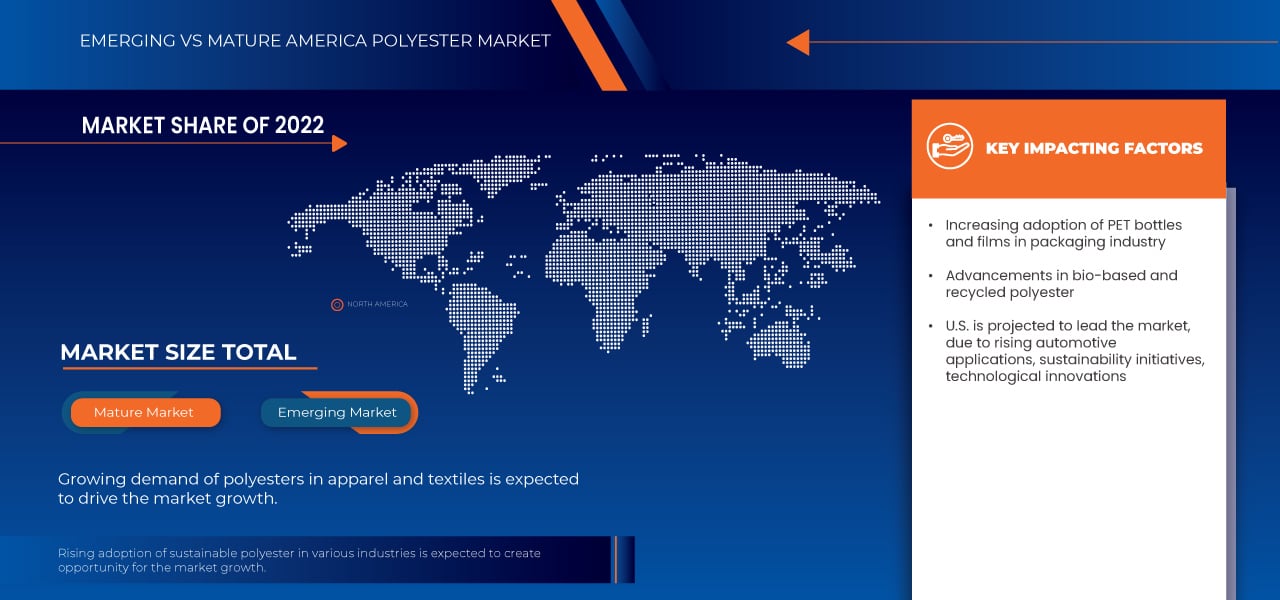
El mercado de poliéster América está impulsado por la creciente demanda en textiles, embalajes y sectores automotrices. Poliéster, valorado para durabilidad, asequibilidad y versatilidad, domina la industria de la fibra sintética. EE.UU. lidera el consumo debido a su fuerte industria de ropa y muebles caseros, mientras que América Latina ve un crecimiento constante en botellas y películas de PET. Las preocupaciones en materia de sostenibilidad están impulsando la adopción de poliéster basado en bio y reciclado. Los retos de mercado incluyen la volatilidad de los precios de materia prima y las regulaciones ambientales. Los actores clave como Indorama Ventures, Eastman y DuPont se centran en iniciativas de innovación y economía circular. En general, se espera que el mercado crezca constantemente, impulsado por aplicaciones industriales y de consumo.
Tamaño del mercado de poliéster
El tamaño del mercado de poliéster en América fue valorado en USD 32.78 mil millones en 2024 y se prevé que alcanzará USD 56.10 mil millones en 2032, con una CAGR de 7,0% durante el período de previsión de 2025 a 2032. In addition to the insights on market scenarios such as market value, growth rate, segmentation, geographical coverage, and major players, the market reports curated by the Data Bridge Market Research also include import export analysis, production capacity overview, production consumption analysis, price trend analysis, climate change scenario, supply chain analysis, value chain analysis, raw material/consumables overview, vendedor selection criteria, PESTLE Analysis, Porter Analysis, and regulatory framework
Polyester MarketTendencias
“Growing Demand of Polyesters in Apparel and Textiles”
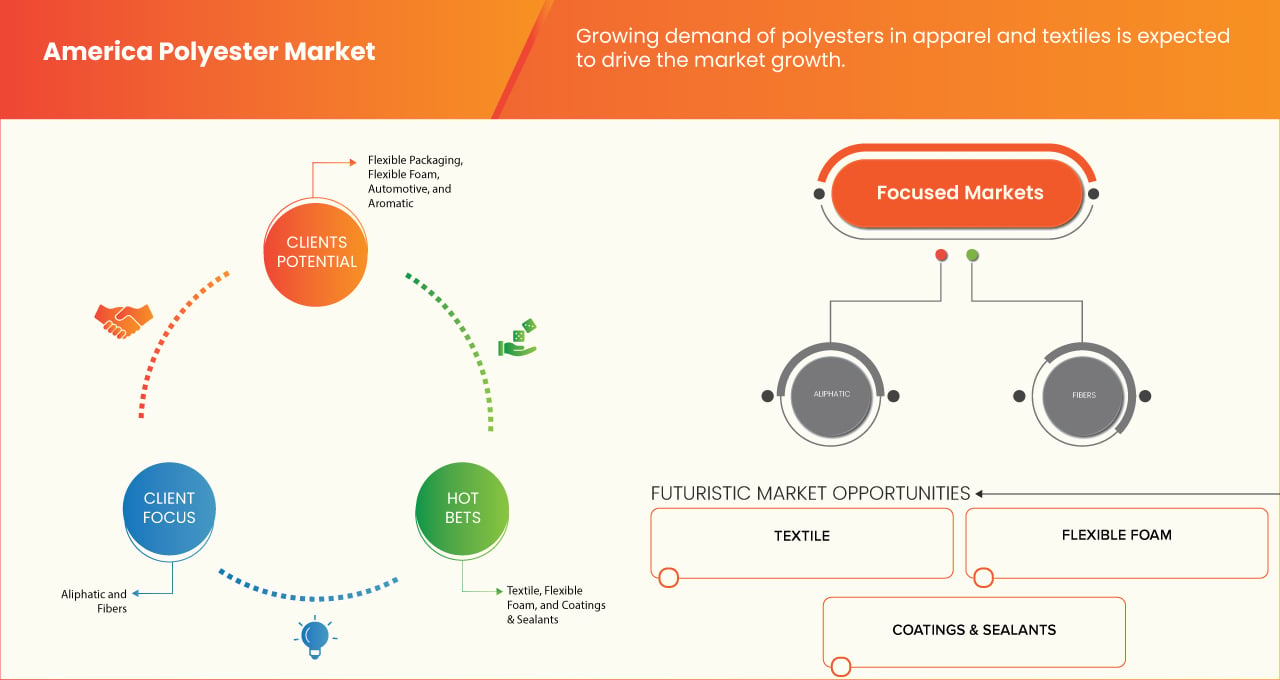
Polyester se ha convertido en un material preferido debido a su versatilidad, durabilidad y asequibilidad, lo que lo convierte en un componente esencial en diversas aplicaciones de ropa y tela. Su capacidad de mezclarse perfectamente con otras fibras, como algodón y lana, mejora aún más su atractivo, permitiendo a los fabricantes crear textiles con propiedades únicas, como la resistencia a las arrugas, la mecha de humedad y las capacidades de secado rápido. El enfoque de la industria de ropa estadounidense en el desgaste de rendimiento y el uso activo ha amplificado la demanda de poliéster. La naturaleza ligera del material y la alta resistencia a la tracción hacen que sea ideal para ropa deportiva, donde la durabilidad y la flexibilidad son primordiales.
En general, la creciente demanda de poliéster en las industrias americanas de prendas de vestir y textiles es impulsada por su versatilidad, asequibilidad y capacidad para adaptarse a las preferencias de los consumidores cambiantes. Esta tendencia posiciona al poliéster como un material crítico para apoyar la innovación y el crecimiento dentro del mercado del poliéster americano.
Report Scope and Polyester Market Segmentation
| Atributos | PoliésterClaveMarket Insights |
| Segmentos cubiertos |
|
| Países cubiertos | Estados Unidos, Canadá, Brasil, Argentina, México, Colombia, Chile, Perú, Venezuela y resto de América |
| Principales jugadores del mercado | Alpek Polyester (Estados Unidos), Dow (Estados Unidos), Eastman Chemical Company (Estados Unidos), Huntsman International LLC (Estados Unidos), Shell plc (England), Arkema (Francia), Coim Group (Italia), DIC CORPORATION (Japón), Repsol (España) y Stepan Company (Estados Unidos) entre otros. |
| Oportunidades de mercado |
|
| Valor añadido Data Infosets | Además de las ideas sobre escenarios de mercado como el valor de mercado, la tasa de crecimiento, la segmentación, la cobertura geográfica y los principales actores, los informes de mercado comisariados por el Data Bridge Market Research también incluyen análisis profundos de expertos, análisis de precios, análisis de acciones de la marca, análisis de la demografía, análisis de la cadena de suministro, análisis de la cadena de valor, visión general de materias primas/consumibles, criterios de selección de proveedores, análisis de PESTLE Analysis, análisis de PESTLE, análisis, análisis de Porter, análisis de Porter y marco regulador. |
PoliésterMercadoDefinición
Poliéster es unpolímero sintéticoderivado principalmente de productos químicos derivados del petróleo, comúnmente conocido como Polyethylene Terephthalate (PET). Es ampliamente utilizado en textiles, embalajes y aplicaciones industriales debido a su durabilidad, resistencia a las arrugas y propiedades que se oponen a la humedad. Los tejidos de poliéster se favorecen en la moda, el mobiliario de casa y la ropa deportiva, mientras que el poliéster de grado industrial se utiliza en los sectores de automoción, construcción y embalaje.
PoliésterMercadoDinámica
Conductores
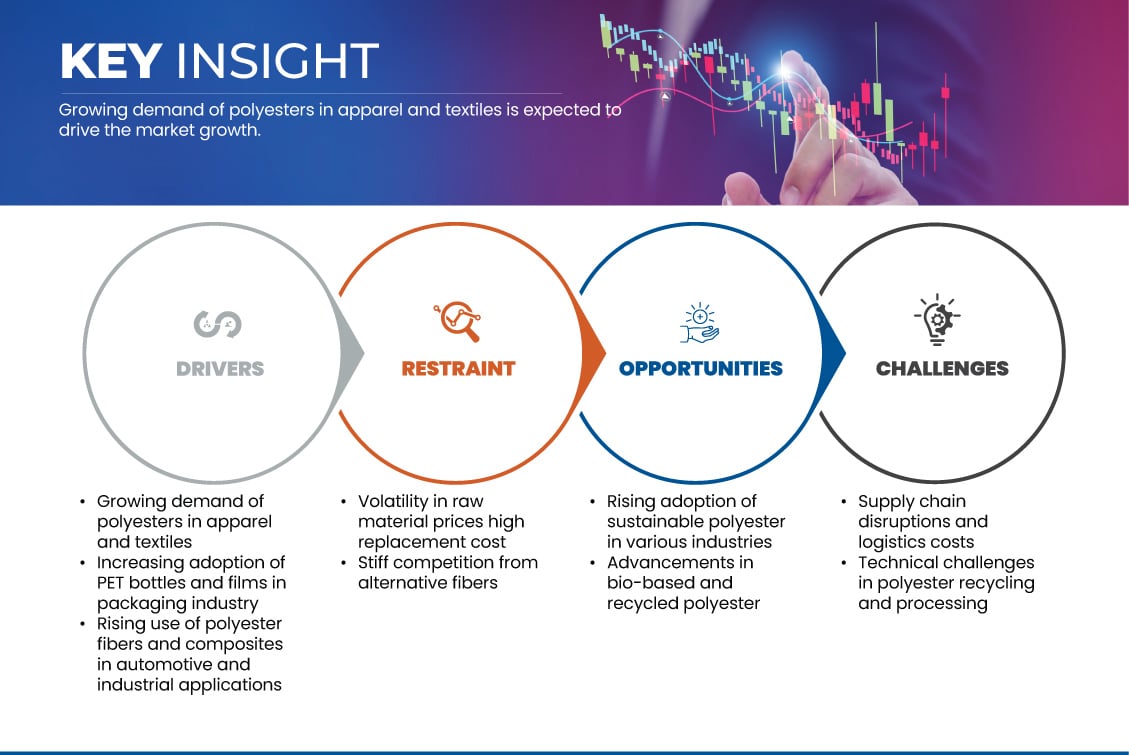
- Aumento de la adopción de botellas y películas de PET en la industria del embalaje
PET, un tipo de poliéster, ha ganado popularidad significativa debido a sus excelentes propiedades, incluyendo peso ligero, durabilidad, transparencia y reciclabilidad. Estos atributos lo convierten en una opción ideal para una amplia gama de aplicaciones de embalaje, especialmente en los sectores de bebidas, alimentos, atención personal y farmacéutico.
Uno de los factores clave que impulsan la adopción de botellas PET es la creciente demanda de soluciones de embalaje sostenibles y ecológicas. A medida que los gobiernos, las industrias y los consumidores se centran cada vez más en reducir los desechos plásticos y promover el reciclaje, las botellas PET se destacan como una opción sostenible. Son 100% reciclables y pueden convertirse en nuevos productos de PET u otros materiales, como fibras de poliéster, reduciendo el impacto ambiental y apoyando iniciativas de economía circular. Esto ha llevado a un aumento de la demanda de envases basados en PET, impulsando el mercado de poliéster. El crecimiento de la industria de las bebidas, en particular el agua embotellada y los refrescos carbonatados, es otro factor que contribuye al uso generalizado de las bebidasBotellas PET. Estas botellas son preferidas sobre materiales tradicionales como el vidrio debido a su naturaleza ligera, lo que reduce los costos de transporte y mejora la comodidad para los consumidores. Del mismo modo, las películas PET se utilizan ampliamente en aplicaciones de embalaje flexible debido a sus excelentes propiedades de barrera, que protegen los productos de la humedad, el oxígeno y los contaminantes, garantizando una vida útil más larga.
Por ejemplo,
En septiembre de 2024, según un artículo publicado por Plastics Engineering, el artículo destaca los avances en el embalaje de película flexible, centrándose en las tendencias de sostenibilidad. Películas monomateriales, como AmPrima y Omni Xtra PE de Berry Global, promueven la reciclabilidad reemplazando estructuras multicapas. Las innovaciones incluyen la integración de PCR, la reducción y las alternativas de aluminio, apoyando la economía circular manteniendo al mismo tiempo el rendimiento y reduciendo el impacto ambiental.
- Rising Use ofFibras de poliéstery Composites en Aplicaciones Automotrices e Industriales
Las propiedades únicas de Polyester, incluyendo alta resistencia a la tracción, durabilidad, ligero y rentable, lo convierten en un material esencial en estos sectores. A medida que las industrias buscan cada vez más materiales innovadores para mejorar el rendimiento, la eficiencia y la sostenibilidad, las fibras y compuestos de poliéster se están convirtiendo en indispensables en procesos de fabricación.
En el sector automotriz, las fibras de poliéster se utilizan ampliamente en tapicería de asientos, alfombras, cabeceras y cinturones de seguridad debido a su fuerza, resistencia a las manchas y facilidad de mantenimiento. Además, los compuestos fabricados con resinas de poliéster se utilizan en componentes estructurales como paneles, parachoques y escudos bajo cuerpo, ofreciendo una excelente resistencia al impacto y un peso reducido del vehículo. La naturaleza ligera de los materiales basados en poliéster contribuye significativamente a la eficiencia del combustible y la reducción de las emisiones, alineando con los objetivos de sostenibilidad de la industria y los requisitos reglamentarios. Con la creciente producción deVehículos eléctricos(EVs) en América, la demanda de compuestos de poliéster aumenta aún más, ya que soportan peso ligero manteniendo la integridad estructural.
Por ejemplo,
- En febrero de 2024, según un artículo publicado por AZoNetwork, La industria automotriz está adoptando compuestos de polímeros reforzados por fibra (FRPCs) para mejorar el rendimiento, eficiencia y sostenibilidad. FRPCs, fabricados en fibras de vidrio, carbono o naturales en una matriz polímero, ofrecen reducción de peso, ahorros de costes y reciclabilidad.
Oportunidades
- Adopción creciente de poliéster sostenible en diversas industrias
Con el aumento de la conciencia del consumidor sobre cuestiones ambientales y el impulso mundial hacia la sostenibilidad, la demanda de materiales ecológicos ha aumentado. El poliéster sostenible, producido a menudo por botellas de PET recicladas o materias primas bio-basadas, ha surgido como una solución viable, ofreciendo las mismas características de rendimiento que el poliéster convencional y reduciendo significativamente el impacto ambiental.
Uno de los principales impulsores de esta oportunidad es el enfoque cada vez mayor en las iniciativas de economía circular. Los gobiernos, las organizaciones y las industrias alientan el uso de materiales reciclados para reducir al mínimo los desechos y reducir la dependencia de los petroquímicos vírgenes. El poliéster sostenible encaja perfectamente en estas iniciativas, ya que permite a las industrias alinearse con las regulaciones ambientales y los objetivos de sostenibilidad corporativa. Este cambio ha abierto puertas para los fabricantes de poliésters para atender a industrias tales como prendas de vestir, automotriz, embalaje y construcción que están priorizando cada vez más los materiales ambientalmente conscientes. En la industria de los prendas de vestir, el poliéster sostenible ha adquirido una tracción sustancial, en particular entre las marcas de moda rápida y deportiva con el objetivo de atraer a consumidores ecoconscientes. Muchas marcas mundiales de moda están incorporando poliéster reciclado en sus colecciones, reemplazando fibras tradicionales para cumplir con objetivos de sostenibilidad. Esta tendencia no sólo refuerza la relevancia del poliéster en el mercado, sino que también mejora su imagen como una opción ecológica.
Por ejemplo,
En enero de 2025, según un artículo publicado por Xometry, La creciente adopción de poliéster sostenible está transformando industrias como moda, automotriz y embalaje. Con avances en el reciclaje y alternativas bio-basadas, las empresas están reduciendo el impacto ambiental manteniendo la durabilidad y el rendimiento. A medida que crece la demanda de materiales ecológicos, el poliéster sostenible está surgiendo como una solución clave para un futuro más verde.
- Avances en poliéster biobajado y reciclado
A medida que las industrias y los consumidores priorizan cada vez más la sostenibilidad, el desarrollo de soluciones innovadoras de poliéster derivadas de recursos renovables o materiales reciclados ha cobrado un impulso significativo. Estos avances se alinean con los objetivos ambientales mundiales, ofreciendo una vía para reducir la dependencia de los combustibles fósiles y minimizar la huella ecológica de la producción de poliéster. El poliéster bio-basado, producido a partir de materias primas renovables como el maíz, la caña de azúcar u otros materiales vegetales, está emergiendo como una alternativa ecológica al poliéster convencional. Esta innovación permite a los fabricantes disminuir las emisiones de gases de efecto invernadero durante la producción, al tiempo que atiende a la creciente demanda de materiales sostenibles. Con la creciente inversión en tecnología e investigación bio-basada, el potencial de producción a gran escala de poliéster bio-basado se está expandiendo, creando oportunidades lucrativas para el mercado.
Del mismo modo, el desarrollo del poliéster reciclado, especialmente elaborado a partir de botellas de PET y desechos industriales posteriores al consumo, ha revolucionado la industria del poliéster. El poliéster reciclado ofrece la misma durabilidad, versatilidad y rendimiento como poliéster virgen, al tiempo que reduce significativamente el consumo de residuos y energía durante la producción. Estas cualidades lo convierten en una opción preferida para industrias como el ropa, la automoción y el embalaje, donde la sostenibilidad y la funcionalidad son igualmente valoradas.
Por ejemplo,
- En noviembre de 2024, según un artículo publicado por American Chemical Society, The push for sustainability has driven interest in biobased polyesters as alternatives to oil-based polymers. Derivado de fuentes renovables, ofrecen biodegradabilidad y fuertes propiedades mecánicas, pero enfrentan desafíos como la baja estabilidad y la cristalización lenta. Los avances en síntesis, polimerización y catalizadores verdes están mejorando su viabilidad y rendimiento industrial.
Restricciones/Retos
- Competencia Stiff de fibras alternativas
Estas fibras a menudo atraen a consumidores e industrias por sus características únicas y su idoneidad para aplicaciones específicas, creando desafíos para el poliéster para mantener su cuota de mercado en diversos sectores. El algodón, por ejemplo, sigue siendo una opción preferida en las industrias de ropa y textiles debido a su origen natural, transpirabilidad y suavidad. Con la creciente preferencia de los consumidores por los materiales ecológicos y biodegradables, el algodón se considera a menudo como una alternativa sostenible al poliéster, que se basa en el petróleo y tarda más en degradarse. Lana, otra fibra natural, tiene una fuerte posición en segmentos de ropa premium debido a sus propiedades de aislamiento superior y atractivo lujoso, lo que lo convierte en un competidor duro para el poliéster en mercados específicos.
Del mismo modo, las fibras como nylon y polipropileno se prefieren en aplicaciones técnicas e industriales debido a sus atributos de mayor rendimiento, como mayor resistencia, durabilidad y resistencia térmica. Estas alternativas pueden superar el poliéster en casos específicos de uso, especialmente cuando se requieren materiales de alto rendimiento. El aumento de alternativas de fibra sostenibles e innovadoras, incluyendo lyocell, cáñamo y materiales bio-basados, intensifica aún más la competencia. Estas fibras están ganando tracción debido a su mínimo impacto ambiental y alineación con las crecientes tendencias de sostenibilidad. Este cambio plantea un reto adicional para el mercado de poliéster a medida que los fabricantes y consumidores adoptan cada vez más opciones ecológicamente conscientes.
Por ejemplo,
En diciembre de 2023, según un artículo publicado por Lyfcycle Ltd., Polyester domina textiles pero tiene preocupaciones ambientales. Las alternativas sostenibles incluyen poliéster reciclado, poliéster biodegradable y fibras naturales como la lyocell. Las marcas adoptan opciones ecológicas, pero persisten desafíos, incluyendo la contaminación microplásica y los costos de producción. Se necesita una combinación de soluciones para diferentes aplicaciones para impulsar la sostenibilidad en la industria de la moda.
- Disrupciones de la cadena de suministro y costos logísticos
Las perturbaciones de la cadena de suministro y el aumento de los costos logísticos son retos importantes que enfrenta el mercado de poliéster americano. La industria del poliéster depende en gran medida del flujo de materias primas, insumos de producción y productos terminados en cadenas globales de suministro. Cualquier interrupción de estos procesos puede afectar gravemente los calendarios de producción, aumentar los costos y interrumpir las operaciones de mercado.
Las tensiones geopolíticas, las restricciones comerciales y los desastres naturales han expuesto las vulnerabilidades de las cadenas de suministro. Estas perturbaciones han ocasionado retrasos en la adquisición de materias primas esenciales como el etileno y el ácido tereftalico, que son fundamentales para la producción de poliéster. La congestión portuaria, las demoras en el transporte y las restricciones al comercio transfronterizo agravan aún más estas cuestiones, creando obstáculos en toda la cadena de suministro. Esas perturbaciones aumentan los plazos de ejecución, dificultan la gestión de inventarios y, en última instancia, retrasan la entrega de productos a los usuarios finales. Además, la intensificación de los costos logísticos contribuye al desafío. El aumento de los precios del combustible, la escasez de contenedores de transporte y el aumento de los gastos de flete han aumentado considerablemente los gastos de transporte. Para los fabricantes de poliéster que operan en sectores sensibles a los costos, como el ropa, el embalaje y la automoción, estos costos añadidos crean presión en los márgenes de ganancia y reducen la competitividad.
Por ejemplo,
Según un artículo publicado por QIMA, el poliéster reciclado (rPET) es una alternativa sostenible al poliéster virgen, que constituye más del 15% del uso global de fibra de poliéster. Sin embargo, los desafíos de la cadena de suministro, como verificar el contenido de rPET, asegurar la trazabilidad y prevenir el lavado verde. Esta guía explora métodos de autenticación y soluciones de cumplimiento. QIMA proporciona pruebas y verificación para mejorar la transparencia de la cadena de suministro.
Este informe de mercado proporciona detalles sobre nuevos acontecimientos recientes, reglamentos comerciales, análisis de las importaciones y exportaciones, análisis de producción, optimización de la cadena de valor, cuota de mercado, impacto de los jugadores de mercado nacionales y localizados, analiza las oportunidades en cuanto a los mercados emergentes, cambios en las regulaciones de mercado, análisis estratégico de crecimiento de mercado, tamaño de mercado, crecimientos de mercado de categoría, nichos de aplicación y dominio, aprobaciones de productos, expansiones geográficas, innovaciones tecnológicas. Para obtener más información sobre el mercado contacte con Data Bridge Market Research para un Analista Breve, nuestro equipo le ayudará a tomar una decisión de mercado informada para lograr el crecimiento del mercado.
Impacto y Escenario del mercado actual de materias primas y relés de envío
Data Bridge Market Research ofrece un análisis de alto nivel del mercado y proporciona información teniendo en cuenta el impacto y el entorno de mercado actual de la escasez de materias primas y los retrasos en el envío. Esto se traduce en la evaluación de las posibilidades estratégicas, la creación de planes de acción eficaces y la asistencia a las empresas para tomar decisiones importantes.
Aparte del informe estándar, también ofrecemos un análisis a fondo del nivel de adquisiciones de las demoras previstas en el transporte marítimo, la asignación de los distribuidores por región, el análisis de los productos básicos, el análisis de la producción, las tendencias de la cartografía de precios, la obtención de recursos, el análisis del desempeño de las categorías, las soluciones de gestión del riesgo de la cadena de suministro, el establecimiento de parámetros avanzados y otros servicios para la adquisición y el apoyo estratégico.
Impacto esperado de la reducción económica en los precios y disponibilidad de productos
Cuando la actividad económica disminuye, las industrias comienzan a sufrir. Los efectos previstos de la recesión económica en la fijación de precios y la accesibilidad de los productos se tienen en cuenta en los informes de visión del mercado y los servicios de inteligencia proporcionados por la DBMR. Con esto, nuestros clientes normalmente pueden mantener un paso por delante de sus competidores, proyectar sus ventas e ingresos, y estimar sus gastos de ganancia y pérdida.
Polyester Market Scope
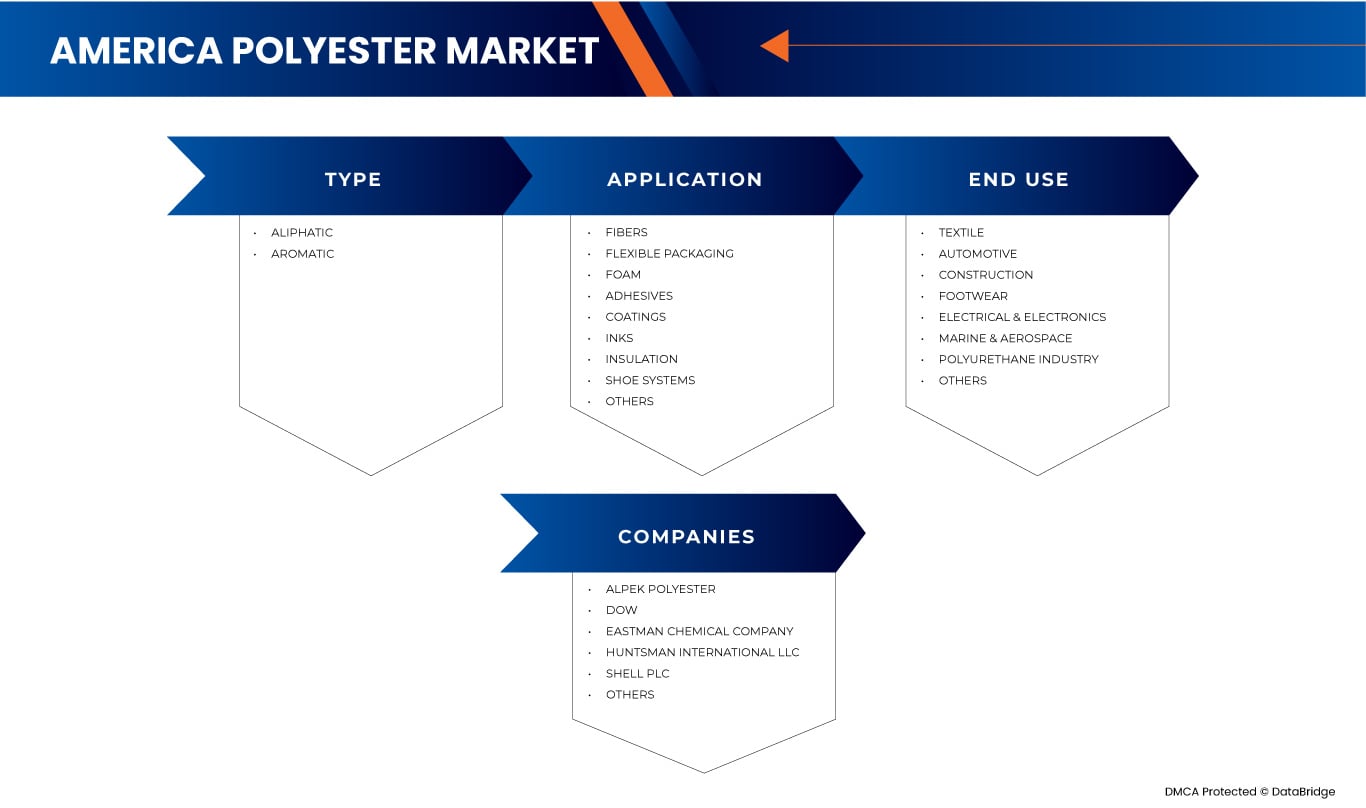
El mercado se segmenta por tipo, aplicación y uso final. El crecimiento entre estos segmentos le ayudará a analizar segmentos de crecimiento bajos en las industrias y proporcionar a los usuarios una valiosa visión general del mercado y perspectivas de mercado para ayudarles a tomar decisiones estratégicas para identificar aplicaciones básicas del mercado.
Tipo
- Aliphatic
- Aromatic
Aplicación
- Fibras
- Embalaje flexible
- Foam
- Foam flexible
- Spray Foam
- Adhesivos
- Coatings
- Tintas
- Aislamiento
- Shoe Systems
- Otros
Uso final
- Textil
- Automoción
- Espumas flexibles y rígidas
- Coatings
- Adhesivos " Sellantes "
- Construcción
- Coatings " Sealants
- Adhesivos
- Foams de aislamiento
- Calzado
- Electrónica
- Marine " Aerospace
- Industria de poliuretano
- Otros
Análisis regional del mercado de poliéster
El mercado es analizado y las tendencias de tamaño del mercado son proporcionadas por país, tipo, aplicación y uso final como se mencionó anteriormente.
Los países cubiertos en el mercado son Estados Unidos, Canadá, Brasil, Argentina, México, Colombia, Chile, Perú, Venezuela y resto de América.
Se proyecta que Estados Unidos lidera y crece rápidamente en el mercado, debido a la alta demanda textil, la fabricación avanzada, la industria de embalaje fuerte, el aumento de las aplicaciones automotrices, las iniciativas de sostenibilidad, las innovaciones tecnológicas y los principales actores que impulsan la expansión y el desarrollo del mercado.
La sección del informe del país también proporciona factores de impacto y cambios de regulación en el mercado nacional que afectan las tendencias actuales y futuras del mercado. Puntos de datos como análisis de cadenas de valor aguas abajo y aguas arriba, tendencias técnicas y análisis de cinco fuerzas del portero, estudios de casos son algunos de los punteros utilizados para prever el escenario del mercado para países individuales. Asimismo, se considera la presencia y disponibilidad de marcas mundiales y sus retos a los que se enfrentan debido a la competencia amplia o escasa de las marcas locales y nacionales, los efectos de los aranceles internos y las rutas comerciales al tiempo que se proporciona un análisis de los datos de los países.
Polyester Market Share
El mercado competitivo paisaje proporciona detalles de los competidores. Los detalles incluidos son la visión general de las empresas, las finanzas de las empresas, los ingresos generados, el potencial de mercado, la inversión en investigación y desarrollo, las nuevas iniciativas de mercado, la presencia mundial, los sitios e instalaciones de producción, las capacidades de producción, las fortalezas y debilidades de las empresas, el lanzamiento de productos, la anchura y amplitud de los productos, el dominio de las aplicaciones. Los puntos de datos arriba proporcionados sólo están relacionados con el enfoque de las empresas relacionados con el mercado.
PoliésterLos líderes de mercado que operan en el mercado son:
- Alpek Polyester (U.S.)
- Dow (Estados Unidos)
- Eastman Chemical Company (Estados Unidos)
- Huntsman International LLC (U.S.)
- Shell plc (England)
- Arkema (Francia)
- Coim Group (Italia)
- DIC CORPORATION (Japón)
- Repsol (España)
- Stepan Company (Estados Unidos)
Novedades en el mercado de poliéster
- En enero de 2025, Dow anunció una colaboración con Brivaplast y TecnoGi para promover la sostenibilidad en el sector de los productos de lujo reprocesando tapas de perfume imperfectas en componentes de alta calidad para calzado de lujo y artículos de cuero. Dow suministra resina SURLYN, utilizada en la producción de tapas de perfume premium por Brivaplast, un fabricante líder en embalaje cosmético. Si bien estas tapas están diseñadas para cumplir con estrictos estándares de calidad, algunas piezas se consideran subestándar. En lugar de descartarlos, TecnoGi reutilizará las tapas imperfectas en componentes para la industria de la moda de lujo. Esta iniciativa muestra un compromiso con la circularidad y demuestra cómo la colaboración entre industrias puede reducir los desechos y añadir valor
- En diciembre de 2022, Eastman y Krahn Chemie GmbH firmaron un acuerdo que establece la distribución de productos de Eastman en toda Europa central y oriental. Este acuerdo ayuda en la expansión de su negocio distribuyendo sus productos en diferentes regiones con condiciones favorables y en forma original
- En mayo de 2020, Huntsman Corporation anunció la remarcación de su negocio de espuma de poliuretano líder mundial como Huntsman Building Solutions. Huntsman Building Solutions es una plataforma mundial bajo la división Polyurethanes de Huntsman. Esta remarcación ayudó a la empresa a ampliar su negocio en el negocio de espuma de poliuretano
- En noviembre de 2023, Shell Chemicals fue galardonado como ganador en el programa de Premios de Sostenibilidad 2023 de BNSF. Junto con otros nueve receptores, Shell Chemicals recibió este reconocimiento de BNSF, una prominente empresa norteamericana de transporte de mercancías, por sus avances en soluciones sostenibles durante todo el año
- En octubre de 2024, DIC Corporation anunció el desarrollo de una nueva película de polifenile sulfuro (PPS), creada en colaboración con la firma japonesa Unitika Ltd., diseñada para reducir la pérdida de transmisión en altas frecuencias. Con sus propiedades dieléctricas bajas, esta película innovadora es ideal para usar en tableros de circuito impresos de onda milímetro, que son esenciales para dispositivos de comunicación de próxima generación y radar de onda milímetro. El producto ya ha sido evaluado por varios fabricantes de materiales electrónicos, y se están realizando preparativos de producción comercial
SKU-
Obtenga acceso en línea al informe sobre la primera nube de inteligencia de mercado del mundo

- Panel de análisis de datos interactivo
- Panel de análisis de empresas para oportunidades con alto potencial de crecimiento
- Acceso de analista de investigación para personalización y consultas
- Análisis de la competencia con panel interactivo
- Últimas noticias, actualizaciones y análisis de tendencias
- Aproveche el poder del análisis de referencia para un seguimiento integral de la competencia
Tabla de contenido
1 INTRODUCCIÓN
1.1 OBJETIVOS DEL ESTUDIO
1.2 DEFINICIÓN DEL MERCADO
1.3 Examen general
1.4 LIMITACIONES
1.5 MARKETS COVERED
2 MARKET SEGMENTATION
2.1 MARKETS COVERED
2.2 ÁMBIÉN GEOGRÁFICO
2.3 AÑOS ESTUDIOS PARA EL ESTUDIO
2.4 CURRENCY AND PRICING
2.5 DBMR TRIPOD DATA VALIDATION MODEL
2.6 MODELO MULTIVARIATE
2.7 Relaciones públicas con los líderes de la OPINIÓN de KEY
2.8 DBMR MARKET POSITION GRID
2.9 MARKET APPLICATION GRID
2.1 Recursos básicos
2.11
RESUMEN EJECUTIVO
4 fotos INSIGHTS
4.1 ANÁLISIS PESTEL
4.1.1 FACTORES POLÍTICOS
4.1.2 FACTORES ECONÓMICOS
4.1.3 FACTORES SOCIALES
4.1.4 FACTORES TECNOLOGICOS
4.1.5 FACTORES ENVIRONMENTALES
4.1.6 FACTORES LEGALES
4.2 FIVE FORCES DE PORTER
4.2.1 Tres de los nuevos territorios
4.2.2 TRES DE SUBSTITUTOS
4.2.3 POWER BARGAINING POWER OF BUYERS
4.2.4 POWER BARGAINING POWER OF SUPPLIERS
4.2.5 RIVALENCIA COMPETITIVA
4.3 IMPORT EXPORT SCENARIO
4.4 CRITERIOS DE SELECCIÓN VENDOR
4.4.1 ANÁLISIS COST-BENEFIT
4.4.2 EJECUCIÓN DE LA CALIDAD Y MEDIDAS
4.4.3 RELIGILIDAD Y CONSISTENENCIA
4.4.4 VENDOR EXPERTISE AND CAPABILITIES
4.4.5 ESTABILIDAD FINANCIERA Y LONGEVIDAD
4.4.6 PRÁCTICAS ÉTICAS Y SOSTENIBLES
4.5 CLIMATE CHANGE SCENARIO
4.5.1 ASUNTOS AMBIENTES
4.5.2 RESPONSE INDUSTRIA
4.5.3 HABITACIÓN DE LOS GOBIERNOS
4.5.4 RECOMENDACIONES ANÁLISIS
4.6 POTENTIAL CUSTOMER LIST
4.7 COVERAGE MATERIAL RAW
4.7.1 ACID TEREPHTHALIC PURIFIED (PTA)
4.7.2 GLYCOL (MEG)
4.7.3 PARAXYLENE (PX)
4.7.4 DIMETHYL TEREPHTHALATE (DMT)
4.7.5 ETHYLENE OXIDE (EO)
4.7.6 BIO-BASED AND RECYCLED POLYESTER FEEDSTOCKS
4.7.7 ADDITIVES AND CATALYSTS
4.7.8 Conclusión
4.8 ANÁLISIS DE CHAIN
4.8.1
4.8.2 COST LOGISTIC SCENARIO
4.8.3 IMPORTANCE OF LOGISTICS SERVICE PROVIDERS
4.9 AVANCES TECNOLOGICOS POR MANUFACTURALES
4.9.1 TECNOLOGÍAS DE RECLUCIÓN AVANCIA
4.9.2 PRODUCCIÓN POLÍTICA BIO-BASED
4.9.3 TECNOLOGÍA DE AGUA
4.9.4 PROCESOS DE PRODUCCIÓN ENERGÍA
4.9.5 TEXTILES SMART AND FUNCTIONAL POLYESTER
4.9.6 ADEMISTRATIVOS SOSTENIBLES
4.9.7 CARBON CAPTURE AND STORAGE (CCs) TECHNOLOGIES
4.9.8 CONCLUSIÓN
5 REGULATORIA
6 MARKET OVERVIEW
6.1 DRIVERS
6.1.1 Desmantelamiento de los políticos en los planos y TEXTILES
6.1.2 INCREASING ADOPTION OF PET BOTTLES AND FILMS IN PACKAGING INDUSTRY
6.1.3 Aprovechamiento de la utilización de expedientes y compromisos de carácter político en las políticas
6.2 RESTRAINTS
6.2.1 VOLATILIDAD EN PRECIOS MATERIALES RAW
6.2.2 COMPETITION STIFF from ALTERNATIVE FIBERS
6.3 OPORTUNIDADES
6.3.1 APROBACIÓN DE LA APROBACIÓN DE POLIDES SOSTENIBLE EN LOS INDUSTRIAS VARIOS
6.3.2 AVANCES IN BIO-BASED AND RECYCLED POLYESTER
6.4
6.4.1 SUPPLY CHAIN DISRUPTIONS AND LOGISTICS COSTS
6.4.2 TECHNICAL CHALLENGES IN POLYESTER RECYCLING AND PROCESSING
7 AMERICA POLYESTER MARKET, BY TYPE
7.1 Examen general
7.2 ALIPHATIC
7.3 AROMÁTICA
8 AMERICA POLYESTER MARKET, BY APPLICATION
8.1 Examen general
8.2 FIBERS
8.3 PACKAGLE PACKAGING
8.4 FOAM
8.5 ADHESIVES
8.6 COATINGS
8.7 INKS
8.8 INSULACIÓN
8,9 SYSTEMS SHOE
8.1 OTROS
9 AMERICA POLYESTER MARKET, BY END USE
9.1 Examen general
9.2 TEXTILE
9.3 AUTOMOTIVE
9.4 CONSTRUCCIÓN
9.5 FOOTWEAR
9.6 ELECTRICAL " ELECTRONICS
9.7 MARINE & AEROSPACE
9.8 POLYURETHANE INDUSTRY
9.9 OTROS
10 AMERICA POLYESTER MARKET, BY COUNTRY
10.1 AMERICA
10.1.1 Estados Unidos
10.1.2 CANADA
10.1.3 BRASIL
10.1.4 ARGENTINA
10.1.5 MEXICO
10.1.6 COLOMBIA
10.1.7 CHILE
10.1.8 PERU
10.1.9 VENEZUELA
10.1.10 REST OF AMERICAS
11 AMERICA POLYESTER MARKET: COMPANY LANDSCAPE
11.1 COMPANY SHARE ANALISIS: AMERICA
12 ANÁLISIS DE SWOT
13 EMPRESAS
13.1 ALPEK POLYESTER
SNAPSHOT
13.1.2 PRODUCTO PORTFOLIO
13.1.3 DESARROLLO RECIENTE
13.2 DOW
SNAPSHOT
13.2.2 ANÁLISIS REVENIDO
13.2.3 PRODUCTO PORTFOLIO
13.2.4 UPDATE RECIENTE
13.3 EASTMAN CHEMICAL COMPANY
SNAPSHOT
13.3.2 FINANCIACIONES RECIENTES
13.3.3 PRODUCTO PORTFOLIO
13.3.4 DESARROLLO RECIENTE
13.4 HUNTSMAN INTERNATIONAL LLC
SNAPSHOT
13.4.2 ANÁLISIS REVENIDO
13.4.3 PRODUCTO PORTFOLIO
13.4.4 ACONTECIMIENTOS RECIENTES
13.5 SHELL PLC
SNAPSHOT
13.5.2 ANÁLISIS REVENIDO
13.5.3 PRODUCTO PORTFOLIO
13.5.4 RECENT DEVELOPMENT/NEWS
13.6 ARKEMA
SNAPSHOT
13.6.2 ANÁLISIS REVENIDO
13.6.3 PRODUCTO PORTFOLIO
13.6.4 RECENT DEVELOPMENT/NEWS
13.7 GRUPO DE COIM
SNAPSHOT
13.7.2 PRODUCTO PORTFOLIO
13.7.3 DESARROLLO RECIENTE
13.8 DIC CORPORATION
SNAPSHOT
13.8.2 FINANCIACIONES RECIENTES
13.8.3 PRODUCTO PORTFOLIO
13.8.4 DESARROLLO RECIENTE
13.9 REPSOL
SNAPSHOT
13.9.2 ANÁLISIS REVENIDO
13.9.3 PRODUCTO PORTFOLIO
13.9.4 DESARROLLO RECIENTE
13.1 EMPRESA
SNAPSHOT
13.10.2 ANÁLISIS REVENIDO
13.10.3 PRODUCTO PORTFOLIO
13.10.4 DESARROLLO RECIENTE
14 CUESTIÓN
15 INFORMES CONEXOS
Lista de Tablas
CUADRO 1 POTENTIAL CUSTOMER LIST
Cuadro 2
CUADRO 3 AMERICA POLYESTER MARKET, POR TYPE, 2018-2032 (USD THOUSAND)
CUADRO 4 AMERICA POLYESTER MARKET, POR TYPE, 2018-2032 (TONS)
CUADRO 5 AMERICA POLYESTER MARKET, POR TYPE, 2018-2032 (USD/KG)
CUADRO 6 AMERICA POLYESTER MARKET, BY APPLICATION, 2018-2032 (USD THOUSAND)
CUADRO 7 AMERICA POLYESTER MARKET, POR APLICACIÓN, 2018-2032 (TONS)
CUADRO 8 AMERICA POLYESTER MARKET, POR APLICACIÓN, 2018-2032 (USD/KG)
CUADRO 9 AMERICA FOAM EN POLYESTER MARKET, POR TYPE, 2018-2032 (USD THOUSAND)
CUADRO 10 AMERICA POLYESTER MARKET, BY END USE, 2018-2032 (USD THOUSAND)
CUADRO 11 AMERICA POLYESTER MARKET, BY END USE, 2018-2032 (TONS)
CUADRO 12 AMERICA POLYESTER MARKET, BY END USE, 2018-2032 (USD/KG)
CUADRO 13 AUTOMOTIVO DEL POLYESTER MARKET, POR TYPE, 2018-2032 (USD THOUSAND)
CUADRO 14 CONSTRUCCIÓN AMERICA EN POLYESTER MARKET, POR TYPE, 2018-2032 (USTED)
CUADRO 15 AMERICA POLYESTER MARKET, POR PAÍS, 2018-2032 (US$ THOUSAND)
CUADRO 16 AMERICA POLYESTER MARKET, POR PAÍS, 2018-2032 (TONS)
CUADRO 17 U.S. POLYESTER MARKET, BY TYPE, 2018-2032 (USD THOUSAND)
CUADRO 18 U.S. POLYESTER MARKET, POR TYPE, 2018-2032 (TONS)
CUADRO 19 MARKET POLYESTER, POR APLICACIÓN, 2018-2032 (US$ THOUSAND)
CUADRO 20 POLYESTER MARKET, POR APLICACIÓN, 2018-2032 (TONS)
CUADRO 21 U.S. FOAM EN POLYESTER MARKET, POR TYPE, 2018-2032 (USD THOUSAND)
CUADRO 22 MERCADO POLYESTER, POR FIN, 2018-2032 (USTED)
CUADRO 23 U.S. POLYESTER MARKET, BY END USE, 2018-2032 (TONS)
CUADRO 24 U.S. AUTOMOTIVE IN POLYESTER MARKET, BY TYPE, 2018-2032 (USD THOUSAND)
CUADRO 25 CONSTRUCCIÓN DE EE.UU. EN MARCO DE POLYESTER, POR TYPE, 2018-2032 (US$ THOUSAND)
CUADRO 26 CANADA POLYESTER MARKET, POR TYPE, 2018-2032 (US$ THOUSAND)
CUADRO 27 CANADA POLYESTER MARKET, POR TYPE, 2018-2032 (TONS)
CUADRO 28 CANADA POLYESTER MARKET, BY APPLICATION, 2018-2032 (USD THOUSAND)
CUADRO 29 CANADA POLYESTER MARKET, POR APLICACIÓN, 2018-2032 (TONS)
CUADRO 30 CANADA FOAM EN POLYESTER MARKET, POR TYPE, 2018-2032 (USD THOUSAND)
CUADRO 31 CANADA POLYESTER MARKET, BY END USE, 2018-2032 (USD THOUSAND)
CUADRO 32 CANADA POLYESTER MARKET, POR FIN USO, 2018-2032 (TONS)
CUADRO 33 CANADA AUTOMOTIVE EN POLYESTER MARKET, POR TYPE, 2018-2032 (USD THOUSAND)
CUADRO 34 CONSTRUCCIÓN CANADA EN MARCO POLYESTER, POR TYPE, 2018-2032 (USTED)
CUADRO 35 BRASIL POLYESTER MARKET, POR TYPE, 2018-2032 (US$ THOUSAND)
CUADRO 36 BRASIL POLYESTER MARKET, POR TYPE, 2018-2032 (TONS)
CUADRO 37 BRASIL POLYESTER MARKET, BY APPLICATION, 2018-2032 (USD THOUSAND)
CUADRO 38 BRASIL POLYESTER MARKET, POR APLICACIÓN, 2018-2032 (TONS)
CUADRO 39 BRASIL FOAM EN POLYESTER MARKET, POR TYPE, 2018-2032 (USD THOUSAND)
CUADRO 40 BRASIL POLYESTER MARKET, BY END USE, 2018-2032 (USD THOUSAND)
CUADRO 41 BRASIL POLYESTER MARKET, POR FIN USO, 2018-2032 (TONS)
CUADRO 42 BRAZIL AUTOMOTIVE EN POLYESTER MARKET, POR TYPE, 2018-2032 (USD THOUSAND)
CUADRO 43 BRAZIL CONSTRUCTION IN POLYESTER MARKET, BY TYPE, 2018-2032 (USD THOUSAND)
CUADRO 44 ARGENTINA POLYESTER MARKET, POR TYPE, 2018-2032 (US$ THOUSAND)
CUADRO 45 ARGENTINA POLYESTER MARKET, POR TYPE, 2018-2032 (TONS)
CUADRO 46 ARGENTINA POLYESTER MARKET, BY APPLICATION, 2018-2032 (USD THOUSAND)
CUADRO 47 ARGENTINA POLYESTER MARKET, POR APLICACIÓN, 2018-2032 (TONS)
CUADRO 48 ARGENTINA FOAM EN POLYESTER MARKET, POR TYPE, 2018-2032 (USD THOUSAND)
CUADRO 49 ARGENTINA POLYESTER MARKET, BY END USE, 2018-2032 (USD THOUSAND)
CUADRO 50 ARGENTINA POLYESTER MARKET, BY END USE, 2018-2032 (TONS)
CUADRO 51 ARGENTINA AUTOMOTIVE EN POLYESTER MARKET, POR TYPE, 2018-2032 (USD THOUSAND)
CUADRO 52 ARGENTINA CONSTRUCCIÓN EN POLYESTER MARKET, POR TYPE, 2018-2032 (USTED)
CUADRO 53 MÉXICO POLYESTER MARKET, POR TYPE, 2018-2032 (USTED)
CUADRO 54 MÉXICO POLYESTER MARKET, POR TYPE, 2018-2032 (TONS)
CUADRO 55 MÉXICO POLYESTER MARKET, POR APLICACIÓN, 2018-2032 (US$ THOUSAND)
CUADRO 56 MÉXICO POLYESTER MARKET, POR APLICACIÓN, 2018-2032 (TONS)
CUADRO 57 MÉXICO FOAM EN POLYESTER MARKET, POR TYPE, 2018-2032 (USD THOUSAND)
CUADRO 58 MÉXICO POLYESTER MARKET, BY END USE, 2018-2032 (USD THOUSAND)
CUADRO 59 MÉXICO POLYESTER MARKET, BY END USE, 2018-2032 (TONS)
CUADRO 60 MÉXICO AUTOMOTIVE IN POLYESTER MARKET, BY TYPE, 2018-2032 (USD THOUSAND)
CUADRO 61 MÉXICO CONSTRUCCIÓN EN POLYESTER MARKET, POR TYPE, 2018-2032 (USD THOUSAND)
CUADRO 62 COLOMBIA POLYESTER MARKET, POR TYPE, 2018-2032 (US$ THOUSAND)
CUADRO 63 COLOMBIA POLYESTER MARKET, POR TYPE, 2018-2032 (TONS)
CUADRO 64 COLOMBIA POLYESTER MARKET, POR APLICACIÓN, 2018-2032 (US$ THOUSAND)
CUADRO 65 COLOMBIA POLYESTER MARKET, POR APLICACIÓN, 2018-2032 (TONS)
CUADRO 66 COLOMBIA FOAM EN POLYESTER MARKET, POR TYPE, 2018-2032 (USD THOUSAND)
CUADRO 67 COLOMBIA POLYESTER MARKET, BY END USE, 2018-2032 (USD THOUSAND)
CUADRO 68 COLOMBIA POLYESTER MARKET, POR FIN, 2018-2032 (TONS)
CUADRO 69 COLOMBIA AUTOMOTIVE EN POLYESTER MARKET, POR TYPE, 2018-2032 (USD THOUSAND)
CUADRO 70 COLOMBIA CONSTRUCCIÓN EN POLYESTER MARKET, POR TYPE, 2018-2032 (USTED)
CUADRO 71 CHILE POLYESTER MARKET, BY TYPE, 2018-2032 (USD THOUSAND)
CUADRO 72 CHILE POLYESTER MARKET, POR TYPE, 2018-2032 (TONS)
CUADRO 73 POLYESTER MARKET, POR APLICACIÓN, 2018-2032 (USTED)
CUADRO 74 POLYESTER MARKET, POR APLICACIÓN, 2018-2032 (TONS)
CUADRO 75 CHILE FOAM EN POLYESTER MARKET, POR TYPE, 2018-2032 (USD THOUSAND)
CUADRO 76 CHILE POLYESTER MARKET, BY END USE, 2018-2032 (USD THOUSAND)
CUADRO 77 CHILE POLYESTER MARKET, BY END USE, 2018-2032 (TONS)
CUADRO 78 CHILE AUTOMOTIVE EN POLYESTER MARKET, POR TYPE, 2018-2032 (USD THOUSAND)
CUADRO 79 CHILE CONSTRUCCIÓN EN POLYESTER MARKET, POR TYPE, 2018-2032 (USD THOUSAND)
CUADRO 80 PERU POLYESTER MARKET, BY TYPE, 2018-2032 (USD THOUSAND)
CUADRO 81 PERU POLYESTER MARKET, POR TYPE, 2018-2032 (TONS)
CUADRO 82 PERU POLYESTER MARKET, BY APPLICATION, 2018-2032 (USD THOUSAND)
CUADRO 83 POLYESTER MARKET, POR APLICACIÓN, 2018-2032 (TONS)
CUADRO 84 PERU FOAM EN POLYESTER MARKET, POR TYPE, 2018-2032 (USD THOUSAND)
CUADRO 85 PERU POLYESTER MARKET, BY END USE, 2018-2032 (USD THOUSAND)
CUADRO 86 PERU POLYESTER MARKET, BY END USE, 2018-2032 (TONS)
CUADRO 87 PERU AUTOMOTIVE EN POLYESTER MARKET, POR TYPE, 2018-2032 (USD THOUSAND)
CUADRO 88 PERU CONSTRUCCIÓN EN POLYESTER MARKET, POR TYPE, 2018-2032 (USD THOUSAND)
CUADRO 89 VENEZUELA POLYESTER MARKET, POR TYPE, 2018-2032 (US$ THOUSAND)
CUADRO 90 VENEZUELA POLYESTER MARKET, POR TYPE, 2018-2032 (TONS)
CUADRO 91 VENEZUELA POLYESTER MARKET, BY APPLICATION, 2018-2032 (USD THOUSAND)
CUADRO 92 VENEZUELA POLYESTER MARKET, POR APLICACIÓN, 2018-2032 (TONS)
CUADRO 93 VENEZUELA FOAM EN POLYESTER MARKET, POR TYPE, 2018-2032 (USD THOUSAND)
CUADRO 94 VENEZUELA POLYESTER MARKET, BY END USE, 2018-2032 (USD THOUSAND)
CUADRO 95 VENEZUELA POLYESTER MARKET, POR FIN, 2018-2032 (TONS)
CUADRO 96 VENEZUELA AUTOMOTIVE EN POLYESTER MARKET, POR TYPE, 2018-2032 (US$ THOUSAND)
CUADRO 97 VENEZUELA CONSTRUCCIÓN EN POLYESTER MARKET, POR TYPE, 2018-2032 (USTED)
CUADRO 98 REST OF AMERICA POLYESTER MARKET, BY TYPE, 2018-2032 (USD THOUSAND)
CUADRO 99 REST OF AMERICA POLYESTER MARKET, POR TYPE, 2018-2032 (TONS)
Lista de figuras
FIGURE 1 AMERICA POLYESTER MARKET
FIGURE 2 AMERICA POLYESTER MARKET: DATA TRIANGULATION
FIGURE 3 AMERICA POLYESTER MARKET: DROC ANALYSIS
FIGURE 4 AMERICA POLYESTER MARKET: COUNTRY-WISE MARKET ANALYSIS
FIGURE 5 AMERICA POLYESTER MARKET: COMPANY RESEARCH ANALYSIS
FIGURE 6 AMERICA POLYESTER MARKET: MULTIVARIATE MODELLING
FIGURE 7 AMERICA POLYESTER MARKET: INTERVIEW DEMOGRAPHICS
FIGURE 8 AMERICA POLYESTER MARKET: DBMR MARKET POSITION GRID
FIGURE 9 AMERICA POLYESTER MARKET: APPLICATION COVERAGE GRID
FIGURE 10 AMERICA POLYESTER MARKET: SEGMENTATION
RESUMEN 11
FIGURE 12 TWO SEGMENTS COMPRISE THE AMERICA POLYESTER MARKET, BY TYPE (2024)
FIGURE 13 DECISIONES ESTRATEGICAS
FIGURE 14 GROWING DE POLYESTERS IN APPAREL AND TEXTILES IS EXPECTED TO DRIVE THE AMERICA POLYESTER MARKET IN THE FORECAST PERIOD
FIGURE 15 El SEGUNDO ALIPÁTICO SEGUNDA SEGUNDA SEGUNDA SEGUNDA SEGUNDA SEGUNDA COMUNICADA PARA LA PARTE RÁGICA DEL MERCADO POLITICO AMERICA EN 2025 Y 2032
FIGURE 16 PESTEL ANALISIS
FIGURE 17 FIVE FIVE PORTER
FIGURE 18 IMPORT EXPORT SCENARIO (US$ THOUSAND)
FIGURE 19 VENDOR SELECTION CRITERIA
FIGURE 20 DRIVERS, RESTRAINTS, OPPORTUNITIES, AND CHALLENGES FOR AMERICA POLYESTER MARKET
FIGURE 21 AMERICA POLYESTER MARKET: BY TYPE, 2024
FIGURE 22 AMERICA POLYESTER MARKET, BY APPLICATION, 2024
FIGURE 23 AMERICA POLYESTER MARKET, BY END USE, 2024
FIGURE 24 AMERICA POLYESTER MARKET: SNAPSHOT (2024)
FIGURE 25 AMERICA POLYESTER MARKET: COMPANY SHARE 2024 (%)

Metodología de investigación
La recopilación de datos y el análisis del año base se realizan utilizando módulos de recopilación de datos con muestras de gran tamaño. La etapa incluye la obtención de información de mercado o datos relacionados a través de varias fuentes y estrategias. Incluye el examen y la planificación de todos los datos adquiridos del pasado con antelación. Asimismo, abarca el examen de las inconsistencias de información observadas en diferentes fuentes de información. Los datos de mercado se analizan y estiman utilizando modelos estadísticos y coherentes de mercado. Además, el análisis de la participación de mercado y el análisis de tendencias clave son los principales factores de éxito en el informe de mercado. Para obtener más información, solicite una llamada de un analista o envíe su consulta.
La metodología de investigación clave utilizada por el equipo de investigación de DBMR es la triangulación de datos, que implica la extracción de datos, el análisis del impacto de las variables de datos en el mercado y la validación primaria (experto en la industria). Los modelos de datos incluyen cuadrícula de posicionamiento de proveedores, análisis de línea de tiempo de mercado, descripción general y guía del mercado, cuadrícula de posicionamiento de la empresa, análisis de patentes, análisis de precios, análisis de participación de mercado de la empresa, estándares de medición, análisis global versus regional y de participación de proveedores. Para obtener más información sobre la metodología de investigación, envíe una consulta para hablar con nuestros expertos de la industria.
Personalización disponible
Data Bridge Market Research es líder en investigación formativa avanzada. Nos enorgullecemos de brindar servicios a nuestros clientes existentes y nuevos con datos y análisis que coinciden y se adaptan a sus objetivos. El informe se puede personalizar para incluir análisis de tendencias de precios de marcas objetivo, comprensión del mercado de países adicionales (solicite la lista de países), datos de resultados de ensayos clínicos, revisión de literatura, análisis de mercado renovado y base de productos. El análisis de mercado de competidores objetivo se puede analizar desde análisis basados en tecnología hasta estrategias de cartera de mercado. Podemos agregar tantos competidores sobre los que necesite datos en el formato y estilo de datos que esté buscando. Nuestro equipo de analistas también puede proporcionarle datos en archivos de Excel sin procesar, tablas dinámicas (libro de datos) o puede ayudarlo a crear presentaciones a partir de los conjuntos de datos disponibles en el informe.











