


Global Multi-Target Biosimilar Development Platform Market Segmentation, By Platform (Cell Line Development Platforms, Process Development Platforms, Analytical & Characterization Platforms, Purification & Downstream Processing Platforms, and Regulatory & Data Management Platforms), Molecule (Monoclonal Antibodies (mAbs), Recombinant Proteins, Hormones & Growth Factors, y Peptides Tendencias y pronósticos industriales a 2033
¿Cuál es la Plataforma de Desarrollo Biosimilar Global Multi-Target
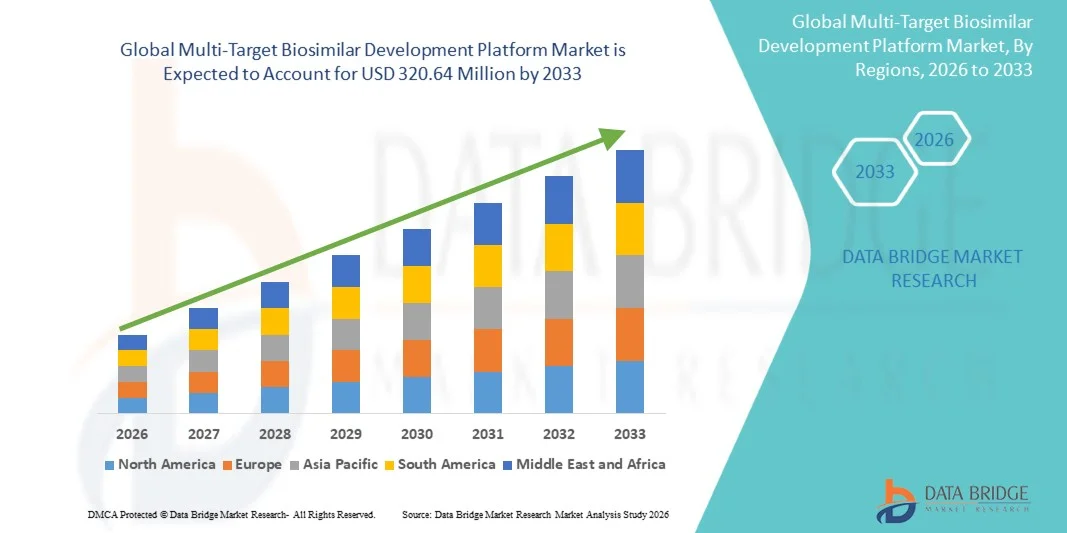
- Según el análisis de Data Bridge Market Research, el tamaño del mercado mundial de plataformas de desarrollo multiobjetivo se valoró en el mercado148,50 millones de dólares en 2025y se espera que alcanceUSD 320.64 million by 2033, aCAGR of 10.10%durante el período previsto
- El crecimiento del mercado está impulsado principalmente por el creciente énfasis en el desarrollo biológico rentable, el aumento de las vencimientos de patentes de los biologicos del bloque, y la creciente necesidad de plataformas integradas que puedan apoyar el desarrollo simultáneo de múltiples objetivos biosimilares
- Furthermore, strong demand from pharmaceutical andbiotecnologíalas empresas para soluciones de desarrollo simplificadas, escalables y compatibles con la regulación están posicionando plataformas de desarrollo biosimilares multiobjetivos como un factor determinante de las tuberías biosimilares eficientes, lo que acelera significativamente el crecimiento general del mercado
Tamaño del mercado
- Valor mundial del mercado (2025):148,50 millones de dólares
- Valor de mercado esperado (2033):USD 320.64 Million
- CAGR prefabricado (2026–2033):10.10%
¿Cuáles son los principales Takeaways of Multi-Target Biosimilar Development Platform Market
- Las plataformas de desarrollo biosimilares multiobjetivo, que permiten el diseño, la optimización y la evaluación simultáneos de múltiples candidatos biosimilares, se están volviendo cada vez más críticas dentro de la industria biofarmacéutica debido a su capacidad de simplificar los flujos de trabajo de desarrollo, reducir los costos y acelerar el tiempo a mercado en diversos objetivos biológicos
- La creciente demanda de estas plataformas está impulsada principalmente por la creciente presión de desarrollar alternativas rentables a los biologicos de alto precio, aumentando las vencimientos de patentes de los biologicos de referencia, y la necesidad de un análisis integrado, desarrollo de procesos y apoyo regulatorio en los oleoductos biosimilares
- América del Norte dominaba el mercado con la mayor cuota de ingresos del 38,5% en 2025, apoyada por un fuertebiofarmacéuticaEcosistema de R-D, marcos regulatorios avanzados para biosimilares, y la presencia de empresas biotecnológicas líderes y MDL que invierten activamente en enfoques de desarrollo basados en plataformas
- Se espera que Asia-Pacífico sea la región de más rápido crecimiento durante el período de pronóstico, ya que la ampliación de las capacidades de fabricación de biológicas, el aumento de las inversiones en R sensibleD biosimilar en países como China, la India y Corea del Sur, y el aumento de las colaboraciones entre las empresas locales y los agentes mundiales de biofarma impulsan la adopción
- El segmento de la plataforma analítica y de caracterización dominaba el mercado con la mayor cuota de mercado del 41,3% en 2025, debido al papel crítico de herramientas analíticas de alto rendimiento y múltiples atributos en la demostración de la biosimilaridad en múltiples objetivos y el cumplimiento de requisitos reglamentarios estrictos
Report Scope and Multi-Target Biosimilar Development Platform Market Segmentation
|
Atributos |
Multi-Target Biosimilar Development Platform Key Market Insights |
|
Segmentos cubiertos |
|
|
Países cubiertos |
América del Norte
Europa
Asia y el Pacífico
Oriente Medio y África
América del Sur
|
|
Principales jugadores del mercado |
|
|
Oportunidades de mercado |
|
|
Valor añadido Data Infosets |
Además de las ideas sobre escenarios de mercado como el valor de mercado, la tasa de crecimiento, la segmentación, la cobertura geográfica y los principales actores, los informes de mercado comisariados por Data Bridge Market Research también incluyen análisis profundos de expertos, epidemiología de pacientes, análisis de tuberías, análisis de precios y marco regulatorio |
¿Cuál es la tendencia clave en el mercado de plataformas de desarrollo multitarea
“Intección basada en la plataforma para el desarrollo multianquitivo simultáneo”
- Una tendencia significativa y aceleradora en el mercado mundial de plataformas de desarrollo multiobjetivo es la creciente adopción de enfoques integrados basados en plataformas que permitan el desarrollo paralelo de múltiples candidatos biosimilares en diferentes objetivos biológicos
- Por ejemplo, los principales proveedores de CDMO y tecnología están ofreciendo líneas celulares estandarizadas, desarrollo de procesos y plataformas analíticas que pueden ser reutilizadasanticuerpos monoclonalesy programas biosimilares de proteína recombinante, reduciendo significativamente la redundancia
- La integración de la plataforma permite características tales como marcos de comparabilidad analítica compartidos, flujos de trabajo de desarrollo de procesos armonizados y paquetes de datos regulatorios reutilizables, permitiendo a los desarrolladores demostrar eficientemente la biosimilaridad en múltiples productos de referencia
- La consolidación de las capacidades preliminares, preliminares y analíticas en una sola plataforma de desarrollo facilita la gestión centralizada de proyectos, la coherencia de los datos y la adopción de decisiones más rápidas en los conductos biosimilares complejos
- El creciente uso de la gestión digital de datos y la analítica avanzada dentro de estas plataformas está mejorando la reutilización de los conocimientos entre programas y acelerando las curvas de aprendizaje para el desarrollo
- Esta tendencia hacia plataformas de desarrollo biosimilares escalables, modulares y reutilizables está remodelando la forma en que las empresas biofarmacéuticas estructuran sus estrategias y asignan recursos de desarrollo
- La creciente preferencia por las plataformas de desarrollo de punta a punta que integran el desarrollo, la analítica y el apoyo reglamentario está fortaleciendo aún más la adopción de plataformas a largo plazo
¿Cuáles son los principales impulsores del mercado de plataformas de desarrollo multitarea
Conductor
“La creciente demanda de desarrollo biosimilar rentable y acelerado”
- La creciente necesidad de reducir los costos y plazos de desarrollo biológico, combinados con el aumento del número de vencimientos de patentes de los biologicos del bloque, es un factor importante para la adopción de plataformas de desarrollo biosimilares multiobjetivos
- Por ejemplo, varios desarrolladores biosimilares se asocian cada vez más con los CDMO basados en plataformas para promover múltiples activos biosimilares simultáneamente en lugar de perseguir modelos de desarrollo autónomos específicos de moléculas
- A medida que la competencia intensifica en el espacio biosimilars, las empresas están priorizando plataformas que permiten evaluaciones de comparabilidad más rápidas, optimización de procesos simplificados y reducción de la carga del desarrollo clínico
- Además, el aumento de la claridad reglamentaria en torno a las vías de aprobación biosimilares alienta a los desarrolladores a invertir en plataformas estandarizadas que apoyen la generación de datos coherente y las presentaciones mundiales
- La capacidad de las plataformas multiobjetivos para apoyar estrategias biosimilares basadas en cartera es un factor clave para acelerar su adopción en todas las empresas farmacéuticas y biotecnológicas
- Aumentar la presión de los sistemas sanitarios y los beneficiarios a reducir los costos de terapia biológica está impulsando indirectamente a las empresas de biofarma a ampliar los oleoductos biosimilares utilizando modelos de plataforma eficientes
- La expansión de las actividades de desarrollo biosimilar en los mercados emergentes también aumenta la demanda de plataformas de desarrollo escalables y transferibles
- Las colaboraciones estratégicas entre las empresas mundiales de biofarma y los OMD regionales están reforzando aún más el desarrollo biosimilar impulsado por las plataformas
Restraint/Challenge
“High Development Complexity and Regulatory Alignment Challenges”
- La complejidad inherente del desarrollo de múltiples biosimilares simultáneamente, cada uno con productos de referencia distintos y atributos de calidad críticos, plantea un desafío importante para el despliegue eficaz de plataformas de desarrollo multiobjetivo
- Por ejemplo, las variaciones de los requisitos analíticos y las expectativas reglamentarias en diferentes clases y regiones biológicas pueden complicar los esfuerzos de normalización de las plataformas
- Para hacer frente a estos desafíos se requiere una inversión inicial sustancial en capacidades analíticas avanzadas, conocimientos científicos especializados y sistemas de calidad robustos para garantizar la flexibilidad de la plataforma sin comprometer las normas de biosimilaridad
- Si bien los enfoques basados en la plataforma pueden reducir los costos a largo plazo, los gastos iniciales de capital y operacionales relacionados con la construcción o el acceso a esas plataformas pueden disuadir a los desarrolladores más pequeños o con recursos limitados
- Las diferencias en la aceptación reglamentaria global de la reutilización de datos basados en plataforma pueden frenar los programas multinacionales de desarrollo biosimilar
- La disponibilidad limitada de talentos biosimilares experimentados puede limitar la utilización y escalabilidad efectivas de las plataformas
- Asegurar un control de calidad coherente en múltiples objetivos y escalas de fabricación añade mayor complejidad operacional
- Para lograr un crecimiento sostenido del mercado será fundamental superar estos desafíos mediante una mejor modularidad de plataformas, una mayor participación de los reguladores y un mayor acceso a los CDMO experimentados.
¿Cómo es segmentado el mercado de plataformas de desarrollo de biosimilar multitarea
El mercado se segmenta sobre la base de plataforma, molécula, modelo de implementación y aplicación.
- By Platform
Sobre la base de la plataforma, el mercado mundial de plataformas de desarrollo biosimilar se segmenta en plataformas de desarrollo de líneas celulares, plataformas de desarrollo de procesos, plataformas analíticas de caracterización, plataformas de procesamiento depuradoras y plataformas reguladoras de gestión de datos. El segmento de las plataformas analíticas de caracterización dominaba el mercado en 2025, con la mayor proporción de ingresos del 41,3%, impulsado por la importancia crítica de demostrar la biosimilaridad en múltiples objetivos mediante estudios de comparabilidad analítica sólidos y de alta resolución. Estas plataformas apoyan técnicas avanzadas como métodos multiatributos, espectrometría de masas y caracterización estructural, que son esenciales para las presentaciones reglamentarias. A medida que los desarrolladores biosimilares persiguen cada vez más oleoductos de múltiples activos, la reutilización de marcos analíticos en múltiples moléculas reduce significativamente los plazos y costos del desarrollo. Los organismos reguladores hacen hincapié en la similitud analítica y refuerzan aún más la demanda de plataformas analíticas amplias. Además, la integración de la gestión digital de datos en las plataformas analíticas aumenta la reutilización y coherencia de los datos de los programas cruzados. Estos factores posicionan colectivamente plataformas de caracterización analíticas como segmento dominante.
Se espera que el segmento de las plataformas reguladoras de gestión de datos sea testigo del crecimiento más rápido durante el período previsto, apoyado por el aumento de la complejidad reglamentaria y la necesidad de presentar comunicaciones mundiales armonizadas. A medida que las empresas realizan aprobaciones simultáneas en múltiples geografías, las plataformas que permiten la documentación estandarizada, la gestión del ciclo de vida y la inteligencia reguladora están ganando tracción. La capacidad de reutilizar estrategias y conjuntos de datos regulatorios en múltiples objetivos biosimilares se está convirtiendo en una ventaja competitiva clave. La creciente adopción de herramientas reguladoras digitales y el seguimiento del cumplimiento habilitado por AI está acelerando aún más el crecimiento de este segmento. Además, los organismos reguladores son cada vez más alentadores las presentaciones estructuradas y basadas en datos, lo que fomenta la adopción de plataformas. Se prevé que estas tendencias impulsarán un fuerte impulso de crecimiento para las plataformas reguladoras de gestión de datos.
- Por Molecule
Sobre la base del tipo de molécula, el mercado se segmenta en anticuerpos monoclonales (mAbs), proteínas recombinantes, hormonas " factores de crecimiento, y péptidos " otros biologicos. El segmento de anticuerpos monoclonales (mAbs) dominaba el mercado en 2025, debido al alto valor comercial y al uso terapéutico generalizado de mAbs en oncología, trastornos autoinmunes y enfermedades inflamatorias. Un gran número de bloques mAbs se han enfrentado o se están acercando a la expiración de patentes, impulsando una extensa actividad de desarrollo biosimilar. Las plataformas de desarrollo multiobjetivo son especialmente adecuadas para mAbs debido a la complejidad estructural compartida y a requisitos analíticos comparables en las moléculas. Los desarrolladores aprovechan plataformas de mAb estandarizadas para reducir la duplicación en el desarrollo de líneas celulares, optimización de procesos y pruebas analíticas. La familiaridad reguladora con los biosimilares mAb apoya aún más su dominio. As a result, mAbs continue to account for the largest share of platform usage.
Se proyecta que el segmento de proteínas recombinantes sea el crecimiento más rápido, impulsado por la creciente demanda de biosimilares rentables en condiciones crónicas como la diabetes, anemia, y deficiencias hormonales de crecimiento. Las proteínas recombinantes a menudo tienen plazos de desarrollo más cortos en comparación con mAbs, haciéndolos candidatos atractivos para estrategias de plataforma multiobjetivo. Aumentar el enfoque en los mercados emergentes, donde la asequibilidad es un factor clave, está acelerando el desarrollo biosimilar de proteína recombinante. Los enfoques basados en la plataforma permiten a los desarrolladores adaptar rápidamente los procesos a múltiples objetivos de proteína. Además, la creciente presión de los beneficiarios para reducir los costos de la terapia biológica está impulsando tuberías biosimilares de proteína recombinante. Se espera que estos factores apoyen un fuerte crecimiento en este segmento.
- By Deployment Model
Sobre la base del modelo de despliegue, el mercado se segmenta en plataformas de premisa, plataformas basadas en la nube y plataformas híbridas. El segmento de plataformas sobre premisas mantuvo la mayor cuota de mercado en 2025, principalmente debido a las preocupaciones en materia de seguridad de datos, los requisitos de cumplimiento reglamentario y la necesidad de un control estricto de los datos de desarrollo patentados. Las grandes empresas farmacéuticas y biotecnológicas prefieren soluciones de premisa para garantizar la confidencialidad de los oleoductos de múltiples activos y datos analíticos sensibles. Las plataformas on-premise también permiten la personalización a flujos de trabajo internos específicos y sistemas de calidad. Además, las auditorías regulatorias a menudo favorecen sistemas internos controlados, fortaleciendo la adopción. Los agentes de biofarma establecidos con una infraestructura de TI sustancial siguen dependiendo de los despliegues previstos. Estos factores contribuyeron colectivamente al dominio de este segmento.
Se espera que el segmento de las plataformas basadas en la nube crezca a la velocidad más rápida durante el período de previsión, impulsado por la adopción creciente de soluciones de gestión de datos digitales R plagaD, la colaboración remota y las soluciones escalables. Las plataformas de nube permiten compartir datos en tiempo real entre equipos y socios geográficamente distribuidos, lo cual es crítico para programas de desarrollo multiobjetivo. Los desarrolladores biosimilares más pequeños y medianos están optando cada vez más por soluciones basadas en la nube para reducir los costos de infraestructura iniciales. Los avances en la seguridad en la nube y la aceptación reglamentaria están mejorando aún más la adopción. La flexibilidad y escalabilidad que ofrecen las plataformas de la nube hacen que sean adecuadas para ampliar las carteras biosimilares. En consecuencia, se prevé que el despliegue basado en la nube será testigo de un rápido crecimiento.
- By Application
Sobre la base de la aplicación, el mercado se centra en las empresas farmacéuticas, las empresas biotecnológicas, las organizaciones de investigación de contratos, las organizaciones de fabricación de contratos y los institutos de investigación académicos. El segmento de las empresas farmacéuticas dominaba el mercado en 2025, impulsado por sus extensos oleoductos biosimilares y su enfoque estratégico en el desarrollo basado en carteras. Las grandes empresas farmacéuticas aprovechan plataformas multiobjetivos para optimizar la utilización de recursos en múltiples candidatos biosimilares. Estas empresas se benefician de economías de escala normalizando los procesos de desarrollo y las estrategias reglamentarias. Las sólidas capacidades financieras les permiten invertir en plataformas avanzadas de punta a punta. Además, las empresas farmacéuticas están pasando cada vez más de un desarrollo único a carteras biosimilares impulsadas por plataformas. Este cambio estratégico sustenta su posición dominante en el mercado.
Se espera que el segmento de las organizaciones de fabricación de contratos registre el crecimiento más rápido, apoyado por el aumento de la contratación externa de actividades de desarrollo y fabricación biosimilares. Las empresas de biofarma se asocian cada vez más con los OMC que ofrecen plataformas de desarrollo integradas y multiobjetivos para reducir los gastos de capital y acelerar los plazos. Los CMO están invirtiendo fuertemente en plataformas estandarizadas que se pueden aplicar a través de múltiples programas de clientes. El número cada vez mayor de pequeños y medianos desarrolladores biosimilares que dependen de asociados externos está impulsando aún más la demanda. La expansión de la capacidad de fabricación biosimilar en Asia-Pacífico también beneficia a los CMO. Se espera que estas tendencias propelan un rápido crecimiento en este segmento de aplicación.
¿Qué región posee la mayor parte del mercado de la plataforma de desarrollo multitarea
- América del Norte dominaba el mercado con la mayor cuota de ingresos del 38,5% en 2025, apoyada por un fuerte ecosistema biofarmacéutico R plagaD, marcos regulatorios avanzados para biosimilares, y la presencia de empresas biotecnológicas líderes y MDL que invierten activamente en enfoques de desarrollo basados en plataformas
- Las empresas de la región hacen especial hincapié en plataformas de desarrollo integradas y escalables que soportan múltiples activos biosimilares simultáneamente, lo que permite un uso más rápido y eficiente de los recursos de R cl
- Esta adopción generalizada está respaldada además por la presencia de las principales empresas farmacéuticas y biotecnológicas, los CDMO experimentados y el creciente interés en el desarrollo de biologicos rentables, estableciendo plataformas de desarrollo biosimilares multiobjetivos como solución preferida en el paisaje biofarmano regional
U.S. Multi-Target Biosimilar Development Platform Market Insight
El mercado de la plataforma de desarrollo biosimilar multiobjetivo estadounidense capturó la mayor parte de los ingresos dentro de América del Norte en 2025, impulsada por la infraestructura biofarmacéutica avanzada del país y el fuerte enfoque en la expansión de la cartera biosimilar. Las empresas de biofarma están priorizando cada vez más los modelos de desarrollo basados en plataformas para acelerar múltiples programas biosimilares simultáneamente. La presencia de las principales empresas farmacéuticas, los CDMO experimentados y las vías biosimilares de la FDA bien definidas apoya aún más el crecimiento del mercado. Además, la creciente presión para reducir los costos y plazos de desarrollo biológicos refuerza la adopción de plataformas de desarrollo integradas y multiobjetivos en todo Estados Unidos.
Europe Multi-Target Biosimilar Development Platform Market Insight
Se proyecta que el mercado de plataformas de desarrollo biosimilar multiobjetivo de Europa se expanda en un CAGR sustancial durante el período de previsión, impulsado principalmente por el entorno regulatorio biosimilar maduro de la región y la alta adopción de biosimilares en todos los sistemas sanitarios. Aumentar el énfasis en la contención de costos y la eficiencia del reembolso es alentar a los desarrolladores a aplicar estrategias biosimilares de múltiples activos. Las empresas europeas de biofarma están aprovechando activamente plataformas estandarizadas para simplificar el desarrollo y las propuestas reglamentarias. La región sigue siendo testigo de un fuerte crecimiento en los conductos biosimilares de oncología, autoinmune y enfermedades crónicas.
U.K. Multi-Target Biosimilar Development Platform Market Insight
Se prevé que el mercado de plataformas de desarrollo biosimilar de múltiples objetivos de los Estados Unidos crezca en una CAGR notable durante el período previsto, con el apoyo de un ecosistema de ciencias de la vida sólida y el aumento de las actividades de R clérigo centradas en biosimilares. Las políticas reglamentarias y de apoyo para los biosimilares del Reino Unido fomentan la adopción de enfoques de desarrollo eficientes basados en la plataforma. La creciente colaboración entre las empresas de biotecnología y los MDL está acelerando aún más la utilización de las plataformas. Además, la atención centrada en la ampliación del acceso biosimilar dentro del Servicio Nacional de Salud está impulsando indirectamente la demanda de plataformas de desarrollo.
Alemania Multi-Target Biosimilar Development Platform Market Insight
Se espera que el mercado de la plataforma de desarrollo multiobjetivo de Alemania se amplíe en un CAGR considerable, alimentado por el liderazgo del país en la fabricación farmacéutica y la adopción biosimilar. Las empresas alemanas hacen un fuerte énfasis en plataformas analíticas y de desarrollo de procesos de alta calidad para cumplir con estrictos estándares regulatorios y de calidad. La demanda de soluciones de desarrollo eficientes que apoyen a múltiples candidatos biosimilares aumenta a medida que se intensifica la competencia. La integración de las tecnologías analíticas avanzadas y la gestión de datos digitales está apoyando aún más el crecimiento del mercado en Alemania.
Asia-Pacific Multi-Target Biosimilar Development Platform Market Insight
El mercado de plataformas de desarrollo multiobjetivo de Asia y el Pacífico está preparado para crecer en la CAGR más rápida durante el período de previsión, impulsada por la ampliación de la capacidad de fabricación de biologics y el aumento de las inversiones en R clérigos biosimilares en países como China, India y Corea del Sur. El creciente papel de la región como centro mundial de fabricación biosimilar es alentador la adopción de plataformas de desarrollo escalables y eficientes en función de los costos. Las iniciativas gubernamentales que apoyan la innovación biofarmacéutica y el aumento de la colaboración con los agentes mundiales de biofarma están acelerando aún más el crecimiento del mercado. La mejora de la madurez reglamentaria en la APAC también está fortaleciendo la adopción de plataformas.
Japón Multi-Target Biosimilar Development Platform Market Insight
El mercado de la plataforma de desarrollo biosimilar multiobjetivo de Japón está ganando impulso debido a la creciente aceptación de los biosimilares y el fuerte enfoque del país en el desarrollo de biologicos de alta calidad. Las empresas japonesas enfatizan la precisión, el rigor analítico y el cumplimiento regulatorio, impulsando la demanda de plataformas de desarrollo avanzadas. La expansión de oleoductos biosimilares en oncología y áreas crónicas de enfermedades está apoyando la adopción de plataformas. Además, las colaboraciones entre las empresas nacionales y los MDL mundiales están mejorando el acceso a la capacidad de desarrollo multiobjetivo.
India Multi-Target Biosimilar Development Platform Market Insight
El mercado de la plataforma de desarrollo biosimilar multiobjetivo de la India representó la mayor parte de los ingresos en Asia y el Pacífico en 2025, con el apoyo de la sólida base de fabricación biosimilar del país y las capacidades de desarrollo rentables. Las empresas de biofarma india están adoptando cada vez más modelos basados en plataformas para desarrollar múltiples biosimilares tanto para mercados nacionales como de exportación. La disponibilidad de talentos cualificados, la creciente presencia de los MDL y el entorno regulatorio de apoyo son factores clave del crecimiento. Además, el enfoque de la India en la expansión de terapias biológicas asequibles a nivel mundial está acelerando la demanda de plataformas de desarrollo biosimilares multiobjetivos.
¿Cuáles son las mejores empresas en el mercado de plataformas de desarrollo multitarea
La industria de la Plataforma de Desarrollo Biosimilar Multi-Target está dirigida principalmente por empresas bien establecidas, incluyendo:
- Biocon Biologics Limited(India)
- Catalent, Inc.(U.S.)
- Amgen Inc. (U.S.)
- Sandoz Group AG(Suiza)
- Samsung Biologics Co., Ltd.(Corea del Sur)
- WuXi Biologics (China)
- Polpharma Biologics(Polonia)
- Creative Biolabs(U.S.)
- Aragen Bioscience, Inc. (U.S.)
- Celltrion, Inc. (South Korea)
- Coherus BioSciences, Inc. (U.S.)
- Boehringer Ingelheim International GmbH (Alemania)
- Fresenius Kabi AG (Alemania)
- Pfizer Inc. (U.S.)
- Teva Pharmaceutical Industries Ltd. (Israel)
- Viatris Inc. (U.S.)
- Merck & Co., Inc. (U.S.)
- AbbVie Inc. (Estados Unidos)
- Biogen Inc. (Estados Unidos)
- GSK plc (U.K.)
¿Cuáles son los desarrollos recientes en el mercado mundial de plataformas de desarrollo multitarea
- En octubre de 2025, los informes indicaron que la Administración de Alimentos y Medicamentos de los Estados Unidos (FDA) tiene la intención de agilizar y acelerar el proceso de aprobación biosimilar reduciendo potencialmente los estudios clínicos humanos necesarios, lo que podría reducir significativamente las barreras de desarrollo y los costos de los biosimilares desarrollados a través de plataformas multiobjetivos
- En agosto de 2025, Intas Pharma finalizó la adquisición del biosimilar UDENYCA (pegfilgrastim), fortaleciendo su cartera biosimilar oncológica y ampliando su alcance mundial del mercado, mostrando actividad de consolidación donde las empresas potencian las plataformas biosimilares mediante adquisiciones de activos estratégicos
- En junio de 2025, los Laboratorios del Dr. Reddy entraron en una colaboración estratégica con Alvotech para co-develop y comercializar una versión biosimilar de la inmunoterapia de cáncer de blockbuster Keytruda (pembrolizumab), reflejando crecientes alianzas mundiales en desarrollo biosimilar que apalancan las capacidades combinadas de R residencial y plataforma para abordar objetivos biologicos de alto valor
- En mayo de 2023, Just – Evotec Biologics y Sandoz lanzaron una asociación tecnológica multianual para desarrollar y posteriormente fabricar una cartera de biosimilares utilizando la plataforma de desarrollo integrado y tecnología de fabricación continua de Evotec, demostrando que la industria temprana avanza hacia plataformas de desarrollo multimoléculas integradas
- En febrero de 2023, Similis Bio (unidad empresarial de JSR Life Sciences) anunció una alianza estratégica con Novel351k para codesarrollar múltiples programas biosimilares dirigidos al cáncer y las enfermedades autoinmunes, combinando la línea celular de Similis, analítica, desarrollo de procesos y capacidades de cGMP con la estrategia regulatoria y clínica de Novel351k para acelerar el desarrollo de biosimilares de múltiples activos
SKU-
Obtenga acceso en línea al informe sobre la primera nube de inteligencia de mercado del mundo
- Panel de análisis de datos interactivo
- Panel de análisis de empresas para oportunidades con alto potencial de crecimiento
- Acceso de analista de investigación para personalización y consultas
- Análisis de la competencia con panel interactivo
- Últimas noticias, actualizaciones y análisis de tendencias
- Aproveche el poder del análisis de referencia para un seguimiento integral de la competencia
Metodología de investigación
La recopilación de datos y el análisis del año base se realizan utilizando módulos de recopilación de datos con muestras de gran tamaño. La etapa incluye la obtención de información de mercado o datos relacionados a través de varias fuentes y estrategias. Incluye el examen y la planificación de todos los datos adquiridos del pasado con antelación. Asimismo, abarca el examen de las inconsistencias de información observadas en diferentes fuentes de información. Los datos de mercado se analizan y estiman utilizando modelos estadísticos y coherentes de mercado. Además, el análisis de la participación de mercado y el análisis de tendencias clave son los principales factores de éxito en el informe de mercado. Para obtener más información, solicite una llamada de un analista o envíe su consulta.
La metodología de investigación clave utilizada por el equipo de investigación de DBMR es la triangulación de datos, que implica la extracción de datos, el análisis del impacto de las variables de datos en el mercado y la validación primaria (experto en la industria). Los modelos de datos incluyen cuadrícula de posicionamiento de proveedores, análisis de línea de tiempo de mercado, descripción general y guía del mercado, cuadrícula de posicionamiento de la empresa, análisis de patentes, análisis de precios, análisis de participación de mercado de la empresa, estándares de medición, análisis global versus regional y de participación de proveedores. Para obtener más información sobre la metodología de investigación, envíe una consulta para hablar con nuestros expertos de la industria.
Personalización disponible
Data Bridge Market Research es líder en investigación formativa avanzada. Nos enorgullecemos de brindar servicios a nuestros clientes existentes y nuevos con datos y análisis que coinciden y se adaptan a sus objetivos. El informe se puede personalizar para incluir análisis de tendencias de precios de marcas objetivo, comprensión del mercado de países adicionales (solicite la lista de países), datos de resultados de ensayos clínicos, revisión de literatura, análisis de mercado renovado y base de productos. El análisis de mercado de competidores objetivo se puede analizar desde análisis basados en tecnología hasta estrategias de cartera de mercado. Podemos agregar tantos competidores sobre los que necesite datos en el formato y estilo de datos que esté buscando. Nuestro equipo de analistas también puede proporcionarle datos en archivos de Excel sin procesar, tablas dinámicas (libro de datos) o puede ayudarlo a crear presentaciones a partir de los conjuntos de datos disponibles en el informe.











