The rising occurrence of vector-borne parasites, including ticks, fleas, mites, and other external parasites, is becoming a significant concern for companion animals and livestock populations. These parasites can negatively impact animal health by causing skin disorders, infections, irritation, reduced immunity, and transmission of various diseases. Increasing exposure of animals to parasite-prone environments, including farms, rural areas, and outdoor habitats, is contributing to greater demand for effective parasite control solutions. The growing focus on maintaining animal welfare and preventing parasite-related health issues is encouraging the adoption of animal parasiticides across veterinary and agricultural applications. Livestock producers are increasingly prioritizing parasite management to minimize health complications and maintain animal productivity, while pet owners are becoming more proactive toward routine parasite prevention. This shift toward preventive animal healthcare practices is supporting the increased utilization of parasiticide products for controlling vector-borne parasite infestations.
Access Full Report @ https://www.databridgemarketresearch.com/reports/global-animal-parasiticides-market
Data Bridge Market Research analyses that the Global Animal Parasiticides Market is expected to reach USD 22,830.17 million by 2033 from USD 13,509.35 million in 2025, growing with a CAGR of 6.97% in the forecast period of 2026 to 2033.
Key Findings of the Study
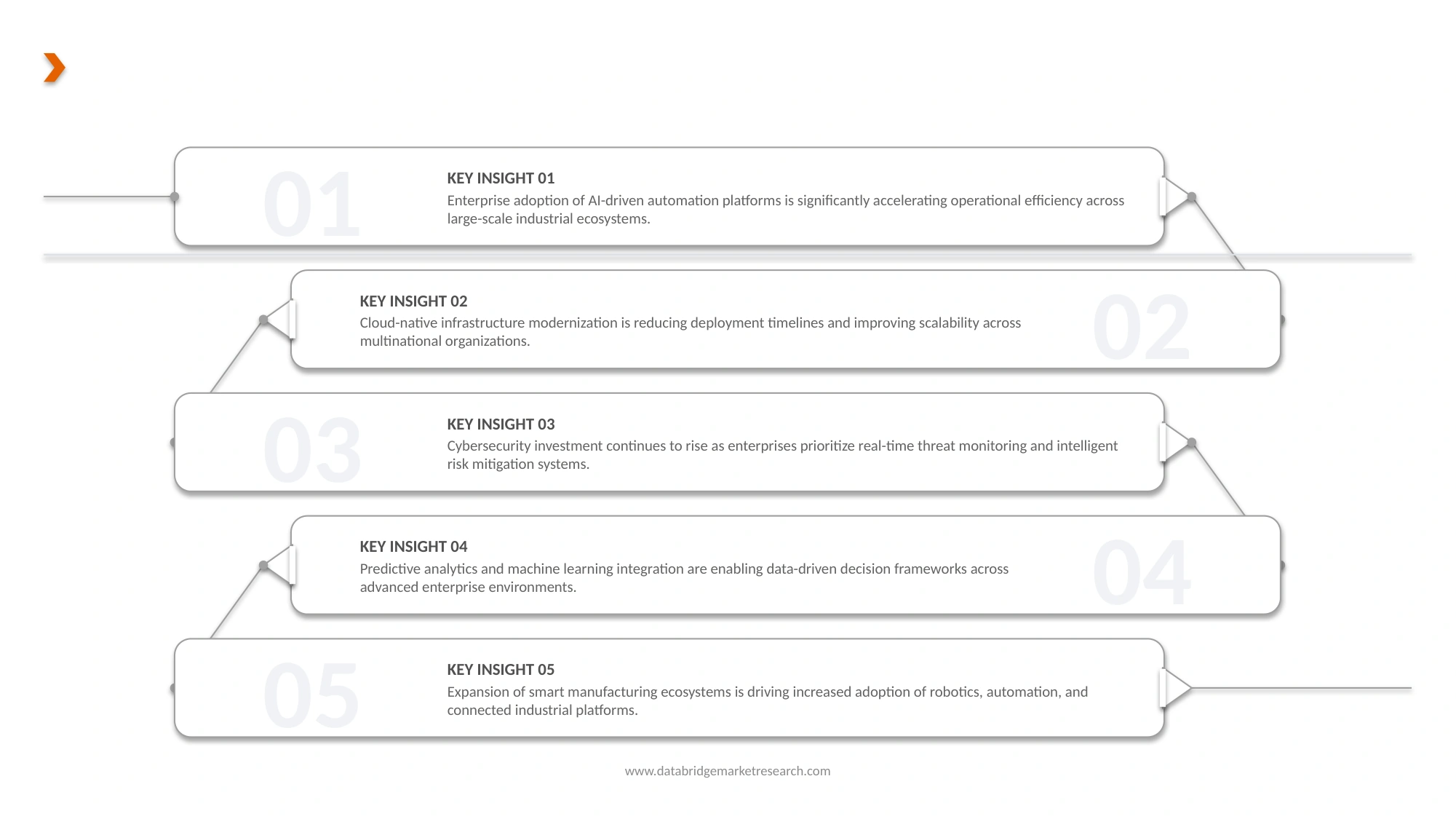
Rising Pet Humanization and Growing Expenditure on Companion Animal Wellness
The increasing perception of pets as family members is transforming companion animal healthcare practices, with owners becoming more proactive toward maintaining pet health, comfort, and overall well-being. Pet owners are increasingly prioritizing preventive healthcare measures, including routine veterinary check-ups, parasite prevention, vaccinations, and wellness treatments to improve the quality and longevity of companion animal life. This shift in ownership behavior is creating greater demand for advanced animal healthcare products, including parasiticide solutions for effective prevention and management of parasite-related conditions. The growing willingness among pet owners to allocate higher spending toward premium healthcare products and services is further supporting the adoption of innovative companion animal wellness solutions. Increasing awareness regarding the risks associated with flea, tick, and other parasite infestations is encouraging regular usage of preventive parasiticides rather than reactive treatments. As companion animal care continues to evolve toward a more preventive and personalized approach, manufacturers are focusing on developing convenient, effective, and animal-friendly parasiticide formulations to address changing consumer expectations.
Report Scope and Market Segmentation
|
Report Metric
|
Details
|
|
Forecast Period
|
2026 to 2033
|
|
Base Year
|
2025
|
|
Historic Years
|
2018-2024 (Customizable from 2013-2017)
|
|
Quantitative Units
|
Revenue in USD Billion
|
|
Segments Covered
|
Product (Ectoparasiticides, Endoparasiticides, and Endectocides), Drug Class (Organochlorines, Organophosphates, Carbamates, Benzimidazoles, Imidazothiazoles, and Others), Mode of Purchase (Prescription and Over the Counter (OTC)), Drug Type (Branded and Generic), Route of Administration (Topical, Oral, Injectables, and Others), Dosage Form (Solution, Tablets, Sprays, and Others), Disease Type (Fleas, Ticks, Round Worms, Hookworms, Ear Mites, and Others), Animal Type (Companion Animal and Farm Animals), End User (Veterinary Clinics, Animal Farms, Home Care, Veterinary Hospitals, Pet Shops, and Others), and Distribution Channel (Retail Sales, Direct Tender, and Other)
|
|
Countries Covered
|
U.S., Canada, Mexico, Germany, U.K., France, Italy, Spain, Russia, Switzerland, Netherlands, Turkey, Belgium, Denmark, Sweden, Norway, Finland, Rest of Europe, China, India, Australia, Japan, Indonesia, South Korea, Thailand, Philippines, Malaysia, New Zealand, Taiwan, Singapore, Hong Kong, Rest of Asia-Pacific, Brazil, Argentina, Colombia, Chile, Peru, Ecuador, Paraguay, Uruguay, Bolivia, Venezuela, Rest of South America, South Africa, Saudi Arabia, Egypt, United Arab Emirates, Israel, Qatar, Kuwait, Oman, Bahrain, Rest of Middle East & Africa
|
|
Market Players Covered
|
Zoetis Services LLC (U.S.), Boehringer Ingelheim International GmbH (Germany), Merck & Co., Inc. (MSD Animal Health) (U.S.), Elanco Animal Health Incorporated (U.S.), Virbac (France), Ceva Santé Animale (France), Vetoquinol S.A. (France), Dechra Pharmaceuticals PLC (U.K.), Phibro Animal Health Corporation (U.S.), Norbrook Laboratories Ltd. (U.K.), Bimeda Animal Health (Ireland), and Bayer AG (Germany)
|
|
Data Points Covered in the Report
|
In addition to the insights on market scenarios such as market value, growth rate, segmentation, geographical coverage, and major players, the market reports curated by the Data Bridge Market Research also include in-depth expert analysis, patient epidemiology, pipeline analysis, pricing analysis, and regulatory framework.
|
Segment Analysis
The global animal parasiticides market is segmented into ten notable segments based on product, drug class, mode of purchase, drug type, route of administration, dosage form, disease type, animal type, end user, and distribution channel.
- On the basis of product, the global animal parasiticides market is segmented into ectoparasiticides, endoparasiticides, and endectocides.
In 2026, the ectoparasiticides segment is expected to dominate the global animal parasiticides market
In 2026, the ectoparasiticides segment is expected to dominate the global animal parasiticides market with a 49.51% market share and is expected to reach USD 11,349.92 million by 2033, growing with a CAGR of 7.03% during the forecast period of 2026 to 2033.
- On the basis of animal type, the global animal parasiticides market is segmented into companion animals and farm animals.
In 2026, the companion animal segment is expected to dominate the global animal parasiticides market
In 2026, the companion animal segment is expected to dominate the global animal parasiticides market with a 75.71% market share and is expected to reach USD 17,129.21 million by 2033, growing with a CAGR of 6.83% during the forecast period of 2026 to 2033.
- On the basis of drug class, the global animal parasiticides market is segmented into organochlorines, organophosphates, carbamates, benzimidazoles, imidazothiazoles, and others. In 2026, the others segment is expected to dominate the market with a 58.03% market share and is expected to reach USD 13,085.93 million by 2033, growing with a CAGR of 6.78% during the forecast period of 2026 to 2033.
- On the basis of mode of purchase, the global animal parasiticides market is segmented into prescription and over the counter (OTC). In 2026, the prescription segment is expected to dominate the market with a 63.17% market share and is expected to reach USD 14,628.30 million by 2033, growing with a CAGR of 7.18% during the forecast period of 2026 to 2033.
- On the basis of drug type, the global animal parasiticides market is segmented into branded and generic. In 2026, the branded segment is expected to dominate the market with a 61.61% market share and is expected to reach USD 13,891.26 million by 2033, growing with a CAGR of 6.78% during the forecast period of 2026 to 2033.
- On the basis of route of administration, the global animal parasiticides market is segmented into topical, oral, injectables, and others. In 2026, the topical segment is expected to dominate the market with a 42.37% market share and is expected to reach USD 9,567.38 million by 2033, growing with a CAGR of 6.80% during the forecast period of 2026 to 2033.
- On the basis of dosage form, the global animal parasiticides market is segmented into solution, tablets, sprays, and others. In 2026, the solution segment is expected to dominate the market with a 44.10% market share and is expected to reach USD 9,979.04 million by 2033, growing with a CAGR of 6.83% during the forecast period of 2026 to 2033.
- On the basis of disease type, the global animal parasiticides market is segmented into fleas, ticks, round worms, hookworms, ear mites, and others. In 2026, the fleas segment is expected to dominate the market with a 27.66% market share and is expected to reach USD 6,407.69 million by 2033, growing with a CAGR of 7.19% during the forecast period of 2026 to 2033.
- On the basis of end user, the global animal parasiticides market is segmented into veterinary clinics, animal farms, home care, veterinary hospitals, pet shops, and others. In 2026, the veterinary clinics segment is expected to dominate the market with a 33.55% market share and is expected to reach USD 7,725.58 million by 2033, growing with a CAGR of 7.10% during the forecast period of 2026 to 2033.
- On the basis of distribution channel, the global animal parasiticides market is segmented into retail sales, direct tender, and other. In 2026, the retail sales segment is expected to dominate the market with a 67.43% market share and is expected to reach USD 15,331.37 million by 2033, growing with a CAGR of 6.90% during the forecast period of 2026 to 2033.
Major Players
Data Bridge Market Research analyzes some of the major market players operating in the market including Zoetis Services LLC (U.S.), Boehringer Ingelheim International GmbH (Germany), Merck & Co., Inc. (MSD Animal Health) (U.S.), Elanco Animal Health Incorporated (U.S.), and Virbac (France).
Market Developments
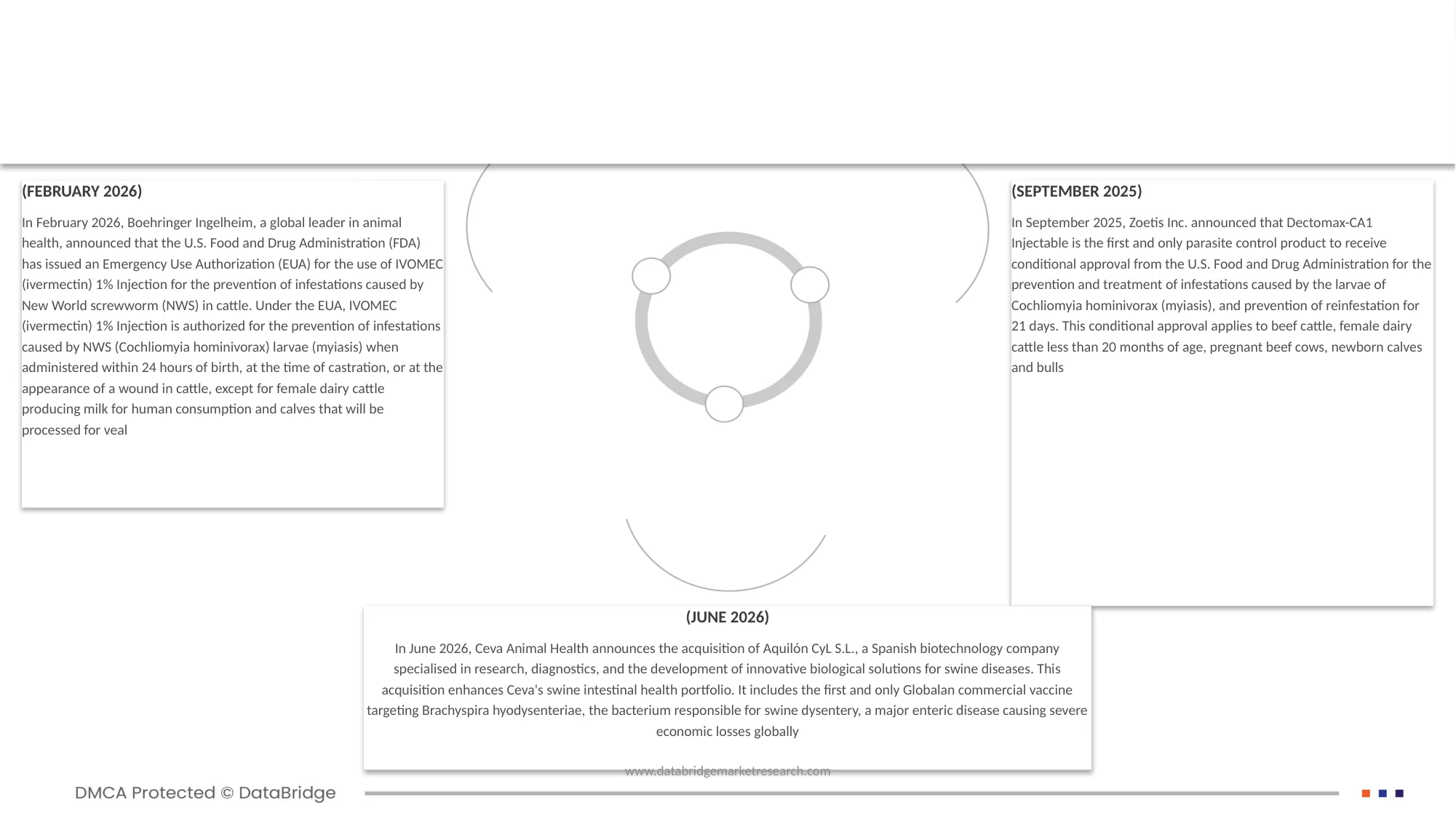
- In September 2025, Zoetis Inc. announced that Dectomax-CA1 Injectable is the first and only parasite control product to receive conditional approval from the U.S. Food and Drug Administration for the prevention and treatment of infestations caused by the larvae of Cochliomyia hominivorax (myiasis), and prevention of reinfestation for 21 days. This conditional approval applies to beef cattle, female dairy cattle less than 20 months of age, pregnant beef cows, newborn calves and bulls.
- In February 2026, Boehringer Ingelheim, a global leader in animal health, announced that the U.S. Food and Drug Administration (FDA) has issued an Emergency Use Authorization (EUA) for the use of IVOMEC (ivermectin) 1% Injection for the prevention of infestations caused by New World screwworm (NWS) in cattle. Under the EUA, IVOMEC (ivermectin) 1% Injection is authorized for the prevention of infestations caused by NWS (Cochliomyia hominivorax) larvae (myiasis) when administered within 24 hours of birth, at the time of castration, or at the appearance of a wound in cattle, except for female dairy cattle producing milk for human consumption and calves that will be processed for veal.
- In June 2026, Ceva Animal Health announces the acquisition of Aquilón CyL S.L., a Spanish biotechnology company specialised in research, diagnostics, and the development of innovative biological solutions for swine diseases. This acquisition enhances Ceva’s swine intestinal health portfolio. It includes the first and only European commercial vaccine targeting Brachyspira hyodysenteriae, the bacterium responsible for swine dysentery, a major enteric disease causing severe economic losses globally.
- In May 2026, Ceva Animal Health (Ceva) and Mitsui & Co., Ltd. (Mitsui) announced the creation of Ceva Bussan Animal Health, a new joint venture that brings together Bussan Animal Health (BAH) and Ceva Japan. As part of the transaction, Mitsui has transferred 60% of its shareholding in BAH to Ceva. Ceva Bussan Animal Health will be operated by Ceva as a controlling shareholder and benefit from Mitsui’s ongoing support as a leading global trading and investment company headquartered in Japan.
- In February 2026, Ceva Animal Health is implementing strategic organisational changes across Asia Pacific (APAC) and China to accelerate growth and drive operational excellence. As part of this strategic realignment, Ceva has relocated its Asia-Pacific regional headquarters to Shanghai, positioning the company to serve the dynamic markets in the region more effectively.
Regional Analysis
Geographically, the country covered in the global animal parasiticides market report U.S., Canada, Mexico, Germany, U.K., France, Italy, Spain, Russia, Switzerland, Netherlands, Turkey, Belgium, Denmark, Sweden, Norway, Finland, Rest of Europe, China, India, Australia, Japan, Indonesia, South Korea, Thailand, Philippines, Malaysia, New Zealand, Taiwan, Singapore, Hong Kong, Rest of Asia-Pacific, Brazil, Argentina, Colombia, Chile, Peru, Ecuador, Paraguay, Uruguay, Bolivia, Venezuela, Rest of South America, South Africa, Saudi Arabia, Egypt, United Arab Emirates, Israel, Qatar, Kuwait, Oman, Bahrain, Rest of Middle East & Africa.
As per Data Bridge Market Research analysis:
North America is the dominant region in the global animal parasiticides market
North America leads the global animal parasiticides market, accounting for a 33.49% share in 2026, due to high companion animal ownership rates, strong pet humanization trends, advanced veterinary infrastructure, and the presence of major animal health companies such as Zoetis and Merck Animal Health. The region's large livestock sector, particularly in the U.S., also drives sustained demand for ectoparasiticides and endoparasiticides to protect cattle, swine, and poultry productivity. Additionally, high veterinary spending, early adoption of long-acting and combination parasiticide products, and well-established retail and e-commerce distribution channels for pet healthcare products continue to reinforce North America's leading position in the market.
Asia Pacific is estimated to be the fastest-growing region in the Global animal parasiticides market
Asia-Pacific is expected to be the fastest-growing region in the global animal parasiticides market from 2026 to 2033, registering a CAGR of 7.54%, driven by rising companion animal adoption, expanding livestock farming activities, and growing veterinary awareness across countries such as China, India, and Japan. The region is witnessing increasing investment in veterinary healthcare infrastructure and rising disposable incomes, which are encouraging pet owners to adopt preventive parasiticide products. In addition, government-supported livestock disease control programs and the growing presence of international and domestic animal health companies expanding their distribution networks across Asia-Pacific are further accelerating market growth in the region.
For more detailed information about Global animal parasiticides market click here – https://www.databridgemarketresearch.com/reports/global-animal-parasiticides-market