



Global Chocolate Fillings Market Segmentation, By Product (Nuts Fillings, Sugar Fillings, Milk Fillings, Fruits Fillings, and Others), Type (Milk Chocolate, Dark Chocolate, White Chocolate, and Others), Application (Cookies, Cupcakes, Breakfast Cereals, and Others), End-User (Food Service, Retail, and Industrial) - Industry Trends and Forecast to 2032
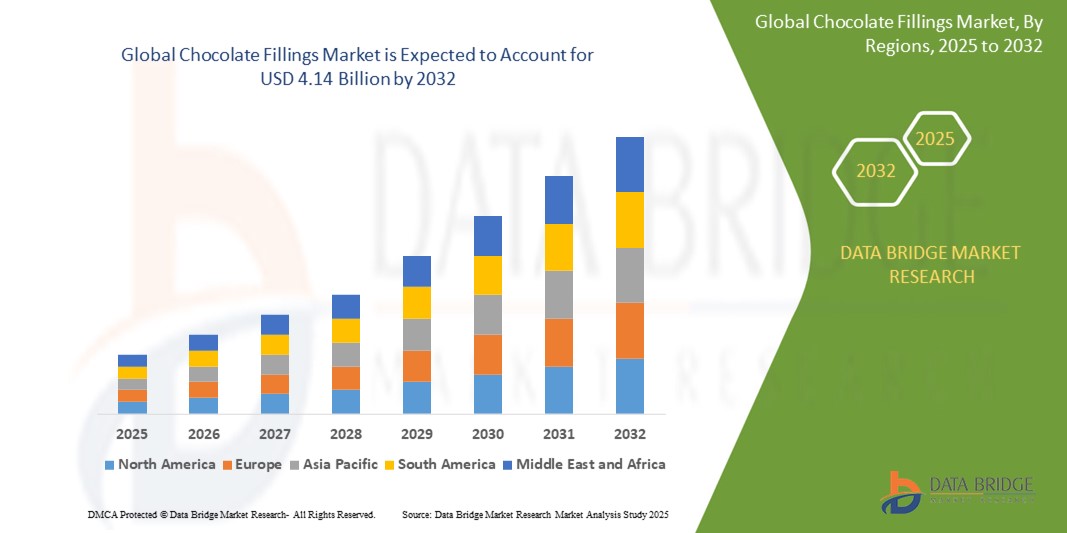
What is the Global Chocolate Fillings Market Size and Growth Rate?
- The global chocolate fillings market size was valued at USD 2.32 billion in 2024 and is expected to reach USD 4.14 billion by 2032, at a CAGR of 7.50% during the forecast period
- The chocolate fillings market is witnessing robust growth, driven by increasing consumer demand for premium and indulgent confectionery products. The rise in popularity of high-quality chocolates and artisanal baked goods has fueled the market for diverse and innovative chocolate fillings
- Key drivers include the growing preference for gourmet and luxury items, which has led to a surge in demand for rich, complex fillings such as ganache, chocolate cream, and chocolate caramel
What are the Major Takeaways of Chocolate Fillings Market?
- In today's fast-paced lifestyle, consumers are looking for convenient food options that save time without compromising on taste and quality. Chocolate fillings, being versatile and ready-to-use, cater perfectly to this demand by providing an easy way to enhance the flavor of various baked goods and desserts
- Whether used in chocolate filled croissants, cookies, or muffins, these fillings offer a quick solution for adding a rich, indulgent taste, making them a popular choice among busy consumers and home bakers alike. The increasing preference for ready-to-eat and easy-to-prepare food products is significantly driving the demand for chocolate fillings
- North America dominated the chocolate fillings market with the largest revenue share of 36.2% in 2024, driven by growing consumer preference for indulgent, premium, and clean-label confectionery products
- Asia-Pacific chocolate fillings market is projected to grow at the fastest CAGR of 15.7% from 2025 to 2032, fueled by rapid urbanization, rising disposable incomes, and increasing demand for indulgent, convenient, and premium food products
- The Sugar Fillings segment dominated the chocolate fillings market with the largest revenue share of 38.5% in 2024, driven by its widespread use in confectionery, bakery, and snack products for adding sweetness, texture, and enhanced flavors
Report Scope and Chocolate Fillings Market Segmentation
|
Attributes |
Chocolate Fillings Key Market Insights |
|
Segments Covered |
|
|
Countries Covered |
North America
Europe
Asia-Pacific
Middle East and Africa
South America
|
|
Key Market Players |
|
|
Market Opportunities |
|
|
Value Added Data Infosets |
In addition to the insights on market scenarios such as market value, growth rate, segmentation, geographical coverage, and major players, the market reports curated by the Data Bridge Market Research also include in-depth expert analysis, pricing analysis, brand share analysis, consumer survey, demography analysis, supply chain analysis, value chain analysis, raw material/consumables overview, vendor selection criteria, PESTLE Analysis, Porter Analysis, and regulatory framework. |
What is the Key Trend in the Chocolate Fillings Market?
“Rising Demand for Chocolate Fillings in Premium and Plant-Based Confectionery Products”
- A prominent trend shaping the global chocolate fillings market is the increasing utilization of chocolate fillings in high-end, clean-label, and plant-based confectionery products to meet evolving consumer preferences for quality, sustainability, and health-conscious indulgence
- For example, in March 2024, Barry Callebaut expanded its dairy-free, vegan chocolate fillings range to serve the growing demand for plant-based confectionery with rich texture and premium taste, enabling manufacturers to innovate responsibly
- Chocolate Fillings are increasingly favored for their ability to enhance mouthfeel, stability, and sensory appeal in applications such as premium chocolates, bakery goods, and dairy alternatives, without relying on artificial ingredients or hydrogenated fats
- Leading brands are reformulating chocolate bars, pralines, pastries, and spreads with plant-based, allergen-friendly chocolate fillings, highlighting certifications such as vegan, non-GMO, and Fairtrade to capture health-conscious and ethical consumers
- The trend is particularly prevalent across Europe and North America, where demand for ethical sourcing, minimal processing, and clean-label confectionery is reshaping new product development strategies
- Global food and confectionery manufacturers are leveraging chocolate fillings to align with the plant-based, sustainable indulgence trend, strengthening market competitiveness and expanding product portfolios
- As the global confectionery market shifts towards premiumization and responsible consumption, the role of chocolate fillings as a clean-label, plant-based solution is expected to accelerate, driving innovation across product categories
What are the Key Drivers of Chocolate Fillings Market?
- The increasing consumer preference for premium, plant-based, and clean-label confectionery is a major driver fueling the demand for Chocolate Fillings in global food markets
- For instance, in January 2024, Lindt & Sprüngli introduced a new line of vegan chocolate products featuring plant-based Chocolate Fillings to address the growing demand for ethical, allergen-free indulgent treats
- Rising awareness of food allergies, vegan diets, and environmental sustainability is pushing manufacturers to incorporate chocolate fillings as a natural, non-GMO alternative to conventional fillings with artificial additives
- The expansion of the plant-based food sector, particularly in chocolates, bakery, and desserts, is creating significant opportunities for chocolate fillings to serve as a functional ingredient that enhances texture, stability, and clean-label appeal
- Technological advancements in chocolate filling production have improved the quality, shelf life, and versatility of plant-based options, making them suitable for both mass-market and premium product line
- Additionally, the growing influence of health-conscious consumers and their focus on simple, recognizable ingredients is driving food manufacturers to prioritize chocolate fillings in product formulations across various categories
Which Factor is challenging the Growth of the Chocolate Fillings Market?
- One of the key challenges restraining chocolate fillings market growth is the relatively higher production cost of plant-based and premium chocolate fillings compared to conventional sugar or oil-based fillings, affecting affordability in mass-market segments
- For example, small and medium-sized confectionery brands in price-sensitive regions may face cost barriers when adopting premium or clean-label Chocolate Fillings, limiting widespread market penetration
- Supply chain fluctuations, including cocoa price volatility and ingredient sourcing limitations, can impact Chocolate Fillings availability, particularly for manufacturers relying on specialty or sustainably certified raw material
- Technical limitations in certain applications, such as heat stability and shelf life of plant-based Chocolate Fillings, may restrict their use in specific product formats, especially in tropical climates or long-distribution channels
- Variability in global regulations regarding vegan, organic, and clean-label claims adds complexity for multinational manufacturers, hindering consistent product positioning across markets
- Addressing these challenges requires increased investment in R&D, cost optimization strategies, and robust supply chain management to enhance the accessibility, functionality, and competitiveness of chocolate fillings globally
How is the Chocolate Fillings Market Segmented?
The market is segmented on the basis of product, type, application, and end-user.
• By Product
On the basis of product, the chocolate fillings market is segmented into Nuts Fillings, Sugar Fillings, Milk Fillings, Fruits Fillings, and Others. The Sugar Fillings segment dominated the Chocolate Fillings market with the largest revenue share of 38.5% in 2024, driven by its widespread use in confectionery, bakery, and snack products for adding sweetness, texture, and enhanced flavor. Sugar Fillings remain a popular choice among manufacturers due to cost efficiency and broad consumer appeal.
The Fruits Fillings segment is projected to witness the fastest growth rate from 2025 to 2032, fueled by rising demand for natural, clean-label, and fruit-based ingredients in premium confectionery and bakery products. Fruit Fillings are increasingly favored for their health appeal, vibrant flavors, and alignment with plant-based and better-for-you food trends.
• By Type
On the basis of type, the chocolate fillings market is segmented into Milk Chocolate, Dark Chocolate, White Chocolate, and Others. The Milk Chocolate segment accounted for the largest market revenue share of 44.2% in 2024, supported by its creamy texture, balanced sweetness, and broad application across bakery, confectionery, and snack products. Milk Chocolate Fillings continue to dominate due to their mass appeal and versatility in various indulgent product categories.
The Dark Chocolate segment is expected to experience the fastest CAGR from 2025 to 2032, driven by increasing consumer preference for premium, high-cocoa, and low-sugar chocolate products. Dark chocolate fillings are gaining traction in health-conscious, plant-based, and premium confectionery offerings.
• By Application
On the basis of application, the chocolate fillings market is segmented into Cookies, Cupcakes, Breakfast Cereals, and Others. The Cookies segment held the largest market revenue share of 36.7% in 2024, owing to growing global demand for indulgent, filled cookies with premium chocolate textures and enhanced flavor profiles. Chocolate Fillings in cookies continue to attract consumers seeking convenient, on-the-go treats with rich taste experiences.
The Breakfast Cereals segment is anticipated to witness the fastest growth rate from 2025 to 2032, fueled by the rising trend of chocolate-filled cereals that combine indulgence with convenience. Increasing consumer demand for innovative, snackable breakfast options is driving the adoption of chocolate fillings in cereals targeting both children and adults.
• By End-User
On the basis of end-user, the chocolate fillings market is segmented into Food Service, Retail, and Industrial. The Retail segment dominated the market with the largest revenue share of 49.8% in 2024, driven by increasing sales of packaged snacks, confectionery, and bakery products through supermarkets, hypermarkets, and e-commerce platforms. Chocolate Fillings play a critical role in enhancing product appeal and driving consumer purchase decisions within the retail sector.
The Food Service segment is projected to register the fastest growth rate from 2025 to 2032, supported by rising demand for chocolate-filled bakery items, desserts, and beverages across cafés, quick-service restaurants, and bakeries. The versatility and indulgent appeal of Chocolate Fillings are boosting their adoption in food service offerings globally.
Which Region Holds the Largest Share of the Chocolate Fillings Market?
- North America dominated the chocolate fillings market with the largest revenue share of 36.2% in 2024, driven by growing consumer preference for indulgent, premium, and clean-label confectionery products. Rising demand for chocolate-filled bakery goods, snacks, and cereals, coupled with increasing health awareness, is fueling market growth across the region
- The U.S., Canada, and Mexico are witnessing significant adoption of chocolate fillings across packaged food, bakery, and dessert categories, supported by strong retail presence, product innovation, and the growing popularity of plant-based and allergen-friendly offerings. The region's well-established food processing industry and consumer focus on convenience and quality are key growth drivers
- Furthermore, leading food manufacturers in North America are expanding their product lines with chocolate fillings to cater to evolving taste preferences, premiumization trends, and increasing demand for clean-label, non-GMO, and sustainably sourced ingredients
U.S. Chocolate Fillings Market Insight
The U.S. chocolate fillings market captured the largest revenue share within North America in 2024, supported by strong demand for chocolate-filled cookies, confectionery, and snack products across retail, foodservice, and e-commerce channels. The growing emphasis on clean-label, gluten-free, and plant-based food options is accelerating the use of Chocolate Fillings in diverse product formulations, reinforcing the country's leadership position in the global market.
Which Region is the Fastest Growing Region in the Chocolate Fillings Market?
Asia-Pacific chocolate fillings market is projected to grow at the fastest CAGR of 15.7% from 2025 to 2032, fueled by rapid urbanization, rising disposable incomes, and increasing demand for indulgent, convenient, and premium food products. Growing consumption of bakery goods, confectionery, and filled snack items is driving Chocolate Fillings adoption across the region. Emerging markets such as China, India, and Southeast Asia are witnessing strong growth in the packaged food and bakery industries, supported by rising middle-class populations and evolving dietary preferences. The growing popularity of Western-style desserts, along with increased focus on food quality and safety, is further boosting market expansion. Additionally, local and international food manufacturers are investing in product innovation, expanding production capacities, and introducing chocolate-filled products tailored to regional tastes, contributing to the robust growth of the Chocolate Fillings market across Asia-Pacific.
China Chocolate Fillings Market Insight
The China chocolate fillings market accounted for the largest revenue share within Asia-Pacific in 2024, driven by the country's vast food production capabilities, growing urban population, and increasing demand for premium, chocolate-filled bakery and snack products. The expanding retail sector, rising popularity of convenience foods, and product innovation are supporting the strong market presence of Chocolate Fillings across China.
Japan Chocolate Fillings Market Insight
The Japan chocolate fillings market is witnessing steady growth, supported by high consumer demand for premium, indulgent, and clean-label confectionery and bakery items. Japanese consumers prioritize product quality, innovation, and minimalistic, health-conscious formulations, driving increased adoption of Chocolate Fillings in bakery goods, desserts, and specialty snack products
Which are the Top Companies in Chocolate Fillings Market?
The chocolate fillings industry is primarily led by well-established companies, including:
- Ghirardelli Chocolate Company (U.S.)
- Barry Callebaut (Switzerland)
- The Kraft Heinz Company (U.S.)
- Agostoni Chocolate (U.S.)
- The Hershey Company (U.S.)
- GCPPL Ltd. (India)
- Blommer Chocolate Company (U.S.)
- Chocoladefabriken Lindt & Sprüngli AG (Switzerland)
- Ferrero (Italy)
- Mondelez International (U.S.)
- Nestle S.A (Switzerland)
- Cargill, Incorporated. (U.S.)
- LOTTE SHOPPING Co., Ltd. (South Korea)
- Mars, Incorporated (U.S.)
- Mondelez International Inc. (U.S.)
- Strauss Group (Israel)
- Favarger SA (Switzerland)
- Unilever (U.K.)
- Chocolat Bernrain AG (Switzerland)
What are the Recent Developments in Global Chocolate Fillings Market?
- In October 2022, Puratos India launched an innovative range of Colored & Flavored Compounds and Compound Fillings, categorized under Hard Compound Chocolate (Carat Cover Classic) and Fat-Based Filling (Carat Supercrem). The introduction caters to the growing consumer demand for flavored chocolate elements in a variety of sweet applications, supporting the brand's expansion in the confectionery and bakery segments
- In February 2022, Dawn Foods unveiled its Delicream line of cocoa-based fillings, developed for convenient pre- and post-bake use in bakery items like croissants, cookies, muffins, and other sweet goods. The ready-to-use, fat-based fillings enhance texture and flavor, meeting market demand for premium, easy-to-apply solutions in bakery preparations
- In March 2021, The Barry Callebaut Group announced the opening of a new chocolate and compound manufacturing facility in Baramati, marking its third factory in India and the company's largest investment in the country. This expansion strengthens Barry Callebaut's production footprint and underscores its commitment to serving the growing demand for chocolate and compound products in the Indian market
- In May 2021, ZeelIndia acquired the assets of John Morley, including its fruit filling, fruit soaking, and mac paste portfolio. This strategic acquisition enables ZeelIndia to broaden its product offerings across industrial, craft, wholesale, and in-store bakery channels, enhancing its market reach and competitive positioning
SKU-
Accédez en ligne au rapport sur le premier cloud mondial de veille économique

- Tableau de bord d'analyse de données interactif
- Tableau de bord d'analyse d'entreprise pour les opportunités à fort potentiel de croissance
- Accès d'analyste de recherche pour la personnalisation et les requêtes
- Analyse de la concurrence avec tableau de bord interactif
- Dernières actualités, mises à jour et analyse des tendances
- Exploitez la puissance de l'analyse comparative pour un suivi complet de la concurrence
Méthodologie de recherche
La collecte de données et l'analyse de l'année de base sont effectuées à l'aide de modules de collecte de données avec des échantillons de grande taille. L'étape consiste à obtenir des informations sur le marché ou des données connexes via diverses sources et stratégies. Elle comprend l'examen et la planification à l'avance de toutes les données acquises dans le passé. Elle englobe également l'examen des incohérences d'informations observées dans différentes sources d'informations. Les données de marché sont analysées et estimées à l'aide de modèles statistiques et cohérents de marché. De plus, l'analyse des parts de marché et l'analyse des tendances clés sont les principaux facteurs de succès du rapport de marché. Pour en savoir plus, veuillez demander un appel d'analyste ou déposer votre demande.
La méthodologie de recherche clé utilisée par l'équipe de recherche DBMR est la triangulation des données qui implique l'exploration de données, l'analyse de l'impact des variables de données sur le marché et la validation primaire (expert du secteur). Les modèles de données incluent la grille de positionnement des fournisseurs, l'analyse de la chronologie du marché, l'aperçu et le guide du marché, la grille de positionnement des entreprises, l'analyse des brevets, l'analyse des prix, l'analyse des parts de marché des entreprises, les normes de mesure, l'analyse globale par rapport à l'analyse régionale et des parts des fournisseurs. Pour en savoir plus sur la méthodologie de recherche, envoyez une demande pour parler à nos experts du secteur.
Personnalisation disponible
Data Bridge Market Research est un leader de la recherche formative avancée. Nous sommes fiers de fournir à nos clients existants et nouveaux des données et des analyses qui correspondent à leurs objectifs. Le rapport peut être personnalisé pour inclure une analyse des tendances des prix des marques cibles, une compréhension du marché pour d'autres pays (demandez la liste des pays), des données sur les résultats des essais cliniques, une revue de la littérature, une analyse du marché des produits remis à neuf et de la base de produits. L'analyse du marché des concurrents cibles peut être analysée à partir d'une analyse basée sur la technologie jusqu'à des stratégies de portefeuille de marché. Nous pouvons ajouter autant de concurrents que vous le souhaitez, dans le format et le style de données que vous recherchez. Notre équipe d'analystes peut également vous fournir des données sous forme de fichiers Excel bruts, de tableaux croisés dynamiques (Fact book) ou peut vous aider à créer des présentations à partir des ensembles de données disponibles dans le rapport.











