



Global Foot Creams and Lotions Market, By Product Type (Cream, Lotion, Oils, Scrub, Gel, Balm, and Others), Type (Moisturizing, Exfoliating, Anti-fungal, Medicated, Repairing, Smoothening, and Others), Ingredient Type (Natural/Herbal, Synthetic, and Organic), Application (Dry Feet, Hard Skin, Cracked Heels, and Others), Distribution Channel (Supermarket, Independent Stores, and E-Commerce), End-User (Men, Women, Unisex, and Babies and Kids) – Industry Trends and Forecast to 2032.
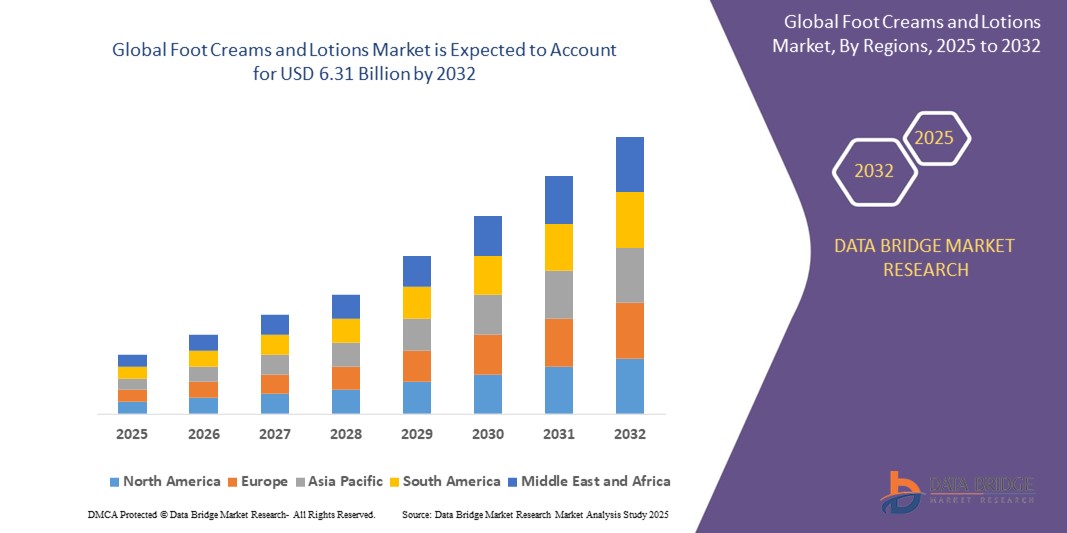
Foot Creams and Lotions Market Size
- The global foot creams and lotions market size was valued at USD 3.90 billion in 2024 and is expected to reach USD 6.31 billion by 2032, at a CAGR of 6.20% during the forecast period
- The market growth is driven by increasing consumer awareness of foot care, rising demand for personal care products, and advancements in formulations that cater to specific foot conditions such as dryness and cracked heels
- The growing preference for natural and organic ingredients, coupled with the rise of e-commerce platforms, is further boosting market expansion by making these products more accessible to consumers worldwide
Foot Creams and Lotions Market Analysis
- Foot creams and lotions are essential personal care products designed to address foot-related concerns such as dryness, cracked heels, and fungal infections, while also providing moisturizing and exfoliating benefits
- The surge in demand is primarily attributed to increasing focus on personal grooming, growing prevalence of foot-related issues due to lifestyle changes, and rising disposable incomes enabling consumers to invest in premium foot care products
- North America held the largest market share of 38.5% in 2024, driven by high consumer awareness, established personal care brands, and a strong retail infrastructure. The U.S. leads the region, with significant demand for medicated and organic foot care products, supported by innovations from both legacy brands and emerging startups
- Asia-Pacific is anticipated to be the fastest-growing region during the forecast period, fueled by rapid urbanization, increasing disposable incomes, and growing awareness of foot care in countries such as China, India, and Japan
- The cream segment dominated the largest market revenue share of 40% in 2023, driven by its thicker consistency and superior hydration properties, making it highly effective for addressing extremely dry feet and cracked heels
Report Scope and Foot Creams and Lotions Market Segmentation
|
Attributes |
Foot Creams and Lotions Key Market Insights |
|
Segments Covered |
|
|
Countries Covered |
North America
Europe
Asia-Pacific
Middle East and Africa
South America
|
|
Key Market Players |
|
|
Market Opportunities |
|
|
Value Added Data Infosets |
In addition to the insights on market scenarios such as market value, growth rate, segmentation, geographical coverage, and major players, the market reports curated by the Data Bridge Market Research also include in-depth expert analysis, pricing analysis, brand share analysis, consumer survey, demography analysis, supply chain analysis, value chain analysis, raw material/consumables overview, vendor selection criteria, PESTLE Analysis, Porter Analysis, and regulatory framework. |
Foot Creams and Lotions Market Trends
“Increasing Demand for Natural and Organic Products”
- The global foot creams and lotions market is experiencing a significant trend toward the use of natural and organic ingredients, driven by consumer preference for plant-based, chemical-free, and eco-friendly products
- These formulations often include ingredients such as shea butter, aloe vera, essential oils, and herbal extracts, which offer moisturizing, soothing, and therapeutic benefits with minimal risk of skin irritation
- Companies are innovating with certified organic and ethically sourced ingredients to appeal to environmentally conscious consumers, enhancing brand loyalty and market share
- For instances, brands such as The Body Shop and Burt’s Bees have seen increased sales for their herbal foot cream variants, while new product launches, such as VOESH’s Solemate Heel Repair Balm in October 2023, emphasize natural components such as tea tree oil and peppermint
- The rise of vegan and cruelty-free foot care products is also gaining traction, aligning with broader sustainability trends and consumer demand for ethical skincare solutions
- This trend is making foot creams and lotions more appealing to health-conscious consumers and driving innovation in product development and packaging.
Foot Creams and Lotions Market Dynamics
Driver
“Rising Awareness of Foot Health and Self-Care Trends”
- Increasing consumer awareness of foot health and its impact on overall well-being is a major driver for the global foot creams and lotions market
- Foot creams and lotions address common issues such as dry feet, cracked heels, and calluses, providing hydration, repair, and relief, which are critical for maintaining mobility and comfort
- The growing popularity of self-care and wellness routines, particularly among urban consumers, is boosting demand for specialized foot care products as part of daily skincare regimens
- Government and health organization campaigns, such as those by the American Podiatric Medical Association, highlight the prevalence of foot-related issues, further encouraging the adoption of foot care solutions
- The proliferation of e-commerce platforms has enhanced access to these products, with over 30% of sales coming from online channels, particularly in regions such as Asia-Pacific, where internet penetration is rising
Restraint/Challenge
“High Cost of Premium Products and Regulatory Challenges”
- The high cost of premium foot creams and lotions, particularly those with organic or specialized ingredients such as CBD or essential oils, can limit adoption among cost-sensitive consumers, especially in emerging markets
- Developing and sourcing natural, organic, and ethically produced ingredients increases production costs, which are often passed on to consumers, reducing affordability for mass-market segments
- Regulatory challenges related to ingredient certifications, labeling requirements, and compliance with organic standards vary across countries, complicating operations for global manufacturers and increasing costs
- In addition, concerns about the efficacy and safety of certain ingredients, such as those in cannabis-infused products, face regulatory hurdles in some regions, potentially restricting market growth
- These factors can deter budget-conscious buyers and limit market expansion in regions with lower disposable incomes or stringent regulatory environments
Foot Creams and Lotions market Scope
The market is segmented on the basis of product type, type, ingredient type, application, distribution channel, and end-user.
- By Product Type
On the basis of product type, the market is segmented into cream, lotion, oils, scrub, gel, balm, and others. The cream segment dominated the largest market revenue share of 40% in 2023, driven by its thicker consistency and superior hydration properties, making it highly effective for addressing extremely dry feet and cracked heels. Creams are widely preferred for their deep moisturizing capabilities and versatility across consumer groups.
The Scrub segment is expected to witness the fastest growth rate from 2025 to 2032, fueled by increasing consumer demand for exfoliating products that remove dead skin and promote smoother, healthier feet. Innovations in formulations, such as those incorporating natural exfoliants such as sea salt and pumice, are driving adoption, particularly among consumers seeking comprehensive foot care solutions.
- By Type
On the basis of type, the market is segmented into moisturizing, exfoliating, anti-fungal, medicated, repairing, smoothening, and others. The moisturizing segment dominated with a market revenue share of 35% in 2024, owing to its widespread use in addressing common foot issues such as dryness and cracked heels. Ingredients such as shea butter, glycerin, and aloe vera enhance hydration and consumer appeal.
The medicated segment is anticipated to experience the fastest growth from 2025 to 2032, driven by rising demand for targeted treatments for conditions such as athlete’s foot, fungal infections, and diabetic foot complications. Increasing awareness of foot health and advancements in therapeutic formulations are key growth factors.
- By Ingredient Type
On the basis of ingredient type, the market is segmented into natural/herbal, synthetic, and organic. The natural/herbal segment held the largest market revenue share of 45% in 2024, driven by growing consumer preference for plant-based ingredients such as shea butter, tea tree oil, and essential oils, which are perceived as safer and more eco-friendly. The shift toward clean-label and vegan products further boosts this segment.
The organic segment is expected to witness the fastest growth rate from 2025 to 2032, propelled by increasing environmental awareness and demand for certified organic products free from pesticides and synthetic chemicals. Brands leveraging organic certifications and sustainable sourcing are gaining traction among environmentally conscious consumers.
- By Application
On the basis of application, the market is segmented into dry feet, hard skin, cracked heels, and others. The dry feet segment accounted for the largest market revenue share of 50% in 2024, driven by the high prevalence of dry skin conditions globally, particularly among aging populations and those in harsh climates. Products targeting hydration and skin nourishment dominate this segment.
The cracked heels segment is projected to grow rapidly from 2025 to 2032, fueled by increasing demand for specialized solutions containing ingredients such as urea and salicylic acid, which effectively repair and soften damaged skin. The rise in diabetic foot care needs and focus on preventive care further accelerates growth.
- By Distribution Channel
On the basis of distribution channel, the market is segmented into supermarket, independent stores, and e-commerce. The supermarket segment held the largest market revenue share of 38% in 2024, attributed to its widespread accessibility and variety, catering to urban and suburban consumers seeking convenience and diverse product options. Major retail chains expanding into developing economies further strengthen this segment.
The e-commerce segment is expected to witness the fastest growth rate from 2025 to 2032, driven by the convenience of online shopping, extensive product selections, and increasing internet penetration in emerging markets. Platforms such as Amazon and Sephora enhance consumer reach, with online sales contributing over 30% to total market distribution.
- By End-User
On the basis of End-User, the market is segmented into men, women, unisex, and babies and kids. The women segment dominated with a market revenue share of 55% in 2024, driven by higher adoption of foot care products among female consumers, who prioritize aesthetics, self-care, and pedicure routines. The influence of fashion trends, such as open-toe shoes, further boosts demand.
The unisex segment is anticipated to experience rapid growth from 2025 to 2032, fueled by increasing awareness of foot health among all genders and the growing popularity of gender-neutral products. Brands offering versatile, multifunctional formulations are appealing to a broader consumer base, including athletes and professionals with active lifestyles.
Foot Creams and Lotions Market Regional Analysis
- North America held the largest market share of 38.5% in 2024, driven by high consumer awareness, established personal care brands, and a strong retail infrastructure. The U.S. leads the region, with significant demand for medicated and organic foot care products, supported by innovations from both legacy brands and emerging startups
- Consumers prioritize foot creams and lotions for moisturizing, repairing, and protecting against conditions such as dry feet, cracked heels, and fungal infections, particularly in regions with diverse climatic conditions
- Growth is supported by advancements in product formulations, including natural and organic ingredients, alongside rising adoption in both retail and e-commerce distribution channels
U.S. Foot Creams and Lotions Market Insight
The U.S. foot creams and lotions market captured the largest revenue share of 87.9% in 2024 within North America, fueled by strong demand in both retail and e-commerce channels and growing consumer awareness of foot health benefits. The trend towards self-care and wellness, coupled with increasing prevalence of foot-related issues such as cracked heels and dryness, boosts market expansion. The availability of premium and medicated products further complements market growth.
Europe Foot Creams and Lotions Market Insight
The Europe foot creams and lotions market is expected to witness significant growth, supported by a strong focus on personal care and rising demand for organic and herbal products. Consumers seek products that offer moisturizing, exfoliating, and anti-fungal benefits while addressing foot health concerns. Growth is prominent in both retail and online channels, with countries such as Germany and the U.K. showing significant uptake due to increasing wellness trends and urban lifestyles.
U.K. Foot Creams and Lotions Market Insight
The U.K. market for foot creams and lotions is expected to witness rapid growth, driven by demand for products that enhance foot comfort and address conditions such as dry feet and cracked heels. Increased consumer interest in natural and organic formulations, along with rising awareness of foot health, encourages adoption. Evolving regulations promoting safer and more effective foot care products further influence consumer choices, balancing efficacy with compliance.
Germany Foot Creams and Lotions Market Insight
Germany is expected to witness rapid growth in the foot creams and lotions market, attributed to its advanced personal care sector and high consumer focus on health and wellness. German consumers prefer technologically advanced products with natural ingredients such as shea butter and essential oils that address dry feet and hard skin while promoting overall foot health. The integration of these products in premium retail and e-commerce channels supports sustained market growth.
Asia-Pacific Foot Creams and Lotions Market Insight
The Asia-Pacific region is expected to witness the fastest growth rate, driven by expanding consumer bases, rising disposable incomes, and increasing urbanization in countries such as China, India, and Japan. Growing awareness of foot health, coupled with demand for natural, herbal, and organic products, boosts market growth. Government initiatives promoting personal care and hygiene further encourage the adoption of advanced foot creams and lotions.
Japan Foot Creams and Lotions Market Insight
Japan’s foot creams and lotions market is expected to witness rapid growth due to strong consumer preference for high-quality, natural, and organic products that enhance foot comfort and health. The presence of major personal care brands and the integration of advanced formulations in retail and e-commerce channels accelerate market penetration. Rising interest in self-care and wellness also contributes to growth.
China Foot Creams and Lotions Market Insight
China holds the largest share of the Asia-Pacific foot creams and lotions market, propelled by rapid urbanization, increasing consumer spending on personal care, and growing demand for moisturizing and medicated products. The country’s expanding middle class and focus on health and wellness support the adoption of advanced foot care solutions. Strong domestic manufacturing capabilities and competitive pricing enhance market accessibility.
Foot Creams and Lotions Market Share
The foot creams and lotions industry is primarily led by well-established companies, including:
- Johnson & Johnson Private Limited (U.S.)
- Pretty Valley Alpine Lodge Falls Creek (Australia)
- AMOREPACIFIC (South Korea)
- The Estée Lauder Companies (U.S.)
- Bayer AG (Germany)
- GlaxoSmithKline plc (U.K.)
- Sanofi (France)
- Implus Footcare LLC (U.S.)
- R.G. Barry Corporation (U.S.)
- Aetna Felt (U.S.)
- grace & stella (Canada)
- HoMedics (U.S.)
- Alva-Amco (U.S.)
- Revlon (U.S.)
- Blistex Inc. (U.S.)
What are the Recent Developments in Global Foot Creams and Lotions Market?
- In March 2024, Johnson & Johnson launched a new medicated foot cream under its Neutrogena brand, specifically formulated to treat severe cracked heels and diabetic foot conditions. Infused with urea and ceramides, this product aims to provide intensive hydration and repair, catering to the growing demand for medical-grade foot care solutions. The launch reinforces Johnson & Johnson’s commitment to addressing specialized foot health needs in the global market
- In January 2024, L’OCCITANE introduced an organic shea butter-based foot cream with cooling peppermint oil, targeting eco-conscious consumers. This premium product, part of their sustainable skincare line, emphasizes ethically sourced ingredients and eco-friendly packaging. The launch aligns with the rising consumer preference for natural and multifunctional foot care products, strengthening L’OCCITANE’s position in the luxury foot care segment
- In November 2023, Unilever acquired a minority stake in Grace & Stella Co., a Canadian company specializing in vegan and cruelty-free foot care products. This strategic acquisition aims to expand Unilever’s portfolio in the organic foot creams and lotions market, leveraging Grace & Stella’s expertise in plant-based formulations to capture the growing demand for sustainable personal care products
- In September 2023, Sanofi S.A. partnered with Himalaya Wellness Company to co-develop an anti-fungal foot cream targeting athlete’s foot and other fungal infections. Combining Sanofi’s pharmaceutical expertise with Himalaya’s herbal ingredient knowledge, the collaboration aims to deliver a clinically effective yet natural solution. This partnership highlights the trend toward hybrid medical and organic foot care products
- In July 2023, Burt’s Bees launched a new exfoliating foot lotion featuring natural tea tree oil and aloe vera, designed to address hard skin and calluses. The product, marketed as part of their eco-friendly line, emphasizes biodegradable packaging and sustainably sourced ingredients. This launch reflects Burt’s Bees’ focus on innovation in the natural foot care segment, appealing to environmentally conscious consumers
SKU-
Accédez en ligne au rapport sur le premier cloud mondial de veille économique

- Tableau de bord d'analyse de données interactif
- Tableau de bord d'analyse d'entreprise pour les opportunités à fort potentiel de croissance
- Accès d'analyste de recherche pour la personnalisation et les requêtes
- Analyse de la concurrence avec tableau de bord interactif
- Dernières actualités, mises à jour et analyse des tendances
- Exploitez la puissance de l'analyse comparative pour un suivi complet de la concurrence
Méthodologie de recherche
La collecte de données et l'analyse de l'année de base sont effectuées à l'aide de modules de collecte de données avec des échantillons de grande taille. L'étape consiste à obtenir des informations sur le marché ou des données connexes via diverses sources et stratégies. Elle comprend l'examen et la planification à l'avance de toutes les données acquises dans le passé. Elle englobe également l'examen des incohérences d'informations observées dans différentes sources d'informations. Les données de marché sont analysées et estimées à l'aide de modèles statistiques et cohérents de marché. De plus, l'analyse des parts de marché et l'analyse des tendances clés sont les principaux facteurs de succès du rapport de marché. Pour en savoir plus, veuillez demander un appel d'analyste ou déposer votre demande.
La méthodologie de recherche clé utilisée par l'équipe de recherche DBMR est la triangulation des données qui implique l'exploration de données, l'analyse de l'impact des variables de données sur le marché et la validation primaire (expert du secteur). Les modèles de données incluent la grille de positionnement des fournisseurs, l'analyse de la chronologie du marché, l'aperçu et le guide du marché, la grille de positionnement des entreprises, l'analyse des brevets, l'analyse des prix, l'analyse des parts de marché des entreprises, les normes de mesure, l'analyse globale par rapport à l'analyse régionale et des parts des fournisseurs. Pour en savoir plus sur la méthodologie de recherche, envoyez une demande pour parler à nos experts du secteur.
Personnalisation disponible
Data Bridge Market Research est un leader de la recherche formative avancée. Nous sommes fiers de fournir à nos clients existants et nouveaux des données et des analyses qui correspondent à leurs objectifs. Le rapport peut être personnalisé pour inclure une analyse des tendances des prix des marques cibles, une compréhension du marché pour d'autres pays (demandez la liste des pays), des données sur les résultats des essais cliniques, une revue de la littérature, une analyse du marché des produits remis à neuf et de la base de produits. L'analyse du marché des concurrents cibles peut être analysée à partir d'une analyse basée sur la technologie jusqu'à des stratégies de portefeuille de marché. Nous pouvons ajouter autant de concurrents que vous le souhaitez, dans le format et le style de données que vous recherchez. Notre équipe d'analystes peut également vous fournir des données sous forme de fichiers Excel bruts, de tableaux croisés dynamiques (Fact book) ou peut vous aider à créer des présentations à partir des ensembles de données disponibles dans le rapport.











