


世界のリバースロジスティクス市場のセグメンテーション、返品タイプ別(返品、使用済み品、再製造、改修、売れ残り品、レンタルおよびリース、修理およびメンテナンス、配送失敗、返品回避、梱包など)、コンポーネント別(返品ポリシーおよび手順(RPP)、再製造または改修(ROR)、廃棄物処理(WAD))、サービスタイプ別(輸送、倉庫保管、交換管理、再販、返金管理承認など)、エンドユーザー別(電子商取引、小売、自動車、消費者向け電子機器、医薬品、再利用可能な梱包、繊維および衣料品、高級品など)– 2032年までの業界動向と予測
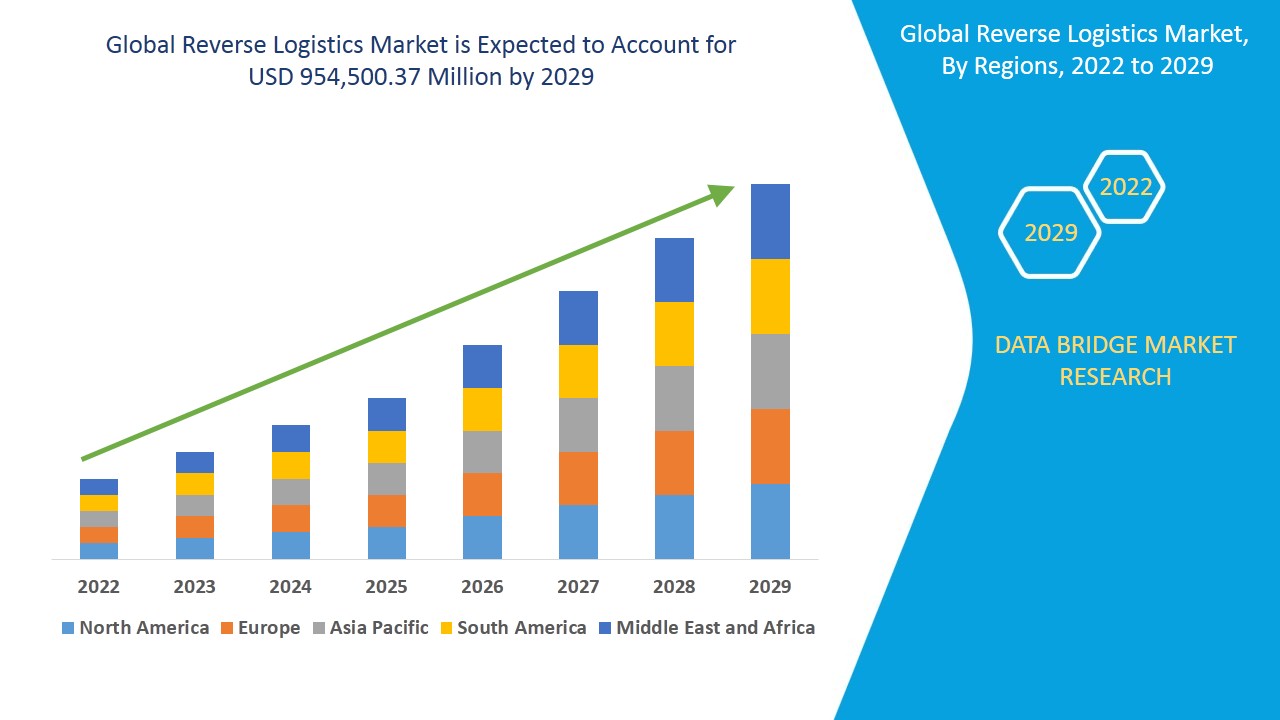
リバースロジスティクス市場分析
リバース ロジスティクス市場では、高度なテクノロジーと手法を活用して業務を合理化し、効率性を向上させています。AI や機械学習などの自動化システムは、返品管理を最適化し、データ パターンを分析して予測的な洞察を得るために活用されています。ブロックチェーン テクノロジーは、サプライ チェーンの透明性を確保し、返品された商品の信頼性と追跡可能性を高めます。
ロボティック プロセス オートメーション (RPA) により、返品された商品の仕分け、等級付け、修理における手作業によるエラーが削減されます。さらに、IoT 対応デバイスなどの高度な追跡システムにより、リバース ロジスティクス サイクル全体の可視性が向上します。これらのイノベーションにより、廃棄物が削減されるだけでなく、製品の再利用性とリサイクル性も向上し、循環型経済の目標に合致するようになります。
これらの進歩は、特に返品率が高く効率的なソリューションが求められる電子商取引や小売業界で、大幅に利用が拡大しています。企業が環境に優しいリバースロジスティクスの実践を採用して二酸化炭素排出量を最小限に抑えることを目指しているため、持続可能性のトレンドがこの市場をさらに活性化させています。
電子商取引の普及率の上昇、消費者の意識の高まり、持続可能な慣行に対する規制圧力により、市場は急速に成長すると予想されています。このような発展により、リバース ロジスティクスは現代のサプライ チェーン管理の重要な要素へと変化しています。
リバースロジスティクス市場規模
世界のリバースロジスティクス市場規模は、2024年に7,372.8億米ドルと評価され、2025年から2032年の予測期間中に5.3%のCAGRで成長し、2032年までに1兆1,144.5億米ドルに達すると予測されています。市場価値、成長率、セグメンテーション、地理的範囲、主要プレーヤーなどの市場シナリオに関する洞察に加えて、Data Bridge Market Researchがまとめた市場レポートには、詳細な専門家の分析、地理的に表された企業別の生産と生産能力、販売業者とパートナーのネットワークレイアウト、詳細で最新の価格動向分析、サプライチェーンと需要の不足分析も含まれています。
リバースロジスティクス市場の動向
「電子商取引の拡大がリバースロジスティクスの成長を促進」
電子商取引ロジスティクスの重要性の高まりは、リバースロジスティクス市場を牽引する極めて重要なトレンドです。オンライン販売の増加に伴い、特にファッションやエレクトロニクスなどの分野で返品率が急上昇しています。小売業者は現在、返品を合理化し、コストを削減し、顧客満足度を高めるために、高度なリバースロジスティクスシステムに投資しています。たとえば、2023年7月、Optoro Inc.はリバースロジスティクスプラットフォームのソフトウェアアップデートをリリースしました。これにより、返品された商品のリアルタイム追跡および処理機能が向上します。このアップデートには、返品データを分析し、処分決定を最適化する機械学習アルゴリズムが組み込まれているため、小売業者は処理コストを削減しながら返品からより多くの価値を回収できます。この高度なテクノロジーは、リバースロジスティクス業務の効率と収益性を向上させることを目的としています。
レポートの範囲とリバースロジスティクス市場のセグメンテーション
|
属性 |
リバースロジスティクスの主要市場分析 |
|
対象セグメント |
|
|
対象国 |
北米では米国、カナダ、メキシコ、ヨーロッパではドイツ、フランス、英国、オランダ、スイス、ベルギー、ロシア、イタリア、スペイン、トルコ、その他のヨーロッパ、ヨーロッパでは中国、日本、インド、韓国、シンガポール、マレーシア、オーストラリア、タイ、インドネシア、フィリピン、アジア太平洋地域 (APAC) ではその他のアジア太平洋地域 (APAC)、中東およびアフリカ (MEA) の一部としてサウジアラビア、UAE、南アフリカ、エジプト、イスラエル、中東およびアフリカ (MEA) の一部としてその他の中東およびアフリカ (MEA)、南米の一部としてブラジル、アルゼンチン、その他の南米 |
|
主要な市場プレーヤー |
CH Robinson Worldwide, Inc. (米国)、Deutsche Post DHL Group (ドイツ)、FedEx (米国)、Core Logistic Private Limited (インド)、Schenker AG (ドイツ)、Kintetsu World Express, Inc. (日本)、YUSEN LOGISTICS CO., LTD. (日本)、LogiNext Solutions Inc (米国)、NFI Industries (米国)、ReverseLogix (米国)、Indev Group of companies (インド)、Safexpress Pvt. Ltd. (インド)、Optoro, Inc. (米国)、Reverse Logistics Group (オランダ)、DGS Translogistics India Pvt. Ltd. (インド)、ShipWizard (米国)、Woodfield Distribution, LLC (米国)、United Parcel Service of America, Inc. (UPS) (米国)、XPO Logistics, Inc. (米国)、IBM Corporation (米国) |
|
市場機会 |
|
|
付加価値データ情報セット |
データブリッジマーケットリサーチがまとめた市場レポートには、市場価値、成長率、セグメンテーション、地理的範囲、主要企業などの市場シナリオに関する洞察に加えて、専門家による詳細な分析、地理的に表された企業別の生産量と生産能力、販売業者とパートナーのネットワークレイアウト、詳細かつ最新の価格動向分析、サプライチェーンと需要の不足分析も含まれています。 |
リバースロジスティクス市場の定義
リバース ロジスティクスとは、消費者から製造業者または販売業者への商品の返品フローを管理するプロセスを指します。このプロセスには、製品の返品、修理、改修、リサイクル、廃棄などの活動が含まれます。価値を回復するか、環境に配慮した方法で適切に廃棄することを目的としています。リバース ロジスティクスを使用する主な業界には、電子商取引、自動車、電子機器、小売などがあります。企業は、顧客満足度の向上、規制の遵守、持続可能性の強化のためにリバース ロジスティクスを採用しています。効率的なリバース ロジスティクス システムは、廃棄物の削減、サプライ チェーンの運用の最適化、収益性の向上に役立つと同時に、資源を廃棄するのではなく再利用することを重視する循環型経済の原則にも沿っています。
リバースロジスティクス市場の動向
ドライバー
- 再生品の台頭
再生電子機器や家電製品の需要の高まりは、リバース物流市場の大きな原動力となっています。消費者は、コスト効率と環境上の利点から、再生品を選ぶ傾向が高まっています。この需要の急増により、企業はこれらの製品の回収、検査、修理、再配送を管理するための効率的なリバース物流フレームワークを確立する必要があります。たとえば、2023年8月、Amazonの子会社であるAWSは、データセンター機器のリサイクルに重点を置いた新しい施設をペンシルベニア州に開設しました。この事業では、リバース物流を利用して機器を収集し、その後リサイクルして材料の再利用を最大化します。AWSは、社内のリバース物流チームを活用することで、持続可能性を高め、データセンターインフラストラクチャのライフサイクル管理を改善し、環境責任への取り組みを強化することを目指しています。
- 電子廃棄物管理に関する規制
Government regulations for e-waste management are a significant driver for the reverse logistics market. With strict mandates on the recycling and disposal of electronic waste (e-waste), companies must adopt efficient reverse logistics systems to comply. For instance, the European Union’s WEEE (Waste Electrical and Electronic Equipment) Directive requires producers to take responsibility for collecting and recycling e-waste. This has led to the establishment of dedicated reverse logistics networks for electronic devices such as smartphones, laptops, and televisions. As a result, companies are investing in advanced logistics solutions to ensure proper handling, recycling, and refurbishing of e-waste, thus stimulating the growth of the reverse logistics market globally.
Opportunities
- Customer Expectations for Hassle-Free Returns
As e-commerce continues to grow, customer expectations for hassle-free returns have become a significant driver for the reverse logistics market. Consumers now demand simple, fast, and transparent return processes, which have prompted retailers to invest heavily in reverse logistics solutions. For instance, companies such as Amazon and Zappos have streamlined return policies, allowing customers to return items with minimal effort. This has increased the demand for systems that can efficiently manage returns, including automated sorting, tracking, and restocking. As a result, businesses are adopting advanced technologies such as AI and machine learning to optimize returns, offering a substantial opportunity for reverse logistics service providers to expand their offerings.
- Global Supply Chain Integration
The growing integration of global supply chains creates significant opportunities for reverse logistics. As companies source materials and products worldwide, ensuring seamless returns management becomes crucial. Reverse logistics helps mitigate disruptions by facilitating the efficient movement of returned goods back through the supply chain. For instance, in January 2022, Berkshire Grey Inc. introduced an AI-driven solution for reverse logistics services, enhancing the return process for retailers. The artificial intelligence-enabled system aims to streamline the re-sale of returned goods by optimizing labor utilization and improving operational efficiency. This technology assists businesses in maximizing recovery value while reducing costs associated with handling returns, offering a competitive edge in the logistics sector.
Restraints/Challenges
- High Transportation Costs
High transportation costs are a significant restraint in the reverse logistics market. The process of returning products often requires reverse transportation, which can be costly due to the need for additional logistics infrastructure. Different from forward logistics, reverse logistics lacks optimized return-friendly routes, leading to inefficient and expensive shipping. Long-distance shipping further exacerbates these costs, particularly when returns come from multiple regions. The complexity of coordinating returns adds additional layers of expense, as products may require specialized handling or warehousing. These increased operational costs can discourage companies from implementing efficient reverse logistics systems, ultimately hindering market growth. The overall inefficiency in reverse transportation contributes to financial strain for businesses.
- Lack of Standardization
The lack of standardization in reverse logistics hinders market growth significantly. Different industries and regions follow varied practices for returns management, leading to inefficiencies and inconsistency. Without uniform protocols, businesses struggle to streamline their processes, resulting in higher operational costs, delays, and errors in handling returned goods. In addition, the absence of standardized systems makes it difficult to scale operations across regions or industries, as organizations must tailor their approaches for each specific market. This lack of cohesion complicates integration with third-party providers and increases the risk of customer dissatisfaction, ultimately preventing companies from optimizing their reverse logistics operations and limiting the growth potential of the market.
This market report provides details of new recent developments, trade regulations, import-export analysis, production analysis, value chain optimization, market share, impact of domestic and localized market players, analyses opportunities in terms of emerging revenue pockets, changes in market regulations, strategic market growth analysis, market size, category market growths, application niches and dominance, product approvals, product launches, geographic expansions, technological innovations in the market. To gain more info on the market contact Data Bridge Market Research for an Analyst Brief, our team will help you take an informed market decision to achieve market growth.
Reverse Logistics Market Scope
The market is segmented on the basis of return type, components, service type, end-user. The growth amongst these segments will help you analyze meagre growth segments in the industries and provide the users with a valuable market overview and market insights to help them make strategic decisions for identifying core market applications.
Return Type
- Returns
- End-Of-Life
- Remanufacturing
- Refurbishing
- Unsold Goods
- Rentals and Leasing
- Repairs and Maintenance
- Delivery Failure
- Returns Avoidance
- Packaging
- Others
Component
- Return Policy and Procedure (RPP)
- Remanufacturing or Refurbishment (ROR)
- Waste Disposal (WAD)
Service Type
- Transportation
- Warehousing
- Replacement Management
- Reselling
- Refund Management Authorization
- Others
End-User
- E-Commerce
- Retail
- Automotive
- Consumer Electronics
- Pharmaceutical
- Reusable Packaging
- Textile and Garments
- Luxury Goods
- Others
Reverse Logistics Market Regional Analysis
The market is analyzed and market size insights and trends are provided by return type, components, service type, end-user as referenced above.
The countries covered in the market report are U.S., Canada, Mexico in North America, Germany, Sweden, Poland, Denmark, Italy, U.K., France, Spain, Netherland, Belgium, Switzerland, Turkey, Russia, Rest of Europe in Europe, Japan, China, India, South Korea, New Zealand, Vietnam, Australia, Singapore, Malaysia, Thailand, Indonesia, Philippines, Rest of Asia-Pacific (APAC) in Asia-Pacific (APAC), Brazil, Argentina, Rest of South America as a part of South America, U.A.E, Saudi Arabia, Oman, Qatar, Kuwait, South Africa, Rest of Middle East and Africa (MEA) as a part of Middle East and Africa (MEA).
North America is expected to dominate the reverse logistics market, with the U.S. leading the charge. The region's growth can be attributed to the increasing adoption of reverse logistics services across various industries. The presence of numerous local players in the U.S. further contributes to the market's expansion, as companies are increasingly focusing on optimizing returns, recycling, and refurbishing goods. In addition, the rise in e-commerce, along with consumers’ growing expectations for return services, has propelled the demand for efficient reverse logistics solutions, ensuring the U.S. remains a key player in the global market.
Asia Pacific is expected to show significant growth in the reverse logistics market, driven by the rapid expansion of e-commerce, particularly in China. The country is poised to capture the largest share of the market due to the increasing demand for reverse logistics services in sectors such as automotive and consumer electronics. With a robust manufacturing base and large-scale consumer markets, China's continuous investment in logistics infrastructure further supports the market's growth. The rise in online shopping and product returns is expected to fuel demand for efficient reverse logistics solutions in the region.
The country section of the report also provides individual market impacting factors and changes in market regulation that impact the current and future trends of the market. Data points such as down-stream and upstream value chain analysis, technical trends and porter's five forces analysis, case studies are some of the pointers used to forecast the market scenario for individual countries. Also, the presence and availability of global brands and their challenges faced due to large or scarce competition from local and domestic brands, impact of domestic tariffs and trade routes are considered while providing forecast analysis of the country data.
Reverse Logistics Market Share
The market competitive landscape provides details by competitor. Details included are company overview, company financials, revenue generated, market potential, investment in research and development, new market initiatives, global presence, production sites and facilities, production capacities, company strengths and weaknesses, product launch, product width and breadth, application dominance. The above data points provided are only related to the companies' focus related to market.
Reverse Logistics Market Leaders Operating in the Market Are:
- C.H. Robinson Worldwide, Inc. (U.S.)
- Deutsche Post DHL Group (Germany)
- FedEx (U.S.)
- Core Logistic Private Limited (India)
- Schenker AG (Germany)
- Kintetsu World Express, Inc. (Japan)
- YUSEN LOGISTICS CO., LTD. (Japan)
- LogiNext Solutions Inc (U.S.)
- NFI Industries (U.S.)
- ReverseLogix (U.S.)
- Indev Group of companies (India)
- Safexpress Pvt. Ltd. (India)
- Optoro, Inc. (U.S.)
- Reverse Logistics Group (Netherlands)
- DGS Translogistics India Pvt. Ltd. (India)
- ShipWizard (U.S.)
- Woodfield Distribution, LLC (U.S.)
- United Parcel Service of America, Inc. (UPS) (U.S.)
- XPO Logistics, Inc. (U.S.)
- IBM Corporation (U.S.)
Latest Developments in Reverse Logistics Market
- In March 2024, Shadowfax, an emerging logistics firm, inaugurated a new hub in Port Blair to enhance its distribution network and services. The facility will focus on improving reverse logistics, offering doorstep quality checks, and providing a range of other services. This move aims to expand the company’s reach and efficiency in managing returns, ensuring better service delivery across the region
- In October 2023, Blue Yonder, a London-based technology company, announced the acquisition of Doddle, a key player in first and last-mile logistics. This strategic move aims to strengthen its position in the rapidly growing reverse logistics and e-commerce returns market. Blue Yonder plans to leverage Doddle's technology to address the increasing demand for efficient logistics services, particularly for returns management in e-commerce
- 2023年9月、カナダに拠点を置くリバース物流サービスプロバイダーであるDebrandは、サリーに新しい本社を発表しました。この最先端の施設は、高度な仕分け技術を通じて繊維の再利用、リサイクル、回収を改善することに専念しています。新しいハブは、繊維産業における廃棄物の削減と資源回収の強化を目指し、持続可能なソリューションと返品された繊維製品の効率的な処理に対するDebrandの取り組みをサポートします。
- アマゾンの子会社AWSは2023年8月、データセンター機器のリサイクルに重点を置いた新しい施設をペンシルバニア州に開設した。この施設はリバースロジスティクスを利用して機器を収集し、その後リサイクルして材料の再利用を最大限に高める。AWSは社内のリバースロジスティクスチームを活用することで、持続可能性を高め、データセンターインフラのライフサイクル管理を改善し、環境責任への取り組みを強化することを目指している。
- 2023年7月、オプトロ社は、返品商品のリアルタイム追跡および処理機能を強化するリバースロジスティクスプラットフォームのソフトウェアアップデートをリリースしました。このアップデートには、返品データを分析し、処分決定を最適化する機械学習アルゴリズムが組み込まれており、小売業者は返品からより多くの価値を回収しながら、処理コストを削減できます。この高度なテクノロジーは、リバースロジスティクス業務の効率と収益性を向上させることを目的としています。
- 2022年1月、バークシャー・グレイ社は、小売業者の返品プロセスを強化するAI駆動型リバース物流サービスソリューションを導入しました。人工知能を活用したこのシステムは、労働力の活用を最適化し、業務効率を改善することで、返品された商品の再販を合理化することを目的としています。このテクノロジーは、企業が回収価値を最大化するのを支援し、返品処理に関連するコストを削減し、物流分野での競争上の優位性を提供します。
SKU-
世界初のマーケットインテリジェンスクラウドに関するレポートにオンラインでアクセスする

- インタラクティブなデータ分析ダッシュボード
- 成長の可能性が高い機会のための企業分析ダッシュボード
- カスタマイズとクエリのためのリサーチアナリストアクセス
- インタラクティブなダッシュボードによる競合分析
- 最新ニュース、更新情報、トレンド分析
- 包括的な競合追跡のためのベンチマーク分析のパワーを活用
調査方法
データ収集と基準年分析は、大規模なサンプル サイズのデータ収集モジュールを使用して行われます。この段階では、さまざまなソースと戦略を通じて市場情報または関連データを取得します。過去に取得したすべてのデータを事前に調査および計画することも含まれます。また、さまざまな情報ソース間で見られる情報の不一致の調査も含まれます。市場データは、市場統計モデルと一貫性モデルを使用して分析および推定されます。また、市場シェア分析と主要トレンド分析は、市場レポートの主要な成功要因です。詳細については、アナリストへの電話をリクエストするか、お問い合わせをドロップダウンしてください。
DBMR 調査チームが使用する主要な調査方法は、データ マイニング、データ変数が市場に与える影響の分析、および一次 (業界の専門家) 検証を含むデータ三角測量です。データ モデルには、ベンダー ポジショニング グリッド、市場タイムライン分析、市場概要とガイド、企業ポジショニング グリッド、特許分析、価格分析、企業市場シェア分析、測定基準、グローバルと地域、ベンダー シェア分析が含まれます。調査方法について詳しくは、お問い合わせフォームから当社の業界専門家にご相談ください。
カスタマイズ可能
Data Bridge Market Research は、高度な形成的調査のリーダーです。当社は、既存および新規のお客様に、お客様の目標に合致し、それに適したデータと分析を提供することに誇りを持っています。レポートは、対象ブランドの価格動向分析、追加国の市場理解 (国のリストをお問い合わせください)、臨床試験結果データ、文献レビュー、リファービッシュ市場および製品ベース分析を含めるようにカスタマイズできます。対象競合他社の市場分析は、技術ベースの分析から市場ポートフォリオ戦略まで分析できます。必要な競合他社のデータを、必要な形式とデータ スタイルでいくつでも追加できます。当社のアナリスト チームは、粗い生の Excel ファイル ピボット テーブル (ファクト ブック) でデータを提供したり、レポートで利用可能なデータ セットからプレゼンテーションを作成するお手伝いをしたりすることもできます。











