


世界の脊椎手術ロボット市場のセグメンテーション:方法別(低侵襲手術と開腹手術)、製品別(システム、付属品、消耗品)、エンドユーザー別(病院と外来手術センター)、アプローチ別(前方アプローチ、後方アプローチ、側方アプローチ)、疾患別(変性椎間板疾患、椎間板ヘルニア、骨折、腫瘍、感染症、不安定性、変形)、用途別(椎弓切除術、脊椎固定術、椎間孔切除術、椎間板インプラント、人工椎間板置換術、前方頸椎椎間板切除術、硬膜外癒着剥離術、椎弓切除術、OLLIF、経皮的椎体形成術、慢性腰痛、脊柱管狭窄症)- 業界動向と2033年までの予測
Spine手術ロボット市場規模と成長率は何ですか
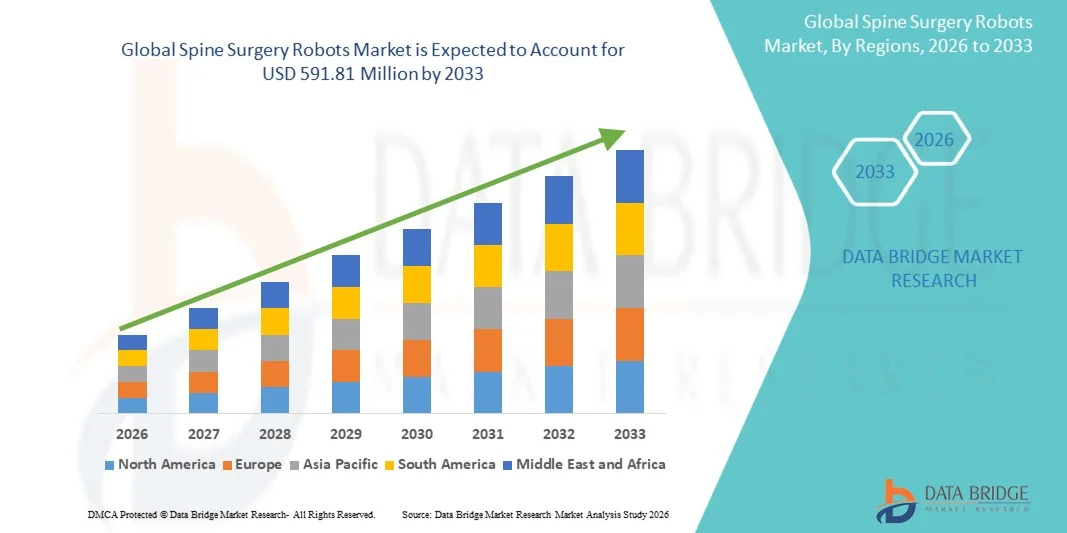
- データブリッジ市場調査分析では、世界脊椎手術ロボット市場規模が評価されました2025年のUSD 230.00百万そして到達する予定米ドル 591.81 百万 によって 2033, お問い合わせ12.54%のCAGR予報期間中
- 市場成長は、ロボット主導の外科系および最小侵襲的な脊柱のプロシージャの連続的な技術の進歩の増加の採用によって主に燃料を供給し、外科的精密および忍耐強い結果を改善します
- さらに、正確なインプラントの配置、外科的合併症の減少、およびより速い忍耐強い回復のための上昇の要求は現代脊柱手術のための高度の解決としてロボティック システムを確立しています。 これらの収束因子は、脊椎手術ロボットの蓄積を加速させ、産業の成長を著しく向上しています
市場規模と予測
グローバル市場価値(2025)米ドル 230.00 百万
期待される市場価値(2033) 米ドル 591.81 百万
予測CAGR(2026~2033):12.54%
脊椎手術ロボット市場分析
- 脊椎手術ロボットは、強化された精度と制御を備えた複雑な脊柱手術の実行を支援するために設計された、病院と専門脊柱センター全体で近代的な外科的環境でますますます重要になり、最小侵襲的な手順をサポートし、インプラントの精度を改善し、外科的結果を高める能力のために
- 脊椎手術ロボットのエスケーラブルな要求は、主に脊椎障害の増殖予防によって燃料を供給され、最小限の侵襲的外科的技術のための優先度を高め、ロボティックアシスト手術システムにおける継続的な技術進歩
- 北米は、2025年に41.3%の最大の収益シェアで脊椎手術ロボット市場を支配しました。先進医療インフラ、ロボット支援手術の高い採用、先進医療技術企業の強力な存在、米国の大手医療技術会社との強力な存在によって、外科的革新への投資の増加と高度なロボットプラットフォームの病院の採用によって駆動されるロボティック背骨の手順の実質的な成長を目撃しました
- アジア・パシフィックは、ヘルスケアインフラの拡大、ヘルスケア分野の拡大、新興国における先端医療技術の導入など、予測期間中、脊椎手術ロボット市場で最も急速に成長する地域であることが期待されています。
- 最小限の侵襲手術セグメントは、2025年に44.8%の市場シェアを持つ脊椎手術ロボット市場を支配し、外科的精度を改善し、合併症を削減し、従来の脊椎手術技術と比較してより速い患者の回復をサポート
レポートスコープとスピン手術ロボット市場セグメンテーション
|
アトリビュート |
脊椎手術ロボット 主要市場動向 |
|
カバーされる区分 |
|
|
カバーされた国 |
北アメリカ
ヨーロッパ
アジアパシフィック
中東・アフリカ
南米
|
|
主要市場プレイヤー |
|
|
マーケットチャンス |
|
|
付加価値データインフォセットを追加 |
市場価値、成長率、セグメンテーション、地理的カバレッジ、主要なプレーヤーなどの市場シナリオに関する洞察に加えて、Data Bridge Market Researchがキュレーションした市場レポートには、詳細なエキスパート分析、患者疫学、パイプライン分析、価格設定分析、規制フレームワークも含まれています。 |
Spine Surgery Robots Marketの主要トレンドは何ですか
「AI搭載ナビゲーションとリアルタイムイメージングシステム」の統合
- 世界的な脊椎手術ロボット市場での有意で加速傾向は、人工知能-運転されたナビゲーション・システムおよび実時間非外科イメージングの技術。 この組み合わせは、外科的精度、計画精度、および複雑な脊柱手術における全体的な臨床結果を大幅に向上させます
- たとえば、Medtronic plc は、高度なナビゲーションとイメージング技術を統合した Mazor X Stealth Edition ロボティックガイダンスシステムを提供し、正確なインプラント配置と脊髄手順中に外科計画を支援します
- 脊椎手術ロボットのAI統合により、自動手術計画、リアルタイム分析マッピングなどの機能が可能予測分析手順戦略を最適化し、外科的精度を向上させるための外科医を支援します。 たとえば、ロボットプラットフォームの中には、患者のイメージングデータを分析し、ペディクルのネジ配置に最適な軌跡を推薦するために機械学習アルゴリズムを利用しています。 さらに、高度なイメージング機能により、手術の進行状況を継続的に監視し、手順中にデータ主導の調整を行うことができます。
- 手術用ナビゲーションソフトウェアとイメージングシステムを備えたロボットプラットフォームのシームレスな統合により、手術室環境内の複数の手術ツールの調整制御が容易になります。 単一のデジタル インターフェイスを通して、外科医はより能率的で、技術的に高度の外科ワークフローを作成するロボティック ガイダンス、イメージ投射のフィードバックおよび外科計画データを管理できます
- よりインテリジェントで正確で相互接続されたロボット手術システムに対するこの傾向は、根本的に脊椎手術技術の期待を再構築しています。 その結果、Globus Medical, Inc.などの企業は、ロボティクス、ナビゲーション、イメージング技術を組み合わせて、外科的精度とワークフローの効率性を向上させるExcelsiusGPSなどのロボットシステムを開発しています。
- 一貫したAI主導のナビゲーションとイメージング機能を備えた脊椎手術ロボットの需要は、医療提供者が改善された外科的精度、患者の安全、そして最小限の侵襲的な治療アプローチを優先するにつれて、病院や専門脊柱センター全体で急速に成長しています
- 次世代型ロボットプラットフォームの研究開発への投資拡大は、より精密でコンパクトで使いやすいロボット外科システムの導入に貢献しています。
Spine Surgery Robots マーケット・ダイナミクス
ドライバー
「小型侵襲的・精密指導的脊椎手術の需要拡大」
- 消化ディスク病や脊椎変形などの脊髄障害の増加の予防、および最小侵襲手術手順の上昇の優先順位とともに、脊椎手術ロボットの増大採用のための重要なドライバーです
- たとえば、2024年6月、Streker Corporationは、マコ・スピネル・プラットフォームの機能を拡張し、より効率的なナビゲーションと計画機能でロボティック・アシスト脊椎手術ソリューションを強化することを目指しています。 主要企業によるそのような戦略は、予測期間における脊椎手術ロボット産業の成長を駆動することが期待されています
- ヘルスケアプロバイダーは、手術の精度と患者の転帰を改善することに重点を置いているため、ロボットシステムは、従来の外科的技術と比較して、複雑な脊椎手術手順を実行することを可能にします
- さらに、先進医療技術への投資と、病院におけるロボット支援手術プログラムの拡大は、脊椎手術ロボットの近代的な外科インフラの重要なコンポーネントです。
- 正確なインプラント位置をサポートし、外科的合併症を減らし、組織の損傷を最小限に抑えるロボットプラットフォームの能力は、学術医療センターと専門整形外科病院の両方で採用を奨励しています。 高度な手術室への傾向と外科医のトレーニングプログラムの可用性の増加により、市場成長に貢献
- また、ロボット支援脊柱手術のメリットに関する外科医の意識を高めることで、高度医療施設の採用率が高まります。
- 老化人口やライフスタイル関連の脊椎疾患による世界的な脊椎外科の増大数は、ロボティック・アシスト外科技術の需要を加速
拘束/チャレンジ
「高いシステムコストと運用の複雑性が採用を制限する」
- ロボティック手術システムに必要な高資本投資を取り巻く懸念、その実装に関連した運用の複雑性、市場浸透の拡大に大きな課題を挙げる。 脊柱手術ロボットは、洗練されたハードウェア、イメージングシステム、および専門的なトレーニング要件を含むように、病院は財政的および運用上の障壁に採用を直面する可能性があります
- 例えば、高価な地域におけるヘルスケアプロバイダーは、高度なロボティックシステムに関連する大規模な買収とメンテナンスコストのために、ロボットの外科プラットフォームへの投資を遅らせる可能性があります。
- 費用対効果の高いシステム設計、柔軟な資金調達モデル、および拡大された外科医のトレーニングプログラムを通じて、これらの財務および運用上の課題に対処することは、より広い採用を奨励するために不可欠です。 Zimmer Biomet Holdings, Inc.などの企業は、ロボットの手術プログラムにおけるサージョンのトレーニングとワークフローの最適化を強調し、ロボット技術の統合における医療提供者を支援しています。 また、ロボティックアシストスピム手順に関連した学習曲線は、特に限られたロボット手術経験のある施設で、手術ワークフローを初期に遅くすることができます
- 技術の進歩は、使いやすさと効率性を向上し続ける一方で、ロボットプラットフォームの複雑さは、限られたリソースで小規模な病院やヘルスケア施設で採用を制限することができます
- 技術革新、包括的なトレーニングイニシアチブ、およびコストリダクション戦略を通じて、これらの課題を克服することは、グローバルな脊椎手術ロボット市場で持続的な成長を保証するために不可欠です
- 特定の医療システムのロボティックアシスト手術手順のための限られた払い戻し方針は、高価なロボットプラットフォームへの投資から病院を捨てることができます
- また、専門訓練および熟練した手術チームがロボットシステムを効果的に操作する要件は、医療従事者のための労働力と操作上の課題を作成できます
脊椎手術ロボット市場スコープ
市場は方法、プロダクト、エンド ユーザー、アプローチ、条件および適用に基づいて区分されます。
- 方法によって
方法に基づいて、脊椎手術ロボットの市場は最小侵襲手術と手術を開くに分割されます。 最小限の侵襲手術セグメントは、2025年に44.8%の最大の収益分配で市場を支配し、より小さい切開、改善された精度を可能にし、脊椎の手順中に血の損失を削減するロボティックアシスト手術システムを採用しました。 病院や脊椎センターは、手術の精度を改善し、患者の回復時間を短縮する能力のために、最小限の侵襲的な手順を実行するロボットプラットフォームを採用しています。 ロボティックシステムは、正確なインプラント配置とリアルタイムのナビゲーションもサポートします。これは、最小限の侵襲的なアプローチで特に価値があります。 さらに、より短い病院の滞在とより速いリハビリテーションに関連付けられているプロシージャのための忍耐強い好みは採用を加速します。 イメージング技術やナビゲーション技術を用いたロボットガイダンスシステムの統合も最小侵襲脊椎手術の成長を強化しています。
オープン手術セグメントは、主に重度の変形、腫瘍、多レベルの脊髄障害などの高度に複雑な脊髄の状態を治療することの重要性のために、予測期間中に最速の成長を目撃する予定です。 特定の高度の背骨のプロシージャはまだ外科が脊柱に直接アクセスしなければならない開いた外科技術を必要とします。 開いた外科のロボット援助は複雑なプロシージャのねじ配置および外科計画の正確さを改善するのを助けます。 また、ロボットのナビゲーションや非操作イメージング技術の進歩は、オープンスピタルの手順で結果を改善しています。 世界的な複雑な脊椎手術の増加は、手術アプリケーションにおけるロボットシステムに対する要求をさらに支持しています。 ヘルスケアプロバイダーは、多様な手術手順を横断するロボットシステムを採用し続けているため、オープンな脊椎手術におけるロボット支援の役割は着実に拡大することが期待されます。
- 製品情報
製品のベースでは、背骨手術ロボットの市場は、システムとアクセサリーと消耗品に分けられます。 システムセグメントは、2025年に最大の収益シェアで市場を支配しました。, 病院や専門脊椎センターのロボット外科プラットフォームの拡大インストールによって駆動. これらのロボットシステムは、脊椎手術の手術計画、ナビゲーション、および脊椎手術中に外科医を支援するロボティックアームガイダンスなどの統合機能を提供します。 病院は外科精密を高め、忍耐強い結果を改善する高度のロボティック システムでかなり投資しています。 先進的な手術室やロボット支援手術プログラムの採用が増加し、この分野の成長に貢献します。 また、ロボットハードウェアとナビゲーションソフトウェアのイノベーションは、これらのシステムの機能を継続的に改善しています。 先進国における医療インフラの拡大も、先進的なロボットシステムの導入をサポートしています。
付属品および消耗品の区分は予測期間の間に最も速い成長を目撃するために期待されます、外科器械、使い捨て可能な部品およびロボット プラットフォームで使用される付属品を支える再調達の要求によって燃料を供給しました。 これらの製品は、各手順で必要な外科工具、ロボット機器、専門コンポーネントを含みます。 ロボティック・アシストの背骨手術がグローバルに増加するにつれて、消耗品や付属品の需要は上昇し続けています。 病院はまた外科性能および安全基準を維持するためにロボット機器および部品の定期的な取り替えを要求します。 これらの製品の再帰性は、メーカーにとって一貫した収益源となります。 さらに、医療施設全体のロボット手術プログラムの拡大は、アクセサリーや消耗品の需要を大幅に増加させることが期待されています。
- エンドユーザーによる
エンドユーザーに基づいて、脊椎手術ロボット市場は、病院や血管外科センターに分けられます。 病院のセグメントは、2025年に最大の収益シェアで市場を支配しました, 主に高度な外科インフラの可用性とロボットシステムのための高い投資能力のために. 病院は、精密および高度の外科装置を必要とする多数の複雑な脊椎手術を遂行すると同時にロボット技術の主要な採用者です。 また、病院はしばしば、ロボット支援の手順をサポートする複数の懲戒処分チームと専門部署を持っています。 経験豊富な外科医と包括的な術後のケア施設の存在も、市場での病院の優位性を強化します。 多くの医療機関は、手術結果を改善し、高度な治療オプションを求める患者を引き付けるために、ロボット手術プログラムを積極的に統合しています。 政府の資金調達と機関の投資は、病院でのロボットシステム導入をさらにサポートします。
閉塞手術センターのセグメントは、予期せぬ手術手順と費用対効果の高い医療配信モデルに対する増加シフトによって駆動され、予測期間の間に最速の成長を目撃することが期待されます。 これらのセンターは、より短い手順時間とより迅速な患者の回復のために最小限の侵襲的な脊椎手術のために人気になります。 ロボティック技術により、アンブレータセンターは、手術安全の高い基準を維持しながら、正確で効率的な手順を実行できます。 また、患者様や医療従事者様の間で、外来の手続きの優先度が高まっています。 病院と比較して、アンブレーラセンターの運用コストが低いため、患者と医療従事者の両方にとって魅力的です。 ロボティック・システムがよりコンパクトになり、費用効果が大きいように、血管の外科中心の採用は著しく拡大すると期待されます。
- アプローチ
アプローチに基づいて、脊椎手術ロボット市場は、前方アプローチ、後方アプローチ、および横方向アプローチに分けられます。 ポスターアプローチセグメントは、2025年に最大の収益シェアで市場を支配しました, 脊椎の融合や減圧手術などの様々な脊椎手術で広く使用されていることにより駆動. サージョンは、一般的には、スクリューとインプラントの正確な配置を可能にする間、重要な背骨構造への直接アクセスを提供するので、ポスターアプローチを使用します。 ロボティック・アシスタンスは注入の配置および外科運行を導くことによってこれらのプロシージャの精密を更に高めます。 ポスターアプローチは、最小限の侵襲的かつオープンな背骨手術で広く利用されています。 また、ロボットナビゲーションシステムにおける技術の進歩は、このアプローチで外科的結果を改善しています。 ポスター技術を用いて行われる背骨処理の大きな量は、セグメントの優位性に著しく貢献します。
一方的なアプローチセグメントは、予測期間の間に最速の成長を目撃する予定です, 脊椎手術における最小侵襲的外科的技術の採用の増加によって燃料を供給. このアプローチは、外科医が体の側面から脊椎にアクセスし、筋肉の破壊を減らし、外科外傷を最小限に抑えることを可能にします。 ロボティックガイダンスシステムは、手術の正確さを改善し、複雑な側面の手順に関連する合併症を減らすのに役立ちます。 一方的なアプローチ手術を受けている患者は、より短い回復時間と術後の痛みを減少させることが多い。 外科医は、患者の成果を高めるために最小限の侵襲的な技術を採用し続けているので、横方向のアプローチはより大きな臨床受諾を得ています。 また、ロボット外科技術の進歩により、より正確で安全な横の背骨の手順が可能になります。
- 条件によって
条件に基づいて、脊椎手術ロボット市場は、再生ディスク疾患、ディスクヘルニエーション、骨折、腫瘍、感染症、不安定性および変形に分けられます。 再生ディスク疾患セグメントは、2025年に最大の収益分配で市場を支配し、主に高齢に伴う脊椎変性による。 再生ディスクの病気は、保守的な治療が症状を緩和するのに失敗したときにしばしば外科的介入を必要とします。 ロボットシステムは、この条件を治療するために必要な正確な背骨の融合とインプラントの配置手順を実行する際の外科医を支援します。 世界的な高齢化人口は、再生脊髄障害のより高い発生率に貢献しています。 また、ロボット技術は、手術結果を改善し、これらの手順で合併症を減らすのに役立ちます。 再生ディスク疾患の治療を必要とする患者が増え続けるため、ロボットアシスト脊椎手術の需要も増加しています。
脊柱変形セグメントは、脊柱症や気管支症などの疾患の診断および外科的治療を高めることによって、予測期間中に最速の成長を目撃することが期待されます。 これらの複雑な条件は、複数の脊椎レベルを含む高精度の外科的矯正を必要とします。 ロボティック・アシスタンスは、これらの手順を計画および実行し、精度と安定性を向上させることを可能にします。 ロボティックシステムの使用は、インプラントの配置のリスクを減らし、全体的な外科的結果を改善するのに役立ちます。 また、ロボットナビゲーションやイメージング技術の進歩は、複雑な脊椎変形の治療をサポートしています。 高度な治療オプションの意識と可用性を高めることで、このセグメントの成長にさらに貢献しています。
- 用途別
アプリケーションに基づいて、脊椎手術ロボット市場は、腹膜、脊椎融合、foraminotomy、インターラミナーインプラント、人工ディスクの交換、前方頚部切除術、付着の疫学的溶解、laminotomy、OLLIF、percutaneous vertebroplasty、慢性腰痛、脊椎狭窄に分けられます。 脊椎融合セグメントは、2025年に最大の収益分配率で市場を支配し、脊髄液の広範な使用によって駆動され、変性ディスク疾患や脊髄の不安定性などの様々な脊髄障害を扱う。 ロボティック・アシスト・システムにより、サージョンが正確なインプラント位置決めを実現し、脊椎の融合手順でアライメントを改善することができます。 これらの技術はまた合併症のリスクを減らし、外科的精度を向上させる。 脊椎融合手術の増大回数は、このセグメントの優位性にさらに貢献します。 また、ロボットプラットフォームは、複雑なマルチレベルの融合手順でより良い外科計画とナビゲーションを可能にします。 病院は、今後もロボット手術技術を採用し続け、脊髄融合アプリケーションは市場成長に大きな貢献を続けています。
人工ディスク交換セグメントは、予測期間中に最速の成長を目撃すると予想されます, 運動保存脊椎治療の需要の増加によって燃料を供給. 人工的なディスク取り替えのプロシージャは再生ディスク条件に取り組む間脊柱の可動性を維持することを目指しています。 ロボット手術システムは、人工ディスクを正確に配置し、最適なアライメントを保証します。 これらの手順は、適切な患者の伝統的な脊椎融合手術の選択肢として人気を集めています。 インプラント技術およびロボット外科的指導における高度化は、ディスク交換手順における臨床結果を改善しています。 高度治療オプションの患者意識が高まるにつれて、ロボティック・アシストの人工的なディスク交換の需要は大幅に増加すると予想されます。
脊椎手術ロボット市場地域分析
- 北米は、2025年に41.3%の最大の収益シェアで脊椎手術ロボット市場を支配しました。先進医療インフラ、ロボット支援手術の高い採用、および主要な医療技術企業の強力な存在によって特徴付けられました
- 地域におけるヘルスケアプロバイダーは、外科的精度、改善された臨床的結果、およびイメージングおよびデジタル外科計画プラットフォームと統合されたロボティックスピッテシステムが提供する高度なナビゲーション機能に非常に価値があります。
- この広範な採用は、先進医療インフラ、高医療費、大手医療機器メーカーの強い存在、および技術的に高度な外科手術手順のための成長の優先順位により、脊椎手術ロボットを病院や専門手術センターを横断する近代的な脊椎治療のための重要なソリューションとして確立することにより、さらにサポートされています
米国スピン手術ロボット市場動向
米国の脊椎手術ロボット市場は、北米で最大79%の収益シェアを率い、ロボティックアシスト手術技術の急速な採用と、病院や専門脊柱センターを横断する最小限の侵襲的な脊柱の手順の増加によって燃料を供給しました。 ヘルスケアプロバイダーは、高度のロボットプラットフォームを優先し、外科的精度と患者の成果を改善しています。 技術主導の外科的処置のための成長の好みは、ヘルスケアの革新および医学のロボティクスの強い投資と結合しましたり、更に脊柱外科ロボット工業を扱います。 また、先進的なイメージング、ナビゲーション技術、およびデジタル外科計画プラットフォームを備えたロボットシステムの統合が大幅に増加し、市場の拡大に貢献しています。
欧州脊椎手術ロボット市場動向
欧州脊椎手術ロボット市場は、先進的な外科技術に対する需要の増加と地域全体の脊椎障害の増加による増加の優先順位によって主として、予測期間全体で実質的なCAGRで拡大することを計画しています。 老化人口の増加, 最小侵襲手術手順の必要性と相まって, ロボット脊椎手術システムの採用を促進しています。. 欧州のヘルスケアプロバイダは、ロボット支援の手順で提供される改善された外科的正確さおよび高められた忍耐強い結果にも描画されます。 地域は、病院や専門外科センターを横断して大きな成長を遂げており、ロボットの背骨システムが新たに確立された施設と既存の医療インフラに組み込まれています。
U.K. Spine Surgery Robots マーケットインサイト
U.K. 脊椎手術ロボット市場は、予測期間中に注目すべきCAGRで成長することを期待しています, 技術的に高度な外科手術手順と改善された患者ケア結果の需要の増加によって駆動. また、脊椎障害や筋骨格疾患の上昇可能性は、ロボット支援脊椎手術技術を採用する医療機関を奨励しています。 デジタルヘルスケアのイノベーションに重点を置き、支援医療インフラや研究への取り組みとともに、市場成長を加速し続けることが期待されています。
ドイツ Spine Surgery Robots マーケットインサイト
ドイツの脊椎手術ロボット市場は、国の強力な医療技術部門が燃料を供給し、高度な手術機器への投資を増加させる、予測期間中にかなりのCAGRで拡大することが期待されます。 ドイツは、イノベーションと精密医学に重点を置いた医療インフラを整備し、病院や専門クリニックにおけるロボット支援脊椎手術システムの導入を推進しています。 高度な外科的ナビゲーションとイメージング技術を備えたロボットプラットフォームの統合もますますます普及しています。また、ヘルスケアプロバイダーの期待に合わせ、高精度で技術的に高度な外科的ソリューションを優先しています。
Asia-Pacific Spine Surgery Robots マーケットインサイト
アジア太平洋脊椎手術ロボット市場は、中国、日本、インドなどの国における医療インフラの拡大、医療費の増大、技術開発の進歩により、2026年から2033年までの予測期間において、最も速いCAGRで成長することが認められています。 地域の成長は、外科的結果を改善し、高度医療技術へのアクセスを拡大することに焦点を合わせています。 ロボティックアシスト脊椎手術システムの導入を推進しています。 さらに、アジア太平洋は急速に成長する医療技術市場として出現し、高度のロボット手術プラットフォームの可用性は、より広い範囲の病院や医療機関に拡大しています。
日本脊椎手術ロボット市場動向
日本脊椎手術ロボットの市場は、国の強力な医療技術産業、老化人口、高度外科手術の手順の需要増加による勢いを増加させています。 日本医療システムは、精密医学と革新的な外科技術に大きな重点を置き、ロボット脊椎手術プラットフォームの採用を推進しています。 イメージング・ナビゲーション技術を用いたロボットシステムの統合は、より正確で効率的な手術手順をサポートします。 また、日本の急速に老化している人口は、病院と専門外科的セッティングにおける年齢関連の脊髄障害を治療するための高度な外科的ソリューションの需要を奪う可能性があります。
インド Spine Surgery Robots マーケットインサイト
インドは、2025年にアジア・パシフィックで最大の市場収益シェアを占める手術ロボット市場を背負い、国の拡大医療インフラ、患者人口の増加、先進医療技術の採用の増加に寄与しました。 インドは、最も急速に成長している医療市場の一つとして立ち、ロボット支援の脊椎手術システムは、大病院や専門整形外科センターを横断して徐々に牽引しています。 医療施設の近代化と、医療技術の上昇の投資に加えて、外科的結果の改善へのプッシュは、インドの脊椎手術ロボット市場を推進する重要な要因です。
脊椎手術ロボット市場シェア
Spine の外科ロボットの企業は主に下記のものを含んでいる十分に確立された会社によって、導きます:
- Medtronic(アイルランド)
- グローバスメディカル株式会社(米国)
- Zimmer Biomet(アメリカ)
- ストライカー(アメリカ)
- NuVasive, Inc.(米国)
- 直感手術株式会社(米国)
- Brainlab AG(ドイツ)
- スミス & ネフエ plc (イギリス)
- ジョンソン&ジョンソンサービス株式会社(米国)
- Renishaw plc (イギリス)
- Siemens Healthineers AG(ドイツ)
- 整形外科株式会社(米国)
- フュージョンロボティクス株式会社(米国)
- TINAVIメディカルテクノロジーズ株式会社(中国)
- メダクタ国際SA(スイス)
- ロボカス(フランス)
- オーロラスピネ株式会社(米国)
- SpineGuard SA(フランス)
- シンク外科株式会社(米国)
- CUREXO(韓国)
グローバル脊椎手術ロボット市場における最近の発展とは
- 2025年12月、プロビデンス・メディカル・テクノロジーは、Globus Medical, Inc.が開発したロボティック・ナビゲーション・プラットフォームExcelsiusGPSと、CORUS-GLXシステムとの互換性を発表しました。これにより、サージオンは、後者の腰神経融合手順でロボットガイダンスとナビゲーションを統合することができます。 開発は外科視覚化を高め、注入の配置の精密を改善し、最小限に侵襲的な脊柱融合の技術を支えます
- 2025年6月、ジョンソン・アンド・ジョンソンは、その整形部DePuy Synthesを通じて、VELYS Spineロボティックシステムの開発と今後の事業展開を発表しました。 プラットフォームは、高度な外科的ナビゲーション技術でロボットの援助を組み合わせて、脊椎手術の精度と効率性を改善します。 新しいシステムは、ワークフローの最適化と高度なイメージング統合を備えた外科医をサポートするように設計されており、ロボティックアシスト脊椎手術ソリューションをグローバルに拡大するための重要なステップです。
- 2024年11月、Globus Medical, Inc.は、ロボット支援の背骨処置をサポートする高度な外科的ナビゲーションプラットフォームであるExcelsiusHubを導入しました。 ロボットの背骨手術プラットフォームの機能を強化し、イメージング、ナビゲーション、ロボティックガイダンス技術を統一した手術ワークフローに統合します。 開発は、複雑な脊椎手術を実行するための手術精度と合理手順を改善することを目指しています。 起動は、ロボットの脊椎手術システムにおける統合されたデジタル技術の増加の役割を強調します
- 2021年7月、Globus Medical, Inc.は、ExcelsiusGPSのロボティックナビゲーションシステムを使用して、世界中で20,000以上の手術手順が行われたことを発表しました。 マイルストーンは、病院や脊椎センターを横断する、ロボティックアシスト脊椎手術技術の高度化を実証しました。 ロボットシステムは、インプラントの配置精度を高め、手術中に放射線曝露を減らし、手術室の効率性を高め、現代の脊椎手術におけるロボティクスの拡大の役割を強調するのに役立ちます
- 2021年4月、業界分析では、Medtronic plcやGlobus Medical、Inc.などの企業が急速に進化するロボティックスピッテ手術市場をリードし、病院はますますロボットプラットフォームを採用し、外科的精度を向上させ、最小限の侵襲的な手順を有効にしました。 先進的なロボティックガイダンスシステムを開発する医療機器企業の間で成長する競争は、精密主導の脊椎手術に対する需要の増加と整形外科手術および神経外科的応用におけるロボティック技術の拡大を反映しています
SKU-
世界初のマーケットインテリジェンスクラウドに関するレポートにオンラインでアクセスする

- インタラクティブなデータ分析ダッシュボード
- 成長の可能性が高い機会のための企業分析ダッシュボード
- カスタマイズとクエリのためのリサーチアナリストアクセス
- インタラクティブなダッシュボードによる競合分析
- 最新ニュース、更新情報、トレンド分析
- 包括的な競合追跡のためのベンチマーク分析のパワーを活用
調査方法
データ収集と基準年分析は、大規模なサンプル サイズのデータ収集モジュールを使用して行われます。この段階では、さまざまなソースと戦略を通じて市場情報または関連データを取得します。過去に取得したすべてのデータを事前に調査および計画することも含まれます。また、さまざまな情報ソース間で見られる情報の不一致の調査も含まれます。市場データは、市場統計モデルと一貫性モデルを使用して分析および推定されます。また、市場シェア分析と主要トレンド分析は、市場レポートの主要な成功要因です。詳細については、アナリストへの電話をリクエストするか、お問い合わせをドロップダウンしてください。
DBMR 調査チームが使用する主要な調査方法は、データ マイニング、データ変数が市場に与える影響の分析、および一次 (業界の専門家) 検証を含むデータ三角測量です。データ モデルには、ベンダー ポジショニング グリッド、市場タイムライン分析、市場概要とガイド、企業ポジショニング グリッド、特許分析、価格分析、企業市場シェア分析、測定基準、グローバルと地域、ベンダー シェア分析が含まれます。調査方法について詳しくは、お問い合わせフォームから当社の業界専門家にご相談ください。
カスタマイズ可能
Data Bridge Market Research は、高度な形成的調査のリーダーです。当社は、既存および新規のお客様に、お客様の目標に合致し、それに適したデータと分析を提供することに誇りを持っています。レポートは、対象ブランドの価格動向分析、追加国の市場理解 (国のリストをお問い合わせください)、臨床試験結果データ、文献レビュー、リファービッシュ市場および製品ベース分析を含めるようにカスタマイズできます。対象競合他社の市場分析は、技術ベースの分析から市場ポートフォリオ戦略まで分析できます。必要な競合他社のデータを、必要な形式とデータ スタイルでいくつでも追加できます。当社のアナリスト チームは、粗い生の Excel ファイル ピボット テーブル (ファクト ブック) でデータを提供したり、レポートで利用可能なデータ セットからプレゼンテーションを作成するお手伝いをしたりすることもできます。











