Wearable devices, like smartphones and tablets, have evolved with improved features and independent processing capabilities as a result of digitalization. In recent years, there has been a significant increase in the adoption of IOT devices for single remote access. The surge in demand for various modern devices and features is a major factor driving market expansion. Wearable electronics is an integrated computing device or product that assists the person or user using it in improving day-to-day tasks. North America topped the wearable electronics market, followed by the European Union and Asia-Pacific.
Access full Report @ https://www.databridgemarketresearch.com/reports/global-wearable-electronic-devices-market
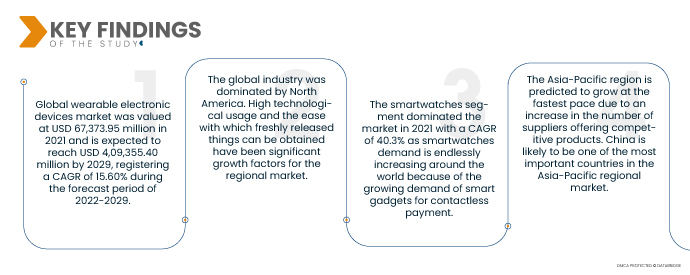
Global Wearable Electronic Devices Market was valued at USD 67,373.95 million in 2021 and is expected to reach USD 4,09,355.40 million by 2029, registering a CAGR of 15.60% during the forecast period of 2022-2029. The increased demand for sophisticated gadgets with enhanced functions is a key factor driving market expansion. Factors such as the rise in the acceptance rate of wearable products in new applications, as well as changes in the trend of communications and network technologies, are also driving the wearable electronic devices market. Furthermore, technical improvements, an increase in the number of digital customers, and the availability of internet mobility will accelerate the growth rate of the wearable electronic devices market.
Rising use of the technology by the healthcare industry is expected to drive the market's growth rate
Given the pandemic, the usage of wearable gadgets in healthcare is increasing, as these items bring advantages and benefits to both patients and healthcare practitioners. Among these advantages include real-time health monitoring of vital statistics and earlier detection of sickness or risk of a major health crisis. Wearable and ear-worn technology have seen rapid expansion as users rely on these gadgets for remote work, health tracking, exercise activities, and more.
Report Scope and Market Segmentation
Report Metric
|
Details
|
Forecast Period
|
2022 to 2029
|
Base Year
|
2021
|
Historic Years
|
2020 (Customizable to 2014- 2019)
|
Quantitative Units
|
Revenue in USD Million, Volumes in Units, Pricing in USD
|
Segments Covered
|
Type (Head-Mounted Displays, Smartwatches, Ear-Worn Devices (Hearables), Sports Watches, Smart Garments and Wristbands), (Application Sports And Fitness, Healthcare, Security And Proximity, Automotive, Electronics, Automation, Industrial and Others)
|
Countries Covered
|
U.S., Canada and Mexico in North America, Germany, France, U.K., Netherlands, Switzerland, Belgium, Russia, Italy, Spain, Turkey, Rest of Europe in Europe, China, Japan, India, South Korea, Singapore, Malaysia, Australia, Thailand, Indonesia, Philippines, Rest of Asia-Pacific (APAC) in the Asia-Pacific (APAC), Saudi Arabia, U.A.E, South Africa, Egypt, Israel, Rest of Middle East and Africa (MEA) as a part of Middle East and Africa (MEA), Brazil, Argentina and Rest of South America as part of South America
|
Market Players Covered
|
SAMSUNG (South Korea), Garmin Ltd. (U.S.), Huawei Technologies Co., Ltd. (China), Apple Inc. (U.S.), Sony Corporation (Japan), HTC Corporation (Taiwan), Fitbit, Inc. (U.S.), Xiaomi Global Community (China), ADIDAS AG (Germany), Nike, Inc. (U.S.), LG Electronics. (South Korea), Motorola Solutions, Inc. (U.S.), Fossil Group, Inc. (U.S.), Google LLC (U.S.), Polar Electro (Finland), Withings (France), Michael Kors (U.S.), CASIO AMERICA, INC. (U.S.), TomTom International BV (Netherlands), and ASUSTeK Computer Inc. (Taiwan)
|
Data Points Covered in the Report
|
In addition to the insights on market scenarios such as market value, growth rate, segmentation, geographical coverage, and major players, the market reports curated by the Data Bridge Market Research also include in-depth expert analysis, geographically represented company-wise production and capacity, network layouts of distributors and partners, detailed and updated price trend analysis and deficit analysis of supply chain and demand
|
Segment Analysis:
Global wearable electronic devices market is categorized into two notable segments which are based on type and application.
- On the basis of type, global wearable electronic devices market is segmented into head-mounted displays, smartwatches, ear-worn devices (hearables), sports watches, smart garments and wristbands.
The smartwatches segment of type dominated the wearable electronic devices market
The smartwatches segment dominated the market in 2021 with a CAGR of 40.3% as smartwatches demand is endlessly increasing around the world because of the growing demand of smart gadgets for contactless payment, health monitoring, reminders, fitness monitoring, notifications and voice calls, entertainment and among others. Furthermore, smartwatches adoption and preference has increase in last few years in numerous industries healthcare, well-being, sports, fitness, work safety, security and proximity, fashion.
- On the basis of application, global wearable electronic devices market is segmented into sports and fitness, healthcare, security and proximity, automotive, electronics, automation, industrial and others.
The sports and fitness segment of application dominated the wearable electronic devices market
스포츠 및 피트니스 부문은 착용자의 생리적 상태를 모니터링하여 스포츠 활동, 체력, 그리고 웰빙을 향상시키는 스포츠 및 피트니스용 웨어러블 전자 기기 도입 증가로 연평균 성장률 48.29%를 기록하며 시장을 장악했습니다. 웨어러블 전자 기기는 착용자가 훈련 및 경기 중 최적의 행동을 취할 수 있도록 지원하며, 이는 선수들이 높은 경기력을 달성하는 데 필수적입니다.
주요 플레이어
Data Bridge Market Research에서는 다음 회사를 주요 시장 주체로 인식합니다. SAMSUNG(한국), Garmin Ltd.(미국), Huawei Technologies Co., Ltd.(중국), Apple Inc.(미국), Sony Corporation(일본), HTC Corporation(대만), Fitbit, Inc.(미국), Xiaomi Global Community(중국), ADIDAS AG(독일), Nike, Inc.(미국), LG Electronics(한국), Motorola Solutions, Inc.(미국), Fossil Group, Inc.(미국), Google LLC(미국), Polar Electro(핀란드), Withings(프랑스), Michael Kors(미국), CASIO AMERICA, INC.(미국), TomTom International BV(네덜란드), ASUSTeK Computer Inc.(대만).
시장 개발
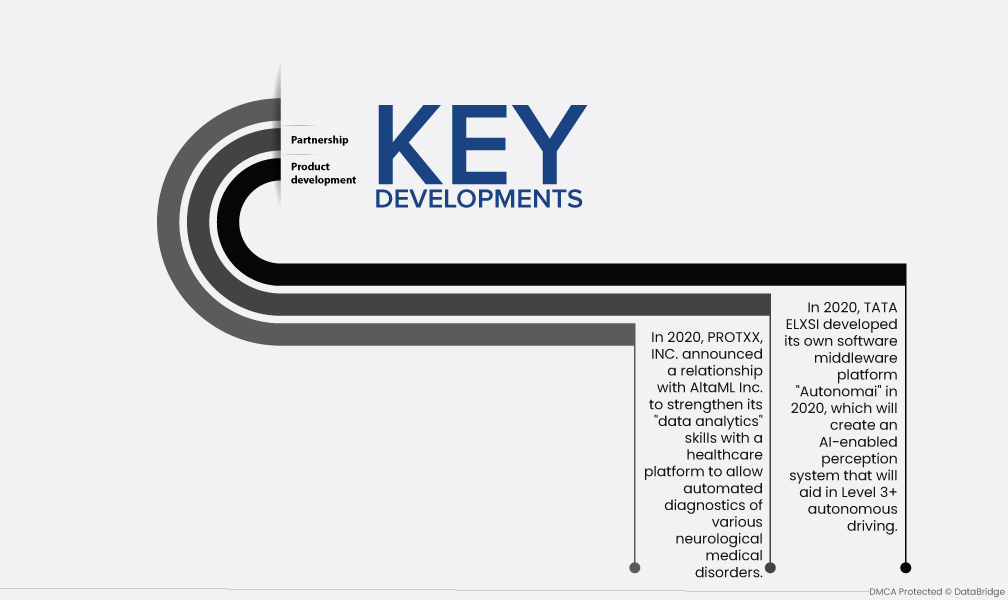
- 2020년, PROTXX, INC.는 다양한 신경계 질환의 자동 진단을 지원하는 헬스케어 플랫폼을 통해 "데이터 분석" 역량을 강화하기 위해 AltaML Inc.와의 협력을 발표했습니다. 이 플랫폼은 복잡하고 값비싼 임상 장비를 대체하여 다양한 생리학적 질환으로 이어지는 신경퇴행성 질환의 진행을 지연시킬 것입니다.
- 타타 엘렉시(TATA ELXSI)는 2020년에 자체 소프트웨어 미들웨어 플랫폼 "오토노마이(Autonomai)"를 개발했습니다. 이 플랫폼은 레벨 3 이상의 자율주행을 지원하는 AI 기반 인식 시스템을 구축할 것입니다. 이 인식 시스템 기반 플랫폼은 물체 감지 센서를 활용하여 자율주행차의 원활한 작동을 담당하게 됩니다.
지역 분석
지리적으로 시장 보고서에서 다루는 국가는 북미의 미국, 캐나다 및 멕시코, 유럽의 독일, 프랑스, 영국, 네덜란드, 스위스, 벨기에, 러시아, 이탈리아, 스페인, 터키, 유럽의 기타 유럽, 중국, 일본, 인도, 한국, 싱가포르, 말레이시아, 호주, 태국, 인도네시아, 필리핀, 아시아 태평양(APAC)의 기타 아시아 태평양(APAC), 사우디 아라비아, UAE, 남아프리카 공화국, 이집트, 이스라엘, 중동 및 아프리카(MEA)의 일부인 기타 중동 및 아프리카(MEA), 남미의 일부인 기타 남미입니다.
Data Bridge Market Research 분석에 따르면:
북미는 2022년부터 2029년까지의 예측 기간 동안 웨어러블 전자 기기 시장 에서 지배적인 지역입니다.
세계 산업은 북미가 주도했습니다. 높은 기술 활용도와 신선식품 구매의 용이성은 이 지역 시장의 중요한 성장 요인이었습니다. 건강을 증진하고, 예방 치료를 용이하게 하며, 만성 질환 관리를 돕는 기기에 대한 수요가 이 지역에서 높습니다.
아시아 태평양 지역은 2022~2029년 예측 기간 동안 웨어러블 전자 기기 시장 에서 가장 빠르게 성장하는 지역으로 추산됩니다.
아시아 태평양 지역은 경쟁력 있는 제품을 제공하는 공급업체의 증가로 가장 빠른 속도로 성장할 것으로 예상됩니다. 중국은 아시아 태평양 지역 시장에서 가장 중요한 국가 중 하나가 될 것으로 예상됩니다. 가까운 미래에 더욱 하락할 것으로 예상되는 스마트폰 가격 하락 또한 중국의 웨어러블 기술 수요를 촉진할 것으로 예상됩니다.
웨어러블 전자 기기 시장 보고서 에 대한 자세한 내용은 여기를 클릭하세요 - https://www.databridgemarketresearch.com/reports/global-wearable-electronic-devices-market