The global insulin market is experiencing growth due to increasing applications across therapeutic areas, including oncology, autoimmune diseases, inflammatory disorders, diabetes, and hematological conditions. Insulins are increasingly being adopted as cost-effective alternatives to reference biologic medicines, helping improve patient access to advanced treatments while reducing healthcare expenditure. Growing demand for monoclonal antibodies, insulin products, and other biologic therapies is further supporting market expansion. Additionally, patent expirations of blockbuster biologic drugs are creating opportunities for insulin manufacturers to introduce competitive treatment options. Advances in biotechnology, improvements in manufacturing capabilities, and supportive regulatory frameworks are encouraging product development and commercialization. Increasing acceptance among healthcare professionals, hospitals, and payers is also contributing to the broader adoption of insulins across healthcare systems worldwide.
Access Full Report @ https://www.databridgemarketresearch.com/reports/global-insulin-market
Data Bridge market research analyzes that the Global Insulin Market is expected to reach USD 9.29 billion by 2033 from USD 7.62 billion in 2025, growing at a substantial CAGR of 2.50% in the forecast period of 2026 to 2033.
Key Findings of the Study
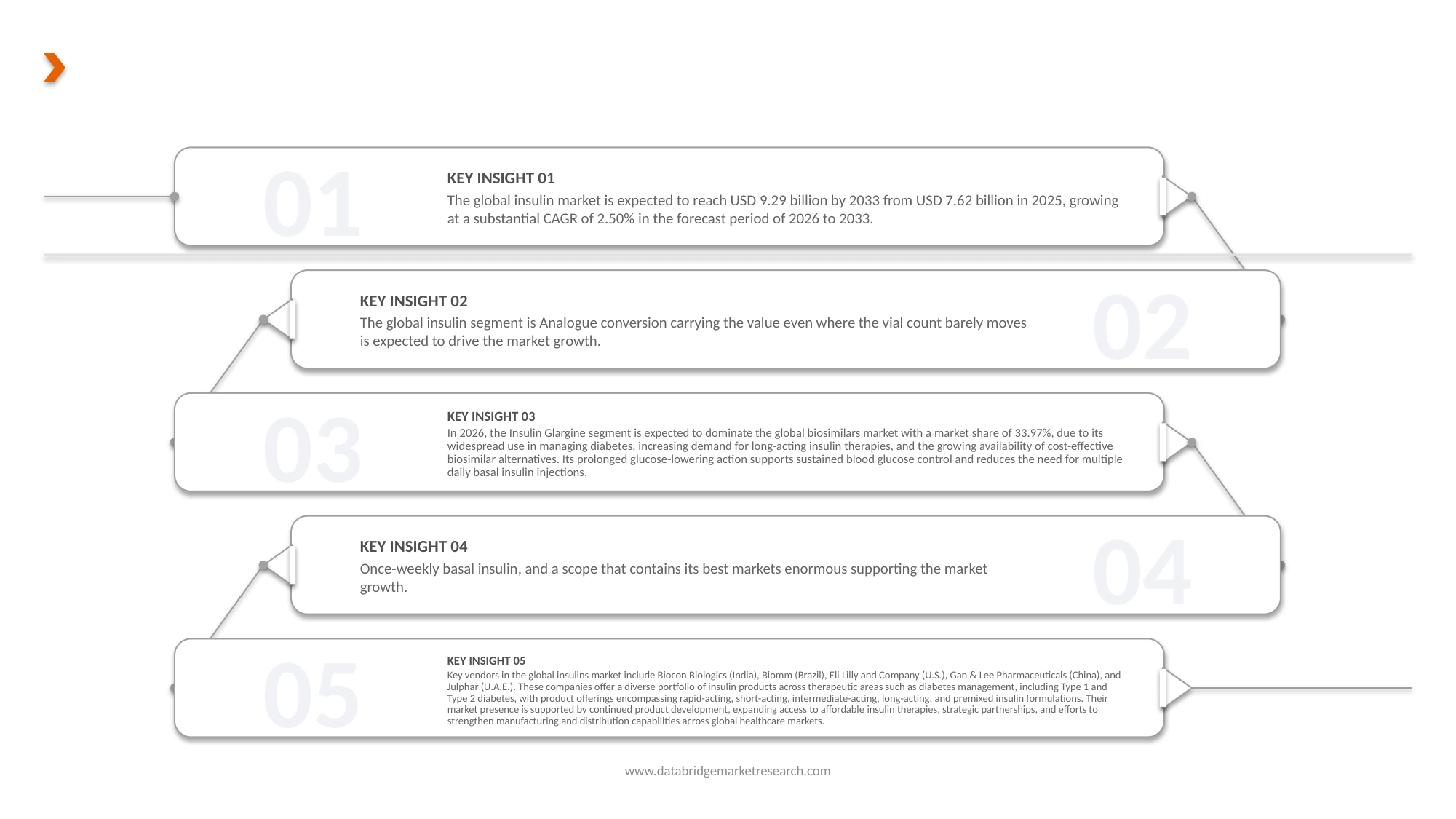
Analogue Conversion Carrying the Value Even where the Vial Count Barely Moves
The increasing shift from human insulin to insulin analogues is a key driver of the global insulin market, as it supports revenue growth even when the total number of insulin vials sold changes only marginally. Insulin analogues, including rapid-acting and long-acting formulations, are designed to provide more predictable glucose control and greater flexibility in insulin administration. Their adoption is supported by the need for personalized diabetes management, reduced risk of hypoglycemia in appropriate patient groups, and improved compatibility with insulin pens, pumps, and continuous glucose monitoring systems. As patients transition toward analogue-based therapies, higher-value product formulations and delivery systems can increase market revenue without requiring a substantial rise in overall insulin consumption. This shift is further supported by evolving treatment guidelines, improved access to modern diabetes care, and growing demand for convenient insulin delivery options.
Report Scope and Market Segmentation
|
Report Metric
|
Details
|
|
Forecast Period
|
2026 to 2033
|
|
Base Year
|
2025
|
|
Historic Years
|
2018-2024 (Customizable to 2013-2017)
|
|
Quantitative Units
|
Revenue in USD millions
|
|
Segments Covered
|
By Molecule (Denosumab, Aflibercept, Ustekinumab, Adalimumab, Pegfilgrastim, Bevacizumab, Ranibizumab, Trastuzumab, Filgrastim, Rituximab, Teriparatide, Etanercept, Tocilizumab, Epoetin alfa, Infliximab, Insulin aspart, Insulin glargine, Eculizumab, Epoetin zeta, Follitropin alfa, Golimumab, Insulin lispro, Enoxaparin sodium, Natalizumab, Omalizumab, Pertuzumab, Somatropin), By Therapeutic Group (Immunology and Inflammation, Oncology, Ophthalmology, Haematology and Supportive Care, Bone and Metabolic, Diabetes, Endocrinology and Fertility, Respiratory and Allergy), By Market Status (Marketed, Approved not launched, Filed, Not present, Not known), By Channel (Public tender, Hospital, Retail pharmacy, Private market)
|
|
Countries Covered
|
Germany, France, Italy, Spain, U.K., Brazil, Mexico, Argentina, Colombia, Chile, China, Indonesia, Thailand, Vietnam, Philippines, Malaysia, Singapore, Saudi Arabia, U. A. E., Egypt, Turkey
|
|
Market Players Covered
|
|
|
Data Points Covered in the Report
|
In addition to the insights on market scenarios such as market value, growth rate, segmentation, geographical coverage, and major players, the market reports curated by the Data Bridge Market Research also include in-depth expert analysis, patient epidemiology, pipeline analysis, pricing analysis, and regulatory framework.
|
Segment Analysis
The global insulin market is segmented into four notable segments based on molecule, therapeutic group, market status, channel.
- On the basis of molecule, the global insulin market is segmented into denosumab, aflibercept, ustekinumab, adalimumab, pegfilgrastim, bevacizumab, ranibizumab, trastuzumab, filgrastim, rituximab, teriparatide, etanercept, tocilizumab, epoetin alfa, infliximab, insulin aspart, insulin glargine, eculizumab, epoetin zeta, follitropin alfa, golimumab, insulin lispro, enoxaparin sodium, natalizumab, omalizumab, pertuzumab, and somatropin.
In 2026, the adalimumab segment is expected to dominate the market
In 2026, the adalimumab segment is expected to dominate the global insulin market due to its widespread use in treating autoimmune and inflammatory conditions, including rheumatoid arthritis, psoriasis, psoriatic arthritis, Crohn’s disease, and ulcerative colitis. The availability of multiple insulin versions of the reference biologic Humira is intensifying competition and improving access to cost-effective treatment options.
- On the basis of therapeutic group, the global insulin market is segmented into immunology and inflammation, oncology, ophthalmology, haematology and supportive care, bone and metabolic, diabetes, endocrinology and fertility, and respiratory and allergy.
In 2026, the immunology and inflammation segment is expected to dominate the market
In 2026, the immunology and inflammation segment is expected to dominate the global insulins market due to the rising prevalence of autoimmune and chronic inflammatory diseases, including rheumatoid arthritis, psoriasis, Crohn’s disease, and ulcerative colitis. The growing use of biologic therapies, such as adalimumab, infliximab, and etanercept, is supporting demand for insulins across these indications.
- On the basis of market status, the global insulin market is segmented into marketed, approved not launched, filed, not present, and not known.
In 2026, the marketed segment is expected to dominate the market
In 2026, the marketed segment is expected to dominate the global insulins market due to the established commercial availability of approved insulin products and their increasing adoption across hospitals, specialty clinics, and healthcare systems. These products have completed the required regulatory assessments to demonstrate similarity to reference biologic medicines in terms of quality, safety, and efficacy, supporting their use in approved indications.
- On the basis of channel, the global insulin market is segmented into public tender, hospital, retail pharmacy, and private market.
In 2026, the hospital segment is expected to dominate the market
In 2026, the hospital segment is expected to dominate the global insulins market due to the widespread use of biologic therapies in hospital settings, particularly for oncology, immunology, and inflammatory diseases. Hospitals provide specialized facilities, trained healthcare professionals, and appropriate infrastructure for administering injectable and intravenous insulins that require medical supervision and patient monitoring.
Major Players
Sandoz (Switzerland), Celltrion (South Korea), Biocon Biologics (India) , Biocon BiologicsAmgen (U.S.), Teva Pharmaceutical Industries (Israel), among others are the major players dealing in the market.
Regional Analysis
Geographically, the country covered in the global insulins market report is Germany, France, Italy, Spain, U.K., Brazil, Mexico, Argentina, Colombia, Chile, China, Indonesia, Thailand, Vietnam, Philippines, Malaysia, Singapore, Saudi Arabia, U. A. E., Egypt, Turkey
As per Data Bridge Market Research analysis:
Europe is the dominant region in the global insulins market
Europe is a leading region in the global insulins market, supported by its well-established regulatory framework, extensive history of insulin adoption, and strong pharmaceutical manufacturing capabilities. The European Medicines Agency (EMA) approved the first insulin in 2006, giving the region a longstanding foundation for product development, commercialization, and clinical acceptance. Increasing demand for cost-effective biologic therapies, patent expirations of major biologic medicines, and supportive healthcare policies are further encouraging insulin uptake across oncology, immunology, and inflammatory diseases. Additionally, established reimbursement systems, growing competition among manufacturers, and efforts to improve patient access to advanced treatments are supporting regional market development.
Southeast Asia is estimated to be the fastest-growing region in the global insulins market
Southeast Asia is estimated to be the fastest-growing region in the global insulins market, driven by increasing demand for affordable biologic therapies, rising prevalence of chronic diseases, and expanding healthcare access across emerging economies. Countries such as Indonesia, Thailand, Vietnam, and the Philippines are creating growth opportunities as healthcare infrastructure improves and demand for treatments for cancer, autoimmune disorders, and inflammatory diseases increases. Government initiatives to strengthen domestic pharmaceutical manufacturing, improve access to advanced medicines, and encourage biotechnology investments are further supporting market development. Additionally, collaborations between regional pharmaceutical companies and international biopharmaceutical manufacturers, along with evolving regulatory frameworks, are expected to accelerate insulin development and adoption. However, differences in reimbursement policies, regulatory requirements, and physician awareness continue to influence the pace of regional growth.
Market Developments
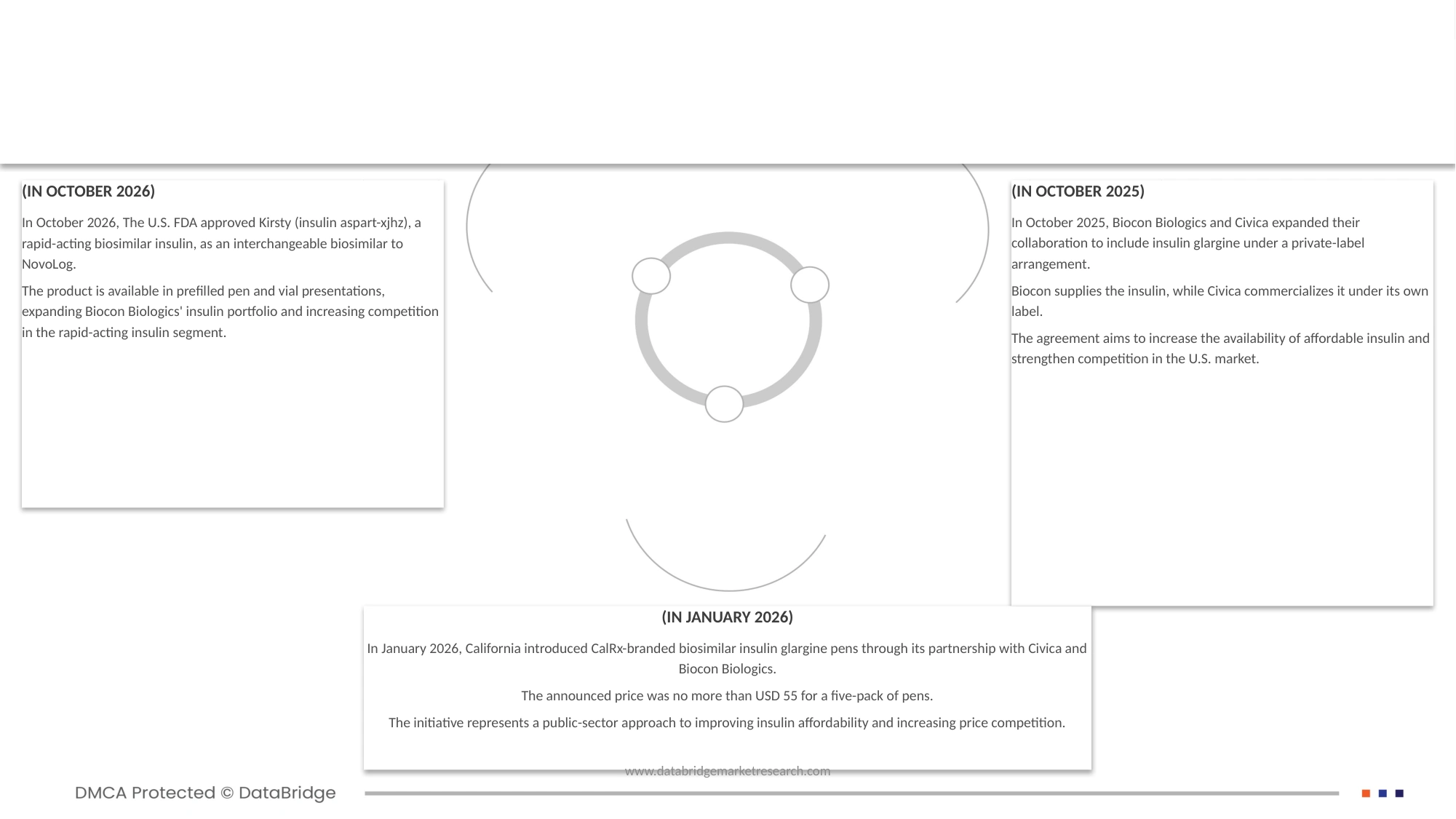
- In July 2025, The U.S. FDA approved Kirsty (insulin aspart-xjhz), a rapid-acting biosimilar insulin, as an interchangeable biosimilar to NovoLog. The product is available in prefilled pen and vial presentations, expanding Biocon Biologics' insulin portfolio and increasing competition in the rapid-acting insulin segment.
- In October 2025, Biocon Biologics and Civica expanded their collaboration to include insulin glargine under a private-label arrangement. Biocon supplies the insulin, while Civica commercializes it under its own label. The agreement aims to increase the availability of affordable insulin and strengthen competition in the U.S. market.
- In Janaury 2026, California introduced CalRx-branded biosimilar insulin glargine pens through its partnership with Civica and Biocon Biologics. The announced price was no more than USD 55 for a five-pack of pens. The initiative represents a public-sector approach to improving insulin affordability and increasing price competition.
- In May 2026, Sandoz confirmed European Commission marketing authorization for Ondibta, a biosimilar insulin glargine developed and registered by Gan & Lee Pharmaceuticals. The medicine was approved for diabetes treatment across the reference product's indications, with a launch expected by early 2027. The approval may broaden treatment choice and intensify competition in Europe's basal insulin market.
- In June 2026, Biocon announced that its long-standing partner Duopharma Biotech secured multiple Malaysian Ministry of Health contracts valued at more than MYR 225 million. Biocon will supply human insulin, insulin glargine, and insulin aspart for distribution under the contracts. The agreements reinforce public-sector procurement and support continuity of insulin supply in Southeast Asia.
As per Data Bridge Market Research analysis:
For more detailed information about the Global Insulins Market report, click here – https://www.databridgemarketresearch.com/reports/global-insulin-market