What is the Microbiome-Friendly Laundry Care Products Market Size and Growth Rate?
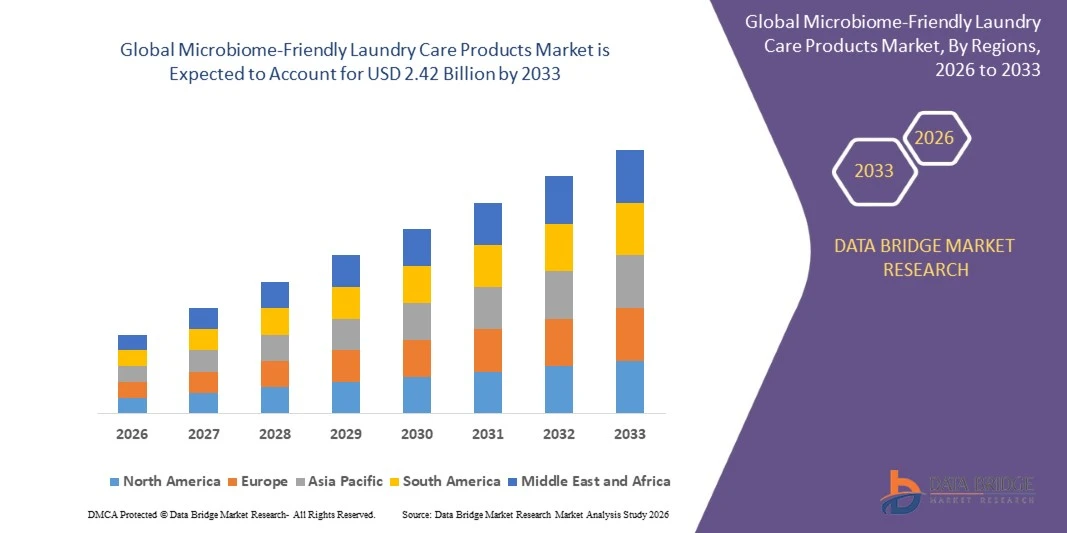
- As per Data Bridge Market Research analysis, the microbiome-friendly laundry care products market was valued at USD 0.95 billion in 2025 and is projected to reach USD 2.42 billion by 2033, growing at a CAGR of 12.40% from 2026 to 2033.
- The market is experiencing consistent growth driven by rising demand for skin-friendly laundry products, increasing awareness of the skin and textile microbiome, and expanding use across household, baby and infant care, and commercial and institutional laundry.
- The increasing shift toward sensitive-skin formulations, allergen reduction, and biodegradable concentrated detergents, combined with growing use of probiotic and synbiotic technologies and fermentation-derived biosurfactants, is supporting market adoption. Microbiome-friendly products are being applied across laundry care, sensitive-skin and baby clothing care, and concentrated detergent formats, offering consumers gentler washing and fewer concerns about fabric residues.
Market Size & Forecast
- Global Market Value (2025): USD 0.95 Billion
- Expected Market Value (2033): USD 2.42 Billion
- Forecast CAGR (2026–2033): 12.40%
- Leading Region in 2025: Europe
- Fastest Growing Region: Asia Pacific
What are the Major Takeaways of the Microbiome-Friendly Laundry Care Products Market?
- Europe dominated the microbiome-friendly laundry care products market with the largest revenue share of 38.26% in 2025, supported by strong skin-health awareness, eco-label adoption, and the presence of leading biotechnology and detergent companies.
- Asia-Pacific is expected to be the fastest-growing region at a CAGR of 15.20% from 2026 to 2033, fueled by rising washing machine ownership, growing awareness of sensitive skin, and expanding online retail.
- The liquid detergents segment led the market with a 63.48% share in 2025, driven by easy dosing, wide compatibility with washing machines, and suitability for cold-water cycles.
- Pods and sheets are the fastest-growing product type, projected to register a CAGR of 15.75%, reflecting demand for concentrated, pre-dosed formats with reduced packaging.
- The free-from microbiome-compatible formulations segment dominated the formulation category with a 54.37% share in 2025, supported by fragrance-free and dye-free positioning for sensitive skin.
- The probiotic and synbiotic formulations segment is the fastest-growing formulation category, with a CAGR of 16.35%, driven by odor control and fabric-hygiene claims.
- Baby and infant care is the fastest-growing end-user category, with a CAGR of 14.85%, driven by parental preference for gentle laundry products.
Report Scope and Microbiome-Friendly Laundry Care Products Market Segmentation
|
Attributes |
Microbiome-Friendly Laundry Care Products Key Market Insights |
|
Segments Covered |
|
|
Countries Covered |
North America
Europe
Asia-Pacific
Middle East and Africa
South America
|
|
Key Market Players |
|
|
Market Opportunities |
|
|
Value Added Data Infosets |
In addition to the insights on market scenarios such as market value, growth rate, segmentation, geographical coverage, and major players, the market reports curated by the Data Bridge Market Research also include in-depth expert analysis, pricing analysis, brand share analysis, consumer survey, demography analysis, supply chain analysis, value chain analysis, raw material/consumables overview, vendor selection criteria, PESTLE Analysis, Porter Analysis, and regulatory framework. |
What is the Key Trend in the Microbiome-Friendly Laundry Care Products Market?
- Microbiome-friendly laundry care is evolving from simple free-from positioning into science-led formulations that combine probiotics, prebiotics, mild surfactants, and fermentation-derived ingredients to support fabric hygiene while limiting irritation to the skin and the washing machine environment.
- For instance, in April 2025, according to HeiQ, its subsidiary HeiQ Chrisal introduced a synbiotic laundry liquid that combines probiotics and prebiotics with fermentation-derived biosurfactants; the highly concentrated, palm-free, and biodegradable formula is offered in branded, white-label, and concentrate options, highlighting the move toward microbe-based surfactant systems.
- Biosurfactants produced through fermentation are gaining attention as alternatives to plant-derived surfactants, helping brands reduce reliance on palm-based raw materials while maintaining cleaning performance in concentrated detergent formats.
- Brands are also expanding clinically tested sensitive-skin ranges, fragrance-free options, and dermatologically positioned detergents as consumers increasingly link laundry residues with skin comfort, allergy management, and baby clothing care.
- For instance, in May 2025, according to HeiQ, a webinar held on May 13, 2025 with Evonik’s biosurfactants specialist presented fermentation-derived biosurfactants as a sustainable alternative to conventional surfactants in laundry liquids, indicating growing collaboration between biotech firms and ingredient suppliers.
- As formulation science, biosurfactant supply, and consumer awareness advance, microbiome-friendly laundry products are expected to expand from sensitive-skin niches into mainstream household, baby care, and institutional laundry applications.
What are the Key Drivers of the Microbiome-Friendly Laundry Care Products Market?
- Growing concern about sensitive skin and rising awareness that detergent residues on clothing remain in constant contact with the skin are increasing demand for laundry products tested for skin and microbiome compatibility.
- For instance, in February 2025, according to the European Centre for Allergy Research Foundation (ECARF), a clinical study in participants with atopic dermatitis found that two sensitive-skin laundry detergents had no negative effect on skin bacterial viability or biodiversity after socks washed with them were worn for seven days, supporting demand for evidence-backed laundry products.
- Detergent brands, private-label companies, and formulators are increasingly seeking ready-to-integrate probiotic and synbiotic ingredients, which shortens development timelines and enables faster launch of microbiome-oriented laundry ranges in liquid, concentrate, and white-label formats.
- For instance, in April 2025, according to HeiQ, its synbiotic laundry liquid was positioned to help break down allergens in fabrics and was made available as branded, white-label, and concentrate supply, widening access for brands that want microbiome-oriented laundry products without building in-house research and development.
- With households seeking gentler laundry solutions for infants, sensitive-skin users, and allergy-prone families, microbiome-friendly products are expected to gain steady adoption across premium and mainstream household segments.
What Factors Are Challenging the Growth of the Microbiome-Friendly Laundry Care Products Market?
- Microbiome-friendly laundry products require stable microbial systems, compatible surfactants, suitable preservation approaches, and consistent dosing, which increases formulation complexity compared with conventional detergents.
- For instance, in February 2025, according to ECARF and Practical Dermatology, a clinical study of two sensitive-skin detergents in 41 participants with atopic dermatitis focused on foot microbiota, and its authors called for further research, highlighting the limited body of evidence behind broader microbiome-friendly claims.
- These formulation requirements can increase manufacturing costs and create challenges related to shelf life, storage temperature, regulatory interpretation of probiotic claims, and demonstrating consistent benefit across fabrics, wash temperatures, and water hardness levels.
- The absence of universally accepted standards for terms such as microbiome-friendly, probiotic, and skin-compatible can confuse consumers and make it difficult for brands to differentiate genuine innovation from marketing claims.
- Premium pricing compared with conventional detergents, limited consumer understanding of how laundry products interact with the skin microbiome, and the need for dermatological or in-use testing can slow adoption among cost-sensitive households and smaller brands.
- The combination of formulation complexity, evidence gaps, unclear claim standards, and higher prices can constrain adoption among cost-sensitive users, particularly where conventional or sensitive-skin detergents already satisfy basic laundry requirements.
How is the Microbiome-Friendly Laundry Care Products Market Segmented?
The microbiome-friendly laundry care products market is segmented on the basis of product, formulation, end user, and distribution channel.
- By Product
On the basis of product, the microbiome-friendly laundry care products market is segmented into liquid detergents, powder detergents, pods and sheets, and fabric conditioners. The liquid detergents segment dominated the market with 63.48% share in 2025, supported by easy dosing, compatibility with automatic washing machines, and suitability for cold-water cycles. Liquid formats are the most practical carrier for probiotic, synbiotic, and mild surfactant systems. They are widely used for baby clothing, sensitive-skin households, and everyday laundry. Fragrance-free and dermatologically positioned liquids are strengthening premium demand. Concentrated liquids and refill packs are also helping brands reduce packaging and improve cost efficiency.
The pods and sheets segment is projected to register the fastest growth at a CAGR of 15.75% from 2026 to 2033, driven by increasing demand for concentrated, pre-dosed formats with reduced packaging. Pods and sheets help avoid overdosing, which can leave residues on fabrics and increase skin contact concerns. Their compact size supports travel, small apartments, and subscription delivery. Brands are introducing free-from and plant-derived versions for sensitive skin. Improvements in dissolution, stability, and ingredient compatibility are enhancing performance, while online channels are improving trial among eco-conscious and health-focused consumers.
- By Formulation
On the basis of formulation, the microbiome-friendly laundry care products market is segmented into probiotic and synbiotic formulations, and free-from microbiome-compatible formulations. The free-from microbiome-compatible formulations segment dominated the category with 54.37% share in 2025, supported by fragrance-free, dye-free, and hypoallergenic positioning for sensitive skin. These products are developed to limit irritation and residue rather than introduce live cultures, which simplifies regulation and storage. Dermatological testing and clinical evaluation are increasingly used to support claims. Established detergent brands are extending sensitive-skin ranges, while specialist brands use gentle surfactant systems to attract allergy-prone and baby-care households.
The probiotic and synbiotic formulations segment is projected to register the fastest growth at a CAGR of 16.35% from 2026 to 2033, driven by interest in odor control, fabric freshness, and washing machine hygiene. Synbiotic systems combine beneficial microorganisms with prebiotic nutrients to support a balanced microbial environment on textiles. Biotechnology suppliers are offering ready-to-use ingredients and concentrates to detergent brands and private-label companies. Pairing probiotics with fermentation-derived biosurfactants is expanding the performance and sustainability story. Clear evidence, consistent dosing, and transparent claims remain important for wider consumer acceptance.
- By End User
On the basis of end user, the microbiome-friendly laundry care products market is segmented into household, baby and infant care, and commercial and institutional. The household segment dominated the end-user category with 66.52% share in 2025, supported by broad consumer interest in skin-friendly laundry and the large base of washing machine owners. Households with sensitive skin, allergies, or pets are early adopters of microbiome-oriented products. Retail availability of fragrance-free and probiotic ranges is improving awareness. Online reviews and dermatologist-oriented messaging influence purchase decisions. Concentrated formats and refill packs also appeal to households seeking lower plastic use and better value per load.
The baby and infant care segment is projected to register the fastest growth at a CAGR of 14.85% from 2026 to 2033, driven by parental preference for gentle laundry products for newborn clothing and bedding. Infant skin is more sensitive to residues and fragrances, increasing interest in mild and allergen-conscious detergents. Brands are launching baby-safe liquids and pods with simplified ingredient lists and dermatological testing. Pediatric recommendations, social media parenting communities, and online subscription services are supporting trial. Clear labeling, safety testing, and transparent ingredient disclosure remain important purchase considerations in this segment.
- By Distribution Channel
On the basis of distribution channel, the microbiome-friendly laundry care products market is segmented into online and offline. The offline segment dominated the distribution channel category with 58.91% share in 2025, supported by supermarkets, drugstores, and specialty organic retailers that carry sensitive-skin and eco-labelled detergents. In-store shelves allow consumers to compare fragrance-free claims, certifications, and pack sizes. Retailers are expanding private-label sensitive ranges, while pharmacies add credibility for skin-oriented products. Promotions and sampling programs also help introduce probiotic and synbiotic detergents to mainstream shoppers.
The online segment is projected to register the fastest growth at a CAGR of 15.60% from 2026 to 2033, driven by direct-to-consumer brands, marketplace listings, and subscription refills. Online pages allow brands to explain probiotic technology, test results, and ingredient transparency in detail. Customer reviews help new formulations build trust with sensitive-skin households. Concentrated and sheet formats reduce shipping weight, improving delivery economics. Growing use of mobile commerce and quick-delivery services is further expanding access to microbiome-friendly laundry products across urban areas.
Which Region Holds the Largest Share of the Microbiome-Friendly Laundry Care Products Market?
- Europe dominated the microbiome-friendly laundry care products market with the largest revenue share of 38.26% in 2025, supported by strong skin-health awareness, eco-label adoption, and the presence of leading biotechnology and detergent companies.
- The region also benefits from stringent environmental and ingredient standards, a high share of consumers seeking fragrance-free and allergy-conscious products, and active collaboration between biotechnology suppliers and detergent brands. Increasing use of probiotic, synbiotic, and biosurfactant technologies continues to strengthen Europe’s position in the global market.
U.S. Microbiome-Friendly Laundry Care Products Market Insight
The U.S. microbiome-friendly laundry care products market is witnessing strong growth due to rising awareness of sensitive skin, expanding availability of probiotic laundry detergents, and strong direct-to-consumer and online retail activity. Distributors are introducing synbiotic detergents certified under European eco-label programs, while specialty brands market washing machine cleaners and detergents that combine probiotics and prebiotics. In addition, growing emphasis on allergen reduction, baby clothing care, and ingredient transparency is accelerating adoption across American households.
Asia-Pacific Microbiome-Friendly Laundry Care Products Market Insight
The Asia-Pacific microbiome-friendly laundry care products market is expected to witness rapid growth, driven by rising washing machine ownership, growing awareness of sensitive skin and hygiene, and expanding online retail across countries such as China, India, and Japan. Urban consumers are increasingly interested in gentle, fragrance-free, and baby-safe detergents. In addition, the region’s strong chemical and consumer goods manufacturing base and rising investment in biotechnology are supporting local development of probiotic and biosurfactant-based laundry products.
Japan Microbiome-Friendly Laundry Care Products Market Insight
The Japan microbiome-friendly laundry care products market is witnessing consistent growth due to consumer preference for mild, skin-friendly, and low-residue detergents, along with strong interest in hygiene and fabric care. Households and baby care consumers are increasingly choosing products that balance cleaning performance with gentleness on the skin. Moreover, strong innovation in concentrated detergents, refill packs, and multifunctional fabric care is further contributing to market growth in Japan.
China Microbiome-Friendly Laundry Care Products Market Insight
The China microbiome-friendly laundry care products market is growing rapidly, driven by large-scale detergent manufacturing, strong e-commerce infrastructure, and rising consumer interest in mild and antibacterial-free laundry care. Domestic brands are introducing enzyme-based, plant-derived, and probiotic-oriented detergents through online platforms, while parents are seeking baby-specific laundry products. In addition, growing biotechnology investment and export-oriented production of concentrates are positioning China as a key growth market across Asia-Pacific.
U.K. Microbiome-Friendly Laundry Care Products Market Insight
The U.K. microbiome-friendly laundry care products market is experiencing steady growth, supported by strong interest in fragrance-free, hypoallergenic, and eco-labelled detergents. Consumers with eczema and sensitive skin are increasingly looking for products backed by dermatological testing, while retailers are expanding sensitive and baby laundry ranges. Furthermore, rising awareness of washing machine hygiene, subscription-based refills, and sustainability commitments is supporting wider adoption of microbiome-friendly laundry care products in the U.K.
Germany Microbiome-Friendly Laundry Care Products Market Insight
The Germany microbiome-friendly laundry care products market is expanding steadily due to the country’s strong consumer awareness of product safety, allergen-free ingredients, and sustainability, as well as the presence of leading detergent and specialty chemical manufacturers. Clinical evaluations of sensitive-skin detergents, including studies in atopic dermatitis patients supported by allergy research bodies, are strengthening consumer trust. Continuous advancements in biosurfactants and mild surfactant systems, together with regulatory focus on environmental performance, are further driving market growth in the country.
Which are the Top Companies in Microbiome-Friendly Laundry Care Products Market?
The microbiome-friendly laundry care products industry is primarily led by well-established companies, including:
- HeiQ Materials AG (Switzerland)
- Henkel AG & Co. KGaA (Germany)
- Unilever (Netherlands)
- Procter & Gamble (U.S.)
- Evonik Industries AG (Germany)
- Church & Dwight Co., Inc. (U.S.)
- Reckitt Benckiser Group plc (U.K.)
- Kao Corporation (Japan)
- Lion Corporation (Japan)
- Novonesis (Denmark)
- BASF SE (Germany)
- Clean Habits (U.S.)
- Synbio Concept (U.S.)
- Saaren Taika (Finland)
- Byoms (Denmark)
- AOBiome Therapeutics (U.S.)
- Seventh Generation (U.S.)
- method products, pbc. (U.S.)
- Colgate-Palmolive Company (U.S.)
- S. C. Johnson & Son, Inc. (U.S.)
What are Latest Developments in Microbiome-Friendly Laundry Care Products Market?
- In April 2025, HeiQ Chrisal launched a next-generation synbiotic laundry liquid enhanced with fermentation-derived biosurfactants. According to HeiQ, the highly concentrated, palm-free, and biodegradable formula is designed to lift dirt, oils, and stains, break down odor molecules, and help break down allergens in fabrics, and it is available in branded packaging as well as white-label and concentrate options.
- In May 2025, HeiQ Chrisal held a webinar on May 13, 2025 titled “Probiotics + biosurfactants. The latest laundry liquid innovation.” with a biosurfactants specialist from Evonik, covering how synbiotics and fermentation-derived biosurfactants are transforming sustainable laundry care and supporting the development of microbiome-oriented detergents.
- In May 2025, HeiQ Chrisal announced its participation at PLMA 2025, held on May 20–21, 2025, where it presented the application of synbiotic detergent in the laundry process, according to HeiQ, targeting private-label retailers and brand owners seeking microbiome-oriented laundry ranges.
- In February 2025, ECARF reported results of a clinical study in 41 participants with atopic dermatitis evaluating Persil Sensitive Gel and Persil Megapearls Sensitive, which showed no significant change in skin bacterial viability or biodiversity and high tolerability, supporting evidence-based sensitive-skin laundry positioning.
- In March 2021, HeiQ completed the takeover of Belgian company Chrisal, according to Greater Zurich Area, and HeiQ Chrisal now operates as a subsidiary that manufactures HeiQ Synbio products, laying the foundation for the group’s probiotic and synbiotic cleaning and laundry portfolio.
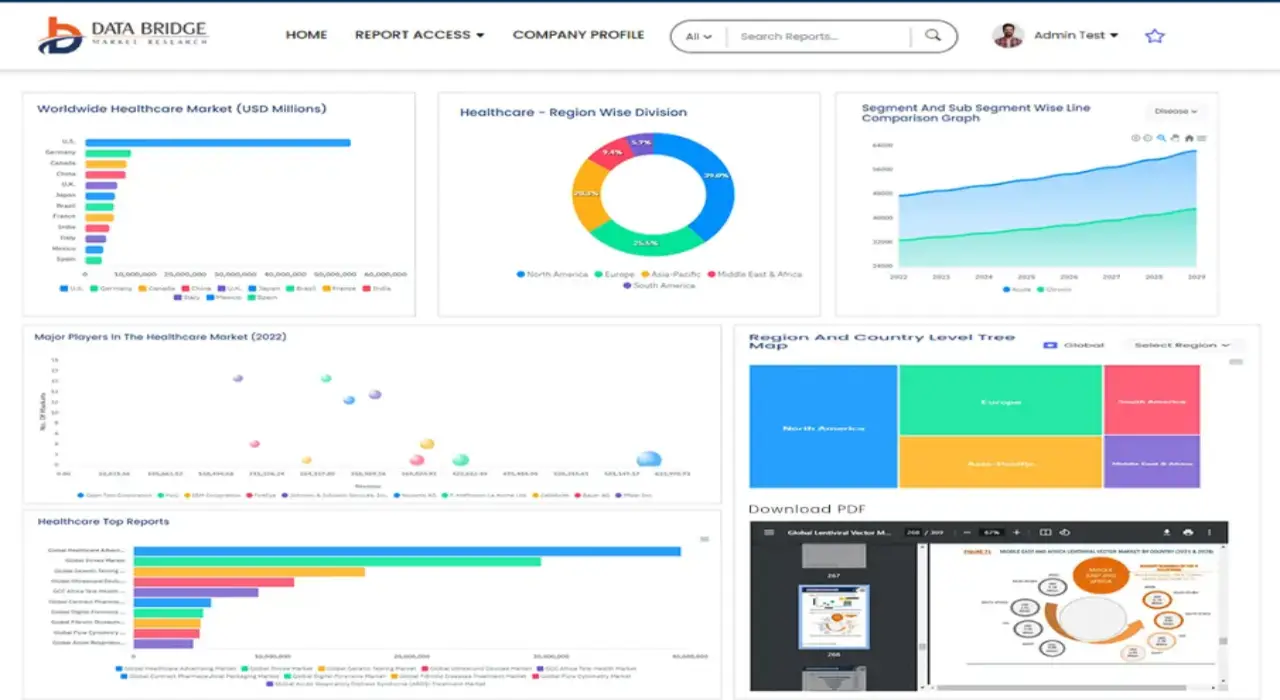
- Interactive Data Analysis Dashboard
- Company Analysis Dashboard for high growth potential opportunities
- Research Analyst Access for customization & queries
- Competitor Analysis with Interactive dashboard
- Latest News, Updates & Trend analysis
- Harness the Power of Benchmark Analysis for Comprehensive Competitor Tracking
Data collection and base year analysis are done using data collection modules with large sample sizes. The stage includes obtaining market information or related data through various sources and strategies. It includes examining and planning all the data acquired from the past in advance. It likewise envelops the examination of information inconsistencies seen across different information sources. The market data is analysed and estimated using market statistical and coherent models. Also, market share analysis and key trend analysis are the major success factors in the market report. To know more, please request an analyst call or drop down your inquiry.
The key research methodology used by DBMR research team is data triangulation which involves data mining, analysis of the impact of data variables on the market and primary (industry expert) validation. Data models include Vendor Positioning Grid, Market Time Line Analysis, Market Overview and Guide, Company Positioning Grid, Patent Analysis, Pricing Analysis, Company Market Share Analysis, Standards of Measurement, Global versus Regional and Vendor Share Analysis. To know more about the research methodology, drop in an inquiry to speak to our industry experts.
Data Bridge Market Research is a leader in advanced formative research. We take pride in servicing our existing and new customers with data and analysis that match and suits their goal. The report can be customized to include price trend analysis of target brands understanding the market for additional countries (ask for the list of countries), clinical trial results data, literature review, refurbished market and product base analysis. Market analysis of target competitors can be analyzed from technology-based analysis to market portfolio strategies. We can add as many competitors that you require data about in the format and data style you are looking for. Our team of analysts can also provide you data in crude raw excel files pivot tables (Fact book) or can assist you in creating presentations from the data sets available in the report.