



Segmentação do mercado de concentrado de proteína de soja na região Ásia-Pacífico, por categoria (composto único e composto fortificado), processo de extração (lavagem com álcool aquoso, lavagem ácida e lavagem com água e desnaturação térmica), tipo de modificação (modificação térmica, modificação química e modificação enzimática), concentração de proteína (70% de proteína), forma (seca e líquida), natureza (orgânica e convencional), função (solubilidade, gelificação, emulsificação, retenção de água, formação de espuma, agente texturizante, estabilizante, agente espessante e outros), aplicação (alimentos, bebidas, nutracêuticos e suplementos alimentares, cosméticos e cuidados pessoais, ração animal, produtos farmacêuticos e outros) - Tendências e previsões do setor até 2033.
Tamanho do mercado de concentrado de proteína de soja na região Ásia-Pacífico
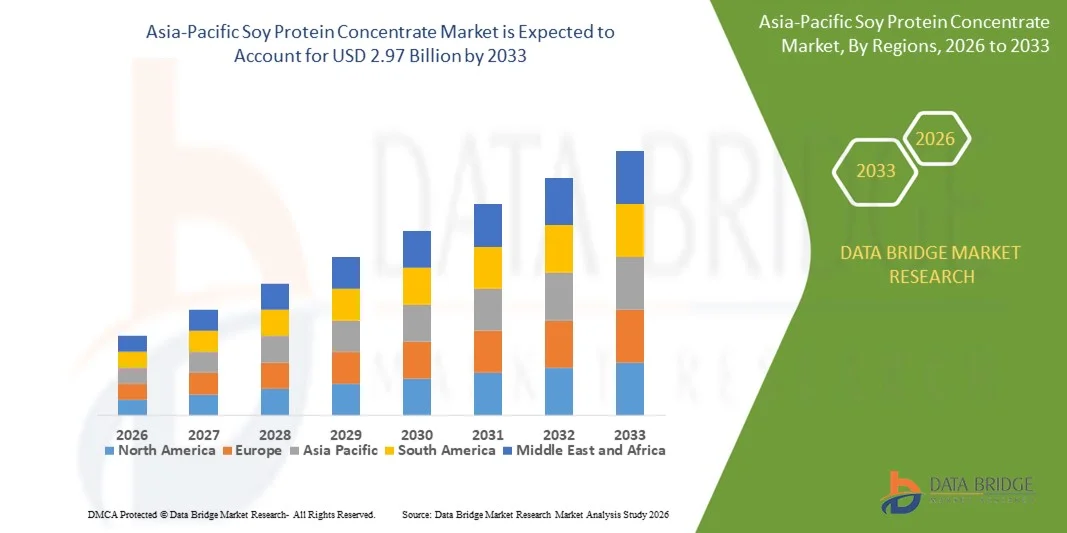
- O mercado de concentrado de proteína de soja na região Ásia-Pacífico foi avaliado em US$ 1,02 bilhão em 2025 e deverá atingir US$ 2,97 bilhões até 2033 , com uma taxa de crescimento anual composta (CAGR) de 14,3% durante o período de previsão.
- O crescimento do mercado é impulsionado principalmente pela crescente demanda por ingredientes alimentares à base de plantas e ricos em proteínas, sustentada pelo foco cada vez maior do consumidor em saúde, nutrição e escolhas alimentares sustentáveis, tanto em economias desenvolvidas quanto emergentes.
- Além disso, a crescente adoção do concentrado de proteína de soja por fabricantes de alimentos para enriquecimento proteico, melhoria da textura e redução de custos em alimentos processados e alternativas à carne está acelerando a penetração no mercado, contribuindo significativamente para a expansão geral do mercado.
Análise do Mercado de Concentrado de Proteína de Soja na Ásia-Pacífico
- O concentrado proteico de soja é um ingrediente proteico de origem vegetal produzido pela remoção de carboidratos solúveis da farinha de soja desengordurada, resultando em um produto rico em proteínas utilizado para melhorar o valor nutricional, a textura e o desempenho funcional em aplicações alimentícias, rações e nutracêuticas.
- O aumento da demanda por concentrado de proteína de soja é impulsionado principalmente pela mudança para dietas à base de plantas, pelo crescente uso em produtos alimentícios funcionais e fortificados e pela expansão da aplicação na nutrição animal devido ao seu perfil equilibrado de aminoácidos e versatilidade funcional.
- A China dominou o mercado de concentrado de proteína de soja em 2025, devido ao alto consumo de alimentos à base de soja, à forte capacidade de processamento de soja no país e ao uso generalizado do concentrado de proteína de soja em produtos alimentícios e ração animal.
- Prevê-se que a Índia seja a região de crescimento mais rápido no mercado de concentrado de proteína de soja durante o período de previsão, devido ao aumento da população, ao crescente consumo de proteínas e à adoção cada vez maior de soluções nutricionais acessíveis e à base de plantas.
- O segmento convencional dominou o mercado com uma participação de 74,6% em 2025, devido às cadeias de suprimentos estabelecidas e às vantagens de custo. O concentrado de proteína de soja convencional atende à demanda em larga escala das indústrias alimentícia e de rações. A disponibilidade estável e os preços competitivos sustentam sua posição de liderança.
Escopo do relatório e segmentação do mercado de concentrado de proteína de soja
|
Atributos |
Principais informações de mercado sobre concentrado de proteína de soja |
|
Segmentos abrangidos |
|
|
Países abrangidos |
Ásia-Pacífico
|
|
Principais participantes do mercado |
|
|
Oportunidades de mercado |
|
|
Conjuntos de informações de dados de valor agregado |
Além das informações sobre cenários de mercado, como valor de mercado, taxa de crescimento, segmentação, cobertura geográfica e principais participantes, os relatórios de mercado elaborados pela Data Bridge Market Research também incluem análises aprofundadas de especialistas, análises de preços, análises de participação de marcas, pesquisas com consumidores, análises demográficas, análises da cadeia de suprimentos, análises da cadeia de valor, visão geral de matérias-primas/insumos, critérios de seleção de fornecedores, análise PESTLE, análise de Porter e estrutura regulatória. |
Tendências do mercado de concentrado de proteína de soja na região Ásia-Pacífico
Uso crescente na alimentação animal
- O mercado de concentrado de proteína de soja está em rápida expansão, à medida que fabricantes e produtores pecuários reconhecem seu valor como um ingrediente rico em proteínas e com boa relação custo-benefício na alimentação animal, especialmente para os setores avícola, suíno e aquícola.
- Por exemplo, grandes empresas como a Bunge fortaleceram sua posição ao adquirir fabricantes especializados em concentrado de proteína de soja, como a CJ Selecta, o que lhes permite oferecer soluções de alimentação personalizadas e atender à crescente demanda por nutrição animal sustentável e rica em proteínas.
- A adoção do concentrado proteico de soja na alimentação animal é impulsionada por seu perfil superior de aminoácidos, digestibilidade e capacidade de aumentar as taxas de crescimento e a eficiência alimentar, tornando-o altamente atrativo para fazendas comerciais de grande escala.
- A crescente preocupação com o uso de antibióticos e a necessidade de otimizar a saúde animal estão levando os formuladores de rações a incorporar o concentrado de proteína de soja como ingrediente funcional para melhorar a saúde intestinal e a resposta imunológica em animais de produção.
- Os avanços tecnológicos no processamento estão levando ao desenvolvimento de concentrados de proteína de soja não transgênicos, com baixo teor de oligossacarídeos e alta digestibilidade, projetados especificamente para a indústria de rações, ampliando o alcance a produtores com necessidades variadas.
- O fornecimento sustentável, a menor pegada ambiental em comparação com a ração proteica de origem animal e o maior foco na transparência da cadeia alimentar estão impulsionando ainda mais sua crescente adoção na indústria de rações.
Dinâmica do mercado de concentrado de proteína de soja na região Ásia-Pacífico
Motorista
Crescente demanda por proteínas de origem vegetal
- O aumento no número de consumidores preocupados com a saúde, aliado à crescente popularidade das dietas vegetarianas, veganas e flexitarianas, está impulsionando significativamente a demanda global por proteínas vegetais nos setores de alimentos e bebidas.
- Por exemplo, empresas líderes como a DuPont e a Solae colaboraram para criar concentrados de proteína de soja com sabor e textura aprimorados, tornando-os mais adequados para alternativas de carne à base de plantas e alimentos funcionais.
- A versatilidade do concentrado de proteína de soja — como ingrediente principal em substitutos de carne, barras de proteína, alternativas lácteas e suplementos nutricionais — está impulsionando seu crescimento de mercado tanto entre produtores de alimentos convencionais quanto especializados.
- A acessibilidade e o perfil equilibrado de aminoácidos posicionam os concentrados de proteína de soja como uma alternativa atraente às proteínas animais, especialmente em regiões com acesso limitado a fontes proteicas tradicionais.
- O crescente foco em ingredientes proteicos com rótulos limpos, não transgênicos e produzidos de forma sustentável está incentivando as empresas alimentícias a integrarem o concentrado de proteína de soja em seus portfólios, alinhando-se às preferências em constante evolução dos consumidores por transparência e nutrição ecologicamente correta.
Restrição/Desafio
Reações alérgicas à soja
- A soja é um dos oito principais alérgenos alimentares em todo o mundo, e o risco de reações alérgicas representa uma barreira significativa para a adoção mais ampla do concentrado de proteína de soja nas indústrias alimentícia e de rações.
- Por exemplo, a Nestlé implementou protocolos rigorosos de rotulagem e segregação de alérgenos em todas as suas linhas de produtos à base de soja para cumprir as regulamentações na América do Norte e na Europa e para mitigar os riscos à segurança do consumidor.
- A busca por formulações hipoalergênicas e o surgimento de proteínas vegetais alternativas — como as proteínas de ervilha, arroz e aveia — estão intensificando a pressão competitiva e impulsionando a inovação para solucionar o problema dos alérgenos.
- A percepção do consumidor sobre a soja, por vezes influenciada por mitos sobre modificação genética ou preocupações com a saúde, pode afetar as decisões de compra e exigir investimentos adicionais em educação ou marketing por parte das marcas.
- As diferenças regulatórias entre regiões em relação à rotulagem, aos níveis permitidos de proteínas alergênicas e às alegações permitidas complicam ainda mais a expansão do mercado e exigem estratégias robustas de conformidade por parte dos fabricantes.
Escopo do mercado de concentrado de proteína de soja na região Ásia-Pacífico
O mercado é segmentado com base em categoria, processo de extração, tipo de modificação, concentração de proteína, forma, natureza, função e aplicação.
- Por categoria
Com base na categoria, o mercado de concentrado de proteína de soja é segmentado em composto simples e composto fortificado. O segmento de composto simples dominou a maior participação na receita de mercado em 2025, impulsionado por seu uso generalizado como uma fonte de proteína de baixo custo no processamento de alimentos e na nutrição animal. Os fabricantes preferem o concentrado de proteína de soja de composto simples devido ao seu perfil proteico consistente e à facilidade de formulação em diversas aplicações. Sua funcionalidade neutra proporciona textura estável e aprimoramento nutricional sem alterar as características do produto final. A forte demanda de grandes processadores de alimentos reforçou ainda mais sua posição de liderança.
O segmento de compostos fortificados deverá apresentar o crescimento mais rápido entre 2026 e 2033, impulsionado pela crescente demanda por perfis nutricionais aprimorados em alimentos funcionais e suplementos alimentares. As variantes fortificadas permitem a inclusão de vitaminas, minerais e aminoácidos, melhorando o posicionamento geral em termos de saúde. A crescente conscientização do consumidor sobre a qualidade da proteína e a nutrição direcionada apoia a adoção desse segmento. O posicionamento premium do produto e as margens de lucro mais elevadas também incentivam os fabricantes a expandir a oferta de produtos fortificados.
- Por processo de extração
Com base no processo de extração, o mercado é segmentado em processo de lavagem com álcool aquoso, processo de lavagem ácida e processo de lavagem com água e desnaturação térmica. O segmento de processo de lavagem com álcool aquoso dominou a participação na receita do mercado em 2025 devido à sua eficácia na redução de fatores antinutricionais, preservando a funcionalidade das proteínas. Esse processo fornece concentrados de alta pureza com sabor e cor aprimorados, tornando-os adequados para aplicações em alimentos para consumo humano. A consistência na qualidade dos resultados sustenta sua adoção industrial em larga escala.
Prevê-se que o segmento de lavagem com água e desnaturação térmica registre o crescimento mais rápido durante o período de previsão, impulsionado pela crescente preferência por métodos de processamento mais limpos. Esse processo está alinhado com as tendências de rótulos limpos, minimizando o uso de produtos químicos. A melhor digestibilidade proteica e o desempenho funcional aumentam seu apelo em aplicações alimentícias e nutracêuticas. A pressão regulatória e do consumidor por processamento natural acelera ainda mais o crescimento.
- Por tipo de modificação
Com base no tipo de modificação, o mercado de concentrado de proteína de soja é segmentado em modificação térmica, modificação química e modificação enzimática. A modificação térmica detinha a maior participação de mercado em 2025 devido à sua ampla aceitação e escalabilidade com boa relação custo-benefício. Esse método melhora a funcionalidade da proteína, incluindo a absorção de água e a textura, sem etapas complexas de processamento. Sua compatibilidade com a infraestrutura de fabricação existente permite seu uso extensivo.
Prevê-se que a modificação enzimática apresente a taxa de crescimento mais rápida entre 2026 e 2033, devido à sua precisão na adequação das propriedades funcionais. Os processos enzimáticos melhoram a solubilidade e a digestibilidade, permitindo formulações alimentares avançadas. A crescente demanda por proteínas vegetais de alto desempenho em nutrição especializada impulsiona a adoção dessa tecnologia. A inovação em tecnologias enzimáticas fortalece ainda mais as perspectivas de crescimento.
- Por concentração de proteína
Com base na concentração de proteína, o mercado é segmentado em <20% de proteína, 20%–70% de proteína e >70% de proteína. O segmento de 20%–70% de proteína dominou a participação na receita do mercado em 2025, impulsionado por seu perfil nutricional equilibrado e versatilidade funcional. Essa faixa de concentração é amplamente utilizada em produtos alimentícios, ração animal e nutracêuticos devido à sua relação custo-benefício favorável. A ampla aplicabilidade garante uma demanda sustentada em diversos setores.
O segmento com mais de 70% de proteína deverá apresentar o crescimento mais rápido durante o período de previsão, impulsionado pela crescente demanda por formulações com alto teor proteico. Os fabricantes de suplementos alimentares e nutrição esportiva estão cada vez mais optando por concentrados proteicos de maior concentração. O foco do consumidor na saúde muscular e no enriquecimento proteico reforça essa tendência. O posicionamento premium impulsiona ainda mais a expansão do mercado.
- Por formulário
Com base na forma, o mercado de concentrado de proteína de soja é segmentado em seco e líquido. O segmento de forma seca dominou o mercado em 2025 devido à sua maior vida útil e facilidade de transporte. O concentrado de proteína de soja seco oferece flexibilidade de formulação e custo-benefício para os fabricantes. Seu uso generalizado em panificação, snacks e alternativas à carne reforça essa dominância.
Prevê-se que o segmento de formas líquidas apresente o crescimento mais rápido entre 2026 e 2033, impulsionado pelo aumento do uso em bebidas e formulações prontas para consumo. Os concentrados líquidos permitem um processamento mais rápido e uma mistura uniforme. A crescente demanda por bebidas enriquecidas com proteínas e produtos emulsionados também contribui para a sua adoção. A praticidade em aplicações industriais acelera ainda mais o crescimento.
- Por natureza
Com base na natureza, o mercado é segmentado em orgânico e convencional. O segmento convencional representou a maior participação na receita de mercado, com 74,6% em 2025, sustentado por cadeias de suprimentos estabelecidas e vantagens de custo. O concentrado de proteína de soja convencional atende à demanda em larga escala das indústrias de alimentos e rações. A disponibilidade estável e os preços competitivos mantêm sua posição de liderança.
Espera-se que o segmento de produtos orgânicos registre o crescimento mais rápido durante o período de previsão, impulsionado pela crescente preferência do consumidor por produtos orgânicos e não transgênicos. A certificação orgânica aumenta a credibilidade do produto em mercados focados em saúde. O crescimento do consumo de alimentos com rótulos limpos e sustentáveis também contribui para a expansão. Preços premium incentivam ainda mais a participação dos produtores.
- Por função
Com base na função, o mercado é segmentado em solubilidade, gelificação, emulsificação, retenção de água, formação de espuma, texturização, estabilização, espessamento e outros. O segmento de emulsificação dominou o mercado em 2025 devido ao seu papel crucial na estabilidade de alimentos processados. O concentrado de proteína de soja é amplamente utilizado para melhorar a textura e a consistência em alternativas à carne e substitutos de laticínios. A forte demanda dos fabricantes de alimentos sustenta essa dominância.
Prevê-se que o segmento de agentes texturizantes apresente o crescimento mais rápido entre 2026 e 2033, impulsionado pela expansão do consumo de carne à base de plantas. A funcionalidade texturizante melhora a sensação na boca e a integridade estrutural de proteínas alternativas. A inovação em formulações de análogos de carne sustenta a crescente demanda. A mudança do consumidor para dietas à base de plantas acelera o crescimento.
- Por meio de aplicação
Com base na aplicação, o mercado de concentrado de proteína de soja é segmentado em produtos alimentícios, bebidas, nutracêuticos e suplementos alimentares, cosméticos e cuidados pessoais, ração animal, produtos farmacêuticos e outros. O segmento de produtos alimentícios dominou a participação na receita do mercado em 2025, impulsionado pelo uso extensivo em panificação, alternativas à carne e alimentos processados. O enriquecimento proteico e os benefícios funcionais sustentam a ampla adoção. O alto volume de consumo mantém a liderança do segmento.
O segmento de nutracêuticos e suplementos alimentares deverá apresentar o crescimento mais rápido entre 2026 e 2033, impulsionado pela crescente conscientização sobre saúde e pelas tendências de suplementação proteica. O concentrado de proteína de soja oferece nutrição de origem vegetal com alta digestibilidade. A demanda da população idosa e de consumidores focados em boa forma física impulsiona esse crescimento. A inovação de produtos e formulações direcionadas fortalecem ainda mais a expansão.
Análise Regional do Mercado de Concentrado de Proteína de Soja na Ásia-Pacífico
- A China dominou o mercado de concentrado de proteína de soja, com a maior participação na receita em 2025, impulsionada pelo alto consumo de alimentos à base de soja, pela forte capacidade de processamento de soja no país e pelo uso generalizado do concentrado de proteína de soja em produtos alimentícios e ração animal.
- A rápida expansão da indústria de processamento de alimentos, a crescente demanda por proteínas vegetais acessíveis e a forte integração de ingredientes de soja em dietas tradicionais e modernas reforçam a liderança da China no mercado regional.
- A presença de grandes produtores nacionais, a expansão contínua da capacidade produtiva e o crescente uso de concentrado de proteína de soja em alternativas à carne, produtos de panificação e alimentos funcionais continuarão a fortalecer a posição dominante da China durante o período de previsão.
Análise do Mercado Japonês de Concentrado de Proteína de Soja
Prevê-se que o mercado japonês de concentrado de proteína de soja cresça de forma constante entre 2026 e 2033, impulsionado por uma indústria alimentícia consolidada, focada em qualidade, funcionalidade e equilíbrio nutricional. Os fabricantes japoneses utilizam cada vez mais o concentrado de proteína de soja em alimentos processados, refeições prontas e produtos nutricionais especializados para aumentar o teor proteico e melhorar a textura. A forte demanda por ingredientes vegetais de alta qualidade e com rótulo limpo está alinhada com a adoção do concentrado de proteína de soja. Uma rede de distribuição bem estabelecida, composta por fabricantes de alimentos e fornecedores de ingredientes, sustenta uma demanda estável. A ênfase do Japão na segurança alimentar, inovação e valor nutricional reforça a perspectiva de crescimento consistente do mercado.
Análise do Mercado de Concentrado de Proteína de Soja na Índia
Prevê-se que a Índia registre a taxa de crescimento anual composta (CAGR) mais rápida no mercado de concentrado de proteína de soja da região Ásia-Pacífico durante o período de 2026 a 2033, impulsionada pelo crescimento populacional, aumento do consumo de proteínas e crescente adoção de soluções nutricionais acessíveis e à base de plantas. O uso crescente de concentrado de proteína de soja em alimentos processados, suplementos alimentares e ração animal está sustentando o rápido crescimento do mercado. A crescente conscientização sobre saúde e o foco governamental no enriquecimento proteico estão acelerando a demanda. O crescimento do processamento organizado de alimentos, a expansão do setor nutracêutico e a melhoria da infraestrutura da cadeia de suprimentos estão ampliando a acessibilidade ao mercado. O foco crescente do consumidor em fontes de proteína com boa relação custo-benefício posiciona a Índia como o mercado de crescimento mais rápido da região.
Participação de mercado do concentrado de proteína de soja na região Ásia-Pacífico
A indústria de concentrado de proteína de soja é liderada principalmente por empresas consolidadas, incluindo:
- Cargill Incorporated (EUA)
- DuPont (EUA)
- Almirante (EUA)
- A CORPORAÇÃO VINCENT (EUA)
- Wilmar International Ltd (Singapura)
- Alimentos Batory (EUA)
- Nordic Soya Oy (Finlândia)
- Aminola (EUA)
- Empresa Crown Soya Protein Group (China)
- Solbar Ningbo Protein Technology Co., Ltd (China)
- Grupo Victoria (Sérvia)
- Yu Wang (China)
- Shandong Yuxin Biotechnology Co., Ltd (China)
- Gushen Biotechnology Group Co., Ltd. (China)
- Arshine Pharmaceutical Co., Limited (China)
- Tianwei Biotech Group Co., Ltd.
- Foodchem International Corporation (China)
Últimos desenvolvimentos no mercado de concentrado de proteína de soja na região Ásia-Pacífico
- Em maio de 2025, a Bunge apresentou uma nova linha de concentrados de proteína de soja na IFFA, com lançamento previsto para o outono. Esses concentrados foram desenvolvidos para solucionar os principais desafios de formulação no setor de proteínas vegetais, oferecendo sabor neutro, cor neutra e custo-benefício. Espera-se que essa expansão estratégica de produtos fortaleça a presença da Bunge no mercado e impulsione uma maior adoção do concentrado de proteína de soja entre os fabricantes de alimentos que buscam ingredientes escaláveis e de alto desempenho.
- Em fevereiro de 2024, a Amfora anunciou o lançamento comercial de sua primeira geração de produtos com altíssimo teor de proteína vegetal. Essa entrada no mercado fortalece o cenário competitivo e atende à crescente demanda por ingredientes sustentáveis e ricos em nutrientes. A inovação da Amfora provavelmente acelerará o crescimento do uso de concentrado de proteína de soja em categorias de alimentos funcionais e fortificados.
- Em junho de 2023, a Nutra Ingredients lançou um novo concentrado de proteína de soja enriquecido com aminoácidos essenciais, direcionado ao mercado de nutrição esportiva. Este produto inovador promete melhorar a recuperação e o crescimento muscular, ampliando a aplicação de concentrados de proteína de soja na indústria de nutrição esportiva.
- Em fevereiro de 2022, a Benson Hill lançou seu portfólio de ingredientes de proteína de soja TruVail, com vantagens de sustentabilidade distintas, adaptadas para diversas aplicações alimentares. Esse lançamento representou um passo significativo na integração da gestão ambiental com a inovação alimentar. A abordagem focada na sustentabilidade está contribuindo para o aumento do interesse do mercado em soluções de proteína de soja com rótulo limpo e ecologicamente conscientes, reforçando o alinhamento de consumidores e fabricantes com práticas de fornecimento responsável.
- Em julho de 2020, a DuPont expandiu seu portfólio Danisco Planit com o lançamento de novos produtos, como os concentrados de proteína de soja texturizada Response e os concentrados de proteína de soja funcional Alpha, atendendo a diversas aplicações e aprimorando sua oferta de concentrados de proteína de soja.
SKU-
Obtenha acesso online ao relatório sobre a primeira nuvem de inteligência de mercado do mundo

- Painel interativo de análise de dados
- Painel de análise da empresa para oportunidades de elevado potencial de crescimento
- Acesso de analista de pesquisa para personalização e customização. consultas
- Análise da concorrência com painel interativo
- Últimas notícias, atualizações e atualizações Análise de tendências
- Aproveite o poder da análise de benchmark para um rastreio abrangente da concorrência
Metodologia de Investigação
A recolha de dados e a análise do ano base são feitas através de módulos de recolha de dados com amostras grandes. A etapa inclui a obtenção de informações de mercado ou dados relacionados através de diversas fontes e estratégias. Inclui examinar e planear antecipadamente todos os dados adquiridos no passado. Da mesma forma, envolve o exame de inconsistências de informação observadas em diferentes fontes de informação. Os dados de mercado são analisados e estimados utilizando modelos estatísticos e coerentes de mercado. Além disso, a análise da quota de mercado e a análise das principais tendências são os principais fatores de sucesso no relatório de mercado. Para saber mais, solicite uma chamada de analista ou abra a sua consulta.
A principal metodologia de investigação utilizada pela equipa de investigação do DBMR é a triangulação de dados que envolve a mineração de dados, a análise do impacto das variáveis de dados no mercado e a validação primária (especialista do setor). Os modelos de dados incluem grelha de posicionamento de fornecedores, análise da linha de tempo do mercado, visão geral e guia de mercado, grelha de posicionamento da empresa, análise de patentes, análise de preços, análise da quota de mercado da empresa, normas de medição, análise global versus regional e de participação dos fornecedores. Para saber mais sobre a metodologia de investigação, faça uma consulta para falar com os nossos especialistas do setor.
Personalização disponível
A Data Bridge Market Research é líder em investigação formativa avançada. Orgulhamo-nos de servir os nossos clientes novos e existentes com dados e análises que correspondem e atendem aos seus objetivos. O relatório pode ser personalizado para incluir análise de tendências de preços de marcas-alvo, compreensão do mercado para países adicionais (solicite a lista de países), dados de resultados de ensaios clínicos, revisão de literatura, mercado remodelado e análise de base de produtos . A análise de mercado dos concorrentes-alvo pode ser analisada desde análises baseadas em tecnologia até estratégias de carteira de mercado. Podemos adicionar quantos concorrentes necessitar de dados no formato e estilo de dados que procura. A nossa equipa de analistas também pode fornecer dados em tabelas dinâmicas de ficheiros Excel em bruto (livro de factos) ou pode ajudá-lo a criar apresentações a partir dos conjuntos de dados disponíveis no relatório.











