



Global Flavored Camel Milk Market Segmentation, By Packaging (Cartons, Bottles, Jars, and Cans), Type (Raw Camel Milk, Frozen Raw Camel Milk, Powder Camel Milk, Camel Milk Handmade Soaps, Camel Milk Flakes, and Others), Application (Daily Foods, Health Care, and Daily Necessities), Distribution Channel (Supermarket, Specialty Stores, Online Stores, Hypermarket, and Others) – Industry Trends and Forecast to 2032
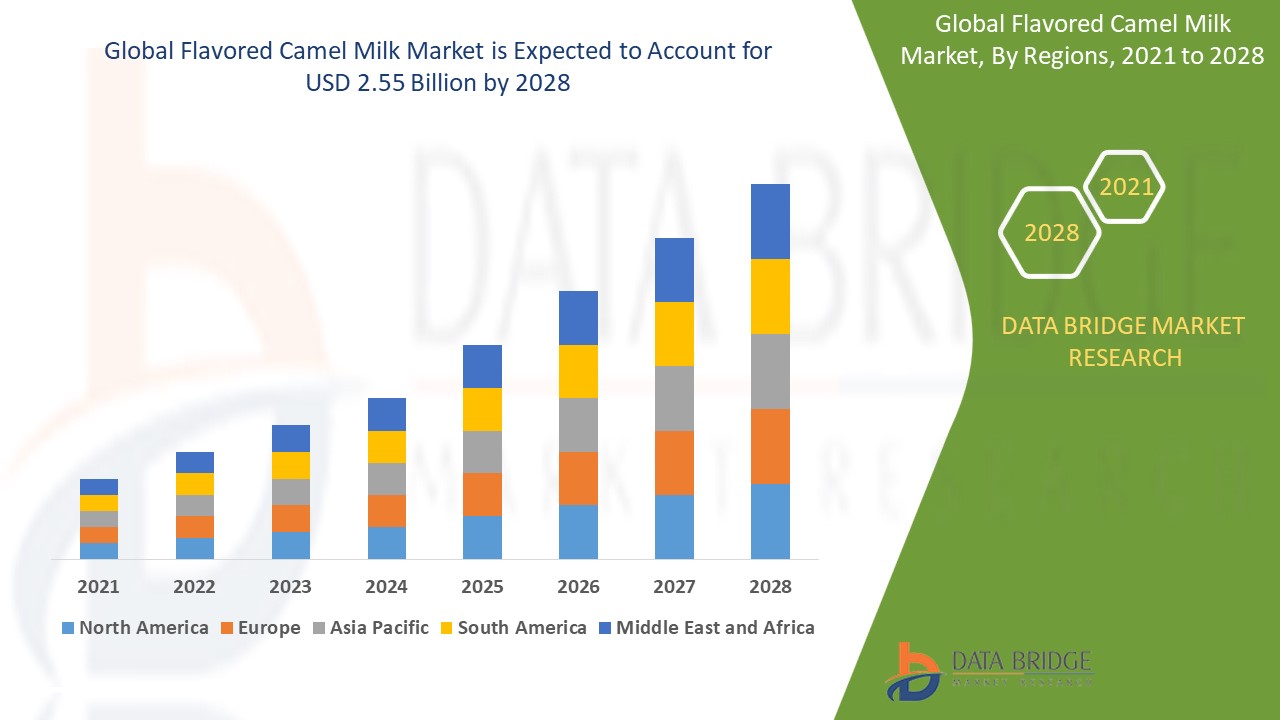
Flavored Camel Milk Market Analysis
The flavored camel milk market is experiencing significant growth due to increasing consumer demand for nutritious and unique dairy alternatives. Camel milk, known for its rich nutrient profile and easy digestibility, is gaining traction among health-conscious individuals and those with lactose intolerance. The introduction of flavored variants such as milk chocolate, vanilla, and strawberry enhances its appeal, especially among children and younger demographics. Rising awareness of camel milk's health benefits, including its role in managing diabetes and boosting immunity, further drives market expansion. Key players are innovating with new flavors and convenient packaging to meet evolving consumer preferences. Recent developments include partnerships with specialty stores and the launch of online sales platforms to expand reach. Growing interest in natural and functional beverages is expected to propel the flavored camel milk market, making it a promising segment in the dairy industry.
Flavored Camel Milk Market Size
The global flavored camel milk market size was valued at USD 1.82 billion in 2024 and is projected to reach USD 3.57 billion by 2032, with a CAGR of 8.80% during the forecast period of 2025 to 2032. In addition to the insights on market scenarios such as market value, growth rate, segmentation, geographical coverage, and major players, the market reports curated by the Data Bridge Market Research also include in-depth expert analysis, pricing analysis, brand share analysis, consumer survey, demography analysis, supply chain analysis, value chain analysis, raw material/consumables overview, vendor selection criteria, PESTLE Analysis, Porter Analysis, and regulatory framework.
Flavored Camel Milk Market Trends
“Rise of Functional Beverages”
The flavored camel milk market is witnessing growing popularity as consumers seek healthier and unique dairy alternatives. Camel milk is increasingly favored by health-conscious individuals and those with lactose intolerance. Innovations in flavor offerings, such as chocolate, vanilla, and exotic fruits, are driving its appeal among younger demographics and expanding its consumer base. A key trend shaping the market is the rise of functional beverages, with flavored camel milk being positioned as a natural and nutrient-rich option. Enhanced by attractive packaging and increased availability through online channels, the market is poised for steady growth, reflecting the global shift toward health-focused and premium dairy products.
Report Scope and Flavored Camel Milk Market Segmentation
|
Attributes |
Flavored Camel Milk Key Market Insights |
|
Segments Covered |
|
|
Countries Covered |
U.S., Canada and Mexico in North America, Germany, France, U.K., Netherlands, Switzerland, Belgium, Russia, Italy, Spain, Turkey, Rest of Europe in Europe, China, Japan, India, South Korea, Singapore, Malaysia, Australia, Thailand, Indonesia, Philippines, Rest of Asia-Pacific (APAC) in the Asia-Pacific (APAC), Saudi Arabia, U.A.E., South Africa, Egypt, Israel, Rest of Middle East and Africa (MEA) as a part of Middle East and Africa (MEA), Brazil, Argentina and Rest of South America as part of South America |
|
Key Market Players |
Camelicious (UAE), Desert Farms, Inc. (U.S.), Tiviski pvt Ltd. (Mauritania), Aadvik Foods (India), Kamelenmelk (Netherlands), QCamel (Australia), The Camel Milk Co. Australia Pty Ltd. (Australia), UK Camel Milk Ltd. (U.K.) Shiva Dairy Pvt Ltd (India), Desert Farms, Inc. (U.S.), Al Ain Farms (U.A.E.), Queensland Camel Milk (Australia), and Almarai (Saudi Arabia) |
|
Market Opportunities |
|
|
Value Added Data Infosets |
In addition to the insights on market scenarios such as market value, growth rate, segmentation, geographical coverage, and major players, the market reports curated by the Data Bridge Market Research also include in-depth expert analysis, pricing analysis, brand share analysis, consumer survey, demography analysis, supply chain analysis, value chain analysis, raw material/consumables overview, vendor selection criteria, PESTLE Analysis, Porter Analysis, and regulatory framework |
Flavored Camel Milk Market Definition
Flavored camel milk is a dairy product derived from camel milk, infused with various flavors such as chocolate, vanilla, strawberry, or other natural and artificial additives to enhance its taste. It retains the nutritional benefits of camel milk, including its high vitamin, mineral, and protein content, while catering to diverse consumer preferences. Flavored camel milk is marketed as a healthier alternative to traditional flavored dairy products, appealing to individuals with lactose intolerance, health-conscious consumers, and those seeking unique beverage options. This product is available in various forms, including ready-to-drink beverages, powders, and frozen options, making it versatile for different consumption needs.
Flavored Camel Milk Market Dynamics
Drivers
- Rising Health Consciousness
Growing consumer awareness about the health benefits of camel milk is significantly driving the flavored camel milk market. Camel milk is rich in essential nutrients, including vitamins, minerals, and proteins, making it a healthier alternative to traditional frozen dairy products. Its easy digestibility and low lactose content make it suitable for individuals with lactose intolerance, further expanding its appeal among health-conscious consumers. In addition, camel milk’s potential benefits in managing diabetes, boosting immunity, and promoting gut health are increasingly recognized, creating a strong demand for flavored variants. This rising awareness supports the adoption of flavored camel milk as a nutritious and functional beverage choice, boosting market growth.
- Growing Popularity of Alternative Dairy
The growing demand for unique and sustainable dairy alternatives is driving the flavored camel milk market. As consumers seek healthier and more eco-friendly options, camel milk has gained attention due to its distinctive composition, which offers superior nutritional benefits compared to cow's milk. It is rich in vitamins, minerals, and antioxidants, while being lower in fat and lactose. In addition, camel milk is considered more sustainable than traditional dairy farming, as camels are more resilient to harsh environments and require fewer resources. This eco-friendly aspect, coupled with its health benefits, is propelling the rise in flavored camel milk adoption, further driving market growth.
Opportunities
- Innovation in Flavor and Product Varieties
The introduction of flavored camel milk, such as chocolate, vanilla, and fruit-infused versions, is significantly enhancing its appeal among consumers, particularly younger demographics and those seeking more exciting, innovative dairy alternatives. These flavored varieties provide a novel option for those who may not traditionally prefer the taste of plain camel milk, thus expanding its consumer base. As more individuals shift toward non-dairy and functional foods, flavored camel milk offers an opportunity to cater to this growing demand for healthier, exotic, and enjoyable beverages. This trend presents a key market opportunity, boosting sales potential and driving the overall growth of the flavored camel milk market.
- Expansion of E-commerce Platforms
The availability of flavored camel milk through online retail channels is significantly expanding its market reach, especially in regions where access to traditional brick-and-mortar stores may be limited. E-commerce platforms provide a convenient and accessible way for consumers to explore and purchase flavored camel milk, even in remote or underserved areas. This shift to online retail is particularly advantageous in regions with growing interest in alternative dairy products but limited physical retail options. As more consumers turn to online shopping for convenience, this trend presents a major market opportunity for flavored camel milk brands to tap into previously inaccessible consumer segments and boost sales globally.
Restraints/Challenges
- Limited Availability and Infrastructure
The production of camel milk is geographically limited, primarily to regions such as the Middle East, Africa, and parts of Asia, where camels are more commonly raised. This restricted production base poses a challenge for expanding the flavored camel milk market globally. The lack of widespread dairy infrastructure for camel milk in regions outside these areas complicates the supply chain and distribution network, leading to higher transportation costs and logistical challenges. These barriers can hinder market growth in areas where demand for alternative dairy products is rising but access to camel milk is limited, presenting a significant challenge to broader market expansion.
- High Production Costs
Camel milk is more expensive to produce than cow milk due to several factors, including the lower milk yield per camel and the specialized farming practices required for their care. Unlike cows, camels are less common in dairy farming, and their milk production is more resource-intensive, leading to higher operational costs. These elevated production costs are often passed on to consumers, making flavored camel milk significantly more expensive than traditional dairy products. As a result, price-sensitive consumers may be discouraged from purchasing flavored camel milk, particularly in regions where cow's milk remains the more affordable and familiar option, limiting market accessibility.
This market report provides details of new recent developments, trade regulations, import-export analysis, production analysis, value chain optimization, market share, impact of domestic and localized market players, analyses opportunities in terms of emerging revenue pockets, changes in market regulations, strategic market growth analysis, market size, category market growths, application niches and dominance, product approvals, product launches, geographic expansions, technological innovations in the market. To gain more info on the market contact Data Bridge Market Research for an Analyst Brief, our team will help you take an informed market decision to achieve market growth.
Impact and Current Market Scenario of Raw Material Shortage and Shipping Delays
Data Bridge Market Research offers a high-level analysis of the market and delivers information by keeping in account the impact and current market environment of raw material shortage and shipping delays. This translates into assessing strategic possibilities, creating effective action plans, and assisting businesses in making important decisions.
Apart from the standard report, we also offer in-depth analysis of the procurement level from forecasted shipping delays, distributor mapping by region, commodity analysis, production analysis, price mapping trends, sourcing, category performance analysis, supply chain risk management solutions, advanced benchmarking, and other services for procurement and strategic support.
Expected Impact of Economic Slowdown on the Pricing and Availability of Products
When economic activity slows, industries begin to suffer. The forecasted effects of the economic downturn on the pricing and accessibility of the products are taken into account in the market insight reports and intelligence services provided by DBMR. With this, our clients can typically keep one step ahead of their competitors, project their sales and revenue, and estimate their profit and loss expenditures.
Flavored Camel Milk Market Scope
The market is segmented on the basis of packaging, type, application, and distribution channel. The growth amongst these segments will help you analyze meagre growth segments in the industries and provide the users with a valuable market overview and market insights to help them make strategic decisions for identifying core market applications.
Packaging
- Cartons
- Bottles
- Jars
- Cans
Type
- Raw Camel Milk
- Frozen Raw Camel Milk
- Powder Camel Milk
- Camel Milk Handmade Soaps
- Camel Milk Flakes
- Others
Application
- Daily Foods
- Health Care
- Daily Necessities
Distribution Channel
- Supermarket
- Specialty Stores
- Online Stores
- Hypermarket
- Others
Flavored Camel Milk Market Regional Analysis
The market is analysed and market size insights and trends are provided by country, packaging, type, application, and distribution channel as referenced above.
The countries covered in the market report are U.S., Canada, Mexico in North America, Germany, Sweden, Poland, Denmark, Italy, U.K., France, Spain, Netherland, Belgium, Switzerland, Turkey, Russia, Rest of Europe in Europe, Japan, China, India, South Korea, New Zealand, Vietnam, Australia, Singapore, Malaysia, Thailand, Indonesia, Philippines, Rest of Asia-Pacific (APAC) in Asia-Pacific (APAC), Brazil, Argentina, Rest of South America as a part of South America, U.A.E., Saudi Arabia, Oman, Qatar, Kuwait, South Africa, Rest of Middle East and Africa (MEA) as a part of Middle East and Africa (MEA)
The Middle East and Africa dominate the flavored camel milk market, driven by their high per capita consumption rates. In these regions, camel milk is a traditional beverage, and its flavored variants are gaining popularity. As a result, the market in these areas is experiencing strong growth and demand.
North America is projected to experience substantial growth from 2025 to 2032, driven by the rising adoption of camel milk among diabetic consumers in the U.S. and Canada. Camel milk’s low sugar content makes it an appealing option for individuals managing blood sugar levels. As awareness of its health benefits grows, more consumers are turning to camel milk as a preferred alternative.
The country section of the report also provides individual market impacting factors and changes in regulation in the market domestically that impacts the current and future trends of the market. Data points such as down-stream and upstream value chain analysis, technical trends and porter's five forces analysis, case studies are some of the pointers used to forecast the market scenario for individual countries. Also, the presence and availability of global brands and their challenges faced due to large or scarce competition from local and domestic brands, impact of domestic tariffs and trade routes are considered while providing forecast analysis of the country data.
Flavored Camel Milk Market Share
The market competitive landscape provides details by competitor. Details included are company overview, company financials, revenue generated, market potential, investment in research and development, new market initiatives, global presence, production sites and facilities, production capacities, company strengths and weaknesses, product launch, product width and breadth, application dominance. The above data points provided are only related to the companies' focus related to market.
Flavored Camel Milk Market Leaders Operating in the Market Are:
- Camelicious (UAE)
- Desert Farms, Inc. (U.S.)
- Tiviski pvt Ltd. (Mauritania)
- Aadvik Foods (India)
- Kamelenmelk (Netherlands)
- QCamel (Australia)
- The Camel Milk Co. Australia Pty Ltd. (Australia)
- UK Camel Milk Ltd. (U.K.)
- Shiva Dairy Pvt Ltd (India)
- Desert Farms, Inc. (U.S.)
- Al Ain Farms (U.A.E.)
- Queensland Camel Milk (Australia)
- Almarai (Saudi Arabia)
Latest Developments in Flavored Camel Milk Market
- In March 2023, Camel Milk Co Australia introduced a freeze-dried camel milk powder packaged in a resealable stand-up pouch. The powder is made from 100% camel milk and is processed through a unique freeze-drying method, which preserves the taste, texture, and nutrients better than traditional hot spray drying. This innovative process also extends the shelf life of the product, offering a convenient and long-lasting alternative to fresh camel milk
- In December 2022, Amul expanded its camel dairy product offerings with the launch of camel milk ice cream and camel milk powder. The company highlighted that its new ice cream is made with 100% camel milk, showcasing a unique flavor without any added flavorings or colorings. This move further diversifies Amul’s camel milk range, catering to consumers seeking natural and distinctive dairy alternatives
- In 2022, Al Ain Farms, part of Al Ain Dairy, revealed plans to launch UHT camel milk in the European market in 2023. The ultra-high temperature (UHT) processing will enhance the product's shelf life, extending it to six months and making it more convenient for transportation. This expansion aims to introduce camel milk to a broader European audience, offering a longer-lasting and easily distributable alternative
- In October 2022, Al Ain Farms introduced a new range of lactose-free dairy products in the UAE. This product launch caters to the growing demand for lactose-free alternatives among consumers in the region. The expanded offering reflects Al Ain Farms' commitment to providing healthier and more inclusive dairy options for a diverse customer base
SKU-
Obtenha acesso online ao relatório sobre a primeira nuvem de inteligência de mercado do mundo

- Painel interativo de análise de dados
- Painel de análise da empresa para oportunidades de elevado potencial de crescimento
- Acesso de analista de pesquisa para personalização e customização. consultas
- Análise da concorrência com painel interativo
- Últimas notícias, atualizações e atualizações Análise de tendências
- Aproveite o poder da análise de benchmark para um rastreio abrangente da concorrência
Metodologia de Investigação
A recolha de dados e a análise do ano base são feitas através de módulos de recolha de dados com amostras grandes. A etapa inclui a obtenção de informações de mercado ou dados relacionados através de diversas fontes e estratégias. Inclui examinar e planear antecipadamente todos os dados adquiridos no passado. Da mesma forma, envolve o exame de inconsistências de informação observadas em diferentes fontes de informação. Os dados de mercado são analisados e estimados utilizando modelos estatísticos e coerentes de mercado. Além disso, a análise da quota de mercado e a análise das principais tendências são os principais fatores de sucesso no relatório de mercado. Para saber mais, solicite uma chamada de analista ou abra a sua consulta.
A principal metodologia de investigação utilizada pela equipa de investigação do DBMR é a triangulação de dados que envolve a mineração de dados, a análise do impacto das variáveis de dados no mercado e a validação primária (especialista do setor). Os modelos de dados incluem grelha de posicionamento de fornecedores, análise da linha de tempo do mercado, visão geral e guia de mercado, grelha de posicionamento da empresa, análise de patentes, análise de preços, análise da quota de mercado da empresa, normas de medição, análise global versus regional e de participação dos fornecedores. Para saber mais sobre a metodologia de investigação, faça uma consulta para falar com os nossos especialistas do setor.
Personalização disponível
A Data Bridge Market Research é líder em investigação formativa avançada. Orgulhamo-nos de servir os nossos clientes novos e existentes com dados e análises que correspondem e atendem aos seus objetivos. O relatório pode ser personalizado para incluir análise de tendências de preços de marcas-alvo, compreensão do mercado para países adicionais (solicite a lista de países), dados de resultados de ensaios clínicos, revisão de literatura, mercado remodelado e análise de base de produtos . A análise de mercado dos concorrentes-alvo pode ser analisada desde análises baseadas em tecnologia até estratégias de carteira de mercado. Podemos adicionar quantos concorrentes necessitar de dados no formato e estilo de dados que procura. A nossa equipa de analistas também pode fornecer dados em tabelas dinâmicas de ficheiros Excel em bruto (livro de factos) ou pode ajudá-lo a criar apresentações a partir dos conjuntos de dados disponíveis no relatório.











