



Global Online Entertainment Market, By Form (Video, Audio, Games, Internet Radio, Others), Revenue Model (Subscription, Advertisement, Sponsorship, Others), Devices (Smartphones, Smart TVs, Projectors, and Monitors, Laptop, Desktops, and Tablets, Others) – Industry Trends and Forecast to 2031.
Qual é o tamanho e taxa de crescimento do mercado de entretenimento online
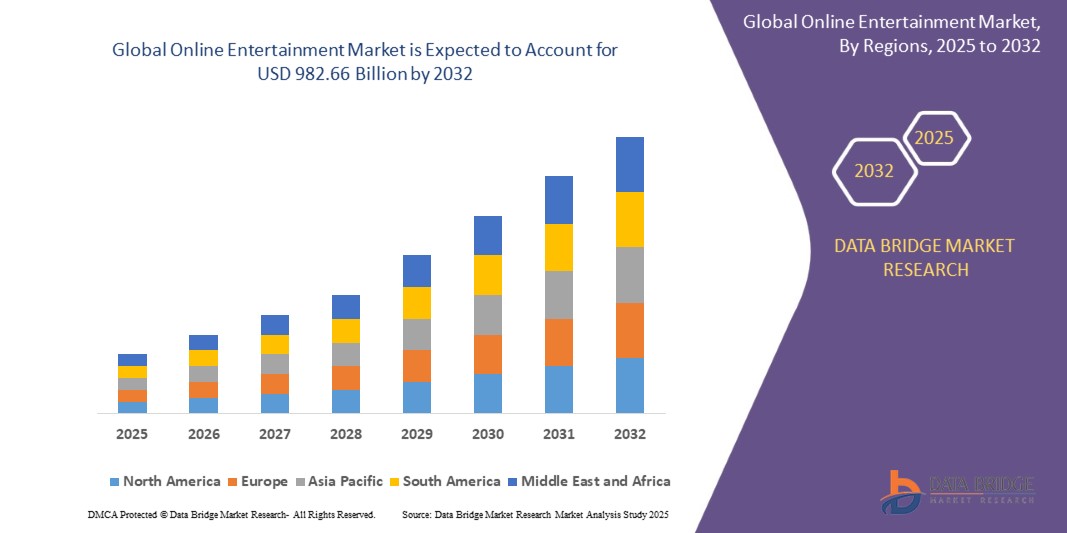
- Como por Data Bridge Market Research Analysis o mercado global de entretenimento online foi valorizado emUSD 316,80 mil milhões em 2024e espera-se alcançar982,66 mil milhões de USD até 2032
- Durante o período de previsão de 2025 a 2032, o mercado irá provavelmente crescer emCAGR de 15,20%,impulsionado principalmente por fatores como o aumento da penetração na internet, aumento do uso de smartphones e expansão das plataformas OTT
- O mercado também está se beneficiando de avanços tecnológicos, como realidade virtual (VR), realidade aumentada (AR) e recursos de streaming interativos que aumentam o engajamento do usuário
Tamanho e previsão do mercado
- Valor de mercado global (2024):USD 316,80 Bilhões
- Valor de mercado previsto (2032):982,66 milhões de USD
- Previsões CAGR (2025-2032): 15.20%
Quais são os principais Takeaways do mercado de entretenimento online
- Plataformas de entretenimento online são vitais para fornecer conteúdo digital em vários formatos, incluindo streaming de vídeo, streaming de música, jogos online e eventos ao vivo. Essas plataformas permitem aos usuários acessar conteúdo de entretenimento sob demanda, a qualquer hora, em qualquer lugar
- A demanda por entretenimento online é significativamente impulsionada pelo aumento da penetração na internet, aumento do uso de smartphones e pela crescente popularidade das plataformas OTT. Mais da metade da demanda global é impulsionada pela necessidade de serviços de streaming de vídeo, com regiões como América do Norte e Ásia-Pacífico experimentando o maior crescimento devido ao aumento do consumo de conteúdo
- A América do Norte domina o mercado global de entretenimento online, impulsionado por sua grande população digital, o aumento de plataformas locais OTT, e aumento de renda disponível, particularmente em países como EUA e Canadá
- Por exemplo, o número de assinantes pagos para serviços de streaming em países como EUA e Canadá tem aumentado, refletindo uma mudança para hábitos de consumo digital-primeiro, com uma preferência crescente por conteúdo localizado e entretenimento
- Globalmente, as plataformas de entretenimento on-line classificam-se como a fonte mais proeminente de consumo de conteúdo, ultrapassando os formatos de mídia tradicionais, como televisão e rádio, e continuam a desempenhar um papel crucial na formação do futuro da entrega de entretenimento através de vários dados demográficos
Relatar Escopo e Segmentação de Mercado de Entretenimento Online
|
Atributos |
Entretenimento Online Principais Insights Mercado |
|
Segmentos Cobertos |
|
|
Países abrangidos |
América do Norte
Europa
Ásia- Pacífico
Médio Oriente e África
América do Sul
|
|
Jogadores do mercado chave |
|
|
Oportunidades de Mercado |
|
|
Informações sobre o Valor Adicionado |
Além dos insights sobre cenários de mercado, como valor de mercado, taxa de crescimento, segmentação, cobertura geográfica e principais atores, os relatórios de mercado curados pela Data Bridge Market Research também incluem análise de especialistas em profundidade, análise de preços, análise de compartilhamento de marca, inquérito ao consumidor, análise demografia, análise da cadeia de suprimentos, análise da cadeia de valor, visão geral da matéria-prima/consumíveis, critérios de seleção de fornecedores, Análise de PESTLE, Análise de Porter e marco regulatório. |
Qual é a tendência chave no mercado de entretenimento online
“A integração crescente de tecnologias interativas e imersivas”
- Uma tendência proeminente no mercado global de entretenimento online é a crescente integração de tecnologias interativas e imersivas, como a Realidade Virtual (VR),Realidade Aumentada (AR)Conteúdo de vídeo de 360 graus
- Essas tecnologias estão melhorando o engajamento do usuário, proporcionando experiências mais imersivas e interativas em plataformas de entretenimento, como jogos, streaming ao vivo e shows virtuais
- Por exemplo, jogos de RV revolucionou como os usuários experimentam entretenimento oferecendo imersão completa, enquanto o AR está transformando aplicativos móveis, permitindo que os usuários interajam com objetos virtuais dentro de seu ambiente real, criando novas formas de contar histórias e consumo de conteúdo
- Os eventos de streaming ao vivo também estão incorporando essas tecnologias imersivas para oferecer aos fãs uma experiência única e participativa, como concertos com AR ou eventos esportivos interativos
- Essa tendência está moldando o futuro do entretenimento on-line, impulsionando o engajamento do usuário e atraindo públicos mais jovens e experientes que exigem conteúdo mais dinâmico e baseado em experiência
Dinâmica de Mercado de Entretenimento Online
Controlador
“Aumentar a demanda por serviços de conteúdo e streaming na demanda”
- A crescente demanda por conteúdo sob demanda e serviços de streaming está impulsionando significativamente o crescimento do mercado global de entretenimento online
- À medida que os consumidores se afastam cada vez mais da televisão tradicional, a procura de conteúdos digitais que possam ser acessados a qualquer momento, em qualquer lugar continua a aumentar, especialmente entre os mais jovens que preferem flexibilidade e conveniência
- Plataformas OTT (Over-the-Top) como Netflix, Disney+ e Amazon Prime Video ganharam grande popularidade oferecendo uma grande variedade de filmes, programas de TV e programação original para o público global
- A adoção crescente de televisões inteligentes, dispositivos de streaming e conexões de internet de alta velocidade permitiu que mais famílias acessassem serviços de streaming, impulsionando o crescimento do mercado
- Com o consumo de conteúdo se tornando mais personalizado, as plataformas estão expandindo suas ofertas para atender a públicos diversos, fornecendo recomendações personalizadas e conteúdo localizado para atrair uma base de espectadores mais ampla
- Esta mudança para serviços de streaming e conteúdo sob demanda está reformulando o cenário de entretenimento, proporcionando novas oportunidades de crescimento para provedores de entretenimento online e criadores de conteúdo
Por exemplo,
- Em 2023, foi relatado que as assinaturas globais para serviços de streaming tinham ultrapassado 1,1 bilhão. Este aumento contínuo do número de assinantes realça a crescente procura do mercado de conteúdos de entretenimento a pedido
- Em 2022, um relatório da PwC destacou que o mercado global OTT foi projetado para crescer em um CAGR de 17,5% a 2026, alimentado por preferências de consumo aumentadas para o consumo de conteúdo digital sobre mídia tradicional
- Como resultado, a crescente demanda por conteúdo sob demanda e serviços de streaming está impulsionando significativamente o mercado global de entretenimento online. Os consumidores estão cada vez mais se afastando da televisão tradicional em favor do acesso flexível, a qualquer momento, ao conteúdo digital, particularmente entre os mais jovens demográficos que valorizam a conveniência
Oportunidade
“Personalização conduzida pelo IA e criação de conteúdo”
- A integração deinteligência artificial (IA)em plataformas de entretenimento está revolucionando a descoberta, curadoria e criação de conteúdo, fornecendo experiências de usuário hiperpersonalizado baseadas em hábitos de visualização, preferências e padrões de engajamento
- A IA está permitindo a personalização de conteúdo em tempo real – desde enredos adaptativos em serviços de streaming até playlists de música inteligentes – melhorando a satisfação e retenção do usuário em plataformas de entretenimento
Além disso, o conteúdo gerado por IA (AIGC), incluindo música, arte e até roteiro, está abrindo novas avenidas criativas e reduzindo os custos de produção, capacitando criadores e estúdios menores para competir em escala global
- Por exemplo, em 2023, o Spotify aprimorou seu recurso de DJ de IA, permitindo que os usuários experimentassem comentários personalizados e curadoria musical, resultando em um aumento de 20% no tempo de sessão entre usuários da Gen Z
- Em 2024, a Netflix introduziu trailers dinâmicos movidos por IA que se adaptam em tempo real com base no comportamento do usuário, melhorando significativamente as taxas de engajamento e clicando no conteúdo promovido
À medida que as tecnologias de IA continuam evoluindo, as plataformas de entretenimento online têm o potencial de oferecer conteúdo mais dinâmico, adaptado e econômico, impulsionando o engajamento mais profundo do usuário e ampliando estratégias de monetização no ecossistema de entretenimento digital
Restrição/Desafio
“Custos de licenciamento de conteúdo crescente e questões de direitos autorais”
- Os custos crescentes de licenciamento de conteúdo e questões de direitos autorais representam um desafio significativo para o mercado global de entretenimento online, afetando particularmente plataformas de streaming e produtores de conteúdo
- Garantir os direitos de conteúdo de alta qualidade, como filmes, programas de TV e eventos ao vivo, pode muitas vezes envolver negócios multimilionários, aumentando os custos operacionais para plataformas OTT e afetando a rentabilidade
- Além disso, a violação de direitos de autor e a pirataria continuam a ser questões persistentes, com a distribuição ilegal de conteúdo impactando negativamente a geração de receitas e dificultando os esforços de proteção de conteúdo
Por exemplo,
- Em 2023, de acordo com um relatório da PwC, a pirataria global custou à indústria de entretenimento mais de US$ 50 bilhões anualmente, afetando tanto os criadores de conteúdo quanto os distribuidores e complicando o cenário para a distribuição legítima de conteúdo
- À medida que os custos de licenciamento aumentam e as questões de propriedade intelectual se tornam mais prevalentes, plataformas de entretenimento online enfrentam pressão financeira aumentada, o que pode dificultar sua capacidade de expandir ou sustentar suas bibliotecas de conteúdo, limitando o crescimento do mercado
Alcance de mercado de entretenimento online
O mercado é segmentado com base em forma, modelo de receita, dispositivos, usuário final e aplicação
|
Segmentação |
Subsegmentação |
|
Pelo Formulário |
|
|
Por modelo de receita |
|
|
Por Dispositivos |
|
|
Por Usuário Final |
|
|
Por Aplicação |
|
Qual é a região que detém a maior parte do mercado de entretenimento online
“A América do Norte é a Região Dominante no Mercado de Entretenimento Online”
- A América do Norte domina o mercado global de entretenimento online, impulsionado pela alta penetração na internet, infraestrutura digital avançada, e pela forte presença de jogadores de mercado como Netflix, Amazon e Disney+.
- Os EUA detém uma parte significativa devido à adoção generalizada de serviços de streaming, renda disponível elevada, e uma forte cultura de consumo de conteúdo digital em vários grupos demográficos
- A disponibilidade de sistemas de pagamento bem estabelecidos, plataformas OTT fortes e a expansão de dispositivos inteligentes reforçam ainda mais o mercado na região
- Além disso, a crescente demanda por conteúdo original e programação localizada, juntamente com o rápido crescimento da transmissão móvel, está alimentando a expansão do mercado na América do Norte
“A Ásia-Pacífico está projetada para registrar a taxa de crescimento mais alta”
- Espera-se que a região Ásia-Pacífico testemunhe a maior taxa de crescimento no mercado global de entretenimento online, impulsionada pela rápida expansão no acesso à internet, adoção de smartphones e aumento do consumo de dados móveis
- Países como China, Índia e Japão estão emergindo como mercados-chave devido às suas grandes populações jovens e à crescente mudança para o consumo de conteúdo digital-primeiro
- A China, com seu mercado OTT em expansão e plataformas de streaming locais, como iQIYI e Tencent Video, continua a ser um grande jogador. O crescente interesse do país em entretenimento interativo e conteúdo localizado também está impulsionando o crescimento
- A Índia, com sua expansão da classe média, crescente penetração de smartphones e aumento da demanda por modelos de assinatura de baixo custo, é um dos mercados de maior crescimento para serviços de streaming na região
- Japão, conhecido por sua indústria de alta tecnologia e forte cultura de consumo em torno do entretenimento, continua a liderar na adoção de anime e conteúdo de nicho em plataformas digitais, contribuindo para sua posição como um mercado chave para o entretenimento online
Online Entertainment Market Share
O cenário competitivo do mercado fornece detalhes por concorrente. Detalhes incluídos são visão geral da empresa, finanças da empresa, receita gerada, potencial de mercado, investimento em pesquisa e desenvolvimento, novas iniciativas de mercado, presença global, locais de produção e instalações, capacidades de produção, pontos fortes e fracos da empresa, lançamento do produto, largura e amplitude do produto, dominância da aplicação. Os pontos de dados acima fornecidos estão relacionados apenas com o foco das empresas relacionados com o mercado.
Os principais líderes de mercado que operam no mercado são:
- Netflix (EUA)
- Amazon Prime Video (EUA)
- Disney+ (EUA)
- Hulu (EUA)
- YouTube (EUA)
- Vídeo Tencent (China)
- Grupo Alibaba (China)
- Spotify (Suécia)
- Apple TV+ (EUA)
- WarnerMedia (EUA)
- ViacomCBS (EUA)
- Bilibili (China)
- iQIYI (China)
- Youku (China)
- Pandora (EUA)
- SoundCloud (Alemanha)
- TikTok (China)
- Roku (EUA)
- Sling TV (EUA)
- Starz (EUA)
Quais são as últimas evoluções no mercado de entretenimento online
- Em agosto de 2023,MIXI, aEmpresa de entretenimento móvel baseada no Japão, estabelecido aFundo de capital de risco empresarial (CVC)valorizado em50 milhões de USDemÍndiaO fundo visa alocar entre Yen 30-50 bilhões (USD 200-350 milhões) para aquisições, fusões e parcerias estratégicas de FY23 para FY25. Este movimento sublinha o compromisso da MIXI em expandir sua pegada no mercado indiano em rápido crescimento, que é uma região chave para o setor global de entretenimento online
- Em agosto de 2023,Penn Entertainment, aEmpresa de jogos de azar baseada nos EUA,Parceria estratégicacomESPN da Disneyremarcar e relançar o seusportsbooksob o nomeESPN BetEsta colaboração significa um passo significativo na evolução da paisagem de apostas e entretenimento desportivos online. Ao alavancar a marca e o público estabelecidos pela ESPN, o movimento visa melhorar a presença do mercado da Penn Entertainment e ampliar seu alcance no crescente setor de apostas esportivas
- Em janeiro de 2022,Microsoftrevelou a sua intenção deadquirir Activision Blizzard, aEmpresa de jogos de vídeo baseada nos EUA, com o objetivo de expandir suas ofertas de jogos e aumentar a acessibilidade das experiências de jogo em todos os dispositivos. Esta aquisição reflete os esforços estratégicos da Microsoft para fortalecer sua posição nos crescentes setores de entretenimento digital e jogos. Ao incorporar o extenso portfólio de franquias de jogos icônicas da Activision Blizzard, a Microsoft visa diversificar e enriquecer seus serviços de entretenimento online
- Em fevereiro de 2022,Sony Music EntretenimentoeSony Pictures EntretenimentolançadoSony Entertainment Talent Ventures India (SETVI), aempresa comumprojetado para acessar a indústria de entretenimento da Índia em rápida expansão. O empreendimento abrange vários setores, incluindo filme, música, TV, mídia digital e jogos, com foco em alavancar o vasto conjunto de talentos da Índia para promover investimentos estratégicos e parcerias. Esta iniciativa se alinha com a crescente demanda por conteúdos diversos e produzidos localmente no mercado global de entretenimento online
- Em fevereiro de 2021,Disney.expandiu sua presença global porintroduçãoaMarca de estrelasemAustrália, Nova Zelândia, Europa Ocidental e CanadáEste movimento estratégico aumenta a pegada da Disney no competitivo mercado de entretenimento online, oferecendo uma ampla gama de conteúdo de entretenimento geral, incluindo filmes, séries de televisão e documentários. Através da marca Star, a Disney visa fortalecer seu alcance geográfico e melhor servir as preferências de conteúdo em evolução dos consumidores nestas regiões-chave
SKU-
Obtenha acesso online ao relatório sobre a primeira nuvem de inteligência de mercado do mundo

- Painel interativo de análise de dados
- Painel de análise da empresa para oportunidades de elevado potencial de crescimento
- Acesso de analista de pesquisa para personalização e customização. consultas
- Análise da concorrência com painel interativo
- Últimas notícias, atualizações e atualizações Análise de tendências
- Aproveite o poder da análise de benchmark para um rastreio abrangente da concorrência
Metodologia de Investigação
A recolha de dados e a análise do ano base são feitas através de módulos de recolha de dados com amostras grandes. A etapa inclui a obtenção de informações de mercado ou dados relacionados através de diversas fontes e estratégias. Inclui examinar e planear antecipadamente todos os dados adquiridos no passado. Da mesma forma, envolve o exame de inconsistências de informação observadas em diferentes fontes de informação. Os dados de mercado são analisados e estimados utilizando modelos estatísticos e coerentes de mercado. Além disso, a análise da quota de mercado e a análise das principais tendências são os principais fatores de sucesso no relatório de mercado. Para saber mais, solicite uma chamada de analista ou abra a sua consulta.
A principal metodologia de investigação utilizada pela equipa de investigação do DBMR é a triangulação de dados que envolve a mineração de dados, a análise do impacto das variáveis de dados no mercado e a validação primária (especialista do setor). Os modelos de dados incluem grelha de posicionamento de fornecedores, análise da linha de tempo do mercado, visão geral e guia de mercado, grelha de posicionamento da empresa, análise de patentes, análise de preços, análise da quota de mercado da empresa, normas de medição, análise global versus regional e de participação dos fornecedores. Para saber mais sobre a metodologia de investigação, faça uma consulta para falar com os nossos especialistas do setor.
Personalização disponível
A Data Bridge Market Research é líder em investigação formativa avançada. Orgulhamo-nos de servir os nossos clientes novos e existentes com dados e análises que correspondem e atendem aos seus objetivos. O relatório pode ser personalizado para incluir análise de tendências de preços de marcas-alvo, compreensão do mercado para países adicionais (solicite a lista de países), dados de resultados de ensaios clínicos, revisão de literatura, mercado remodelado e análise de base de produtos . A análise de mercado dos concorrentes-alvo pode ser analisada desde análises baseadas em tecnologia até estratégias de carteira de mercado. Podemos adicionar quantos concorrentes necessitar de dados no formato e estilo de dados que procura. A nossa equipa de analistas também pode fornecer dados em tabelas dinâmicas de ficheiros Excel em bruto (livro de factos) ou pode ajudá-lo a criar apresentações a partir dos conjuntos de dados disponíveis no relatório.











