



Segmentação do mercado de plataforma vertical global, por tipo de software (software bancário, software de educação, software legal, software de agricultura, software de gerenciamento de ex-alunos, software de parque de diversões, software de apparel, software de arquitetura e outros), tamanho da organização (pequena e média empresa e grande empresa), implantação (baseado em nuvem e on-premise) – tendências da indústria e previsão para 2032
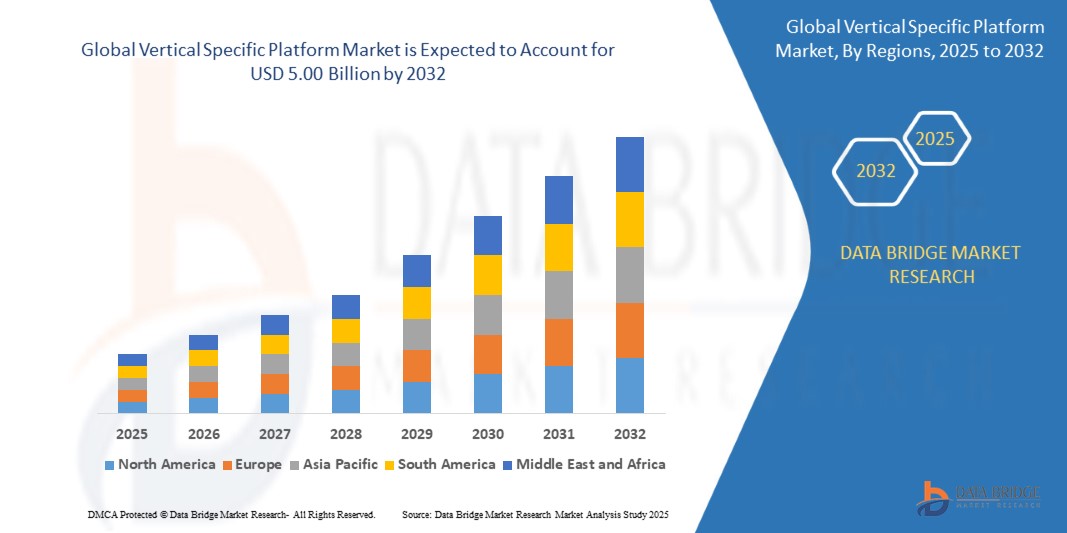
Análise Vertical Específica da Plataforma de Mercado
O mercado de plataforma vertical-específica está experimentando um crescimento significativo à medida que as indústrias adotam cada vez mais soluções de software sob medida para aumentar a eficiência e a competitividade. Estas plataformas são concebidas para responder às necessidades únicas de sectores como a banca, a educação, os cuidados de saúde, a agricultura e os serviços jurídicos através da integração de tecnologias avançadas, tais comointeligência artificial(AI),computação em nuvem, e automação. A mudança para a implantação baseada na nuvem é um fator chave, permitindo que as empresas escalem as operações, reduzindo os custos de infraestrutura. Além disso, avanços em IA e aprendizado de máquina (ML) estão transformando plataformas específicas do setor, possibilitando análises preditivas, automação de processos e recursos de tomada de decisão aprimorados. A crescente procura de transformação digital, especialmente nos mercados emergentes, está a acelerar ainda mais a adopção, com as pequenas e médias empresas (PME) a alavancar soluções baseadas na nuvem para flexibilidade e eficiência de custos. Os governos em todo o mundo também estão promovendo infraestrutura digital e adoção de software específico para o setor através de regulamentos e investimentos de apoio. Por exemplo, na agricultura, as plataformas alimentadas por IA ajudam a otimizar os rendimentos das culturas, enquanto nas soluções bancárias, a fintech melhora as transações digitais e a prevenção de fraudes. À medida que as indústrias continuam a adotar a digitalização, o mercado de plataforma vertical-específica está pronto para expansão sustentada, com inovação impulsionando novas oportunidades em diversos setores.
Tamanho do mercado da plataforma específica vertical
O tamanho do mercado vertical global específico da plataforma foi avaliado em US$ 3,80 bilhões em 2024 e prevê-se atingir US$ 5,00 bilhões em 2032, com um CAGR de 3,50% durante o período de previsão de 2025 a 2032. Além dos insights de mercado, como valor de mercado, taxa de crescimento, segmentos de mercado, cobertura geográfica, atores de mercado e cenário de mercado, o relatório de mercado curado pela equipe de Pesquisa do Mercado da Ponte de Dados inclui análise de especialistas em profundidade, análise de importação/exportação, análise de preços, análise de consumo de produção e análise de pilão.
Plataforma específica verticalTendências do mercado
“Adoção rápida de automação com energia artificial”
Uma das principais tendências que moldam o mercado de plataforma vertical-específica é a rápida adoção de automação alimentada por IA em soluções de software específicas do setor. As empresas estão a integrar cada vez mais a inteligência artificial (IA), a aprendizagem de máquina (ML), eautomação de processo robótico(RPA) em suas plataformas para melhorar a eficiência operacional, agilizar fluxos de trabalho e melhorar a tomada de decisão. Por exemplo, no setor bancário, plataformas orientadas por IA estão revolucionando a detecção de fraudes analisando padrões de transação em tempo real, minimizando riscos para instituições financeiras. Da mesma forma, em saúde, as plataformas de IA auxiliam em diagnósticos preditivos, possibilitando a detecção precoce de doenças e planos de tratamento personalizados. O aumento das plataformas verticais baseadas em nuvem acelerou ainda mais a adoção de IA, permitindo que pequenas e médias empresas (PME) aproveitassem análises avançadas sem exigir investimentos pesados em infraestrutura. Como as empresas de vários setores buscam automação inteligente para aumentar a produtividade e reduzir os custos, espera-se que as plataformas verticais específicas orientadas por IA testemunhem um crescimento sustentado, transformando fluxos de trabalho tradicionais e impulsionando a transformação digital em grande escala.
Âmbito do relatório eSegmentação Vertical Específica da Plataforma Mercado
| Atributos | Chave de plataforma específica verticalPerspectivas de mercado |
| Segmentos Cobertos |
|
| Países abrangidos | EUA, Canadá e México na América do Norte, Alemanha, França, Reino Unido, Holanda, Suíça, Bélgica, Rússia, Itália, Espanha, Turquia, Resto da Europa na Europa, China, Japão, Índia, Coreia do Sul, Singapura, Malásia, Austrália, Tailândia, Indonésia, Filipinas, Resto da Ásia-Pacífico (APAC) na Ásia-Pacífico (APAC), Arábia Saudita, EUA, África do Sul, Egito, Israel, Resto do Oriente Médio e África (MEA) como parte do Oriente Médio e África (MEA), Brasil, Argentina e Resto da América do Sul como parte da América do Sul |
| Jogadores do mercado chave | Amazon Web Services, Inc. (EUA), Microsoft (EUA), Alibaba Cloud (China), IBM (EUA), Salesforce, Inc. (EUA), Google (EUA), Oracle (EUA), SAP (Alemanha), Mendix Technology BV (Países Baixos), Zoho Corporation Pvt. Ltd. (Índia), DevGraph (EUA), Top-Best (EUA), Broadcom (EUA), ServiceNow (EUA), WebPros International GmbH (Suíça), Render (EUA), Circle Internet Services, Inc. (EUA), Tray.ai, Inc. (EUA), Cloud66, Inc. (EUA), AppHarPros Inc. (EUA), Apptuozzo Inc. (EUA), Virtuozzo (Suíça), Platform.sh (França), Scalingo (França), PythonAnywhever LLB (EUA), e Lowbor Inc. (U. |
| Oportunidades de Mercado |
|
| Informações sobre o Valor Adicionado | Além dos insights de mercado, como valor de mercado, taxa de crescimento, segmentos de mercado, cobertura geográfica, atores de mercado e cenário de mercado, o relatório de mercado curado pela equipe de Pesquisa do Mercado da Ponte de Dados inclui análise de especialistas em profundidade, análise de importação/exportação, análise de preços, análise de consumo de produção e análise de pilão. |
Mercado vertical específico da plataformaDefinição
Uma plataforma vertical específica refere-se a uma solução de software personalizada projetada para atender às necessidades únicas de uma determinada indústria ou setor empresarial. Ao contrário das plataformas de uso geral, essas soluções são adaptadas para enfrentar desafios, fluxos de trabalho e requisitos de conformidade específicos do setor. Plataformas verticais específicas integram recursos especializados, ferramentas e recursos de automação para otimizar operações em áreas como banca, saúde, educação, varejo, agricultura e serviços jurídicos.
Dinâmica Vertical Específica do Mercado da Plataforma
Controladores
- Aumento da demanda por soluções específicas da indústria
A crescente complexidade das operações do setor levou as empresas à transição de software genérico para plataformas verticais específicas que atendem às necessidades do setor único. Ao contrário do software tradicional, essas plataformas fornecem recursos personalizados, conformidade regulatória e automação de processos personalizados para indústrias específicas. Por exemplo, o software bancário integra a detecção de fraudes, gestão de riscos e módulos de conformidade regulatória para ajudar as instituições financeiras a cumprir quadros legais rigorosos. Da mesma forma, o software agrícola aproveita a agricultura de precisão, monitoramento climático e sistemas de irrigação automatizados para aumentar a produtividade. A crescente preferência por soluções personalizadas e focadas no setor está acelerando o crescimento do mercado à medida que as empresas buscam ferramentas digitais mais eficientes e compatíveis.
- Transformação Digital Rápida nas Indústrias
À medida que as indústrias passam por transformações digitais, a demanda por soluções de software especializadas está aumentando em setores como saúde, finanças e educação. As empresas estão adotando automação baseada em IA, plataformas baseadas em nuvem e análise de dados para simplificar as operações e melhorar a tomada de decisão. Por exemplo, as empresas legais estão adotando software legal que oferece gerenciamento de casos com tecnologia IA, análise de contratos e monitoramento de conformidade para reduzir o trabalho manual e melhorar a eficiência. Da mesma forma, as instituições de ensino estão a integrarsistemas de gestão da aprendizagem(LMS) para fornecer salas de aula digitais e classificação automatizada. A adoção crescente de soluções digitais específicas para o setor é um motor fundamental da expansão do mercado, garantindo operações sem descontinuidades e enfrentando desafios específicos para o setor.
Oportunidades
- Aumento da adoção de modelos de implantação baseados em nuvem
A adoção crescente de computação em nuvem transformou o mercado de plataforma vertical específica, permitindo às empresas implantar soluções escaláveis, econômicas e remotamente acessíveis. Ao contrário dos sistemas on-premise, as plataformas baseadas na nuvem permitem que as organizações reduzam os custos de infraestrutura, melhorem a flexibilidade operacional e melhorem a segurança de dados. Empresas como a Salesforce e a SAP oferecem soluções de nuvem específicas do setor que atendem às necessidades únicas de empresas em vários setores. Por exemplo, a Salesforce’s Financial Services Cloud oferece serviços personalizadosCRMsoluções para instituições bancárias, enquanto o software ERP baseado em nuvem da SAP ajuda os fabricantes a otimizar o gerenciamento da cadeia de suprimentos. À medida que as empresas continuam a mudar para estratégias de nuvem inicial, a demanda por plataformas de nuvem vertical-específicas apresenta uma oportunidade de mercado significativa, especialmente para pequenas e médias empresas (PME) procurando soluções digitais acessíveis e eficientes.
- Aumentar os regulamentos governamentais e as necessidades de conformidade
Regulações da indústria rígidas em setores como bancário, saúde e educação estão forçando as empresas a investir em software vertical-específico que garante o cumprimento de normas de segurança de dados, privacidade e relatórios. Quadros regulamentares como o GDPR (General Data Protection Regulation) na Europa, o HIPAA (Health Insurance Portability and Responsable Act) nos EUA e o PCI DSS (Payment Card Industry Data Security Standard) nas finanças exigem que as empresas adotem soluções de software que protejam dados sensíveis e aumentem a transparência. Por exemplo, o software bancário integra as soluções Know Your Customer (KYC) e Anti-Money Laundering (AML) para evitar fraudes e atender aos requisitos de conformidade. Da mesma forma, as plataformas de saúde incorporam sistemas eletrônicos de registro de saúde (EHR) para garantir o gerenciamento seguro dos dados dos pacientes. A pressão regulatória crescente oferece uma oportunidade para os provedores de software desenvolverem soluções orientadas para a conformidade, ajudando as empresas a navegarem por paisagens jurídicas complexas, garantindo simultaneamente operações perfeitas e seguras.
Restrições/Desafios
- Altos Custos de Implementação e Manutenção
Um dos principais desafios no mercado vertical específico da plataforma é o alto custo de implementação e manutenção, que pode dissuadir a adoção de pequenas e médias empresas (PME). Ao contrário das soluções genéricas de software, plataformas verticais específicas exigem personalização, integrações específicas do setor e adesão à conformidade, levando a maiores investimentos iniciais. Além disso, as atualizações em curso, as medidas de segurança cibernética e o apoio técnico contribuem para a despesa global. Por exemplo, no setor da saúde, plataformas como Epic e Cerner exigem compromissos financeiros substanciais para implantação, tornando o custo uma barreira fundamental para a entrada.
- Escalabilidade limitada entre as indústrias
Embora plataformas verticais específicas sejam altamente otimizadas para uma determinada indústria, sua escalabilidade fora de seu nicho é limitada, restringindo oportunidades de expansão. Ao contrário das plataformas horizontais que atendem a múltiplas indústrias com amplas funcionalidades, as soluções verticais devem sofrer extensas modificações para serem aplicáveis em diferentes setores. Por exemplo, uma plataforma de gestão imobiliária não pode facilmente passar para a hospitalidade ou para o comércio retalhista, exigindo um significativo redesenvolvimento e investimento. Esta falta de adaptabilidade entre empresas pode abrandar o crescimento do mercado e limitar a escalabilidade a longo prazo.
Este relatório de mercado fornece detalhes de novos desenvolvimentos recentes, regulamentação comercial, análise importação-exportação, análise de produção, otimização da cadeia de valor, market share, impacto de atores de mercado nacionais e localizados, análises de oportunidades em termos de emergentes bolsas de receita, mudanças na regulamentação de mercado, análise estratégica do crescimento do mercado, tamanho do mercado, crescimentos de mercado categoria, nichos de aplicação e dominância, aprovação de produtos, lançamentos de produtos, expansões geográficas, inovações tecnológicas no mercado. Para obter mais informações sobre o contato de mercado Data Bridge Market Research for an Analyst Brief, nossa equipe irá ajudá-lo a tomar uma decisão de mercado informada para alcançar o crescimento do mercado.
Âmbito de mercado da plataforma específica vertical
O mercado é segmentado com base no tipo de software, tamanho da organização e implantação. O crescimento entre esses segmentos ajudará você a analisar segmentos de crescimento escassos nas indústrias, e fornecer os usuários. O crescimento entre esses segmentos irá ajudá-lo a analisar segmentos de crescimento escassos nas indústrias e fornecer aos usuários uma visão geral de mercado valiosa e insights de mercado para ajudá-los a tomar decisões estratégicas para identificar aplicações de mercado principais.
Tipo de Software
- Software bancário
- Software de Educação
- Software legal
- Software de Agricultura
- Software de gerenciamento de alunos
- Software de parque de diversões
- Software de apparel
- Software de Arquitetura
- Outros
Tamanho da organização
- Pequenas e médias empresas
- Grande Empresa
Implantação
- Baseado em nuvem
- Em Premise
Análise regional do mercado da plataforma específica vertical
O mercado é analisado e insights e tendências de tamanho de mercado são fornecidos por país, tipo de software, tamanho da organização e implantação. O crescimento entre estes segmentos ajudará você a analisar segmentos de crescimento escassos nas indústrias, e fornecer os usuários como referido acima.
Os países abrangidos pelo relatório de mercado são EUA, Canadá, México na América do Norte, Alemanha, Suécia, Polônia, Dinamarca, Itália, Reino Unido, França, Espanha, Holanda, Bélgica, Suíça, Turquia, Rússia, Resto da Europa na Europa, Japão, China, Índia, Coreia do Sul, Nova Zelândia, Vietnã, Austrália, Cingapura, Malásia, Tailândia, Indonésia, Filipinas, Resto da Ásia-Pacífico (APAC) na Ásia-Pacífico (APAC), Brasil, Argentina, Resto da América do Sul como parte da América do Sul, EUA, Arábia Saudita, Omã, Catar, Kuwait, África do Sul, Resto do Oriente Médio e África (MEA) como parte do Oriente Médio e África (MEA).
A América do Norte domina o mercado vertical de plataformas específicas, impulsionado pela forte presença de empresas líderes em tecnologia e uma alta taxa de adoção de soluções digitais específicas da indústria. A região beneficia de investimentos robustos em IA, computação em nuvem e automação, melhorando as capacidades das plataformas verticais em setores como saúde, finanças e varejo. Além disso, quadros regulatórios favoráveis e crescente demanda por soluções empresariais adaptadas contribuem para o crescimento do mercado. A expansão da infraestrutura inteligente e o aumento das iniciativas de transformação digital solidificam ainda mais a liderança da América do Norte neste espaço.
A Ásia-Pacífico está experimentando o crescimento mais rápido no mercado global vertical específico de plataforma devido à rápida transformação digital em várias indústrias. A crescente adoção de soluções baseadas em nuvem pela região, juntamente com a crescente penetração na internet, está impulsionando a demanda por software específico do setor. Além disso, as iniciativas governamentais que promovem a infra-estrutura digital e o número crescente de pequenas e médias empresas (PME) que abrangem soluções tecnológicas adaptadas estão a acelerar ainda mais a expansão do mercado. Com países como China, Índia e Japão liderando a adoção de plataformas inovadoras, a Ásia-Pacífico vai testemunhar um crescimento substancial nos próximos anos.
A secção «país» do relatório também fornece factores de impacto individuais no mercado e alterações na regulamentação do mercado que afectam as tendências actuais e futuras do mercado. Pontos de dados como análise de corrente descendente e corrente ascendente da cadeia de valor, tendências técnicas e análise de cinco forças de porter, estudos de caso são alguns dos indicadores usados para prever o cenário de mercado para cada país. Além disso, a presença e disponibilidade de marcas globais e seus desafios enfrentados devido à grande ou escassa concorrência de marcas locais e nacionais, o impacto das tarifas nacionais e rotas comerciais são considerados ao fornecer análise de previsão dos dados do país.
Parte de mercado da plataforma específica vertical
O cenário competitivo do mercado fornece detalhes por concorrente. Detalhes incluídos são visão geral da empresa, finanças da empresa, receita gerada, potencial de mercado, investimento em pesquisa e desenvolvimento, novas iniciativas de mercado, presença global, locais de produção e instalações, capacidades de produção, pontos fortes e fracos da empresa, lançamento do produto, largura e amplitude do produto, dominância da aplicação. Os pontos de dados acima fornecidos estão relacionados apenas com o foco das empresas relacionados com o mercado.
Líderes Verticais Específicos do Mercado de Plataformas Operando no Mercado São:
- Serviços Web da Amazon, Inc. (EUA)
- Microsoft (EUA)
- Nuvem Alibaba (China)
- IBM (EUA)
- Salesforce, Inc. (EUA)
- Google (EUA)
- Oráculo (EUA)
- SAP (Alemanha)
- Mendix Technology BV (Países Baixos)
- Zoho Corporation Pvt. Ltd (Índia)
- DevGraph (EUA)
- Topo Melhor (EUA)
- Broadcom (EUA)
- ServiceNow (EUA)
- WebPros International GmbH (Suíça)
- Render (EUA)
- Circle Internet Services, Inc. (EUA)
- Tray.ai, Inc. (EUA)
- Cloud66, Inc. (U.K.)
- AppHarbor Inc. (EUA)
- Virtuozzo (Suíça)
- Plataforma.sh (França)
- Scalingo (França)
- PythonAnywhere LLB (EUA)
- LLC (U.S.)
Mais recentes desenvolvimentos no mercado de plataformas específicas verticais
- Em setembro de 2023, a Kingsway Financial Services Inc. estabeleceu a Vertical Market Solutions, LLC e a Systems Products International, Inc., marcando sua quarta aquisição no âmbito do Programa Kingsway Search Xcelerator. Este movimento teve como objetivo criar uma plataforma para futuras aquisições de software de mercado vertical
- Em março de 2023, a Siemens lançou uma nova Intralogistics vertical nos EUA, fornecendo soluções de manuseio de materiais. Liderada por Joel Thomas, a iniciativa focou-se em abordar a transformação digital, segurança cibernética, segurança e sustentabilidade, além de apoiar programas de educação da indústria para a futura gestão de armazéns
- Em março de 2023, a Constellation Software Inc. anunciou que seu grupo operacional Perseus tinha concluído com sucesso a aquisição de um fornecedor de software de mercado vertical baseado nos EUA, reforçando seu compromisso de fornecer soluções de longo prazo para os clientes
- Em fevereiro de 2023, a Vertical Insure, uma plataforma de seguros incorporada, garantiu um financiamento adicional de 2 milhões de dólares, aumentando seu investimento inicial total para 6 milhões de dólares. A rodada de financiamento foi liderada pela Greenlight Re Innovations, juntamente com a participação da Groove Capital, Daren Cotter e outros investidores angélicos táticos. Vertical Segurar oferece produtos de seguros de marca branca embutidos em plataformas verticais SaaS para clientes existentes
- Em novembro de 2022, a Prismforce, uma empresa vertical da SaaS focada em permitir que as organizações de TI construíssem uma cadeia digital de fornecimento de talentos, arrecadou US$ 13,6 milhões em fundos da Sequoia Capital India. A empresa planejava utilizar os fundos para expandir seu pool de talentos, aumentar o alcance do mercado e fortalecer seu portfólio de produtos. Prismforce tem instalações ao vivo com fornecedores de TI líderes e empresas digitais em rápido crescimento nos EUA e Índia
SKU-
Obtenha acesso online ao relatório sobre a primeira nuvem de inteligência de mercado do mundo

- Painel interativo de análise de dados
- Painel de análise da empresa para oportunidades de elevado potencial de crescimento
- Acesso de analista de pesquisa para personalização e customização. consultas
- Análise da concorrência com painel interativo
- Últimas notícias, atualizações e atualizações Análise de tendências
- Aproveite o poder da análise de benchmark para um rastreio abrangente da concorrência
Metodologia de Investigação
A recolha de dados e a análise do ano base são feitas através de módulos de recolha de dados com amostras grandes. A etapa inclui a obtenção de informações de mercado ou dados relacionados através de diversas fontes e estratégias. Inclui examinar e planear antecipadamente todos os dados adquiridos no passado. Da mesma forma, envolve o exame de inconsistências de informação observadas em diferentes fontes de informação. Os dados de mercado são analisados e estimados utilizando modelos estatísticos e coerentes de mercado. Além disso, a análise da quota de mercado e a análise das principais tendências são os principais fatores de sucesso no relatório de mercado. Para saber mais, solicite uma chamada de analista ou abra a sua consulta.
A principal metodologia de investigação utilizada pela equipa de investigação do DBMR é a triangulação de dados que envolve a mineração de dados, a análise do impacto das variáveis de dados no mercado e a validação primária (especialista do setor). Os modelos de dados incluem grelha de posicionamento de fornecedores, análise da linha de tempo do mercado, visão geral e guia de mercado, grelha de posicionamento da empresa, análise de patentes, análise de preços, análise da quota de mercado da empresa, normas de medição, análise global versus regional e de participação dos fornecedores. Para saber mais sobre a metodologia de investigação, faça uma consulta para falar com os nossos especialistas do setor.
Personalização disponível
A Data Bridge Market Research é líder em investigação formativa avançada. Orgulhamo-nos de servir os nossos clientes novos e existentes com dados e análises que correspondem e atendem aos seus objetivos. O relatório pode ser personalizado para incluir análise de tendências de preços de marcas-alvo, compreensão do mercado para países adicionais (solicite a lista de países), dados de resultados de ensaios clínicos, revisão de literatura, mercado remodelado e análise de base de produtos . A análise de mercado dos concorrentes-alvo pode ser analisada desde análises baseadas em tecnologia até estratégias de carteira de mercado. Podemos adicionar quantos concorrentes necessitar de dados no formato e estilo de dados que procura. A nossa equipa de analistas também pode fornecer dados em tabelas dinâmicas de ficheiros Excel em bruto (livro de factos) ou pode ajudá-lo a criar apresentações a partir dos conjuntos de dados disponíveis no relatório.











