


Asia-Pacific Adenomyosis Drugs Market Size
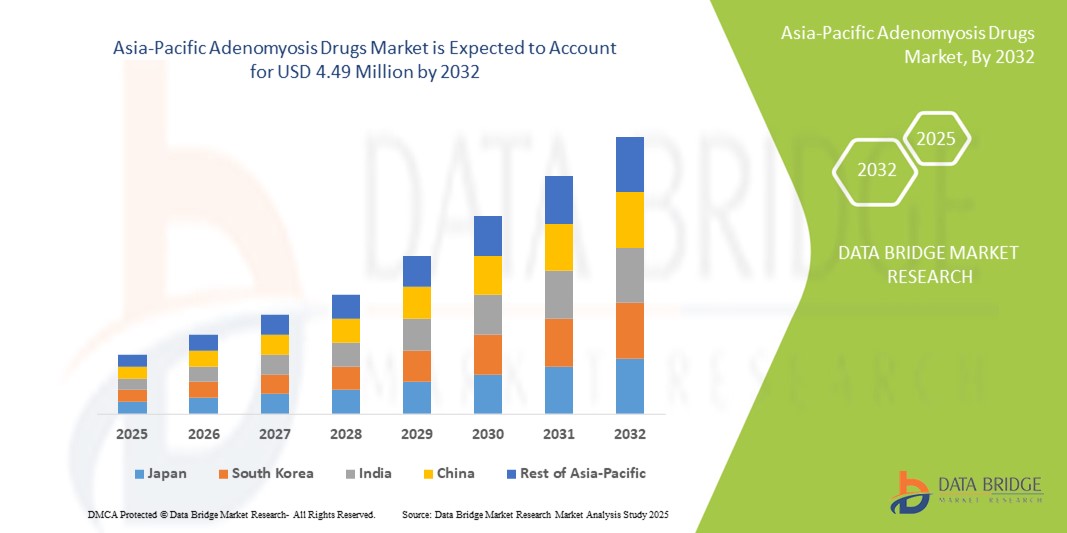
- The Asia-Pacific adenomyosis drugs market size was valued at USD 2.69 million in 2024 and is expected to reach USD 4.49 million by 2032, at a CAGR of 6.60% during the forecast period
- The market growth is largely fueled by the increasing prevalence of adenomyosis, advancements in diagnostic technologies, and rising demand for effective treatment options across the region
- Furthermore, the availability of diverse drug types, including anti-inflammatory medications, hormone therapies, and other pharmacological treatments, along with expanding healthcare infrastructure and improved access to medical services, is establishing adenomyosis drugs as the preferred treatment choice. These converging factors are accelerating the adoption of adenomyosis therapies, thereby significantly boosting the industry's growth
Asia-Pacific Adenomyosis Drugs Market Analysis
- Adenomyosis drugs, including anti-inflammatory medications, hormone therapies, and other pharmacological treatments, are increasingly vital in managing the chronic gynecological condition, improving patients’ quality of life, and reducing complications associated with delayed or inadequate treatment across both residential and clinical settings
- The escalating demand for adenomyosis drugs is primarily fueled by the rising prevalence of adenomyosis in women of reproductive age, growing awareness about the condition, and an increasing preference for effective, non-invasive treatment options
- Japan dominated the Asia-Pacific adenomyosis drugs market in 2024, accounting for the largest revenue share of 38.7%, owing to advanced healthcare infrastructure, high patient awareness, and strong presence of key pharmaceutical players
- India is expected to be the fastest-growing country in the Asia-Pacific adenomyosis drugs market during the forecast period, due to improving healthcare access, increasing diagnosis rates, rising disposable incomes, and growing awareness of women’s reproductive health
- Hormone medication dominated the Asia-Pacific adenomyosis drugs market with a market share of 50.5% in 2024, driven by its proven efficacy in symptom management and increasing acceptance as a first-line treatment option
Report Scope and Asia-Pacific Adenomyosis Drugs Market Segmentation
|
Attributes |
Asia-Pacific Adenomyosis Drugs Key Market Insights |
|
Segments Covered |
|
|
Countries Covered |
Asia-Pacific
|
|
Key Market Players |
|
|
Market Opportunities |
|
|
Value Added Data Infosets |
In addition to the insights on market scenarios such as market value, growth rate, segmentation, geographical coverage, and major players, the market reports curated by the Data Bridge Market Research also include in-depth expert analysis, pricing analysis, brand share analysis, consumer survey, demography analysis, supply chain analysis, value chain analysis, raw material/consumables overview, vendor selection criteria, PESTLE Analysis, Porter Analysis, and regulatory framework. |
Asia-Pacific Adenomyosis Drugs Market Trends
Advancements in Targeted and Hormonal Therapies
- A significant and accelerating trend in the Asia-Pacific adenomyosis drugs market is the development of targeted hormone therapies and minimally invasive pharmacological treatments that improve symptom management and patient quality of life
- For instance, GnRH agonists and selective progesterone receptor modulators are increasingly being prescribed to manage heavy bleeding and pain, reducing the need for invasive surgical interventions
- Innovations in drug formulations, including sustained-release and combination therapies, are enhancing treatment adherence and efficacy, allowing patients to manage symptoms with fewer side effects and greater convenience
- The integration of hormone therapies with patient monitoring programs and digital health platforms facilitates better disease management, personalized dosing, and improved patient compliance
- This trend towards more effective, patient-centric, and technologically supported therapies is reshaping treatment protocols and driving demand for advanced adenomyosis drugs across hospitals and clinics
- The adoption of novel therapies is growing rapidly in both urban and semi-urban healthcare centers, as patients increasingly prioritize minimally invasive, symptom-targeted treatment options
Asia-Pacific Adenomyosis Drugs Market Dynamics
Driver
Rising Prevalence and Awareness of Adenomyosis
- The increasing prevalence of adenomyosis among women of reproductive age, coupled with growing awareness of available treatment options, is a significant driver for the heightened demand for adenomyosis drugs
- For instance, in 2024, hospitals in Japan and China reported a rise in diagnosed adenomyosis cases due to improved screening and diagnostic facilities, boosting drug prescriptions
- As more women seek effective symptom management and fertility-preserving treatments, hormone medications and anti-inflammatory drugs are becoming the preferred choice in clinical practice
- Furthermore, the expansion of healthcare infrastructure and rising disposable incomes in countries such as India and Southeast Asia are enabling wider access to adenomyosis therapies
- The convenience of oral and injectable therapies, along with improved patient education programs, is propelling the adoption of adenomyosis drugs in hospitals, clinics, and specialized women’s health centers
- The growing trend of personalized treatment plans and minimally invasive management approaches further contributes to the increasing uptake of advanced adenomyosis therapies
Restraint/Challenge
Side Effects, High Cost, and Regulatory Barriers
- Concerns surrounding side effects of hormone medications, coupled with the relatively high cost of advanced adenomyosis therapies, pose significant challenges to broader market penetration
- For instance, some patients experience menopausal-such as symptoms or gastrointestinal issues during hormone therapy, leading to therapy discontinuation or switching to alternative treatments
- Regulatory approval processes for new drugs in countries such as Japan, India, and China can be lengthy, delaying market entry and limiting accessibility of innovative therapies
- Addressing these challenges through patient monitoring, education on managing side effects, and development of cost-effective treatment options is crucial for increasing adoption
- While generic and more affordable drugs are becoming available, the perceived high price of novel therapies may still hinder widespread uptake, particularly in emerging Asia-Pacific markets
- Overcoming these barriers through improved safety profiles, patient awareness programs, and streamlined regulatory pathways will be vital for sustained growth in the adenomyosis drugs market
Asia-Pacific Adenomyosis Drugs Market Scope
The market is segmented on the basis of type, treatment, patient type, dosage form, end-user, and distribution channel.
- By Type
On the basis of type, the Asia-Pacific adenomyosis drugs market is segmented into diffuse, nodular, sclerotic, adult cystic, and others. Diffuse adenomyosis dominated the market with the largest revenue share in 2024 due to its higher prevalence and the severity of associated symptoms, including heavy menstrual bleeding and chronic pelvic pain. Hospitals and clinics primarily manage diffuse cases, driving consistent demand for hormone medications and anti-inflammatory drugs. Advanced diagnostics, such as MRI and transvaginal ultrasound, have increased detection rates, further supporting market dominance. Pharmaceutical companies are focusing on tailored hormone therapies for diffuse cases, enhancing treatment efficacy and patient adherence. Awareness campaigns and physician recommendations reinforce diffuse adenomyosis as the leading type.
Nodular adenomyosis is expected to witness the fastest growth from 2025 to 2032, driven by rising diagnosis in urban populations with greater access to imaging technologies. Patients often prefer minimally invasive or targeted drug therapies for nodular forms, supporting rapid adoption. Fertility-preserving treatment demand and increasing awareness of alternative therapies further propel growth. Pharmaceutical innovation is focusing on localized drug delivery systems for nodular adenomyosis. Expanding healthcare infrastructure across India, China, and Southeast Asia provides new opportunities. Personalized treatment plans and improved side-effect profiles also contribute to the growth trajectory.
- By Treatment
On the basis of treatment, the Asia-Pacific adenomyosis drugs market is segmented into hormone medication, anti-inflammatory drugs, and others. Hormone medication dominated the market in 2024 with a market share of 50.5%, accounting for the largest share due to its proven efficacy in controlling bleeding, reducing pain, and managing disease progression. Hormone therapies such as GnRH agonists and oral contraceptives are widely prescribed in hospitals and specialty centers. Growing patient awareness, preference for non-invasive treatment options, and strong clinical outcomes reinforce market dominance. Pharmaceutical R&D is continuously optimizing formulations for better adherence. High patient compliance and physician confidence contribute to sustained revenue growth.
Anti-inflammatory drugs are expected to witness the fastest growth from 2025 to 2032, due to rising demand for short-term symptom management with fewer hormonal side effects. OTC availability and online pharmacy distribution are expanding access. Increasing adoption as adjunct therapy alongside hormones supports rapid uptake. Clinical evidence demonstrating effective pain and inflammation management encourages physician recommendations. Urbanization and improved healthcare access accelerate growth in emerging markets. Patient preference for convenient, non-hormonal options strengthens market potential.
- By Patient Type
On the basis of patient type, the Asia-Pacific adenomyosis drugs market is segmented into adult, geriatric, and adolescence. Adult women dominated the market in 2024 due to higher prevalence of adenomyosis in reproductive age, requiring ongoing pharmacological management. Hospitals and specialty centers treat most adult cases, driving high therapy adoption. Hormone medication and anti-inflammatory drugs form the backbone of treatment. Awareness campaigns and education initiatives targeting adult women enhance early diagnosis and treatment uptake. Long-term management and strong physician guidance reinforce market dominance. Clinical research targeting adult women further supports segment growth.
Adolescents are expected to witness the fastest growth from 2025 to 2032, driven by increased awareness and early diagnosis initiatives. Schools, clinics, and digital health platforms improve access to therapies. Minimally invasive and hormone-based therapies are preferred for fertility preservation. Pharmaceutical companies are developing age-appropriate formulations. Rising education on reproductive health encourages timely intervention. Government and NGO programs further accelerate adolescent patient uptake.
- By Dosage Form
On the basis of dosage form, the Asia-Pacific adenomyosis drugs market is segmented into parenteral, oral, and others. Oral dosage forms dominated the market in 2024, due to convenience, ease of administration, and high patient adherence. Hormone therapies and anti-inflammatory drugs are widely available in oral form. Long-term treatment needs favor oral administration, especially in outpatient settings. Flexible dosing and combination therapy options improve compliance. Hospitals, clinics, and pharmacies focus on oral formulations for effective disease management. Pharmaceutical optimization enhances bioavailability and reduces side effects.
Parenteral dosage forms are expected to witness the fastest growth from 2025 to 2032, driven by rapid symptom relief and targeted therapy delivery. Injectable hormone therapies such as GnRH agonists are preferred for severe cases. Hospitals and specialty centers provide controlled administration, improving treatment outcomes. Long-acting depot formulations increase patient convenience and adherence. Physician preference for injectable forms in acute cases supports adoption. Growth is bolstered by awareness of advanced therapies and clinical recommendations.
- By End-User
On the basis of end-user, the Asia-Pacific adenomyosis drugs market is segmented into hospitals, clinics, specialty centers, home healthcare, ambulatory centers, and others. Hospitals dominated the market in 2024 due to capacity to handle severe cases, advanced diagnostics, and administration of specialized therapies. Hormone medications and parenteral drugs are primarily dispensed in hospitals. Hospital-based follow-up care ensures compliance and treatment efficacy. Experienced gynecologists drive therapy adoption and physician trust. Expansion of private and government hospitals in Asia-Pacific supports sustained growth. Integration with patient management systems enhances operational efficiency.
Specialty centers are expected to witness the fastest growth from 2025 to 2032, driven by focus on women’s health and reproductive care. Outpatient, patient-centric care models increase adoption of minimally invasive drug therapies. Accessibility in urban and semi-urban regions supports higher patient volumes. Collaboration with pharmaceutical companies improves awareness of advanced therapies. Patient preference for specialized care over general hospitals drives growth. Personalized treatment programs and enhanced monitoring further accelerate uptake.
- By Distribution Channel
On the basis of distribution channel, the Asia-Pacific adenomyosis drugs market is segmented into hospital pharmacy, retail pharmacy, online pharmacy, and others. Hospital pharmacies dominated the market in 2024, as most advanced therapies are administered or prescribed through hospitals. Onsite drug dispensing ensures professional supervision for parenteral and hormone therapies. Integration with hospital systems ensures efficient inventory and patient management. Strong pharmaceutical partnerships maintain high supply and adoption. Newly launched drugs are first made available through hospital pharmacies. Hospitals remain the primary access point for advanced treatment protocols.
Online pharmacies are expected to witness the fastest growth from 2025 to 2032, due to convenience, accessibility, and digital adoption. Patients can order oral medications directly from home. E-pharmacies improve access in semi-urban and remote areas. Digital payment systems and smartphone penetration enhance reach. Subscription and home delivery models increase patient convenience. Telemedicine platforms and awareness campaigns further accelerate online pharmacy adoption across Asia-Pacific.
Asia-Pacific Adenomyosis Drugs Market Regional Analysis
- Japan dominated the Asia-Pacific adenomyosis drugs market in 2024, accounting for the largest revenue share of 38.7%, owing to advanced healthcare infrastructure, high patient awareness, and strong presence of key pharmaceutical players
- Patients and healthcare providers in the region prioritize effective symptom management, fertility-preserving treatments, and access to advanced hormone therapies and anti-inflammatory drugs, contributing to high adoption rates
- The widespread adoption is further supported by early diagnosis through improved imaging and screening technologies, increasing government initiatives for women’s health, and growing healthcare spending, establishing adenomyosis drugs as the preferred treatment option in both hospitals and specialty centers across the region
The Japan Adenomyosis Drugs Market Insight
The Japan adenomyosis drugs market dominated the Asia- market in 2024, accounting for the largest revenue share of 38.7%, due to advanced healthcare facilities, high patient awareness, and strong adoption of hormone therapies. The country emphasizes fertility-preserving treatments and minimally invasive management, which supports high uptake of adenomyosis drugs. Integration of advanced diagnostic imaging and personalized treatment plans further fuels market growth. Japan’s aging female population also increases demand for effective symptom management and chronic care solutions in both hospitals and specialty centers.
India Adenomyosis Drugs Market Insight
The India adenomyosis drugs market is expected to be the fastest-growing country in the Asia-Pacific market during the forecast period, driven by rapid urbanization, growing healthcare access, and increasing awareness of reproductive health among women. Expanding middle-class population, higher disposable incomes, and the rising prevalence of adenomyosis are boosting demand for hormone medications and anti-inflammatory drugs. The government’s initiatives in women’s health, coupled with growing availability of affordable treatment options, are key factors propelling the market in India. Residential clinics, hospitals, and specialty centers are witnessing strong adoption, particularly in urban and semi-urban regions.
China Adenomyosis Drugs Market Insight
The China adenomyosis drugs market is expected to witness substantial growth during the forecast period due to increasing diagnosis rates, urbanization, and a growing preference for minimally invasive and effective drug therapies. Hospitals and specialty centers are leading the administration of hormone therapies and anti-inflammatory medications. Rising awareness campaigns and digital health platforms contribute to early diagnosis and treatment. The expansion of healthcare infrastructure, coupled with government policies supporting women’s health, strengthens market penetration. In addition, increasing patient preference for personalized treatment regimens is driving adoption.
South Korea Adenomyosis Drugs Market Insight
The South Korea adenomyosis drugs market is witnessing steady growth due to advanced healthcare infrastructure, rising awareness of women’s reproductive health, and strong adoption of hormone therapies. Hospitals and specialty centers are key providers of adenomyosis treatments, particularly for minimally invasive and fertility-preserving options. Government health programs and increasing patient education on early diagnosis are driving adoption. The market benefits from high patient compliance and strong physician recommendations. Integration of advanced diagnostics and personalized therapy approaches supports continued expansion. Urbanization and rising disposable incomes further enhance market growth.
Asia-Pacific Adenomyosis Drugs Market Share
The Asia-Pacific Adenomyosis Drugs industry is primarily led by well-established companies, including:
- Accord Healthcare (U.K.)
- Tolmar Inc. (U.S.)
- Boehringer Ingelheim International GmbH (U.S.)
- TerSera Therapeutics LLC (U.S.)
- Ferring Pharmaceuticals Inc. (U.S.)
- Lannett (U.S.)
- Endo, Inc. (U.S.)
- Hikma Pharmaceuticals PLC (U.K.)
- Context Therapeutics Inc. (U.S.)
- Viatris Inc. (U.S.)
- Bayer AG (Germany)
- Teva Pharmaceutical Industries Ltd. (Israel)
- AstraZeneca (U.K.)
- Pfizer Inc. (U.S.)
- Zydus Pharmaceuticals Inc. (U.S.)
- Sun Pharmaceutical Industries Limited (India)
- AbbVie Inc. (U.S.)
- ReproNovo Pty Ltd (Australia)
- Johnson & Johnson Services, Inc. (U.S.)
What are the Recent Developments in Asia-Pacific Adenomyosis Drugs Market?
- In August 2025, Chinese scientists have identified the prolactin receptor as a critical target driving adenomyosis. Their research demonstrated that abnormal activation of prolactin signaling is directly related to the development of adenomyosis. This discovery opens avenues for developing monoclonal antibody drugs targeting the prolactin receptor, potentially offering a new therapeutic approach for managing adenomyosis
- In May 2025, Australian biopharmaceutical company ReproNovo secured USD 65 million in Series A funding to advance RPN-002, a novel drug candidate targeting adenomyosis. RPN-002 aims to reduce abnormal uterine contractility, minimize local inflammation, and alleviate menstrual pain associated with adenomyosis. This financial boost supports the progression of RPN-002 through clinical trials, marking a significant step in developing targeted therapies for adenomyosis
- In March 2025, ASKA Pharmaceutical announced the initiation of a Phase III clinical trial in Japan for its relugolix combination tablet, targeting the treatment of adenomyosis. This trial aims to evaluate the efficacy and safety of the combination therapy, potentially offering a new treatment option for patients with adenomyosis
- In December 2024, Varanasi, India, hosted the inaugural Endometricon conference, dedicated to advancing knowledge on endometriosis and adenomyosis. The event brought together healthcare professionals and researchers to discuss the latest developments in the diagnosis and treatment of these conditions, emphasizing the need for improved patient care and awareness
- In September 2023, the Asian Society of Endometriosis and Adenomyosis released its first guidelines for the treatment of adenomyosis. These guidelines provide evidence-based recommendations for clinicians in Asia, aiming to standardize care and improve treatment outcomes for patients with adenomyosis across the region

- Interactive Data Analysis Dashboard
- Company Analysis Dashboard for high growth potential opportunities
- Research Analyst Access for customization & queries
- Competitor Analysis with Interactive dashboard
- Latest News, Updates & Trend analysis
- Harness the Power of Benchmark Analysis for Comprehensive Competitor Tracking
Data collection and base year analysis are done using data collection modules with large sample sizes. The stage includes obtaining market information or related data through various sources and strategies. It includes examining and planning all the data acquired from the past in advance. It likewise envelops the examination of information inconsistencies seen across different information sources. The market data is analysed and estimated using market statistical and coherent models. Also, market share analysis and key trend analysis are the major success factors in the market report. To know more, please request an analyst call or drop down your inquiry.
The key research methodology used by DBMR research team is data triangulation which involves data mining, analysis of the impact of data variables on the market and primary (industry expert) validation. Data models include Vendor Positioning Grid, Market Time Line Analysis, Market Overview and Guide, Company Positioning Grid, Patent Analysis, Pricing Analysis, Company Market Share Analysis, Standards of Measurement, Global versus Regional and Vendor Share Analysis. To know more about the research methodology, drop in an inquiry to speak to our industry experts.
Data Bridge Market Research is a leader in advanced formative research. We take pride in servicing our existing and new customers with data and analysis that match and suits their goal. The report can be customized to include price trend analysis of target brands understanding the market for additional countries (ask for the list of countries), clinical trial results data, literature review, refurbished market and product base analysis. Market analysis of target competitors can be analyzed from technology-based analysis to market portfolio strategies. We can add as many competitors that you require data about in the format and data style you are looking for. Our team of analysts can also provide you data in crude raw excel files pivot tables (Fact book) or can assist you in creating presentations from the data sets available in the report.












