


Asia-pacific Contrast Injector Market Size
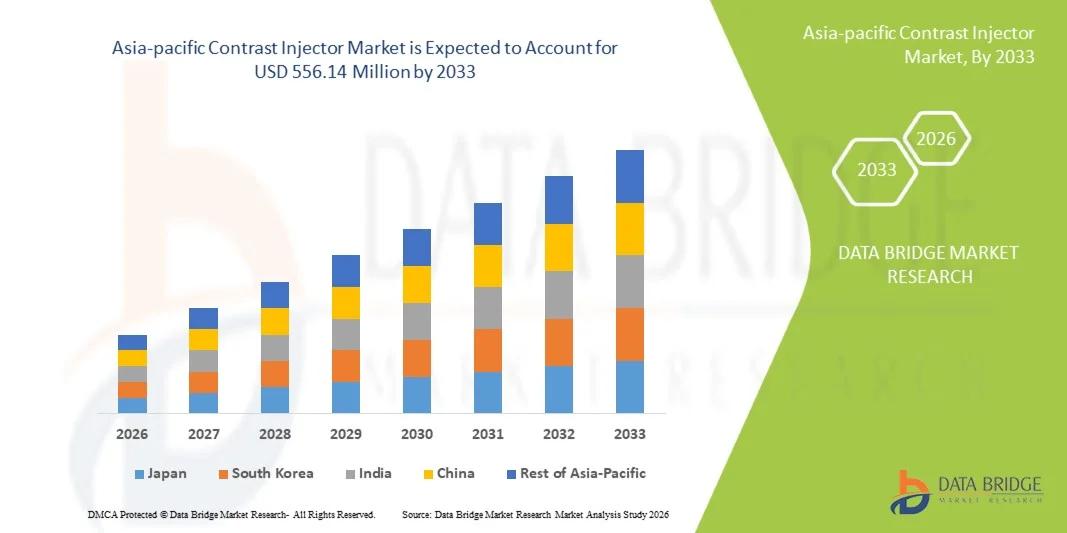
- The Asia-pacific contrast injector market size was valued at USD 336.04 million in 2025 and is expected to reach USD 556.14 million by 2033, at a CAGR of 6.50% during the forecast period
- The market growth is largely fueled by the rapid expansion of healthcare infrastructure, rising prevalence of chronic diseases, and advancements in diagnostic imaging technologies in key Asia‑Pacific countries such as China, Japan, and India, leading to greater adoption of contrast injector systems across hospitals and diagnostic centers
- Furthermore, rising demand for precise, efficient, and safe contrast delivery solutions to support imaging procedures such as CT and MRI, combined with increasing healthcare investments and government initiatives for advanced diagnostic services, is establishing contrast injectors as essential components in modern radiology workflows. These converging factors are accelerating the uptake of contrast injector solutions, thereby significantly boosting the industry’s growth
Asia-pacific Contrast Injector Market Analysis
- Contrast injectors, providing automated and precise delivery of contrast media for imaging procedures such as CT and MRI, are increasingly vital components of modern diagnostic workflows in hospitals and diagnostic centers due to their enhanced accuracy, safety, and seamless integration with advanced imaging systems
- The escalating demand for contrast injectors is primarily fueled by the rapid expansion of healthcare infrastructure, rising prevalence of chronic and cardiovascular diseases, and a growing preference for efficient, safe, and automated contrast delivery in diagnostic imaging procedures
- China dominated the Asia-Pacific contrast injector market in 2025, with a market share of 35.2% characterized by high healthcare spending, large patient populations, and significant investments in advanced imaging facilities, with hospitals in these countries experiencing substantial adoption of contrast injector systems
- India is expected to be the fastest-growing country in the Asia-Pacific contrast injector market during the forecast period due to increasing healthcare investments, expanding hospital networks, growing demand for diagnostic imaging, and rising awareness of advanced imaging technologies
- Dual-Head segment dominated the Asia-Pacific contrast injector market with a market share of 45.9% in 2025, driven by its ability to simultaneously deliver multiple contrast media types, improve procedural efficiency, and its wide adoption in advanced imaging facilities
Report Scope and Asia-pacific Contrast Injector Market Segmentation
|
Attributes |
Asia-pacific Contrast Injector Key Market Insights |
|
Segments Covered |
|
|
Countries Covered |
Asia-Pacific
|
|
Key Market Players |
|
|
Market Opportunities |
|
|
Value Added Data Infosets |
In addition to the insights on market scenarios such as market value, growth rate, segmentation, geographical coverage, and major players, the market reports curated by the Data Bridge Market Research also include in-depth expert analysis, patient epidemiology, pipeline analysis, pricing analysis, and regulatory framework |
Asia-pacific Contrast Injector Market Trends
“Automation and AI-Enhanced Imaging Workflow”
- A significant and accelerating trend in the Asia-Pacific contrast injector market is the growing integration of automation and AI technologies in injector systems, improving precision, workflow efficiency, and safety during CT and MRI procedures
- For instance, the MEDRAD Stellant system incorporates automated injection protocols with AI-assisted bolus tracking to optimize contrast delivery for individual patients, reducing manual intervention
- AI integration in contrast injectors enables features such as predicting patient-specific injection parameters, minimizing contrast wastage, and sending intelligent alerts if injection anomalies are detected. For instance, some Bayer injector systems adjust flow rates dynamically based on patient physiology
- The seamless integration of contrast injectors with hospital imaging networks and PACS (Picture Archiving and Communication Systems) facilitates centralized control, enabling operators to manage multiple imaging devices and procedures from a single interface
- This trend towards more intelligent, automated, and connected imaging workflows is fundamentally reshaping user expectations in diagnostic radiology. Consequently, companies such as Bracco and Guerbet are developing AI-enabled injectors with automated contrast delivery and integration with imaging software
- The demand for contrast injectors that offer automation and AI-assisted functionality is growing rapidly across hospitals and diagnostic centers, as healthcare providers increasingly prioritize workflow efficiency, patient safety, and precise imaging results
- Integration with cloud-based data management is another emerging trend, allowing hospitals to analyze injection patterns and optimize contrast usage across multiple imaging departments for better cost management
Asia-pacific Contrast Injector Market Dynamics
Driver
“Rising Demand Due to Expanding Healthcare Infrastructure and Imaging Procedures”
- The rapid growth of healthcare infrastructure, increasing patient volumes, and rising prevalence of chronic and cardiovascular diseases are significant drivers for the heightened demand for contrast injectors
- For instance, in March 2025, Guerbet launched a new dual-head injector system in India to support the growing demand for high-throughput CT imaging procedures in private and public hospitals
- As hospitals expand diagnostic imaging capabilities, contrast injectors offer precise, automated, and safe delivery of contrast media, enhancing imaging quality and patient throughput
- Furthermore, the increasing adoption of advanced imaging modalities such as CT and MRI and the desire for efficient, automated workflows are making contrast injectors an integral component of modern diagnostic facilities
- The capability to deliver dual contrast media types, program injection protocols, and remotely monitor procedures are key factors propelling adoption in hospitals and diagnostic centers. The trend toward fully automated imaging suites and AI-assisted injectors further contributes to market growth
- For instance, hospitals in China are upgrading older single-head injectors to dual-head AI-enabled systems to increase imaging throughput and minimize patient wait times
- Government initiatives and funding in countries such as India to expand hospital and diagnostic networks are further driving adoption of contrast injectors in emerging cities and semi-urban regions
- Increasing awareness among radiologists about workflow optimization and patient safety benefits of automated injectors is promoting the replacement of manual injection systems with modern AI-assisted injectors
Restraint/Challenge
“High Costs and Regulatory Compliance Hurdles”
- Concerns surrounding the high initial cost of advanced contrast injector systems pose a significant challenge to widespread adoption, particularly in budget-constrained hospitals and clinics in developing countries
- For instance, premium dual-head injector systems from companies such as MEDRAD and Bayer can cost significantly more than single-head systems, limiting uptake in smaller healthcare facilities
- Regulatory compliance and approval processes in countries such as India and China can delay market entry, as contrast injectors must meet strict safety, performance, and quality standards before clinical deployment
- While costs are gradually decreasing for entry-level injector systems, premium models with advanced features such as AI-assisted injection and integrated monitoring remain expensive, which may hinder adoption
- Overcoming these challenges through affordable system variants, streamlined regulatory approvals, and education on operational efficiency and patient safety benefits will be vital for sustained market growth
- For instance, delays in obtaining local medical device approvals in India or Japan can slow hospital procurement cycles and impact sales for global injector manufacturers
- Limited awareness or training among hospital staff on the proper use of advanced injectors may lead to underutilization of features, reducing the perceived value and return on investment for these systems
- Variability in contrast media quality and compatibility issues with some injector systems in certain countries may also pose operational challenges, limiting seamless adoption in emerging markets
Asia-pacific Contrast Injector Market Scope
The market is segmented on the basis of product, application, modality, design, end-user, and distribution channel.
- By Product
On the basis of product, the Asia-Pacific contrast injector market is segmented into injector systems, consumables, and accessories. The injector systems segment dominated the market with the largest revenue share in 2025, driven by its essential role in precise and automated delivery of contrast media during imaging procedures such as CT and MRI. Hospitals and diagnostic centers prefer injector systems due to their reliability, automation capabilities, and ability to handle high patient volumes efficiently. The segment benefits from technological advancements, including dual-head injectors and AI-assisted flow control, which enhance safety and imaging accuracy. Injector systems also reduce manual errors and workflow bottlenecks, making them indispensable in modern diagnostic facilities. The demand is particularly strong in countries such as China, Japan, and India, where healthcare infrastructure is rapidly expanding. Moreover, established medical device companies continue to innovate in this segment, further consolidating its dominant position.
The consumables segment is expected to witness the fastest growth during the forecast period, fueled by increasing use of contrast media, syringes, tubing sets, and other disposable components. Consumables are essential for every injection procedure, creating a recurring revenue stream for manufacturers. Rising imaging procedures across radiology, interventional radiology, and cardiology drive continuous demand for consumables. Hospitals and diagnostic centers prioritize high-quality consumables to ensure patient safety and minimize contamination risks. In addition, growing awareness about infection control and regulatory compliance encourages adoption of certified consumables. Emerging markets in India and Southeast Asia are particularly contributing to the rapid growth of this segment.
- By Application
On the basis of application, the market is segmented into radiology, interventional radiology, and interventional cardiology. The radiology segment dominated the Asia-Pacific market in 2025, due to the high volume of CT and MRI scans performed in hospitals and diagnostic centers. Radiology departments rely heavily on contrast injectors to deliver precise doses of contrast media for enhanced imaging quality. Automated injector systems ensure consistency across repeated procedures and improve patient throughput. The growing prevalence of chronic diseases requiring routine imaging further strengthens the dominance of this segment. Radiology departments also benefit from dual-head injector systems that allow simultaneous delivery of multiple contrast agents. Major hospitals in China, Japan, and India are increasingly replacing manual injection methods with automated systems, reinforcing this segment’s market share.
The interventional radiology segment is expected to witness the fastest growth during the forecast period, driven by the rising number of minimally invasive procedures and image-guided interventions. Automated injectors improve precision during angiography, biopsies, and therapeutic procedures, reducing complications. Increasing awareness among clinicians about procedural efficiency and patient safety fuels adoption. Emerging hospitals and diagnostic centers in India and Southeast Asia are expanding interventional radiology services, boosting market growth. Technological innovations, including AI-assisted injectors for interventional procedures, further enhance operational efficiency. The growing trend of outpatient interventions also contributes to faster adoption in this application segment.
- By Modality
On the basis of modality, the market is segmented into dual-head, single-head, and syringeless injectors. The dual-head segment dominated the Asia-Pacific market in 2025 with a share of 45.9%, driven by its ability to deliver multiple contrast media types simultaneously. Dual-head injectors enhance procedural efficiency and reduce downtime between sequential scans. Hospitals and diagnostic centers prefer this modality for high-throughput imaging workflows and complex interventional procedures. The system’s automation reduces the risk of human error and improves patient safety. Strong adoption in India, China, and Japan is supported by technological innovations from leading injector manufacturers. The dual-head configuration also supports integration with AI-assisted imaging protocols, further increasing its utility and market dominance.
The syringeless injector segment is expected to witness the fastest growth during the forecast period, fueled by its compact design, ease of use, and reduced operational complexity. Syringeless systems minimize manual preparation steps and allow faster workflow, making them ideal for small diagnostic centers and outpatient facilities. Growing awareness about minimizing contrast wastage and improving infection control supports adoption. Hospitals in India and Southeast Asia are increasingly deploying syringeless injectors to optimize resources. Manufacturers are investing in compact and automated syringeless designs to cater to emerging markets. The segment benefits from favorable regulatory approvals for safety and reduced maintenance requirements.
- By Design
On the basis of design, the market is segmented into pedestal mounted, ceiling mounted, and standalone. The pedestal-mounted segment dominated the Asia-Pacific market in 2025 due to its stability, flexibility, and compatibility with most imaging suites. Pedestal-mounted systems allow easy positioning next to CT and MRI machines and are ideal for hospitals performing high-volume imaging procedures. Their robust design supports dual-head injectors and automated protocols, ensuring reliability. Hospitals and diagnostic centers in China, Japan, and India prefer pedestal-mounted systems for their durability and ease of maintenance. The segment also benefits from widespread installation in newly built facilities and replacements of older injector setups. Manufacturers continue to innovate pedestal designs to improve ergonomics and workflow efficiency.
The ceiling-mounted segment is expected to witness the fastest growth during the forecast period, driven by increasing adoption in space-constrained hospitals and modern imaging suites. Ceiling-mounted injectors free up floor space and enhance mobility during procedures. Hospitals performing complex interventional procedures benefit from the flexibility of ceiling-mounted systems. Emerging hospitals in India and Southeast Asia are adopting ceiling-mounted designs to optimize space utilization. Technological upgrades, including dual-head and AI-assisted ceiling-mounted injectors, are fueling adoption. The segment is gaining traction in high-end diagnostic centers focused on workflow efficiency and patient safety.
- By End-User
On the basis of end-user, the market is segmented into hospitals, diagnostic imaging centers, ambulatory surgical centers, and others. The hospital segment dominated the Asia-Pacific contrast injector market in 2025 due to the high volume of imaging procedures performed and the increasing adoption of advanced imaging systems. Hospitals require reliable, automated injector systems to support CT, MRI, and interventional procedures. Dual-head and AI-enabled injectors are particularly preferred for high-throughput operations. Hospitals in China, Japan, and India account for the largest share due to large patient populations and expanding healthcare infrastructure. The segment also benefits from ongoing investments in hospital upgrades and imaging network integration. Hospitals continue to prioritize patient safety, workflow efficiency, and regulatory compliance, reinforcing this segment’s dominance.
The diagnostic imaging centers segment is expected to witness the fastest growth during the forecast period, driven by the rising number of standalone imaging centers in urban and semi-urban areas. Automated and compact injector systems allow these centers to perform high-quality imaging procedures efficiently. Growing patient awareness and increasing demand for outpatient diagnostic services contribute to adoption. Emerging centers in India and Southeast Asia are replacing manual injection methods with automated solutions. Integration with hospital networks and PACS systems further enhances operational efficiency. The segment’s growth is also supported by government initiatives and partnerships with private diagnostic chains.
- By Distribution Channel
On the basis of distribution channel, the market is segmented into direct tender and third-party distributors. The direct tender segment dominated the Asia-Pacific market in 2025 as hospitals and large diagnostic centers prefer to procure contrast injectors directly from manufacturers. Direct procurement ensures access to after-sales service, warranty, and training support for operators. Leading manufacturers such as Bayer, Bracco, and Guerbet provide technical support and software updates directly to clients. Large hospitals in India, China, and Japan favor direct tender procurement for dual-head and AI-enabled injector systems. Direct purchasing also allows customization according to workflow requirements and integration with existing imaging infrastructure. The segment continues to dominate due to strong manufacturer-hospital relationships and long-term service agreements.
The third-party distributors segment is expected to witness the fastest growth during the forecast period, fueled by the increasing presence of smaller hospitals, imaging centers, and emerging market adoption. Distributors enable access to injector systems and consumables in regions with limited direct manufacturer presence. They also provide installation support, training, and maintenance services to local hospitals. In India and Southeast Asia, third-party distributors are expanding their reach to semi-urban and tier-2 cities. The segment benefits from flexible financing options and localized after-sales support. Growing partnerships between distributors and manufacturers are accelerating the adoption of automated injectors in underserved regions.
Asia-pacific Contrast Injector Market Regional Analysis
- China dominated the Asia-Pacific contrast injector market in 2025, with a market share of 35.2% characterized by high healthcare spending, large patient populations, and significant investments in advanced imaging facilities, with hospitals in these countries experiencing substantial adoption of contrast injector systems
- Hospitals and diagnostic centers in the region highly value the accuracy, safety, and automation offered by modern contrast injectors, particularly dual-head and AI-assisted systems, which enhance procedural efficiency and patient throughput
- This widespread adoption is further supported by strong government initiatives, increasing healthcare investments, and growing awareness among clinicians about workflow optimization and patient safety, establishing contrast injectors as essential tools for high-quality imaging in hospitals and diagnostic facilities
The China Contrast Injector Market Insight
The China contrast injector market captured the largest revenue share of 35.2% in 2025 within Asia-Pacific, fueled by rapid expansion of healthcare infrastructure, increasing prevalence of chronic and cardiovascular diseases, and widespread adoption of advanced imaging modalities such as CT and MRI. Hospitals and diagnostic centers are increasingly prioritizing automation and dual-head injector systems to improve workflow efficiency and patient safety. The growing focus on high-quality diagnostic imaging, supported by government initiatives and healthcare investments, is significantly contributing to market expansion. In addition, China’s large patient population and rising demand for minimally invasive procedures are driving sustained adoption of modern contrast injectors.
Japan Contrast Injector Market Insight
The Japan contrast injector market is experiencing steady growth, driven by the country’s advanced healthcare infrastructure, high patient awareness, and demand for precise imaging solutions. Hospitals emphasize the use of AI-assisted and dual-head injectors to improve procedural efficiency and reduce manual errors. The aging population is increasing the demand for diagnostic imaging procedures, while hospitals are upgrading to automated injector systems to enhance patient safety. Integration with PACS and hospital imaging networks is further supporting adoption. Moreover, Japan’s emphasis on technological innovation and quality healthcare is bolstering the use of advanced contrast injector systems in both radiology and interventional procedures.
India Contrast Injector Market Insight
The India contrast injector market accounted for the fastest growth in Asia-Pacific during 2025, driven by rapid urbanization, expansion of hospital networks, and rising demand for diagnostic imaging and interventional procedures. India’s large and growing patient base, coupled with increasing healthcare investments, is accelerating adoption of dual-head, AI-enabled, and automated injector systems. Emerging diagnostic centers and hospitals in tier-2 and tier-3 cities are replacing manual injection methods with modern injector systems. Government initiatives promoting advanced healthcare infrastructure and smart hospital setups are further supporting market growth. The availability of cost-effective injector solutions and strong presence of domestic and global manufacturers are key factors propelling adoption in India.
Australia Contrast Injector Market Insight
The Australia contrast injector market is witnessing steady adoption due to well-developed healthcare infrastructure, high patient awareness, and demand for advanced imaging solutions. Hospitals are increasingly investing in dual-head and AI-assisted injector systems to enhance efficiency in CT, MRI, and interventional procedures. The country’s focus on healthcare quality and patient safety is driving modernization of imaging departments with automated injector systems. Integration with hospital networks and PACS platforms is facilitating centralized workflow management. Moreover, the prevalence of chronic diseases and the need for precise diagnostic imaging are further promoting market growth in Australia.
Asia-pacific Contrast Injector Market Share
The Asia-pacific Contrast Injector industry is primarily led by well-established companies, including:
- Bracco S.p.A. (Italy)
- Bayer AG (Germany)
- Guerbet Group (France)
- Medtron AG (Germany)
- GE HealthCare (U.S.)
- Siemens Healthineers AG (Germany)
- CANON MEDICAL SYSTEMS CORPORATION (Japan)
- Nemoto Kyorindo Co., Ltd. (Japan)
- AngioDynamics, Inc. (U.S.)
- Imaxeon Pty Ltd. (Australia)
- APOLLO RT Co., Ltd. (Japan)
- Cook (U.S.)
- RI.MOS. S.r.l. (Italy)
- CS Diagnostics GmbH (Germany)
- Sino Medical-Device Technology Co., Ltd. (China)
- Shenzhen Anke High-Tech Co., Ltd. (China)
- Shenzhen Seacrown Electromechanical Co., Ltd. (China)
- HONG KONG MEDI CO LIMITED (Hong Kong)
- B. Braun SE (Germany)
What are the Recent Developments in Asia-pacific Contrast Injector Market?
- In April 2025, Bayer and Siemens Healthineers officially launched MEDRAD® Centargo, an advanced automated contrast injection solution designed to streamline imaging workflows and reduce manual steps for radiology technologists, at the “Expanding the Future of Care” event hosted in Vietnam, strengthening access to high‑precision injector systems in Asia‑Pacific hospitals
- In December 2024, Bayer’s MEDRAD® Centargo CT Injection System received 510(k) clearance from the U.S. Food and Drug Administration (FDA), extending its global regulatory approvals and signaling imminent broader availability including key markets such as Asia‑Pacific which supports advanced clinical use with workflow‑optimized multi‑patient injection capabilities
- In August 2024, Bayer launched the MEDRAD Stellant FLEX CT Injection System, a next‑generation contrast media injector featuring smaller syringe sizes, automation and improved documentation workflows, reflecting manufacturers’ efforts to introduce APAC‑relevant efficient injector models
- In April 2024, the Bracco Group announced the establishment of a fully autonomous entity, Bracco Japan, to strengthen its direct presence in the Japanese diagnostic imaging market, enhancing localized support and delivery of injector technologies and services across Asia‑Pacific
- In November 2023, Bayer launched a multi‑million‑dollar radiology supply center in Beijing, with strategic plans to begin local production of contrast injectors in China, underscoring long‑term regional investment and anticipated growth in locally manufactured injector systems across the Asia‑Pacific healthcare market

- Interactive Data Analysis Dashboard
- Company Analysis Dashboard for high growth potential opportunities
- Research Analyst Access for customization & queries
- Competitor Analysis with Interactive dashboard
- Latest News, Updates & Trend analysis
- Harness the Power of Benchmark Analysis for Comprehensive Competitor Tracking
Data collection and base year analysis are done using data collection modules with large sample sizes. The stage includes obtaining market information or related data through various sources and strategies. It includes examining and planning all the data acquired from the past in advance. It likewise envelops the examination of information inconsistencies seen across different information sources. The market data is analysed and estimated using market statistical and coherent models. Also, market share analysis and key trend analysis are the major success factors in the market report. To know more, please request an analyst call or drop down your inquiry.
The key research methodology used by DBMR research team is data triangulation which involves data mining, analysis of the impact of data variables on the market and primary (industry expert) validation. Data models include Vendor Positioning Grid, Market Time Line Analysis, Market Overview and Guide, Company Positioning Grid, Patent Analysis, Pricing Analysis, Company Market Share Analysis, Standards of Measurement, Global versus Regional and Vendor Share Analysis. To know more about the research methodology, drop in an inquiry to speak to our industry experts.
Data Bridge Market Research is a leader in advanced formative research. We take pride in servicing our existing and new customers with data and analysis that match and suits their goal. The report can be customized to include price trend analysis of target brands understanding the market for additional countries (ask for the list of countries), clinical trial results data, literature review, refurbished market and product base analysis. Market analysis of target competitors can be analyzed from technology-based analysis to market portfolio strategies. We can add as many competitors that you require data about in the format and data style you are looking for. Our team of analysts can also provide you data in crude raw excel files pivot tables (Fact book) or can assist you in creating presentations from the data sets available in the report.













