


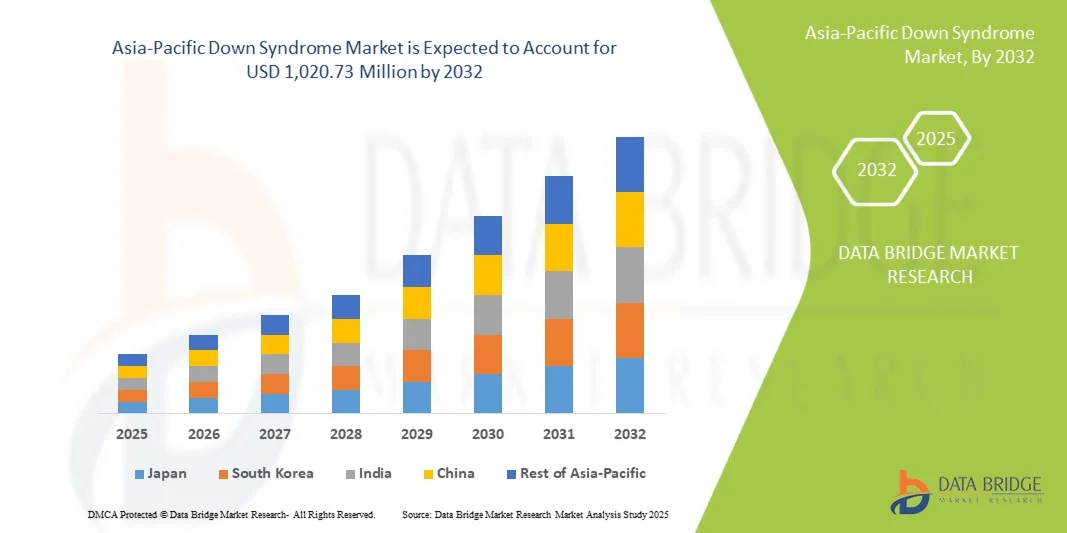
Asia-Pacific Down Syndrome Market Size
- The Asia-Pacific Down Syndrome market size was valued at USD 307.08 million in 2024 and is expected to reach USD 1,020.73 million by 2032, at a CAGR of 16.2% during the forecast period
- The market growth is largely fueled by the increasing prevalence of Down syndrome and related disorders, coupled with the rising adoption of effective therapies and early intervention programs across the region
- Furthermore, growing awareness, improved healthcare infrastructure, and increasing accessibility to diagnostic and treatment facilities are establishing comprehensive Down syndrome care as a key focus in Asia-Pacific. These converging factors are accelerating the uptake of Down syndrome treatments, thereby significantly boosting the industry's growth
Asia-Pacific Down Syndrome Market Analysis
- Down syndrome care and treatment, encompassing therapies, early intervention programs, and supportive healthcare services, are increasingly vital components of the region’s healthcare landscape due to their critical role in improving patient outcomes, developmental support, and quality of life
- The escalating demand for Down syndrome management solutions is primarily fueled by the rising prevalence of the condition, growing awareness among caregivers and healthcare professionals, and increasing governmental and non-governmental initiatives supporting early diagnosis and treatment
- China dominated the Asia-Pacific Down Syndrome market with the largest revenue share of 38.7% in 2024, characterized by well-established healthcare infrastructure, higher awareness levels, and strong government support for genetic and pediatric healthcare programs, with substantial growth in therapy adoption driven by innovations in personalized treatment and early intervention services
- India is expected to be the fastest-growing country in the Asia-Pacific Down Syndrome market during the forecast period, due to increasing healthcare accessibility, rising disposable incomes, and expanding public and private initiatives for pediatric genetic disorders
- Therapy segment dominated the Asia-Pacific Down Syndrome market with a market share of 42.5% in 2024, driven by its proven effectiveness in improving developmental outcomes and its growing integration into standard care protocols across hospitals and specialized clinics
Report Scope and Asia-Pacific Down Syndrome Market Segmentation
|
Attributes |
Asia-Pacific Down Syndrome Key Market Insights |
|
Segments Covered |
|
|
Countries Covered |
Asia-Pacific
|
|
Key Market Players |
|
|
Market Opportunities |
|
|
Value Added Data Infosets |
In addition to the insights on market scenarios such as market value, growth rate, segmentation, geographical coverage, and major players, the market reports curated by the Data Bridge Market Research also include in-depth expert analysis, pricing analysis, brand share analysis, consumer survey, demography analysis, supply chain analysis, value chain analysis, raw material/consumables overview, vendor selection criteria, PESTLE Analysis, Porter Analysis, and regulatory framework. |
Asia-Pacific Down Syndrome Market Trends
“Enhanced Care Through Early Intervention and Personalized Therapies”
- A significant and accelerating trend in the Asia-Pacific Down Syndrome market is the growing adoption of early intervention programs and personalized therapeutic approaches, which are improving developmental outcomes and overall quality of life for patients
- For instance, specialized early education programs in China incorporate individualized learning plans tailored to each child’s developmental needs, enhancing cognitive and motor skills. Similarly, therapy centers in India provide integrated physiotherapy, speech therapy, and occupational therapy programs for holistic care
- Personalized treatment approaches enable caregivers and clinicians to monitor patient progress more effectively and adjust interventions, improving long-term outcomes. For instance, genetic counseling combined with tailored physiotherapy schedules allows for targeted developmental support
- The integration of therapy, education, and support services into a coordinated care model facilitates comprehensive management of Down syndrome across various healthcare and educational settings. Through a single coordinated plan, families can access therapies, clinical monitoring, and educational interventions simultaneously
- This trend towards more individualized, comprehensive, and outcome-driven care is reshaping expectations for Down syndrome management. Consequently, organizations such as Down Syndrome Association of India are expanding programs with personalized therapy plans and holistic support services
- The demand for integrated early intervention and personalized therapies is growing rapidly across both urban and semi-urban regions, as caregivers increasingly prioritize effective developmental support and quality of life for children with Down syndrome
Asia-Pacific Down Syndrome Market Dynamics
Driver
“Rising Awareness and Healthcare Access Driving Adoption”
- The increasing prevalence of Down syndrome and growing awareness among families and healthcare professionals, coupled with improving access to specialized care centers, is a significant driver of the market in Asia-Pacific
- For instance, in 2024, India launched national awareness campaigns and training programs for pediatric healthcare workers, aiming to improve early diagnosis and therapeutic interventions. Such initiatives by key organizations are expected to drive market growth during the forecast period
- As families become more aware of available therapies and intervention strategies, they seek comprehensive programs that combine medical, educational, and developmental support, providing a compelling upgrade over fragmented care
- Furthermore, expanding healthcare infrastructure and government-supported programs are making Down syndrome care more accessible, integrating services across hospitals, clinics, and educational centers
- The growing adoption of coordinated therapy programs, caregiver training, and early intervention initiatives, alongside rising disposable incomes in urban areas, are key factors propelling the market across countries such as China and India
Restraint/Challenge
“High Cost of Therapy and Limited Specialized Facilities”
- The relatively high cost of comprehensive therapies, coupled with limited availability of specialized Down syndrome care centers, poses a significant challenge to wider market penetration in the region. As therapies often require multi-disciplinary approaches, many families face financial and logistical barriers
- For instance, in rural areas of India and Southeast Asia, access to certified therapy centers remains limited, making families hesitant to adopt intensive intervention programs
- Addressing these accessibility and affordability concerns through subsidized programs, teletherapy solutions, and government support is crucial for broader adoption. Organizations such as the Down Syndrome Federation of China emphasize affordable community-based programs and mobile therapy units to reach underserved populations
- In addition, gaps in trained professionals and standardized care protocols can hinder consistent delivery of therapy services, particularly in less developed countries, limiting market expansion
- Overcoming these challenges through improved healthcare policies, increased funding for specialized centers, and wider awareness campaigns will be vital for sustained growth of the Asia-Pacific Down Syndrome market
Asia-Pacific Down Syndrome Market Scope
The market is segmented on the basis of disease type, treatment, end user, and distribution channel.
- By Disease Type
On the basis of disease type, the Asia-Pacific Down Syndrome market is segmented into Trisomy 21, Translocation Down Syndrome, and Mosaic Down Syndrome. Trisomy 21 segment dominated the market with the largest revenue share of 65% in 2024, driven by its high prevalence across countries such as China and Japan. Trisomy 21 accounts for the majority of Down syndrome cases, leading to a higher demand for early diagnosis, genetic counseling, and therapeutic interventions. Governments and NGOs prioritize awareness campaigns and support programs targeting Trisomy 21, further boosting market penetration. Diagnostic centers and hospitals often focus on Trisomy 21 due to established clinical guidelines and a broad base of treatment protocols. Families tend to seek comprehensive therapy packages for children with Trisomy 21, increasing recurring revenue for care providers. The market also benefits from ongoing research and clinical studies aimed at improving developmental and therapeutic outcomes for this group.
Mosaic Down Syndrome is anticipated to witness the fastest growth rate of 18.2% CAGR from 2025 to 2032, fueled by increasing awareness and improved diagnostic capabilities in urban centers. Mosaic cases are less common but require specialized monitoring and therapy tailored to variable symptom severity. Rising availability of genetic testing and personalized treatment options is expanding diagnosis and management in countries such as India and South Korea. Caregivers increasingly prefer early intervention programs for mosaic patients to enhance developmental outcomes. Clinics and therapy centers are adopting advanced assessment tools to identify mosaic cases more accurately. Growth is also supported by educational and advocacy programs that emphasize early recognition and tailored care plans.
- By Treatment
On the basis of treatment, the market is segmented into Diagnosis and Therapy. Therapy segment dominated the market with a revenue share of 42.5% in 2024, driven by the rising demand for multi-disciplinary intervention including speech therapy, occupational therapy, and physiotherapy. Families are increasingly investing in long-term therapy programs to improve cognitive and motor development. Therapy centers in China, Japan, and Australia are expanding services to meet demand, offering both in-person and teletherapy options. Integration of therapy with early education programs ensures better developmental outcomes, driving market preference. Insurance coverage and government subsidies for therapeutic programs further support adoption. The segment benefits from technological advancements in therapy tools and personalized care plans.
Diagnosis is expected to witness the fastest CAGR of 19.3% during the forecast period, fueled by improved prenatal and postnatal screening technologies. Non-invasive prenatal testing (NIPT) and advanced genetic assays are increasingly available in countries such as India, Singapore, and South Korea. Rising awareness of early diagnosis benefits and increasing availability of diagnostic centers contribute to segment growth. Hospitals and clinics are adopting rapid genetic testing protocols to support timely interventions. The segment also benefits from government-supported screening programs and public health initiatives promoting early detection.
- By End User
On the basis of end user, the market is segmented into hospital, clinics, homecare settings, therapy centers, and others. Hospitals dominated the market with a revenue share of 45% in 2024, driven by their established infrastructure, access to specialized pediatric care, and availability of integrated diagnostic and therapy services. Hospitals in China, Japan, and South Korea serve as primary care centers for Down syndrome management. Families often prefer hospital-based programs for initial diagnosis, counseling, and structured therapy sessions. Hospitals also collaborate with NGOs and government programs to increase outreach and awareness. Advanced equipment and trained specialists in hospitals ensure higher adoption of standardized treatment protocols. Large hospitals also offer follow-up programs and multidisciplinary clinics for long-term patient management.
Therapy Centers are expected to witness the fastest CAGR of 20% from 2025 to 2032, fueled by growing demand for personalized, intensive, and continuous therapy programs. Therapy centers in India and Southeast Asia are expanding rapidly to cater to increasing pediatric populations. Families are increasingly seeking specialized centers for speech, occupational, and physiotherapy. Integration of teletherapy and mobile therapy services further enhances accessibility. These centers also provide structured progress tracking and individualized care plans, making them attractive to caregivers. Expansion of private therapy chains is driving organized market growth in urban regions.
- By Distribution Channel
On the basis of distribution channel, the market is segmented into direct tender, retail sales, and others. Direct Tender segment dominated the market with a revenue share of 52% in 2024, driven by government and NGO procurement of diagnostic kits, therapy tools, and educational aids. Direct procurement ensures consistent supply to hospitals, clinics, and therapy centers. Countries such as China and India leverage bulk government tenders to provide affordable therapy programs. Direct tender distribution also reduces dependency on intermediaries, ensuring quality and timely delivery. Long-term contracts with healthcare institutions further stabilize revenue streams. The segment benefits from increasing public health initiatives supporting Down syndrome care and therapy.
Retail Sales is expected to witness the fastest CAGR of 17.8% from 2025 to 2032, fueled by the rising adoption of homecare kits, therapy aids, and assistive devices for at-home management. Online retail platforms and e-commerce channels in countries such as India, China, and Australia have improved accessibility for caregivers. Convenience, affordability, and increasing awareness are driving retail sales growth. Availability of teletherapy-compatible kits and educational tools enhances adoption. The segment also benefits from growing consumer preference for home-based care alongside professional therapy programs.
Asia-Pacific Down Syndrome Market Regional Analysis
- China dominated the Asia-Pacific Down Syndrome market with the largest revenue share of 38.7% in 2024, characterized by well-established healthcare infrastructure, higher awareness levels, and strong government support for genetic and pediatric healthcare programs, with substantial growth in therapy adoption driven by innovations in personalized treatment and early intervention services
- Families and healthcare providers in the country highly value the accessibility to specialized therapy centers, comprehensive diagnostic services, and integrated care models, which improve developmental outcomes and quality of life for patients
- This widespread adoption is further supported by increasing disposable incomes, rising urbanization, and expanding public and private healthcare initiatives, establishing China as the leading market for Down syndrome management in the Asia-Pacific region for both residential and clinical care
Japan Down Syndrome Market Insight
The Japan Down Syndrome market is gaining momentum due to the country’s advanced healthcare infrastructure, high awareness levels, and strong focus on early intervention. The market is fueled by the increasing demand for personalized therapy programs and developmental support services for children with Down syndrome. Hospitals and therapy centers are adopting innovative approaches integrating education and medical care. Japan’s aging population and government-led healthcare initiatives are also expected to spur demand for specialized care and support systems. In addition, integration of genetic counseling and early screening programs is contributing to market expansion.
India Down Syndrome Market Insight
The India Down Syndrome market accounted for the largest market revenue share in Asia-Pacific after China in 2024, attributed to rapid urbanization, growing awareness, and expanding healthcare accessibility. The country is witnessing an increasing number of therapy centers, specialized clinics, and homecare support services for children with Down syndrome. Government initiatives and NGO-led programs promoting early diagnosis, intervention, and caregiver training are key growth drivers. Rising disposable incomes and urban middle-class expansion are further supporting adoption. Affordable therapy solutions and growing teletherapy services are enhancing reach in both urban and semi-urban areas.
South Korea Down Syndrome Market Insight
The South Korea Down Syndrome market is expected to grow at a notable CAGR during the forecast period, driven by technological advancements in diagnostic tools and therapy programs. The country emphasizes early screening and personalized intervention, integrating healthcare services with educational support. Rising awareness among parents and caregivers about the benefits of early intervention is fueling adoption. Government and private sector collaborations are expanding access to therapy centers and homecare support. Moreover, South Korea’s strong digital healthcare ecosystem facilitates remote monitoring and teletherapy services, further promoting market growth.
Asia-Pacific Down Syndrome Market Share
The Asia-Pacific Down Syndrome industry is primarily led by well-established companies, including:
- Aelis Farma (France)
- AC Immune SA (Switzerland)
- Annovis Bio, Inc. (U.S.)
- Alzheon, Inc. (U.S.)
- Perha Pharmaceuticals (France)
- Natera, Inc. (U.S.)
- Myriad Genetics, Inc. (U.S.)
- Thermo Fisher Scientific Inc. (U.S.)
- F. Hoffmann-La Roche Ltd (Switzerland)
- Eisai Co., Ltd. (Japan)
- Illumina, Inc. (U.S.)
- Abbott (U.S.)
- Berry Genomics (China)
- KingMed Diagnostics (China)
- Inmedi (China)
- Zhejiang Shaoxing Dingjing Biopharmaceutical Technology Co., Ltd. (China)
- Annoroad Gene Technology (Beijing) Co., Ltd. (China)
- Sanvalley (China)
- Yinfeng Gene (China)
What are the Recent Developments in Asia-Pacific Down Syndrome Market?
- In August 2025, Amanda D'Silva, a 22-year-old Indian-origin woman from Dubai with Down syndrome, was featured on the giant screens of New York's Times Square as part of a global Down syndrome awareness campaign. She was chosen from over 2,600 entries for the National Down Syndrome Society's annual presentation, promoting inclusion and representation of individuals with Down syndrome
- In August 2025, Researchers at Mie University in Japan utilized CRISPR-Cas9 gene-editing technology to remove the extra chromosome 21 responsible for Down syndrome in lab-grown human cells. This groundbreaking study, published in PNAS Nexus, marks a significant step toward potential therapeutic interventions for Down syndrome
- In March 2025, The theme for World Down Syndrome Day 2025 was "Improve Our Support Systems," focusing on strengthening inclusive support systems to ensure individuals with Down syndrome receive the care, education, and opportunities they deserve
- In March 2024, China's National Health Commission announced improvements in treatments for high-risk pregnancies and stepped-up screenings of congenital birth defects, including Down syndrome, as part of efforts to deal with the rising number of older mothers and an emphasis on quality care for newborns
- In March 2023, Adidas partnered with FCB to design a performance shoe tailored for runners with Down syndrome. The shoe features a unique design to accommodate the specific needs of individuals with Down syndrome, promoting inclusivity in sports and physical activities

- Interactive Data Analysis Dashboard
- Company Analysis Dashboard for high growth potential opportunities
- Research Analyst Access for customization & queries
- Competitor Analysis with Interactive dashboard
- Latest News, Updates & Trend analysis
- Harness the Power of Benchmark Analysis for Comprehensive Competitor Tracking
Data collection and base year analysis are done using data collection modules with large sample sizes. The stage includes obtaining market information or related data through various sources and strategies. It includes examining and planning all the data acquired from the past in advance. It likewise envelops the examination of information inconsistencies seen across different information sources. The market data is analysed and estimated using market statistical and coherent models. Also, market share analysis and key trend analysis are the major success factors in the market report. To know more, please request an analyst call or drop down your inquiry.
The key research methodology used by DBMR research team is data triangulation which involves data mining, analysis of the impact of data variables on the market and primary (industry expert) validation. Data models include Vendor Positioning Grid, Market Time Line Analysis, Market Overview and Guide, Company Positioning Grid, Patent Analysis, Pricing Analysis, Company Market Share Analysis, Standards of Measurement, Global versus Regional and Vendor Share Analysis. To know more about the research methodology, drop in an inquiry to speak to our industry experts.
Data Bridge Market Research is a leader in advanced formative research. We take pride in servicing our existing and new customers with data and analysis that match and suits their goal. The report can be customized to include price trend analysis of target brands understanding the market for additional countries (ask for the list of countries), clinical trial results data, literature review, refurbished market and product base analysis. Market analysis of target competitors can be analyzed from technology-based analysis to market portfolio strategies. We can add as many competitors that you require data about in the format and data style you are looking for. Our team of analysts can also provide you data in crude raw excel files pivot tables (Fact book) or can assist you in creating presentations from the data sets available in the report.












