


What is the Asia-Pacific Exosome Therapeutics Market Size and Growth Rate ?
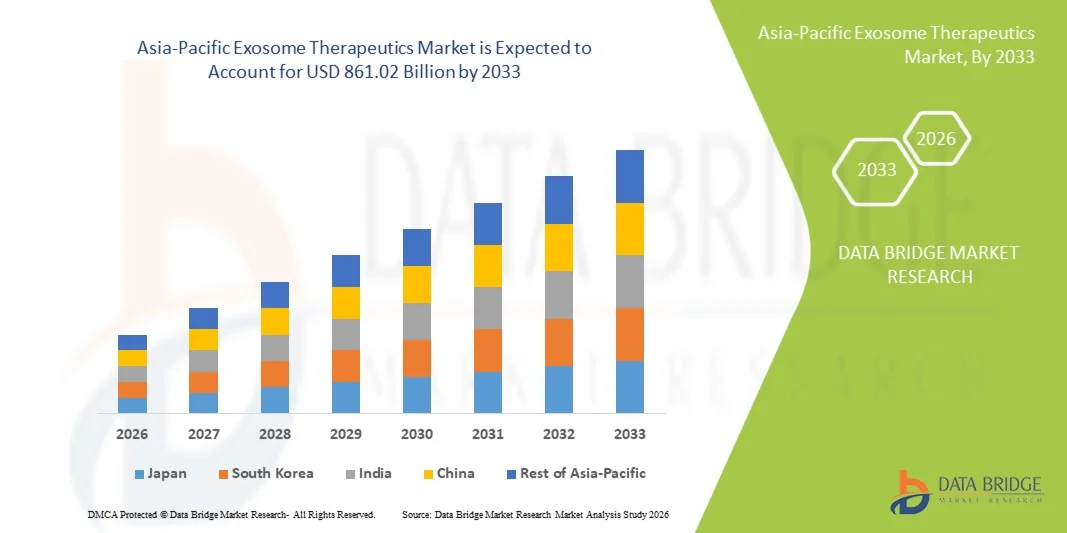
- As per Data Bridge Market Research Analysis the Asia-Pacific Exosome Therapeutics Market size was valued at USD 255.50 billion in 2025and is expected to reach USD 861.02 billion by 2033, at a CAGR of 16.40% during the forecast period
- The market growth is largely fueled by the increasing focus on regenerative medicine and advancements in cell-free therapies, leading to growing adoption of exosome-based therapeutics across various clinical application
- Furthermore, rising investment in biotechnology research, expanding applications in drug delivery and tissue repair, and increasing demand for targeted and minimally invasive treatment approaches are establishing exosome therapeutics as a promising frontier in modern medicine. These converging factors are accelerating the uptake of exosome therapeutics solutions, thereby significantly boosting the industry's growth
Market Size & Forecast
- Global Market Value (2025): USD 255.50 billion
- Expected Market Value (2033): USD 861.02 billion
- Forecast CAGR (2026–2033): 16.40%
What are the Major Takeaways of Asia-Pacific Exosome Therapeutics Market?
- Exosome therapeutics, involving extracellular vesicle-based therapies for drug delivery and regenerative medicine, are increasingly vital components of advanced biomedical research due to their ability to enable targeted treatment, reduce immunogenicity, and enhance cellular communication
- The escalating demand for exosome therapeutics is primarily fueled by rising investments in biotechnology, growing focus on precision medicine, increasing prevalence of chronic diseases, and expanding research in cell-free therapeutic approaches
- China dominated the Asia-Pacific Exosome Therapeutics Market with the largest revenue share of 37.8% in 2025, driven by strong government support for biotechnology innovation, expanding clinical research activities, rapid growth of biopharmaceutical companies, and increasing adoption of advanced therapeutic platforms
- India is expected to be the fastest growing region in the Asia-Pacific Exosome Therapeutics Market during the forecast period, supported by rising investments in life sciences research, growing number of biotech startups, increasing focus on regenerative medicine, and expanding clinical trial activities
- The parenteral segment held the largest market revenue share of 68.2% in 2025, driven by its effectiveness in delivering exosome-based therapies directly into systemic circulation
Report Scope and Asia-Pacific Exosome Therapeutics Market Segmentation
|
Attributes |
Exosome Therapeutics Key Market Insights |
|
Segments Covered |
|
|
Countries Covered |
Asia-Pacific · China · Japan · India · South Korea · Singapore · Malaysia · Australia · Thailand · Indonesia · Philippines · Rest of Asia-Pacific |
|
Key Market Players |
· Codiak BioSciences, Inc. (U.S.) · Exopharm Limited (Australia) · Evox Therapeutics Ltd. (U.K.) · CAPRICOR Therapeutics, Inc. (U.S.) · Aegle Therapeutics Corp. (U.S.) · Ilios Therapeutics, Inc. (U.S.) · ReNeuron Group plc (U.K.) · Stemcell Technologies Inc. (Canada) · System Biosciences, LLC (U.S.) · Lonza Group AG (Switzerland) · Thermo Fisher Scientific Inc. (U.S.) · SBI Biotech Co., Ltd. (Japan) · Anjarium Biosciences AG (Switzerland) · Aruna Bio, Inc. (U.S.) · Xtend Bio, Inc. (U.S.) · VivaZome Therapeutics Pty Ltd. (Australia) · HansaBioMed Life Sciences Ltd. (Estonia) · Exosome Diagnostics, Inc. (U.S.) · Kimera Labs Inc. (U.S.) · NanoSomiX, Inc. (U.S.) |
|
Market Opportunities |
· Expanding Applications in Regenerative Medicine and Drug Delivery · Rising Investments and Clinical Research in Cell-Free Therapies |
|
Value Added Data Infosets |
In addition to the insights on market scenarios such as market value, growth rate, segmentation, geographical coverage, and major players, the market reports curated by the Data Bridge Market Research also include in-depth expert analysis, patient epidemiology, pipeline analysis, pricing analysis, and regulatory framework. |
What is the Key Trend in the Asia-Pacific Exosome Therapeutics Market?
“Advancements in Regenerative Medicine and Targeted Drug Delivery”
- A significant and accelerating trend in the Asia-Pacific Exosome Therapeutics Market is the growing focus on exosome-based regenerative medicine and targeted drug delivery systems, which are transforming treatment approaches across multiple therapeutic areas. Exosomes are increasingly being explored for their natural ability to transfer biomolecules such as proteins, lipids, and nucleic acids between cells
- For instance, several biotechnology companies and research institutes across countries such as Japan and South Korea are actively developing exosome-based therapies for tissue repair and cancer treatment, demonstrating promising preclinical and early clinical outcomes
- These nanoscale vesicles are gaining attention due to their biocompatibility, low immunogenicity, and ability to cross biological barriers, making them ideal carriers for precision therapeutics
- In addition, advancements in isolation and purification technologies are improving the scalability and efficiency of exosome production, enabling broader clinical applications
- The increasing collaboration between academic institutions and pharmaceutical companies is further accelerating innovation and commercialization in this field
- This trend is reshaping the therapeutic landscape in Asia-Pacific, with rising investments and research activities supporting the development of next-generation biologics
Asia-Pacific Exosome Therapeutics Market Dynamics
Driver
“Rising Demand for Advanced Biologics and Increasing Prevalence of Chronic Diseases”
- The increasing demand for advanced biologics, along with the rising prevalence of chronic diseases such as cancer, neurodegenerative disorders, and cardiovascular conditions, is a key driver for the Asia-Pacific Exosome Therapeutics Market in Asia-Pacific
- For instance, the growing burden of cancer in countries such as China and India has led to increased investment in novel therapeutic approaches, including exosome-based drug delivery systems aimed at improving treatment efficacy and reducing side effects
- As traditional therapies often face limitations such as toxicity and poor targeting, exosome therapeutics offer a promising alternative by enabling precise delivery of therapeutic agents to specific cells or tissues
- Furthermore, the expansion of healthcare infrastructure and increased funding for biotechnology research in emerging economies are supporting market growth
- Government initiatives promoting innovation in biologics and personalized medicine are also encouraging the adoption of exosome-based technologies
- The rising awareness among healthcare professionals and patients regarding the benefits of advanced therapies is further contributing to market expansion
Restraint/Challenge
“Challenges in Standardization, Regulatory Complexity, and High Development Costs”
- One of the major challenges in the Asia-Pacific Exosome Therapeutics Market is the lack of standardized protocols for exosome isolation, characterization, and large-scale manufacturing, which can impact product consistency and quality
- For instance, regulatory authorities across the Asia-Pacific region are still developing clear guidelines for exosome-based therapeutics, leading to delays in product approvals and commercialization timelines
- In addition, the complexity of exosome biology and variability depending on the source cells make it difficult to establish uniform manufacturing processes
- High research and development costs, along with the need for advanced technologies and specialized expertise, can limit the entry of smaller companies into the market
- Limited clinical data and long validation timelines further add to the uncertainty associated with these therapies
- Addressing these challenges through robust regulatory frameworks, technological advancements, and increased investment in research will be crucial for the sustained growth of the market
How is the Asia-Pacific Exosome Therapeutics Market Segmented ?
The market is segmented on the basis of type, source, therapy, transporting capacity, application, route of administration, and end user.
- By Type
On the basis of type, the Asia-Pacific Exosome Therapeutics Market is segmented into natural exosome and hybrid exosome. The natural exosome segment dominated the largest market revenue share of 61.4% in 2025, driven by its superior biocompatibility, low toxicity, and natural ability to facilitate intercellular communication. These exosomes are widely derived from biological sources such as stem cells and are increasingly used in regenerative medicine and targeted drug delivery. Their capability to cross complex biological barriers such as the blood-brain barrier enhances their clinical applicability across neurological and oncological conditions. The growing number of clinical trials and expanding research activities focused on natural exosome-based therapies are further strengthening segment growth. In addition, the rising demand for non-invasive and precision-based treatment approaches is accelerating adoption. Improvements in isolation, purification, and large-scale production technologies are also contributing to commercialization. Furthermore, increasing funding support from both public and private sectors is boosting innovation in this segment. The ability of natural exosomes to deliver bioactive molecules efficiently makes them a preferred choice in therapeutic development. Their widespread application across multiple disease areas continues to reinforce their dominant position in the global market.
The hybrid exosome segment is expected to witness the fastest growth with a CAGR of 27.6% from 2026 to 2033, driven by advancements in bioengineering and nanotechnology. Hybrid exosomes combine natural vesicles with synthetic components, significantly enhancing drug loading efficiency, targeting specificity, and therapeutic performance. These engineered systems are gaining traction for their improved stability and controlled drug release capabilities. The increasing focus on personalized medicine and targeted drug delivery systems is further propelling demand. Moreover, hybrid exosomes offer flexibility in designing customized therapeutic solutions, which is highly beneficial in complex disease treatment. Rising collaborations between biotechnology firms and research institutions are accelerating product innovation and development pipelines. The integration of artificial intelligence and nanomedicine is also playing a key role in optimizing hybrid exosome functionality. In addition, the growing prevalence of chronic and genetic disorders is creating strong demand for advanced therapeutic platforms. As regulatory frameworks evolve and clinical validations increase, the hybrid exosome segment is expected to expand rapidly over the forecast period.
- By Source
On the basis of source, the market is segmented into mesenchymal stem cells, blood, body fluids, urine, dendritic cells, saliva, milk, and others. The mesenchymal stem cells segment held the largest market revenue share of 48.9% in 2025, driven by their strong regenerative and immunomodulatory properties. MSC-derived exosomes are extensively used in tissue repair, inflammation control, and immune system regulation. These exosomes are highly preferred due to their ability to promote healing and reduce immune rejection risks. The segment benefits from increasing research in stem cell therapy and regenerative medicine, which continues to expand clinical applications. In addition, MSCs offer scalability and ease of extraction, making them commercially viable for therapeutic use. Growing investments in stem cell-based research and rising clinical trials are further supporting segment dominance. The increasing burden of chronic diseases and degenerative disorders is also driving demand for MSC-derived exosomes. Technological advancements in cell culture and exosome isolation are enhancing production efficiency. Furthermore, the rising focus on personalized and precision medicine is strengthening the role of MSC-derived exosomes in modern therapeutics.
The dendritic cells segment is projected to witness the fastest CAGR of 25.3% from 2026 to 2033, driven by its critical role in immunotherapy and vaccine development. Dendritic cell-derived exosomes are highly effective in antigen presentation and immune system activation, making them valuable in cancer treatment strategies. The growing focus on immuno-oncology and targeted immune therapies is significantly boosting demand for this segment. In addition, advancements in cellular engineering and immunotherapy research are expanding their therapeutic applications. The increasing prevalence of cancer and infectious diseases is further accelerating adoption. Rising investments in vaccine development and immune-based therapies are also contributing to segment growth. Furthermore, ongoing clinical trials evaluating dendritic exosomes in cancer treatment are creating strong future opportunities. The integration of these exosomes with advanced drug delivery systems enhances treatment efficiency. As research continues to progress, dendritic cell-derived exosomes are expected to play a pivotal role in next-generation therapeutics.
- By Therapy
On the basis of therapy, the Asia-Pacific Exosome Therapeutics Market is segmented into immunotherapy, chemotherapy, and gene therapy. The immunotherapy segment dominated the market with a revenue share of 44.7% in 2025, driven by the increasing use of immune-based treatments in oncology and autoimmune diseases. Exosomes serve as effective carriers for immune-modulating agents, enhancing the body’s natural defense mechanisms against diseases. The rising prevalence of cancer and the growing shift toward targeted and personalized therapies are key factors supporting segment growth. In addition, advancements in immuno-oncology and biomarker identification are improving treatment outcomes. The integration of exosome technology with immune checkpoint inhibitors and vaccines is further boosting demand. Increasing clinical trials and regulatory approvals for immunotherapy-based treatments are also strengthening the segment. Moreover, the ability of exosomes to reduce systemic toxicity compared to traditional therapies enhances their adoption. The growing focus on precision medicine is further driving innovation in this segment. Continuous technological advancements and research investments are expected to sustain its dominance.
The gene therapy segment is expected to witness the fastest CAGR of 28.1% from 2026 to 2033, driven by the increasing demand for advanced genetic treatment solutions. Exosomes are emerging as highly efficient delivery vehicles for genetic materials such as RNA and DNA, offering a safer alternative to viral vectors. The rising prevalence of rare genetic disorders and increasing focus on curative therapies are significantly contributing to segment growth. In addition, advancements in gene editing technologies such as CRISPR are enhancing the effectiveness of exosome-based gene delivery. The growing adoption of precision medicine and personalized therapeutics is further accelerating demand. Increasing investments in biotechnology and genomic research are also supporting market expansion. Furthermore, the ability of exosomes to target specific cells improves treatment accuracy and reduces side effects. As clinical trials continue to demonstrate positive outcomes, the gene therapy segment is expected to grow rapidly.
- By Transporting Capacity
On the basis of transporting capacity, the market is segmented into bio macromolecules and small molecules. The bio macromolecules segment held the largest market revenue share of 57.8% in 2025, driven by the extensive use of exosomes for delivering proteins, nucleic acids, and other large biomolecules. These macromolecules play a critical role in regulating cellular functions and treating complex diseases. The increasing focus on molecular therapies and regenerative medicine is significantly supporting segment growth. In addition, exosomes provide a protective environment for macromolecules, enhancing their stability and delivery efficiency. The growing demand for RNA-based therapies and protein therapeutics is further driving adoption. Advances in molecular biology and biotechnology are also contributing to the expansion of this segment. Furthermore, increasing research activities in genomics and proteomics are creating new growth opportunities. The ability to deliver functional biomolecules precisely to target cells strengthens the segment’s dominance. Continuous innovation in drug delivery technologies is expected to further enhance its market share.
The small molecules segment is anticipated to witness the fastest CAGR of 22.9% from 2026 to 2033, driven by the rising demand for efficient drug delivery systems. Exosomes enhance the solubility, stability, and bioavailability of small molecule drugs, improving therapeutic outcomes. The increasing adoption of targeted therapies and precision medicine is significantly contributing to segment growth. In addition, the use of exosomes reduces off-target effects and enhances drug efficacy. The growing prevalence of chronic diseases is further boosting demand for small molecule-based treatments. Advances in nanotechnology and drug formulation are also supporting segment expansion. Furthermore, pharmaceutical companies are increasingly focusing on developing exosome-based delivery platforms for small molecules. As research progresses, this segment is expected to witness substantial growth in the coming years.
- By Application
On the basis of application, the Asia-Pacific Exosome Therapeutics Market is segmented into metabolic disorders, oncology, cardiac disorders, neurology, inflammatory disorders, organ transplantation, gynecology disorders, blood disorders, and others. The oncology segment dominated the largest market revenue share of 36.5% in 2025, driven by the increasing use of exosomes in cancer diagnosis, monitoring, and treatment. Exosomes play a vital role in tumor progression analysis and targeted drug delivery, making them highly valuable in oncology applications. The rising global cancer burden and growing demand for advanced therapeutic solutions are key factors supporting segment growth. In addition, advancements in biomarker discovery and precision oncology are enhancing the effectiveness of exosome-based therapies. Increasing clinical trials and research activities in cancer treatment are further strengthening this segment. The ability of exosomes to deliver anti-cancer agents directly to tumor cells improves treatment efficiency. Furthermore, growing investments in oncology research are accelerating innovation. The expanding application of exosomes in liquid biopsy is also contributing to segment dominance.
The neurology segment is expected to witness the fastest CAGR of 26.4% from 2026 to 2033, driven by the ability of exosomes to cross the blood-brain barrier. This unique capability makes them highly effective for delivering therapeutics to treat neurological disorders such as Alzheimer’s and Parkinson’s disease. The increasing prevalence of neurodegenerative diseases is significantly driving demand for advanced treatment options. In addition, growing research in brain-targeted drug delivery systems is supporting segment growth. The integration of exosome technology with neurotherapeutics is opening new opportunities in disease management. Rising investments in neuroscience research and clinical trials are further accelerating adoption. Furthermore, advancements in nanomedicine are enhancing the efficiency of exosome-based therapies. As awareness and innovation continue to grow, the neurology segment is expected to expand rapidly.
- By Route of Administration
On the basis of route of administration, the market is segmented into parenteral and oral. The parenteral segment held the largest market revenue share of 68.2% in 2025, driven by its effectiveness in delivering exosome-based therapies directly into systemic circulation. This route ensures higher bioavailability, rapid therapeutic action, and precise targeting of affected tissues. It is widely used in clinical settings for treating severe and chronic conditions. The increasing adoption of injectable therapies and advancements in delivery technologies are further supporting segment growth. In addition, parenteral administration reduces degradation of therapeutic agents, enhancing treatment outcomes. Growing hospital-based treatments and clinical procedures are also contributing to segment dominance. The rising demand for targeted and efficient drug delivery systems is further boosting adoption. Continuous advancements in injectable formulations are expected to sustain growth in this segment.
The oral segment is projected to witness the fastest CAGR of 23.6% from 2026 to 2033, driven by the growing demand for non-invasive and patient-friendly treatment options. Oral delivery systems offer greater convenience, improved patient compliance, and reduced healthcare costs. Advancements in formulation technologies are improving the stability and absorption of exosomes in the gastrointestinal tract. In addition, increasing research efforts are focused on overcoming challenges related to oral bioavailability. The rising preference for home-based treatments is also supporting segment growth. Furthermore, innovations in nanocarrier systems are enhancing oral delivery efficiency. As technology continues to evolve, the oral segment is expected to gain significant traction in the coming years.
- By End User
On the basis of end user, the market is segmented into research and academic institutes, hospitals, and diagnostic centers. The research and academic institutes segment dominated the market with a revenue share of 52.1% in 2025, driven by extensive research activities and ongoing clinical trials in exosome therapeutics. These institutions play a critical role in advancing scientific understanding and developing innovative treatment approaches. Increasing funding from government bodies and private organizations is significantly supporting research initiatives. In addition, collaborations between academia and biotechnology companies are accelerating product development. The growing focus on precision medicine and regenerative therapies is further strengthening this segment. Rising investments in R&D infrastructure and advanced technologies are also contributing to growth. Furthermore, academic institutes are actively involved in exploring new therapeutic applications of exosomes. Continuous innovation and knowledge expansion are expected to maintain segment dominance.
The hospitals segment is expected to witness the fastest CAGR of 24.7% from 2026 to 2033, driven by the increasing adoption of exosome-based therapies in clinical practice. Hospitals are integrating advanced therapeutic solutions to improve patient outcomes and treatment efficiency. The growing number of clinical applications and approvals for exosome therapies is significantly boosting demand. In addition, the rising patient population and increasing prevalence of chronic diseases are driving the need for innovative treatments. Hospitals are also investing in advanced healthcare infrastructure and technology adoption. The shift toward personalized medicine is further supporting segment growth. Furthermore, increasing awareness among healthcare professionals regarding exosome therapeutics is accelerating adoption. As clinical validation expands, hospitals are expected to play a key role in market growth.
Which Region Holds the Largest Share of the Asia-Pacific Exosome Therapeutics Market?
The Asia-Pacific Exosome Therapeutics Market is poised to grow at the fastest CAGR of 24% during the forecast period of 2026 to 2033, driven by rapid advancements in biotechnology, increasing investments in regenerative medicine, and growing focus on novel drug delivery systems across countries such as China, Japan, and India. The region is witnessing rising clinical research activities, expanding biopharmaceutical manufacturing capabilities, and strong government support for innovation in cell-free therapies. Increasing awareness of precision medicine and the therapeutic potential of exosomes in oncology, neurology, and inflammatory diseases is further accelerating market growth across Asia-Pacific.
China Asia-Pacific Exosome Therapeutics Market Insight
The China Asia-Pacific Exosome Therapeutics Market captured the largest revenue share of 37.8% in 2025 within Asia-Pacific, driven by strong government support for biotechnology innovation, rapid expansion of biopharmaceutical companies, and increasing number of clinical trials focused on exosome-based therapies. The country is benefiting from well-established research infrastructure, rising funding for advanced therapeutic platforms, and growing collaboration between academic institutions and industry players. In addition, favorable regulatory developments and increasing adoption of next-generation therapeutics are significantly contributing to market dominance.
India Asia-Pacific Exosome Therapeutics Market Insight
The India Asia-Pacific Exosome Therapeutics Market is expected to be the fastest growing in Asia-Pacific during the forecast period, supported by rising investments in life sciences research, growing number of biotechnology startups, and increasing focus on regenerative medicine. Expanding clinical trial activities, improving healthcare infrastructure, and increasing government initiatives to promote biotechnology innovation are significantly driving market expansion. In addition, the growing demand for cost-effective advanced therapies and increasing participation of contract research organizations are further contributing to the rapid growth of the market in India.
Which are the Top Companies in Asia-Pacific Exosome Therapeutics Market?
The Exosome Therapeutics industry is primarily led by well-established companies, including:
- Codiak BioSciences, Inc. (U.S.)
- Exopharm Limited (Australia)
- Evox Therapeutics Ltd. (U.K.)
- CAPRICOR Therapeutics, Inc. (U.S.)
- Aegle Therapeutics Corp. (U.S.)
- Ilios Therapeutics, Inc. (U.S.)
- ReNeuron Group plc (U.K.)
- Stemcell Technologies Inc. (Canada)
- System Biosciences, LLC (U.S.)
- Lonza Group AG (Switzerland)
- Thermo Fisher Scientific Inc. (U.S.)
- SBI Biotech Co., Ltd. (Japan)
- Anjarium Biosciences AG (Switzerland)
- Aruna Bio, Inc. (U.S.)
- Xtend Bio, Inc. (U.S.)
- VivaZome Therapeutics Pty Ltd. (Australia)
- HansaBioMed Life Sciences Ltd. (Estonia)
- Exosome Diagnostics, Inc. (U.S.)
- Kimera Labs Inc. (U.S.)
- NanoSomiX, Inc. (U.S.)
What are Latest Developments in Asia-Pacific Exosome Therapeutics Market?
- In March 2021, researchers initiated multiple early-phase clinical studies exploring mesenchymal stem cell-derived exosomes for treating inflammatory and respiratory conditions, including COVID-19-related lung injury, highlighting the growing clinical interest in exosome-based therapeutics
- In September 2022, the exosome therapeutics pipeline expanded significantly, with more than 30 candidates entering early-stage clinical development, reflecting increasing investment by biotechnology companies in exosome-based drug delivery and regenerative therapies
- In June 2023, global research activity in exosome therapeutics continued to rise, supported by advancements in bioengineering techniques enabling the development of engineered exosomes for targeted drug delivery and gene therapy applications
- In October 2025, industry analysis highlighted that dozens of biotechnology companies were actively developing exosome-based therapeutics, with multiple candidates progressing through clinical trials, including engineered and naïve exosome platforms aimed at treating rare diseases, cancer, and inflammatory disorders
- In September 2025, market updates indicated rapid growth in the exosome-based therapeutics and diagnostics sector, driven by increasing demand for personalized medicine and regenerative therapies, with strong expansion expected across global markets
- In August 2025, clinical research publications emphasized the increasing number of clinical studies focused on exosome applications in therapeutics and diagnostics, demonstrating sustained scientific momentum and growing validation of exosome-based treatment approaches
- In October 2025, pipeline analyses reported a broad range of emerging exosome therapeutics such as ExoCoVac, COYA 201, EV-101, and CAP-1002 advancing through different phases of clinical trials, indicating a robust and diversified product development landscape
- In December 2025, industry reports highlighted continued growth in the stem cell-derived Asia-Pacific Exosome Therapeutics Market, driven by increasing research funding, expanding clinical pipelines, and rising interest in cell-free regenerative medicine approaches

- Interactive Data Analysis Dashboard
- Company Analysis Dashboard for high growth potential opportunities
- Research Analyst Access for customization & queries
- Competitor Analysis with Interactive dashboard
- Latest News, Updates & Trend analysis
- Harness the Power of Benchmark Analysis for Comprehensive Competitor Tracking
Data collection and base year analysis are done using data collection modules with large sample sizes. The stage includes obtaining market information or related data through various sources and strategies. It includes examining and planning all the data acquired from the past in advance. It likewise envelops the examination of information inconsistencies seen across different information sources. The market data is analysed and estimated using market statistical and coherent models. Also, market share analysis and key trend analysis are the major success factors in the market report. To know more, please request an analyst call or drop down your inquiry.
The key research methodology used by DBMR research team is data triangulation which involves data mining, analysis of the impact of data variables on the market and primary (industry expert) validation. Data models include Vendor Positioning Grid, Market Time Line Analysis, Market Overview and Guide, Company Positioning Grid, Patent Analysis, Pricing Analysis, Company Market Share Analysis, Standards of Measurement, Global versus Regional and Vendor Share Analysis. To know more about the research methodology, drop in an inquiry to speak to our industry experts.
Data Bridge Market Research is a leader in advanced formative research. We take pride in servicing our existing and new customers with data and analysis that match and suits their goal. The report can be customized to include price trend analysis of target brands understanding the market for additional countries (ask for the list of countries), clinical trial results data, literature review, refurbished market and product base analysis. Market analysis of target competitors can be analyzed from technology-based analysis to market portfolio strategies. We can add as many competitors that you require data about in the format and data style you are looking for. Our team of analysts can also provide you data in crude raw excel files pivot tables (Fact book) or can assist you in creating presentations from the data sets available in the report.













