


Asia-Pacific Musculoskeletal (MSK) Disease Management Market Size
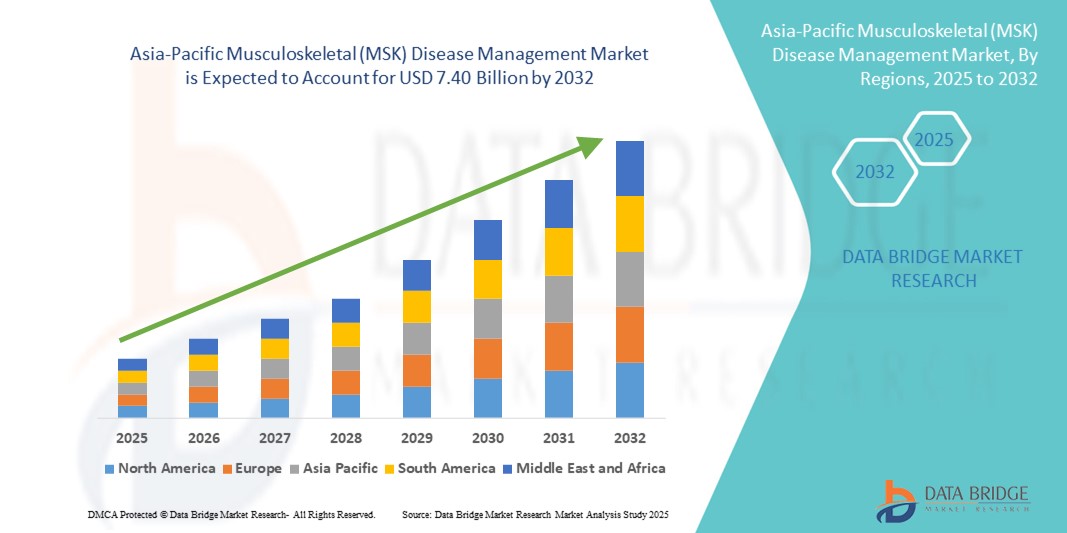
- The Asia-Pacific musculoskeletal (MSK) disease management market size was valued at USD 1.30 billion in 2024 and is expected to reach USD 7.40 billion by 2032, at a CAGR of 24.3% during the forecast period
- The market growth is primarily driven by the increasing prevalence of musculoskeletal disorders across the region, coupled with technological advancements in digital biofeedback systems and telemedicine applications that enhance patient care
- In addition, the rising geriatric population and growing awareness about MSK health management are encouraging the adoption of innovative digital and virtual therapy solutions, establishing this market as a critical component of healthcare modernization in Asia-Pacific. These factors collectively propel the market expansion, significantly boosting the region's MSK disease management industry growth
Asia-Pacific Musculoskeletal (MSK) Disease Management Market Analysis
- MSK Disease Management Market focuses on digital and virtual solutions for diagnosing, monitoring, and treating musculoskeletal disorders, becoming increasingly vital in improving healthcare outcomes across both urban and rural settings
- The growing prevalence of MSK conditions, rising aging population, and advancements in telemedicine and AI-powered therapy solutions are the primary factors fueling market demand
- China dominated the Asia-Pacific musculoskeletal (MSK) disease management market with the largest revenue share of 45.5% in 2024, driven by substantial healthcare investments, expanding digital health infrastructure, and a large patient base
- India is expected to be the fastest growing country in the Asia-Pacific musculoskeletal (MSK) disease management market during the forecast period due to increasing healthcare accessibility and digital adoption
- The virtual therapy segment dominated the Asia-Pacific musculoskeletal (MSK) disease management market with a share of 38.5% in 2024, supported by its convenience, personalized rehabilitation capabilities, and effectiveness in improving patient adherence and recovery rates
Report Scope and Asia-Pacific Musculoskeletal (MSK) Disease Management Market Segmentation
|
Attributes |
Asia-Pacific Musculoskeletal (MSK) Disease Management Key Market Insights |
|
Segments Covered |
|
|
Countries Covered |
Asia-Pacific
|
|
Key Market Players |
|
|
Market Opportunities |
|
|
Value Added Data Infosets |
In addition to the insights on market scenarios such as market value, growth rate, segmentation, geographical coverage, and major players, the market reports curated by the Data Bridge Market Research also include in-depth expert analysis, pricing analysis, brand share analysis, consumer survey, demography analysis, supply chain analysis, value chain analysis, raw material/consumables overview, vendor selection criteria, PESTLE Analysis, Porter Analysis, and regulatory framework. |
Asia-Pacific Musculoskeletal (MSK) Disease Management Market Trends
Advancement in Digital and Virtual Therapeutics
- A significant and accelerating trend in the Asia-Pacific MSK disease management market is the growing adoption of digital and virtual therapy solutions, driven by technological advancements in telemedicine, AI, and wearable sensors. These technologies enable more personalized, accessible, and effective management of musculoskeletal disorders
- For instance, Singapore-based startup MediTrak developed an AI-powered app that delivers personalized MSK rehabilitation exercises and tracks patient progress remotely, improving adherence and outcomes
- AI integration enhances diagnostic accuracy and customizes therapy plans by analyzing patient movement patterns and recovery progress, improving outcomes. Telehealth platforms enable virtual consultations and remote supervision, breaking geographical barriers
- The rise of patient-centric care models that emphasize convenience and continuous engagement is driving demand for virtual therapy, particularly in post-surgical rehabilitation and chronic MSK condition management
- Leading companies in the region are investing in AI-powered platforms and wearable technologies that offer remote motion tracking and personalized feedback, elevating the standards of MSK care
- The growing availability of affordable smartphones and internet connectivity in rural Asia-Pacific supports wider adoption of digital MSK solutions
- Partnerships between healthcare providers and technology firms are facilitating integration of MSK digital therapeutics into mainstream clinical practice, expanding reach
Asia-Pacific Musculoskeletal (MSK) Disease Management Market Dynamics
Driver
Increasing Burden of MSK Disorders and Aging Population
- The rising prevalence of musculoskeletal diseases such as arthritis, osteoporosis, and back pain, combined with a rapidly aging population in Asia-Pacific, is a key driver of market growth
- For instance, Japan's Ministry of Health reports over 25 million adults suffering from MSK conditions, boosting demand for management solutions. Healthcare systems are focusing on improving patient outcomes through digital health innovations that enable early diagnosis, continuous monitoring, and personalized therapy
- Governments and private players are investing in infrastructure and digital health initiatives to expand access, especially in remote and underserved areas, which is expected to further propel market expansion
- Growing patient preference for non-invasive, home-based therapies is increasing adoption of virtual therapy and wearable devices, supporting long-term disease management
- Increasing health insurance coverage for digital therapies in countries such as South Korea and Australia encourages adoption of MSK management technologies
- Awareness campaigns by organizations such as the Asia-Pacific League of Associations for Rheumatology (APLAR) are educating populations about early detection and management, increasing market penetration
Restraint/Challenge
High Cost and Regulatory Complexities
- The relatively high cost of advanced digital MSK management solutions, including AI-enabled platforms and wearable devices, poses a barrier for widespread adoption, particularly in lower-income segments and developing countries within the region. For instance, costly devices remain out of reach for many patients in Southeast Asia
- In addition, navigating diverse regulatory frameworks across Asia-Pacific countries complicates the approval and commercialization of new technologies, slowing market penetration
- Concerns about data privacy and cybersecurity in digital health applications also impact user trust and acceptance, necessitating stringent safeguards
- Addressing these challenges through cost reduction strategies, harmonized regulations, and robust security protocols will be crucial for sustained market growth
- Limited digital literacy among elderly patients in rural areas reduces the effectiveness and adoption of tech-driven MSK therapies
- Fragmented healthcare infrastructure in some countries creates barriers to seamless integration and scaling of MSK digital health solutions
Asia-Pacific Musculoskeletal (MSK) Disease Management Market Scope
The market is segmented on the basis of type, technology, integration type, modality, application, patient population, and end user.
- By Type
On the basis of type, the Asia-Pacific musculoskeletal (MSK) disease management market is segmented into digital biofeedback systems, musculoskeletal-focused digital apps, solutions, and others. The digital biofeedback system segment dominated the market with the largest revenue share of 42% in 2024, primarily due to its ability to provide real-time feedback and interactive rehabilitation exercises that significantly improve treatment adherence and outcomes.
The musculoskeletal-focused digital apps segment is expected to witness the fastest growth during the forecast period, driven by the increasing penetration of smartphones and patient preference for convenient, app-based self-management tools that allow continuous engagement outside clinical settings.
- By Technology
On the basis of technology, the Asia-Pacific musculoskeletal (MSK) disease management market is segmented into precision motion technology, computer vision technology, and other technologies. The precision motion technology segment held the largest market share of 45% in 2024, thanks to its high accuracy in tracking patient movements and facilitating personalized therapy adjustments. This technology is widely adopted in virtual therapy devices and wearable sensors.
The computer vision technology segment is forecasted to experience the fastest growth during forecast period, supported by advancements in AI and machine learning that enhance remote diagnostics and movement analysis capabilities.
- By Integration Type
On the basis of integration type, the Asia-Pacific musculoskeletal (MSK) disease management market is segmented into phone, tablet, computer, and others. The phone integration segment dominated with 50% market share in 2024, driven by the ubiquity of smartphones which allow patients and clinicians to easily access therapy programs and monitor progress remotely.
The tablet integration segment is expected to grow the fastest during forecast period, as tablets provide larger screens and interactive interfaces that are increasingly preferred in clinical and rehabilitation center environments for detailed therapy sessions.
- By Modality
On the basis of modality, the Asia-Pacific musculoskeletal (MSK) disease management market is segmented into virtual therapy, in-person therapy, customized/personalized therapy, and others. The virtual therapy segment led the market with a share of 38.5% in 2024, due to its convenience, cost-effectiveness, and ability to deliver rehabilitation at home or remote locations, which is especially valuable for post-surgery recovery and chronic condition management.
The customized/personalized therapy segment is anticipated to grow the fastest during forecast period, driven by rising demand for tailored treatment plans that leverage patient-specific data and AI analytics to optimize therapy outcomes.
- By Application
On the basis of application, the Asia-Pacific musculoskeletal (MSK) disease management market is segmented into pre-surgery and post-surgery applications. The post-surgery application segment held the largest share of 55.5% in 2024, reflecting the widespread use of digital solutions to enhance recovery, monitor progress, and improve adherence during rehabilitation after surgeries such as joint replacements.
The pre-surgery application segment is expected to grow rapidly during forecast period, fueled by increasing use of digital assessment tools to prepare patients for surgery and improve surgical outcomes.
- By Patient Population
On the basis of patient population, the Asia-Pacific musculoskeletal (MSK) disease management market is segmented into pediatrics, adults, and geriatrics. The adults segment dominated with 60% market share in 2024, due to a higher prevalence of musculoskeletal disorders such as back pain, arthritis, and sports injuries in this demographic.
The geriatrics segment is predicted to be the fastest growing during forecast period, propelled by Asia-Pacific’s aging population and the increasing incidence of chronic MSK conditions requiring long-term management.
- By End User
On the basis of end user, the Asia-Pacific musculoskeletal (MSK) disease management market is segmented into hospitals & clinics, nursing homes, health centers, rehabilitation centers, virtual/home healthcare settings, and others. The hospitals & clinics segment accounted for the largest share of 48% in 2024, as these are primary care settings with established infrastructure and trained professionals implementing advanced MSK management solutions.
The virtual/home healthcare segment is expected to experience the fastest growth during forecast period, driven by growing patient preference for home-based rehabilitation, remote monitoring, and telehealth services that reduce hospital visits and improve convenience.
Asia-Pacific Musculoskeletal (MSK) Disease Management Market Regional Analysis
- China dominated the Asia-Pacific musculoskeletal (MSK) disease management market with the largest revenue share of 45.5% in 2024, driven by substantial healthcare investments, expanding digital health infrastructure, and a large patient base
- Consumers and healthcare providers in the region are increasingly prioritizing early diagnosis, remote monitoring, and personalized rehabilitation solutions to manage the growing burden of musculoskeletal disorders, particularly among aging populations
- This strong market presence is further supported by government initiatives promoting telemedicine, expanding digital health coverage, and rising awareness about musculoskeletal health, positioning Asia-Pacific as a rapidly growing hub for innovative MSK disease management solutions
The China MSK Disease Management Market Insight
The China musculoskeletal (MSK) disease management market dominates the Asia-Pacific market with the largest revenue share of 45.5% in 2024, supported by significant investments in healthcare digitization and the availability of advanced diagnostic and therapeutic technologies. The country’s large patient base and rising healthcare expenditure are major growth drivers. Increasing collaborations between technology firms and healthcare providers are also fostering innovation and adoption of AI-enabled MSK disease management solutions.
Japan MSK Disease Management Market Insight
The Japan's musculoskeletal (MSK) disease management market is growing steadily, driven by a rapidly aging population and increasing demand for home-based and remote rehabilitation services. Advanced healthcare infrastructure and high patient awareness support the adoption of digital MSK therapeutics integrated with IoT and wearable technologies. The country’s emphasis on preventive care and chronic disease management further fuels market expansion.
India MSK Disease Management Market Insight
The India musculoskeletal (MSK) disease management market accounted for a significant share of the Asia-Pacific market in 2024, propelled by rapid urbanization, rising disposable incomes, and increasing adoption of telemedicine and digital health platforms. Government initiatives aimed at improving rural healthcare access and expanding digital infrastructure are enabling wider adoption of MSK management solutions. The availability of cost-effective digital therapeutics and growing patient awareness are also contributing to market growth.
Australia MSK Disease Management Market Insight
The Australia’s musculoskeletal (MSK) disease management market is witnessing robust growth, supported by well-established healthcare infrastructure and increasing government focus on digital health innovation. The country’s aging population and high incidence of musculoskeletal conditions are driving demand for personalized and remote therapy solutions. Integration of MSK management systems with national digital health initiatives is further propelling market expansion.
South Korea MSK Disease Management Market Insight
The South Korea musculoskeletal (MSK) disease management market is emerging as a key player in the Asia-Pacific market, with rapid adoption of AI-powered diagnostic tools and virtual rehabilitation platforms. The country’s strong technological base, government support for digital healthcare, and increasing patient preference for non-invasive treatments are accelerating market growth. Collaboration between tech startups and healthcare providers is fostering innovation in MSK disease management.
Asia-Pacific Musculoskeletal (MSK) Disease Management Market Share
The Asia-Pacific musculoskeletal (MSK) disease management industry is primarily led by well-established companies, including:
- Zimmer Biomet (U.S.)
- Stryker (U.S.)
- Medtronic (Ireland)
- Johnson & Johnson and its affiliates (U.S.)
- Smith + Nephew (U.K.)
- Arthrex, Inc. (U.S.)
- Globus Medical, Inc. (U.S.)
- NuVasive, Inc. (U.S.)
- ConforMIS, Inc. (U.S.)
- DJO Global, Inc. (U.S.)
- Hinge Health, Inc. (U.S.)
- Orthofix Medical Inc. (U.S.)
- Wright Medical Group N.V. (U.S.)
- B. Braun SE (Germany)
- Integra LifeSciences Holdings Corporation (U.S.)
- Exactech, Inc. (U.S.)
- Ossur hf. (Iceland)
- Medacta International SA (Switzerland)
What are the Recent Developments in Asia-Pacific Musculoskeletal (MSK) Disease Management Market?
- In June 2025, the American Psychological Association published new guidelines recommending cognitive behavioral therapy (CBT) and multicomponent self-management interventions as first-line treatments for chronic musculoskeletal pain. These non-drug therapies aim to help patients manage pain and improve function without the side effects associated with long-term medication use
- In April 2025, the Luxembourg Institute of Health (LIH) launched the SmILE project under the Horizon Europe program. This initiative aims to transform musculoskeletal non-communicable disease (MSK-NCD) prevention and management by integrating digital health solutions and AI-driven data platforms. The project focuses on enhancing prevention, early intervention, personalized therapies, improving patient autonomy, and reducing the burden of MSK-NCDs on healthcare systems. Collaborating with various partners, SmILE seeks to develop smart implants and digital health solutions to address MSK diseases effectively
- In March 2025, Monogram Technologies received FDA 510(k) clearance for its mBôs Total Knee Arthroplasty (TKA) system. This clearance paves the way for the system's introduction into the U.S. market, offering a new, innovative approach to knee replacement surgeries
- In January 2025, Hinge Health released its fifth annual State of Musculoskeletal (MSK) Care Report, highlighting the strengths of digital care for joint and muscle pain compared to traditional care. The report emphasizes that nearly 40% of U.S. adults experience MSK conditions, generating estimated annual medical expenses of approximately $381 billion. Digital care solutions such as Hinge Health can fill in the affordability, awareness, and accessibility gaps, bolstering quality of life and reducing costs
- In December 2024, Amazon Health Services partnered with Hinge Health to integrate its digital musculoskeletal (MSK) care services into Amazon's Health Conditions Program. This collaboration aims to connect consumers with digital MSK benefits offered through their employers or health insurers. By joining Amazon's platform, Hinge Health expands its reach, providing more individuals with access to digital care solutions for musculoskeletal conditions, thereby enhancing the accessibility and affordability of MSK care

- Interactive Data Analysis Dashboard
- Company Analysis Dashboard for high growth potential opportunities
- Research Analyst Access for customization & queries
- Competitor Analysis with Interactive dashboard
- Latest News, Updates & Trend analysis
- Harness the Power of Benchmark Analysis for Comprehensive Competitor Tracking
Data collection and base year analysis are done using data collection modules with large sample sizes. The stage includes obtaining market information or related data through various sources and strategies. It includes examining and planning all the data acquired from the past in advance. It likewise envelops the examination of information inconsistencies seen across different information sources. The market data is analysed and estimated using market statistical and coherent models. Also, market share analysis and key trend analysis are the major success factors in the market report. To know more, please request an analyst call or drop down your inquiry.
The key research methodology used by DBMR research team is data triangulation which involves data mining, analysis of the impact of data variables on the market and primary (industry expert) validation. Data models include Vendor Positioning Grid, Market Time Line Analysis, Market Overview and Guide, Company Positioning Grid, Patent Analysis, Pricing Analysis, Company Market Share Analysis, Standards of Measurement, Global versus Regional and Vendor Share Analysis. To know more about the research methodology, drop in an inquiry to speak to our industry experts.
Data Bridge Market Research is a leader in advanced formative research. We take pride in servicing our existing and new customers with data and analysis that match and suits their goal. The report can be customized to include price trend analysis of target brands understanding the market for additional countries (ask for the list of countries), clinical trial results data, literature review, refurbished market and product base analysis. Market analysis of target competitors can be analyzed from technology-based analysis to market portfolio strategies. We can add as many competitors that you require data about in the format and data style you are looking for. Our team of analysts can also provide you data in crude raw excel files pivot tables (Fact book) or can assist you in creating presentations from the data sets available in the report.













