


What is the Asia-Pacific Skin Tightening Market Size and Growth Rate?
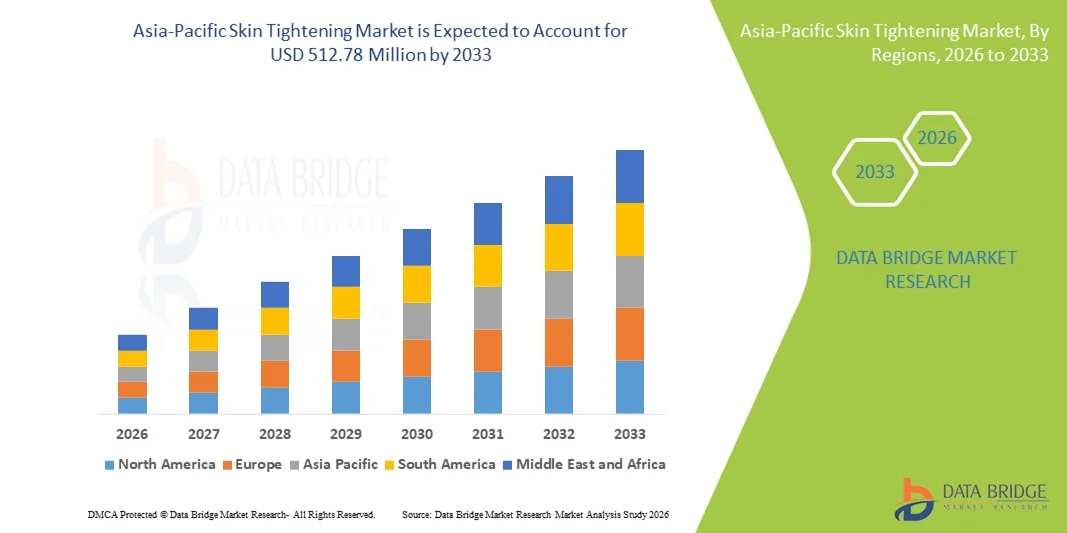
- As per Data Bridge Market Research analysis, the Asia-Pacific skin tightening market size was valued at USD 222.51 million in 2025 and is expected to reach USD 512.78 million by 2033, at a CAGR of 11.00% during the forecast period
- The market growth is primarily driven by the rising preference for minimally invasive and non-invasive aesthetic procedures, increasing awareness of anti-aging treatments, and advancements in radiofrequency, ultrasound, and laser-based technologies across major Asia-Pacific economies
- In addition, growing disposable incomes, expanding medical tourism, and the surge in demand for personalized cosmetic treatments are positioning skin tightening solutions as a key segment in the region’s aesthetic industry, thereby propelling sustained market expansion
Market Size & Forecast
- Global Market Value (2025): USD 222.51 million
- Expected Market Value (2033): USD 512.78 million
- Forecast CAGR (2026-2033): 11.00%
What are the Major Takeaways of Asia-Pacific Skin Tightening Market?
- Skin tightening treatments, encompassing radiofrequency, ultrasound, laser, and combination-based technologies, are emerging as essential components of the region’s aesthetic and dermatology industry, offering non-invasive solutions for skin laxity, wrinkle reduction, and collagen stimulation in both clinical and home-use settings
- The accelerating demand for skin tightening procedures is primarily fueled by growing consumer awareness of aesthetic enhancements, rapid technological advancements in energy-based devices, and the increasing availability of affordable cosmetic treatments across emerging Asian economies
- China dominated the Asia-Pacific skin tightening market with the largest revenue share of 38.1% in 2025, supported by a booming medical aesthetics sector, rising disposable incomes, and expanding networks of aesthetic clinics and dermatology centers catering to both domestic and international clients
- India is expected to be the fastest-growing market during the forecast period, driven by a youthful population, expanding medical tourism, and rising acceptance of non-surgical cosmetic procedures
- Radio Frequency Skin Tightening segment dominated the market with the largest market share of 42.2% in 2025, owing to their proven safety, versatility, and consistent clinical outcomes in skin rejuvenation and tightening applications across diverse skin types
Report Scope and Asia-Pacific Skin Tightening Market Segmentation
|
Attributes |
Asia-Pacific Skin Tightening Key Market Insights |
|
Segments Covered |
|
|
Countries Covered |
Asia-Pacific
|
|
Key Market Players |
|
|
Market Opportunities |
|
|
Value Added Data Infosets |
In addition to the insights on market scenarios such as market value, growth rate, segmentation, geographical coverage, and major players, the market reports curated by the Data Bridge Market Research also include in-depth expert analysis, patient epidemiology, pipeline analysis, pricing analysis, and regulatory framework |
What is the Key Trend in the Asia-Pacific Skin Tightening Market?
Integration of AI-Driven and Home-Use Aesthetic Technologies
- A significant and accelerating trend in the Asia-Pacific skin tightening market is the growing integration of artificial intelligence (AI) and advanced home-use aesthetic technologies, enhancing personalization, treatment precision, and accessibility in aesthetic care
- For instance, ULTRAFORMER MPT integrates AI-based feedback technology to automatically adjust ultrasound intensity for optimal tightening results across different skin types, improving safety and treatment efficiency. Similarly, LG Pra.L and YA-MAN have launched AI-enabled home beauty devices that analyze skin condition and recommend customized tightening settings
- AI integration in skin tightening systems enables features such as adaptive energy delivery, real-time temperature monitoring, and predictive skin response analysis, enhancing treatment comfort and outcomes. For instance, several new RF platforms now utilize AI algorithms to analyze skin impedance and optimize energy output for consistent tightening results across sessions. Furthermore, home-use devices incorporating AI-based tracking allow users to monitor treatment progress and receive intelligent alerts or reminders for follow-up session
- The seamless integration of AI technologies and portable tightening systems allows users and clinics to manage treatments through mobile applications, enabling real-time performance tracking and synchronization with dermatology platforms for improved patient engagement
- This trend toward smarter, data-driven, and accessible aesthetic devices is redefining consumer expectations for anti-aging care in Asia-Pacific. Consequently, companies such as BISON Medical and Lutronic are developing AI-enabled systems with real-time thermal imaging, auto-calibration, and remote monitoring features for enhanced treatment precision
- The demand for AI-driven and connected skin tightening devices is rapidly expanding across both professional and home-use segments, as consumers increasingly prioritize convenience, safety, and personalized skincare outcomes
Asia-Pacific Skin Tightening Market Dynamics
Driver
Growing Demand Fueled by Aging Population and Non-Invasive Aesthetic Preferences
- The increasing aging population, combined with a strong regional preference for non-invasive aesthetic procedures, is a major driver of the Asia-Pacific skin tightening market’s expansion
- For instance, in March 2025, BTL Aesthetics announced the expansion of its EMSCULPT NEO and EXION platforms across Asia-Pacific, introducing combined RF and ultrasound tightening systems to meet rising demand for comprehensive skin rejuvenation. Such product introductions by key players are expected to drive market growth over the forecast period
- As consumers seek effective anti-aging solutions without downtime or surgical risks, non-invasive skin tightening treatments provide visible lifting and contouring benefits, appealing to both younger and older demographics
- Furthermore, rapid advancements in radiofrequency, HIFU, and hybrid technologies, along with expanding access to aesthetic clinics and dermatology centers, are making these procedures more widely available across the region
- The convenience of outpatient treatments, minimal recovery time, and the growing acceptance of aesthetic enhancement as part of lifestyle wellness trends are propelling adoption across urban populations. In addition, home-use tightening devices have become increasingly popular due to rising awareness and affordability, particularly among working professionals
- These converging factors, along with greater social acceptance of aesthetic care and technological innovation, are expected to continue fueling the market’s steady growth
Restraint/Challenge
Skin Irritation Risks and Stringent Regulatory Approval Processes
- Concerns related to temporary skin irritation, burns, or discomfort during energy-based tightening procedures pose a significant challenge to broader adoption, especially among first-time users in emerging markets
- For instance, reports of post-procedure redness and mild swelling following high-intensity RF or ultrasound treatments have made some consumers cautious about undergoing such procedures without professional supervision
- Addressing these safety concerns through improved energy calibration, patient education, and advanced cooling or contact monitoring technologies is crucial for maintaining trust and satisfaction among clients. Companies such as Cutera and Venus Concept are incorporating real-time skin temperature feedback systems to enhance safety and comfort during treatments. In addition, the complex regulatory approval process across multiple Asia-Pacific countries often delays product launches and market entry for device manufacturers, limiting accessibility to the latest technologies
- While regulatory oversight ensures patient safety and product reliability, the variation in standards between countries such as China, Japan, and India can slow regional harmonization and innovation adoption
- Overcoming these challenges through coordinated regional frameworks, continued R&D investment, and clinician training initiatives will be vital for achieving consistent and sustainable market growth across Asia-Pacific
How is the Asia-Pacific Skin Tightening Market Segmented?
The market is segmented on the basis of product type, portability, treatment type, application, end user, and distribution channel.
- By Product Type
On the basis of product type, the Asia-Pacific skin tightening market is segmented into radiofrequency (RF) skin tightening, laser skin tightening, and ultrasound skin tightening. The radiofrequency skin tightening segment dominated the market with the largest revenue share of 41.7% in 2025, attributed to its proven clinical safety, versatility, and consistent outcomes in collagen regeneration. RF systems are widely used across dermatology clinics and aesthetic centers due to their compatibility with all skin types and minimal downtime. They are preferred for both facial and body contouring applications, offering uniform tightening results and long-term skin rejuvenation benefits. The affordability and availability of RF-based devices have also accelerated adoption among mid-range aesthetic clinics and homecare users in countries such as China, India, and South Korea. Moreover, ongoing advancements in multipolar and fractional RF technologies are strengthening their position as the standard for non-invasive tightening treatments in Asia-Pacific.
The ultrasound skin tightening segment is projected to witness the fastest CAGR from 2026 to 2033, driven by rising adoption of HIFU (High-Intensity Focused Ultrasound) systems for deep dermal lifting. Ultrasound devices deliver precise energy to deeper tissue layers, stimulating collagen and elastin production for long-lasting tightening effects. For instance, HIFU platforms are gaining immense popularity in South Korea and Japan due to their natural-looking results and minimal side effects. Increased awareness of high-end ultrasound treatments, coupled with innovations such as multi-depth transducers, is expected to expand accessibility beyond premium clinics. The growing availability of portable HIFU devices for home use is further amplifying consumer demand across the region.
- By Portability
On the basis of portability, the Asia-Pacific skin tightening market is segmented into portable and standalone systems. The standalone segment dominated the market in 2025 with the largest revenue share, primarily driven by its superior performance and precision in professional medical settings. Standalone devices are extensively adopted in dermatology clinics and hospitals due to their high energy output, wide treatment range, and advanced safety mechanisms. These systems allow for multiple modalities—such as RF, laser, and ultrasound—within a single platform, improving operational efficiency for practitioners. Their enhanced durability and customizable treatment parameters also make them ideal for high-volume clinical operations. The segment continues to lead owing to rising demand for premium, clinic-based tightening procedures across key Asia-Pacific cities such as Tokyo, Seoul, and Singapore.
The portable segment is expected to register the fastest CAGR during 2026–2033, attributed to increasing preference for home-use aesthetic solutions and portable clinic-grade systems. Portable devices are gaining traction due to affordability, compact design, and growing consumer interest in convenient self-care treatments. For instance, brands such as YA-MAN and LG Pra.L have successfully launched handheld RF and LED tightening devices in Japan and South Korea, creating a strong consumer base. The rise of e-commerce and digital beauty platforms has also boosted product visibility and accessibility among young professionals. Technological miniaturization enabling professional-grade results at home continues to propel this segment’s rapid growth.
- By Treatment Type
On the basis of treatment type, the market is bifurcated into non-invasive and minimally invasive procedures. The non-invasive segment dominated the Asia-Pacific skin tightening market with the highest revenue share in 2025, owing to the growing preference for pain-free, zero-downtime treatments. Non-invasive technologies such as RF, HIFU, and laser-based systems are increasingly favored for facial and body rejuvenation. Their appeal lies in immediate results, minimal discomfort, and low recovery time, making them ideal for working professionals and busy urban consumers. The proliferation of aesthetic clinics offering affordable packages has further driven accessibility in emerging markets such as India, Vietnam, and Indonesia. In addition, advancements in non-invasive systems offering multi-layer tightening and combination therapies are enhancing treatment efficacy and expanding patient adoption.
The minimally invasive segment is projected to grow at the fastest CAGR from 2026 to 2033, driven by the increasing acceptance of precision-based treatments such as fractional RF microneedling and subdermal tightening. These methods deliver more targeted results for moderate to severe skin laxity without requiring surgical intervention. For instance, fractional RF platforms by Cutera and Venus Concept are gaining strong traction across high-end clinics for their dual tightening and resurfacing effects. Growing demand among middle-aged consumers for long-lasting, natural results is fueling this segment’s rapid uptake. Furthermore, hybrid devices that combine microneedling with RF or ultrasound energy are gaining popularity for their efficiency and safety, reinforcing the segment’s growth outlook.
- By Application
On the basis of application, the market is segmented into reduce wrinkles, face lifting, body lifting, anti-aging, and others. The anti-aging segment dominated the market in 2025 with the largest share, supported by increasing consumer focus on youthful appearance and skin health maintenance. The expanding middle-class population in Asia-Pacific, along with growing social media influence, has led to widespread awareness of anti-aging treatments. Clinics across China, Japan, and Thailand report a surge in non-invasive tightening treatments for prevention and correction of early aging signs. Energy-based tightening procedures that stimulate collagen and improve skin tone are highly sought after, making anti-aging the cornerstone of aesthetic services. In addition, the availability of affordable maintenance sessions and subscription-based clinic programs has strengthened repeat consumer engagement.
The face lifting segment is expected to exhibit the fastest CAGR during 2026–2033, driven by the rising preference for non-surgical facial contouring among millennials and younger professionals. HIFU and fractional RF technologies are gaining immense popularity for achieving V-line lifting and jawline definition without incisions. For instance, South Korea remains a global hub for non-invasive facial treatments, influencing adoption trends across the Asia-Pacific region. Increasing consumer inclination toward naturally contoured appearances and minimal-recovery procedures is further enhancing segment growth. The proliferation of compact facial lifting devices for at-home use is also fueling accessibility and consumer confidence in this category.
- By End User
On the basis of end user, the market is segmented into dermatology clinics, hospitals, beauty salons and cosmetic centres, and homecare. The dermatology clinics segment dominated the market in 2025, accounting for the largest revenue share due to the presence of trained specialists and advanced technology infrastructure. Dermatology clinics provide higher safety assurance, customized treatment programs, and access to premium tightening systems, making them the preferred choice among consumers seeking reliable results. In addition, rising partnerships between device manufacturers and aesthetic chains for clinical trials and training support are reinforcing this segment’s dominance. Rapid urbanization and the growth of private aesthetic practices in China and India are also boosting clinic-based procedure volumes. The segment continues to expand as clinics diversify offerings through subscription-based and package-driven models targeting recurring clientele.
The homecare segment is anticipated to register the fastest CAGR from 2026 to 2033, propelled by technological miniaturization, affordability, and changing consumer behavior toward self-administered beauty solutions. Portable tightening devices are witnessing increasing adoption among tech-savvy consumers in Japan, South Korea, and China, where home-use skincare is a rising trend. For instance, companies such as Panasonic and YA-MAN are launching advanced RF and LED systems catering to personalized at-home facial tightening. The convenience, privacy, and cumulative benefits of regular home treatments are driving strong demand growth. The segment’s expansion is further supported by online retail availability and product education through beauty influencers and digital marketing campaigns.
- By Distribution Channel
On the basis of distribution channel, the market is categorized into direct, tenders, and retail. The direct segment dominated the Asia-Pacific skin tightening market in 2025 with the largest revenue share, as major manufacturers prioritize direct sales to clinics, hospitals, and authorized distributors. This channel ensures hands-on device training, maintenance support, and quality control—key factors in professional device sales. For instance, leading brands such as BTL and Lutronic rely heavily on direct partnerships with aesthetic chains for large-scale product deployment. The segment’s strength also stems from long-term service contracts and regulatory compliance management provided directly by manufacturers. Direct distribution continues to play a vital role in ensuring device credibility and sustaining institutional trust across regional markets.
The retail segment is projected to grow at the fastest CAGR during 2026–2033, driven by rising online sales of aesthetic devices and the growing influence of digital retail platforms. E-commerce expansion through channels such as Tmall, Amazon Asia, and Lazada has made beauty devices more accessible to consumers across tier-1 and tier-2 cities. For instance, regional beauty tech brands such as YA-MAN and FOREO have established strong online ecosystems, enabling personalized product recommendations and user education. The surge in consumer preference for self-care and digital shopping convenience is propelling this channel’s expansion. In addition, retail partnerships with beauty stores and wellness chains are expected to further enhance brand visibility and accelerate market penetration.
Asia-Pacific Skin Tightening Market Regional Analysis
- China dominated the Asia-Pacific skin tightening market with the largest revenue share of 38.1% in 2025, supported by a booming medical aesthetics sector, rising disposable incomes, and expanding networks of aesthetic clinics and dermatology centers catering to both domestic and international clients
- Consumers in China are increasingly adopting radiofrequency, ultrasound, and laser-based tightening procedures due to their effectiveness, safety, and minimal recovery time, reflecting a growing shift toward technology-led skincare solutions
- This dominant position is further supported by the presence of a large network of aesthetic clinics, continuous technological innovation by domestic and international manufacturers, and government support for the expanding cosmetic and wellness sectors, solidifying China as the regional leader in skin tightening treatments
The China Skin Tightening Market Insight
The China skin tightening market captured the largest revenue share in Asia-Pacific in 2025, fueled by a booming medical aesthetics sector, strong consumer demand for anti-aging treatments, and widespread acceptance of minimally invasive cosmetic procedures. Chinese consumers are increasingly favoring energy-based skin tightening solutions due to their visible results and safety profile. Continuous investment by domestic manufacturers in advanced aesthetic systems and growing availability of professional-grade devices in clinics and beauty centers are driving market expansion across both urban and tier-2 cities.
Japan Skin Tightening Market Insight
The Japan skin tightening market is experiencing robust growth, propelled by a high emphasis on skincare innovation, aging population demographics, and the country’s strong cultural preference for youthful appearance. Demand for radiofrequency and ultrasound-based tightening treatments is rising due to their non-surgical nature and proven efficacy. In addition, collaborations between international and local manufacturers are enhancing the adoption of advanced skin tightening technologies in medical and cosmetic clinics across Japan.
India Skin Tightening Market Insight
The India skin tightening market is expected to witness the fastest growth within Asia-Pacific, driven by an expanding middle-class population, increasing awareness of aesthetic procedures, and the influence of social media beauty trends. The availability of cost-effective treatment options and the proliferation of dermatology clinics and cosmetic centers are supporting market growth. Furthermore, the entry of global aesthetic device manufacturers and government support for healthcare infrastructure are enhancing access to advanced skin tightening technologies, solidifying India’s emerging position in the regional market.
South Korea Skin Tightening Market Insight
The South Korea skin tightening market is expanding rapidly, supported by the country’s globally recognized aesthetic and cosmetic industry and its strong focus on advanced skincare technology. Consumers in South Korea prioritize preventative and anti-aging treatments, driving demand for non-invasive and minimally invasive skin tightening procedures such as HIFU (High-Intensity Focused Ultrasound) and RF (Radiofrequency) therapies. The presence of leading cosmetic device manufacturers and medical tourism focused on aesthetic treatments further boosts market growth. In addition, continuous innovation in home-use beauty devices and rising male consumer participation in aesthetic care are contributing to South Korea’s strong market performance in the region.
Which are the Top Companies in Asia-Pacific Skin Tightening Market?
The Asia-Pacific Skin Tightening industry is primarily led by well-established companies, including:
- Cynosure, LLC (South Korea)
- Cutera, Inc. (U.S.)
- Merz North America, Inc. (Germany)
- Alma Lasers (Israel)
- BTL Group of Companies (Czech Republic)
- Venus Concept (Canada)
- Lumenis Be Ltd (Israel)
- InMode Ltd. (Israel)
- Sciton, Inc. (U.S.)
- Fotona d.o.o. (Slovenia)
- Candela (U.S.)
- CLASSYS Inc. (South Korea)
- Jeisys Medical Inc. (South Korea)
- Quanta System (Italy)
- DEKA M.E.L.A. S.r.l. (Italy)
- Galderma Group (Switzerland)
- Lynton Lasers Ltd (U.K.)
- Apyx Medical (U.S.)
- Hironic Co., Ltd. (South Korea)
- Zimmer MedizinSysteme GmbH (Germany)
What are the Recent Developments in Asia-Pacific Skin Tightening Market?
- In September 2025, a market-news article noted that the introduction of the next-generation ultrasound system “Ultherapy Prime” in Singapore in late 2024 had spurred a surge in regional adoption of non-surgical skin tightening, as preferences shift toward minimal downtime, visible lift and practising clinics upgrade technology
- In March 2025, Merz Aesthetics announced an expanded indication for the Ultherapy PRIME platform to include treatment of skin laxity on the arms and abdomen. The expansion from facial to body applications shows the device’s versatility and the broader demand for skin tightening beyond the face in Asia-Pacific
- In September 2024, Merz Aesthetics announced the global launch of its “Ultherapy PRIME” platform a next-generation, noninvasive ultrasound skin lifting/tightening system with real-time imaging and enhanced ergonomics. The improved platform introduces advanced ultrasound energy delivery and imaging, aimed at improving treatment precision and outcomes in skin tightening
- In October 2022, Galderma announced plans to expand its manufacturing and innovation footprint in the Asia-Pacific region, supported by the Singapore Economic Development Board this move underscores the company’s strategic commitment to meeting increasing demand for dermatology and aesthetic treatments across Asia-Pacific markets
- In August 2022, Korean skincare brand MEDICUBE launched home-use skin tightening / lifting devices in South Korea, namely the “Age-R Derma EMS Shot” (EMS = electrical muscle stimulation) and “Age-R Ussera Deep Shot” (ultrasound energy) — these move professional-grade tightening technology into consumer hands
- https://www.businesswireindia.com/galderma-announces-intention-expand-manufacturing-innovation-footprint-asia-pacific-81212.html
- https://www.allure.com/story/medicube-skin-care-devices-review
- https://ians.in/business-wire-detail/merz-aesthetics-announces-the-launch-of-ultherapy-prime-platform-as-the-next-generation-of-nonsurgical-skin-lifting-treatments-24-09-2024?
- https://merzaesthetics.com/news/merz-announces-new-arms-abdomen-indication-ultherapy/
- https://www.businesstimes.com.sg/lifestyle/style-travel/skip-scalpel-growing-preference-non-surgical-aesthetic-treatment-drives-ultherapy-sale

- Interactive Data Analysis Dashboard
- Company Analysis Dashboard for high growth potential opportunities
- Research Analyst Access for customization & queries
- Competitor Analysis with Interactive dashboard
- Latest News, Updates & Trend analysis
- Harness the Power of Benchmark Analysis for Comprehensive Competitor Tracking
Data collection and base year analysis are done using data collection modules with large sample sizes. The stage includes obtaining market information or related data through various sources and strategies. It includes examining and planning all the data acquired from the past in advance. It likewise envelops the examination of information inconsistencies seen across different information sources. The market data is analysed and estimated using market statistical and coherent models. Also, market share analysis and key trend analysis are the major success factors in the market report. To know more, please request an analyst call or drop down your inquiry.
The key research methodology used by DBMR research team is data triangulation which involves data mining, analysis of the impact of data variables on the market and primary (industry expert) validation. Data models include Vendor Positioning Grid, Market Time Line Analysis, Market Overview and Guide, Company Positioning Grid, Patent Analysis, Pricing Analysis, Company Market Share Analysis, Standards of Measurement, Global versus Regional and Vendor Share Analysis. To know more about the research methodology, drop in an inquiry to speak to our industry experts.
Data Bridge Market Research is a leader in advanced formative research. We take pride in servicing our existing and new customers with data and analysis that match and suits their goal. The report can be customized to include price trend analysis of target brands understanding the market for additional countries (ask for the list of countries), clinical trial results data, literature review, refurbished market and product base analysis. Market analysis of target competitors can be analyzed from technology-based analysis to market portfolio strategies. We can add as many competitors that you require data about in the format and data style you are looking for. Our team of analysts can also provide you data in crude raw excel files pivot tables (Fact book) or can assist you in creating presentations from the data sets available in the report.













