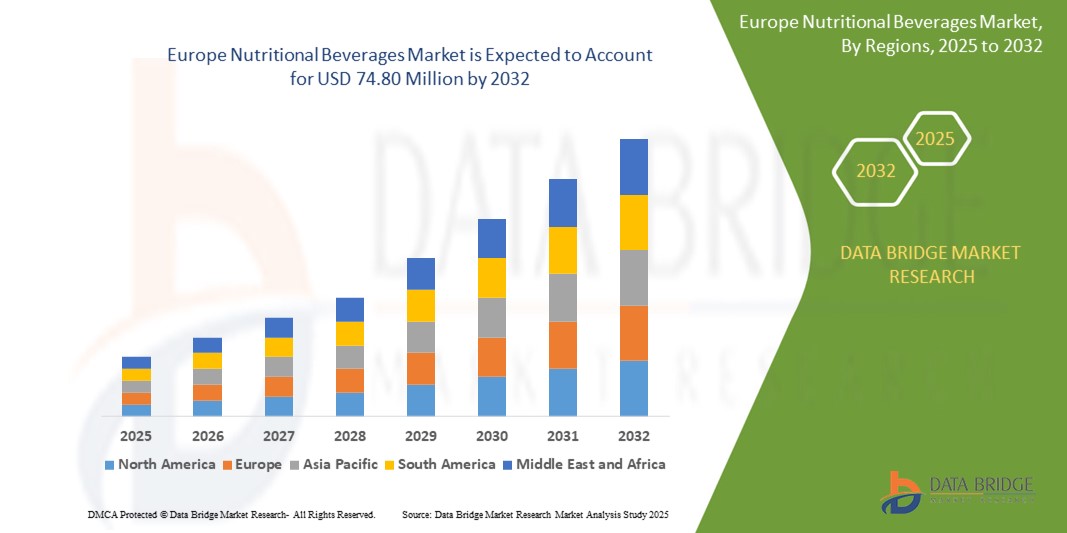
Nutritional Beverages Market Size
- The Europe nutritional beverages market size was valued at USD 37.26 million in 2024 and is expected to reach USD 74.80 million by 2032, at a CAGR of 9.10% during the forecast period
- The market growth is largely fueled by the increasing consumer focus on health, wellness, and preventive nutrition, leading to widespread adoption of functional and fortified beverages across various age groups and lifestyles
- Furthermore, rising demand for convenient, on-the-go nutritional solutions that offer targeted health benefits—such as immunity support, energy boost, digestive health, and weight management—is accelerating the consumption of ready-to-drink and protein-enriched beverages, thereby significantly boosting the industry’s growth
Nutritional Beverages Market Analysis
- Nutritional beverages are specially formulated drinks enriched with essential nutrients including proteins, vitamins, minerals, amino acids, and fibers, designed to support overall health, athletic performance, or specific dietary needs. These beverages are available in various forms such as shakes, enhanced waters, juices, and smoothies, catering to diverse consumer preferences
- The growing popularity of plant-based ingredients, clean-label formulations, and personalized nutrition—combined with innovations in functional ingredients and sustainable packaging—is driving rapid expansion of the market across household and commercial sectors, particularly through health-conscious retail and online channels
- Germany dominated the nutritional beverages market in 2024, due to its mature health and wellness sector, strong demand for functional foods, and increasing consumer preference for high-protein, low-sugar drinks
- France is expected to be the fastest growing region in the nutritional beverages market during the forecast period due to national initiatives promoting preventive health and clean eating, increased demand for organic and naturally sourced drinks, and the emergence of functional beverages catering to skin health, detox, and energy
- Bottles segment dominated the market with a market share of 62% in 2024, due to their ease of transport, resealability, and favorable shelf presentation. Bottled nutritional beverages are a staple in both home use and retail settings
Report Scope and Nutritional Beverages Market Segmentation
|
Attributes |
Nutritional Beverages Key Market Insights |
|
Segments Covered |
|
|
Countries Covered |
Europe
|
|
Key Market Players |
|
|
Market Opportunities |
|
|
Value Added Data Infosets |
In addition to the insights on market scenarios such as market value, growth rate, segmentation, geographical coverage, and major players, the market reports curated by the Data Bridge Market Research also include in-depth expert analysis, pricing analysis, brand share analysis, consumer survey, demography analysis, supply chain analysis, value chain analysis, raw material/consumables overview, vendor selection criteria, PESTLE Analysis, Porter Analysis, and regulatory framework. |
Nutritional Beverages Market Trends
“Growing Interest in Hydration and Electrolyte Balance”
- Consumer priorities are shifting toward beverages that support hydration and maintain electrolyte balance, particularly among fitness enthusiasts, athletes, and individuals with active lifestyles. Nutritional beverages now regularly feature added electrolytes, minerals, and functional ingredients aimed at enhanced hydration and overall well-being
- For instance, PepsiCo—through brands such as Gatorade—has expanded its product line to include zero-sugar and advanced electrolyte formulas targeted at health-conscious consumers seeking improved hydration and performance recovery solutions
- Growth is driven by the broader trend toward functional beverages, with many brands integrating clean-label ingredients, low sugar content, and added vitamins to align with evolving health and wellness goals
- Demand is particularly high in emerging markets, where rising incomes and urbanization boost awareness and consumption of convenient, health-oriented drink options
- Innovation in packaging, such as resealable bottles and eco-friendly materials, is gaining traction to enhance convenience and sustainability
- Expansion of online and specialty retail channels is making it easier for consumers to access a diverse range of nutritional beverages tailored to their specific hydration, energy, or performance needs
Nutritional Beverages Market Dynamics
Driver
“Growing Health Awareness”
- Increased health awareness is a major catalyst for the nutritional beverages market, with consumers seeking products that offer functional benefits, such as immune support, digestive health, protein enrichment, and energy enhancement
- For instance, Danone S.A. has seen substantial growth in its nutritional beverage segment (including brands such as Activia and Evian+) as consumers gravitate towards beverages formulated with probiotics, collagen, or added vitamins to proactively support wellness and meet dietary goals
- Government initiatives and public health campaigns are educating populations globally about the benefits of nutrient-rich beverages, further accelerating market adoption
- Health and wellness trends exacerbate demand for drinks suitable for a range of consumers, such as low-calorie, diabetic-friendly, organic, and plant-based products
- Millennials and Gen Z are particularly strong drivers, showing a preference for beverages supporting fitness goals and holistic health, thus influencing new product development. Manufacturers are investing in R&D to launch novel formulations tailored to immunity, cognitive function, and sports recovery
Restraint/Challenge
“Increasing Price Sensitivity among Consumers”
- As inflationary pressures and production costs rise, consumers are becoming more price-sensitive, challenging both premiumization strategies and market expansion in value-driven segments
- For instance, many health beverage brands—including leading protein shake and meal-replacement companies—have had to adjust pricing or introduce value-pack options in response to mounting competitive pressure and consumer demand for affordability, especially in developing markets where disposable incomes are under strain
- High prices for functional ingredients and advanced processing technologies lead to elevated final product costs, making some nutritional beverages inaccessible to a broader consumer base
- Price sensitivity is exacerbated by the prevalence of private-label and locally produced alternatives, pushing major brands to enhance price competitiveness without sacrificing nutritional value
- Economic slowdowns, supply chain disruptions, and volatility in raw material costs further squeeze margins for both brands and retailers, potentially hindering consistent market growth. Companies are increasingly offering tiered product ranges and promotional pricing to retain and attract cost-conscious consumers
Nutritional Beverages Market Scope
The market is segmented on the basis of nutrition type, product type, source, life cycle, content, flavors, packaging, origin, category, distribution channel, and end user.
- By Nutrition Type
On the basis of nutrition type, the market is segmented into vitamin profile, fat profile, protein profile, and others. The protein profile segment dominated the market revenue share in 2024, largely due to increasing awareness regarding the importance of muscle maintenance, tissue repair, and weight management. Consumers across demographics are incorporating high-protein nutritional drinks into their daily diets, particularly gym-goers, athletes, and those following high-protein or ketogenic diets. The availability of both dairy and plant-based protein formulations has expanded the segment’s consumer base.
The vitamin profile segment is projected to register the fastest growth rate from 2025 to 2032, driven by heightened focus on immunity, cognitive health, and overall wellness. Rising incidences of vitamin deficiencies, especially in urban populations, and increasing interest in preventive healthcare are prompting consumers to opt for beverages enriched with essential vitamins such as B12, D, and C.
- By Product Type
On the basis of product type, the market is segmented into ready-to-drink (RTD) beverages, energy drinks, flavored and enhanced waters, juices, and others. The RTD beverages segment accounted for the largest share in 2024, as these products offer unmatched convenience, shelf stability, and portability. They align well with the fast-paced lifestyles of working individuals and students who seek nutritional benefits without preparation time.
The flavored and enhanced waters segment is expected to witness the fastest CAGR through 2032, propelled by rising demand for low-calorie, functional beverages. Consumers are increasingly attracted to waters fortified with vitamins, minerals, herbs, or electrolytes, as they offer hydration with added health value while avoiding sugars and artificial additives.
- By Source
On the basis of source, the market is categorized into fruits, vegetables, cereals, milk, eggs, and others. In 2024, fruits held the largest market share owing to their natural flavor, high consumer familiarity, and nutrient density. Fruit-based drinks are often perceived as healthier options and appeal to a broad age range, from children to seniors.
The vegetables segment is expected to grow at the highest rate over the forecast period, driven by increasing popularity of green smoothies and detox drinks. Vegetables such as spinach, kale, beetroot, and carrots are being incorporated into nutritional beverages due to their antioxidant and anti-inflammatory properties, attracting health-conscious consumers seeking plant-powered nutrition.
- By Life Cycle
On the basis of life cycle, the market is segmented into infants, kids, and adults. The adults segment dominated the market in 2024, as this group comprises the most active buyers of functional and fortified beverages that support energy, weight control, and age-related nutritional needs. Busy professionals, aging adults, and fitness-oriented individuals drive sustained demand.
The infants segment is projected to experience the fastest growth, supported by growing concerns over child nutrition and increasing availability of infant-safe, fortified drinks. Parents, particularly in urban areas, are turning to beverages enriched with iron, calcium, and DHA to support brain and physical development during early stages of growth.
- By Content
On the basis of content, the market is divided into macronutrients and micronutrients. Macronutrient-rich beverages led the market in 2024 due to their importance in daily energy supply, satiety, and metabolic support. Products offering high protein, healthy fats, and complex carbohydrates are in high demand among those seeking performance-based or meal replacement options.
The micronutrient segment is anticipated to grow rapidly, fueled by consumer demand for immunity-boosting, bone-strengthening, and brain-enhancing beverages. Fortification with zinc, magnesium, selenium, and vitamins is becoming increasingly common, especially in beverages targeting seniors and women’s health.
- By Flavors
On the basis of flavor, the market is segmented into fruits, berries, tea and coffee, chocolate, vanilla, nuts, and others. The fruits segment dominated in 2024 due to the natural taste preference and a wide array of fruit-based blends that enhance both palatability and perceived healthiness. Flavors such as mango, citrus, apple, and pomegranate are among the top sellers.
Tea and coffee flavors are expected to grow at the fastest pace, largely driven by the increasing shift toward functional beverages that provide alertness, antioxidants, and a familiar taste profile. The growth of cold-brew coffee protein drinks, matcha-infused wellness blends, and herbal teas with adaptogens is expanding this segment’s footprint.
- By Packaging
On the basis of packaging, the market is segmented into bottles, cans, and cartons. Bottles held the largest share of 62% in 2024 due to their ease of transport, resealability, and favorable shelf presentation. Bottled nutritional beverages are a staple in both home use and retail settings.
Cartons are expected to witness the fastest growth rate, driven by increasing consumer preference for environmentally sustainable packaging solutions. Carton-based beverages are gaining popularity especially in Europe and North America, where recycling awareness and regulatory pressure on plastic waste are influencing packaging choices.
- By Origin
On the basis of origin, the market is classified into organic and conventional. In 2024, conventional beverages led the market due to affordability, mass production capabilities, and broad distribution networks. These products dominate traditional retail channels and offer economic accessibility to a larger population base.
The organic segment is projected to grow at the fastest pace, driven by rising health consciousness, increasing allergic sensitivities, and demand for chemical-free, non-GMO ingredients. The organic trend is especially strong among urban millennials and health-focused families, driving premiumization of nutritional beverage portfolios.
- By Category
On the basis of category, market is segmented into nutritional shakes, diet/weight loss, low carb nutrition, sport nutrition, organic high protein nutrition, breakfast to-go shakes, meal replacement shakes, and yogurt smoothies. Nutritional shakes led the market in 2024 owing to their versatility and widespread appeal for general health maintenance, fitness recovery, and daily supplementation. These shakes offer a convenient way to consume balanced nutrients in one serving.
The meal replacement shakes category is expected to expand rapidly, particularly as consumers seek on-the-go, nutrient-dense options that support weight loss, satiety, and dietary control. These beverages are also gaining traction in clinical and elderly nutrition, providing easy-to-digest yet complete meals.
- By Distribution Channel
On the basis of distribution channel, the market is bifurcated into B2B and B2C. The B2C segment dominated the market in 2024 due to the growing availability of nutritional beverages through retail stores, health food shops, pharmacies, and online platforms. The rise of e-commerce has especially fueled direct-to-consumer access, with customized subscription services and home delivery.
The B2B segment is projected to grow significantly over the forecast period, fueled by increasing partnerships with hospitals, gyms, wellness retreats, and institutional food services. These commercial setups are integrating nutritional beverages into their offerings to meet client health goals and corporate wellness standards.
- By End User
On the basis of end user, the market is segmented into household and commercial. The household segment accounted for the largest market share in 2024, underpinned by rising demand for daily health supplements and fortified drinks for family consumption. Households are increasingly adopting nutritional beverages as meal accompaniments, breakfast options, or workout supplements.
The commercial segment is expected to grow at the highest CAGR, as nutritional beverages are being introduced in gyms, healthcare centers, offices, cafes, and educational institutions. These beverages are being used not just as consumer products, but also as part of nutrition plans and menu innovations in commercial health and hospitality sectors.
Nutritional Beverages Market Regional Analysis
- Germany dominated the nutritional beverages market with the largest revenue share in 2024, driven by its mature health and wellness sector, strong demand for functional foods, and increasing consumer preference for high-protein, low-sugar drinks
- The country’s leadership is bolstered by a well-established retail network, widespread acceptance of plant-based nutrition, and innovation in fortified beverages targeting energy, digestion, and immunity
- Germany’s position is further supported by active R&D investment from global and local food manufacturers, the availability of advanced processing technologies, and regulatory alignment that encourages functional ingredient usage and clean-label formulations. The growing number of fitness-focused consumers and aging populations seeking convenient health solutions continues to reinforce demand across both B2C and B2B channels
U.K. Nutritional Beverages Market Insight
The U.K. nutritional beverages market is expected to grow steadily from 2025 to 2032, fueled by increasing health consciousness, rising adoption of on-the-go wellness drinks, and heightened consumer interest in gut health, energy, and mental performance. The surge in vegan and flexitarian lifestyles is also promoting demand for plant-based protein shakes and vitamin-enhanced beverages, while a strong e-commerce presence is accelerating product accessibility and innovation.
France Nutritional Beverages Market Insight
France is projected to register the fastest CAGR in the Europe nutritional beverages market during the forecast period of 2025 to 2032. Growth is driven by national initiatives promoting preventive health and clean eating, increased demand for organic and naturally sourced drinks, and the emergence of functional beverages catering to skin health, detox, and energy. The market is also benefiting from strong domestic production capabilities and a growing base of health-focused startups developing regionally inspired formulations.
Nutritional Beverages Market Share
The nutritional beverages industry is primarily led by well-established companies, including:
- Chr Hansen Holding A/S (Denmark)
- SGS Société Générale de Surveillance SA. (Switzerland)
- Intertek Group plc (U.K.)
- Eurofins Scientific (Luxembourg)
- Bureau Veritas (France)
- ALS (Australia)
- Mérieux Nutrisciences Corporation (U.S.)
- AsureQuality (New Zealand)
- TUV Nord Group (Germany)
- Bureau Veritas (France)
- Labcorp (U.S.)
- Danone (France)
- Mead Johnson and Company, LLC. (U.S.)
- PepsiCo (U.S.)
- Nestlé (Switzerland)
- The Kraft Heinz Company (U.S.)
- General Mills Inc (U.S.)
- ADM (U.S.)
- B. Braun SE (Germany)
- Abbott (U.S.)
- Thermo Fisher Scientific Inc. (U.S.)
- BASF (Germany)
- DuPont (U.S.)
Latest Developments in Europe Nutritional Beverages Market
- In February 2025, Coca-Cola confirmed a strategic shift towards its ultra-filtered milk brand, Fairlife. The company plans to expand Fairlife's offerings, capitalizing on the increasing consumer interest in high-protein, lactose-free, and low-sugar dairy alternatives
- In March 2025, PepsiCo announced its plan to acquire Poppi, a low-calorie, probiotic-infused soda brand, for nearly USD 2 billion. This strategic move aims to align PepsiCo with the growing consumer demand for healthier beverage options
- In May 2022, PerfectTed introduced a line of health drinks made of matcha green tea-based natural energy beverages to combat fatigue. The challenger brand's goal was to transform caffeine usage into something healthier by utilizing a matcha ingredient that has been used for over 800 years
- In May 2021, Gist, a prebiotic effervescent beverage made from five botanical components that have received organic certification, was launched to compete with other health drinks. The gist is reinventing was claimed to be a clean beverage as it was made using plants rather than extracts
- In May 2021, PepsiCo, the leading-edge food and beverage company, just launched its latest innovation, Soulboost, a sparkling water beverage with a splash of real juice and functional ingredients. Soulboost captures the fun of a fruity drink through a light, guilt-free sparkling water refreshment

- Interactive Data Analysis Dashboard
- Company Analysis Dashboard for high growth potential opportunities
- Research Analyst Access for customization & queries
- Competitor Analysis with Interactive dashboard
- Latest News, Updates & Trend analysis
- Harness the Power of Benchmark Analysis for Comprehensive Competitor Tracking
Europe Nutritional Beverages Market, Supply Chain Analysis and Ecosystem Framework
To support market growth and help clients navigate the impact of geopolitical shifts, DBMR has integrated in-depth supply chain analysis into its Europe Nutritional Beverages Market research reports. This addition empowers clients to respond effectively to global changes affecting their industries. The supply chain analysis section includes detailed insights such as Europe Nutritional Beverages Market consumption and production by country, price trend analysis, the impact of tariffs and geopolitical developments, and import and export trends by country and HSN code. It also highlights major suppliers with data on production capacity and company profiles, as well as key importers and exporters. In addition to research, DBMR offers specialized supply chain consulting services backed by over a decade of experience, providing solutions like supplier discovery, supplier risk assessment, price trend analysis, impact evaluation of inflation and trade route changes, and comprehensive market trend analysis.
Data collection and base year analysis are done using data collection modules with large sample sizes. The stage includes obtaining market information or related data through various sources and strategies. It includes examining and planning all the data acquired from the past in advance. It likewise envelops the examination of information inconsistencies seen across different information sources. The market data is analysed and estimated using market statistical and coherent models. Also, market share analysis and key trend analysis are the major success factors in the market report. To know more, please request an analyst call or drop down your inquiry.
The key research methodology used by DBMR research team is data triangulation which involves data mining, analysis of the impact of data variables on the market and primary (industry expert) validation. Data models include Vendor Positioning Grid, Market Time Line Analysis, Market Overview and Guide, Company Positioning Grid, Patent Analysis, Pricing Analysis, Company Market Share Analysis, Standards of Measurement, Global versus Regional and Vendor Share Analysis. To know more about the research methodology, drop in an inquiry to speak to our industry experts.
Data Bridge Market Research is a leader in advanced formative research. We take pride in servicing our existing and new customers with data and analysis that match and suits their goal. The report can be customized to include price trend analysis of target brands understanding the market for additional countries (ask for the list of countries), clinical trial results data, literature review, refurbished market and product base analysis. Market analysis of target competitors can be analyzed from technology-based analysis to market portfolio strategies. We can add as many competitors that you require data about in the format and data style you are looking for. Our team of analysts can also provide you data in crude raw excel files pivot tables (Fact book) or can assist you in creating presentations from the data sets available in the report.