


What is the Europe Topical Drug Delivery Market Size and Overview?
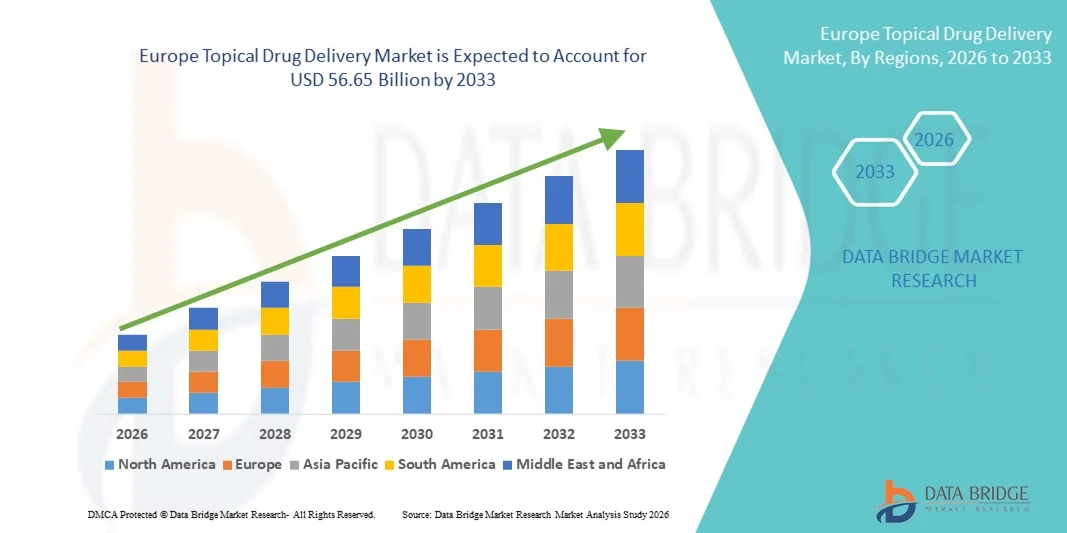
- The Europe topical drug delivery market size was valued at USD 36.50 billion in 2025 and is expected to reach USD 56.65 billion by 2033, at a CAGR of 5.65% during the forecast period
- The market growth is largely fueled by the increasing prevalence of dermatological disorders, rising incidence of chronic wounds and pain conditions, and continuous advancements in formulation technologies such as transdermal patches, gels, creams, and nano-based delivery systems, leading to improved therapeutic efficacy and patient compliance across both hospital and homecare settings
- Furthermore, growing patient preference for non-invasive and self-administered treatment options, along with rising demand for targeted drug delivery with reduced systemic side effects, is establishing topical drug delivery systems as a preferred therapeutic approach. These converging factors are accelerating the adoption of Topical Drug Delivery solutions, thereby significantly boosting the industry’s growth
Market Size & Forecast
- Europe Market Value (2025): USD 36.50 billion
- Expected Market Value (2033): USD 56.65 billion
- Forecast CAGR (2025–2033): 5.65%
Europe Topical Drug Delivery Market Analysis
- Topical drug delivery systems, including creams, gels, ointments, transdermal patches, and sprays, are increasingly vital components of modern therapeutic management across dermatology, pain management, and hormone replacement therapies due to their non-invasive administration, localized action, and improved patient compliance in both clinical and homecare settings
- The escalating demand for topical drug delivery solutions is primarily fueled by the rising prevalence of skin disorders, increasing incidence of chronic pain and diabetic wounds, growing geriatric population, and a strong preference for targeted therapies that minimize systemic side effects
- The U.K. dominated the topical drug delivery market with the largest revenue share of 28.6% in 2025, characterized by advanced pharmaceutical research capabilities, strong regulatory framework, high healthcare expenditure, and widespread adoption of innovative transdermal and dermatological formulations across hospitals and retail pharmacies
- Germany is expected to be the fastest-growing region in the topical drug delivery market during the forecast period, driven by increasing investments in pharmaceutical R&D, strong presence of leading drug manufacturers, rising demand for advanced wound care products, and growing focus on patient-centric drug delivery technologies
- The Dermal Drug Delivery segment held the largest market revenue share of 44.2% in 2025, driven by widespread use in treating dermatological conditions, localized pain, and inflammation
Report Scope and Topical Drug Delivery Market Segmentation
|
Attributes |
Topical Drug Delivery Key Market Insights |
|
Segments Covered |
|
|
Countries Covered |
Europe
|
|
Key Market Players |
|
|
Market Opportunities |
|
|
Value Added Data Infosets |
|
What is the Key Trend in the Europe Topical Drug Delivery Market?
Advancements in Transdermal and Targeted Drug Delivery Technologies
- A significant and accelerating trend in the topical drug delivery market is the growing advancement in transdermal patches, microneedle systems, and nano-formulated topical therapies aimed at improving drug absorption, bioavailability, and patient compliance
- These innovations are enhancing therapeutic outcomes while minimizing systemic side effects
- For instance, several European pharmaceutical companies are expanding transdermal patch portfolios for hormone replacement therapy and pain management, while research institutions in Germany and the U.K. are actively developing microneedle-based patches for insulin and vaccine delivery to improve controlled release and patient comfort
- The rising demand for non-invasive and patient-friendly treatment options is encouraging the adoption of topical drug delivery systems over oral and injectable alternatives. This is particularly evident in dermatology, wound care, and localized pain management applications
- Furthermore, increasing research into lipid-based carriers, hydrogels, and nanoparticle formulations is improving drug stability and penetration efficiency. These advancements are reshaping product development strategies within the European pharmaceutical sector
- The emphasis on personalized medicine and customized dermatological treatments is further driving innovation in topical formulations tailored to specific patient needs
- Overall, the shift toward advanced, targeted, and minimally invasive drug delivery systems is significantly transforming treatment approaches and strengthening the growth trajectory of the Europe Topical Drug Delivery market
Europe Topical Drug Delivery Market Dynamics
Driver
Rising Prevalence of Dermatological Disorders and Chronic Diseases
- The increasing prevalence of skin disorders such as eczema, psoriasis, acne, and fungal infections, along with the growing incidence of chronic pain and hormonal conditions, is a major driver for the Europe Topical Drug Delivery market
- For instance, the growing number of psoriasis and atopic dermatitis cases in countries such as Germany, France, and Italy has led to increased prescriptions of corticosteroid creams, antifungal ointments, and medicated gels, thereby driving demand for advanced topical formulations across hospital and retail pharmacy channels
- The expanding geriatric population across Europe is contributing to higher demand for topical treatments, particularly for age-related skin conditions and localized pain management. Elderly patients often prefer non-invasive treatment methods, which supports the adoption of creams, gels, ointments, and transdermal patches
- In addition, rising awareness regarding early diagnosis and treatment of dermatological conditions is encouraging patients to seek prescription and over-the-counter topical therapies
- The presence of strong pharmaceutical manufacturing capabilities and increasing investments in research and development across European countries are accelerating product innovation and commercialization
- Favorable regulatory support for advanced drug formulations and growing healthcare expenditure further contribute to the sustained expansion of the topical drug delivery industry in the region
Restraint/Challenge
Skin Irritation Risks and Regulatory Compliance Challenges
- One of the primary challenges in the Europe Topical Drug Delivery market is the risk of skin irritation, allergic reactions, and inconsistent drug absorption associated with certain formulations. Variability in skin permeability among patients can impact treatment effectiveness and limit universal applicability
- For instance, certain high-potency topical corticosteroids and transdermal patches have been associated with contact dermatitis or redness in sensitive patients, requiring additional clinical validation and post-market surveillance to ensure safety compliance under European regulatory standards
- Strict regulatory requirements imposed by European health authorities regarding product safety, clinical efficacy, and quality standards can lengthen approval timelines and increase development costs for manufacturers
- Compliance with Good Manufacturing Practices (GMP), labeling regulations, and pharmacovigilance standards requires significant investment in quality control systems and clinical testing
- Furthermore, competition from alternative drug delivery routes such as oral and injectable therapies may limit the adoption of certain topical products, particularly when deeper systemic action is required
- Addressing these challenges through improved formulation technologies, enhanced safety testing, and streamlined regulatory strategies will be essential for maintaining long-term growth and competitiveness in the Europe topical drug delivery market
Europe Topical Drug Delivery Market Scope
The market is segmented on the basis of product, route of administration, distribution channel, and end-user.
- By Product
On the basis of product, the Topical Drug Delivery market is segmented into Semi-Solid Formulations, Liquid Formulations, Solid Formulations, and Transdermal Products. The Semi-Solid Formulations segment dominated the largest market revenue share of 38.6% in 2025, driven by the extensive use of creams, ointments, and gels in dermatological treatments and pain management therapies. These formulations are widely preferred due to ease of application, localized drug action, and reduced systemic side effects. Increasing prevalence of skin disorders such as eczema, psoriasis, and acne supports strong demand. Pharmaceutical companies continue to innovate with enhanced absorption bases and combination therapies. Semi-solids offer cost-effective manufacturing and patient-friendly dosing. Growing demand for over-the-counter dermatology products further strengthens segment dominance. Hospitals and clinics frequently prescribe semi-solid formulations for wound care and infection management. Favorable regulatory approvals for topical generics support market penetration. Rising awareness regarding self-care and skin health accelerates adoption. The segment also benefits from strong retail pharmacy distribution networks. Overall, semi-solid formulations maintain leadership due to high prescription rates and broad therapeutic applications.
The Transdermal Products segment is anticipated to witness the fastest CAGR of 12.9% from 2026 to 2033, fueled by advancements in patch technologies and controlled drug release systems. Transdermal patches provide sustained drug delivery and improved patient compliance. Increasing use in hormone replacement therapy, pain management, and smoking cessation supports rapid growth. Innovations in microneedle patches enhance drug permeability and efficacy. Pharmaceutical firms are investing in next-generation adhesive technologies for improved skin compatibility. Rising preference for non-invasive drug administration methods accelerates adoption. Expanding geriatric population favors convenient long-term therapy solutions. Regulatory support for novel transdermal systems boosts commercialization. Growth in chronic disease prevalence strengthens demand for continuous drug delivery options. Improved bioavailability and reduced dosing frequency increase patient adherence. Overall, transdermal products represent the fastest-growing product segment due to technological innovation and rising demand for sustained-release therapies.
- By Route of Administration
On the basis of route of administration, the Topical Drug Delivery market is segmented into Dermal Drug Delivery, Ophthalmic Drug Delivery, Rectal Drug Delivery, Vaginal Drug Delivery, and Nasal Drug Delivery. The Dermal Drug Delivery segment held the largest market revenue share of 44.2% in 2025, driven by widespread use in treating dermatological conditions, localized pain, and inflammation. Increasing incidence of skin infections and allergic reactions fuels demand. Dermal delivery minimizes systemic exposure and enhances safety profiles. Pharmaceutical companies develop advanced penetration enhancers to improve drug absorption. Over-the-counter availability of dermal formulations strengthens consumer adoption. Growing awareness of cosmetic dermatology also supports segment expansion. Hospitals and outpatient clinics frequently prescribe dermal therapies for wound management. Favorable reimbursement policies for certain dermatology treatments sustain revenue growth. Continuous product launches and generic approvals enhance availability. Overall, dermal drug delivery dominates due to broad therapeutic scope and high patient acceptance.
The Nasal Drug Delivery segment is expected to witness the fastest CAGR of 13.5% from 2026 to 2033, driven by rapid drug absorption and growing demand for non-invasive systemic delivery. Nasal sprays are increasingly utilized for vaccines, migraine treatments, and hormonal therapies. Rising research in intranasal biologics accelerates product development. The route offers quick onset of action, making it suitable for emergency treatments. Expanding use in central nervous system therapies enhances segment growth. Pharmaceutical companies invest in advanced spray technologies for precise dosing. Increasing patient preference for needle-free administration supports adoption. Regulatory approvals for innovative nasal formulations strengthen commercialization. Growth in respiratory disorders further fuels demand. Overall, nasal drug delivery emerges as the fastest-growing route due to rapid absorption, convenience, and expanding clinical applications.
- By Distribution Channel
On the basis of distribution channel, the Topical Drug Delivery market is segmented into Direct Tenders and Retail. The Retail segment accounted for the largest market revenue share of 61.8% in 2025, driven by strong presence of pharmacy chains, online platforms, and over-the-counter product availability. Consumers prefer retail pharmacies for convenience and immediate access to dermatology treatments. Growth of e-commerce platforms enhances product accessibility. Increasing demand for self-medication and skincare solutions strengthens retail dominance. Pharmaceutical companies expand distribution partnerships with large retail networks. Promotional campaigns and consumer awareness initiatives boost sales. Wide product portfolios in retail settings encourage brand visibility. Rising urbanization supports pharmacy expansion. Overall, retail channels dominate due to accessibility, convenience, and strong consumer demand.
The Direct Tenders segment is projected to witness the fastest CAGR of 11.6% from 2026 to 2033, fueled by bulk procurement by hospitals and government healthcare institutions. Public healthcare programs increasingly procure topical medications through centralized tenders. Growing focus on cost optimization supports tender-based purchasing. Expansion of hospital networks strengthens institutional demand. Pharmaceutical manufacturers compete through pricing strategies in tender contracts. Increasing prevalence of chronic wounds and infections in hospital settings accelerates procurement volumes. Government reimbursement frameworks further support direct purchases. Emerging economies are investing in public healthcare infrastructure, driving tender growth. Overall, direct tenders are the fastest-growing channel due to expanding institutional procurement and cost-efficiency initiatives.
- By End-User
On the basis of end-user, the Topical Drug Delivery market is segmented into Hospitals, Clinics, Home Healthcare, Diagnostic Centers, and Others. The Hospitals segment dominated with a revenue share of 47.5% in 2025, driven by high patient inflow for dermatological treatments, wound care, and post-surgical management. Hospitals rely on topical therapies for infection prevention and pain management. Availability of skilled professionals ensures appropriate prescription and monitoring. Rising surgical procedures increase demand for post-operative topical medications. Strong procurement systems ensure consistent supply. Favorable reimbursement structures support hospital purchases. Integration of advanced wound care products enhances treatment outcomes. Overall, hospitals maintain dominance due to patient volume and clinical infrastructure.
The Home Healthcare segment is expected to witness the fastest CAGR of 14.1% from 2026 to 2033, driven by rising preference for at-home treatment and self-administration of medications. Increasing geriatric population supports demand for convenient topical therapies. Growth in chronic skin conditions encourages home-based management. Expansion of telemedicine platforms enhances remote consultation and prescription. Patients prefer cost-effective and non-invasive therapies at home. Availability of OTC products strengthens adoption. Pharmaceutical companies focus on patient-friendly packaging and dosing formats. Rising awareness regarding skincare and wound management fuels demand. Overall, home healthcare is the fastest-growing end-user segment due to convenience, cost savings, and expanding patient awareness.
Europe Topical Drug Delivery Market Regional Analysis
- The Europe topical drug delivery market is projected to expand at a substantial CAGR throughout the forecast period, primarily driven by the rising prevalence of dermatological disorders, increasing geriatric population, and growing demand for non-invasive drug administration methods
- The growing incidence of chronic conditions such as psoriasis, eczema, localized pain, and hormonal imbalances is significantly fostering the adoption of creams, gels, transdermal patches, and medicated ointments. European consumers and healthcare providers are increasingly inclined toward targeted and patient-friendly therapies that minimize systemic side effects
- The region is witnessing steady growth across hospital, retail pharmacy, and homecare settings, with topical drug delivery systems being incorporated into both prescription-based and over-the-counter treatment frameworks
U.K. Topical Drug Delivery Market Insight
The U.K. topical drug delivery market dominated the regional landscape with the largest revenue share of 28.6% in 2025, characterized by advanced pharmaceutical research capabilities, a strong regulatory framework, high healthcare expenditure, and widespread adoption of innovative transdermal and dermatological formulations across hospitals and retail pharmacies. The country’s well-established healthcare infrastructure and strong presence of research-driven pharmaceutical companies support continuous product development and commercialization of advanced topical therapies. In addition, the increasing burden of skin disorders and chronic pain conditions is encouraging greater use of corticosteroid creams, antifungal formulations, hormone replacement patches, and analgesic gels. The U.K.’s emphasis on evidence-based medicine and rapid adoption of innovative formulations further strengthens its leading position in the Europe Topical Drug Delivery market.
Germany Topical Drug Delivery Market Insight
The Germany topical drug delivery market is expected to be the fastest-growing region during the forecast period, driven by increasing investments in pharmaceutical research and development, strong presence of leading drug manufacturers, rising demand for advanced wound care products, and growing focus on patient-centric drug delivery technologies. Germany’s robust manufacturing base and emphasis on high-quality pharmaceutical production are accelerating the development of innovative topical formulations, including hydrogel-based systems and advanced transdermal patches. The country is witnessing growing demand for specialized wound care creams, anti-inflammatory gels, and dermatological treatments, particularly among its aging population. Furthermore, continuous innovation in formulation technologies and a strong focus on safety, efficacy, and regulatory compliance are expected to support sustained market expansion in Germany.
Which are the Top Companies in Europe Topical Drug Delivery Market?
The Topical Drug Delivery industry is primarily led by well-established companies, including:
- GSK plc (U.K.)
- Johnson & Johnson (U.S.)
- Novartis AG (Switzerland)
- Bayer AG (Germany)
- Pfizer Inc. (U.S.)
- Sanofi S.A. (France)
- 3M Company (U.S.)
- Hisamitsu Pharmaceutical Co., Inc. (Japan)
- Mylan N.V. (U.S.)
- Teva Pharmaceutical Industries Ltd. (Israel)
- AbbVie Inc. (U.S.)
- Merck & Co., Inc. (U.S.)
- Sun Pharmaceutical Industries Ltd. (India)
- Glenmark Pharmaceuticals Ltd. (India)
- Dr. Reddy’s Laboratories Ltd. (India)
- LTS Lohmann Therapie-Systeme AG (Germany)
- Bausch Health Companies Inc. (Canada)
- Almirall S.A. (Spain)
- Galderma S.A. (Switzerland)
- Perrigo Company plc (Ireland)
Latest Developments in Europe Topical Drug Delivery Market
- In May 2023, the U.S. Food and Drug Administration approved beremagene geperpavec (Vyjuvek), the first topical gene therapy using a herpes-simplex virus vector for wound treatment in patients with dystrophic epidermolysis bullosa. This approval marked a first-of-its-kind topical biologic therapeutic treating rare genetic disease via a topical delivery route
- In January 2024, Arcutis Biotherapeutics launched ZORYVE (roflumilast) topical foam 0.3% in the United States for the treatment of seborrheic dermatitis. ZORYVE is a steroid-free topical therapy with a novel mechanism of action, representing the first new treatment option approved for this condition in over two decades
- In June 2025, Aptar Pharma expanded its topical dermal delivery offerings with Airless+ and BOV system innovations designed to provide precise, hygienic drug dispensing and improved sustainability in topical and dermal formulations — signaling growing industry focus on advanced packaging and dispensing technology to enhance therapeutic effectiveness
- In July 2025, LEO Pharma received U.S. FDA approval for ANZUPGO (delgocitinib) cream 20 mg/g, indicated for the topical treatment of moderate-to-severe chronic hand eczema in adults not adequately managed by corticosteroids. This approval expanded the branded topical treatment landscape for inflammatory skin diseases
- In June 2025, Amneal Pharmaceuticals announced FDA approval of prednisolone acetate ophthalmic suspension 1%, a topical anti-inflammatory ophthalmic agent indicated for steroid-responsive ocular inflammation, with plans for a commercial launch later in 2025

- Interactive Data Analysis Dashboard
- Company Analysis Dashboard for high growth potential opportunities
- Research Analyst Access for customization & queries
- Competitor Analysis with Interactive dashboard
- Latest News, Updates & Trend analysis
- Harness the Power of Benchmark Analysis for Comprehensive Competitor Tracking
Data collection and base year analysis are done using data collection modules with large sample sizes. The stage includes obtaining market information or related data through various sources and strategies. It includes examining and planning all the data acquired from the past in advance. It likewise envelops the examination of information inconsistencies seen across different information sources. The market data is analysed and estimated using market statistical and coherent models. Also, market share analysis and key trend analysis are the major success factors in the market report. To know more, please request an analyst call or drop down your inquiry.
The key research methodology used by DBMR research team is data triangulation which involves data mining, analysis of the impact of data variables on the market and primary (industry expert) validation. Data models include Vendor Positioning Grid, Market Time Line Analysis, Market Overview and Guide, Company Positioning Grid, Patent Analysis, Pricing Analysis, Company Market Share Analysis, Standards of Measurement, Global versus Regional and Vendor Share Analysis. To know more about the research methodology, drop in an inquiry to speak to our industry experts.
Data Bridge Market Research is a leader in advanced formative research. We take pride in servicing our existing and new customers with data and analysis that match and suits their goal. The report can be customized to include price trend analysis of target brands understanding the market for additional countries (ask for the list of countries), clinical trial results data, literature review, refurbished market and product base analysis. Market analysis of target competitors can be analyzed from technology-based analysis to market portfolio strategies. We can add as many competitors that you require data about in the format and data style you are looking for. Our team of analysts can also provide you data in crude raw excel files pivot tables (Fact book) or can assist you in creating presentations from the data sets available in the report.












