


Alternative Medicines and Therapies Market Size
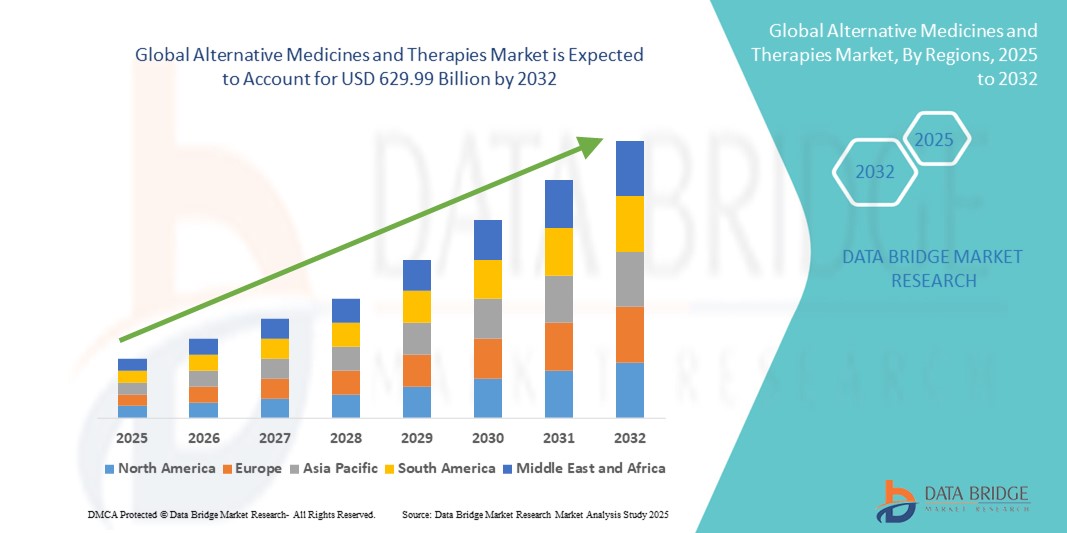
- The global alternative medicines and therapies market size was valued at USD 147.49 billion in 2024 and is expected to reach USD 629.99 billion by 2032, at a CAGR of 19.90% during the forecast period
- The market growth is largely fueled by the increasing inclination toward natural and holistic healthcare approaches, driven by rising awareness of preventive health and the side effects of conventional drugs, leading to broader acceptance of complementary treatments in both developed and developing regions
- Furthermore, growing consumer demand for personalized, safe, and wellness-focused solutions, coupled with supportive government initiatives and research in herbal, traditional, and mind-body therapies, is positioning alternative medicine as a mainstream health option. These converging factors are accelerating market penetration, thereby significantly boosting the industry's growth
Alternative Medicines and Therapies Market Analysis
- Alternative medicines and therapies, including herbal remedies, acupuncture, homeopathy, naturopathy, and mind-body interventions, are becoming increasingly important in the global healthcare landscape due to their holistic approach, perceived safety, and focus on natural healing, making them a preferred choice for preventive and complementary care in both developed and developing markets
- The rising demand for alternative medicines and therapies is primarily driven by growing consumer awareness of preventive health, increasing concerns over the side effects of conventional pharmaceuticals, and a heightened preference for personalized, wellness-focused treatment options
- North America dominated the alternative medicines and therapies market with the largest revenue share of 39.6% in 2024, supported by rising adoption of integrative health practices, higher healthcare expenditures, and increased availability of alternative treatments through clinics, wellness centers, and online platforms, with the U.S. leading growth due to expanding insurance coverage and regulatory support for certain complementary therapies
- Asia-Pacific is expected to be the fastest growing region in the alternative medicines and therapies market during the forecast period, fueled by deep-rooted cultural acceptance of traditional medicine, rising disposable incomes, and the growth of wellness tourism in countries such as China, India, and Thailand
- The herbal medicine segment dominated the alternative medicines and therapies market with a market share of 36.9% in 2024, driven by strong consumer trust, easy accessibility, and increasing clinical research validating the efficacy and safety of plant-based treatments
Report Scope and Alternative Medicines and Therapies Market Segmentation
|
Attributes |
Alternative Medicines and Therapies Key Market Insights |
|
Segments Covered |
|
|
Countries Covered |
North America
Europe
Asia-Pacific
Middle East and Africa
South America
|
|
Key Market Players |
|
|
Market Opportunities |
|
|
Value Added Data Infosets |
In addition to the insights on market scenarios such as market value, growth rate, segmentation, geographical coverage, and major players, the market reports curated by the Data Bridge Market Research also include in-depth expert analysis, pricing analysis, brand share analysis, consumer survey, demography analysis, supply chain analysis, value chain analysis, raw material/consumables overview, vendor selection criteria, PESTLE Analysis, Porter Analysis, and regulatory framework. |
Alternative Medicines and Therapies Market Trends
Digital Integration and Personalized Wellness Solutions
- A significant and rapidly growing trend in the global alternative medicines and therapies market is the integration of digital health platforms, AI-driven wellness recommendations, and telehealth services to personalize treatment plans and improve patient engagement. This transformation is making alternative therapies more accessible, trackable, and evidence-based
- For instance, platforms such as Mindbody and Healy World now offer AI-powered assessments to recommend herbal remedies, acupuncture sessions, or mindfulness practices based on users’ health data and preferences. Similarly, mobile apps from Ayurvedic and Traditional Chinese Medicine (TCM) providers allow remote consultations and therapy tracking
- AI integration enables practitioners to analyze user lifestyle data, suggest preventive therapies, and monitor treatment progress, while telemedicine solutions expand access to alternative care in rural or underserved regions
- Digital tools also connect alternative treatments with broader health ecosystems, allowing users to track herbal supplement intake, meditation routines, and nutrition alongside conventional medical care, creating a unified wellness dashboard
- This trend toward more personalized, tech-enabled, and data-driven alternative healthcare is reshaping consumer expectations, prompting companies such as Gaia Herbs and Banyan Botanicals to develop app-linked supplement plans and virtual consultation services
- Demand for digital integration in alternative therapies is accelerating across both developed and emerging markets as consumers seek convenience, personalization, and continuous engagement in their wellness journeys
Alternative Medicines and Therapies Market Dynamics
Driver
Rising Demand for Preventive and Holistic Healthcare
- The increasing awareness of preventive health measures, growing concerns about the side effects of conventional drugs, and a global shift toward wellness-focused living are key drivers of alternative medicine adoption
- For instance, in February 2024, Himalaya Wellness Company expanded its global herbal supplement line, introducing immune-boosting formulations supported by clinical research, aimed at proactive health maintenance
- As chronic diseases rise and healthcare costs escalate, consumers are turning to herbal remedies, acupuncture, yoga, and other alternative practices to complement or replace conventional treatments
- Government initiatives in countries such as India, China, and Germany to promote traditional and complementary medicine through funding, research, and insurance coverage are further boosting market growth
- The accessibility of alternative treatments through e-commerce platforms, wellness tourism, and retail health chains is widening consumer reach, while the trend toward personalized remedies is deepening adoption across diverse demographics
Restraint/Challenge
Lack of Standardization and Regulatory Variability
- The absence of globally harmonized regulations and quality standards for alternative medicines and therapies remains a major challenge, leading to inconsistencies in product efficacy, labeling, and safety
- For instance, varying herbal product approval processes between the U.S. FDA, European Medicines Agency, and China’s National Medical Products Administration create compliance complexities for global brands
- Cases of adulterated or contaminated herbal products in unregulated markets have fueled consumer skepticism, particularly in regions with less stringent oversight
- Addressing these issues requires stronger quality assurance frameworks, third-party certifications, and transparent labeling to build trust among health-conscious consumers
- In addition, limited large-scale clinical trials for certain therapies can hinder mainstream medical endorsement and insurance coverage, slowing broader adoption
- Overcoming these challenges through regulatory alignment, evidence-based research, and public education will be essential for sustainable market growth
Alternative Medicines and Therapies Market Scope
The market is segmented on the basis of intervention type, disease, therapy type, dosage form, route of administration, and end users.
- By Intervention Type
On the basis of intervention type, the alternative medicines and therapies market is segmented into homeopathic medicine, herbal medicine, traditional Chinese medicine (TCM), Ayurveda medicine, and others. The herbal medicine segment dominated the market with the largest revenue share of 36.9% in 2024, driven by strong consumer trust, widespread product availability, and increasing clinical validation of plant-based treatments. Herbal remedies are widely accepted culturally and are frequently incorporated into preventive healthcare routines and dietary supplements. Consumer awareness campaigns, wellness programs, and digital health platforms are further promoting herbal medicine globally. E-commerce and online marketplaces have expanded the reach of herbal products to international consumers, enhancing market penetration.
The Ayurveda medicine segment is anticipated to witness the fastest growth rate of 22.1% from 2025 to 2032, fueled by rising global awareness and wellness tourism in countries such as India and Sri Lanka. Government-backed initiatives promoting Ayurveda internationally are supporting its adoption. Ayurveda is increasingly integrated into spa resorts, fitness centers, and digital wellness apps, broadening consumer access. Furthermore, scientific validation of Ayurvedic formulations is improving trust and adoption in North America and Europe, creating new growth opportunities for manufacturers and service providers.
- By Disease
On the basis of disease, the alternative medicines and therapies market is segmented into chronic diseases, neurological diseases, reducing pain, CNS disorders, and others. The chronic diseases segment held the largest market share in 2024, driven by the rising use of herbal supplements, acupuncture, and yoga to manage lifestyle-related conditions such as diabetes, arthritis, and cardiovascular disorders. The segment benefits from increasing patient preference for non-pharmacological interventions to complement conventional medicine. Health awareness campaigns and preventive wellness programs further encourage adoption among middle-aged and elderly populations. Integration of chronic disease management plans in hospitals and clinics also supports herbal and alternative therapies. Additionally, research studies demonstrating efficacy and safety of alternative interventions are boosting credibility and market acceptance.
The neurological diseases segment is expected to witness the fastest CAGR during the forecast period, supported by growing interest in mind-body therapies, meditation, and herbal formulations aimed at improving cognitive health and alleviating anxiety, depression, and other neurological disorders. Rising stress levels, urban lifestyles, and an aging population are key factors driving the demand for therapies that enhance mental well-being. Educational institutions, corporate wellness programs, and mental health clinics are increasingly adopting alternative therapies to manage cognitive and emotional health.
- By Therapy Type
On the basis of therapy type, the alternative medicines and therapies market is segmented into magnetic therapy, herbal therapy, yoga therapy, and others. The herbal therapy segment led the market in 2024, driven by cultural significance, availability in multiple dosage forms, and strong consumer preference for natural remedies. Herbal therapy is widely used for detoxification, immunity enhancement, and disease prevention. Its adoption is further fueled by e-commerce platforms offering home-delivery options and subscription models for wellness products. Continuous research and publications validating the efficacy of herbal remedies are increasing trust among healthcare providers and patients alike.
The yoga therapy segment is projected to grow at the fastest rate from 2025 to 2032, as it becomes a mainstream tool for stress management, mental health improvement, and preventive care. Yoga is increasingly incorporated into corporate wellness programs, schools, and rehabilitation centers. Digital platforms offering live and on-demand yoga sessions are expanding accessibility globally. Growing evidence of yoga’s impact on cardiovascular health, respiratory wellness, and mental resilience is further propelling adoption in multiple end-user segments.
- By Dosage Form
On the basis of dosage form, the alternative medicines and therapies market is segmented into tablets, powder, syrup, capsules, and others. The tablets segment dominated in 2024, owing to their convenience, standardized dosing, and broad availability across retail stores and online marketplaces. Tablets offer long shelf-life, easy portability, and predictable absorption, making them preferred by consumers for daily use. Pharmaceutical-grade manufacturing, packaging innovations, and the popularity of combination supplements further support this segment. Hospitals, clinics, and homecare providers increasingly recommend tablet formulations due to ease of prescription and patient compliance.
The powder segment is anticipated to record the highest growth during the forecast period, supported by increasing popularity of herbal drink mixes, Ayurvedic powders, and TCM formulations that can be easily integrated into daily routines. Powders are often preferred for detox programs, immunity boosting, and nutritional supplementation. Innovative flavors, pre-mixed formulations, and convenient sachets are driving adoption among millennials and health-conscious consumers. Online subscriptions and wellness boxes further enhance distribution and accessibility worldwide.
- By Route of Administration
On the basis of route of administration, the alternative medicines and therapies market is segmented into oral, topical, and others. The oral segment accounted for the largest share in 2024, due to the convenience of tablets, capsules, and powders for daily consumption. Oral administration is widely accepted by consumers and healthcare practitioners for its ease, reliability, and versatility across various therapeutic areas. Hospitals, clinics, and homecare setups recommend oral therapies for chronic and neurological conditions. Consumer trust in traditional herbal formulations and dietary supplements further supports market dominance.
The topical segment is expected to grow the fastest during the forecast period, driven by rising demand for herbal creams, oils, balms, and ointments in pain management, skin health, and aromatherapy. Topical products provide localized effects, reduce systemic side effects, and offer ease of application. Increasing awareness of natural skincare, beauty routines, and physiotherapy applications is accelerating adoption. Digital tutorials, influencer marketing, and DIY wellness trends are boosting consumer confidence in topical alternative therapies.
- By End Users
On the basis of end users, the alternative medicines and therapies market is segmented into hospitals, homecare, specialty clinics, and others. The hospitals segment dominated in 2024, as integrative medicine departments increasingly incorporate alternative therapies alongside conventional treatments. Hospitals offer structured programs combining herbal medicine, acupuncture, yoga, and mind-body therapies for chronic and neurological diseases. Government hospitals and private healthcare chains are promoting evidence-based alternative medicine programs. Collaborative research and clinical trials conducted in hospitals are enhancing credibility and adoption.
The homecare segment is projected to grow at the fastest rate from 2025 to 2032, fueled by rising consumer preference for self-care routines, home-use herbal kits, and remote consultation services. Virtual wellness programs, online therapy subscriptions, and mobile apps providing guided alternative treatments are supporting homecare growth. Convenience, flexibility, and personalized treatment plans make this segment increasingly popular across urban and semi-urban populations globally.
Alternative Medicines and Therapies Market Regional Analysis
- North America dominated the alternative medicines and therapies market with the largest revenue share of 39.6% in 2024, supported by rising adoption of integrative health practices, higher healthcare expenditures, and increased availability of alternative treatments through clinics, wellness centers, and online platforms
- Consumers in the region value the perceived safety, personalization, and wellness benefits of alternative therapies, with strong demand for herbal supplements, acupuncture, yoga, and homeopathic remedies
- This widespread adoption is further supported by high healthcare spending, expanding insurance coverage for select alternative treatments, and the presence of well-established wellness brands, positioning alternative medicines and therapies as a preferred choice for both preventive care and chronic condition management
U.S. Alternative Medicines and Therapies Market Insight
The U.S. alternative medicines and therapies market captured the largest revenue share of 81% in 2024 within North America, driven by increasing consumer preference for holistic healthcare solutions and preventive wellness practices. Demand is fueled by a growing inclination toward herbal supplements, acupuncture, yoga, and homeopathy, supported by expanding insurance coverage for select complementary treatments. The strong presence of leading wellness brands, coupled with digital platforms offering virtual consultations and AI-based health recommendations, further accelerates adoption. In addition, rising awareness of lifestyle-related health issues is encouraging consumers to integrate alternative therapies into daily routines.
Europe Alternative Medicines and Therapies Market Insight
The Europe alternative medicines and therapies market is projected to expand at a substantial CAGR throughout the forecast period, supported by rising healthcare costs and growing demand for non-invasive, natural treatment options. Increasing integration of alternative therapies into national healthcare systems, particularly in countries such as Germany and France, is fostering acceptance. European consumers are drawn to the safety, sustainability, and personalization of herbal medicines, Ayurveda, and Traditional Chinese Medicine. The region is witnessing growth across hospitals, wellness centers, and homecare settings, with herbal product sales thriving both in-store and through e-commerce channels.
U.K. Alternative Medicines and Therapies Market Insight
The U.K. alternative medicines and therapies market is anticipated to grow at a noteworthy CAGR during the forecast period, driven by the rising adoption of integrative healthcare approaches and consumer interest in preventive wellness. Concerns over the long-term effects of synthetic drugs are prompting individuals to explore herbal and mind-body therapies. The U.K.’s robust e-commerce infrastructure supports easy access to herbal supplements and homeopathy remedies, while wellness retreats and alternative therapy clinics are expanding their reach, catering to both domestic and international clientele.
Germany Alternative Medicines and Therapies Market Insight
The Germany alternative medicines and therapies market is expected to expand at a considerable CAGR during the forecast period, underpinned by strong public acceptance of naturopathy, herbal remedies, and homeopathy. Government support for alternative medicine research and integration into healthcare services further enhances the market’s growth prospects. The emphasis on high-quality, eco-conscious products aligns with German consumer preferences, while a well-developed regulatory framework and trusted domestic brands reinforce market confidence.
Asia-Pacific Alternative Medicines and Therapies Market Insight
The Asia-Pacific alternative medicines and therapies market is poised to grow at the fastest CAGR of 24% during 2025–2032, driven by deep-rooted cultural acceptance of traditional healing systems and increasing disposable incomes. Countries such as China, India, and Japan lead in the use of Traditional Chinese Medicine, Ayurveda, and herbal supplements, with government initiatives promoting their global reach. Rising wellness tourism, urbanization, and digital access to alternative treatments are further supporting market expansion across both rural and urban populations.
Japan Alternative Medicines and Therapies Market Insight
The Japan alternative medicines and therapies market is gaining traction due to the country’s strong cultural emphasis on preventive healthcare and natural remedies. Kampo medicine, herbal supplements, and acupuncture are widely accepted and increasingly integrated with modern healthcare services. Japan’s aging population is driving demand for gentle, non-invasive therapies aimed at enhancing quality of life, while tech-driven health platforms and mobile applications make alternative care more accessible.
India Alternative Medicines and Therapies Market Insight
The India alternative medicines and therapies market accounted for the largest market revenue share in Asia-Pacific in 2024, supported by the global popularity of Ayurveda, yoga, and herbal products. Government-backed initiatives such as AYUSH are promoting the domestic and international adoption of traditional medicine systems. India’s large manufacturing base, affordable product offerings, and growing middle class are driving demand in both urban and semi-urban areas. In addition, the country’s strong presence in wellness tourism continues to position India as a hub for alternative healthcare services.
Alternative Medicines and Therapies Market Share
The alternative medicines and therapies industry is primarily led by well-established companies, including:
- Himalaya Wellness Company (India)
- Dabur India Ltd. (India)
- Patanjali Ayurved Limited (India)
- Nature’s Bounty (U.S.)
- Amway Corp. (U.S.)
- Herbalife International of America, Inc. (U.S.)
- Blackmores Limited (Australia)
- Gaia Herbs (U.S.)
- Nature's Way Brands, LLC. (U.S.)
- Weleda AG (Switzerland)
- Schwabe Pharmaceuticals (Germany)
- Bioforce AG (Switzerland)
- Ricola AG (Switzerland)
- Dr. Willmar Schwabe India Pvt. Ltd. (India)
- Tsumura & Co. (Japan)
- Arkopharma Laboratories (France)
- Nutraceutical Corporation (U.S.)
- GNC Holdings, LLC (U.S.)
- Jamieson Wellness Inc. (Canada)
- Integria (Australia)
What are the Recent Developments in Global Alternative Medicines and Therapies Market?
- In July 2025, India became the first country in the world to digitize its traditional medical systems including Ayurveda, Unani, Siddha, Sowa Rigpa, and Homeopathy via an AI-powered platform called the Traditional Knowledge Digital Library (TKDL). The initiative, endorsed by WHO, aims to preserve ancient medical knowledge, prevent biopiracy, and make traditional wisdom globally accessible and scientifically relevant
- In May 2025, India’s Ministry of Ayush signed a Donor Agreement with WHO to initiate work on a dedicated module for traditional medicine under the International Classification of Health Interventions (ICHI), aiming to standardize and elevate the global recognition of AYUSH systems
- In May 2025, WHO and countries at WHA78 formally agreed on the Global Traditional Medicine Strategy 2025–2034, marking a historic step toward integrating evidence-based traditional, complementary, and integrative medicine (TCIM) into health systems
- In May 2025, at the 78th World Health Assembly (WHA78), the World Health Organization (WHO) received strong support from global health leaders including China and India for its Traditional Medicine Strategy 2025–2034, signaling a major push to integrate traditional, complementary, and integrative medicine (TCIM) into national health systems
- In March 2024, the U.S. Food and Drug Administration (FDA) granted Breakthrough Therapy Designation to MindMed’s MM120 (an LSD-based treatment) for Generalized Anxiety Disorder (GAD), based on promising Phase 2b results showing sustained efficacy through week 12

- Interactive Data Analysis Dashboard
- Company Analysis Dashboard for high growth potential opportunities
- Research Analyst Access for customization & queries
- Competitor Analysis with Interactive dashboard
- Latest News, Updates & Trend analysis
- Harness the Power of Benchmark Analysis for Comprehensive Competitor Tracking
Data collection and base year analysis are done using data collection modules with large sample sizes. The stage includes obtaining market information or related data through various sources and strategies. It includes examining and planning all the data acquired from the past in advance. It likewise envelops the examination of information inconsistencies seen across different information sources. The market data is analysed and estimated using market statistical and coherent models. Also, market share analysis and key trend analysis are the major success factors in the market report. To know more, please request an analyst call or drop down your inquiry.
The key research methodology used by DBMR research team is data triangulation which involves data mining, analysis of the impact of data variables on the market and primary (industry expert) validation. Data models include Vendor Positioning Grid, Market Time Line Analysis, Market Overview and Guide, Company Positioning Grid, Patent Analysis, Pricing Analysis, Company Market Share Analysis, Standards of Measurement, Global versus Regional and Vendor Share Analysis. To know more about the research methodology, drop in an inquiry to speak to our industry experts.
Data Bridge Market Research is a leader in advanced formative research. We take pride in servicing our existing and new customers with data and analysis that match and suits their goal. The report can be customized to include price trend analysis of target brands understanding the market for additional countries (ask for the list of countries), clinical trial results data, literature review, refurbished market and product base analysis. Market analysis of target competitors can be analyzed from technology-based analysis to market portfolio strategies. We can add as many competitors that you require data about in the format and data style you are looking for. Our team of analysts can also provide you data in crude raw excel files pivot tables (Fact book) or can assist you in creating presentations from the data sets available in the report.












