


What is the Alveolar Capillary Dysplasia Treatment Market Size and Growth Rate?
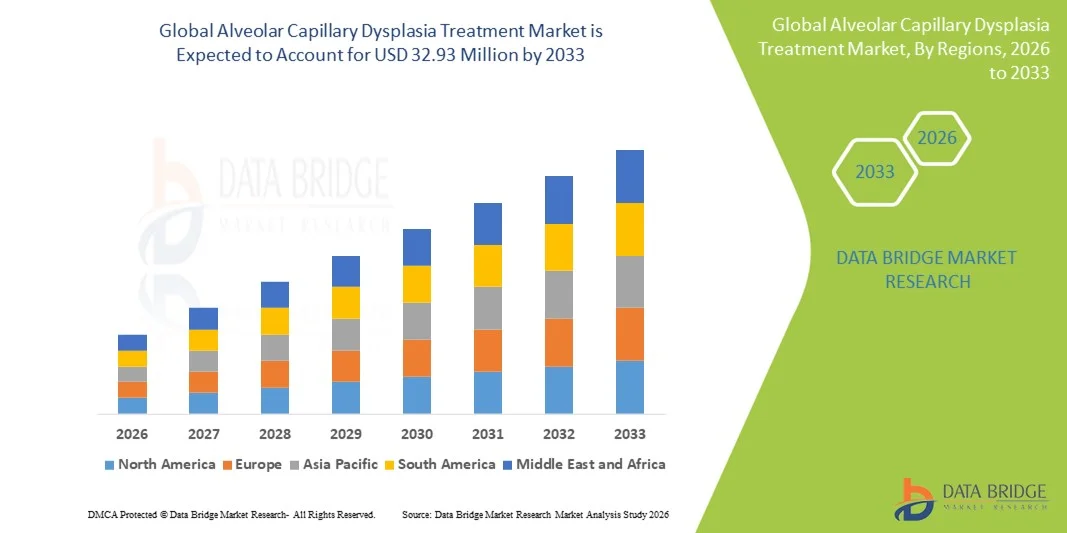
- As per Data Bridge Market Research Analysis the global alveolar capillary dysplasia treatment market size was valued at USD 21.14 million in 2025 and is expected to reach USD 32.93 million by 2033, at a CAGR of 5.70% during the forecast period
- The market growth is largely fueled by increasing awareness of ACD among healthcare professionals and patients, advancements in diagnostic techniques such as genetic testing, and ongoing research in rare-disease therapies. These developments are improving early diagnosis and opening potential avenues for treatment
- Furthermore, rising investment in rare disease research, growing focus on precision medicine, and the adoption of novel therapeutic approaches are positioning ACD treatments as increasingly viable options for affected patients. These converging factors are accelerating the uptake of treatment solutions, thereby significantly boosting the industry's growth
Market Size & Forecast
- Global Market Value (2025): USD 21.14 million
- Expected Market Value (2033): USD 32.93 million
- Forecast CAGR (2026–2033): 5.70%
What are the Major Takeaways of Alveolar Capillary Dysplasia Treatment Market?
- Alveolar capillary dysplasia treatment, including lung transplantations, genetic counseling, and other supportive therapies, is increasingly vital in neonatal and pediatric care due to its potential to improve survival, enable early diagnosis, and integrate with specialized clinical care protocols
- The escalating demand for alveolar capillary dysplasia treatment is primarily fueled by growing awareness among healthcare professionals and parents, advancements in diagnostic techniques such as genetic testing, imaging studies, and lung biopsies, and increasing R&D investments in rare-disease therapies
- North America dominated the alveolar capillary dysplasia treatment market with the largest revenue share of 42.8% in 2025, characterized by advanced neonatal care infrastructure, early adoption of diagnostic technologies, and the presence of key pharmaceutical and biotech companies driving innovation in lung transplantation and genetic counseling services
- Asia-Pacific is expected to be the fastest-growing region in the alveolar capillary dysplasia treatment market during the forecast period, due to rising healthcare access, increased investment in neonatal care, and growing awareness of rare diseases across emerging economies
- Lung transplantation segment dominated the alveolar capillary dysplasia treatment market in 2025 with a 45.4% share, driven by the critical role of this treatment in severe cases, coupled with supportive care protocols and integration with hospitals and clinics specializing in neonatal and pediatric care
Report Scope and Alveolar Capillary Dysplasia Treatment Market Segmentation
|
Attributes |
Alveolar Capillary Dysplasia Treatment Key Market Insights |
|
Segments Covered |
|
|
Countries Covered |
North America
Europe
Asia-Pacific
Middle East and Africa
South America
|
|
Key Market Players |
|
|
Market Opportunities |
|
|
Value Added Data Infosets |
In addition to the insights on market scenarios such as market value, growth rate, segmentation, geographical coverage, and major players, the market reports curated by the Data Bridge Market Research also include in-depth expert analysis, patient epidemiology, pipeline analysis, pricing analysis, and regulatory framework |
What is the Key Trend in the Alveolar Capillary Dysplasia Treatment Market?
Advances in Genetic Diagnostics and Early Detection
- A significant and accelerating trend in the global alveolar capillary dysplasia treatment market is the adoption of advanced genetic testing and imaging technologies, enabling early and more accurate diagnosis of ACD in neonates and infants
- For instance, next-generation sequencing panels are increasingly being utilized in neonatal intensive care units to identify ACD-associated gene mutations, allowing clinicians to plan timely interventions
- Integration of genetic testing with clinical and imaging data enables personalized treatment strategies, including targeted lung transplantation and supportive care tailored to the patient’s specific condition
- The seamless combination of diagnostics, genetic counseling, and clinical protocols facilitates coordinated care across pediatric and neonatal healthcare teams, improving patient management and outcomes
- This trend towards earlier and more precise diagnosis is fundamentally reshaping treatment strategies for ACD, prompting biotech companies and hospitals to invest in rapid genetic screening and advanced neonatal care programs
- The demand for integrated diagnostic and treatment solutions is growing rapidly across specialized healthcare centers, as clinicians increasingly prioritize early detection and personalized intervention to improve survival rates
- Increasing collaboration between hospitals, research institutions, and biotech companies is enabling faster clinical trials and development of novel therapies tailored for ACD patients
- Adoption of telemedicine and remote genetic counseling is emerging as a trend, allowing families in remote areas to access specialized ACD expertise without traveling to tertiary care centers
Alveolar Capillary Dysplasia Treatment Market Dynamics
Driver
Growing Demand for Early Diagnosis and Specialized Care
- The increasing awareness among healthcare providers and parents regarding ACD, coupled with advancements in neonatal care, is a significant driver for the rising demand for early diagnosis and treatment
- For instance, in April 2025, leading pediatric hospitals in North America expanded genetic screening programs for rare neonatal disorders, aiming to improve early detection and intervention strategies for ACD patients
- As clinicians become more aware of the benefits of timely diagnosis, alveolar capillary dysplasia treatment options, including lung transplantation and genetic counseling, are being increasingly adopted in specialized centers
- Furthermore, growing investments in rare disease research and improved neonatal care infrastructure are making ACD treatments more accessible to infants in both developed and emerging markets
- The availability of supportive care protocols, integrated genetic counseling, and early intervention therapies is propelling the adoption of Alveolar Capillary Dysplasia Treatment across neonatal and pediatric care settings
- Increasing government and NGO initiatives for rare disease awareness and funding support are encouraging hospitals to adopt specialized ACD treatment programs
- Technological advancements in neonatal monitoring and ICU equipment are facilitating better patient outcomes, driving the adoption of comprehensive ACD treatment solutions
Restraint/Challenge
Limited Awareness and High Cost of Rare Disease Treatments
- A major challenge for broader adoption of alveolar capillary dysplasia treatment is the low awareness of ACD among general healthcare providers and the general population, which can delay diagnosis and treatment
- For instance, many neonates with ACD are initially misdiagnosed due to the rarity of the disease, limiting timely intervention and impacting survival outcomes
- High costs associated with specialized treatments, including lung transplantation and advanced diagnostic tests, pose a significant barrier for adoption, particularly in emerging economies or budget-constrained hospitals
- While research and early diagnosis capabilities are improving, the limited availability of specialized care centers and trained personnel can hinder access to effective Alveolar Capillary Dysplasia Treatment in certain regions
- Overcoming these challenges through education programs for healthcare professionals, awareness campaigns for rare diseases, and development of cost-effective diagnostic and therapeutic solutions is vital for sustained market growth
- Regulatory hurdles and complex clinical trial requirements for novel ACD therapies can slow down the introduction of new treatments, limiting options for patients
- Limited insurance coverage and reimbursement policies for rare disease treatments further restrict patient access to comprehensive Alveolar Capillary Dysplasia Treatment programs
How is the Alveolar Capillary Dysplasia Treatment Market Segmented?
The market is segmented on the basis of treatment, diagnosis, demographic, symptoms, end-users, and distribution channel.
- By Treatment
On the basis of treatment, the alveolar capillary dysplasia treatment market is segmented into lung transplantations, genetic counseling, and others. The lung transplantation segment dominated the market in 2025 with the largest revenue share of 45.4%, driven by its critical role in managing severe cases of ACD. This treatment is considered the most definitive intervention for improving survival in neonates with advanced disease. Hospitals and specialized neonatal care centers prioritize lung transplantation for eligible patients, and growing expertise in pediatric transplant programs is strengthening adoption. Lung transplantation also benefits from advancements in surgical techniques, immunosuppressive therapies, and post-operative care protocols. Moreover, awareness among clinicians and parents about the effectiveness of transplantation in severe ACD cases supports continued market dominance. The increasing number of clinical centers capable of performing pediatric lung transplants is further reinforcing the segment’s leading position.
The genetic counseling segment is expected to witness the fastest growth rate from 2026 to 2033, fueled by rising awareness of the genetic basis of ACD and the growing demand for early intervention. Genetic counseling helps parents understand inheritance risks, enables proactive management, and supports decision-making regarding treatment strategies. Integration of counseling with genetic testing and clinical follow-up is enhancing patient outcomes and driving adoption. Increasing investments by hospitals and research centers to provide comprehensive genetic services is boosting market growth. Telemedicine and remote genetic counseling solutions are also expanding access in emerging markets, contributing to rapid growth. In addition, favorable government initiatives for rare disease awareness are encouraging wider uptake of genetic counseling services.
- By Diagnosis
On the basis of diagnosis, the alveolar capillary dysplasia treatment market is segmented into imaging studies, genetic testing, lung biopsy, and others. The genetic testing segment dominated the market in 2025 with a revenue share of around 40%, due to its critical role in early and precise identification of ACD-associated mutations. Genetic testing enables clinicians to detect the disease before clinical symptoms worsen, guiding treatment planning including potential lung transplantation or supportive care. Hospitals and neonatal ICUs are increasingly adopting next-generation sequencing and other advanced techniques. Rising awareness among pediatricians and parents about the importance of genetic testing is further driving adoption. The segment benefits from technological advancements, improved accuracy, and faster turnaround times. Collaborations between diagnostic labs and hospitals are strengthening the availability of genetic testing for rare pediatric diseases.
The imaging studies segment is expected to witness the fastest CAGR from 2026 to 2033, driven by growing use of high-resolution CT scans and echocardiography in neonatal intensive care units. Imaging studies complement genetic testing, enabling physicians to assess lung structure and function non-invasively. The availability of portable imaging equipment in NICUs supports early diagnosis even in resource-constrained settings. Technological improvements such as 3D reconstruction imaging enhance diagnostic accuracy. Increasing training programs for radiologists and neonatologists are facilitating adoption. Rising awareness of the role of imaging in monitoring disease progression is contributing to segment growth.
- By Demographic
On the basis of demographic, the alveolar capillary dysplasia treatment market is segmented into infancy and neonatal. The neonatal segment dominated the market in 2025 with the largest share of approximately 55%, as ACD is primarily diagnosed in newborns during the first few days of life. Early detection in the neonatal period is critical to improving survival outcomes. Hospitals with specialized NICUs are focusing on rapid screening and intervention. Neonatal care programs integrating genetic testing, imaging, and lung transplantation are further strengthening market dominance. Awareness campaigns targeting pediatricians and parents highlight the importance of early neonatal intervention. The presence of dedicated neonatal care centers in developed regions supports segment leadership.
The infancy segment is expected to witness the fastest growth rate from 2026 to 2033, fueled by growing follow-up care programs for infants diagnosed postnatally and long-term management strategies. Infants require ongoing monitoring for respiratory complications, hypoxemia, and other secondary symptoms. Expansion of pediatric home care services and remote monitoring programs is driving adoption. Telemedicine platforms are facilitating access to specialized care for infants in remote regions. Government and NGO initiatives for rare disease follow-up care are contributing to market growth. Increasing parent awareness of post-neonatal care needs is supporting segment expansion.
- By Symptoms
On the basis of symptoms, the alveolar capillary dysplasia treatment market is segmented into breathing problems, hypoxemia, cyanosis, high blood pressure, hydronephrosis, and others. The breathing problems segment dominated the market in 2025 with a share of approximately 50%, as respiratory distress is the most common presenting symptom of ACD. Immediate interventions such as mechanical ventilation, supplemental oxygen, and advanced neonatal care are critical. Hospitals focus on managing breathing difficulties to stabilize infants before considering definitive treatments. Clinician awareness and early symptom recognition support rapid intervention, driving market share. The severity and prevalence of respiratory symptoms reinforce the importance of this segment. Continuous improvements in neonatal respiratory support technologies also contribute to dominance.
The hypoxemia segment is expected to witness the fastest CAGR from 2026 to 2033, driven by increased use of advanced monitoring devices and early intervention protocols to correct oxygen deficiencies. Continuous pulse oximetry and arterial blood gas monitoring improve clinical outcomes. Integration of hypoxemia management with genetic testing and supportive care enhances survival chances. Awareness among healthcare providers about the impact of hypoxemia on long-term prognosis is boosting adoption. Technological advances in NICU monitoring equipment and training for medical staff support growth. Rising prevalence reporting of hypoxemia cases in ACD is contributing to segment expansion.
- By End-Users
On the basis of end-users, the alveolar capillary dysplasia treatment market is segmented into clinics, hospitals, and others. The hospital segment dominated the market in 2025 with a share of 65%, as ACD treatment requires specialized NICUs, pediatric ICUs, and access to advanced surgical and diagnostic facilities. Hospitals provide integrated care including lung transplantation, genetic counseling, and long-term monitoring. Collaboration with research centers and availability of specialized staff further reinforces dominance. Hospitals are central to clinical trials for new therapies, supporting adoption of emerging treatments. Awareness programs and neonatal care investments by hospitals are strengthening market leadership. High patient inflow and comprehensive care offerings contribute to segment share.
The clinics segment is expected to witness the fastest CAGR from 2026 to 2033, driven by growing demand for outpatient genetic counseling, follow-up care, and monitoring of infants and neonates diagnosed with ACD. Clinics provide localized and accessible services for families unable to travel to large hospitals. Integration with telemedicine platforms supports remote consultations and ongoing care. Expansion of pediatric specialty clinics in emerging regions is boosting adoption. Preventive and follow-up services offered at clinics are gaining recognition. Increasing awareness among parents regarding early intervention drives segment growth.
- By Distribution Channel
On the basis of distribution channel, the alveolar capillary dysplasia treatment market is segmented into hospital pharmacy, retail pharmacy, and online pharmacy. The hospital pharmacy segment dominated the market in 2025 with a share of 60%, as specialized medications and therapies for ACD are primarily administered in hospital settings under professional supervision. Hospitals ensure proper dosing, monitoring, and administration of critical treatments. Access to hospital pharmacies is integrated with NICU and ICU services, driving adoption. Close collaboration between hospital pharmacies and clinical teams ensures effective treatment delivery. The controlled environment reduces risks associated with rare disease medications, supporting segment dominance. Investments in hospital pharmacy infrastructure are enhancing service quality.
The online pharmacy segment is expected to witness the fastest CAGR from 2026 to 2033, driven by rising e-commerce penetration, telemedicine integration, and convenience for families managing post-discharge care. Online platforms facilitate access to supportive medications, supplements, and genetic counseling kits. Integration with delivery and consultation services enhances patient adherence. Awareness campaigns and government support for rare disease management via digital channels boost adoption. Expansion of logistics and regulatory compliance for online pharmacy services supports growth. Increasing comfort with online healthcare purchases among parents contributes to segment expansion.
Alveolar Capillary Dysplasia Treatment Market Regional Analysis
- North America dominated the alveolar capillary dysplasia treatment market with the largest revenue share of 42.8% in 2025, characterized by advanced neonatal care infrastructure, early adoption of diagnostic technologies, and the presence of key pharmaceutical and biotech companies driving innovation in lung transplantation and genetic counseling services
- Healthcare providers in the region prioritize early diagnosis and comprehensive treatment options, including lung transplantation and genetic counseling, supported by specialized NICUs and pediatric hospitals
- This widespread adoption is further supported by substantial healthcare investment, availability of trained neonatal specialists, and integration of cutting-edge diagnostic and treatment technologies, establishing alveolar capillary dysplasia treatment as a critical intervention for affected infants in North America.
U.S. Alveolar Capillary Dysplasia Treatment Market Insight
The U.S. alveolar capillary dysplasia treatment market captured the largest revenue share of 82% in 2025 within North America, fueled by advanced neonatal care infrastructure and widespread adoption of genetic testing and specialized pediatric treatments. Hospitals and NICUs prioritize early diagnosis and lung transplantation for severe cases. The growing availability of telemedicine and genetic counseling services further propels market adoption. Moreover, strong government support for rare disease research, coupled with high awareness among clinicians and parents, is significantly contributing to market expansion. The integration of advanced diagnostics and personalized treatment protocols in leading hospitals continues to strengthen the U.S. market.
Europe Alveolar Capillary Dysplasia Treatment Market Insight
The Europe alveolar capillary dysplasia treatment market is projected to expand at a substantial CAGR throughout the forecast period, primarily driven by the presence of advanced healthcare systems and increasing awareness of rare neonatal disorders. Rising investments in neonatal care, coupled with growing access to genetic testing and lung transplantation facilities, are fostering adoption. European healthcare providers are also drawn to the integration of early diagnosis, genetic counseling, and supportive care for ACD patients. The region is witnessing significant growth across hospitals and specialty clinics, with treatments incorporated into both new healthcare programs and ongoing rare disease initiatives.
U.K. Alveolar Capillary Dysplasia Treatment Market Insight
The U.K. alveolar capillary dysplasia treatment market is anticipated to grow at a noteworthy CAGR during the forecast period, driven by rising awareness of rare neonatal conditions and a focus on specialized pediatric care. Concerns regarding infant mortality from undiagnosed ACD are encouraging hospitals and clinics to adopt early diagnostic and treatment protocols. The U.K.’s advanced healthcare infrastructure, alongside robust telemedicine and genetic counseling services, is expected to continue stimulating market growth. Increasing government and NGO initiatives to support rare disease management further enhance adoption.
Germany Alveolar Capillary Dysplasia Treatment Market Insight
The Germany alveolar capillary dysplasia treatment market is expected to expand at a considerable CAGR during the forecast period, fueled by strong healthcare infrastructure, high clinical awareness, and demand for technologically advanced diagnostic and treatment solutions. Germany’s emphasis on innovation and precision medicine promotes adoption, particularly in neonatal and pediatric care centers. Hospitals are increasingly integrating genetic testing, imaging studies, and lung transplantation protocols. The prevalence of specialized neonatal care units and rare disease research centers supports the market’s expansion. Germany’s focus on patient safety and high-quality clinical outcomes drives growth further.
Asia-Pacific Alveolar Capillary Dysplasia Treatment Market Insight
The Asia-Pacific alveolar capillary dysplasia treatment market is poised to grow at the fastest CAGR of 24% from 2026 to 2033, driven by increasing urbanization, rising healthcare investments, and expanding neonatal care infrastructure in countries such as China, Japan, and India. The region's growing focus on early diagnosis and specialized pediatric treatments is driving adoption. Government initiatives promoting rare disease awareness and establishment of specialized NICUs support market expansion. Moreover, improvements in access to genetic testing, imaging technologies, and lung transplantation facilities are contributing to rapid growth. Increasing public and private collaborations in pediatric healthcare further strengthen the market.
Japan Alveolar Capillary Dysplasia Treatment Market Insight
The Japan alveolar capillary dysplasia treatment market is gaining momentum due to the country’s high level of healthcare development, focus on precision medicine, and demand for early neonatal interventions. Hospitals and NICUs prioritize genetic testing and early supportive care. Integration of telemedicine and remote genetic counseling is enhancing access, particularly in urban centers. Growing awareness among healthcare providers and parents about ACD is fueling adoption. Moreover, Japan’s aging population and increased focus on pediatric rare disease care are such asly to spur demand for specialized neonatal treatment solutions.
India Alveolar Capillary Dysplasia Treatment Market Insight
The India alveolar capillary dysplasia treatment market accounted for the largest market revenue share in Asia-Pacific in 2025, attributed to the country’s expanding healthcare infrastructure, growing neonatal care units, and rising awareness of rare pediatric conditions. India is increasingly focusing on early diagnosis through genetic testing and imaging studies. Government initiatives promoting rare disease management and pediatric care, coupled with availability of cost-effective treatment options, are key factors propelling the market. Expansion of specialty hospitals and clinics offering lung transplantation and genetic counseling services further drives adoption. The integration of telemedicine and awareness campaigns enhances accessibility to ACD treatment across urban and semi-urban regions.
Which are the Top Companies in Alveolar Capillary Dysplasia Treatment Market?
The Alveolar Capillary Dysplasia Treatment industry is primarily led by well-established companies, including:
- Labcorp (U.S.)
- Invitae Corporation (U.S.)
- Natera, Inc. (U.S.)
- BGI Genomics (China)
- Mayo Foundation for Medical Education and Research (U.S.)
- ARUP Laboratories (U.S.)
- Baylor Genetics, LLC (U.S.)
- Blueprint Genetics Oy (Finland)
- Illumina, Inc. (U.S.)
- Thermo Fisher Scientific Inc. (U.S.)
- PerkinElmer (U.S.)
- Sema4 (U.S.)
- Children’s Hospital of Philadelphia (U.S.)
- Cincinnati Children’s Hospital Medical Center (U.S.)
- Boston Children’s Hospital (U.S.)
- Stanford Medicine Children’s Health (U.S.)
- Great Ormond Street Hospital for Children NHS Foundation Trust (U.K.)
- Johns Hopkins Medicine (U.S.)
- UCSF Health (U.S.)
- GeneDx, LLC (U.S.)
What are the Recent Developments in Global Alveolar Capillary Dysplasia Treatment Market?
- In July 2025, a review article was published highlighting prenatal cases of 16q24.1 deletion (which includes FOXF1 or its regulatory enhancer region) describing how non-coding deletions can underlie ACD/MPV and noting recurrent sonographic markers for early suspicion of the disease before birth
- In November 2024, a study titled “The molecular consequences of FOXF1 missense mutations associated with ACD/MPV” demonstrated that many patient-derived mutations in the FOXF1 gene impair FOXF1’s ability to bind DNA, alter its phosphorylation, and disrupt its regulation of target genes shedding light on how genetic variants lead to the disease’s pathology and explaining phenotypic variability among patients
- In June 2024, a research team at Phoenix Children’s Research Institute published findings identifying critical non-coding enhancer regions of FOXF1 whose deletions lead to ACD/MPV. This discovery improves genetic diagnostic precision and opens the door for better screening of regulatory-region variants (not just coding mutations), broadening the diagnostic net for ACD
- In August 2023, a case report described a 22-month–old child with previously unrecognized ACD who, after rapid whole-genome sequencing (rWGS), was diagnosed with a novel FOXF1 pathogenic variant. Based on the diagnosis, aggressive therapy was initiated (instead of palliative care), and the child survived and was discharged suggesting that rWGS can replace invasive lung biopsy and enable life-saving interventions in atypical ACD cases
- In February 2023, a case report documented the use of lung ultrasound (LUS) in a premature newborn diagnosed with ACD/MPV suggesting that non-invasive bedside imaging may help raise early suspicion for ACD/MPV in resource-limited or emergency settings

- Interactive Data Analysis Dashboard
- Company Analysis Dashboard for high growth potential opportunities
- Research Analyst Access for customization & queries
- Competitor Analysis with Interactive dashboard
- Latest News, Updates & Trend analysis
- Harness the Power of Benchmark Analysis for Comprehensive Competitor Tracking
Data collection and base year analysis are done using data collection modules with large sample sizes. The stage includes obtaining market information or related data through various sources and strategies. It includes examining and planning all the data acquired from the past in advance. It likewise envelops the examination of information inconsistencies seen across different information sources. The market data is analysed and estimated using market statistical and coherent models. Also, market share analysis and key trend analysis are the major success factors in the market report. To know more, please request an analyst call or drop down your inquiry.
The key research methodology used by DBMR research team is data triangulation which involves data mining, analysis of the impact of data variables on the market and primary (industry expert) validation. Data models include Vendor Positioning Grid, Market Time Line Analysis, Market Overview and Guide, Company Positioning Grid, Patent Analysis, Pricing Analysis, Company Market Share Analysis, Standards of Measurement, Global versus Regional and Vendor Share Analysis. To know more about the research methodology, drop in an inquiry to speak to our industry experts.
Data Bridge Market Research is a leader in advanced formative research. We take pride in servicing our existing and new customers with data and analysis that match and suits their goal. The report can be customized to include price trend analysis of target brands understanding the market for additional countries (ask for the list of countries), clinical trial results data, literature review, refurbished market and product base analysis. Market analysis of target competitors can be analyzed from technology-based analysis to market portfolio strategies. We can add as many competitors that you require data about in the format and data style you are looking for. Our team of analysts can also provide you data in crude raw excel files pivot tables (Fact book) or can assist you in creating presentations from the data sets available in the report.












