


Antisense Nucleic Acid Therapeutics Market Size
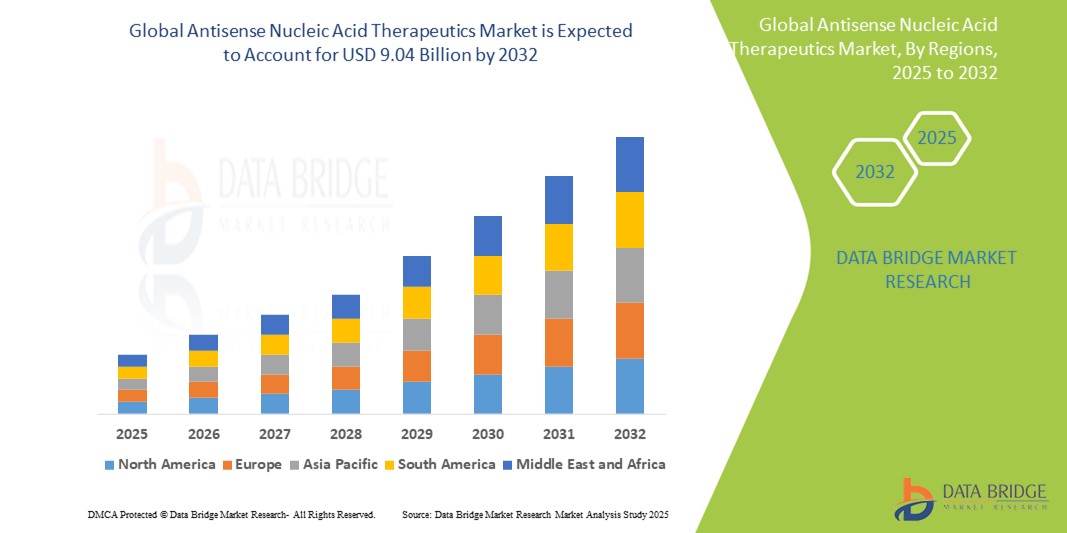
- The global antisense nucleic acid therapeutics market size was valued at USD 5.07 billion in 2024 and is expected to reach USD 9.04 billion by 2032, at a CAGR of 7.50% during the forecast period
- The market growth is largely fueled by increasing advancements in genetic research, along with the growing demand for precision medicine to treat complex and rare genetic disorders, cancers, and infectious diseases
- Furthermore, rising investments in RNA-based drug development and expanding clinical pipeline for antisense therapies are solidifying their role in modern pharmacology. These converging factors are accelerating the adoption of antisense nucleic acid therapeutics, thereby significantly boosting the industry's growth
Antisense Nucleic Acid Therapeutics Market Analysis
- Antisense nucleic acid therapeutics, designed to selectively bind to RNA and modulate gene expression, are increasingly vital in modern medicine for their targeted approach in treating genetic disorders, cancers, and viral infections, offering new pathways for personalized and precision therapies
- The escalating demand for antisense therapeutics is primarily fueled by the rise in genetic and rare diseases, advancements in oligonucleotide chemistry, and growing R&D investments by pharmaceutical companies and biotech firms
- North America dominated the antisense nucleic acid therapeutics market with the largest revenue share of 43% in 2024, characterized by robust biopharmaceutical infrastructure, early adoption of gene-targeted therapies, and a high concentration of key market players, with the U.S. witnessing significant progress in clinical trials and regulatory approvals of antisense-based drugs
- Asia-Pacific is expected to be the fastest growing region in the antisense nucleic acid therapeutics market during the forecast period due to expanding healthcare expenditure, increasing government support for genomic research, and a growing pipeline of RNA-based therapies
- Oncology segment dominated the antisense nucleic acid therapeutics market with a market share of 38.2% in 2024, driven by its urgent need for novel cancer treatments, growing prevalence of oncological diseases, and the promising clinical efficacy demonstrated by antisense compounds in cancer gene silencing
Report Scope and Antisense Nucleic Acid Therapeutics Market Segmentation
|
Attributes |
Antisense Nucleic Acid Therapeutics Key Market Insights |
|
Segments Covered |
|
|
Countries Covered |
North America
Europe
Asia-Pacific
Middle East and Africa
South America
|
|
Key Market Players |
|
|
Market Opportunities |
|
|
Value Added Data Infosets |
In addition to the insights on market scenarios such as market value, growth rate, segmentation, geographical coverage, and major players, the market reports curated by the Data Bridge Market Research also include in-depth expert analysis, pricing analysis, brand share analysis, consumer survey, demography analysis, supply chain analysis, value chain analysis, raw material/consumables overview, vendor selection criteria, PESTLE Analysis, Porter Analysis, and regulatory framework. |
Antisense Nucleic Acid Therapeutics Market Trends
“Enhanced Precision Through AI-Powered Drug Discovery and Bioinformatics”
- A significant and accelerating trend in the global antisense nucleic acid therapeutics market is the deepening integration of artificial intelligence (AI) and advanced bioinformatics platforms in drug discovery and development workflows. This fusion of technologies is significantly enhancing the precision, speed, and success rate of therapeutic target identification and oligonucleotide design
- For instance, companies such as Ionis Pharmaceuticals and Wave Life Sciences are leveraging AI algorithms to optimize antisense oligonucleotide sequences, predict off-target effects, and accelerate preclinical testing phases with greater accuracy and reduced timelines. Similarly, deep learning platforms are being used to identify novel RNA targets implicated in genetic and oncological diseases
- AI integration in antisense therapeutics enables features such as predicting RNA secondary structures, modeling drug-RNA interactions, and automating large-scale screening for efficacy and toxicity. For instance, some platforms utilize machine learning to enhance the design of sequence-specific molecules with better cellular uptake and reduced immune responses. Furthermore, AI-powered analytics help streamline clinical trial data, improving decision-making and regulatory submissions
- The seamless integration of AI and data analytics across antisense therapeutic pipelines—from discovery through commercialization—facilitates centralized control over various stages of development, reducing attrition rates and improving R&D productivity. Through unified digital platforms, researchers can manage molecular data, patient genomics, and treatment outcomes more effectively
- This trend toward more intelligent, predictive, and automated drug development is fundamentally reshaping expectations for personalized medicine. Consequently, companies such as Sarepta Therapeutics and BioNTech are investing in AI-driven discovery engines to develop next-generation antisense therapies with enhanced specificity and clinical efficacy.
- The demand for AI-integrated antisense nucleic acid therapeutics is growing rapidly across both academic and commercial sectors, as the industry increasingly prioritizes precision, speed, and scalability in addressing complex and rare diseases
Antisense Nucleic Acid Therapeutics Market Dynamics
Driver
“Rising Demand for Targeted Therapies and Advancements in Genomic Medicine”
- The increasing prevalence of genetic disorders, rare diseases, and various cancers, coupled with growing awareness and acceptance of personalized medicine, is a significant driver for the heightened demand for antisense nucleic acid therapeutics
- For instance, in March 2024, Ionis Pharmaceuticals expanded its collaboration with Roche to develop advanced RNA-targeted therapies for rare neurodegenerative diseases, highlighting how strategic alliances are accelerating innovation and commercialization in the field
- As healthcare providers and researchers increasingly seek targeted therapies that address disease at the molecular level, antisense drugs offer a compelling alternative by modulating gene expression with high specificity, thereby minimizing off-target effects seen in conventional treatments
- Furthermore, advancements in genome sequencing, bioinformatics, and oligonucleotide synthesis are making the development of customized antisense therapies more feasible and cost-effective, driving adoption in clinical research and therapeutic pipelines
- The potential to address previously untreatable conditions, alongside supportive regulatory frameworks and orphan drug incentives, are key factors propelling the adoption of antisense therapeutics in both academic and commercial sectors. The increasing availability of clinical trial data and growing investments in RNA-based drug platforms further contribute to sustained market growth
Restraint/Challenge
“Delivery Barriers and Regulatory Compliance Hurdle”
- Concerns surrounding the efficient delivery of antisense oligonucleotides to target tissues and cells pose a significant challenge to broader market adoption. Due to their molecular size and susceptibility to degradation, antisense therapies often face obstacles in achieving optimal bioavailability and tissue specificity, particularly for systemic diseases
- For instance, despite promising results in preclinical studies, several antisense candidates have struggled in clinical trials due to challenges related to delivery, off-target effects, or insufficient therapeutic concentrations at the target site
- Addressing these delivery limitations through the development of advanced carriers such as lipid nanoparticles, conjugates, or cell-penetrating peptides is crucial for improving therapeutic outcomes. Companies such as Sarepta Therapeutics and Ionis Pharmaceuticals are investing in novel delivery technologies to enhance efficacy and reduce toxicity. In addition, the complexity of regulatory approval for oligonucleotide-based drugs—due to their unique mechanisms and manufacturing processes—can slow commercialization timelines and increase costs
- While regulatory agencies such as the FDA and EMA are creating more defined pathways for RNA-based therapeutics, the need for extensive safety, stability, and pharmacokinetic data often extends the development cycle and deters smaller players. Furthermore, the relatively high cost of antisense therapies compared to conventional drugs may limit accessibility, particularly in low- and middle-income regions
- Overcoming these challenges through innovation in delivery technologies, greater clarity in regulatory guidance, and pricing models that promote broader access will be critical for the sustained growth of the antisense nucleic acid therapeutics market
Antisense Nucleic Acid Therapeutics Market Scope
The market is segmented on the basis of therapeutic type, indication, route of administration, and end user
- By Therapeutic Type
On the basis of therapeutic type, the antisense nucleic acid therapeutics market is segmented into antisense oligonucleotides (ASOs), peptide nucleic acids (PNAs), and other nucleic acid conjugates. The antisense oligonucleotides (ASOs) segment dominated the market with the largest revenue share in 2024, driven by their proven efficacy in targeting specific RNA sequences and their extensive use in treating rare genetic disorders. ASOs have demonstrated significant clinical success, leading to multiple FDA approvals, and remain at the forefront of antisense research due to advancements in sequence design and chemical modifications that improve stability and specificity.
The peptide nucleic acids (PNAs) segment is anticipated to witness the fastest growth rate from 2025 to 2032, fueled by their superior binding affinity, resistance to enzymatic degradation, and expanding research applications. PNAs offer promising therapeutic potential in oncology and infectious diseases, and ongoing innovation in delivery systems is expected to further support their adoption across emerging indications.
- By Indication
On the basis of indication, the antisense nucleic acid therapeutics market is categorized into genetic disorders, oncology, infectious diseases, cardiovascular diseases, neurological disorders, and others. The oncology segment led the market with a market share of 38.2% in 2024, attributed to the rising burden of cancer worldwide and the growing interest in gene-silencing therapies that selectively target oncogenes. Antisense therapeutics in oncology are increasingly supported by preclinical and clinical studies that show their potential to complement or replace traditional chemotherapy.
The genetic disorders segment is expected to register the highest CAGR during the forecast period, propelled by increased diagnosis rates of monogenic diseases, improved access to genomic testing, and heightened regulatory support for orphan drugs targeting rare conditions.
- By Route Of Administration
On the basis of route of administration, the antisense nucleic acid therapeutics market is segmented into intravenous, subcutaneous, intrathecal, and other routes. The intrathecal route dominated the market in 2024, largely due to its direct access to the central nervous system, which is essential for treating neurological conditions such as spinal muscular atrophy. Drugs such as Spinraza have demonstrated the effectiveness of this route, setting a precedent for future treatments.
The subcutaneous segment is expected to witness the fastest CAGR from 2025 to 2032, owing to its patient-friendly nature and increasing preference for home-based treatments. The development of auto-injectors and sustained-release formulations supports broader adoption across multiple therapeutic areas.
- By End User
On the basis of end user, the antisense nucleic acid therapeutics market is segmented into hospitals & clinics, specialty research centers, contract research organizations (CROs), and academic & government labs. Hospitals & clinics held the largest market share in 2024 due to the increasing integration of advanced genetic therapies into standard care protocols, particularly for rare and complex diseases. These institutions benefit from direct access to patients and the infrastructure needed to administer complex treatments.
Specialty research centers is expected to witness the fastest CAGR from 2025 to 2032, driven by the rising outsourcing of preclinical and clinical development activities. The demand for specialized expertise in oligonucleotide chemistry and regulatory strategy is fueling collaborations between biopharma companies and research-focused entities.
Antisense Nucleic Acid Therapeutics Market Regional Analysis
- North America dominated the antisense nucleic acid therapeutics market with the largest revenue share of 43% in 2024, driven by robust biopharmaceutical infrastructure, early adoption of gene-targeted therapies, and a high concentration of key market players
- The region’s robust pipeline of clinical trials, early adoption of precision medicine, and favorable regulatory frameworks support the rapid development and commercialization of antisense therapies across a range of indications
- This leadership is further reinforced by a well-established ecosystem of academic research institutions, strategic collaborations between pharma companies, and increasing patient demand for innovative treatments targeting rare and genetic diseases, positioning North America as the most dynamic and progressive market for antisense therapeutics
U.S. Antisense Nucleic Acid Therapeutics Market Insight
The U.S. antisense nucleic acid therapeutics market captured the largest revenue share of 78% in 2024 within North America, fueled by cutting-edge R&D infrastructure and a strong presence of leading biopharmaceutical companies. The swift uptake of RNA-based drug platforms, driven by strategic collaborations and favorable FDA support for orphan drug development, significantly accelerates market growth. High healthcare expenditure and increasing adoption of personalized medicine further contribute to the expansion of antisense therapies in treating genetic, oncological, and neurodegenerative diseases.
Europe Antisense Nucleic Acid Therapeutics Market Insight
The Europe antisense nucleic acid therapeutics market is projected to expand at a substantial CAGR throughout the forecast period, primarily driven by strong regulatory frameworks supporting advanced therapies and a surge in rare disease diagnosis. Countries across the region are fostering RNA drug development through funding initiatives and academic-industry partnerships. Increased awareness of genetic testing and precision medicine, combined with a growing clinical trial footprint, is fostering broader adoption of antisense-based treatments across therapeutic areas.
U.K. Antisense Nucleic Acid Therapeutics Market Insight
The U.K. antisense nucleic acid therapeutics market is anticipated to grow at a noteworthy CAGR during the forecast period, driven by robust investments in genomics and a thriving biotech sector. With support from the NHS and government-backed research institutions, the U.K. is becoming a center for RNA-based innovation. Growing attention toward personalized healthcare solutions and a rise in orphan drug designations are expected to enhance the deployment of antisense therapies across oncology and rare diseases.
Germany Antisense Nucleic Acid Therapeutics Market Insight
The Germany antisense nucleic acid therapeutics market is expected to expand at a considerable CAGR during the forecast period, fueled by the country's emphasis on healthcare innovation, research excellence, and early adoption of novel therapeutic platforms. Germany’s leadership in clinical research infrastructure and its strong pharmaceutical manufacturing base support the commercial viability of antisense therapies, especially in addressing unmet needs in genetic and neurological disorders.
Asia-Pacific Antisense Nucleic Acid Therapeutics Market Insight
The Asia-Pacific antisense nucleic acid therapeutics market is poised to grow at the fastest CAGR during the forecast period of 2025 to 2032, driven by rapid advancements in biotechnology, increasing government investment in genomics, and growing demand for precision medicine. Countries such as China, Japan, and India are expanding their capabilities in RNA drug development and clinical research, making APAC a key contributor to the global antisense pipeline.
Japan Antisense Nucleic Acid Therapeutics Market Insight
The Japan antisense nucleic acid therapeutics market is gaining momentum during the forecast period, due to the country's mature pharmaceutical industry, aging population, and a focus on innovative therapies. Japan’s regulatory support for advanced medicinal products, combined with local clinical expertise in neurological and rare diseases, is boosting the deployment of antisense treatments. Integration with genomic initiatives and a high demand for targeted therapies further enhance market prospects.
India Antisense Nucleic Acid Therapeutics Market Insight
The India antisense nucleic acid therapeutics market accounted for the largest market revenue share in Asia Pacific in 2024, attributed to increasing investment in biopharmaceutical R&D, improved diagnostic access, and a growing burden of genetic diseases. Government support through national health missions, alongside domestic biotech firms entering the RNA therapeutics space, is driving the expansion of antisense solutions in both research and clinical applications.
Antisense Nucleic Acid Therapeutics Market Share
The antisense nucleic acid therapeutics industry is primarily led by well-established companies, including:
- Ionis Pharmaceuticals, Inc. (U.S.)
- F. Hoffmann-La Roche Ltd (Switzerland)
- Alnylam Pharmaceuticals, Inc. (U.S.)
- Sarepta Therapeutics, Inc. (U.S.)
- Pfizer Inc. (U.S.)
- Moderna, Inc. (U.S.)
- Wave Life Sciences Ltd. (Singapore)
- BioNTech SE (Germany)
- Avidity Biosciences, Inc. (U.S.)
- Regulus Therapeutics Inc. (U.S.)
- Bausch Health Companies Inc. (Canada)
- Lilly (U.S.)
- Arcturus Therapeutics Holdings Inc. (U.S.)
- Silence Therapeutics plc (United Kingdom)
- PharmaMar S.A. (Spain)
- Exicure, Inc. (U.S.)
- Noema Pharma AG (Switzerland)
- Debiopharm Group (Switzerland)
- Transgene SA (France)
What are the Recent Developments in Global Antisense Nucleic Acid Therapeutics Market?
- In May 2024, Ionis Pharmaceuticals deepened its partnership with Roche in May 2024 to co-develop antisense oligonucleotides targeting neurological disorders such as Alzheimer’s and Huntington’s. Roche obtained exclusive global rights to develop, manufacture, and commercialize these early-stage RNA-targeted programs, reinforcing the alliance's long-term commitment to CNS therapeutics
- In March 2024, Sarepta Therapeutics received traditional FDA approval for ELEVIDYS (delandistrogene moxeparvovec-rokl) for ambulatory Duchenne muscular dystrophy patients and accelerated approval for non-ambulatory patients aged 4 + years
- In February 2024, Wave Life Sciences introduced a novel peptide nucleic acid (PNA) backbone antisense platform enhancing stability, binding affinity, and CNS targeting. This innovation strengthens oligonucleotide platforms for neurological applications
- In January 2024, TransCode Therapeutics entered a collaboration with Debiopharm to develop targeted nucleic acid therapeutics for oncology indications. This alliance aims to leverage TransCode’s delivery technology alongside Debiopharm’s clinical and regulatory expertise to develop antisense oligonucleotides against solid tumor targets
- In December 2023, BioMarin launched Phase 1 clinical trials for BMN 349, an antisense oligonucleotide targeting phenylketonuria (PKU), marking advancement in ASO therapy for metabolic conditions

- Interactive Data Analysis Dashboard
- Company Analysis Dashboard for high growth potential opportunities
- Research Analyst Access for customization & queries
- Competitor Analysis with Interactive dashboard
- Latest News, Updates & Trend analysis
- Harness the Power of Benchmark Analysis for Comprehensive Competitor Tracking
Data collection and base year analysis are done using data collection modules with large sample sizes. The stage includes obtaining market information or related data through various sources and strategies. It includes examining and planning all the data acquired from the past in advance. It likewise envelops the examination of information inconsistencies seen across different information sources. The market data is analysed and estimated using market statistical and coherent models. Also, market share analysis and key trend analysis are the major success factors in the market report. To know more, please request an analyst call or drop down your inquiry.
The key research methodology used by DBMR research team is data triangulation which involves data mining, analysis of the impact of data variables on the market and primary (industry expert) validation. Data models include Vendor Positioning Grid, Market Time Line Analysis, Market Overview and Guide, Company Positioning Grid, Patent Analysis, Pricing Analysis, Company Market Share Analysis, Standards of Measurement, Global versus Regional and Vendor Share Analysis. To know more about the research methodology, drop in an inquiry to speak to our industry experts.
Data Bridge Market Research is a leader in advanced formative research. We take pride in servicing our existing and new customers with data and analysis that match and suits their goal. The report can be customized to include price trend analysis of target brands understanding the market for additional countries (ask for the list of countries), clinical trial results data, literature review, refurbished market and product base analysis. Market analysis of target competitors can be analyzed from technology-based analysis to market portfolio strategies. We can add as many competitors that you require data about in the format and data style you are looking for. Our team of analysts can also provide you data in crude raw excel files pivot tables (Fact book) or can assist you in creating presentations from the data sets available in the report.












