


What is the Antithyroid Agents Market Size and Growth Rate?
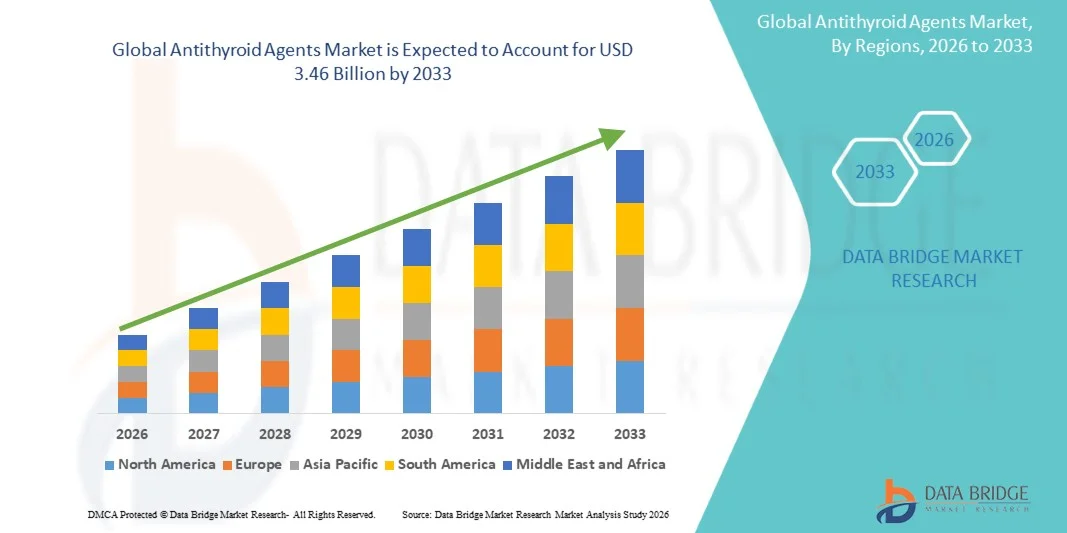
- As per Data Bridge Market Research analysis, the global antithyroid agents market size was valued at USD 2.63 billion in 2025 and is expected to reach USD 3.46 billion by 2033, at a CAGR of 3.50% during the forecast period
- The market growth is primarily driven by the increasing prevalence of thyroid disorders such as hyperthyroidism and Graves’ disease, alongside growing awareness regarding early diagnosis and treatment options across both developed and emerging economies
- Furthermore, advancements in endocrine therapeutics, improved healthcare access, and the availability of effective antithyroid medications are enhancing treatment outcomes and patient compliance, thereby supporting market expansion
Market Size & Forecast
- Global Market Value (2025): USD 2.63 billion
- Expected Market Value (2033): USD 3.46 billion
- Forecast CAGR (2026-2033): 3.50%
What are the Major Takeaways of Antithyroid Agents Market?
- Antithyroid agents, used to manage thyroid hormone overproduction and related conditions, are increasingly vital in endocrine therapy across hospitals, specialty clinics, and other care settings due to their effectiveness in regulating hormone levels, oral administration, and role in both short-term and long-term treatment regimens
- The escalating demand for antithyroid agents is primarily fueled by the rising prevalence of thyroid disorders such as hyperthyroidism and thyroid cancer, growing awareness regarding early diagnosis, and increasing utilization of diagnostic screening and routine health check-ups across global populations
- North America dominated the antithyroid agents market with a revenue share of 42.4% in 2025, supported by advanced healthcare infrastructure, high diagnosis rates, strong access to treatment options, and the presence of well-established pharmaceutical companies, particularly in the U.S., where endocrine disorder management is widely adopted
- Asia-Pacific is expected to be the fastest growing region in the antithyroid agents market during the forecast period, driven by a large patient base, improving healthcare infrastructure, rising healthcare expenditure, and increasing awareness of thyroid-related conditions across emerging economies such as India and China
- The methimazole segment dominated the antithyroid agents market in 2025 with an estimated market share of 50.8%, owing to its widespread use as a first-line treatment for hyperthyroidism due to its proven efficacy, favorable safety profile compared to alternatives, and strong adoption across hospitals and specialty centres globally
Report Scope and Antithyroid Agents Market Segmentation
|
Attributes |
Antithyroid Agents Key Market Insights |
|
Segments Covered |
|
|
Countries Covered |
North America
Europe
Asia-Pacific
Middle East and Africa
South America
|
|
Key Market Players |
|
|
Market Opportunities |
|
|
Value Added Data Infosets |
In addition to the insights on market scenarios such as market value, growth rate, segmentation, geographical coverage, and major players, the market reports curated by the Data Bridge Market Research also include in-depth expert analysis, patient epidemiology, pipeline analysis, pricing analysis, and regulatory framework |
What is the Key Trend in the Antithyroid Agents Market?
“Rising Adoption of Personalized and Advanced Endocrine Therapies”
- A significant and accelerating trend in the global antithyroid agents market is the increasing adoption of personalized treatment approaches and advanced endocrine therapies tailored to individual patient profiles, improving treatment efficacy and outcomes across diverse patient populations
- For instance, the growing use of Methimazole-based regimens in patient-specific dosing strategies and optimized treatment plans allows clinicians to better manage hyperthyroidism while minimizing adverse effects and improving adherence
- Advancements in diagnostics and biomarker-based monitoring are enabling more precise disease assessment and therapy adjustments, supporting dynamic treatment optimization and better clinical decision-making in thyroid disorder management. Furthermore, integration of digital health tools and electronic health records is facilitating continuous patient monitoring and follow-up care
- The availability of multiple drug options, including Sodium Iodide-I-131 for radioactive treatment and Methimazole for long-term management, allows healthcare providers to customize therapies based on disease severity and patient condition, enhancing flexibility in treatment protocols
- This trend toward more targeted, evidence-based, and patient-centric treatment approaches is reshaping expectations in endocrine care. Consequently, pharmaceutical companies are focusing on improving drug safety profiles, dosage convenience, and treatment outcomes through clinical innovation and research initiatives
- The demand for effective and well-tolerated antithyroid agents is growing steadily across hospitals and specialty centres, as healthcare providers increasingly prioritize individualized care and improved long-term disease management strategies
- Moreover, increasing clinical research activities and drug development efforts aimed at improving efficacy and reducing side effects are contributing to the evolution of next-generation antithyroid therapies
Antithyroid Agents Market Dynamics
Driver
“Growing Prevalence of Thyroid Disorders and Expanding Diagnostic Awareness”
- The increasing prevalence of thyroid disorders such as hyperthyroidism and thyroid cancer, coupled with growing awareness of thyroid health, is a significant driver for the rising demand for antithyroid agents across global healthcare systems
- For instance, the expansion of routine thyroid screening programs and early diagnostic initiatives has led to higher detection rates of thyroid-related conditions, thereby increasing the number of patients receiving timely treatment with antithyroid medications
- As patients and healthcare providers become more informed about the risks associated with untreated thyroid dysfunction, there is a growing preference for pharmacological management options such as Methimazole and Sodium Iodide-I-131, which offer effective disease control
- Furthermore, improvements in healthcare infrastructure, increasing access to endocrinology services, and rising healthcare expenditure in both developed and emerging economies are contributing to higher treatment adoption rates. The growing geriatric population, which is more susceptible to thyroid disorders, is also supporting market growth
- The convenience of oral administration, availability of generic formulations, and established clinical guidelines for antithyroid drug usage are further encouraging physicians to prescribe these therapies as first-line treatments in many cases
- Overall, the combination of rising disease burden, improved diagnosis, and increased treatment accessibility is significantly propelling the growth of the antithyroid agents market globally
- In addition, government initiatives and public health programs aimed at improving endocrine disorder awareness are further accelerating early diagnosis and treatment uptake
- Moreover, the expansion of telemedicine and digital healthcare platforms is improving access to endocrinology consultations, particularly in remote and underserved regions, thereby supporting market growth
Restraint/Challenge
“Side Effects, Safety Concerns, and Regulatory Compliance Hurdle”
- Concerns regarding adverse effects associated with antithyroid agents, such as hepatotoxicity, agranulocytosis, and other rare but serious complications, pose a significant challenge to wider adoption and long-term patient compliance in the market
- For instance, reported cases of severe side effects linked to prolonged use of drugs such as Methimazole and Propylthiouracil have led to cautious prescribing practices among physicians and increased monitoring requirements during treatment
- Regulatory requirements for drug safety, clinical approvals, and post-marketing surveillance further add complexity to the development and commercialization of antithyroid therapies, increasing the time and cost associated with bringing new formulations to market. Furthermore, the need for regular blood monitoring and follow-up visits can create additional burden for patients and healthcare systems
- The availability of alternative treatment options such as surgical interventions and radioactive iodine therapy may also limit the exclusive reliance on pharmacological treatments, particularly in severe or refractory cases. In addition, patient adherence issues due to long treatment durations and potential side effects can impact overall therapy effectiveness
- Addressing these challenges through improved drug formulations, enhanced safety monitoring, physician awareness, and patient education is essential for ensuring better treatment adherence and sustained market growth
- In addition, pricing pressures and reimbursement limitations in certain regions can restrict patient access to advanced or branded therapies, particularly in cost-sensitive markets
- Moreover, variability in treatment response among patients and the need for continuous dose adjustments can further complicate long-term therapy management, impacting overall clinical outcomes
How is the Antithyroid Agents Market Segmented?
The market is segmented on the basis of drugs, indication, end-users, and distribution channel.
- By Drugs
On the basis of drugs, the antithyroid agents market is segmented into Sodium Iodide-I-131, Methimazole, and Others. The Methimazole segment dominated the market with the largest market revenue share of 50.8% in 2025, driven by its widespread adoption as a first-line treatment for hyperthyroidism due to its proven efficacy, safety profile, and ease of oral administration. Methimazole is extensively prescribed across hospitals and specialty centres for long-term management of thyroid disorders, as it effectively inhibits thyroid hormone synthesis with relatively manageable side effects. Its availability in generic formulations further supports affordability and accessibility across developed and emerging markets. The strong clinical guidelines supporting Methimazole usage and its suitability for a broad patient population also contribute to its dominance in the market. In addition, consistent physician preference and established treatment protocols reinforce its leading position in endocrine therapy. The Others segment, including alternative thionamides and adjunct therapies, holds a smaller share due to limited usage and niche applications.
The Sodium Iodide-I-131 segment is anticipated to witness the fastest growth rate from 2026 to 2033, driven by its increasing use in the treatment of thyroid cancer and hyperthyroidism, particularly in cases where pharmacological therapy alone is insufficient. This radioactive iodine therapy is gaining traction due to its targeted approach, high effectiveness in ablating overactive thyroid tissue, and suitability for definitive treatment in certain patient groups. Growing prevalence of thyroid cancer and rising preference for minimally invasive therapeutic options are further accelerating demand for this segment. In addition, advancements in nuclear medicine infrastructure and improved access to specialized treatment facilities are supporting its adoption globally. Increasing awareness among physicians and patients regarding long-term treatment alternatives is also contributing to the segment’s rapid growth. The expansion of oncology-focused healthcare services and government investments in cancer care are further expected to boost the uptake of Sodium Iodide-I-131.
- By Indication
On the basis of indication, the antithyroid agents market is segmented into hyperthyroidism, thyroid cancer, and others. The Hyperthyroidism segment dominated the market with the largest revenue share of 65% in 2025, driven by the high global prevalence of conditions such as Graves’ disease and toxic multinodular goiter. Hyperthyroidism remains the primary indication for which antithyroid agents such as Methimazole are prescribed as first-line therapy, making it the largest contributor to market demand. Increasing diagnosis rates, routine thyroid screening, and growing awareness about thyroid dysfunction are further supporting the dominance of this segment. Hospitals and endocrinology clinics frequently manage hyperthyroidism through long-term pharmacological treatment, reinforcing steady demand for antithyroid drugs. The chronic nature of the disease and need for continuous monitoring also contribute to sustained medication usage. In addition, favorable treatment guidelines recommending antithyroid drugs as initial therapy further strengthen this segment’s leading position.
The Thyroid Cancer segment is expected to witness the fastest growth rate from 2026 to 2033, driven by the rising incidence of thyroid malignancies globally and increasing adoption of Sodium Iodide-I-131 as part of post-surgical or definitive treatment. Early detection through improved imaging technologies and screening programs is leading to higher diagnosis rates, thereby increasing treatment interventions. The growing focus on oncology care, coupled with advancements in radioactive iodine therapy, is further supporting segment expansion. Multidisciplinary treatment approaches involving surgery, radioactive iodine, and adjunct therapies are becoming more common, boosting the utilization of antithyroid-related agents in cancer management. In addition, increasing healthcare investments in cancer treatment infrastructure and specialized oncology centres are accelerating growth. Awareness among patients and physicians regarding effective long-term management of thyroid cancer is also contributing to the rapid expansion of this segment.
- By End-Users
On the basis of end-users, the antithyroid agents market is segmented into hospitals, homecare, speciality centres, and others. The Hospitals segment dominated the market with the largest revenue share of 55% in 2025, driven by the high volume of patient admissions for diagnosis, treatment initiation, and management of thyroid disorders. Hospitals serve as primary points of care for administering both pharmacological therapies and radioactive iodine treatments, particularly for complex and severe cases. The availability of advanced diagnostic facilities, endocrinology specialists, and integrated care systems further supports the dominance of this segment. Hospitals also play a crucial role in monitoring treatment outcomes and managing potential side effects, ensuring effective patient care. The structured treatment protocols and accessibility of multidisciplinary teams contribute to the widespread reliance on hospitals for antithyroid therapies. In addition, government and private hospital networks continue to expand, further strengthening this segment’s position in the market.
The Speciality Centres segment is anticipated to witness the fastest growth rate from 2026 to 2033, driven by the increasing preference for specialized endocrine care and targeted treatment approaches. These centres offer focused expertise in managing thyroid disorders, including advanced diagnostic tools and personalized treatment plans. Rising patient inclination toward specialized consultations and improved treatment outcomes is supporting the growth of this segment. Speciality centres are also better equipped to handle complex cases requiring long-term monitoring and tailored therapies. The expansion of outpatient specialty clinics and endocrinology-focused healthcare facilities is further contributing to market growth. In addition, increasing awareness about thyroid health and the availability of expert care in these centres are encouraging more patients to seek specialized treatment.
- By Distribution Channel
On the basis of distribution channel, the antithyroid agents market is segmented into hospital pharmacy, online pharmacy, and retail pharmacy. The Hospital Pharmacy segment dominated the market with the largest revenue share of 60% in 2025, driven by the high number of prescriptions generated within hospital settings and the immediate availability of medications for inpatients and outpatient visits. Hospital pharmacies play a critical role in dispensing antithyroid drugs, especially for patients undergoing initial diagnosis, hospitalization, or radioactive iodine therapy. The integration of hospital pharmacies with clinical departments ensures timely access to medications and better coordination of care. In addition, the preference for hospital-based dispensing in complex cases and the presence of specialist supervision further support the dominance of this segment. The structured procurement systems and bulk purchasing practices within hospitals also contribute to their leading share in the distribution channel landscape.
The Online Pharmacy segment is expected to witness the fastest growth rate from 2026 to 2033, driven by the increasing adoption of e-commerce platforms, digital healthcare services, and telemedicine consultations. Growing consumer preference for convenience, home delivery, and easy prescription refills is significantly boosting the demand for online pharmacies. The expansion of digital infrastructure and improved internet penetration in emerging markets are further accelerating this trend. Patients managing chronic conditions such as hyperthyroidism benefit from the ability to reorder medications online without frequent hospital visits. In addition, promotional discounts, subscription models, and improved logistics networks are enhancing accessibility and affordability. The rising trust in verified online pharmacy platforms and regulatory support for digital health services are also contributing to the rapid growth of this segment.
Which Region Holds the Largest Share of the Antithyroid Agents Market?
- North America dominated the antithyroid agents market with a revenue share of 42.4% in 2025, supported by advanced healthcare infrastructure, high diagnosis rates, strong access to treatment options, and the presence of well-established pharmaceutical companies
- Consumers and healthcare providers in the region benefit from widespread awareness of thyroid health, early screening programs, and established clinical guidelines that promote timely diagnosis and effective treatment using antithyroid medications
- This widespread adoption is further supported by high healthcare expenditure, availability of both branded and generic drugs such as Methimazole, and the presence of leading pharmaceutical companies and endocrinology specialists, establishing antithyroid agents as a standard treatment option across hospitals and specialty centres
U.S. Antithyroid Agents Market Insight
The U.S. antithyroid agents market captured the largest revenue share within North America in 2025, driven by the high prevalence of thyroid disorders and the strong presence of advanced healthcare infrastructure. Patients and healthcare providers are increasingly prioritizing early diagnosis and effective management of conditions such as hyperthyroidism and thyroid cancer through widely used drugs such as Methimazole and Sodium Iodide-I-131. The presence of well-established pharmaceutical companies, coupled with robust endocrinology services, further supports market growth. In addition, strong insurance coverage, high healthcare expenditure, and widespread access to both branded and generic medications contribute to the market’s expansion across hospitals and specialty centres.
Europe Antithyroid Agents Market Insight
The Europe antithyroid agents market is projected to expand at a substantial CAGR throughout the forecast period, primarily driven by increasing prevalence of thyroid disorders and well-structured healthcare systems across the region. Rising awareness regarding thyroid health, along with routine screening programs, is fostering early diagnosis and timely treatment adoption. European healthcare systems emphasize standardized clinical guidelines, ensuring consistent use of antithyroid therapies across hospitals and specialty centres. Furthermore, growing geriatric population, increasing healthcare expenditure, and strong access to endocrinology services are supporting the steady demand for antithyroid agents across both Western and Eastern Europe.
U.K. Antithyroid Agents Market Insight
The U.K. antithyroid agents market is anticipated to grow at a noteworthy CAGR during the forecast period, driven by increasing diagnosis rates of thyroid disorders and strong access to public healthcare through the National Health Service (NHS). The growing emphasis on preventive healthcare and routine medical check-ups is encouraging early detection and treatment of hyperthyroidism and related conditions. In addition, the availability of structured treatment pathways, access to specialized endocrinology care, and the presence of both hospital and retail pharmacy channels are supporting the adoption of antithyroid medications. Rising awareness among patients regarding thyroid health and treatment options is further contributing to market growth.
Germany Antithyroid Agents Market Insight
The Germany antithyroid agents market is expected to expand at a considerable CAGR during the forecast period, fueled by a well-developed healthcare infrastructure and strong focus on precision medicine and early disease management. Germany’s healthcare system supports widespread access to diagnostic tools and endocrinology specialists, enabling timely identification and treatment of thyroid disorders. The country’s emphasis on high-quality, patient-centric care promotes the use of effective therapies such as Methimazole and radioactive iodine treatments. In addition, increasing awareness of endocrine disorders, along with strong hospital networks and specialty centres, is contributing to the steady adoption of antithyroid agents across both urban and semi-urban regions.
Asia-Pacific Antithyroid Agents Market Insight
The Asia-Pacific antithyroid agents market is poised to grow at the fastest CAGR of 8% during the forecast period of 2026 to 2033, driven by a large patient population, rising healthcare expenditure, and increasing awareness of thyroid disorders. Countries such as China, Japan, and India are witnessing rapid improvements in healthcare infrastructure and expanding access to diagnostic and treatment facilities. Government initiatives promoting healthcare accessibility, along with the growing adoption of generic medications, are further accelerating market growth. In addition, increasing prevalence of thyroid disorders and expansion of hospitals and specialty centres are contributing to the rising demand for antithyroid agents across the region.
Japan Antithyroid Agents Market Insight
The Japan antithyroid agents market is gaining steady momentum due to the country’s aging population, advanced healthcare system, and strong focus on early diagnosis and chronic disease management. Japan’s healthcare infrastructure ensures wide availability of endocrinology specialists and advanced diagnostic technologies, supporting effective treatment of hyperthyroidism and thyroid cancer. The integration of routine health screenings and established clinical practices encourages early intervention using antithyroid drugs. In addition, the country’s emphasis on high-quality care and patient safety, along with increasing awareness of thyroid-related conditions, is contributing to consistent demand for antithyroid agents in hospitals and specialty centres.
India Antithyroid Agents Market Insight
The India antithyroid agents market accounted for a significant revenue share in Asia Pacific in 2025, attributed to the country’s large population base, increasing prevalence of thyroid disorders, and improving access to healthcare services. Rising awareness about thyroid health, expansion of diagnostic facilities, and growing adoption of routine health check-ups are driving early detection and treatment of conditions such as hyperthyroidism. In addition, the availability of affordable generic medications, increasing number of hospitals and specialty clinics, and growing penetration of retail and online pharmacy channels are key factors propelling the demand for antithyroid agents across urban and semi-urban regions of the country.
Which are the Top Companies in Antithyroid Agents Market?
The Antithyroid Agents industry is primarily led by well-established companies, including:
- Merck Sharp & Dohme LLC (U.S.)
- AbbVie Inc. (U.S.)
- Pfizer Inc. (U.S.)
- Teva Pharmaceuticals USA (U.S.)
- Sanofi (U.S.)
- Novartis AG (U.S.)
- GSK plc (U.S.)
- Bayer Pharmaceuticals Division (U.S.)
- Eli Lilly and Company (U.S.)
- AstraZeneca (U.K.)
- Boehringer Ingelheim Pharmaceuticals Inc. (U.S.)
- Takeda Pharmaceuticals U.S.A., Inc. (U.S.)
- Sun Pharmaceutical Industries Ltd (India)
- Dr. Reddy’s Laboratories Ltd (India)
- Cipla Ltd (India)
- Zydus Healthcare USA Inc. (U.S.)
- Torrent Pharmaceuticals Ltd (India)
- Aurobindo Pharma USA Inc. (U.S.)
- Lupin Pharmaceuticals Inc. (U.S)
What are the Recent Developments in Global Antithyroid Agents Market?
- In March 2026, Viridian Therapeutics reported late-stage clinical trial results for its investigational thyroid eye disease treatment, with plans to submit for U.S. marketing approval in early 2027, highlighting ongoing therapeutic innovation in thyroid-related autoimmune conditions
- In March 2026, the U.S. Food and Drug Administration outlined regulatory actions to address unapproved animal-derived thyroid medications such as Armour Thyroid and NP Thyroid, underscoring safety and compliance concerns for long-standing thyroid drug products. This announcement highlights regulatory scrutiny on thyroid medications that have historically been marketed without formal FDA approval, affecting prescribing and availability
- In October 2025, a comprehensive safety analysis of methimazole use reported new safety signals and adverse events associated with the antithyroid drug, emphasizing the importance of pharmacovigilance and ongoing monitoring of widely used therapies. These findings may inform clinical practice and regulatory focus on drug safety
- In August 2025, the U.S. Food and Drug Administration issued warnings to manufacturers of animal-derived thyroid medications (natural desiccated thyroid), signaling potential regulatory action against unapproved products and prompting discussions about patient transition to approved therapies. This development could impact availability and regulatory compliance for certain thyroid drug products in the U.S.
- In August 2025, the FDA warned of future regulatory action against animal-derived thyroid drugs that pre-date modern approval pathways, signaling potential shifts in how these thyroid hormone therapies are regulated and prescribed. This warning could influence market dynamics and patient access to certain thyroid treatments

- Interactive Data Analysis Dashboard
- Company Analysis Dashboard for high growth potential opportunities
- Research Analyst Access for customization & queries
- Competitor Analysis with Interactive dashboard
- Latest News, Updates & Trend analysis
- Harness the Power of Benchmark Analysis for Comprehensive Competitor Tracking
Data collection and base year analysis are done using data collection modules with large sample sizes. The stage includes obtaining market information or related data through various sources and strategies. It includes examining and planning all the data acquired from the past in advance. It likewise envelops the examination of information inconsistencies seen across different information sources. The market data is analysed and estimated using market statistical and coherent models. Also, market share analysis and key trend analysis are the major success factors in the market report. To know more, please request an analyst call or drop down your inquiry.
The key research methodology used by DBMR research team is data triangulation which involves data mining, analysis of the impact of data variables on the market and primary (industry expert) validation. Data models include Vendor Positioning Grid, Market Time Line Analysis, Market Overview and Guide, Company Positioning Grid, Patent Analysis, Pricing Analysis, Company Market Share Analysis, Standards of Measurement, Global versus Regional and Vendor Share Analysis. To know more about the research methodology, drop in an inquiry to speak to our industry experts.
Data Bridge Market Research is a leader in advanced formative research. We take pride in servicing our existing and new customers with data and analysis that match and suits their goal. The report can be customized to include price trend analysis of target brands understanding the market for additional countries (ask for the list of countries), clinical trial results data, literature review, refurbished market and product base analysis. Market analysis of target competitors can be analyzed from technology-based analysis to market portfolio strategies. We can add as many competitors that you require data about in the format and data style you are looking for. Our team of analysts can also provide you data in crude raw excel files pivot tables (Fact book) or can assist you in creating presentations from the data sets available in the report.












