


Apoptosis Stimulant Market Size
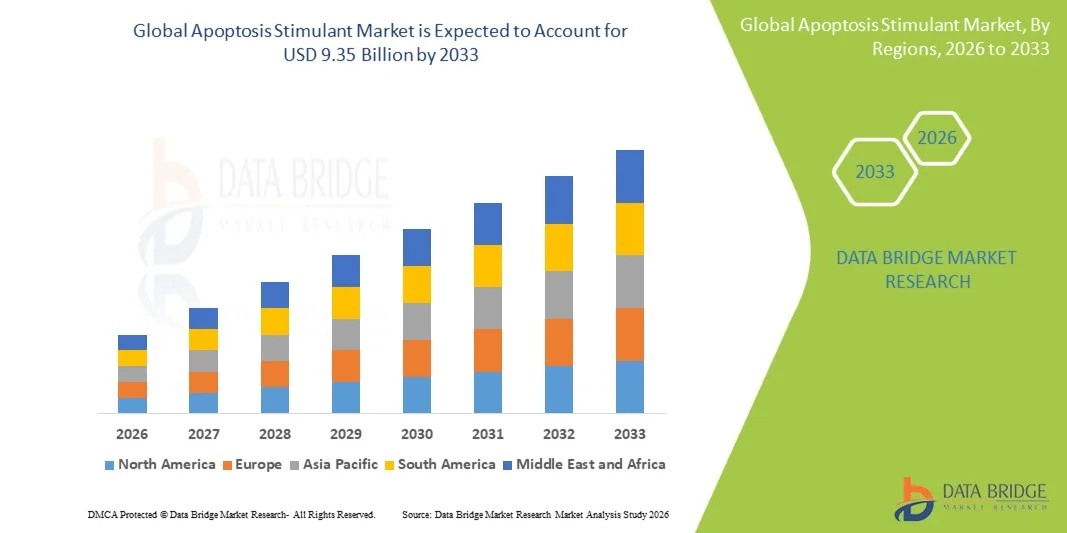
- The global apoptosis stimulant market size was valued at USD 6.58 billion in 2025 and is expected to reach USD 9.35 billion by 2033, at a CAGR of 4.49% during the forecast period
- The market growth is primarily driven by the rising global cancer burden, increasing focus on targeted oncology therapies, and rapid advancements in apoptosis-modulating drug discovery platforms, including small molecules and biologics targeting programmed cell death pathways
- Furthermore, expanding clinical research in precision medicine, growing pharmaceutical R&D investments, and increasing adoption of pathway-specific anti-cancer therapeutics are accelerating the integration of apoptosis stimulators into modern oncology treatment pipelines, thereby significantly supporting market expansion
Apoptosis Stimulant Market Analysis
- Apoptosis stimulants, which regulate programmed cell death pathways, are emerging as important therapeutic agents in modern medicine by restoring controlled cell death in abnormal cells, particularly in cancer and other disease conditions linked to dysregulated apoptosis
- The market growth is primarily driven by the rising prevalence of cancer, increasing incidence of neurodegenerative and cardiovascular diseases, and growing research into targeted apoptosis pathways, including both direct and indirect apoptogens for disease modification and precision treatment approaches
- North America dominated the apoptosis stimulant market with the largest revenue share of 42.9% in 2025, supported by strong biopharmaceutical R&D infrastructure, high clinical trial activity, and early adoption of advanced apoptosis-targeting therapies, particularly in the United States
- Asia-Pacific is expected to be the fastest growing region in the apoptosis stimulant market during the forecast period due to expanding healthcare infrastructure, rising disease burden, increasing biotech investments, and growing focus on advanced drug development in countries such as China and India
- The cancer segment dominated the market in 2025 with the largest share of 60.1%, driven by the high global cancer burden and extensive use of apoptosis stimulants in oncology treatment strategies
Report Scope and Apoptosis Stimulant Market Segmentation
|
Attributes |
Apoptosis Stimulant Key Market Insights |
|
Segments Covered |
|
|
Countries Covered |
North America
Europe
Asia-Pacific
Middle East and Africa
South America
|
|
Key Market Players |
|
|
Market Opportunities |
|
|
Value Added Data Infosets |
In addition to the insights on market scenarios such as market value, growth rate, segmentation, geographical coverage, and major players, the market reports curated by the Data Bridge Market Research also include in-depth expert analysis, patient epidemiology, pipeline analysis, pricing analysis, and regulatory framework |
Apoptosis Stimulant Market Trends
“Rising Shift Toward Precision Targeted Apoptosis Pathway Modulation”
- A significant and accelerating trend in the global apoptosis stimulant market is the increasing focus on precision targeting of programmed cell death pathways such as BCL-2, caspases, and IAP inhibition, improving therapeutic specificity in oncology and degenerative diseases
- For instance, Venetoclax is widely used as a BCL-2 inhibitor demonstrating how apoptosis pathway targeting is being successfully integrated into hematologic cancer treatment regimens
- Advances in molecular biology and drug discovery are enabling next-generation apoptosis stimulants that selectively activate intrinsic and extrinsic apoptotic pathways with improved safety and reduced off-target toxicity
- The integration of apoptosis-modulating compounds with immunotherapy and chemotherapy is supporting synergistic treatment approaches, improving overall survival outcomes across multiple cancer indications
- The expansion of AI-driven drug discovery platforms is accelerating identification of apoptosis-regulating drug candidates, reducing development timelines and improving target validation accuracy
- This trend toward highly targeted, mechanism-based apoptosis regulation is reshaping pharmaceutical R&D priorities, with companies increasingly investing in pathway-specific drug pipelines and biomarker-guided therapies
- The demand for advanced apoptosis stimulants is growing rapidly across oncology and chronic disease segments, as healthcare systems increasingly prioritize precision medicine and disease-modifying treatment strategies
Apoptosis Stimulant Market Dynamics
Driver
“Growing Need Due to Rising Cancer and Chronic Disease Burden”
- The increasing prevalence of cancer, neurodegenerative disorders, and cardiovascular diseases is a major driver for rising demand for apoptosis stimulants as these conditions are strongly linked to dysregulated cell death mechanisms
- For instance, in April 2025, ongoing clinical advancements in BCL-2 and caspase-activating drug candidates demonstrated expanding use of apoptosis-based therapies in oncology pipelines across global pharmaceutical companies
- As disease burden continues to rise globally, apoptosis stimulants are being increasingly adopted to selectively eliminate abnormal cells while preserving healthy tissue function in targeted treatment approaches
- Furthermore, growing investment in oncology R&D and precision medicine initiatives is accelerating the development of next-generation apoptosis modulators across both direct and indirect apoptogen classes
- Expansion of biotech collaborations and licensing agreements between pharmaceutical companies is further accelerating pipeline development and commercialization of apoptosis-targeting therapies
- Rising government and institutional funding for cancer research programs is strengthening early-stage discovery and translational research in apoptosis-based drug development
- The availability of advanced molecular screening tools and improved understanding of apoptotic signaling pathways are key factors propelling drug discovery and clinical adoption in multiple therapeutic areas
Restraint/Challenge
“High Development Complexity and Off-Target Toxicity Risks”
- Concerns related to complex drug development processes and potential off-target effects on healthy cells pose a significant challenge to broader commercialization of apoptosis stimulants in clinical practice
- For instance, several early-stage apoptosis-targeting compounds have shown dose-limiting toxicities in clinical trials, restricting their progression into late-stage development and regulatory approval
- Ensuring selective activation of apoptotic pathways without disrupting normal cellular functions remains a major scientific and regulatory hurdle for pharmaceutical developers
- In addition, high R&D costs, long clinical timelines, and stringent regulatory requirements for oncology drugs further slow down market entry for new apoptosis stimulant therapies
- Limited predictive biomarker availability for patient stratification continues to hinder efficient clinical trial success rates in apoptosis-targeted drug development
- Variability in patient response due to tumor heterogeneity creates additional challenges in achieving consistent therapeutic outcomes across different indications
- Overcoming these challenges through improved biomarker identification, targeted delivery systems, and safer compound design will be critical for sustained market expansion
Apoptosis Stimulant Market Scope
The market is segmented on the basis of drug class, application, end-users, and distribution channel.
- By Drug Class
On the basis of drug class, the apoptosis stimulant market is segmented into direct apoptogens and indirect apoptogens. The indirect apoptogens segment dominated the market with the largest revenue share of 60.1% in 2025, driven by their ability to modulate upstream signaling pathways and regulate apoptosis more broadly across multiple disease mechanisms. These agents are widely preferred in drug development due to their versatility in targeting complex cellular survival pathways, particularly in oncology and chronic disease treatment. Pharmaceutical companies favor indirect apoptogens because they allow multi-pathway intervention, improving therapeutic potential across heterogeneous tumor types. Their growing inclusion in pipeline oncology therapies and combination regimens further strengthens their dominance. In addition, strong clinical research activity focusing on pathway regulation and protein signaling is supporting continued adoption of indirect apoptogens globally.
The direct apoptogens segment is expected to witness the fastest growth rate of 11% CAGR from 2026 to 2033, driven by increasing demand for highly specific and targeted apoptosis activation therapies. These agents directly trigger programmed cell death mechanisms, offering precise therapeutic action with reduced pathway ambiguity. Rising advancements in molecular drug design and biomarker-based patient selection are improving the clinical success rate of direct apoptogens. Furthermore, growing interest in next-generation oncology treatments that minimize systemic toxicity is accelerating their development. Expanding biotech innovation and increased funding for targeted biologics are also supporting rapid pipeline expansion in this segment.
- By Application
On the basis of application, the market is segmented into cancer, neurodegenerative diseases, cardiovascular diseases, and others. The cancer segment dominated the market with the largest share of 70% in 2025, driven by the high global prevalence of malignancies and the critical role of apoptosis dysregulation in tumor growth. Apoptosis stimulants are extensively used in oncology pipelines to selectively eliminate cancer cells while preserving normal tissues. Strong adoption of targeted therapies, including BCL-2 and caspase-modulating agents, further strengthens this dominance. Continuous clinical trials and regulatory approvals in oncology are accelerating market penetration. In addition, increasing demand for precision medicine approaches in cancer treatment is reinforcing long-term segment leadership.
The neurodegenerative diseases segment is expected to witness the fastest growth rate of 12% CAGR from 2026 to 2033, driven by rising cases of Alzheimer’s, Parkinson’s, and other age-related neurological disorders. Dysregulated apoptosis is increasingly recognized as a key mechanism in neuronal degeneration, creating strong therapeutic interest. Pharmaceutical research is expanding into disease-modifying treatments targeting neuronal survival pathways. Growing aging population globally is further increasing demand for innovative neurological therapies. In addition, increasing funding for brain research and regenerative medicine is accelerating development in this segment.
- By End-Users
On the basis of end-users, the market is segmented into hospitals, homecare, specialty clinics, and others. The hospitals segment dominated the market with the largest share of 55% in 2025, driven by the high volume of cancer treatments and advanced therapeutic administration requirements. Hospitals remain the primary setting for oncology drug infusion, clinical trials, and specialized treatment protocols involving apoptosis stimulants. Availability of advanced diagnostic and monitoring infrastructure further supports hospital dominance. Strong presence of oncology departments and multidisciplinary care teams enhances treatment adoption. In addition, hospital-based procurement of high-cost biologics strengthens their market leadership.
The specialty clinics segment is expected to witness the fastest growth rate of 11% CAGR from 2026 to 2033, driven by the rising shift toward outpatient oncology care and personalized treatment centers. These clinics offer focused expertise in cancer and chronic disease management using targeted therapies. Increasing patient preference for specialized and less hospital-intensive care settings is supporting growth. Expansion of private oncology networks and precision medicine clinics is further accelerating adoption. In addition, improved accessibility and reduced treatment costs compared to hospitals are boosting demand in this segment.
- By Distribution Channel
On the basis of distribution channel, the market is segmented into hospital pharmacy, online pharmacy, and retail pharmacy. The hospital pharmacy segment dominated the market with the largest share of 65% in 2025, driven by the high dependency on hospital-based administration of apoptosis stimulant therapies, especially in oncology settings. Most apoptosis-targeting drugs are prescription-based and administered under clinical supervision, reinforcing hospital pharmacy dominance. Strong integration with hospital procurement systems ensures consistent drug availability. In addition, clinical trial distribution and inpatient treatment protocols further strengthen this channel. High-cost biologics and controlled dispensing requirements also contribute to its leading position.
The online pharmacy segment is expected to witness the fastest growth rate of 14% CAGR from 2026 to 2033, driven by increasing digitalization of healthcare and expanding e-pharmacy platforms. Rising demand for convenient prescription fulfillment and home delivery services is accelerating adoption. Growth in telemedicine and remote consultations is further supporting online prescription dispensing. Improved regulatory frameworks for digital pharmacies are increasing consumer trust. In addition, expanding internet penetration and healthcare digitization are making online channels increasingly accessible globally.
Apoptosis Stimulant Market Regional Analysis
- North America dominated the apoptosis stimulant market with the largest revenue share of 42.9% in 2025, supported by strong biopharmaceutical R&D infrastructure, high clinical trial activity, and early adoption of advanced apoptosis-targeting therapies, particularly in the United States
- The region benefits from a highly developed pharmaceutical ecosystem, extensive clinical trial activity, and early commercialization of apoptosis-targeting drugs across hematologic and solid tumor indications
- This widespread adoption is further supported by high healthcare expenditure, strong government and private funding for cancer research, and rapid integration of precision medicine approaches, establishing apoptosis stimulants as a key component of advanced therapeutic strategies
U.S. Apoptosis Stimulant Market Insight
The U.S. apoptosis stimulant market captured the largest revenue share of 75% in North America in 2025, driven by strong oncology R&D infrastructure, high adoption of targeted cancer therapies, and extensive clinical trial activity. The country benefits from a well-established biopharmaceutical ecosystem, with leading pharmaceutical companies actively developing apoptosis-modulating drugs for cancer and chronic diseases. In addition, strong government funding for cancer research and rapid FDA approvals for innovative oncology therapies are significantly supporting market expansion. The growing focus on precision medicine and biomarker-driven treatment approaches is further accelerating adoption across hospitals and specialty clinics.
Europe Apoptosis Stimulant Market Insight
The Europe apoptosis stimulant market is projected to expand at a substantial CAGR throughout the forecast period, primarily driven by rising cancer prevalence, increasing focus on targeted therapies, and strong regulatory support for innovative oncology drug development. The region’s robust clinical research networks and collaboration between academic institutions and pharmaceutical companies are strengthening pipeline development for apoptosis-targeting therapies. In addition, growing adoption of biomarker-based treatment strategies and precision medicine is improving patient outcomes across oncology care. Increasing healthcare investments and early disease diagnosis programs are further supporting market growth across key European countries.
U.K. Apoptosis Stimulant Market Insight
The U.K. apoptosis stimulant market is anticipated to grow at a notable CAGR during the forecast period, driven by rising investment in cancer research and expanding access to advanced oncology treatments. The presence of leading research institutes and biotechnology startups is fostering innovation in apoptosis pathway-targeting drug development. Furthermore, increasing burden of cancer and growing adoption of precision oncology approaches in clinical settings are strengthening demand. Government support for life sciences innovation and participation in global clinical trials are also contributing to market expansion.
Germany Apoptosis Stimulant Market Insight
The Germany apoptosis stimulant market is expected to expand at a considerable CAGR during the forecast period, fueled by strong pharmaceutical manufacturing capabilities and increasing focus on advanced cancer therapeutics. The country’s well-developed healthcare infrastructure and emphasis on innovation-driven drug discovery are supporting the adoption of apoptosis-modulating therapies. Growing collaboration between research institutions and pharmaceutical companies is enhancing clinical pipeline development. In addition, rising demand for targeted and personalized treatment approaches is further accelerating market penetration.
Asia-Pacific Apoptosis Stimulant Market Insight
The Asia-Pacific apoptosis stimulant market is poised to grow at the fastest CAGR of 12% during 2026 to 2033, driven by rising cancer burden, expanding biotechnology sector, and increasing healthcare investments. The region is witnessing rapid adoption of precision medicine and targeted oncology therapies supported by government initiatives and growing clinical research activity. In addition, expanding pharmaceutical manufacturing capabilities and improving access to advanced treatments are significantly boosting market penetration across emerging economies.
Japan Apoptosis Stimulant Market Insight
The Japan apoptosis stimulant market is gaining momentum due to its advanced healthcare system, strong focus on oncology innovation, and high adoption of precision medicine approaches. Increasing research into cancer and neurodegenerative diseases is driving demand for apoptosis-modulating therapies across clinical and academic settings. Moreover, Japan’s aging population and high prevalence of chronic diseases are further supporting long-term demand for advanced therapeutic solutions.
India Apoptosis Stimulant Market Insight
The India apoptosis stimulant market accounted for a significant share in Asia Pacific in 2025, driven by rising cancer incidence, expanding healthcare infrastructure, and growing pharmaceutical research activity. Increasing availability of advanced oncology treatments in urban hospitals and specialty clinics is supporting market penetration. Furthermore, government initiatives promoting biotechnology development and rising participation in global clinical trials are accelerating overall market growth in the country.
Apoptosis Stimulant Market Share
The Apoptosis Stimulant industry is primarily led by well-established companies, including:
- AbbVie Inc. (U.S.)
- AstraZeneca plc (U.K.)
- F. Hoffmann-La Roche Ltd (Switzerland)
- Novartis AG (Switzerland)
- Merck & Co., Inc. (U.S.)
- Eli Lilly and Company (U.S.)
- Pfizer Inc. (U.S.)
- Bristol-Myers Squibb Company (U.S.)
- Amgen Inc. (U.S.)
- BeiGene, Ltd. (China)
- Ascentage Pharma Group International (China)
- Sanofi (France)
- Gilead Sciences, Inc. (U.S.)
- Takeda Pharmaceutical Company Limited (Japan)
- GSK plc (U.K.)
- Boehringer Ingelheim International GmbH (Germany)
- Daiichi Sankyo Company, Limited (Japan)
- Incyte Corporation (U.S.)
- Astellas Pharma Inc. (Japan)
What are the Recent Developments in Global Apoptosis Stimulant Market?
- In February 2026, industry updates highlighted rapid expansion in next-generation BCL-2 inhibitors such as lisaftoclax, sonrotoclax, and other BH3 mimetics, with multiple late-stage clinical trials targeting hematologic cancers such as CLL, AML, and lymphoma. These drugs are designed to restore apoptosis in cancer cells resistant to chemotherapy. The pipeline expansion reflects increasing pharmaceutical focus on apoptosis reactivation as a core oncology strategy
- In December 2025, Ascentage Pharma presented new clinical data on lisaftoclax (APG-2575), a next-generation BCL-2 inhibitor, showing promising response rates in patients with venetoclax-exposed myeloid malignancies. The study demonstrated that apoptosis reactivation remained effective even in drug-resistant cancer populations, reinforcing the role of BCL-2 inhibition in overcoming therapeutic resistance
- In November 2025, BeOne Medicines announced that the U.S. FDA accepted the New Drug Application (NDA) for sonrotoclax, a next-generation BCL-2 inhibitor, granting it Priority Review for relapsed or refractory mantle cell lymphoma. This milestone reflects increasing regulatory momentum for apoptosis-targeting therapies, especially in oncology indications with high unmet need. The development strengthens competitive innovation in apoptosis-stimulant drug pipelines
- In November 2025, BeOne Medicines announced FDA acceptance of the New Drug Application (NDA) for sonrotoclax, a next-generation BCL-2 inhibitor, for the treatment of relapsed or refractory mantle cell lymphoma. The therapy demonstrated strong apoptosis reactivation in malignant B-cells by selectively inhibiting anti-apoptotic BCL-2 proteins, leading to improved cancer cell death
- In October 2025, BeOne Medicines received FDA Breakthrough Therapy Designation for sonrotoclax for the treatment of relapsed or refractory mantle cell lymphoma. This designation accelerates clinical development and regulatory review, highlighting the growing importance of apoptosis pathway modulation in fast-tracking cancer therapies. It also signals strong clinical confidence in next-generation BCL-2 inhibition strategies

- Interactive Data Analysis Dashboard
- Company Analysis Dashboard for high growth potential opportunities
- Research Analyst Access for customization & queries
- Competitor Analysis with Interactive dashboard
- Latest News, Updates & Trend analysis
- Harness the Power of Benchmark Analysis for Comprehensive Competitor Tracking
Data collection and base year analysis are done using data collection modules with large sample sizes. The stage includes obtaining market information or related data through various sources and strategies. It includes examining and planning all the data acquired from the past in advance. It likewise envelops the examination of information inconsistencies seen across different information sources. The market data is analysed and estimated using market statistical and coherent models. Also, market share analysis and key trend analysis are the major success factors in the market report. To know more, please request an analyst call or drop down your inquiry.
The key research methodology used by DBMR research team is data triangulation which involves data mining, analysis of the impact of data variables on the market and primary (industry expert) validation. Data models include Vendor Positioning Grid, Market Time Line Analysis, Market Overview and Guide, Company Positioning Grid, Patent Analysis, Pricing Analysis, Company Market Share Analysis, Standards of Measurement, Global versus Regional and Vendor Share Analysis. To know more about the research methodology, drop in an inquiry to speak to our industry experts.
Data Bridge Market Research is a leader in advanced formative research. We take pride in servicing our existing and new customers with data and analysis that match and suits their goal. The report can be customized to include price trend analysis of target brands understanding the market for additional countries (ask for the list of countries), clinical trial results data, literature review, refurbished market and product base analysis. Market analysis of target competitors can be analyzed from technology-based analysis to market portfolio strategies. We can add as many competitors that you require data about in the format and data style you are looking for. Our team of analysts can also provide you data in crude raw excel files pivot tables (Fact book) or can assist you in creating presentations from the data sets available in the report.












