


Babesiosis Market Size
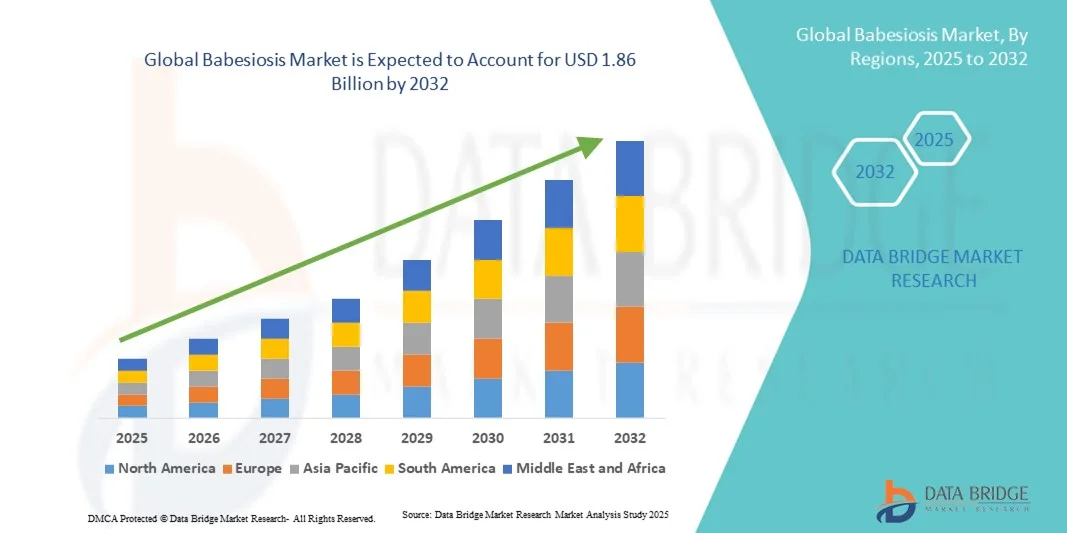
- The global babesiosis market size was valued at USD 1.26 billion in 2024 and is expected to reach USD 1.86 billion by 2032, at a CAGR of 5.00% during the forecast period
- The market growth is largely fueled by the increasing prevalence of babesiosis, advancements in medical technology, and growing awareness about the disease among healthcare providers and patients
- Furthermore, rising demand for effective and accessible treatment solutions, particularly in regions affected by tick-borne diseases, is establishing babesiosis management as a critical component of infectious disease care. These converging factors are accelerating the uptake of babesiosis solutions, thereby significantly boosting the industry's growth
Babesiosis Market Analysis
- Babesiosis, a tick-borne parasitic infection affecting red blood cells, is increasingly recognized as a significant public health concern in both endemic and non-endemic regions due to its potential for severe complications in immunocompromised and elderly populations
- The escalating demand for babesiosis treatment and management solutions is primarily fueled by the rising incidence of tick-borne diseases, growing awareness among healthcare providers, and increasing focus on early diagnosis and effective therapy
- North America dominated the babesiosis market with the largest revenue share of 39.7% in 2024, driven by high disease awareness, robust healthcare infrastructure, and strong presence of key pharmaceutical and diagnostic companies, with the U.S. experiencing substantial growth in testing and treatment adoption, supported by innovations in rapid diagnostics and combination therapy protocols
- Asia-Pacific is expected to be the fastest-growing region in the babesiosis market during the forecast period due to increasing incidence rates, expanding healthcare access, and rising investment in infectious disease research
- Ixodes Scapularis Ticks Bite segment dominated the babesiosis market with a market share of 43.9% in 2024, driven by its role as the primary vector for Babesia microti, the most common causative agent of human babesiosis
Report Scope and Babesiosis Market Segmentation
|
Attributes |
Babesiosis Key Market Insights |
|
Segments Covered |
|
|
Countries Covered |
North America
Europe
Asia-Pacific
Middle East and Africa
South America
|
|
Key Market Players |
|
|
Market Opportunities |
|
|
Value Added Data Infosets |
In addition to the insights on market scenarios such as market value, growth rate, segmentation, geographical coverage, and major players, the market reports curated by the Data Bridge Market Research also include in-depth expert analysis, patient epidemiology, pipeline analysis, pricing analysis, and regulatory framework |
Babesiosis Market Trends
Advancements in Rapid Diagnostic and Molecular Testing
- A significant and accelerating trend in the global babesiosis market is the adoption of advanced molecular diagnostic tools and rapid testing kits, enabling early and accurate detection of Babesia infections
- For instance, the PCR-based molecular assays can identify Babesia microti even in low parasitemia patients, significantly reducing diagnostic delays and improving treatment outcomes
- Integration of these diagnostics with digital health platforms allows healthcare providers to track infection patterns, identify outbreaks, and streamline patient management
- Point-of-care testing devices are increasingly being used in both hospital and home healthcare settings, improving accessibility and reducing time-to-treatment
- Mobile health applications and telemedicine platforms are being integrated with diagnostic reporting, allowing real-time monitoring and remote consultations
- This trend towards faster, more reliable, and data-driven diagnosis is reshaping clinical expectations and improving disease surveillance across both endemic and non-endemic regions
- Consequently, companies such as Imugen and Quest Diagnostics are developing high-sensitivity assays and point-of-care testing kits to facilitate prompt detection and management of babesiosis
- The demand for innovative diagnostic solutions is growing rapidly across hospitals, academic research institutes, and home healthcare services, as early detection is critical for effective treatment
Babesiosis Market Dynamics
Driver
Rising Incidence and Awareness of Tick-Borne Diseases
- The increasing prevalence of tick-borne diseases, including babesiosis, combined with growing awareness among healthcare providers and the general population, is a significant driver for market growth
- For instance, in 2024, the CDC reported a surge in Babesia microti cases in the U.S., highlighting the need for enhanced surveillance, diagnosis, and treatment solutions
- As healthcare systems focus on infectious disease management, effective treatment options, early diagnosis, and preventive strategies are gaining traction, driving the adoption of testing and therapy
- Furthermore, the rising number of immunocompromised and elderly patients, who are more susceptible to severe babesiosis, is creating demand for specialized treatment and monitoring solutions
- The expansion of public health initiatives, awareness campaigns, and improved reporting mechanisms further reinforce the need for comprehensive babesiosis management across healthcare settings
- Increased investment by pharmaceutical companies in research and development of new therapeutic options is propelling market growth
- Growing collaboration between governmental and non-governmental organizations to enhance tick-borne disease control and surveillance is boosting market opportunities
- Rising adoption of integrated healthcare approaches that combine diagnostics, treatment, and patient monitoring is further supporting market expansion
Restraint/Challenge
Limited Treatment Options and Regional Healthcare Disparities
- Constraints such as limited FDA-approved treatment options and regional disparities in healthcare access pose significant challenges to market growth
- For instance, in several developing regions, delayed diagnosis and insufficient access to antiprotozoal drugs restrict timely intervention, increasing disease severity and complications
- Addressing these gaps through investment in drug development, enhanced distribution networks, and awareness campaigns is critical for improving patient outcomes and market expansion
- In addition, the presence of asymptomatic carriers and misdiagnosis with malaria or other febrile illnesses complicates treatment protocols and delays proper care
- Overcoming these challenges requires coordinated efforts in research, diagnostics, and treatment accessibility to ensure broader adoption of effective babesiosis management solutions
- Lack of standardized treatment protocols and varying regulatory requirements across regions can hinder consistent adoption of therapies
- High costs of advanced diagnostics and treatment options in certain markets may limit accessibility for lower-income populations
- Insufficient awareness among rural populations about tick-borne risks and prevention strategies continues to pose a barrier to effective disease management
Babesiosis Market Scope
The market is segmented on the basis of mode of transmission, symptoms, drug type, route of administration, diagnosis, end-users, and distribution channel.
- By Mode of Transmission
On the basis of mode of transmission, the market is segmented into Ixodes scapularis ticks bite, contaminated blood transfusion, and transmission from an infected mother to her baby. The Ixodes scapularis ticks bite segment dominated the market with the largest market revenue share of 43.9% in 2024, driven by the high prevalence of tick-borne infections in North America and Europe. These ticks are the primary vector for Babesia microti, the most common causative agent of human babesiosis, making this mode of transmission the most significant contributor to cases globally. Public health surveillance and awareness campaigns in endemic regions further highlight this transmission route. Healthcare providers prioritize preventive strategies and rapid diagnosis for patients exposed to tick bites, reinforcing its dominance. The high infection rates in adult ticks and nymphs sustain continuous transmission to humans, maintaining its market prominence.
The contaminated blood transfusion segment is expected to witness the fastest growth rate from 2025 to 2032, fueled by increased blood screening initiatives and awareness of transfusion-associated babesiosis. Improved testing protocols in blood banks, particularly in the U.S. and Europe, are driving demand for safer transfusion practices. Regulatory mandates for screening donated blood for Babesia infections are expanding market adoption. Hospitals and diagnostic centers are investing in nucleic acid testing (NAT) and serological methods to mitigate risk. Technological advancements in rapid blood screening kits also support this growth. Public and private partnerships in transfusion safety are expected to further accelerate market expansion for this segment.
- By Symptoms
On the basis of symptoms, the market is segmented into fever, body aches, haemolytic anaemia, thrombocytopenia, and abdominal pain. The fever segment dominated the market in 2024 as it is the most common and early symptom in babesiosis patients, leading to prompt diagnosis and treatment. Fever is a critical clinical indicator that triggers healthcare visits, diagnostic testing, and intervention, making it a central driver for market demand. Its high prevalence in both endemic and emerging regions ensures continuous attention from clinicians. Diagnostic kits and treatment protocols are often designed to address febrile patients first. The symptom’s visibility increases disease reporting and awareness, contributing to sustained market activity. Fever management also drives supportive therapy and drug administration services in hospitals and home healthcare.
The haemolytic anaemia segment is anticipated to witness the fastest growth rate during the forecast period due to increasing recognition of severe complications in immunocompromised and elderly patients. The rising need for specialized management and monitoring of red blood cell destruction is creating opportunities for advanced diagnostics and supportive therapies. Awareness programs among healthcare providers emphasize early detection to prevent critical outcomes. Treatment regimens for haemolytic anaemia associated with babesiosis are increasingly being integrated into hospital protocols. Novel drug formulations targeting severe cases are expected to expand adoption. The growth of haemolytic anaemia segment aligns with increasing investment in research and clinical management solutions.
- By Drug Type
On the basis of drug type, the market is segmented into branded and generic drugs. The generic drugs segment dominated the market in 2024 due to their cost-effectiveness, wider accessibility, and extensive adoption in endemic regions. Generic antiprotozoal medications such as atovaquone and azithromycin are commonly prescribed, providing affordable treatment options for large patient populations. Their established safety and efficacy profiles contribute to widespread use across hospitals and home healthcare settings. Insurance coverage and government reimbursement programs also favor generic drugs, enhancing market penetration. The availability of generics in multiple formulations facilitates rapid treatment initiation. Market demand is further driven by price-sensitive healthcare systems and developing countries.
The branded drugs segment is expected to witness the fastest growth rate from 2025 to 2032, fueled by increased R&D investment and introduction of novel combination therapies. Branded therapies often offer improved efficacy, standardized dosing, and regulatory approvals that increase clinician confidence. Pharmaceutical companies are focusing on branded products to address severe or complicated cases. Patient preference for higher-quality branded medications in developed regions supports growth. Marketing strategies targeting hospitals and specialty clinics further enhance adoption. The segment growth is also accelerated by strategic partnerships between biotech firms and healthcare providers.
- By Route of Administration
On the basis of route of administration, the market is segmented into oral, injectable, and others. The oral treatment segment dominated the market in 2024 due to ease of use, patient compliance, and widespread availability of antiprotozoal medications in tablet form. Oral administration is preferred in both outpatient and home healthcare settings. Healthcare providers often recommend oral therapy for mild to moderate cases, making it the most utilized route. Oral formulations reduce hospitalization needs, lowering treatment costs and supporting broader adoption. Patient-friendly administration drives adherence, particularly for elderly and immunocompromised populations. The convenience and scalability of oral therapy reinforce its dominant market position.
The injectable segment is expected to witness the fastest growth rate from 2025 to 2032, driven by increasing use in severe and complicated cases of babesiosis. Injectable therapies enable rapid therapeutic action and are essential in hospitalized patients. Growth is supported by advances in IV antiprotozoal formulations and combination regimens. Hospitals and specialty clinics are investing in injectable solutions to manage critical patients effectively. Injectable treatments are often paired with supportive care such as blood transfusions, expanding market demand. Clinical guidelines emphasizing injectable therapy for high-risk patients boost adoption across healthcare facilities.
- By Diagnosis
On the basis of diagnosis, the market is segmented into parasitological methods, molecular methods, and blood tests. The molecular methods segment dominated the market in 2024 due to high sensitivity and accuracy for detecting Babesia infections, even at low parasitemia levels. PCR-based techniques and real-time PCR assays provide rapid results, improving treatment outcomes. Hospitals, research institutes, and blood banks prioritize molecular diagnostics for surveillance and outbreak management. Integration with digital reporting platforms enhances tracking and monitoring of cases. Molecular testing also supports epidemiological studies and vaccine research. Continuous innovation in assay technology reinforces the dominance of molecular methods in the market.
The blood tests segment is expected to witness the fastest growth rate from 2025 to 2032, driven by adoption in blood banks and home healthcare diagnostics. Serological testing and antibody detection enable large-scale screening programs and transfusion safety. Blood tests are simple, cost-effective, and widely accessible, increasing their adoption across regions. Technological improvements in rapid test kits support expansion in non-hospital settings. Blood testing also aids in early detection of asymptomatic carriers, a critical factor for market growth. Demand for convenient and scalable testing methods is boosting the growth of this segment globally.
- By End-Users
On the basis of end-users, the market is segmented into hospitals, academic research institutes, home healthcare, and others. The hospitals segment dominated the market in 2024 due to the need for professional supervision, advanced diagnostics, and treatment administration. Hospitals provide critical care for severe cases and facilitate early detection and treatment of babesiosis. Their established infrastructure and skilled personnel make them primary end-users for diagnostics, drug therapy, and supportive care. Continuous investment in disease surveillance and patient management in hospitals reinforces market dominance. Collaboration with diagnostic labs and blood banks further drives adoption. Hospitals remain central to disease control and management initiatives.
The home healthcare segment is expected to witness the fastest growth rate from 2025 to 2032, fueled by rising patient preference for at-home monitoring, treatment, and follow-up care. Home healthcare services offer convenience, reduce hospitalization costs, and improve patient compliance. Technological integration, such as telemedicine and remote monitoring, supports growth in this segment. Increased awareness and accessibility of oral therapies facilitate at-home management. Growth is also driven by the aging population and the need for long-term monitoring of immunocompromised patients. Partnerships between home healthcare providers and diagnostic companies are accelerating adoption.
- By Distribution Channel
On the basis of distribution channel, the market is segmented into hospital pharmacy, retail pharmacy, online pharmacy, and others. The hospital pharmacies segment dominated the market in 2024 due to direct access to patients receiving treatment in clinical settings and integration with hospital-based disease management protocols. Hospital pharmacies ensure availability of critical medications, IV formulations, and diagnostic kits for timely treatment. Coordination with healthcare providers supports proper administration and adherence. Bulk procurement and established supply chains in hospitals maintain consistent availability. Professional guidance on drug usage reinforces hospital pharmacy dominance. Hospitals also serve as key nodes for public health programs targeting babesiosis.
The online pharmacy segment is expected to witness the fastest growth rate from 2025 to 2032, driven by rising e-commerce adoption, convenience of home delivery, and increased awareness of remote purchasing options. Patients in remote or underserved regions can access drugs and testing kits easily. Digital platforms provide patient education, teleconsultation, and home delivery services. Regulatory approval and secure payment systems support trust in online pharmacies. Growth is accelerated by expanding internet penetration and mobile device usage globally. Online pharmacies reduce barriers to access, especially in non-endemic and emerging regions.
Babesiosis Market Regional Analysis
- North America dominated the babesiosis market with the largest revenue share of 39.7% in 2024, driven by high disease awareness, robust healthcare infrastructure, and strong presence of key pharmaceutical and diagnostic companies
- The U.S. leads the region due to well-established diagnostic facilities, widespread adoption of molecular testing, and effective treatment protocols for managing babesiosis cases
- This dominance is further supported by robust public health initiatives, high healthcare spending, and strategic investments by pharmaceutical and diagnostic companies, making North America the key market for both human and veterinary babesiosis management
U.S. Babesiosis Market Insight
The U.S. babesiosis market captured the largest revenue share of 82% in 2024 within North America, fueled by the high prevalence of Babesia microti infections and the country’s advanced healthcare infrastructure. Awareness campaigns by the CDC and other public health agencies have increased early diagnosis and treatment adoption. The growing use of molecular diagnostic tools and rapid testing kits, along with widespread availability of antiprotozoal therapies, further propels the market. Moreover, rising cases among immunocompromised and elderly populations are driving demand for hospital-based care and specialized treatment protocols. The expansion of blood screening programs to prevent transfusion-transmitted babesiosis is also significantly contributing to market growth.
Europe Babesiosis Market Insight
The Europe babesiosis market is projected to expand at a substantial CAGR throughout the forecast period, primarily driven by rising awareness of tick-borne diseases and stringent healthcare regulations. The increasing incidence of Babesia infections in endemic regions, coupled with the adoption of advanced diagnostic and treatment solutions, is fostering market growth. European healthcare providers are prioritizing early detection, especially in high-risk populations, enhancing market adoption. The region is witnessing significant growth across hospitals, academic research institutes, and home healthcare applications. Public health initiatives and government-supported disease surveillance programs further reinforce market expansion.
U.K. Babesiosis Market Insight
The U.K. babesiosis market is anticipated to grow at a noteworthy CAGR during the forecast period, driven by heightened awareness of tick-borne diseases and the need for timely diagnosis and treatment. Concerns regarding blood transfusion safety and increasing reports of tick-related infections are encouraging both hospitals and research institutes to adopt advanced diagnostic and treatment solutions. The U.K.’s robust healthcare infrastructure, combined with increasing public knowledge campaigns, is expected to continue stimulating market growth. In addition, adoption of molecular diagnostics and rapid testing kits enhances detection rates and supports early intervention.
Germany Babesiosis Market Insight
The Germany babesiosis market is expected to expand at a considerable CAGR during the forecast period, fueled by increasing awareness of vector-borne diseases and adoption of technologically advanced diagnostics. Germany’s well-established healthcare infrastructure and focus on preventive medicine promotes the uptake of rapid testing, molecular assays, and standardized treatment protocols. Hospitals and research institutes are integrating advanced diagnostic methods for effective patient management. In addition, Germany’s public health policies emphasize early detection and monitoring, which supports consistent market growth. Investment in innovative therapies and surveillance programs further strengthens the market.
Asia-Pacific Babesiosis Market Insight
The Asia-Pacific babesiosis market is poised to grow at the fastest CAGR of 25% during the forecast period of 2025 to 2032, driven by rising awareness of tick-borne diseases, increasing healthcare access, and technological advancements in countries such as China, Japan, and India. Growing urbanization and expanding healthcare infrastructure are promoting early diagnosis and treatment adoption. Government initiatives to improve infectious disease management and public health surveillance are supporting market growth. Moreover, increased availability of cost-effective diagnostics and antiprotozoal therapies is expanding patient reach. The rising incidence of tick-borne diseases in both human and veterinary populations is further boosting market demand.
Japan Babesiosis Market Insight
The Japan babesiosis market is gaining momentum due to the country’s emphasis on high-tech healthcare solutions and rapid adoption of advanced diagnostics. The integration of molecular testing and point-of-care diagnostics with hospital systems enhances early detection and treatment. Public health awareness programs and proactive disease surveillance are supporting market expansion. The rising number of elderly and immunocompromised individuals increases the demand for specialized care and monitoring. In addition, Japan’s focus on research in tick-borne diseases is encouraging the development of innovative therapies and diagnostic kits.
India Babesiosis Market Insight
The India babesiosis market accounted for the largest market revenue share in Asia-Pacific in 2024, attributed to increasing awareness of tick-borne diseases, expanding healthcare access, and rising technological adoption. India is witnessing growing adoption of molecular diagnostics, rapid testing kits, and antiprotozoal medications across hospitals and home healthcare. Government initiatives to strengthen infectious disease surveillance, along with increasing public awareness, are key factors propelling the market. The affordability of diagnostic and treatment options enhances accessibility to a wider population. In addition, increasing incidence reports in endemic regions are driving adoption of comprehensive babesiosis management solutions.
Babesiosis Market Share
The Babesiosis industry is primarily led by well-established companies, including:
- GSK plc (U.K.)
- Pfizer Inc. (U.S.)
- AbbVie Ltd. (U.S.)
- Bayer AG (Germany)
- Sanofi (France)
- Merck & Co., Inc. (U.S.)
- AstraZeneca (U.K.)
- Johnson & Johnson Services, Inc. (U.S.)
- Eli Lilly and Company (U.S.)
- Bristol-Myers Squibb Company (U.S.)
- Gilead Sciences, Inc. (U.S.)
- Amgen Inc. (U.S.)
- Teva Pharmaceutical Industries Ltd. (Israel)
- Biogen Inc. (U.S.)
- Vertex Pharmaceuticals Incorporated (U.S.)
- Regeneron Pharmaceuticals, Inc. (U.S.)
- Allergan plc (Ireland)
What are the Recent Developments in Global Babesiosis Market?
- In October 2025, 60 Degrees Pharmaceuticals announced the initiation of the B-FREE study, a Phase 2 open-label clinical trial evaluating the efficacy of tafenoquine in treating chronic babesiosis. This study aims to assess the impact of a 90-day tafenoquine regimen on patient-reported fatigue and parasitemia levels
- In October 2025, 60 Degrees Pharmaceuticals reported that the first patient in their tafenoquine study exhibited no detectable Babesia infection following treatment. This outcome suggests potential for tafenoquine as a therapeutic option for relapsing babesiosis, though further research is needed
- In July 2025, the U.S. Department of Defense issued a public health advisory regarding the rising threat of babesiosis as a co-infection with Lyme disease, particularly in Maryland. The advisory emphasized the need for heightened awareness and diagnostic vigilance among healthcare providers to manage these co-infections effectively
- In May 2025, a study published in Frontiers in Cellular and Infection Microbiology highlighted significant progress in diagnostic techniques for Babesia species. The research focused on developing more accurate and efficient methods for detecting Babesia infections, which is crucial for timely treatment and disease control
- In September 2023, the FDA approved the use of pathogen reduction devices to inactivate Babesia spp. in blood products. This advancement aims to reduce the risk of transfusion-transmitted babesiosis, enhancing blood safety protocols in endemic regions

- Interactive Data Analysis Dashboard
- Company Analysis Dashboard for high growth potential opportunities
- Research Analyst Access for customization & queries
- Competitor Analysis with Interactive dashboard
- Latest News, Updates & Trend analysis
- Harness the Power of Benchmark Analysis for Comprehensive Competitor Tracking
Data collection and base year analysis are done using data collection modules with large sample sizes. The stage includes obtaining market information or related data through various sources and strategies. It includes examining and planning all the data acquired from the past in advance. It likewise envelops the examination of information inconsistencies seen across different information sources. The market data is analysed and estimated using market statistical and coherent models. Also, market share analysis and key trend analysis are the major success factors in the market report. To know more, please request an analyst call or drop down your inquiry.
The key research methodology used by DBMR research team is data triangulation which involves data mining, analysis of the impact of data variables on the market and primary (industry expert) validation. Data models include Vendor Positioning Grid, Market Time Line Analysis, Market Overview and Guide, Company Positioning Grid, Patent Analysis, Pricing Analysis, Company Market Share Analysis, Standards of Measurement, Global versus Regional and Vendor Share Analysis. To know more about the research methodology, drop in an inquiry to speak to our industry experts.
Data Bridge Market Research is a leader in advanced formative research. We take pride in servicing our existing and new customers with data and analysis that match and suits their goal. The report can be customized to include price trend analysis of target brands understanding the market for additional countries (ask for the list of countries), clinical trial results data, literature review, refurbished market and product base analysis. Market analysis of target competitors can be analyzed from technology-based analysis to market portfolio strategies. We can add as many competitors that you require data about in the format and data style you are looking for. Our team of analysts can also provide you data in crude raw excel files pivot tables (Fact book) or can assist you in creating presentations from the data sets available in the report.












