


What is the Biguanides Market Size and Growth Rate?
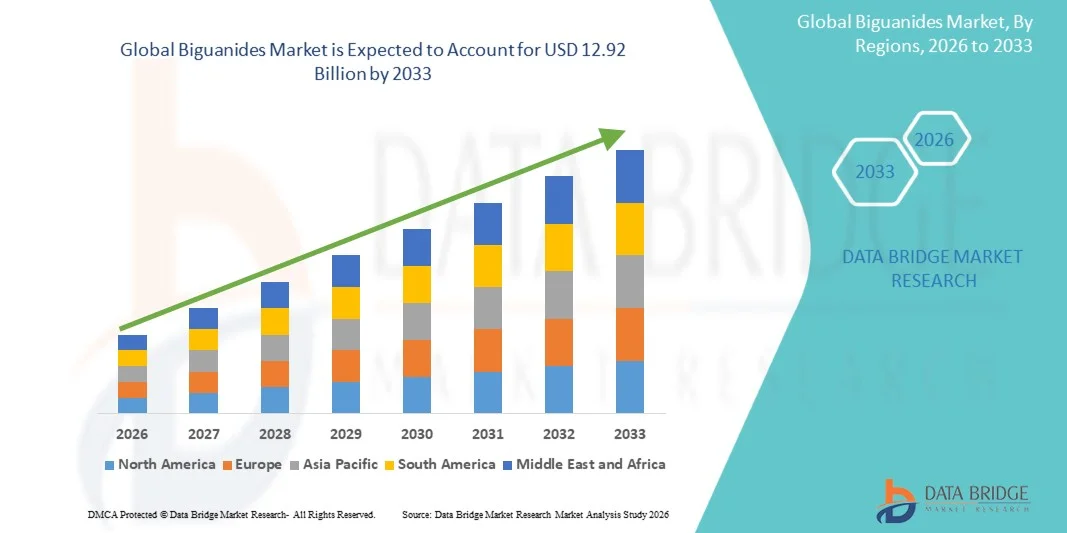
- As per Data Bridge Market Research analysis, the biguanides market was valued at USD 8.68 billion in 2025 and is projected to reach USD 12.92 billion by 2033, growing at a CAGR of 5.10% from 2026 to 2033.
- The market is experiencing steady growth driven by the increasing prevalence of type 2 diabetes, rising awareness of metabolic disorders, growing availability of generic biguanides, adoption of oral antidiabetic medications, and advancements in liver-targeted therapies.
- The rising incidence of diabetes globally, particularly type 2 diabetes, combined with increasing demand for cost-effective and reliable treatment options, is supporting the adoption of biguanides. Metformin remains the most widely prescribed biguanide, while advancements in extended-release formulations, combination therapies, and expanded indications are contributing to continued market growth
Market Size & Forecast
- Global Market Value (2025): USD 8.68 Billion
- Expected Market Value (2033): USD 12.92 Billion
- Forecast CAGR (2026–2033): 5.10%
- Leading Region in 2025: North America
- Fastest Growing Region: Asia Pacific
What are the Major Takeaways of the Biguanides Market?
- North America dominated the biguanides market with the largest revenue share of 32.80% in 2025, supported by the high prevalence of type 2 diabetes, established healthcare infrastructure, strong adoption of metformin as a first-line therapy, and broad access to diabetes medications.
- Asia-Pacific is expected to be the fastest-growing region at a CAGR of 7.88% from 2026 to 2033, fueled by rising diabetes prevalence, expanding access to treatment, and increasing generic drug competition across countries such as China and India.
- The metformin segment led the market with a 75.02% share in 2025, driven by its established position as a first-line therapy for type 2 diabetes.
- Buformin are the fastest-growing molecule type, projected to register a CAGR of 7.22%, reflecting the surge in renewed research interest in biguanide molecules and their potential therapeutic applications.
- The immediate-release tablets segment dominated the dosage form category with a 59.85% revenue share in 2025, led by established prescribing practices and widespread availability of generic metformin
- Type 2 diabetes mellitus accounted for 88.66% of the market share in 2025, preferred by the widespread use of metformin for glycemic management.
- The fixed-dose combinations segment is the fastest-growing formulation type category, with a CAGR of 6.29%, driven by increasing adoption of combination treatment for improved glycemic control
Report Scope and Biguanides Market Segmentation
|
Attributes |
Biguanides Key Market Insights |
|
Segments Covered |
|
|
Countries Covered |
North America
Europe
Asia-Pacific
Middle East and Africa
South America
|
|
Key Market Players |
|
|
Market Opportunities |
|
|
Value Added Data Infosets |
In addition to the insights on market scenarios such as market value, growth rate, segmentation, geographical coverage, and major players, the market reports curated by the Data Bridge Market Research also include in-depth expert analysis, patient epidemiology, pipeline analysis, pricing analysis, and regulatory framework. |
What is the Key Trend in the Biguanides Market?
- Pharmaceutical manufacturers are increasingly advancing extended-release metformin formulations to improve treatment adherence, reduce gastrointestinal adverse events, and provide more convenient dosing for patients receiving long-term diabetes management.
- For instance, in September 2024, a study published in BMC Endocrine Disorders analyzed 21 observational studies and found that extended-release metformin had lower incidences of several gastrointestinal adverse events than immediate-release metformin, supporting the trend toward improved-tolerability extended-release formulations.
- Research into metformin is increasingly extending beyond type 2 diabetes toward women’s health applications, particularly polycystic ovary syndrome, where the drug is used for metabolic and anthropometric outcomes.
- For instance, in February 2024, the MESIDA Phase 3 trial evaluated a fixed-dose combination of dapagliflozin, sitagliptin, and extended-release metformin in 274 Indian adults with type 2 diabetes; the triple combination reduced HbA1c by 1.45% versus 1.00% with sitagliptin plus sustained-release metformin, demonstrating growing clinical interest in metformin-based combination therapy.
- Pharmaceutical companies are also expanding fixed-dose combination formulations that incorporate metformin with other glucose-lowering agents to improve glycemic control and simplify treatment regimens for patients with type 2 diabetes.
What are the Key Drivers of the Biguanides Market?
- The increasing global prevalence of diabetes is significantly strengthening demand for biguanides, particularly metformin, which remains a widely used first-line therapy for type 2 diabetes across healthcare systems.
- For instance, in November 2024, a Lancet pooled analysis of 1,108 population-representative studies involving 141 million participants estimated that 828 million adults were living with diabetes globally in 2022, an increase of 630 million from 1990.
- Expanding diagnosis and treatment coverage across emerging economies is supporting demand for affordable generic biguanides, particularly as diabetes prevalence increases faster in low- and middle-income countries.
- For instance, in May 2025, a U.S. real-world study published on PubMed, of 964,914 adults with type 2 diabetes found that 74%–83% initiated metformin as first-line therapy before 2022, demonstrating its continued widespread use despite increasing adoption of newer glucose-lowering medicines.
- With metformin-based therapy remaining clinically established, increasing diabetes prevalence, generic availability, and expanding access to chronic disease treatment are expected to sustain demand for biguanides across mature and emerging markets.
Which Factors are Challenging the Growth of the Biguanides Market?
- Renal impairment remains an important treatment limitation for metformin, as reduced kidney function can decrease metformin clearance and increase the potential for drug accumulation and metformin-associated lactic acidosis.
- For instance, in September 2024, BMC Endocrine Disorders published a systematic review and meta-analysis of 21 observational studies involving 25,206 metformin-treated patients, reporting gastrointestinal event rates of 6.9% for diarrhea, 6.2% for bloating, and 5.3% for abdominal pain.
- Long-term safety monitoring can also challenge biguanide therapy, particularly because metformin has been associated with vitamin B12 deficiency, which may require monitoring in patients receiving prolonged treatment.
- The risk of metformin-associated lactic acidosis in patients with kidney dysfunction can restrict the eligible patient population, particularly where renal impairment, acute kidney injury, or other conditions increase metformin accumulation.
- For instance, in November 2023, Endocrine Practice published the EMBER real-world evidence study using 36,740 adults with type 2 diabetes, finding that metformin use for four years or longer was associated with a 41.0% increased odds of vitamin B12 deficiency compared with use for less than four years
- Historical safety concerns surrounding older biguanides such as phenformin and buformin continue to influence the risk profile of the drug class, as these agents were withdrawn because of life-threatening lactic acidosis.
How is the Biguanides Market Segmented?
The biguanides market is segmented on the basis of molecule, dosage form, indication, formulation type, and distribution channel.
- By Molecule
On the basis of molecule, the biguanides market is segmented into metformin, phenformin, and buformin. The metformin segment dominated the market with a 75.02% share in 2025, owing to its established position as a first-line therapy for type 2 diabetes. Metformin has a well-established efficacy and safety profile and is widely available as an affordable generic medicine. Its extensive use across healthcare systems and inclusion in treatment guidelines support continued demand. The molecule is also commonly used as the foundation of combination therapy when additional glycemic control is required. Strong physician familiarity and broad patient acceptance further reinforce its market position.
The buformin segment is projected to register the fastest growth at a CAGR of 7.22% through 2033, supported by renewed research interest in biguanide molecules and their potential therapeutic applications. Buformin is being investigated for mechanisms involving metabolic regulation and AMP-activated protein kinase pathways. Research interest is also expanding toward potential applications beyond conventional diabetes management. These developments are creating opportunities for further investigation of buformin-based therapies. However, the segment remains considerably smaller than metformin because of its limited commercial use.
- By Dosage Form
On the basis of dosage form, the biguanides market is segmented into immediate-release tablets, extended-release tablets, and oral solutions. The immediate-release tablets segment dominated the market with a 59.85% share in 2025, supported by established prescribing practices and widespread availability of generic metformin. Immediate-release tablets are extensively used for routine type 2 diabetes management. Their relatively low cost makes them accessible across developed and emerging healthcare markets. Physicians have extensive experience with the formulation because of its long-standing clinical use. Broad availability through retail and hospital pharmacies further supports adoption.
The extended-release tablets segment is projected to register the fastest growth at a CAGR of 6.48% through 2033, driven by demand for once-daily dosing and improved treatment convenience. Extended-release formulations can help reduce gastrointestinal intolerance associated with conventional immediate-release metformin. They can also simplify treatment regimens and potentially improve medication adherence. Advances in controlled-release technologies are supporting the development of differentiated formulations. Increasing patient preference for convenient dosing is further supporting adoption.
- By Indication
On the basis of indication, the biguanides market is segmented into type 2 diabetes mellitus, polycystic ovary syndrome, gestational diabetes, prediabetes management, and others. The type 2 diabetes mellitus segment dominated the market with an 88.66% share in 2025, reflecting the widespread use of metformin for glycemic management. Metformin is established as a first-line pharmacological treatment for many patients with type 2 diabetes. Its affordability, availability, and extensive clinical evidence support continued utilization. The growing number of people requiring diabetes treatment provides a large patient base for biguanide therapies. Metformin is also frequently retained when additional glucose-lowering medicines are introduced.
The polycystic ovary syndrome segment is projected to register the fastest growth at a CAGR of 7.35% through 2033, supported by increasing recognition of metabolic abnormalities associated with PCOS. Metformin is used in selected patients to address insulin resistance and metabolic outcomes. Increasing diagnosis and clinical management of PCOS are expanding the potential patient population. Research into metformin's metabolic effects is also broadening its therapeutic relevance beyond diabetes. Growing attention to metabolic health in women is providing additional opportunities for biguanide use.
- By Formulation Type
On the basis of formulation type, the biguanides market is segmented into monotherapy and fixed-dose combinations. The monotherapy segment dominated the market with a 51.48% share in 2025, supported by the continued use of metformin as an initial treatment for type 2 diabetes. Metformin monotherapy has a long-established clinical history and is widely recommended in diabetes management. Its low cost and generic availability further support adoption. Physicians can initiate treatment with metformin before adding other glucose-lowering agents when required. The extensive population receiving first-line pharmacological treatment sustains demand for monotherapy products.
The fixed-dose combinations segment is projected to register the fastest growth at a CAGR of 6.29% through 2033, driven by increasing adoption of combination treatment for improved glycemic control. Fixed-dose combinations allow multiple glucose-lowering agents to be delivered in a single dosage form. This can reduce pill burden and simplify treatment regimens for patients requiring multiple therapies. Metformin is frequently incorporated into combination products with other antidiabetic agents. Growing treatment intensification and demand for convenient therapies are supporting this segment.
- By Distribution Channel
On the basis of distribution channel, the biguanides market is segmented into hospital pharmacies, retail pharmacies, online pharmacies, and others. The hospital pharmacies segment dominated the market with a 44.79% share in 2025, supported by the important role of hospitals in diabetes diagnosis, treatment initiation, and medication dispensing. Hospital pharmacies provide direct access to prescribed medicines for patients receiving specialized care. Their established procurement and distribution systems support reliable availability of biguanide medicines. Hospitals also manage patients with complex metabolic conditions requiring supervised treatment. These factors contribute to the leading position of hospital pharmacies.
The online pharmacies segment is projected to register the fastest growth at a CAGR of 8.02% through 2033, supported by the expansion of digital pharmacy services and increasing demand for convenient medicine purchasing. Online pharmacies allow patients to order chronic-disease medications remotely. The expansion of digital healthcare infrastructure is improving access to medicines for geographically dispersed populations. Increasing consumer familiarity with e-pharmacy platforms is also encouraging online purchases. Convenience and home delivery are particularly relevant for patients requiring long-term diabetes medication.
Which Region Holds the Largest Share of the Biguanides Market?
- North America dominated the biguanides market with the largest revenue share of 32.80% in 2025, supported by the high prevalence of type 2 diabetes, established healthcare infrastructure, strong adoption of metformin as a first-line therapy, and broad access to diabetes medications.
- The region also benefits from extensive insurance coverage for diabetes medications, established clinical protocols emphasizing metformin as a first-line therapy, and strong access to affordable generic medicines. Increasing obesity and diabetes prevalence further expand the treated patient population, while advanced healthcare infrastructure and digital diabetes-management capabilities strengthen treatment access and continuity.
U.S. Biguanides Market Insight
The U.S. biguanides market is witnessing steady growth due to the country’s high prevalence of diabetes and established healthcare infrastructure, which support sustained demand for metformin-based therapies. The country’s extensive pharmaceutical distribution network, strong generic-drug availability, and established clinical use of metformin as a first-line treatment are supporting market development. In addition, increasing diagnosis and treatment of type 2 diabetes are expanding the patient population receiving biguanides. The American Diabetes Association reported that 38.4 million people in the U.S. had diabetes, including 29.7 million diagnosed cases, demonstrating the substantial patient population requiring diabetes management.
Asia-Pacific Biguanides Market Insight
The Asia-Pacific biguanides market is expected to witness rapid growth, driven by the increasing prevalence of diabetes, expanding healthcare access, and rising demand for affordable oral antidiabetic medicines across countries such as China and India. Growing availability of generic metformin and increasing diabetes screening are supporting regional market expansion. In addition, the large population base and increasing treatment coverage are creating substantial opportunities for biguanide manufacturers. The International Diabetes Federation estimated that the Western Pacific region had 180 million adults living with diabetes, while the South-East Asia region had 106 million, highlighting the region’s substantial diabetes-treatment demand.
Japan Biguanides Market Insight
The Japan biguanides market is witnessing consistent growth due to the country’s aging population, established healthcare system, and continued demand for pharmacological management of type 2 diabetes. Healthcare providers are increasingly focused on appropriate glycemic management among older adults, while established access to prescription medicines supports continued use of metformin and other biguanides. Moreover, Japan’s strong pharmaceutical and clinical research capabilities contribute to continued development of diabetes-management strategies. The International Diabetes Federation estimated that approximately 7.4 million adults in Japan were living with diabetes, highlighting the continuing need for diabetes treatment and management.
China Biguanides Market Insight
The China biguanides market is growing rapidly, driven by the country’s large diabetes population, increasing healthcare expenditure, and expanding access to diabetes diagnosis and treatment. Growing availability of generic medicines and increasing emphasis on diabetes prevention and management are supporting demand for affordable oral therapies such as metformin. In addition, the country’s expanding healthcare infrastructure is improving access to chronic-disease treatment across urban and rural populations. The International Diabetes Federation estimated that China had approximately 148 million adults aged 20–79 living with diabetes, representing one of the world’s largest diabetes populations and a substantial addressable market for biguanides.
U.K. Biguanides Market Insight
The U.K. biguanides market is experiencing steady growth, supported by established diabetes-care pathways, widespread availability of generic metformin, and increasing demand for long-term management of type 2 diabetes. The country’s National Health Service provides broad access to diabetes diagnosis, prescription medicines, and structured diabetes-management services. Furthermore, continued emphasis on early diagnosis and improved glycemic control supports the use of established oral therapies. Diabetes UK estimated that more than 5.6 million people in the U.K. were living with diabetes, including approximately 1.3 million people who were estimated to be undiagnosed, demonstrating significant unmet demand for diabetes diagnosis and treatment
Germany Biguanides Market Insight
The Germany biguanides market is expanding steadily due to the country’s high diabetes burden, comprehensive healthcare infrastructure, and established use of metformin in type 2 diabetes management. Strong access to prescription medicines and Germany’s well-developed pharmaceutical and healthcare distribution systems continue to support biguanide utilization. Increasing attention to diabetes prevention, early diagnosis, and long-term disease management is also supporting market demand. The International Diabetes Federation estimated that approximately 5.6 million adults in Germany were living with diabetes, highlighting the country’s substantial requirement for diabetes-management therapies
Which are the Top Companies in Biguanides Market?
The biguanides industry is primarily led by well-established companies, including:
- Merck & Co., Inc. (U.S.)
- Cipla (India)
- Lupin (India)
- Viatris Inc. (U.S.)
- Zydus Lifesciences Limited (India)
- Teva Pharmaceutical Industries Ltd. (Israel)
- Dr. Reddy's Laboratories Limited (India)
- Torrent Pharmaceuticals Limited (India)
- Sun Pharmaceutical Industries Ltd. (India)
- Ajanta Pharma Ltd. (India)
- Amneal Pharmaceuticals LLC (U.S.)
- Alkem (India)
- Glenmark Pharmaceuticals Limited (India)
- Ipca Laboratories Ltd. (India)
- Intas Pharmaceuticals Limited (India)
- Macleods Pharmaceuticals Limited (India)
- USV Private Limited (India)
- Wockhardt Limited (India)
- Alembic Pharmaceuticals Limited (India)
- Aristo Pharmaceuticals Pvt. Ltd. (India)
What are Latest Developments in Biguanides Market?
- In November 2025, Nature Communications published a randomized, placebo-controlled clinical trial evaluating metformin in adults with type 1 diabetes. The 26-week INTIMET trial included 40 adults with type 1 diabetes and assessed metformin 1,500 mg versus placebo for insulin resistance. The study found no significant difference in hepatic insulin resistance between the metformin and placebo groups, although metformin was associated with a reduction in total daily insulin dose.
- In July 2025, Camber Pharmaceuticals launched Metformin Hydrochloride Oral Solution in the U.S., adding a liquid metformin formulation to its generic pharmaceutical portfolio. The 500 mg/5 mL oral solution is indicated as an adjunct to diet and exercise to improve glycemic control in adults and pediatric patients aged 10 years and older with type 2 diabetes mellitus. The launch expands metformin availability beyond conventional tablet formulations and provides an alternative dosage form for eligible patients.
- In January 2025, Mantra Pharma launched M-METFORMIN 1000 mg in Canada, expanding its metformin product range alongside existing 500 mg and 850 mg strengths. The company stated that the expanded range provides healthcare professionals with greater flexibility to adjust treatment according to individual patient needs. The product is supplied as metformin tablets and adds another commercially available strength to the company's diabetes portfolio.
- In August 2023, Akums Drugs & Pharmaceuticals launched Vildagliptin SR and Metformin SR tablets for diabetes management in India. The products combine a DPP-4 inhibitor with sustained-release metformin, providing a fixed-dose treatment option for patients requiring combination therapy for type 2 diabetes.
- In July 2021, JAMA Oncology published the NRG-LU001 Phase 2 randomized clinical trial evaluating metformin in combination with concurrent chemoradiation for locally advanced non-small cell lung cancer. The trial enrolled 167 patients and investigated whether adding metformin to chemoradiation could improve outcomes. The study found that adding metformin was well tolerated but did not improve overall survival or other major clinical outcomes.

- Interactive Data Analysis Dashboard
- Company Analysis Dashboard for high growth potential opportunities
- Research Analyst Access for customization & queries
- Competitor Analysis with Interactive dashboard
- Latest News, Updates & Trend analysis
- Harness the Power of Benchmark Analysis for Comprehensive Competitor Tracking
Data collection and base year analysis are done using data collection modules with large sample sizes. The stage includes obtaining market information or related data through various sources and strategies. It includes examining and planning all the data acquired from the past in advance. It likewise envelops the examination of information inconsistencies seen across different information sources. The market data is analysed and estimated using market statistical and coherent models. Also, market share analysis and key trend analysis are the major success factors in the market report. To know more, please request an analyst call or drop down your inquiry.
The key research methodology used by DBMR research team is data triangulation which involves data mining, analysis of the impact of data variables on the market and primary (industry expert) validation. Data models include Vendor Positioning Grid, Market Time Line Analysis, Market Overview and Guide, Company Positioning Grid, Patent Analysis, Pricing Analysis, Company Market Share Analysis, Standards of Measurement, Global versus Regional and Vendor Share Analysis. To know more about the research methodology, drop in an inquiry to speak to our industry experts.
Data Bridge Market Research is a leader in advanced formative research. We take pride in servicing our existing and new customers with data and analysis that match and suits their goal. The report can be customized to include price trend analysis of target brands understanding the market for additional countries (ask for the list of countries), clinical trial results data, literature review, refurbished market and product base analysis. Market analysis of target competitors can be analyzed from technology-based analysis to market portfolio strategies. We can add as many competitors that you require data about in the format and data style you are looking for. Our team of analysts can also provide you data in crude raw excel files pivot tables (Fact book) or can assist you in creating presentations from the data sets available in the report.












