


Bowenoid Papulosis Treatment Market Size
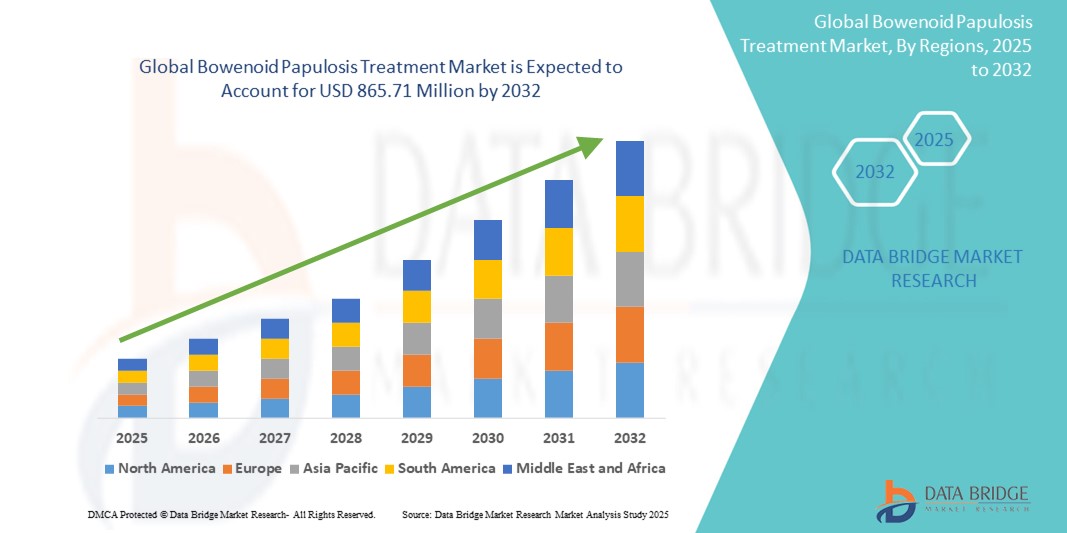
- The global Bowenoid papulosis treatment market size was valued at USD 529.42 million in 2024 and is expected to reach USD 865.71 million by 2032, at a CAGR of 6.34% during the forecast period
- The market growth is primarily driven by increased awareness of sexually transmitted infections (STIs), growing demand for early diagnosis, and improved access to dermatological care, particularly in developed regions
- Moreover, advancements in antiviral therapies, heightened patient preference for non-invasive treatment options, and supportive government health initiatives are fostering a favorable environment for market expansion. These combined factors are propelling the adoption of effective Bowenoid papulosis treatments, significantly strengthening the industry’s growth trajectory
Bowenoid Papulosis Treatment Market Analysis
- Bowenoid papulosis treatments, including topical agents, cryotherapy, laser ablation, and antiviral medications, are critical in managing this HPV-associated condition, with growing relevance in dermatology and sexually transmitted infection (STI) care due to their effectiveness, minimal invasiveness, and ability to prevent malignant progression in high-risk patients
- The rising demand for Bowenoid papulosis treatment is largely driven by increasing global STI incidence, enhanced awareness regarding HPV-related skin conditions, and a growing inclination toward early intervention and preventive care
- North America dominated the Bowenoid papulosis treatment market with the largest revenue share of 39.5% in 2024, attributed to widespread public health initiatives, well-established healthcare infrastructure, and proactive screening programs, especially in the U.S. where early detection and specialized dermatological services are more accessible
- Asia-Pacific is expected to be the fastest growing region in the Bowenoid papulosis treatment market during the forecast period, owing to improved healthcare access, increasing awareness of STIs, and expanding public health education
- The topical segment dominated the Bowenoid papulosis treatment market with a market share of 42.5% in 2024, supported by its non-invasive nature, ease of self-application, and cost-effectiveness, particularly in outpatient and home-care settings
Report Scope and Bowenoid Papulosis Treatment Market Segmentation
|
Attributes |
Bowenoid Papulosis Treatment Key Market Insights |
|
Segments Covered |
|
|
Countries Covered |
North America
Europe
Asia-Pacific
Middle East and Africa
South America
|
|
Key Market Players |
|
|
Market Opportunities |
|
|
Value Added Data Infosets |
In addition to the insights on market scenarios such as market value, growth rate, segmentation, geographical coverage, and major players, the market reports curated by the Data Bridge Market Research also include in-depth expert analysis, pricing analysis, brand share analysis, consumer survey, demography analysis, supply chain analysis, value chain analysis, raw material/consumables overview, vendor selection criteria, PESTLE Analysis, Porter Analysis, and regulatory framework. |
Bowenoid Papulosis Treatment Market Trends
“Advancement in Non-Invasive and Targeted Therapies”
- A prominent and accelerating trend in the global Bowenoid papulosis treatment market is the rising preference for non-invasive and targeted therapies, particularly topical agents, immune response modifiers, and laser-based interventions. These approaches offer effective management of lesions while minimizing side effects and discomfort for patients
- For instance, Imiquimod, an immune response modifier, is gaining traction for its ability to stimulate local immune activity and clear lesions without the need for surgical excision. Similarly, photodynamic therapy (PDT) is emerging as a promising non-invasive modality due to its targeted mechanism and minimal scarring
- Technological innovations in dermatological devices have enabled enhanced precision in laser therapies, allowing clinicians to treat lesions more effectively while preserving surrounding healthy tissue. In addition, cryotherapy remains a popular minimally invasive option with proven efficacy in treating localized outbreaks
- These developments support a growing demand for outpatient and at-home treatment solutions that emphasize patient comfort, shorter recovery times, and reduced recurrence rates. The increasing availability of such treatment options has widened access to care, especially for patients with limited mobility or in remote locations
- The broader trend towards personalized medicine and targeted dermatological interventions is reshaping therapeutic strategies in HPV-related conditions. As a result, pharmaceutical companies are increasingly focusing on developing novel topical agents and antivirals aimed at high-risk HPV strains associated with Bowenoid papulosis
- The growing demand for less invasive, effective, and accessible treatment options is expected to drive innovation and expand the reach of Bowenoid papulosis therapies across both developed and emerging healthcare markets
Bowenoid Papulosis Treatment Market Dynamics
Driver
“Rising HPV Prevalence and Growing STI Awareness”
- The increasing global prevalence of high-risk human papillomavirus (HPV) strains, along with rising public health awareness of sexually transmitted infections (STIs), is a key driver behind the expanding demand for Bowenoid papulosis treatments
- For instance, various governments and non-profit organizations are implementing HPV awareness campaigns and expanding access to screening services. These efforts contribute to earlier diagnosis and timely intervention, improving treatment outcomes and limiting disease progression
- As public knowledge improves, patients are more such likely to seek dermatological consultation at early stages, encouraging demand for effective and accessible treatment solutions such as topical therapies and minimally invasive procedures
- In addition, the integration of STI screening into routine health check-ups and the increased availability of point-of-care diagnostic tools are fostering early detection. Combined with a growing focus on sexual health education, these factors are accelerating market growth across both genders and all age groups
- The increasing emphasis on preventive healthcare, including HPV vaccination programs, is also indirectly boosting the market by raising awareness of HPV-related conditions and promoting early medical attention for suspicious skin lesions
Restraint/Challenge
“Limited Awareness and Misdiagnosis Risks”
- Despite medical advancements, the Bowenoid papulosis treatment market faces challenges due to limited awareness, underreporting, and frequent misdiagnosis of the condition, especially in underserved regions. The visual similarity of Bowenoid papulosis to other genital skin conditions, including warts and carcinoma in situ, often leads to incorrect or delayed treatment
- For instance, in low-resource settings, lack of access to skilled dermatologists and inadequate diagnostic infrastructure can hinder accurate identification and management of the disease. This diagnostic uncertainty can result in inappropriate treatment, poor patient outcomes, and further spread of infection
- Furthermore, the stigma associated with sexually transmitted infections may prevent individuals from seeking timely medical intervention, further contributing to underdiagnosis and disease persistence
- While awareness campaigns and improved access to dermatological care are helping to address these gaps, continued efforts in public education, professional training, and development of more accurate point-of-care diagnostic tools will be essential in overcoming these limitations and ensuring broader access to effective treatment options
Bowenoid Papulosis Treatment Market Scope
The market is segmented on the basis of treatment, drug type, dosage, route of administration, end-users, and distribution channel.
- By Treatment
On the basis of treatment, the Bowenoid papulosis treatment market is segmented into electrosurgery, cryosurgery, laser surgery, 5-aminolevulinic acid-mediated photodynamic therapy, and medication. The medication segment dominated the market with the largest market revenue share in 2024, driven by its non-invasive application, affordability, and growing preference among dermatologists for first-line topical treatments. These options allow patients to manage symptoms effectively at home, reducing clinic visits and enabling better adherence to therapy.
The 5-aminolevulinic acid-mediated photodynamic therapy (ALA-PDT) segment is anticipated to witness the fastest growth rate from 2025 to 2032, fueled by advancements in non-invasive dermatological treatments and improved lesion targeting with minimal side effects. ALA-PDT offers cosmetic benefits and is increasingly adopted in developed healthcare systems seeking advanced therapeutic outcomes.
- By Drug Type
On the basis of drug type, the Bowenoid papulosis treatment market is segmented into 5-fluorouracil, imiquimod, podophyllin, and cidofovir. The imiquimod segment held the largest market revenue share in 2024 due to its proven efficacy in stimulating a local immune response, wide clinical acceptance, and availability in multiple generic and branded forms. It is frequently prescribed for outpatient topical therapy with high success rates and minimal systemic effects.
The cidofovir segment is anticipated to witness the fastest growth rate from 2025 to 2032, driven by its off-label usage in difficult-to-treat and recurring cases. Increasing research into its topical and intravenous applications is expanding its potential use among specialists managing aggressive or high-risk HPV infections.
- By Dosage
On the basis of dosage, the Bowenoid papulosis treatment market is segmented into injection, solution, and cream. The cream segment dominated the market with the largest market revenue share in 2024, supported by the convenience of self-application, favorable safety profile, and strong patient preference for non-invasive therapy. Creams such as imiquimod and 5-fluorouracil are standard in treatment guidelines and widely available through retail pharmacies.
The injection segment is anticipated to witness the fastest growth rate from 2025 to 2032, due to increasing use of intralesional antivirals and immunotherapies in clinical settings. This method is gaining traction for managing resistant lesions and patients unresponsive to conventional topical therapy.
- By Route of Administration
On the basis of route of administration, the Bowenoid papulosis treatment market is segmented into topical, intravenous, and other. The topical segment dominated the market with the largest market revenue share of 42.5% in 2024, driven by high efficacy for localized lesions, ease of use, and reduced risk of systemic side effects. Topical agents are widely preferred in both home and outpatient settings, making them the standard route of administration.
The intravenous segment is anticipated to witness the fastest growth rate from 2025 to 2032, fueled by increasing use of IV antivirals such as cidofovir for severe or recurrent cases. Hospitals and specialty clinics are adopting intravenous therapy for patients requiring aggressive or systemic intervention.
- By End-Users
On the basis of end-users, the Bowenoid papulosis treatment market is segmented into clinic, hospital, and others. The clinic segment dominated the market with the largest market revenue share in 2024, supported by the high volume of dermatology consultations and outpatient procedures such as cryotherapy and topical treatment prescriptions. Clinics are the frontline in diagnosing and managing HPV-related lesions.
The hospital segment is anticipated to witness the fastest growth rate from 2025 to 2032, owing to increased diagnosis of complex or misclassified lesions and growing demand for advanced diagnostic tools, biopsies, and specialized treatments not typically available in outpatient settings.
- By Distribution Channel
On the basis of distribution channel, the Bowenoid papulosis treatment market is segmented into hospital pharmacy, retail pharmacy, and online pharmacy. The retail pharmacy segment dominated the market with the largest market revenue share in 2024, driven by strong consumer access to prescription and over-the-counter medications, particularly in urban centers. Retail pharmacies are crucial for dispensing topical treatments that form the backbone of outpatient care.
The online pharmacy segment is anticipated to witness the fastest growth rate from 2025 to 2032, supported by rising demand for private, convenient, and discreet access to STI-related medications. The increasing digitization of healthcare and widespread internet penetration are making e-commerce platforms a preferred channel for purchasing treatment products.
Bowenoid Papulosis Treatment Market Regional Analysis
- North America dominated the Bowenoid papulosis treatment market with the largest revenue share of 39.5% in 2024, attributed to widespread public health initiatives, well-established healthcare infrastructure, and proactive screening programs, especially in the U.S. where early detection and specialized dermatological services are more accessible
- Consumers in the region prioritize early diagnosis, non-invasive treatments, and access to advanced topical and procedural therapies, supported by routine health check-ups and sexual health education
- This robust market growth is further supported by a strong healthcare infrastructure, high patient awareness, and proactive government initiatives promoting STI prevention and HPV management, making North America a key hub for effective Bowenoid papulosis care across clinics and hospitals
U.S. Bowenoid Papulosis Treatment Market Insight
The U.S. Bowenoid papulosis treatment market captured the largest revenue share of 79% in 2024 within North America, fueled by high awareness of HPV-related conditions and widespread availability of dermatological and STI-focused healthcare services. The country's proactive sexual health education, advanced diagnostic capabilities, and availability of both prescription and over-the-counter therapies contribute significantly to early diagnosis and effective management. Increasing public health campaigns and integration of STI screening in primary care settings are further driving market expansion.
Europe Bowenoid Papulosis Treatment Market Insight
The Europe Bowenoid papulosis treatment market is projected to expand at a substantial CAGR throughout the forecast period, primarily driven by rising awareness of sexually transmitted infections, growing investment in public health systems, and increased access to dermatological care. European nations are enhancing early detection programs and promoting non-invasive treatments for HPV-associated conditions. The region is witnessing consistent demand across outpatient clinics and hospitals, with preference growing for topical therapies that align with patient comfort and healthcare cost optimization.
U.K. Bowenoid Papulosis Treatment Market Insight
The U.K. Bowenoid papulosis treatment market is anticipated to grow at a noteworthy CAGR during the forecast period, driven by strong public health infrastructure and high engagement in STI prevention and screening programs. The National Health Service (NHS) supports broad accessibility to diagnosis and treatment options, including creams and cryotherapy. Increasing awareness campaigns around HPV and related skin lesions are contributing to early patient presentation and treatment uptake, especially among sexually active populations.
Germany Bowenoid Papulosis Treatment Market Insight
The Germany Bowenoid papulosis treatment market is expected to expand at a considerable CAGR during the forecast period, fueled by the country’s emphasis on preventive care, advanced dermatology services, and rising awareness of HPV-associated conditions. German consumers are becoming more proactive in managing sexual health, supported by strong insurance coverage and physician training. The adoption of topical immunotherapies and advanced photodynamic treatments is growing, aligning with Germany’s preference for evidence-based, non-invasive medical solutions.
Asia-Pacific Bowenoid Papulosis Treatment Market Insight
The Asia-Pacific Bowenoid papulosis treatment market is poised to grow at the fastest CAGR of 25% during the forecast period of 2025 to 2032, driven by increasing STI awareness, improving healthcare access, and rapid urbanization in countries such as China, Japan, and India. Regional governments are prioritizing sexual health education and expanding access to diagnostic and treatment services. Rising demand for cost-effective and less invasive treatments is increasing the adoption of topical therapies, particularly in community clinics and urban health centers.
Japan Bowenoid Papulosis Treatment Market Insight
The Japan Bowenoid papulosis treatment market is gaining momentum due to strong government-led public health initiatives, a culture of preventive healthcare, and a high standard of medical infrastructure. The population’s focus on discreet, efficient, and cosmetic-friendly treatment options supports demand for topical and laser-based therapies. Integration of digital health records and AI-driven diagnostic tools is also contributing to timely and accurate identification of HPV-related conditions.
India Bowenoid Papulosis Treatment Market Insight
The India Bowenoid papulosis treatment market accounted for the largest market revenue share in Asia-Pacific in 2024, attributed to growing urbanization, rising STI awareness, and improved accessibility to dermatological care. India’s expanding network of primary care clinics and pharmacies has enabled greater access to topical treatments. The government’s digital health push and focus on affordable STI screening and treatment under national health schemes are playing a pivotal role in driving market growth, particularly in metropolitan and semi-urban regions.
Bowenoid Papulosis Treatment Market Share
The Bowenoid papulosis treatment industry is primarily led by well-established companies, including:
- LEO Pharma A/S (Denmark)
- Almirall, S.A. (Spain)
- Glenmark Pharmaceuticals Ltd. (India)
- Photocure ASA (Norway)
- DermTech, Inc. (U.S.)
- Viatris Inc. (U.S.)
- Bausch Health Companies Inc. (Canada)
- Sun Pharmaceutical Industries Ltd. (India)
- Novartis AG (Switzerland)
- Pfizer Inc. (U.S.)
- F. Hoffmann-La Roche Ltd (Switzerland)
- AbbVie Inc. (U.S.)
- Sanofi (France)
- Merck & Co., Inc. (U.S.)
- Takeda Pharmaceutical Company Limited (Japan)
- Aurobindo Pharma Ltd. (India)
- Cipla Ltd. (India)
- Teva Pharmaceutical Industries Ltd. (Israel)
- Zydus Lifesciences Limited (India)
- Dr. Reddy's Laboratories Ltd. (India)
What are the Recent Developments in Global Bowenoid Papulosis Treatment Market?
- In May 2024, LEO Pharma A/S, a global leader in dermatology, announced the advancement of a topical antiviral formulation targeting high-risk HPV strains associated with Bowenoid papulosis. The formulation, currently in late-stage clinical trials, aims to provide a non-invasive, patient-friendly alternative to surgical interventions. This development reinforces LEO Pharma’s commitment to innovating skin disease treatments and addressing unmet needs in HPV-related dermatological conditions
- In April 2024, DermTech, Inc., a U.S.-based precision dermatology company, expanded its non-invasive genomic testing platform to include early detection of HPV-induced skin lesions, including bowenoid papulosis. This initiative enhances diagnostic accuracy and enables clinicians to differentiate between benign and pre-cancerous lesions more effectively. DermTech’s technology is poised to transform clinical decision-making and reduce unnecessary invasive biopsies
- In March 2024, Almirall S.A., a Spanish pharmaceutical company specializing in skin health, launched a research collaboration with European academic institutions to study the efficacy of immunomodulators, such as imiquimod, in treating rare HPV-related skin disorders, including Bowenoid papulosis. The project seeks to refine topical treatment protocols and improve long-term patient outcomes through targeted therapy regimens
- In February 2024, Photocure ASA, a leader in photodynamic therapy solutions, announced the successful completion of a pilot study on the use of 5-aminolevulinic acid-mediated photodynamic therapy (ALA-PDT) in treating localized Bowenoid papulosis. The results showed promising lesion clearance rates with minimal discomfort and cosmetic impact. The company plans to initiate larger multicenter trials to validate the findings and pursue broader regulatory approvals
- In January 2024, Glenmark Pharmaceuticals Ltd., based in India, introduced a new topical formulation combining podophyllin with anti-inflammatory agents aimed at improving tolerability in patients undergoing Bowenoid papulosis treatment. This innovation is part of Glenmark’s strategy to offer accessible and effective therapies for HPV-related conditions in emerging markets, enhancing patient compliance and clinical effectiveness

- Interactive Data Analysis Dashboard
- Company Analysis Dashboard for high growth potential opportunities
- Research Analyst Access for customization & queries
- Competitor Analysis with Interactive dashboard
- Latest News, Updates & Trend analysis
- Harness the Power of Benchmark Analysis for Comprehensive Competitor Tracking
Data collection and base year analysis are done using data collection modules with large sample sizes. The stage includes obtaining market information or related data through various sources and strategies. It includes examining and planning all the data acquired from the past in advance. It likewise envelops the examination of information inconsistencies seen across different information sources. The market data is analysed and estimated using market statistical and coherent models. Also, market share analysis and key trend analysis are the major success factors in the market report. To know more, please request an analyst call or drop down your inquiry.
The key research methodology used by DBMR research team is data triangulation which involves data mining, analysis of the impact of data variables on the market and primary (industry expert) validation. Data models include Vendor Positioning Grid, Market Time Line Analysis, Market Overview and Guide, Company Positioning Grid, Patent Analysis, Pricing Analysis, Company Market Share Analysis, Standards of Measurement, Global versus Regional and Vendor Share Analysis. To know more about the research methodology, drop in an inquiry to speak to our industry experts.
Data Bridge Market Research is a leader in advanced formative research. We take pride in servicing our existing and new customers with data and analysis that match and suits their goal. The report can be customized to include price trend analysis of target brands understanding the market for additional countries (ask for the list of countries), clinical trial results data, literature review, refurbished market and product base analysis. Market analysis of target competitors can be analyzed from technology-based analysis to market portfolio strategies. We can add as many competitors that you require data about in the format and data style you are looking for. Our team of analysts can also provide you data in crude raw excel files pivot tables (Fact book) or can assist you in creating presentations from the data sets available in the report.












