


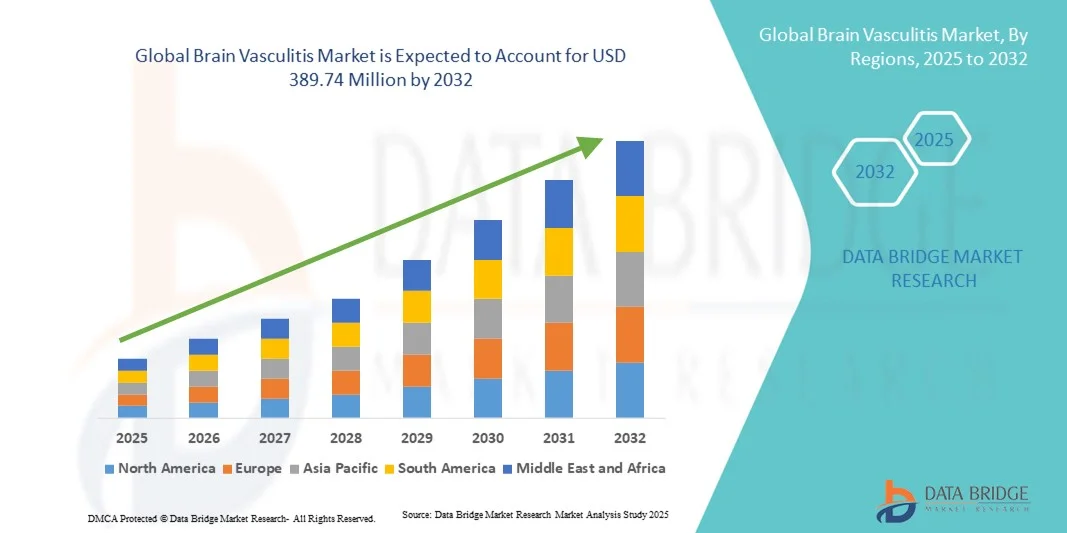
Brain Vasculitis Market Size
- The global brain vasculitis market size was valued at USD 250.14 million in 2024 and is expected to reach USD 389.74 million by 2032, at a CAGR of 5.70% during the forecast period
- The market growth is largely fueled by advancements in diagnostic technologies, rising awareness of neurological disorders, and the development of innovative therapies, leading to earlier detection and improved patient outcomes
- Furthermore, increasing investment in research, along with the emergence of targeted biologics and immunosuppressive treatments, is driving demand for effective and specialized solutions for managing brain vasculitis. These converging factors are accelerating the adoption of advanced treatment options, thereby significantly boosting the industry's growth
Brain Vasculitis Market Analysis
- Brain vasculitis, a rare condition characterized by inflammation of the blood vessels in the brain, is increasingly recognized as a critical area of focus in neurology due to its potential to cause severe neurological complications and the growing availability of advanced diagnostic and treatment options
- The escalating demand for effective brain vasculitis management is primarily fueled by advancements in imaging technologies, increasing awareness among healthcare providers and patients, and the development of targeted immunosuppressive therapies and biologics that improve treatment outcomes
- North America dominated the brain vasculitis market with the largest revenue share of 43% in 2024, driven by well-established healthcare infrastructure, high research funding, and early adoption of advanced diagnostic and treatment solutions, particularly in the U.S., where specialized centers are implementing cutting-edge therapies and monitoring techniques
- Asia-Pacific is expected to be the fastest-growing region in the brain vasculitis market during the forecast period due to rising healthcare investments, increasing awareness of neurological disorders, and expanding access to specialized diagnostics and treatment facilities
- Immunosuppressive therapy segment dominated the brain vasculitis market in 2024 with a market share of 47.3%, driven by its effectiveness in controlling inflammation, improving patient outcomes, and the availability of well-established treatment protocols supported by ongoing clinical research
Report Scope and Brain Vasculitis Market Segmentation
|
Attributes |
Brain Vasculitis Key Market Insights |
|
Segments Covered |
|
|
Countries Covered |
North America
Europe
Asia-Pacific
Middle East and Africa
South America
|
|
Market Opportunities |
|
|
Value Added Data Infosets |
In addition to the insights on market scenarios such as market value, growth rate, segmentation, geographical coverage, and major players, the market reports curated by the Data Bridge Market Research also include in-depth expert analysis, pricing analysis, brand share analysis, consumer survey, demography analysis, supply chain analysis, value chain analysis, raw material/consumables overview, vendor selection criteria, PESTLE Analysis, Porter Analysis, and regulatory framework. |
Brain Vasculitis Market Trends
Advancements in AI-Enabled Diagnostics and Imaging
- A significant and accelerating trend in the global brain vasculitis market is the integration of artificial intelligence (AI) and advanced imaging modalities such as MRI and PET scans, improving early diagnosis and disease monitoring for patients
- For Instance, AI-assisted imaging platforms can detect subtle vascular changes and inflammation patterns in the brain, enabling clinicians to initiate timely treatments and potentially improve outcomes for patients with complex vasculitis cases
- AI integration in diagnostics allows for predictive analytics, identifying high-risk patients, tracking disease progression, and suggesting personalized treatment adjustments. Instance: some hospitals use AI to analyze angiogram data to detect early cerebral vasculitis indicators and generate actionable insights for neurologists
- The integration of AI diagnostics with electronic health records and hospital management systems facilitates centralized patient management, enabling coordinated care between neurologists, radiologists, and immunologists
- This trend towards more intelligent, data-driven, and interconnected diagnostic systems is fundamentally reshaping expectations for patient care. Instance: biotech companies are developing AI-enabled platforms that provide early alerts and treatment recommendations based on patient-specific imaging data
- The demand for AI-assisted diagnostics and imaging solutions is growing rapidly across hospitals and specialty clinics, as healthcare providers increasingly prioritize precision, early intervention, and comprehensive disease management
Brain Vasculitis Market Dynamics
Driver
Rising Awareness and Need for Early Diagnosis
- The increasing prevalence of neurological disorders and growing awareness among healthcare providers and patients are driving demand for advanced brain vasculitis diagnostics and treatments
- For Instance, In March 2024, a leading neurology center introduced AI-based cerebral angiography tools to enhance early detection of brain vasculitis in at-risk populations, supporting better treatment outcomes
- As clinicians and patients become more aware of the potential severity of brain vasculitis, advanced therapies and imaging techniques offer early intervention, improved monitoring, and reduced complications
- Furthermore, the adoption of precision medicine approaches and integration of multi-disciplinary care in neurology is making early diagnosis and targeted therapy essential components of disease management
- Growing investment in research and clinical trials for novel biologics and immunosuppressive therapies is expanding treatment options and improving patient outcomes
- The convenience of non-invasive imaging, personalized treatment planning, and AI-assisted monitoring are key factors propelling adoption in both hospitals and specialty clinics. The trend towards integrated digital healthcare solutions and more accessible diagnostic platforms further contributes to market growth
Restraint/Challenge
High Treatment Costs and Limited Specialized Expertise
- The high cost of advanced diagnostics and therapies, including biologics and immunosuppressive drugs, poses a significant challenge to broader market adoption, particularly in resource-limited regions
- For Instance, Hospitals in developing countries often face budget constraints that limit access to AI-assisted imaging and targeted therapies, delaying diagnosis and treatment for patients with brain vasculitis
- Addressing these financial barriers through healthcare policies, insurance coverage, and cost-effective treatment alternatives is crucial for improving market penetration. Instance: some clinics offer subsidized diagnostic packages to improve accessibility
- In addition, the limited availability of neurologists and specialists trained in brain vasculitis management can affect timely diagnosis and effective treatment delivery
- While awareness and technology adoption are increasing, shortages of skilled expertise and high costs can hinder equitable access. Overcoming these challenges through training programs, telemedicine, and cost reduction strategies will be vital for sustained market growth
- Regulatory hurdles and lengthy approval processes for new biologics and AI-assisted diagnostic devices can delay the availability of advanced treatment options in some regions
Brain Vasculitis Market Scope
The market is segmented on the basis of drug class, disease type, treatment, route of administration, and end-users.
- By Drug Class
On the basis of drug class, the brain vasculitis market is segmented into corticosteroids, immunosuppressants, and biologics. The immunosuppressive therapy segment dominated the brain vasculitis market in 2024 with a market share of 47.3%, driven by its proven efficacy in controlling inflammation, preventing relapses, and improving patient outcomes. Immunosuppressants are widely prescribed in both acute and chronic cases and are considered a cornerstone therapy alongside corticosteroids. Hospitals and specialty clinics prefer immunosuppressive therapy for patients with severe or relapsing disease due to established treatment protocols and physician familiarity. The segment’s dominance is also supported by cost-effectiveness relative to biologics and broad accessibility across developed and emerging regions. Long-term clinical experience and extensive research data further reinforce confidence in immunosuppressive therapy.
The biologics segment is anticipated to witness the fastest growth rate of 19.8% from 2025 to 2032, fueled by the development of targeted therapies addressing treatment-resistant or relapsing cases. Biologics provide precise immunomodulatory action, reducing systemic side effects compared with traditional therapies. Increasing approvals of monoclonal antibodies and biologic agents for cerebral vasculitis management are driving adoption in specialty hospitals and research-focused clinics. Biologics are particularly preferred for patients with severe or refractory disease, and ongoing clinical trials are expected to expand their indications. The segment’s growth is further supported by rising awareness of personalized medicine approaches among neurologists and immunologists.
- By Disease Type
On the basis of disease type, the brain vasculitis market is segmented into small vessel and medium vessel vasculitis. The small vessel vasculitis segment dominated the market in 2024, accounting for a market share of 57.3%, due to its higher prevalence and the critical need for timely diagnosis and management. Small vessel involvement often leads to subtle neurological symptoms, prompting increased use of advanced imaging and early therapeutic intervention. Hospitals and specialty clinics prioritize rapid identification to prevent complications such as stroke or cognitive impairment. The availability of standardized treatment protocols and widespread physician familiarity further reinforce the segment’s dominance.
The medium vessel vasculitis segment is expected to witness the fastest CAGR from 2025 to 2032, driven by increasing detection rates and improved diagnostic techniques that allow precise classification of vessel involvement. Medium vessel cases often present with more severe neurological manifestations, necessitating targeted immunosuppressive therapy or biologics. Adoption of AI-assisted imaging platforms and angiography has enhanced early detection in this subsegment. Growing awareness among neurologists and increased investment in clinical research for medium vessel vasculitis are further boosting growth.
- By Treatment
On the basis of treatment, the brain vasculitis market is segmented into medication, surgery, and others. The medication segment dominated the market in 2024 with a revenue share of 65.1%, as pharmacological management forms the cornerstone of brain vasculitis therapy. Corticosteroids, immunosuppressants, and biologics constitute primary treatments, enabling effective inflammation control and reducing relapse risk. Hospitals and specialty clinics prefer medication-based regimens due to non-invasiveness, ease of dosing, and the ability to tailor therapy according to disease severity. Ongoing research into novel drug combinations and targeted therapies continues to support the dominance of this segment.
The surgery segment is expected to witness the fastest growth rate of 16.2% from 2025 to 2032, primarily in cases requiring intervention for aneurysms, stenosis, or severe vessel damage. Advanced neurosurgical techniques and minimally invasive procedures are expanding surgical options for patients with complications. Increased awareness and availability of specialized surgical centers contribute to the rising adoption. Surgery is increasingly used alongside medication for comprehensive management, particularly in medium and large vessel involvement. The growing adoption of interventional radiology techniques also supports segment growth.
- By Route of Administration
On the basis of route of administration, the brain vasculitis market is segmented into oral and parenteral. The oral segment dominated the market in 2024, capturing the largest share due to ease of use, patient compliance, and suitability for long-term treatment regimens. Corticosteroids and immunosuppressants administered orally allow patients to manage chronic therapy at home with minimal supervision. Hospitals and homecare providers often recommend oral administration for stable patients, reducing healthcare resource burden. Oral formulations are cost-effective and widely accessible in both developed and emerging markets.
The parenteral segment is expected to witness the fastest CAGR from 2025 to 2032, driven by biologics and intravenous immunosuppressants requiring injection or infusion for higher efficacy in severe or refractory cases. Parenteral therapy ensures rapid drug delivery, optimal bioavailability, and precise dosing control. Adoption is increasing in hospitals and specialty clinics offering monitored administration. The availability of outpatient infusion centers and home infusion services is further boosting segment growth.
- By End-Users
On the basis of end-users, the brain vasculitis market is segmented into hospitals, homecare, specialty clinics, oncologists, immunologists, and others. The hospitals segment dominated the market in 2024 with a share of 48.7%, due to comprehensive diagnostic facilities, access to multidisciplinary teams, and advanced treatment options. Hospitals provide centralized care for acute and chronic cases, including imaging, pharmacotherapy, and surgical interventions. High patient inflow, experienced neurologists, and research-driven protocols contribute to the segment’s market leadership.
The specialty clinics segment is expected to witness the fastest CAGR from 2025 to 2032, driven by the rise of clinics focused on neurology and autoimmune disorders, providing personalized treatment plans. These clinics often adopt advanced imaging, AI-assisted diagnostics, and targeted therapies to manage complex cases. Patients increasingly prefer specialty clinics for specialized care, early intervention, and follow-up management. Growing investments in clinic infrastructure and rising awareness among patients contribute to the subsegment’s rapid growth.
Brain Vasculitis Market Regional Analysis
- North America dominated the brain vasculitis market with the largest revenue share of 43% in 2024, driven by well-established healthcare infrastructure, high research funding, and early adoption of advanced diagnostic and treatment solutions
- Patients and healthcare providers in the region highly value access to specialized neurologists, advanced imaging technologies, and targeted immunosuppressive and biologic therapies, which enable precise diagnosis and effective disease management
- This widespread adoption is further supported by increasing awareness of neurological disorders, strong insurance coverage, and the availability of multidisciplinary care centers, establishing North America as the leading region for brain vasculitis management in both acute and chronic cases
U.S. Brain Vasculitis Market Insight
The U.S. brain vasculitis market captured the largest revenue share of 38% in 2024 within North America, fueled by the availability of advanced diagnostic technologies and widespread adoption of specialized treatment protocols. Patients and healthcare providers are increasingly prioritizing early detection and effective management through immunosuppressive therapies and biologics. The growing number of neurology specialty centers, coupled with integration of AI-assisted imaging and precision medicine approaches, further propels the market. Moreover, increasing awareness among physicians and patients regarding the severity of cerebral vasculitis is significantly contributing to market expansion.
Europe Brain Vasculitis Market Insight
The Europe brain vasculitis market is projected to expand at a substantial CAGR throughout the forecast period, primarily driven by advanced healthcare infrastructure, rising research funding, and increasing patient awareness. The prevalence of specialized neurology clinics and multidisciplinary care centers fosters the adoption of innovative therapies and AI-assisted diagnostics. European patients are also drawn to personalized treatment approaches and improved monitoring systems. The region is experiencing significant growth across hospitals, specialty clinics, and homecare settings, with brain vasculitis management being incorporated into both acute care and long-term therapy plans.
U.K. Brain Vasculitis Market Insight
The U.K. brain vasculitis market is anticipated to grow at a noteworthy CAGR during the forecast period, driven by rising awareness of autoimmune and neurological disorders and the adoption of advanced diagnostic and treatment solutions. In addition, the increasing number of neurology specialists and referral centers is encouraging timely diagnosis and personalized treatment. The U.K.’s healthcare system, coupled with high patient compliance and integration of AI-based imaging platforms, is expected to continue stimulating market growth.
Germany Brain Vasculitis Market Insight
The Germany brain vasculitis market is expected to expand at a considerable CAGR during the forecast period, fueled by increasing awareness of rare neurological conditions and the demand for advanced therapies such as immunosuppressants and biologics. Germany’s well-developed healthcare infrastructure, research initiatives, and emphasis on innovative treatment solutions promote adoption. Hospitals and specialty clinics are increasingly implementing AI-assisted imaging and multidisciplinary care approaches. The growing focus on precision medicine and early intervention aligns with local patient expectations, further supporting market growth.
Asia-Pacific Brain Vasculitis Market Insight
The Asia-Pacific brain vasculitis market is poised to grow at the fastest CAGR during 2025 to 2032, driven by improving healthcare infrastructure, rising awareness of neurological disorders, and increased access to advanced diagnostics and treatment options in countries such as China, Japan, and India. Government initiatives promoting digital health, coupled with the growing number of specialty neurology clinics, are driving adoption. Furthermore, the increasing availability of affordable therapies and AI-assisted imaging tools is expanding access to diagnosis and management across the region.
Japan Brain Vasculitis Market Insight
The Japan brain vasculitis market is gaining momentum due to the country’s high-tech healthcare ecosystem, increasing geriatric population, and demand for convenient access to specialized care. Japanese patients and providers emphasize early detection and effective management of cerebral vasculitis through advanced diagnostics and targeted therapies. The integration of AI-assisted imaging with hospital networks and homecare monitoring systems is fueling growth. Moreover, Japan’s aging population is such asly to drive demand for accessible, patient-friendly, and precise treatment solutions in both residential and hospital settings.
India Brain Vasculitis Market Insight
The India brain vasculitis market accounted for the largest market revenue share in Asia-Pacific in 2024, attributed to the country’s expanding healthcare infrastructure, increasing awareness of neurological disorders, and growing number of specialty clinics. India is emerging as a key market for advanced diagnostics and immunosuppressive therapies, with rising adoption in hospitals, homecare, and specialty neurology centers. Government initiatives promoting digital health, coupled with increasing urbanization and availability of cost-effective treatment options, are key factors propelling market growth in India.
What are the Recent Developments in Global Brain Vasculitis Market?
- In July 2025, a study published in Neurology focused on biopsy-confirmed small vessel primary CNS vasculitis, emphasizing the importance of early, aggressive treatment with cyclophosphamide for better patient outcomes
- In May 2025, Swiss Medica introduced stem cell therapy for cerebral vasculitis, aiming to reduce inflammation and repair brain tissue through regenerative treatment. Mesenchymal stem cell therapy is a form of regenerative medicine that uses the body's own natural repair mechanisms to manage chronic conditions
- In April 2025, the U.S. FDA approved upadacitinib for the treatment of adults with giant cell arteritis, expanding treatment options for vasculitis-related conditions. RINVOQ (upadacitinib) is now the first and only oral Janus Kinase (JAK) inhibitor approved for the treatment of giant cell arteritis (GCA) in adults
- In December 2024, a study published in the American Journal of Neuroradiology highlighted the utility of 7T MRI in detecting small and medium vessel CNS vasculitis, offering enhanced imaging capabilities for diagnosis. The study demonstrated that diagnosing CNS vasculitis, especially small vessel vasculitis, is feasible at 7T and highlighted the potential of high-field vessel wall imaging (VWI) in encouraging further studies in this field
- In August 2024, the FAIRVASC project utilized AI and big data techniques to address challenges in diagnosing and treating systemic vasculitis, connecting patient registries across Europe for improved research and patient care. The research, part of the EU-funded FAIRVASC project, leverages advanced artificial intelligence (AI) and big data techniques to overcome key challenges in diagnosing and treating systemic vasculitis

- Interactive Data Analysis Dashboard
- Company Analysis Dashboard for high growth potential opportunities
- Research Analyst Access for customization & queries
- Competitor Analysis with Interactive dashboard
- Latest News, Updates & Trend analysis
- Harness the Power of Benchmark Analysis for Comprehensive Competitor Tracking
Data collection and base year analysis are done using data collection modules with large sample sizes. The stage includes obtaining market information or related data through various sources and strategies. It includes examining and planning all the data acquired from the past in advance. It likewise envelops the examination of information inconsistencies seen across different information sources. The market data is analysed and estimated using market statistical and coherent models. Also, market share analysis and key trend analysis are the major success factors in the market report. To know more, please request an analyst call or drop down your inquiry.
The key research methodology used by DBMR research team is data triangulation which involves data mining, analysis of the impact of data variables on the market and primary (industry expert) validation. Data models include Vendor Positioning Grid, Market Time Line Analysis, Market Overview and Guide, Company Positioning Grid, Patent Analysis, Pricing Analysis, Company Market Share Analysis, Standards of Measurement, Global versus Regional and Vendor Share Analysis. To know more about the research methodology, drop in an inquiry to speak to our industry experts.
Data Bridge Market Research is a leader in advanced formative research. We take pride in servicing our existing and new customers with data and analysis that match and suits their goal. The report can be customized to include price trend analysis of target brands understanding the market for additional countries (ask for the list of countries), clinical trial results data, literature review, refurbished market and product base analysis. Market analysis of target competitors can be analyzed from technology-based analysis to market portfolio strategies. We can add as many competitors that you require data about in the format and data style you are looking for. Our team of analysts can also provide you data in crude raw excel files pivot tables (Fact book) or can assist you in creating presentations from the data sets available in the report.












