


Bursitis Treatment Market Size
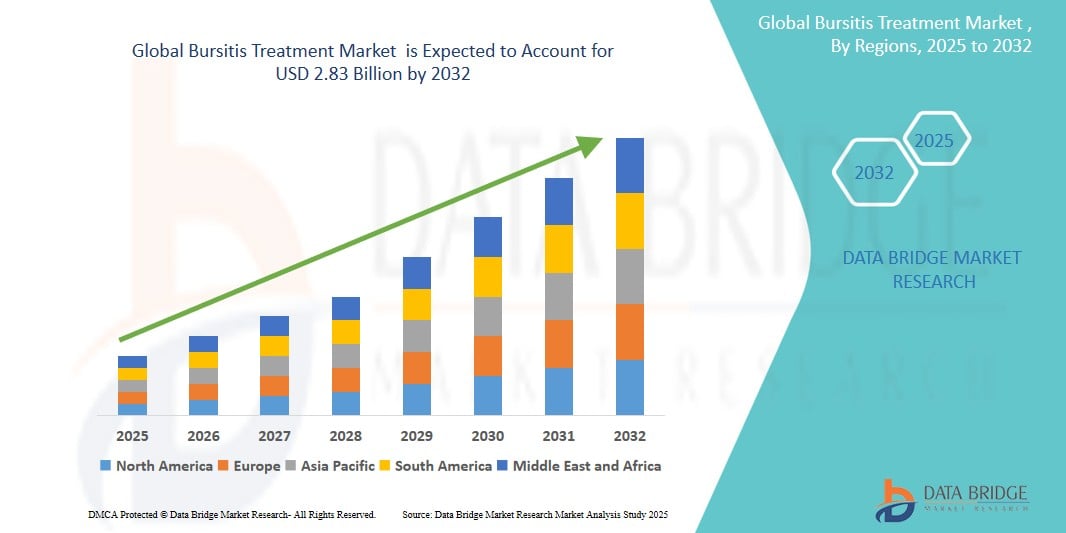
- The Global Bursitis Treatment Market size was valued at USD 1.80 Billion in 2024 and is expected to reach USD 2.83 Billion by 2032, at a CAGR of 5.80% during the forecast period
- This market growth is primarily driven by factors such as the rising prevalence of musculoskeletal disorders, increasing geriatric population, greater awareness of joint health, and the rising demand for non-surgical and minimally invasive treatment options
Bursitis Treatment Market Analysis
- Bursitis treatment methods are critical in managing inflammation of the bursae—small fluid-filled sacs that cushion bones, tendons, and muscles near joints. These treatments help relieve pain, reduce inflammation, and restore joint function. Bursitis management typically involves pharmacological therapy, physical therapy, and in severe cases, surgical intervention
- The demand for bursitis treatment is significantly driven by the increasing prevalence of musculoskeletal disorders, a growing geriatric population, and rising awareness about joint health and mobility preservation. Additionally, the preference for non-invasive and outpatient-based therapies is accelerating the adoption of targeted drug therapies and physical rehabilitation programs
- North America is expected to dominate the bursitis treatment market with a share of over 35%, owing to its advanced healthcare infrastructure, high diagnosis and treatment rates, availability of advanced therapies, and the presence of leading pharmaceutical and medical device companies
- The Asia-Pacific region is anticipated to be the fastest-growing region in the bursitis treatment market during the forecast period. This is attributed to an expanding aging population, increasing incidence of orthopedic conditions, improving access to healthcare services, and rising investments in physical therapy and rehabilitation centers
- The Pharmacological Treatment segment is expected to dominate the market with a market share of approximately 58.3%, due to its broad clinical use, cost-effectiveness, and ease of administration. NSAIDs continue to be the first-line treatment for managing bursitis-related pain and inflammation in both acute and chronic settings, contributing significantly to the segment’s growth
Report Scope and Bursitis Treatment Market Segmentation
|
Attributes |
Bursitis Treatment Key Market Insights |
|
Segments Covered |
|
|
Countries Covered |
North America
Europe
Asia-Pacific
Middle East and Africa
South America
|
|
Key Market Players |
|
|
Market Opportunities |
|
|
Value Added Data Infosets |
In addition to the insights on market scenarios such as market value, growth rate, segmentation, geographical coverage, and major players, the market reports curated by the Data Bridge Market Research also include import export analysis, production capacity overview, production consumption analysis, price trend analysis, climate change scenario, supply chain analysis, value chain analysis, raw material/consumables overview, vendor selection criteria, PESTLE Analysis, Porter Analysis, and regulatory framework. |
Bursitis Treatment Market Trends
“Rising Preference for Non-Invasive and Home-Based Therapies”
- One notable trend in the bursitis treatment market is the increasing preference for non-invasive and home-based management options among patients and healthcare providers
- As awareness of musculoskeletal health grows and patients seek convenient treatment approaches, there is heightened demand for therapies such as oral NSAIDs, topical gels, physical therapy, and guided home exercises to manage bursitis symptoms without surgery
- For instance, the growing availability of tele-rehabilitation platforms and wearable therapeutic devices has made it easier for patients to adhere to treatment regimens at home, reducing the burden on clinical infrastructure and improving outcomes
- This trend is reshaping the way bursitis is managed, especially in aging populations, athletes, and workers with repetitive strain injuries—supporting faster recovery, fewer side effects, and reduced healthcare costs
- As healthcare systems move toward value-based care, patient-centered and conservative treatment methods for bursitis will continue to gain traction, driving innovations in drug formulations, digital physiotherapy, and remote monitoring solutions
Bursitis Treatment Market Dynamics
Driver
“Advancements in Pharmacological and Regenerative Therapies”
- The rapid development of pharmacological and regenerative treatments is a key driver propelling growth in the bursitis treatment market
- Innovative drug delivery mechanisms, extended-release corticosteroid injections, and biologic therapies offer new pathways for more effective and long-lasting relief from inflammation and pain
- Additionally, regenerative approaches such as platelet-rich plasma (PRP) and stem cell therapy are gaining attention for their ability to repair damaged bursal tissue and reduce chronic symptoms, providing a promising alternative to traditional anti-inflammatory medications and surgery
For instance,
- Clinics offering PRP therapy for chronic bursitis have reported improved mobility and reduced pain duration, especially in shoulder and hip cases
- These advancements are expanding the treatment toolbox for clinicians, enabling more personalized and targeted care that improves outcomes and minimizes recurrence
Opportunity
“High Demand from Geriatric and Occupational Health Segments”
- The growing geriatric population and rising incidence of work-related musculoskeletal disorders present a major opportunity for the bursitis treatment market
- Elderly individuals are more prone to bursitis due to joint degeneration, while professionals in physically demanding jobs (e.g., construction, nursing, and manufacturing) frequently suffer from repetitive motion injuries that contribute to bursitis
- This rising patient base creates room for growth in preventive care, ergonomic interventions, and early-stage treatments, particularly non-invasive therapies that improve quality of life and reduce disability
For instance,
- Workplace health programs integrating bursitis management and physical therapy have shown success in reducing employee downtime and long-term joint complications
- Targeting these high-burden populations with tailored products and services can drive broader market expansion and address unmet clinical needs
Restraint/Challenge
“Limited Awareness and Underdiagnosis in Low-Income Regions”
- Despite growing therapeutic options, bursitis remains underdiagnosed and undertreated, particularly in low-income and rural regions where musculoskeletal health awareness is limited
- Many patients misattribute bursitis symptoms to general fatigue or joint aging, delaying diagnosis and allowing inflammation to worsen. Additionally, the lack of specialized orthopedic care and rehabilitation infrastructure hinders timely intervention
For instance,
- In several low-resource healthcare systems, patients often rely on over-the-counter pain relievers without formal medical evaluation, leading to suboptimal or prolonged recovery
- These challenges slow down treatment initiation and adoption of innovative therapies, ultimately impacting market growth. To overcome this, educational outreach, primary care training, and affordable treatment programs are crucial to raising awareness and improving disease outcomes in underserved areas
Bursitis Treatment Market Scope
The market is segmented on the basis of type, biopsy techniques, end user, and usage.
|
Segmentation |
Sub-Segmentation |
|
By Treatment Type |
|
|
By Route of Administration |
|
|
By End User |
|
|
By Distribution Channel |
|
In 2025, the Pharmacological Treatment Segment is Projected to Dominate the Market with the Largest Share in the Treatment Type segment
The pharmacological treatment segment is expected to dominate the Global Bursitis Treatment Market with 58.3% share in 2025. This is primarily driven by the widespread use of anti-inflammatory drugs (NSAIDs), which are commonly prescribed to reduce pain, inflammation, and swelling associated with bursitis. NSAIDs are cost-effective, readily available, and widely recognized for their efficacy in treating mild to moderate cases of bursitis. Despite the emergence of newer therapies such as corticosteroid injections and biologics, NSAIDs remain the most common pharmacological treatment choice due to their familiarity and long-standing track record of success in managing bursitis symptoms. This market segment is expected to maintain its dominance due to the continued reliance on pharmacological therapies as a first-line treatment approach.
In 2025, the Oral Route of Administration Segment is Expected to Account for the Largest Share in the Route of Administration segment
The oral route of administration segment is projected to account for the largest share of 49.3% in the Global Bursitis Treatment Market in 2025. This preference is largely due to the ease of use, cost-effectiveness, and patient compliance associated with oral anti-inflammatory drugs (NSAIDs) such as ibuprofen, naproxen, and diclofenac. Oral treatments are widely accessible, do not require specialized training or medical facilities, and offer significant convenience for patients, making them the most commonly utilized method for managing bursitis in the early stages. Furthermore, the availability of oral corticosteroids and oral pain relievers contributes to the continued dominance of the oral route in bursitis treatment.
Bursitis Treatment Market Regional Analysis
“North America Holds the Largest Share in the Bursitis Treatment Market”
- North America dominates the Global Bursitis Treatment Market with the largest market share of 38.6%, driven by advanced healthcare infrastructure, high adoption of new treatment methods, and the strong presence of key market players
- The U.S. holds a significant share of 78.2% in North America, contributing significantly to the demand for pharmacological treatments, surgical interventions, and non-pharmacological treatments such as physical therapy and rehabilitation. The high prevalence of bursitis, particularly among the aging population, has increased the demand for effective treatment options
- The presence of leading companies in the pharmaceutical, medical device, and rehabilitation sectors continues to drive innovation and market growth in North America. The robust healthcare system, along with continued investment in research and development (R&D), ensures that advanced treatments and rehabilitation technologies are readily available to patients
- The rising number of patients seeking treatments for bursitis, including both non-invasive and surgical options, as well as the growing focus on improving patient care and outcomes, supports the market's continued expansion in North America
“Asia-Pacific is Projected to Register the Highest CAGR in the Bursitis Treatment Market”
- Asia-Pacific is expected to witness the highest growth rate in the Global Bursitis Treatment Market during the forecast period, driven by rapid improvements in healthcare infrastructure, increasing awareness about musculoskeletal disorders, and growing procedure volumes
- Countries such as China, India, and Japan are emerging as key markets for bursitis treatment due to the rising prevalence of joint-related disorders, including bursitis, coupled with the growing adoption of modern medical treatments and technologies
- Japan, with its advanced medical infrastructure, is a major market for bursitis treatment technologies. The country is leading in the adoption of cutting-edge medical devices and rehabilitation solutions, improving the quality of care for bursitis patients
- In regions like India and China, the expanding healthcare infrastructure, increasing access to quality healthcare services, and growing patient awareness regarding musculoskeletal conditions are driving demand for bursitis treatments. The increasing focus on preventive care and early diagnosis is encouraging patients to seek timely treatment options, contributing to the rapid market growth in the APAC region
- The rising adoption of minimally invasive treatments, alongside government initiatives to improve healthcare access and affordability, is expected to fuel the growth of the bursitis treatment market in Asia-Pacific, making it the fastest-growing region in the market
Bursitis Treatment Market Share
The market competitive landscape provides details by competitor. Details included are company overview, company financials, revenue generated, market potential, investment in research and development, new market initiatives, global presence, production sites and facilities, production capacities, company strengths and weaknesses, product launch, product width and breadth, application dominance. The above data points provided are only related to the companies' focus related to market.
The Major Market Leaders Operating in the Market Are:
- Carl Zeiss AG (Germany)
- Novartis AG (Switzerland)
- Johnson & Johnson Services, Inc. (U.S.)
- Allergan (Ireland)
- Topcon Corporation (Japan)
- NIDEK CO., LTD. (Japan)
- HAAG-STREIT GROUP (Switzerland)
- Ziemer Ophthalmic Systems (Switzerland)
- Bausch & Lomb Incorporated (U.S.)
- Biotech (India)
- VisionCare, Inc. (U.S.)
- Akorn, Incorporated (U.S.)
- Bayer AG (Germany)
- Acucela Inc. (U.S.)
- Regeneron Pharmaceuticals, Inc. (U.S.)
- Nicox (France)
- anten Pharmaceutical Co., Ltd. (Japan)
- IRIDEX Corporation (U.S.)

- Interactive Data Analysis Dashboard
- Company Analysis Dashboard for high growth potential opportunities
- Research Analyst Access for customization & queries
- Competitor Analysis with Interactive dashboard
- Latest News, Updates & Trend analysis
- Harness the Power of Benchmark Analysis for Comprehensive Competitor Tracking
Data collection and base year analysis are done using data collection modules with large sample sizes. The stage includes obtaining market information or related data through various sources and strategies. It includes examining and planning all the data acquired from the past in advance. It likewise envelops the examination of information inconsistencies seen across different information sources. The market data is analysed and estimated using market statistical and coherent models. Also, market share analysis and key trend analysis are the major success factors in the market report. To know more, please request an analyst call or drop down your inquiry.
The key research methodology used by DBMR research team is data triangulation which involves data mining, analysis of the impact of data variables on the market and primary (industry expert) validation. Data models include Vendor Positioning Grid, Market Time Line Analysis, Market Overview and Guide, Company Positioning Grid, Patent Analysis, Pricing Analysis, Company Market Share Analysis, Standards of Measurement, Global versus Regional and Vendor Share Analysis. To know more about the research methodology, drop in an inquiry to speak to our industry experts.
Data Bridge Market Research is a leader in advanced formative research. We take pride in servicing our existing and new customers with data and analysis that match and suits their goal. The report can be customized to include price trend analysis of target brands understanding the market for additional countries (ask for the list of countries), clinical trial results data, literature review, refurbished market and product base analysis. Market analysis of target competitors can be analyzed from technology-based analysis to market portfolio strategies. We can add as many competitors that you require data about in the format and data style you are looking for. Our team of analysts can also provide you data in crude raw excel files pivot tables (Fact book) or can assist you in creating presentations from the data sets available in the report.












