


What is the Cachexia Treatment Market Size and Growth Rate?
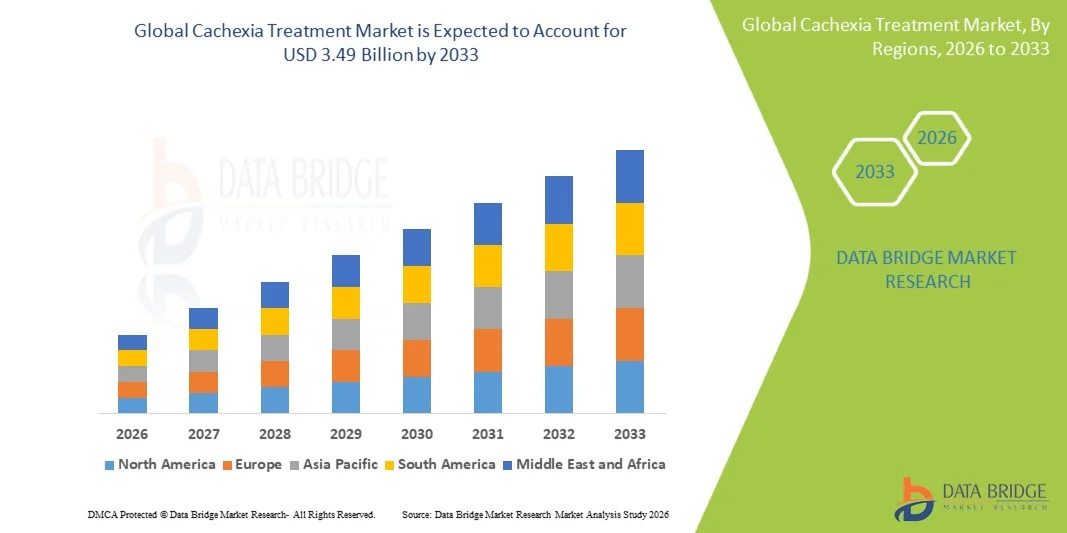
- As per Data Bridge Market Research Analysis the global cachexia treatment market size was valued at USD 2.31 billion in 2025 and is expected to reach USD 3.49 billion by 2033, at a CAGR of 5.30 % during the forecast period
- The market growth is primarily driven by the increasing prevalence of chronic diseases such as cancer, chronic kidney disease, and heart failure, which are strongly associated with cachexia, along with growing awareness regarding early diagnosis and treatment interventions
- Furthermore, rising investments in research and development, advancements in targeted therapies, and the growing demand for effective nutritional and pharmacological management solutions are positioning cachexia treatments as a critical component in improving patient outcomes. These combined factors are significantly accelerating the growth of the global cachexia treatment market
Market Size & Forecast
- Global Market Value (2025): USD XXX Billion
- Expected Market Value (2033): USD 3.49 billion
- Forecast CAGR (2026–2033): 5.30 %
Cachexia Treatment Market Analysis
- Cachexia treatments, comprising a combination of pharmacological therapies, nutritional interventions, and supportive care approaches, are becoming increasingly essential in managing patients with chronic diseases such as cancer, chronic kidney disease, and heart failure, due to their ability to mitigate severe weight loss and improve patient quality of life
- The escalating demand for cachexia treatment solutions is primarily fueled by the growing global burden of chronic illnesses, increasing clinical awareness regarding early-stage management, and the rising integration of supportive therapies into standard treatment protocols across healthcare systems
- North America dominated the cachexia treatment market with the largest revenue share of 40.01% in 2025, characterized by advanced healthcare infrastructure, strong research and development activities, and the presence of leading pharmaceutical companies, with the U.S. witnessing significant adoption of novel drugs and therapeutic strategies for cachexia management
- Asia-Pacific is expected to be the fastest growing region in the cachexia treatment market during the forecast period due to increasing prevalence of chronic diseases, expanding healthcare access, and rising healthcare expenditure across emerging economies such as China and India
- The cancer segment dominated the cachexia treatment market with a market share of 43.2% in 2025, driven by the high incidence of cancer-related cachexia, increasing use of drugs such as Dronabinol and Megestrol acetate, and the growing focus on improving nutritional status and treatment tolerance among oncology patients
Report Scope and Cachexia Treatment Market Segmentation
|
Attributes |
Cachexia Treatment Key Market Insights |
|
Segments Covered |
|
|
Countries Covered |
North America
Europe
Asia-Pacific
Middle East and Africa
South America
|
|
Key Market Players |
|
|
Market Opportunities |
|
|
Value Added Data Infosets |
In addition to the insights on market scenarios such as market value, growth rate, segmentation, geographical coverage, and major players, the market reports curated by the Data Bridge Market Research also include in-depth expert analysis, patient epidemiology, pipeline analysis, pricing analysis, and regulatory framework |
What is the Key Trend in the Cachexia Treatment Market?
“Advancement in Targeted Therapies and Multimodal Treatment Approaches”
- A significant and accelerating trend in the global Cachexia treatment market is the growing focus on targeted therapies combined with nutritional and metabolic interventions. This integrated approach is significantly enhancing patient outcomes and disease management
- For instance, drugs such as Dronabinol and Megestrol acetate are increasingly being used alongside nutritional supplementation to improve appetite and weight gain in cachexia patients. Similarly, corticosteroids are utilized for short-term appetite stimulation and inflammation control
- Advancements in cachexia treatment enable personalized care strategies such as tailoring therapies based on underlying disease conditions and metabolic profiles. For instance, emerging research focuses on anti-inflammatory and anabolic agents to counter muscle wasting and improve strength. Furthermore, combination therapies offer patients more comprehensive disease management and improved quality of life
- The integration of pharmacological treatments with supportive care frameworks facilitates a more holistic approach to patient management. Through coordinated care involving physicians, dietitians, and caregivers, patients receive optimized treatment plans addressing both symptoms and underlying causes, creating a more effective healthcare delivery system
- This trend towards more personalized, multi-targeted, and patient-centric treatment solutions is fundamentally reshaping clinical approaches to cachexia management. Consequently, companies are developing innovative therapies that combine appetite stimulation, metabolic regulation, and anti-inflammatory effects to enhance treatment efficacy
- The demand for advanced cachexia treatments that offer integrated and effective disease management is growing rapidly across healthcare settings, as providers increasingly prioritize improved patient outcomes and quality of life
- Growing collaboration between pharmaceutical companies and research institutions is accelerating innovation and development of novel cachexia-specific therapies
Cachexia Treatment Market Dynamics
Driver
“Rising Burden of Chronic Diseases and Increasing Focus on Supportive Care”
- The increasing prevalence of chronic diseases such as cancer, chronic kidney disease, and heart failure, coupled with the growing emphasis on supportive and palliative care, is a significant driver for the heightened demand for cachexia treatments
- For instance, in recent years, several pharmaceutical companies have accelerated clinical trials targeting cachexia associated with cancer and chronic illnesses, focusing on improving patient survival and quality of life. Such strategies by key companies are expected to drive the cachexia treatment market growth in the forecast period
- As healthcare providers become more aware of the impact of cachexia on morbidity and mortality, treatment approaches are evolving to include early diagnosis, nutritional intervention, and pharmacological support, offering a comprehensive upgrade over conventional disease management
- Furthermore, the increasing integration of supportive therapies into standard treatment protocols is making cachexia management an essential component of chronic disease care, enhancing patient recovery and treatment tolerance
- The growing need for effective appetite stimulants, anti-inflammatory drugs, and anabolic agents, along with improved access to healthcare services, is propelling the adoption of cachexia treatments across hospitals, specialty clinics, and homecare settings. The trend towards patient-centric care and advancements in drug development further contribute to market growth
- Rising geriatric population globally, which is more susceptible to chronic diseases and cachexia, is further accelerating the demand for effective treatment solutions
- Increasing healthcare expenditure and supportive government initiatives for chronic disease management are contributing to improved access and adoption of cachexia treatments
Restraint/Challenge
“Limited Approved Therapies and Complex Disease Mechanism”
- Challenges surrounding the limited availability of approved and highly effective therapies for cachexia pose a significant barrier to market growth, as the condition involves complex metabolic and inflammatory pathways that are difficult to target effectively
- For instance, variability in patient response to existing treatments and the lack of standardized therapeutic guidelines have made it difficult for healthcare providers to achieve consistent outcomes in cachexia management
- Addressing these challenges requires extensive clinical research, improved understanding of disease biology, and the development of targeted therapies. In addition, regulatory hurdles and stringent approval processes for new drugs can delay market entry and limit treatment availability
- The relatively high cost of emerging therapies and supportive care interventions can also act as a barrier, particularly in low- and middle-income regions where access to advanced treatments is limited
- While ongoing research is expanding the treatment landscape, the complexity of cachexia and the need for multi-modal approaches continue to hinder rapid adoption. Overcoming these challenges through innovation, regulatory support, and increased healthcare awareness will be critical for sustained market growth
- Limited awareness and underdiagnosis of Cachexia in early stages further restrict timely treatment intervention and market expansion
- Lack of universally accepted treatment guidelines and standardized care protocols creates inconsistencies in clinical practices and hampers overall market growth
Cachexia Treatment Market Scope
The market is segmented on the basis of drugs, indication, route of administration, dosage form, end-users, and distribution channel.
- By Drugs
On the basis of drugs, the Cachexia treatment market is segmented into Dronabinol, Megestrol acetate, corticosteroids, and others. The Megestrol acetate segment dominated the market with the largest market revenue share in 2025, driven by its strong clinical adoption for appetite stimulation and weight gain in cachexia patients, particularly in oncology settings. Its proven efficacy, ease of oral administration, and relatively favorable cost profile make it a preferred first-line therapy. In addition, its wide availability across hospital and retail pharmacies enhances accessibility for patients. The drug’s long-standing presence in treatment protocols further strengthens physician confidence and prescribing rates. Increasing use in chronic disease-associated cachexia is also contributing to sustained demand.
The Dronabinol segment is anticipated to witness the fastest growth rate from 2026 to 2033, fueled by its expanding use in appetite stimulation and management of nausea in cancer patients. Growing clinical evidence supporting cannabinoid-based therapies is boosting its adoption globally. Furthermore, increasing regulatory acceptance in several regions is accelerating its commercialization. The drug’s ability to improve caloric intake and patient comfort is driving its preference among healthcare providers. Rising awareness about alternative and adjunct therapies is further contributing to its uptake. Its potential role in improving quality of life makes it a key growth driver in this segment.
- By Indication
On the basis of indication, the market is segmented into cancer, congestive heart failure (CHF), rheumatoid arthritis, chronic kidney disease, cystic fibrosis, and chronic obstructive pulmonary disease (COPD). The cancer segment dominated the market with the largest revenue share of 43.2% in 2025, driven by the high prevalence of cancer-related cachexia and its significant impact on patient survival and treatment tolerance. Cachexia is commonly observed in advanced cancer stages, making it a primary focus area for therapeutic intervention. The availability of multiple treatment options and strong clinical focus on supportive oncology care further reinforce this dominance. In addition, increasing investments in cancer research are expanding treatment possibilities for cachexia management. The integration of nutritional and pharmacological therapies is also enhancing treatment outcomes in this segment.
The chronic obstructive pulmonary disease (COPD) segment is expected to witness the fastest growth during the forecast period, driven by the rising global burden of respiratory diseases and increasing recognition of cachexia in COPD patients. COPD-associated cachexia is gaining clinical importance due to its impact on disease progression and mortality. Growing awareness among healthcare providers is improving diagnosis and treatment rates. Furthermore, advancements in respiratory care and supportive therapies are contributing to segment expansion. Increasing research focus on non-cancer cachexia is also supporting growth. The need for comprehensive disease management in COPD patients is expected to drive sustained demand.
- By Route of Administration
On the basis of route of administration, the market is segmented into oral, parenteral, and others. The oral segment dominated the market with the largest revenue share in 2025, driven by its convenience, non-invasive nature, and high patient compliance. Oral medications such as Megestrol acetate and Dronabinol are widely preferred for long-term treatment, especially in homecare settings. The ease of administration without the need for medical supervision further enhances its adoption. In addition, oral drugs are cost-effective and widely available across distribution channels. Their compatibility with chronic disease management protocols supports sustained usage.
The parenteral segment is anticipated to witness the fastest growth rate from 2026 to 2033, fueled by its effectiveness in severe cases requiring rapid therapeutic action. Parenteral administration ensures higher bioavailability and faster onset, making it ideal for hospitalized patients. Increasing hospital admissions due to advanced chronic diseases are driving demand for injectable therapies. Furthermore, advancements in infusion technologies are improving treatment delivery. The growing need for immediate symptom management is further supporting segment growth. Its use in critical care settings is expected to expand significantly.
- By Dosage Form
On the basis of dosage form, the market is segmented into tablets, injections, and others. The tablets segment dominated the market with the largest revenue share in 2025, driven by their ease of use, cost-effectiveness, and suitability for long-term therapy. Tablets are widely prescribed due to their convenience in administration and storage. Their compatibility with oral drugs such as Megestrol acetate and Dronabinol further strengthens their market position. In addition, tablets are easily distributed through retail and online pharmacies, enhancing accessibility. Their role in outpatient and homecare settings also contributes to their dominance.
The injections segment is expected to witness the fastest growth during the forecast period, driven by increasing demand for rapid and effective treatment in acute care settings. Injectable drugs are particularly beneficial for patients who cannot tolerate oral medications. Hospitals and specialty clinics are the primary users of injectable formulations. Furthermore, advancements in injectable drug delivery systems are improving efficacy and patient outcomes. The growing need for intensive care treatment is also driving demand. Increasing clinical adoption in severe cases supports segment expansion.
- By End-Users
On the basis of end-users, the market is segmented into hospitals, specialty clinics, homecare, and others. The hospitals segment dominated the market with the largest revenue share in 2025, driven by the high patient inflow for chronic disease and cancer treatment. Hospitals provide comprehensive care, including diagnosis, pharmacological treatment, and nutritional support. The presence of skilled healthcare professionals and advanced infrastructure supports effective cachexia management. In addition, hospitals are central to clinical trials and adoption of new therapies. Their role in managing severe and complex cases further reinforces their dominance.
The homecare segment is anticipated to witness the fastest growth rate from 2026 to 2033, fueled by the increasing preference for at-home treatment and long-term care. Homecare offers convenience, reduced healthcare costs, and improved patient comfort. The availability of oral medications and remote monitoring solutions supports this trend. Furthermore, the rising geriatric population is driving demand for home-based care. Increasing awareness about chronic disease management is also contributing to growth. The shift toward patient-centric healthcare models is expected to sustain this trend.
- By Distribution Channel
On the basis of distribution channel, the market is segmented into hospital pharmacy, retail pharmacy, online pharmacy, and others. The hospital pharmacy segment dominated the market with the largest revenue share in 2025, driven by the high volume of prescriptions generated in hospital settings. Hospital pharmacies ensure the availability of specialized medications required for acute and severe cases. Their integration with hospital systems enables efficient and timely drug distribution. In addition, they play a key role in dispensing newly approved therapies. The presence of trained pharmacists further supports proper medication management.
The online pharmacy segment is expected to witness the fastest growth during the forecast period, driven by increasing digitalization and growing consumer preference for convenience. Online platforms provide easy access to medications with home delivery services. This is particularly beneficial for patients requiring long-term therapy. Furthermore, competitive pricing and discounts are attracting more consumers. Rising internet penetration and e-commerce adoption are accelerating growth. The shift toward digital healthcare solutions is expected to further boost this segment.
Cachexia Treatment Market Regional Analysis
- North America dominated the cachexia treatment market with the largest revenue share of 40.01% in 2025, characterized by advanced healthcare infrastructure, strong research and development activities, and the presence of leading pharmaceutical companies
- Healthcare providers in the region place significant emphasis on early diagnosis, supportive care, and the use of pharmacological treatments such as Dronabinol and Megestrol acetate to improve patient outcomes and quality of life
- This widespread adoption is further supported by high healthcare expenditure, increasing research and development activities, and a strong presence of pharmaceutical companies, along with growing awareness about cachexia management, establishing advanced treatment solutions as a key component of chronic disease care
U.S. Cachexia Treatment Market Insight
The U.S. Cachexia treatment market captured the largest revenue share of 81% in 2025 within North America, fueled by the high prevalence of chronic diseases such as cancer and chronic kidney disease and the strong presence of advanced healthcare infrastructure. Healthcare providers are increasingly prioritizing early diagnosis and comprehensive management of cachexia through pharmacological and nutritional interventions. The growing adoption of drugs such as Dronabinol and Megestrol acetate, combined with robust clinical research activities, further propels the market. Moreover, the increasing focus on improving patient quality of life and supportive care integration is significantly contributing to the market's expansion.
Europe Cachexia Treatment Market Insight
The Europe cachexia treatment market is projected to expand at a substantial CAGR throughout the forecast period, primarily driven by increasing awareness of chronic disease management and the rising burden of conditions such as cancer, COPD, and heart failure. The increase in aging population, coupled with improved healthcare access, is fostering the adoption of cachexia treatments. European healthcare systems are also emphasizing early intervention and multidisciplinary care approaches. The region is experiencing significant growth across hospital and homecare settings, with cachexia treatments being incorporated into comprehensive disease management programs in both acute and long-term care environments.
U.K. Cachexia Treatment Market Insight
The U.K. cachexia treatment market is anticipated to grow at a noteworthy CAGR during the forecast period, driven by the increasing prevalence of chronic illnesses and a growing focus on supportive and palliative care. In addition, concerns regarding patient quality of life and disease-related complications are encouraging healthcare providers to adopt targeted treatment solutions. The country’s strong public healthcare system and expanding clinical research initiatives are expected to stimulate market growth. The integration of pharmacological therapies with nutritional support is becoming increasingly common, further enhancing treatment outcomes.
Germany Cachexia Treatment Market Insight
The Germany cachexia treatment market is expected to expand at a considerable CAGR during the forecast period, fueled by rising awareness of disease-related malnutrition and the demand for advanced therapeutic solutions. Germany’s well-developed healthcare infrastructure, combined with its emphasis on medical innovation and research, promotes the adoption of cachexia treatments across hospitals and specialty clinics. The integration of pharmacological therapies with supportive care is also becoming increasingly prevalent. A strong preference for effective and evidence-based treatment approaches aligns with local clinical practices and patient expectations.
Asia-Pacific Cachexia Treatment Market Insight
The Asia-Pacific cachexia treatment market is poised to grow at the fastest CAGR during the forecast period of 2026 to 2033, driven by increasing prevalence of chronic diseases, rising healthcare expenditure, and improving access to medical services in countries such as China, Japan, and India. The region's growing focus on healthcare infrastructure development, supported by government initiatives, is driving the adoption of cachexia treatments. Furthermore, as awareness regarding disease-related malnutrition increases, the demand for effective treatment options is expanding to a wider patient population.
Japan Cachexia Treatment Market Insight
The Japan cachexia treatment market is gaining momentum due to the country’s aging population, advanced healthcare system, and strong focus on patient care. The Japanese market places significant emphasis on managing chronic diseases and improving patient quality of life, driving the adoption of cachexia treatments. The integration of pharmacological therapies with nutritional and supportive care solutions is fueling growth. Moreover, Japan's high prevalence of age-related conditions is likely to spur demand for effective and accessible cachexia management solutions in both hospital and homecare settings.
India Cachexia Treatment Market Insight
The India cachexia treatment market accounted for the largest market revenue share in Asia Pacific in 2025, attributed to the country's growing burden of chronic diseases, expanding healthcare infrastructure, and increasing awareness about disease management. India stands as one of the rapidly growing markets for supportive care therapies, and cachexia treatments are becoming increasingly important across hospitals, specialty clinics, and homecare settings. The push towards improving healthcare access, along with the availability of cost-effective treatment options and generic drugs, are key factors propelling the market in India.
Which are the Top Companies in Cachexia Treatment Market?
The Cachexia Treatment industry is primarily led by well-established companies, including:
- Pfizer Inc. (U.S.)
- Novartis AG (Switzerland)
- Merck & Co., Inc. (U.S.)
- Bristol-Myers Squibb Company (U.S.)
- Eli Lilly and Company (U.S.)
- F. Hoffmann-La Roche Ltd (Switzerland)
- Sanofi (France)
- GSK plc (U.K.)
- AbbVie Inc. (U.S.)
- Astellas Pharma Inc. (Japan)
- Takeda Pharmaceutical Company Limited (Japan)
- Boehringer Ingelheim International GmbH (Germany)
- Teva Pharmaceutical Industries Ltd. (Israel)
- Daiichi Sankyo Company, Limited (Japan)
- Otsuka Pharmaceutical Co., Ltd. (Japan)
- Helsinn Healthcare SA (Switzerland)
- Amgen Inc. (U.S.)
- Ipsen Pharma (France)
- Actimed Therapeutics Ltd. (U.K.)
- Aeterna Zentaris Inc. (Canada)
What are the Recent Developments in Global Cachexia Treatment Market?
- In September 2025, Artelo Biosciences reported successful Phase II trial results for its drug candidate ART27.13 for cancer cachexia, demonstrating promising efficacy and safety outcomes. The therapy, if approved, has the potential to become one of the first targeted treatments specifically addressing cancer cachexia, marking a significant advancement in a field with limited approved therapies
- In May 2025, Pfizer advanced its cachexia pipeline by preparing for Phase III trials of ponsegromab following encouraging mid-stage results. This development reflects increasing industry investment in late-stage clinical programs aimed at addressing unmet needs in cachexia treatment, particularly in oncology-related cases
- In April 2025, Endevica Bio announced the first-patient dosing in its Phase 2 clinical trial (B07) for a novel cachexia treatment, focusing on patients with metastatic colorectal cancer undergoing chemotherapy. The study is designed as a prophylactic approach, aiming to prevent cachexia onset rather than treating it after progression, highlighting a shift toward early intervention strategies in cachexia management
- In September 2024, Pfizer announced positive Phase 2 trial results for its monoclonal antibody ponsegromab, which targets GDF-15, a key driver of cachexia. The study showed improvements in body weight, muscle mass, and patient quality of life, reinforcing the growing importance of targeted biologics in cachexia treatment development
- In September 2024, researchers at the University of Rochester Medical Center reported that ponsegromab significantly improved weight gain and physical activity in cancer cachexia patients during clinical evaluation. The study highlighted the drug’s favorable safety profile and its potential to outperform traditional appetite stimulants, indicating a major breakthrough in targeted cachexia therapies

- Interactive Data Analysis Dashboard
- Company Analysis Dashboard for high growth potential opportunities
- Research Analyst Access for customization & queries
- Competitor Analysis with Interactive dashboard
- Latest News, Updates & Trend analysis
- Harness the Power of Benchmark Analysis for Comprehensive Competitor Tracking
Data collection and base year analysis are done using data collection modules with large sample sizes. The stage includes obtaining market information or related data through various sources and strategies. It includes examining and planning all the data acquired from the past in advance. It likewise envelops the examination of information inconsistencies seen across different information sources. The market data is analysed and estimated using market statistical and coherent models. Also, market share analysis and key trend analysis are the major success factors in the market report. To know more, please request an analyst call or drop down your inquiry.
The key research methodology used by DBMR research team is data triangulation which involves data mining, analysis of the impact of data variables on the market and primary (industry expert) validation. Data models include Vendor Positioning Grid, Market Time Line Analysis, Market Overview and Guide, Company Positioning Grid, Patent Analysis, Pricing Analysis, Company Market Share Analysis, Standards of Measurement, Global versus Regional and Vendor Share Analysis. To know more about the research methodology, drop in an inquiry to speak to our industry experts.
Data Bridge Market Research is a leader in advanced formative research. We take pride in servicing our existing and new customers with data and analysis that match and suits their goal. The report can be customized to include price trend analysis of target brands understanding the market for additional countries (ask for the list of countries), clinical trial results data, literature review, refurbished market and product base analysis. Market analysis of target competitors can be analyzed from technology-based analysis to market portfolio strategies. We can add as many competitors that you require data about in the format and data style you are looking for. Our team of analysts can also provide you data in crude raw excel files pivot tables (Fact book) or can assist you in creating presentations from the data sets available in the report.












