Global Canine Arthritis Treatment Market
Market Size in USD Billion
CAGR :
% 
 USD
2.50 Billion
USD
3.55 Billion
2025
2033
USD
2.50 Billion
USD
3.55 Billion
2025
2033
 Forecast Period Forecast Period |
2026 –2033 |
 Market Size (Base Year) Market Size (Base Year) |
USD 2.50 Billion |
 Market Size (Forecast Year) Market Size (Forecast Year) |
USD 3.55 Billion |
 CAGR CAGR |
% |
| Major Markets Players |
|
Canine Arthritis Treatment Market Size
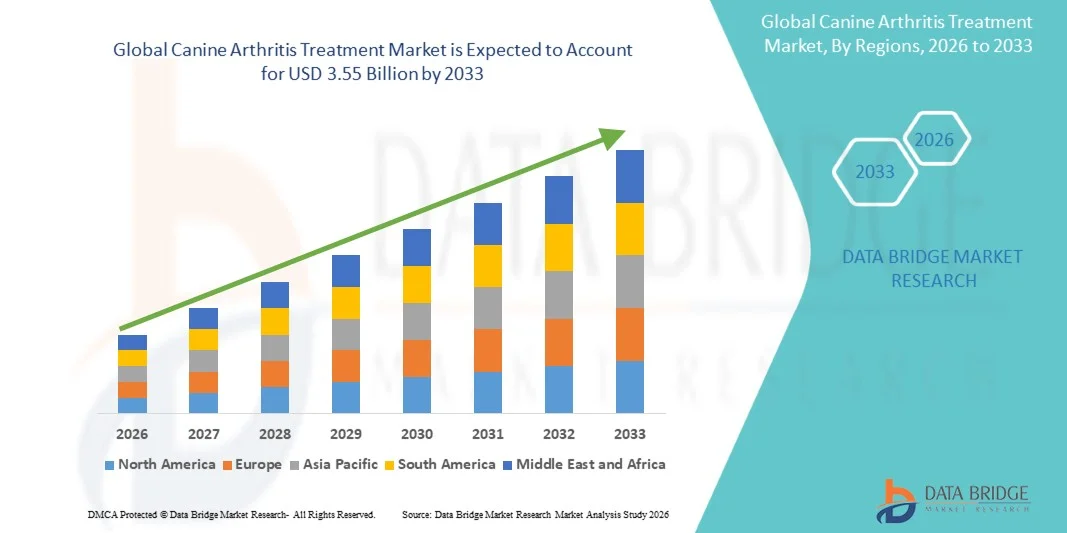
- The global canine arthritis treatment market size was valued at USD 2.50 billion in 2025 and is expected to reach USD 3.55 billion by 2033, at a CAGR of 4.5% during the forecast period
- The market growth is largely fueled by the rising prevalence of osteoarthritis and joint disorders in dogs, coupled with increasing pet ownership and growing expenditure on companion animal healthcare, leading to greater demand for effective veterinary therapeutics
- Furthermore, advancements in veterinary pharmaceuticals, including biologics, pain management drugs, and regenerative therapies, along with heightened awareness among pet owners regarding early diagnosis and treatment, are establishing canine arthritis solutions as a critical segment in animal healthcare. These converging factors are accelerating the adoption of treatment options, thereby significantly boosting the industry's growth
Canine Arthritis Treatment Market Analysis
- Canine arthritis treatments, encompassing pharmaceuticals, supplements, and regenerative therapies for managing joint pain and inflammation in dogs, are increasingly vital components of modern veterinary care due to their ability to improve mobility, enhance quality of life, and support long-term disease management in companion animals
- The escalating demand for canine arthritis treatments is primarily fueled by the rising prevalence of osteoarthritis in aging dog populations, increasing pet humanization, and growing willingness among pet owners to spend on advanced veterinary care and pain management solutions
- North America dominated the canine arthritis treatment market with the largest revenue share of 39.8% in 2025, characterized by high pet ownership rates, advanced veterinary healthcare infrastructure, and strong presence of leading animal health companies, with the U.S. witnessing substantial growth in the adoption of innovative therapies such as monoclonal antibodies and regenerative medicine
- Asia-Pacific is expected to be the fastest growing region in the canine arthritis treatment market during the forecast period due to increasing pet adoption, rising disposable incomes, and expanding access to veterinary services in emerging economies
- Non-steroidal anti-inflammatory Medications (NSAIDs) segment dominated the canine arthritis treatment market with a market share of 41.5% in 2025, driven by their widespread use as first-line therapy for pain relief and inflammation control in dogs suffering from arthritis
Report Scope and Canine Arthritis Treatment Market Segmentation
|
Attributes |
Canine Arthritis Treatment Key Market Insights |
|
Segments Covered |
|
|
Countries Covered |
North America
Europe
Asia-Pacific
Middle East and Africa
South America
|
|
Key Market Players |
|
|
Market Opportunities |
|
|
Value Added Data Infosets |
In addition to the insights on market scenarios such as market value, growth rate, segmentation, geographical coverage, and major players, the market reports curated by the Data Bridge Market Research also include in-depth expert analysis, patient epidemiology, pipeline analysis, pricing analysis, and regulatory framework |
Canine Arthritis Treatment Market Trends
“Advancement of Biologics and Long-Acting Therapies”
- A significant and accelerating trend in the global canine arthritis treatment market is the growing adoption of advanced biologics and long-acting therapeutics such as monoclonal antibodies, which are transforming pain management and improving treatment compliance. This evolution is significantly enhancing therapeutic outcomes and convenience for pet owners and veterinarians
- For instance, Zoetis introduced Librela (bedinvetmab), a monoclonal antibody therapy designed to control osteoarthritis pain in dogs, offering monthly dosing and improved safety compared to traditional treatments. Similarly, Elanco is investing in pipeline innovations focused on long-acting pain relief solutions
- Biologic integration in canine arthritis care enables targeted pain management by blocking nerve growth factor (NGF), reducing chronic pain without the gastrointestinal side effects often associated with NSAIDs. For instance, these therapies provide sustained relief with fewer doses and improved safety profiles, particularly in older dogs with comorbidities. Furthermore, long-acting injectables offer convenience to pet owners by reducing the frequency of administration and improving adherence to treatment plans
- The integration of advanced therapies with veterinary care protocols facilitates a more comprehensive and personalized approach to managing canine arthritis. Through veterinary supervision, treatment plans can combine biologics, supplements, and lifestyle adjustments, creating a holistic disease management framework
- This trend towards more effective, safer, and longer-lasting treatment solutions is fundamentally reshaping expectations in companion animal healthcare. Consequently, companies such as Zoetis and Elanco are developing innovative arthritis treatments with features such as extended duration, improved safety, and targeted mechanisms of action
- The demand for advanced and long-acting arthritis treatments is growing rapidly across veterinary clinics and specialty hospitals, as pet owners increasingly prioritize effective pain management and improved quality of life for their pets
Canine Arthritis Treatment Market Dynamics
Driver
“Rising Pet Ownership and Increasing Focus on Animal Healthcare”
- The increasing prevalence of osteoarthritis in aging dog populations, coupled with rising pet ownership and growing awareness of animal health, is a significant driver for the heightened demand for canine arthritis treatments
- For instance, in January 2024, Zoetis Inc. expanded the global availability of Librela following regulatory approvals in multiple regions, aiming to address the unmet need for effective chronic pain management in dogs. Such strategies by key companies are expected to drive the canine arthritis treatment industry growth in the forecast period
- As pet owners become more attentive to the health and well-being of their animals and seek improved quality of life for aging pets, arthritis treatments offer effective solutions such as pain relief, mobility improvement, and inflammation control, providing a strong alternative to untreated disease progression
- Furthermore, the growing trend of pet humanization and willingness to invest in advanced veterinary care are making arthritis treatments an essential component of companion animal healthcare, supporting long-term disease management
- The expanding availability of pet insurance coverage in developed markets is supporting affordability of long-term arthritis treatments, encouraging pet owners to opt for advanced and continuous care solutions
- Continuous investments by key players in R&D and product innovation, including novel drug delivery systems and targeted therapies, are accelerating the introduction of more effective and safer treatment options, thereby boosting market growth
- The availability of multiple treatment options, including NSAIDs, biologics, supplements, and physical therapy, along with increasing veterinary guidance, are key factors propelling the adoption of arthritis treatments in both developed and emerging markets. The trend towards preventive care and early diagnosis further contributes to market growth
Restraint/Challenge
“Side Effects of Long-Term Therapies and High Treatment Costs”
- Concerns surrounding the side effects associated with prolonged use of traditional therapies, particularly NSAIDs, pose a significant challenge to broader market adoption. As these treatments may lead to gastrointestinal, renal, or hepatic complications, they raise concerns among pet owners and veterinarians regarding long-term safety
- For instance, clinical observations and veterinary reports have highlighted potential adverse effects linked with chronic NSAID usage in dogs, making some pet owners cautious about continuous medication for arthritis management
- Addressing these concerns through the development of safer alternatives such as biologics and improved dosing regimens is crucial for enhancing treatment acceptance. Companies such as Zoetis and Elanco emphasize safety profiles and reduced side effects in their newer therapies to build confidence among users. Additionally, the relatively high cost of advanced treatments, including monoclonal antibodies and regenerative therapies, can be a barrier to adoption for price-sensitive consumers, particularly in developing regions
- Limited access to advanced veterinary infrastructure in rural and underdeveloped regions restricts timely diagnosis and treatment, thereby hindering market penetration in emerging economies
- Lack of awareness among some pet owners regarding the early symptoms and chronic nature of arthritis can lead to delayed treatment initiation, negatively impacting demand for therapeutic solutions
- While awareness and availability of advanced treatments are increasing, affordability remains a concern, especially for long-term therapy plans required in chronic conditions such as arthritis
- Overcoming these challenges through cost optimization, expansion of pet insurance coverage, and continued innovation in safer and affordable therapies will be vital for sustained market growth
Canine Arthritis Treatment Market Scope
The market is segmented on the basis of type, route of administration, treatment, end-users, and distribution channel.
- By Type
On the basis of type, the canine arthritis treatment market is segmented into surgery, drugs, and others. The drugs segment dominated the market with the largest market revenue share in 2025, driven by its widespread use as the first-line treatment option for managing pain and inflammation in dogs. Veterinary professionals commonly prescribe NSAIDs, opioids, and newer biologics due to their proven efficacy and ease of administration. The accessibility and relatively lower cost compared to surgical interventions further support the dominance of this segment. Additionally, continuous advancements in pharmaceutical formulations, including long-acting injectables and targeted therapies, are enhancing treatment outcomes. The strong presence of key pharmaceutical players and the availability of a broad product portfolio also contribute to segment growth. Increasing awareness among pet owners regarding early treatment is further boosting drug adoption.
The surgery segment is anticipated to witness the fastest growth rate during the forecast period, fueled by rising cases of severe arthritis and joint degeneration requiring advanced intervention. Surgical procedures such as joint replacement and arthroscopy are increasingly recommended when pharmacological treatments fail to provide adequate relief. Technological advancements in veterinary surgery, including minimally invasive techniques, are improving success rates and recovery times. The growing availability of specialized veterinary surgeons and advanced clinics is also supporting this growth. Additionally, higher willingness among pet owners to spend on premium treatments is driving demand for surgical options. Increasing pet insurance coverage in developed markets is further enabling access to such high-cost procedures.
- By Route of Administration
On the basis of route of administration, the market is segmented into oral, parenteral, and others. The oral segment dominated the market with the largest revenue share in 2025, driven by its convenience, ease of administration, and high acceptance among pet owners. Oral medications such as tablets, chewables, and liquid formulations are widely preferred for long-term management of arthritis. These formulations are cost-effective and easily accessible through various distribution channels. Additionally, palatable formulations designed specifically for pets improve compliance and adherence to treatment regimens. The availability of a wide range of oral NSAIDs and supplements further strengthens this segment. Continuous product innovation in flavored and easy-to-administer drugs is also contributing to its dominance.
The parenteral segment is expected to witness the fastest growth rate during the forecast period, driven by the increasing adoption of advanced injectable therapies such as monoclonal antibodies and regenerative treatments. Parenteral administration offers faster onset of action and improved bioavailability compared to oral drugs. Veterinary professionals often prefer injectables for severe cases or when oral administration is not feasible. The growing popularity of long-acting injections that reduce dosing frequency is further boosting demand. Additionally, advancements in biologics and targeted therapies are expanding the application of parenteral treatments. Increasing veterinary visits and clinical supervision are also supporting segment growth.
- By Treatment
On the basis of treatment, the market is segmented into non-steroidal anti-inflammatory medications (NSAIDs), opioids, stem cell therapy, allogeneic stem cells, and autologous stem cells. The NSAIDs segment dominated the market with the largest revenue share of 41.5% in 2025, driven by its widespread use as the primary treatment for pain and inflammation management in canine arthritis. NSAIDs are commonly prescribed due to their proven effectiveness, affordability, and availability. They are often the first-line therapy recommended by veterinarians for mild to moderate arthritis cases. The presence of well-established products and strong clinical evidence further supports their dominance. Additionally, continuous improvements in safety profiles are enhancing their adoption. High awareness among pet owners regarding NSAIDs also contributes to segment growth.
The stem cell therapy segment is anticipated to witness the fastest growth rate during the forecast period, fueled by its potential to regenerate damaged tissues and provide long-term relief. Stem cell therapies, including both autologous and allogeneic approaches, are gaining traction as advanced treatment options. These therapies address the root cause of arthritis rather than just managing symptoms. Increasing research and clinical trials are supporting their efficacy and safety. The growing demand for regenerative medicine in veterinary care is also driving this segment. Furthermore, rising willingness among pet owners to adopt innovative treatments is accelerating growth.
- By End-Users
On the basis of end-users, the market is segmented into hospitals, specialty clinics, and others. The hospitals segment dominated the market with the largest revenue share in 2025, driven by the availability of comprehensive diagnostic and treatment facilities. Veterinary hospitals are often the first point of care for arthritis diagnosis and management. They offer access to advanced imaging technologies and skilled professionals, enabling accurate diagnosis and effective treatment planning. The presence of multidisciplinary teams further enhances patient outcomes. Additionally, hospitals handle a high volume of cases, contributing significantly to market revenue. Growing investments in veterinary infrastructure are also supporting this segment.
The specialty clinics segment is expected to witness the fastest growth rate during the forecast period, fueled by increasing demand for specialized and advanced care. These clinics focus on specific conditions such as orthopedics and pain management, offering targeted treatment solutions. The availability of expert veterinarians and advanced therapies such as stem cell treatment is attracting pet owners. Shorter waiting times and personalized care further enhance their appeal. Additionally, the expansion of specialty veterinary networks is supporting segment growth. Rising awareness about advanced treatment options is also driving demand for specialty clinics.
- By Distribution Channel
On the basis of distribution channel, the market is segmented into hospital pharmacy, retail pharmacy, and others. The hospital pharmacy segment dominated the market with the largest revenue share in 2025, driven by direct dispensing of prescribed medications during veterinary visits. Pet owners often prefer purchasing medicines directly from hospitals for convenience and assurance of authenticity. The availability of a wide range of prescription drugs within hospital settings further supports this dominance. Additionally, veterinarians play a key role in influencing purchasing decisions at the point of care. The integration of diagnosis and treatment within hospitals enhances patient compliance. Growing veterinary visits are also contributing to segment growth.
The retail pharmacy segment is anticipated to witness the fastest growth rate during the forecast period, fueled by increasing accessibility and convenience for pet owners. Retail pharmacies, including online platforms, offer a wide range of products at competitive prices. The rising trend of e-commerce and home delivery services is significantly boosting this segment. Pet owners are increasingly opting for retail channels for refilling long-term medications. Additionally, discounts and subscription-based models are attracting more consumers. Expanding distribution networks and improved product availability are further supporting segment growth.
Canine Arthritis Treatment Market Regional Analysis
- North America dominated the canine arthritis treatment market with the largest revenue share of 39.8% in 2025, characterized by high pet ownership rates, advanced veterinary healthcare infrastructure, and strong presence of leading animal health companies
- Pet owners in the region highly value the effectiveness, safety profiles, and advanced treatment options offered by arthritis therapies such as NSAIDs, biologics, and regenerative medicine
- This widespread adoption is further supported by high pet ownership rates, well-established veterinary infrastructure, and the growing trend of pet humanization, establishing canine arthritis treatments as a critical solution for improving mobility and quality of life in companion animals
U.S. Canine Arthritis Treatment Market Insight
The U.S. canine arthritis treatment market captured the largest revenue share of 80.5% in 2025 within North America, fueled by the high prevalence of osteoarthritis in aging dogs and the increasing focus on advanced veterinary care. Pet owners are increasingly prioritizing effective pain management and mobility improvement through innovative treatment options. The growing preference for biologics, long-acting injectables, and personalized treatment plans, combined with strong demand for veterinary consultation and monitoring, further propels the market. Moreover, the increasing adoption of advanced therapies, such as monoclonal antibodies and regenerative medicine, is significantly contributing to the market's expansion.
Europe Canine Arthritis Treatment Market Insight
The Europe canine arthritis treatment market is projected to expand at a substantial CAGR throughout the forecast period, primarily driven by increasing awareness of companion animal health and the rising demand for effective chronic disease management. The increase in pet ownership, coupled with advancements in veterinary care, is fostering the adoption of arthritis treatments. European pet owners are also drawn to the safety and long-term benefits these therapies offer. The region is experiencing significant growth across veterinary hospitals, specialty clinics, and homecare settings, with arthritis treatments being increasingly adopted in both routine care and specialized treatment plans.
U.K. Canine Arthritis Treatment Market Insight
The U.K. canine arthritis treatment market is anticipated to grow at a noteworthy CAGR during the forecast period, driven by the rising trend of pet humanization and a desire for improved quality of life for companion animals. Additionally, increasing awareness regarding early diagnosis and chronic pain management is encouraging pet owners to opt for advanced treatment solutions. The UK’s strong veterinary infrastructure, alongside its expanding pet insurance coverage, is expected to continue to stimulate market growth.
Germany Canine Arthritis Treatment Market Insight
The Germany canine arthritis treatment market is expected to expand at a considerable CAGR during the forecast period, fueled by increasing awareness of animal welfare and the demand for advanced, high-quality veterinary treatments. Germany’s well-developed veterinary infrastructure, combined with its emphasis on innovation and research, promotes the adoption of arthritis therapies, particularly biologics and regenerative solutions. The integration of advanced treatment protocols into routine veterinary care is also becoming increasingly prevalent, with a strong preference for safe and effective therapies aligning with local consumer expectations.
Asia-Pacific Canine Arthritis Treatment Market Insight
The Asia-Pacific canine arthritis treatment market is poised to grow at the fastest CAGR of 6.1% during the forecast period of 2026 to 2033, driven by increasing pet adoption, rising disposable incomes, and improving access to veterinary care in countries such as China, Japan, and India. The region's growing inclination towards companion animal healthcare, supported by rising awareness and veterinary infrastructure development, is driving the adoption of arthritis treatments. Furthermore, as APAC emerges as a key market with expanding veterinary services, the accessibility and affordability of treatments are improving for a broader population.
Japan Canine Arthritis Treatment Market Insight
The Japan canine arthritis treatment market is gaining momentum due to the country’s aging pet population, high standards of veterinary care, and demand for advanced treatment options. The Japanese market places a significant emphasis on pet health and longevity, and the adoption of arthritis treatments is driven by increasing awareness and early diagnosis. The integration of advanced therapies, such as biologics and supplements, into routine care is fueling growth. Moreover, Japan's aging population is likely to spur demand for easier-to-manage, long-term treatment solutions in both homecare and clinical settings.
India Canine Arthritis Treatment Market Insight
The India canine arthritis treatment market accounted for the largest market revenue share in Asia Pacific in 2025, attributed to the country's expanding pet population, rising disposable incomes, and increasing awareness of animal healthcare. India stands as one of the fastest-growing markets for veterinary services, and arthritis treatments are becoming increasingly popular in urban households and veterinary clinics. The push towards improved veterinary infrastructure and the availability of affordable treatment options, alongside growing presence of domestic and international players, are key factors propelling the market in India.
Canine Arthritis Treatment Market Share
The Canine Arthritis Treatment industry is primarily led by well-established companies, including:
- Zoetis Inc. (U.S.)
- Elanco Animal Health Incorporated (U.S.)
- Boehringer Ingelheim International GmbH (Germany)
- Merck & Co., Inc. (U.S.)
- Dechra Pharmaceuticals PLC (U.K.)
- Virbac (France)
- Vetoquinol SA (France)
- Ceva Santé Animale S.A. (France)
- Norbrook Laboratories Limited (U.K.)
- American Regent, Inc. (U.S.)
- VetStem, Inc. (U.S.)
- Nutramax Laboratories Veterinary Sciences, Inc. (U.S.)
- Thorne HealthTech, Inc. (U.S.)
- OrthoPets LLC (U.S.)
- Rejuvenate Bio, Inc. (U.S.)
- Kyoritsu Seiyaku Corporation (Japan)
- Phibro Animal Health Corporation (U.S.)
- Huvepharma EOOD (Bulgaria)
- Zomedica Corp. (U.S.)
- Bioiberica S.A.U. (Spain)
What are the Recent Developments in Global Canine Arthritis Treatment Market?
- In November 2025, Zoetis received European Commission marketing authorization for Lenivia (izenivetmab), a next-generation monoclonal antibody designed to reduce osteoarthritis pain in dogs. This approval expanded the company’s biologics portfolio and underscored ongoing innovation in targeted therapies for canine arthritis treatment
- In February 2025, Zoetis announced a label update for Librela based on post-approval real-world data collected after its U.S. launch. The update included revised safety information and guidance for veterinarians, reinforcing the company’s commitment to transparency and safe usage while supporting continued adoption of the therapy
- In December 2024, the U.S. FDA issued a communication to veterinarians regarding reported adverse events associated with Librela, including neurological and mobility-related symptoms in some dogs. This development prompted increased monitoring and evaluation of post-market safety data, highlighting the importance of pharmacovigilance in newly introduced biologic therapies
- In October 2023, Zoetis officially launched Librela in the U.S. market following FDA approval, enabling veterinarians to adopt a new class of biologic treatment for canine arthritis. The product quickly gained traction due to its long-acting formulation and improved safety profile compared to conventional therapies, contributing to rapid adoption across veterinary clinics
- In May 2023, Zoetis Inc. announced that the U.S. Food and Drug Administration approved Librela (bedinvetmab injection), the first monoclonal antibody therapy for controlling osteoarthritis pain in dogs. This once-monthly injectable treatment marked a breakthrough in veterinary medicine by offering targeted pain relief and improved mobility for canine patients, representing a major shift from traditional NSAID-based therapies
SKU-
Get online access to the report on the World's First Market Intelligence Cloud

- Interactive Data Analysis Dashboard
- Company Analysis Dashboard for high growth potential opportunities
- Research Analyst Access for customization & queries
- Competitor Analysis with Interactive dashboard
- Latest News, Updates & Trend analysis
- Harness the Power of Benchmark Analysis for Comprehensive Competitor Tracking
Research Methodology
Data collection and base year analysis are done using data collection modules with large sample sizes. The stage includes obtaining market information or related data through various sources and strategies. It includes examining and planning all the data acquired from the past in advance. It likewise envelops the examination of information inconsistencies seen across different information sources. The market data is analysed and estimated using market statistical and coherent models. Also, market share analysis and key trend analysis are the major success factors in the market report. To know more, please request an analyst call or drop down your inquiry.
The key research methodology used by DBMR research team is data triangulation which involves data mining, analysis of the impact of data variables on the market and primary (industry expert) validation. Data models include Vendor Positioning Grid, Market Time Line Analysis, Market Overview and Guide, Company Positioning Grid, Patent Analysis, Pricing Analysis, Company Market Share Analysis, Standards of Measurement, Global versus Regional and Vendor Share Analysis. To know more about the research methodology, drop in an inquiry to speak to our industry experts.
Customization Available
Data Bridge Market Research is a leader in advanced formative research. We take pride in servicing our existing and new customers with data and analysis that match and suits their goal. The report can be customized to include price trend analysis of target brands understanding the market for additional countries (ask for the list of countries), clinical trial results data, literature review, refurbished market and product base analysis. Market analysis of target competitors can be analyzed from technology-based analysis to market portfolio strategies. We can add as many competitors that you require data about in the format and data style you are looking for. Our team of analysts can also provide you data in crude raw excel files pivot tables (Fact book) or can assist you in creating presentations from the data sets available in the report.