


What is the Global Cappuccino Ingredients Market Size and Growth Rate?
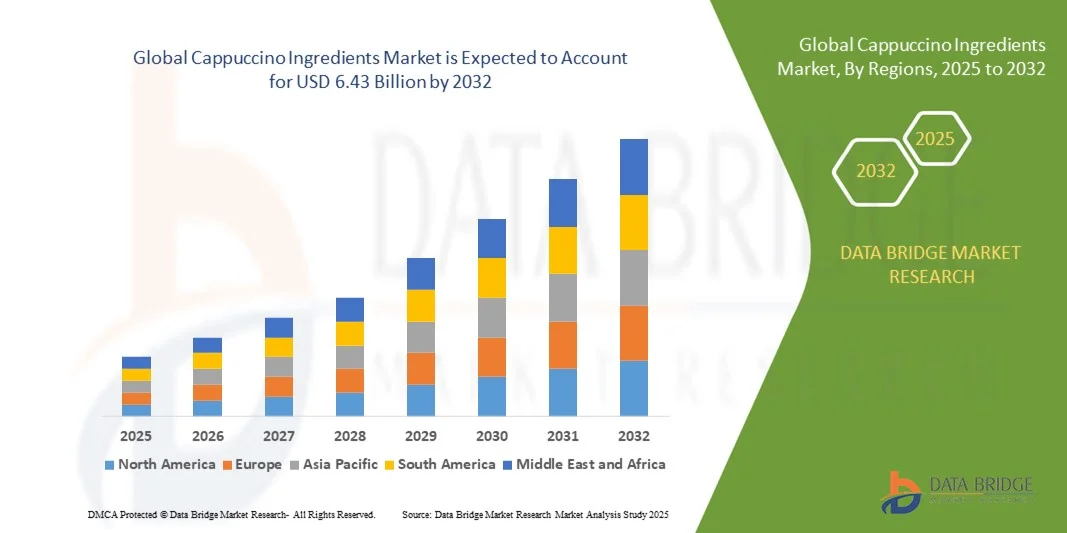
- The global cappuccino ingredients market size was valued at USD 4.7 billion in 2024 and is expected to reach USD 6.43 billion by 2032, at a CAGR of 4.00% during the forecast period
- Cappuccino contains caffeine and antioxidants and the drink is considered to stimulate the nervous system by increasing the level of adrenaline and cortisol in the body which gives a boost to energy. These qualities of cappuccino increase its adoption as a refreshing drink and act as a major driving factor of the cappuccino ingredients market
- The growth in millennial population and their attraction towards caffeine and caffeine products and favorable climate conditions for coffee grains also influence the market. The availability of cappuccino in various caffeine content and flavors which gives consumers a wide range of options choose from according to their respective taste and technological advancement in the vending machines accelerate the cappuccino ingredients market
What are the Major Takeaways of Cappuccino Ingredients Market?
- The expansion of e-commerce platforms and remote retail brands making purchasing easier, developing economies, change in lifestyle and manufacturers experimenting with new flavors and products contribute to the market growth
- Furthermore, the need of different intensities of espresso flavors for consumers, growing trend of espresso-based drinks and penetration of western culture extend profitable opportunities to the market players
- North America dominated the cappuccino ingredients market with the largest revenue share of 36.14% in 2024, driven by the strong coffee culture, increasing demand for premium beverages, and the widespread popularity of café-style experiences at home
- The Asia-Pacific cappuccino ingredients market is projected to grow at the fastest CAGR of 11.02% from 2025 to 2032, driven by rapid urbanization, rising disposable incomes, and the expanding café culture in countries such as China, Japan, South Korea, and India
- The Arabica segment dominated the market with the largest revenue share of 61.3% in 2024, driven by its superior flavor profile, smooth acidity, and widespread use in premium cappuccino blends
Report Scope and Cappuccino Ingredients Market Segmentation
|
Attributes |
Cappuccino Ingredients Key Market Insights |
|
Segments Covered |
|
|
Countries Covered |
North America
Europe
Asia-Pacific
Middle East and Africa
South America
|
|
Key Market Players |
|
|
Market Opportunities |
|
|
Value Added Data Infosets |
In addition to the insights on market scenarios such as market value, growth rate, segmentation, geographical coverage, and major players, the market reports curated by the Data Bridge Market Research also include in-depth expert analysis, pricing analysis, brand share analysis, consumer survey, demography analysis, supply chain analysis, value chain analysis, raw material/consumables overview, vendor selection criteria, PESTLE Analysis, Porter Analysis, and regulatory framework. |
What is the Key Trend in the Cappuccino Ingredients Market?
Rising Demand for Plant-Based and Clean-Label Formulations
- A major trend shaping the global cappuccino ingredients market is the growing consumer preference for plant-based, natural, and clean-label ingredients. Consumers are increasingly seeking products made without artificial additives, preservatives, or allergens, reflecting a broader movement toward healthier and more sustainable beverage options
- For instance, Nestlé introduced plant-based cappuccino mixes under its Nescafé Gold line, formulated with oat and almond milk alternatives to cater to vegan and lactose-intolerant consumers. Similarly, Luigi Lavazza S.p.A. launched its Lavazza Plant-Based Cappuccino Pods in 2024, emphasizing sustainability and taste balance
- This shift has encouraged ingredient manufacturers to innovate with non-dairy creamers, natural sweeteners, and organic flavorings, aiming to replicate traditional taste and texture while offering health-conscious alternatives. Brands are also focusing on traceability and transparency, showcasing ingredient sourcing and nutritional benefits
- The movement toward clean-label and plant-based cappuccino ingredients is reshaping product development, marketing, and consumer engagement strategies, positioning sustainability and wellness at the heart of innovation
- As consumers continue to prioritize ethical consumption and health, companies adopting eco-friendly sourcing, recyclable packaging, and natural formulations are such asly to gain a competitive edge in the evolving cappuccino ingredients landscape
What are the Key Drivers of Cappuccino Ingredients Market?
- The rising popularity of café-style beverages at home, coupled with the expansion of coffee shop chains and specialty cafés, is driving demand for premium cappuccino ingredients. Consumers increasingly seek café-quality experiences using convenient home brewing systems
- For instance, in May 2024, The J.M. Smucker Company expanded its Folgers Cappuccino Mixes line, introducing new flavors designed for single-serve machines, addressing growing demand for convenience and flavor diversity
- The growing awareness of health and wellness trends is pushing demand for low-sugar, non-dairy, and functional ingredients, such as collagen, adaptogens, and probiotics, within cappuccino blends
- Furthermore, the rapid urbanization and rise of the on-the-go beverage culture are fueling consumption among young professionals seeking quick, indulgent options. The integration of e-commerce platforms has also made it easier for consumers to access specialty cappuccino mixes and ingredients globally
- Manufacturers are leveraging innovative packaging formats such as single-serve sachets and ready-to-mix pods to improve shelf life and user convenience, further propelling market growth
Which Factor is Challenging the Growth of the Cappuccino Ingredients Market?
- One of the primary challenges in the cappuccino ingredients market is the price volatility of raw materials, including coffee beans, milk powders, and plant-based substitutes. Fluctuating agricultural yields and supply chain disruptions can impact product pricing and profit margins
- For instance, in 2024, rising Arabica coffee prices due to unfavorable weather conditions in Brazil led to increased production costs for companies such as Strauss Group and Keurig Green Mountain, Inc., pressuring retail prices
- In addition, the short shelf life of natural and clean-label ingredients poses formulation challenges for manufacturers, especially in maintaining taste and texture consistency without synthetic stabilizers
- High competition and brand saturation, particularly in developed markets, make product differentiation difficult. Smaller companies may struggle to compete with large established brands that dominate retail shelf space and online visibility
- To overcome these obstacles, manufacturers are focusing on supply chain resilience, sustainable sourcing, and technological innovation to balance cost efficiency with product quality, ensuring steady growth in the competitive cappuccino ingredients market
How is the Cappuccino Ingredients Market Segmented?
The market is segmented on the basis of coffee bean, cappuccino type, and application.
- By Coffee Bean
On the basis of coffee bean, the cappuccino ingredients market is segmented into Arabica, Robusta, Liberica, and Excelsa. The Arabica segment dominated the market with the largest revenue share of 61.3% in 2024, driven by its superior flavor profile, smooth acidity, and widespread use in premium cappuccino blends. Arabica beans are favored by specialty coffee producers and consumers seeking high-quality, aromatic beverages.
The Robusta segment is anticipated to witness the fastest CAGR from 2025 to 2032, owing to its higher caffeine content, affordability, and suitability for instant and vending cappuccino mixes. Robusta’s strong and bold flavor makes it an essential ingredient in commercial cappuccino formulations. Meanwhile, Liberica and Excelsa varieties serve niche markets, offering unique fruity and floral notes. Growing consumer interest in coffee diversity and regional bean sourcing trends further support the segment’s expansion in specialty beverage applications.
- By Cappuccino Type
On the basis of cappuccino type, the market is segmented into Traditional Style Cappuccino, Wet Cappuccino, Dry Cappuccino, Flavored Cappuccino, and Iced Cappuccinos. The Traditional Style Cappuccino segment dominated the market with a 38.9% share in 2024, driven by its classic blend of espresso, steamed milk, and froth that appeals to purists and mainstream consumers asuch as. Its consistency and balanced taste profile have made it a staple across cafés and households globally.
The Flavored Cappuccino segment is projected to grow at the fastest CAGR from 2025 to 2032, fueled by increasing experimentation with seasonal and innovative flavors such as vanilla, caramel, hazelnut, and pumpkin spice. Brands such as Starbucks and Nestlé are launching diverse flavor variants to attract younger demographics seeking novelty and personalization. Rising demand for customization and indulgent beverage experiences continues to drive innovation within this segment.
- By Application
On the basis of application, the cappuccino ingredients market is segmented into Drink To Go, Takeaway, Restaurant Service, Coffeehouse Service, Personal Use, Office Use, Supermarkets Service, Convenience Stores Service, and Vending Machines Service. The Coffeehouse Service segment held the largest market share of 42.6% in 2024, supported by the global expansion of café chains and specialty coffee outlets offering freshly prepared cappuccinos. Consumers are drawn to the social and experiential aspects of coffeehouse consumption, further strengthening demand.
The Vending Machines Service segment is expected to register the fastest CAGR from 2025 to 2032, driven by increasing installations of automated coffee dispensers in workplaces, transportation hubs, and public areas. These machines offer convenience, consistency, and quick service, aligning with the growing “on-the-go” beverage culture. The rapid digitization of foodservice channels and integration of smart vending technology continue to expand this segment’s footprint across global markets.
Which Region Holds the Largest Share of the Cappuccino Ingredients Market?
- North America dominated the cappuccino ingredients market with the largest revenue share of 36.14% in 2024, driven by the strong coffee culture, increasing demand for premium beverages, and the widespread popularity of café-style experiences at home. Consumers in the region are showing a growing preference for specialty and ready-to-drink cappuccino products made with high-quality and clean-label ingredients
- The rising influence of international coffee chains, coupled with the expansion of artisanal coffee shops and home brewing systems, has further fueled market growth. Consumers increasingly seek convenience, innovation, and indulgence in their coffee choices, prompting companies to introduce new flavors, plant-based variants, and functional blends
- The region’s high disposable incomes, growing health awareness, and the presence of key players such as Starbucks, The J.M. Smucker Company, and Keurig Green Mountain, Inc. have reinforced North America’s dominance in the global Cappuccino Ingredients landscape
U.S. Cappuccino Ingredients Market Insight
The U.S. cappuccino ingredients market captured the largest revenue share of 75% in 2024 within North America, supported by the nation’s deep-rooted coffee consumption culture and the expanding trend of premiumization in beverages. The growing popularity of at-home coffee machines and single-serve pods has boosted demand for convenient cappuccino mixes and ingredients. Moreover, U.S. consumers are increasingly embracing plant-based creamers, low-sugar formulations, and functional ingredients such as collagen and adaptogens. The presence of major players such as Nestlé USA and Peet’s Coffee continues to drive innovation and accessibility in the market.
Europe Cappuccino Ingredients Market Insight
The Europe cappuccino ingredients market is projected to expand at a steady CAGR during the forecast period, fueled by rising café culture, increasing urbanization, and the demand for ethically sourced, sustainable coffee ingredients. Consumers in countries such as Italy, Germany, and France favor premium cappuccino blends emphasizing authenticity and traceable sourcing. European brands are focusing on organic and fair-trade certified ingredients, catering to environmentally conscious consumers. The region’s expanding specialty coffee shop network and growing retail availability of high-quality cappuccino mixes are further contributing to sustained market growth.
U.K. Cappuccino Ingredients Market Insight
The U.K. cappuccino ingredients market is expected to grow at a significant CAGR through 2032, driven by the rising popularity of café-inspired beverages and the growing number of coffeehouse chains and independent cafés. Consumers are increasingly experimenting with flavored cappuccinos such as caramel, hazelnut, and vanilla, reflecting shifting preferences toward indulgence and variety. The U.K.’s robust online retail infrastructure and the growing demand for instant cappuccino sachets and pods have enhanced product accessibility. Moreover, sustainability-focused product lines, such as recyclable packaging and ethically sourced beans, are gaining momentum among eco-conscious consumers.
Germany Cappuccino Ingredients Market Insight
The Germany cappuccino ingredients market is anticipated to grow at a considerable CAGR during the forecast period, driven by the country’s preference for premium, locally roasted coffee and the adoption of organic and non-dairy ingredients. Germany’s strong café culture and the rise of automated coffee machines in households and offices have bolstered the demand for convenient cappuccino formulations. Consumers are increasingly prioritizing health and environmental impact, leading manufacturers to develop vegan, low-calorie, and sustainable cappuccino options. German coffee producers are also emphasizing technological innovation and transparency in ingredient sourcing to meet evolving consumer expectations.
Which Region is the Fastest Growing Region in the Cappuccino Ingredients Market?
The Asia-Pacific cappuccino ingredients market is projected to grow at the fastest CAGR of 11.02% from 2025 to 2032, driven by rapid urbanization, rising disposable incomes, and the expanding café culture in countries such as China, Japan, South Korea, and India. Consumers in the region are increasingly embracing Western-style coffee habits, particularly among millennials and young professionals. The surge in local coffeehouse chains, combined with growing demand for instant cappuccino mixes and ready-to-drink formats, is driving strong growth. Government-led initiatives promoting digitalization and modernization in the food and beverage industry are further enhancing accessibility and affordability across developing markets.
Japan Cappuccino Ingredients Market Insight
The Japan cappuccino ingredients market is witnessing notable growth due to the nation’s emphasis on innovation, convenience, and quality. Japan’s evolving coffee culture, characterized by ready-to-drink cappuccino cans, vending solutions, and premium instant products, supports market expansion. The country’s aging population also fuels demand for functional cappuccino products enriched with collagen and vitamins. Leading Japanese beverage companies are integrating sustainability into product development through recyclable packaging and low-carbon manufacturing, appealing to environmentally aware consumers.
China Cappuccino Ingredients Market Insight
The China cappuccino ingredients market accounted for the largest revenue share in Asia-Pacific in 2024, driven by the rise of urban coffee culture and increasing middle-class consumption. Chinese consumers are developing a strong taste for premium and flavored cappuccinos, spurred by Western influence and the proliferation of international coffee chains. Domestic manufacturers are responding with innovative formulations that combine traditional flavors such as matcha and red bean with cappuccino bases. The government’s push toward smart retail and e-commerce integration further boosts accessibility, while the expansion of cafés and vending machines accelerates market penetration across urban centers.
Which are the Top Companies in Cappuccino Ingredients Market?
The cappuccino ingredients industry is primarily led by well-established companies, including:
- Luigi Lavazza S.p.A. (Italy)
- NESTLÉ (Switzerland)
- Keurig Green Mountain, Inc. (U.S.)
- JACOBS DOUWE EGBERTS (Netherlands)
- Starbucks Coffee Company (U.S.)
- PEET'S COFFEE (U.S.)
- The J.M. Smucker Company (U.S.)
- The Kraft Heinz Company (U.S.)
- Strauss Group (Israel)
- Daily Chef (U.S.)
- Farmer Bros. Co. (U.S.)
- The Folger Coffee Company (U.S.)
- Eight O'Clock Coffee Company (U.S.)
- Brad Barry Company, Ltd. (U.S.)
- Cafe Coffee Day (India)
- MKC Food Products (India)
- DD IP Holder LLC (U.S.)
- The Coca-Cola Company (U.S.)
- Jittery Joe's Coffee (U.S.)

- Interactive Data Analysis Dashboard
- Company Analysis Dashboard for high growth potential opportunities
- Research Analyst Access for customization & queries
- Competitor Analysis with Interactive dashboard
- Latest News, Updates & Trend analysis
- Harness the Power of Benchmark Analysis for Comprehensive Competitor Tracking
Global Cappuccino Ingredients Market, Supply Chain Analysis and Ecosystem Framework
To support market growth and help clients navigate the impact of geopolitical shifts, DBMR has integrated in-depth supply chain analysis into its Global Cappuccino Ingredients Market research reports. This addition empowers clients to respond effectively to global changes affecting their industries. The supply chain analysis section includes detailed insights such as Global Cappuccino Ingredients Market consumption and production by country, price trend analysis, the impact of tariffs and geopolitical developments, and import and export trends by country and HSN code. It also highlights major suppliers with data on production capacity and company profiles, as well as key importers and exporters. In addition to research, DBMR offers specialized supply chain consulting services backed by over a decade of experience, providing solutions like supplier discovery, supplier risk assessment, price trend analysis, impact evaluation of inflation and trade route changes, and comprehensive market trend analysis.
Data collection and base year analysis are done using data collection modules with large sample sizes. The stage includes obtaining market information or related data through various sources and strategies. It includes examining and planning all the data acquired from the past in advance. It likewise envelops the examination of information inconsistencies seen across different information sources. The market data is analysed and estimated using market statistical and coherent models. Also, market share analysis and key trend analysis are the major success factors in the market report. To know more, please request an analyst call or drop down your inquiry.
The key research methodology used by DBMR research team is data triangulation which involves data mining, analysis of the impact of data variables on the market and primary (industry expert) validation. Data models include Vendor Positioning Grid, Market Time Line Analysis, Market Overview and Guide, Company Positioning Grid, Patent Analysis, Pricing Analysis, Company Market Share Analysis, Standards of Measurement, Global versus Regional and Vendor Share Analysis. To know more about the research methodology, drop in an inquiry to speak to our industry experts.
Data Bridge Market Research is a leader in advanced formative research. We take pride in servicing our existing and new customers with data and analysis that match and suits their goal. The report can be customized to include price trend analysis of target brands understanding the market for additional countries (ask for the list of countries), clinical trial results data, literature review, refurbished market and product base analysis. Market analysis of target competitors can be analyzed from technology-based analysis to market portfolio strategies. We can add as many competitors that you require data about in the format and data style you are looking for. Our team of analysts can also provide you data in crude raw excel files pivot tables (Fact book) or can assist you in creating presentations from the data sets available in the report.













