


Cardiology Electrodes Market Size
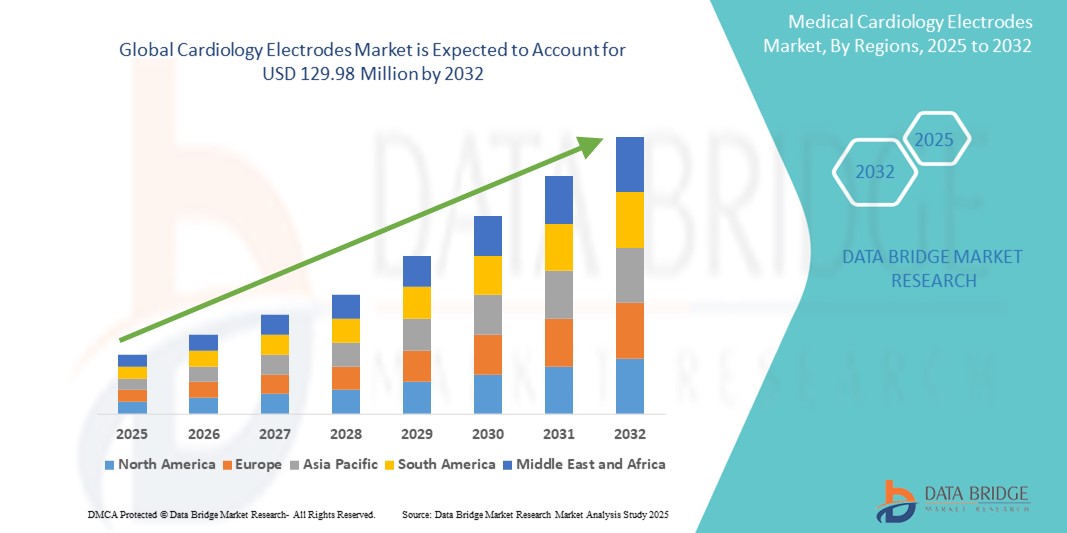
- The global cardiology electrodes market size was valued at USD 88.65 million in 2024 and is expected to reach USD 129.98 million by 2032, at a CAGR of 4.90% during the forecast period
- The market growth is largely fueled by the increasing incidence of cardiovascular diseases and the expanding use of electrocardiogram (ECG) monitoring across hospitals, clinics, and homecare settings, leading to greater demand for reliable cardiac diagnostic tools
- Furthermore, rising awareness regarding early diagnosis, coupled with advancements in electrode materials and wearable ECG technologies, is positioning cardiology electrodes as essential components in cardiac care. These converging factors are accelerating the adoption of cardiology electrodes, thereby significantly boosting the industry's growth
Cardiology Electrodes Market Analysis
- Cardiology electrodes, essential for transmitting electrical signals during electrocardiography (ECG) procedures, are increasingly critical components in modern cardiac diagnostics across hospitals, ambulatory settings, and home care due to their reliability, cost-effectiveness, and compatibility with portable monitoring devices
- The rising demand for cardiology electrodes is primarily fueled by the increasing global burden of cardiovascular diseases, growing awareness of preventive cardiac care, and a surge in the use of wearable ECG monitoring systems for real-time heart health assessment
- North America dominated the cardiology electrodes market with the largest revenue share of 39% in 2024, supported by a well-established healthcare infrastructure, high prevalence of cardiac disorders, and strong adoption of technologically advanced diagnostic solutions, particularly in the U.S., where remote cardiac monitoring and home-based ECG testing are gaining momentum
- Asia-Pacific is expected to be the fastest growing region in the cardiology electrodes market during the forecast period due to rising healthcare investments, an expanding elderly population, and increasing focus on early diagnosis of cardiovascular conditions
- The wet electrodes segment dominated the cardiology electrodes market with a market share of 47.7% in 2024, attributed to their widespread use in clinical ECG applications due to superior signal acquisition and lower impedance compared to dry and solid gel variants
Report Scope and Cardiology Electrodes Market Segmentation
|
Attributes |
Cardiology Electrodes Key Market Insights |
|
Segments Covered |
|
|
Countries Covered |
North America
Europe
Asia-Pacific
Middle East and Africa
South America
|
|
Key Market Players |
|
|
Market Opportunities |
|
|
Value Added Data Infosets |
In addition to the insights on market scenarios such as market value, growth rate, segmentation, geographical coverage, and major players, the market reports curated by the Data Bridge Market Research also include in-depth expert analysis, pricing analysis, brand share analysis, consumer survey, demography analysis, supply chain analysis, value chain analysis, raw material/consumables overview, vendor selection criteria, PESTLE Analysis, Porter Analysis, and regulatory framework. |
Cardiology Electrodes Market Trends
“Technological Advancements in Wearable and Wireless ECG Monitoring”
- A significant and accelerating trend in the global cardiology electrodes market is the rapid evolution of wearable and wireless ECG technologies, enabling continuous cardiac monitoring across clinical, ambulatory, and homecare environments. This transition is enhancing convenience, early diagnosis, and long-term disease management
- For instance, iRhythm Technologies’ Zio Patch utilizes long-wear disposable electrodes for uninterrupted cardiac rhythm monitoring, while Philips and GE HealthCare have launched wireless ECG solutions with smart electrodes that transmit real-time data to cloud-based platforms
- These innovations allow patients and clinicians to detect arrhythmias, heart rate variability, and other abnormalities more efficiently. Emerging AI-driven platforms are also using electrode data to support predictive analytics and early intervention
- Advancements in electrode materials—such as hydrogel, foam-based, and dry-contact electrodes—are reducing skin irritation and improving conductivity, which boosts patient comfort and data accuracy. In addition, the trend toward miniaturized and flexible electrodes supports their use in sports medicine, elderly care, and mobile health environments
- The seamless integration of smart ECG electrodes with mobile apps and remote monitoring platforms allows centralized control and real-time diagnostics. Through connected devices, clinicians can remotely access ECG data, issue alerts, or initiate follow-ups
- This trend toward more intelligent, wearable, and patient-centric ECG solutions is redefining cardiac diagnostics. Consequently, companies such as BPL Medical Technologies and Cardiac Insight are developing next-gen electrodes that support mobile telemetry, AI features, and cloud synchronization, catering to the rising demand for proactive and connected heart health monitoring
Cardiology Electrodes Market Dynamics
Driver
“Rising Cardiovascular Disease Burden and Preventive Monitoring Demand”
- The increasing global burden of cardiovascular diseases (CVDs), including arrhythmias and myocardial infarctions, combined with growing emphasis on preventive cardiac monitoring, is a major driver of the cardiology electrodes market
- For instance, in March 2024, Koninklijke Philips N.V. introduced next-generation ECG electrode systems compatible with wearable monitors and remote telemetry, targeting early diagnosis and continuous patient monitoring across both inpatient and outpatient settings
- As populations age and sedentary lifestyles persist, healthcare systems are shifting toward early detection and chronic disease management. Cardiology electrodes play a critical role by enabling accurate, non-invasive ECG testing in routine checkups and long-term care
- Furthermore, the rising popularity of portable ECG devices and home-based cardiac care—especially post-COVID—has driven demand for disposable, skin-friendly, and easy-to-use electrode designs that meet both clinical and consumer expectations
- The integration of electrodes into AI-enhanced devices, growing public awareness, and increased investments in cardiac care infrastructure are further supporting adoption across hospitals, diagnostic labs, and home monitoring settings
Restraint/Challenge
“Skin Sensitivity Concerns and Regulatory Compliance Hurdles”
- Skin irritation and allergic reactions from long-term use of cardiology electrodes—particularly wet gel-based types—pose challenges to patient comfort and monitoring accuracy, especially in pediatric, geriatric, or sensitive-skin populations
- For instance, prolonged wear of traditional adhesive electrodes can cause contact dermatitis, leading to patient non-compliance in ambulatory ECG testing and limiting broader usage of continuous monitoring solutions
- Addressing this issue requires investment in hypoallergenic materials, breathable adhesives, and novel dry or textile-based electrode technologies. However, these innovations must balance comfort, cost, and signal performance
- In parallel, regulatory challenges remain significant. Electrodes used in medical diagnostics must meet rigorous standards from global authorities such as the U.S. FDA, European Medicines Agency, and other national regulators. These requirements often increase product development timelines and compliance costs
- While companies such as Medtronic and Nihon Kohden are actively working on advanced designs that minimize irritation and meet global compliance, broader market access remains limited by cost sensitivity and regulatory complexity. Continued R&D, patient-centric design, and streamlined approval pathways will be key to overcoming these restraints and unlocking growth
Cardiology Electrodes Market Scope
The market is segmented on the basis of product, procedure, usability, and application
- By Product
On the basis of product, the cardiology electrodes market is segmented into resting ECG electrodes, short-term monitoring ECG electrodes, long-term monitoring ECG electrodes, stress test ECG electrodes, and neonatal ECG electrodes. The resting ECG Electrodes segment held the largest market revenue share in 2024, primarily due to their widespread use in routine cardiac checkups and diagnostic assessments. These electrodes are essential for capturing a static image of the heart’s electrical activity, making them a fundamental tool in primary care and hospital-based cardiology departments. Their compatibility with standard 12-lead ECG systems and cost-effectiveness further contribute to their dominance.
The long-term monitoring ECG electrodes segment is expected to witness the fastest growth rate from 2025 to 2032, driven by the increasing demand for continuous cardiac monitoring in outpatient and homecare settings. These electrodes are optimized for extended wear, often integrated into ambulatory ECG or Holter monitoring devices, offering comfort, durability, and high-fidelity signal acquisition over 24 to 72 hours or more. The shift toward preventive healthcare and remote monitoring is fueling this segment’s rapid expansion.
- By Procedure
On the basis of procedure, the cardiology electrodes market is segmented into electrocardiography (ECG), electroencephalography (EEG), electromyography (EMG), and others. The electrocardiography (ECG) segment dominated the market in 2024 due to the procedure’s pivotal role in diagnosing a wide range of cardiovascular conditions including arrhythmias, myocardial infarction, and ischemic heart disease. The rising incidence of these conditions globally, along with routine ECG screening in hospitals and clinics, supports sustained demand for ECG electrodes.
The electromyography (EMG) segment is projected to grow at the fastest CAGR during the forecast period, as neuromuscular diagnostics gain traction across sports medicine and rehabilitation centers. The need for precise muscular activity tracking and expanding application of EMG in physiotherapy and pain management is accelerating demand for specialized electrodes.
- By Usability
On the basis of usability, the cardiology electrodes market is segmented into disposable medical electrodes and reusable medical electrodes. The disposable medical electrodes segment held the largest revenue share in 2024, driven by their widespread use in high-volume diagnostic settings where hygiene, convenience, and cost efficiency are paramount. These electrodes reduce the risk of cross-contamination and are preferred in acute care and outpatient diagnostic procedures.
The reusable medical electrodes segment is projected to grow at the fastest CAGR during the forecast period, particularly in research institutions and specialized clinics where high-quality materials and longer service life justify the higher upfront cost. Advances in cleaning technologies and materials that retain signal quality over multiple uses are further supporting this segment.
- By Application
On the basis of application, the cardiology electrodes market is segmented into wet electrodes, dry electrodes, solid gel electrodes, and needle electrodes. The wet electrodes segment dominated the market in 2024 with the largest market share of 47.7%, due to their superior conductivity and signal clarity, making them the gold standard in most ECG procedures. Their use in both diagnostic and monitoring applications across hospitals and emergency care ensures high demand.
The dry electrodes segment is anticipated to witness the fastest growth from 2025 to 2032, driven by the growing adoption of wearable health monitors and long-term ambulatory cardiac monitoring. Their non-adhesive, skin-friendly nature supports continuous usage without irritation, making them suitable for elderly and sensitive patients.
Cardiology Electrodes Market Regional Analysis
- North America dominated the cardiology electrodes market with the largest revenue share of 39% in 2024, supported by a well-established healthcare infrastructure, high prevalence of cardiac disorders, and strong adoption of technologically advanced diagnostic solutions, particularly in the U.S., where remote cardiac monitoring and home-based ECG testing are gaining momentum
- Consumers and healthcare providers in the region increasingly rely on ECG procedures for routine and emergency diagnostics, supported by widespread access to modern medical technology and increasing adoption of wearable cardiac monitoring solutions
- This regional growth is further supported by significant healthcare spending, favorable reimbursement policies, and ongoing innovation in remote and preventive cardiac care, positioning cardiology electrodes as a critical component in managing heart health across both clinical and home settings
U.S. Cardiology Electrodes Market Insight
The U.S. cardiology electrodes market captured the largest revenue share of 80.2% in 2024 within North America, fueled by the country’s advanced healthcare infrastructure and growing demand for early cardiac diagnostics. The rising incidence of cardiovascular conditions, along with increasing use of ECG procedures in both inpatient and outpatient settings, is propelling market growth. Moreover, the expanding adoption of wearable and remote cardiac monitoring solutions—integrated with cloud platforms and AI analytics—is enhancing the role of electrodes in preventive care and long-term disease management
Europe Cardiology Electrodes Market Insight
The Europe cardiology electrodes market is projected to expand at a substantial CAGR throughout the forecast period, primarily driven by the region’s aging population and rising awareness of cardiovascular health. Governments and healthcare providers are increasingly emphasizing early diagnosis and long-term monitoring, supporting the widespread use of ECG electrodes. Furthermore, the growing adoption of telehealth and mobile ECG systems, particularly in Germany, France, and the Nordics, is accelerating demand for high-quality, disposable, and wireless-compatible electrodes across both public and private healthcare settings.
U.K. Cardiology Electrodes Market Insight
The U.K. cardiology electrodes market is anticipated to grow at a noteworthy CAGR during the forecast period, driven by increasing healthcare digitization and the national focus on reducing cardiovascular disease burdens. The expansion of community diagnostics centers and mobile health programs is creating strong demand for ECG electrodes that are compatible with portable monitoring systems. In addition, government initiatives encouraging early screening and remote patient care are fueling the use of disposable and wearable electrodes across primary and specialty healthcare settings.
Germany Cardiology Electrodes Market Insight
The Germany cardiology electrodes market is expected to expand at a considerable CAGR during the forecast period, supported by the country’s robust clinical infrastructure and emphasis on innovation. Hospitals and research centers are increasingly adopting advanced ECG systems, driving demand for high-performance electrodes that offer reliable signal quality and patient comfort. With growing investments in digital health and preventive diagnostics, Germany is witnessing a surge in the deployment of ECG monitoring tools, particularly among aging populations and cardiac patients undergoing long-term care.
Asia-Pacific Cardiology Electrodes Market Insight
The Asia-Pacific cardiology electrodes market is poised to grow at the fastest CAGR during the forecast period of 2025 to 2032, driven by rising healthcare investments, increasing prevalence of heart diseases, and expanding access to diagnostic tools across emerging economies. Countries such as China, India, and Japan are witnessing heightened demand for ECG procedures in both clinical and remote settings. The rapid growth of mobile health technologies, government-led health screening programs, and the emergence of local manufacturers are making electrodes more accessible and affordable throughout the region.
Japan Cardiology Electrodes Market Insight
The Japan cardiology electrodes market is gaining momentum due to the country's aging population and strong focus on advanced medical technologies. The high adoption rate of wearable cardiac monitors and telemedicine platforms is fueling demand for long-lasting and skin-friendly electrode solutions. Japan's healthcare providers are integrating ECG electrodes into smart home health systems and remote monitoring programs, particularly for elderly care. The country's strong emphasis on quality and innovation is further encouraging the development of next-gen electrode materials and compact ECG solutions.
India Cardiology Electrodes Market Insight
The India cardiology electrodes market accounted for the largest market revenue share in Asia Pacific in 2024, driven by the growing incidence of cardiovascular diseases, increased access to healthcare facilities, and the rise of point-of-care diagnostics. India's expanding healthcare infrastructure, supported by public-private initiatives, is increasing demand for cost-effective, disposable ECG electrodes. The widespread adoption of mobile ECG systems and wearable monitoring devices across urban and semi-urban regions is further propelling market growth, supported by strong local manufacturing capabilities and favorable government policies.
Cardiology Electrodes Market Share
The cardiology electrodes industry is primarily led by well-established companies, including:
- Medtronic (Ireland)
- Koninklijke Philips N.V. (Netherlands)
- Cardinal Health (U.S.)
- GE HealthCare (U.S.)
- Nihon Kohden Corporation (Japan)
- BPL Medical Technologies Pvt. Ltd. (India)
- 3M (U.S.)
- CONMED Corporation (U.S.)
- Ambu A/S (Denmark)
- ZOLL Medical Corporation (U.S.)
- Cognionics, Inc. (U.S.)
- Leonhard Lang GmbH (Austria)
- Vermed, Inc. (U.S.)
- Skintact Medical (Austria)
- SORIMEX Sp. z o.o. (Poland)
- FIAB SpA (Italy)
- Axelgaard Manufacturing Co., Ltd. (U.S.)
- Rhythmlink International, LLC (U.S.)
- Spes Medica S.r.l. (Italy)
- Nissha Co., Ltd. (Japan)
What are the Recent Developments in Global Cardiology Electrodes Market?
- In April 2024, Medtronic plc, a global healthcare technology leader, introduced its next-generation ECG monitoring solution integrated with advanced disposable cardiology electrodes, designed to enhance long-term ambulatory cardiac monitoring. This innovation is tailored to deliver high-quality signal accuracy while improving patient comfort during extended wear. The launch reflects Medtronic’s commitment to addressing the rising global burden of cardiovascular diseases with innovative, patient-centric diagnostic tools that support preventive care and remote monitoring
- In March 2024, Koninklijke Philips N.V. expanded its cardiac care portfolio with a new range of multi-day wearable ECG electrodes featuring dry-contact technology. These electrodes are engineered for high signal fidelity and skin sensitivity, particularly for elderly and chronic cardiac patients. This development strengthens Philips' position in the wearable health monitoring space, supporting growing global demand for minimally invasive and real-time cardiac diagnostics, especially in home and outpatient settings
- In February 2024, Cardinal Health Inc. announced enhancements to its Vital ECG electrode line, including eco-friendly packaging and hypoallergenic adhesive improvements. These updates respond to rising concerns about skin irritation and sustainability in clinical settings. The move aligns with Cardinal Health’s strategy to prioritize patient comfort and environmental responsibility, while reinforcing its role as a key supplier of consumables in global cardiology diagnostics
- In January 2024, BPL Medical Technologies, a leading Indian medical device manufacturer, launched a new series of neonatal ECG electrodes specifically designed for sensitive skin applications in newborns and premature infants. These electrodes address the growing need for high-precision, non-invasive cardiac monitoring in neonatal intensive care units (NICUs). This initiative marks BPL’s continued investment in specialized cardiac care and its focus on expanding access to essential diagnostics across emerging markets
- In December 2023, Nihon Kohden Corporation introduced a new line of wireless-compatible ECG electrodes optimized for mobile and emergency care units. These electrodes support faster deployment in high-pressure environments and feature antimicrobial adhesive surfaces to enhance hygiene. The innovation reflects Nihon Kohden’s ongoing commitment to improving diagnostic efficiency and infection control in critical care scenarios, addressing evolving global healthcare challenges

- Interactive Data Analysis Dashboard
- Company Analysis Dashboard for high growth potential opportunities
- Research Analyst Access for customization & queries
- Competitor Analysis with Interactive dashboard
- Latest News, Updates & Trend analysis
- Harness the Power of Benchmark Analysis for Comprehensive Competitor Tracking
Data collection and base year analysis are done using data collection modules with large sample sizes. The stage includes obtaining market information or related data through various sources and strategies. It includes examining and planning all the data acquired from the past in advance. It likewise envelops the examination of information inconsistencies seen across different information sources. The market data is analysed and estimated using market statistical and coherent models. Also, market share analysis and key trend analysis are the major success factors in the market report. To know more, please request an analyst call or drop down your inquiry.
The key research methodology used by DBMR research team is data triangulation which involves data mining, analysis of the impact of data variables on the market and primary (industry expert) validation. Data models include Vendor Positioning Grid, Market Time Line Analysis, Market Overview and Guide, Company Positioning Grid, Patent Analysis, Pricing Analysis, Company Market Share Analysis, Standards of Measurement, Global versus Regional and Vendor Share Analysis. To know more about the research methodology, drop in an inquiry to speak to our industry experts.
Data Bridge Market Research is a leader in advanced formative research. We take pride in servicing our existing and new customers with data and analysis that match and suits their goal. The report can be customized to include price trend analysis of target brands understanding the market for additional countries (ask for the list of countries), clinical trial results data, literature review, refurbished market and product base analysis. Market analysis of target competitors can be analyzed from technology-based analysis to market portfolio strategies. We can add as many competitors that you require data about in the format and data style you are looking for. Our team of analysts can also provide you data in crude raw excel files pivot tables (Fact book) or can assist you in creating presentations from the data sets available in the report.













