


Cercarial Dermatitis Market Size
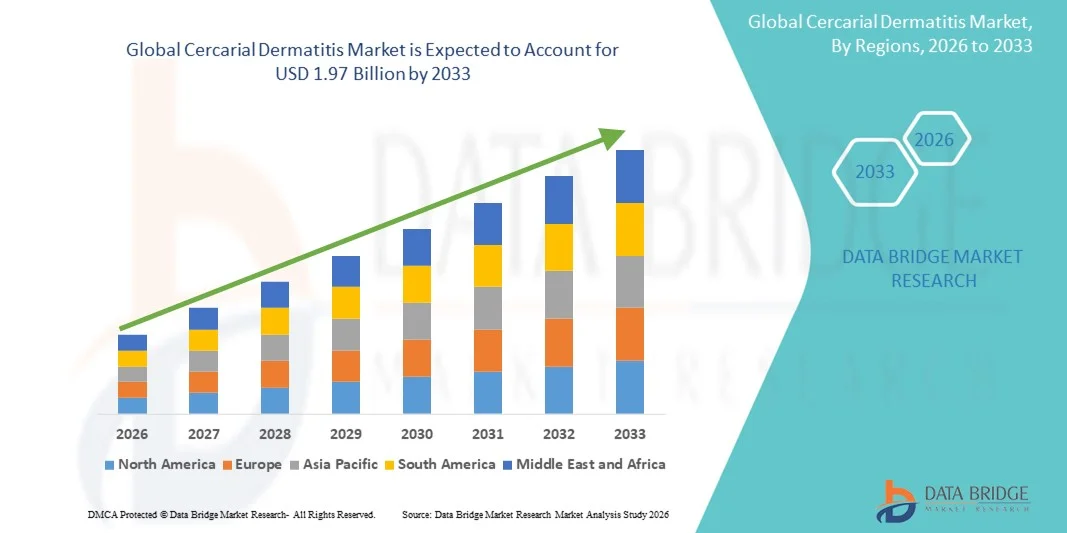
- The global cercarial dermatitis market size was valued at USD 1.30 billion in 2025 and is expected to reach USD 1.97 billion by 2033, at a CAGR of 5.30% during the forecast period
- The market growth is largely fueled by increasing recreational water activities and expanding snail-host habitats, which raise human exposure to cercarial parasites, leading to higher incidence of infections
- Furthermore, rising public and healthcare awareness for prevention and treatment of waterborne skin conditions, coupled with growing demand for effective topical and systemic therapies, is establishing cercarial dermatitis management solutions as a priority in both public health and private care. These converging factors are accelerating the uptake of prevention and treatment measures, thereby significantly boosting the industry's growth
Cercarial Dermatitis Market Analysis
- Cercarial dermatitis, caused by skin penetration of parasitic cercariae from contaminated water, is increasingly recognized as a significant public health concern in recreational and occupational water settings due to its growing incidence and associated discomfort, driving demand for prevention and treatment solutions
- The escalating demand for cercarial dermatitis management is primarily fueled by increasing participation in water-based recreational activities, rising awareness of waterborne skin infections, and the growing adoption of topical and systemic therapeutic interventions
- North America dominated the cercarial dermatitis market with the largest revenue share of 38.2% in 2025, characterized by high recreational water activity rates, strong public health awareness programs, and a well-established healthcare infrastructure, with the U.S. witnessing substantial growth in the adoption of preventive measures and treatments, driven by innovations in drug class options and awareness campaigns
- Asia-Pacific is expected to be the fastest-growing region in the cercarial dermatitis market during the forecast period due to expanding recreational water facilities, increased tourism, and rising public awareness of waterborne diseases
- Antihistamines dominated the cercarial dermatitis market by drug class with a market share of 46.7% in 2025, driven by their effectiveness in relieving itching and inflammation, ease of administration, and widespread availability in both over-the-counter and prescription formulations
Report Scope and Cercarial Dermatitis Market Segmentation
|
Attributes |
Cercarial Dermatitis Key Market Insights |
|
Segments Covered |
|
|
Countries Covered |
North America
Europe
Asia-Pacific
Middle East and Africa
South America
|
|
Key Market Players |
|
|
Market Opportunities |
|
|
Value Added Data Infosets |
In addition to the insights on market scenarios such as market value, growth rate, segmentation, geographical coverage, and major players, the market reports curated by the Data Bridge Market Research also include in-depth expert analysis, patient epidemiology, pipeline analysis, pricing analysis, and regulatory framework |
Cercarial Dermatitis Market Trends
Integration of Preventive and Digital Monitoring Solutions
- A significant and accelerating trend in the global cercarial dermatitis market is the adoption of preventive solutions coupled with digital water quality monitoring, which helps identify high-risk recreational and occupational water zones in real time, thereby reducing exposure to parasitic cercariae
- For instance, wearable skin sensors and water quality monitoring devices are being utilized in some resorts and public swimming areas to alert users about cercarial contamination before water entry
- Preventive creams and barrier ointments are now formulated with advanced antiparasitic and soothing agents, allowing users to minimize infection risks while engaging in water-based activities. For instance, some new topical formulations combine natural plant extracts with antihistamines to enhance protection and reduce irritation
- Integration of digital platforms with mobile applications enables users to receive real-time notifications about high-risk water zones, facilitating proactive measures and timely treatment
- This trend towards combining preventive therapies with intelligent monitoring is fundamentally changing how individuals and institutions manage waterborne skin health. For instance, coastal resorts and municipal pools are increasingly offering integrated solutions for visitors to prevent cercarial dermatitis
- Rising collaborations between health-tech companies and tourism operators are fostering innovations such as subscription-based preventive creams and alert systems. For instance, some companies now offer bundled services that combine digital monitoring with on-site prophylactic treatments
Cercarial Dermatitis Market Dynamics
Driver
Rising Recreational Water Activities and Awareness
- The increasing participation in recreational water activities, combined with heightened awareness of waterborne skin infections, is a major driver for cercarial dermatitis management solutions
- For instance, in March 2025, a public health campaign in Florida highlighted preventive measures for swimmers, boosting demand for topical antihistamines and barrier creams in high-risk areas
- As consumers become more aware of cercarial dermatitis symptoms, demand for rapid treatment and prophylactic solutions, including topical creams and antihistamines, is rising significantly
- Furthermore, the growing popularity of water-based tourism and outdoor leisure activities is increasing exposure risk, thereby driving preventive and treatment solution adoption
- For instance, resorts, municipal pools, and waterparks are increasingly supplying preventive creams and educational material to minimize infections among visitors
- Increasing investment in research and development of advanced antiparasitic and soothing formulations is driving market growth. For instance, companies are developing creams with enhanced absorption and longer-lasting protection for frequent swimmers
Restraint/Challenge
Limited Awareness and Seasonal Prevalence
- A key challenge in the cercarial dermatitis market is the limited awareness among the general population about the condition and its prevention, which restricts widespread adoption of protective measures and treatments
- For instance, many tourists and swimmers in endemic regions remain unaware of safe practices or effective topical solutions to avoid infection
- In addition, the seasonal and geographic prevalence of cercarial dermatitis limits year-round demand, as infections typically peak in warm months when water activities are more frequent
- For instance, products may see high sales in summer but remain underutilized in colder months, affecting consistent market growth
- High variability in regulatory standards for topical creams and antihistamines across different countries creates hurdles in product distribution and market entry. For instance, companies often face delays in launching new preventive or therapeutic formulations due to differing approval requirements in North America, Europe, and Asia-Pacific
- Limited public health infrastructure in emerging regions can restrict awareness campaigns and product penetration. For instance, rural recreational areas often lack accessible preventive solutions or educational initiatives, constraining market growth
Cercarial Dermatitis Market Scope
The market is segmented on the basis of drug class, dosage, route of administration, end-users, and distribution channel.
- By Drug Class
On the basis of drug class, the market is segmented into antibiotics, calcineurin inhibitors, corticosteroids, PDE-4 inhibitors, antihistamines, immunosuppressants, emollients, biologic therapy, and others. The antihistamines segment dominated the market with the largest market revenue share of 46.7% in 2025, driven by their efficacy in relieving itching and inflammation caused by cercarial penetration. Antihistamines are widely preferred due to their rapid onset of action and accessibility in both prescription and over-the-counter forms. The segment also benefits from extensive consumer awareness campaigns highlighting the effectiveness of antihistamines for waterborne skin irritation. Topical antihistamine creams, in particular, are popular among swimmers and tourists in endemic areas due to their ease of application and convenience. The high safety profile of antihistamines and their compatibility with preventive barrier creams further reinforce their dominant position. In addition, antihistamines are increasingly recommended in public health initiatives at recreational water facilities, ensuring strong market penetration.
The emollients segment is expected to witness the fastest growth rate during the forecast period, fueled by rising consumer preference for natural and skin-soothing preventive solutions. Emollients help maintain skin barrier integrity, which reduces susceptibility to cercarial penetration, making them attractive for daily preventive use. The growth is further supported by increasing demand for combination formulations that integrate antihistamines with moisturizing agents. Rising awareness about eco-friendly and chemical-free topical options also drives adoption in developed and emerging markets. Resorts, municipal pools, and spa facilities are increasingly offering emollient-based prophylactic products to visitors as a preventive measure. Moreover, collaborations between dermatology product companies and tourism operators are enhancing market visibility and adoption of emollient-based solutions.
- By Dosage
On the basis of dosage, the market is segmented into cream, tablet, injection, and others. The cream segment dominated the market in 2025 due to its ease of topical application and immediate symptomatic relief. Cream formulations are preferred by recreational users for their convenience and localized action, providing protection before or after water exposure. They are widely available in both over-the-counter and prescription varieties, which helps maintain broad accessibility. The segment also benefits from continuous innovation in textures, absorption rates, and added soothing agents to improve user experience. Public health authorities and resorts often promote creams as the primary preventive solution, reinforcing their market dominance. In addition, creams can be used in combination with other preventive measures, making them versatile and highly adopted.
The tablet segment is anticipated to witness the fastest growth during the forecast period, driven by increasing use of systemic antihistamines and immunomodulatory agents for severe cases. Tablets offer longer-lasting relief for individuals prone to repeated exposure, such as lifeguards, water-sports instructors, and tourists in endemic regions. The growth is further supported by rising awareness among healthcare providers regarding oral preventive therapy for high-risk populations. Tablets also complement topical solutions for integrated treatment approaches. Pharmaceutical companies are focusing on developing user-friendly oral dosage forms to enhance adherence, thereby expanding the tablet segment. Moreover, tablets are increasingly included in travel kits for recreational tourists, further boosting market penetration.
- By Route of Administration
On the basis of route of administration, the market is segmented into oral, topical, intravenous, and others. The topical route dominated the market with the largest share in 2025 due to its direct application on the skin, immediate relief, and suitability for preventive and post-exposure treatment. Topical formulations include creams, gels, and ointments that are easy to use for both recreational and occupational exposure scenarios. They are widely recommended by dermatologists and public health authorities as the first line of defense against cercarial dermatitis. The segment benefits from continuous product innovations, such as faster absorption, soothing agents, and combination formulations with emollients or antihistamines. Topical treatments also allow targeted therapy without systemic side effects, which enhances patient preference. The accessibility and affordability of topical options reinforce their dominant position in the market.
The oral route is expected to witness the fastest growth during the forecast period, driven by increasing use of systemic antihistamines and immunosuppressants for high-risk populations. Oral therapy provides longer-lasting protection and is particularly suitable for repeated or widespread exposure. Growth is also supported by healthcare education campaigns that emphasize oral prophylaxis in endemic regions. Pharmaceutical companies are developing convenient oral formulations with improved compliance and minimal side effects. Rising tourism and recreational water activities in developing countries are increasing demand for oral medications as a preventive measure. Moreover, integration of oral therapy into travel and recreational kits is boosting adoption.
- By End-Users
On the basis of end-users, the market is segmented into clinic, hospital, and others. The hospital segment dominated the market in 2025 due to the critical role hospitals play in diagnosing and managing severe cercarial dermatitis cases. Hospitals provide access to a wide range of therapeutic options, including topical, oral, and intravenous treatments. The segment benefits from structured patient care pathways, professional recommendations, and integration with preventive public health measures. Hospitals also facilitate adoption of new therapies and innovations by educating both patients and healthcare providers. Moreover, hospitals are often the primary suppliers of prescription-only treatments, ensuring a large and consistent revenue share. The availability of specialized dermatology departments further supports the dominance of the hospital segment.
The clinic segment is expected to witness the fastest growth during the forecast period, fueled by increasing outpatient visits for preventive consultations and mild cases. Clinics offer convenient access to topical creams, antihistamines, and preventive advice, especially in recreational tourist areas. The growth is also driven by the rising number of dermatology and travel-health clinics in urban and semi-urban regions. Clinics provide personalized recommendations, enhancing patient adherence to preventive measures. Partnerships with resorts and recreational centers are promoting clinic-based preventive solutions. The segment also benefits from shorter consultation times, quicker access to medications, and localized treatment campaigns, accelerating adoption.
- By Distribution Channel
On the basis of distribution channel, the market is segmented into hospital pharmacy, retail pharmacy, and online pharmacy. The retail pharmacy segment dominated the market in 2025 due to widespread accessibility, convenience, and ability to provide both OTC and prescription-based creams and oral medications. Retail pharmacies offer visibility and availability of multiple brands and formulations, making them the first choice for recreational users and tourists. The segment benefits from strategic placement near recreational hubs, tourist spots, and urban centers. Continuous promotional activities and healthcare education campaigns through retail channels enhance awareness and drive sales. Retail pharmacies also provide guidance on correct usage and combinations of preventive and therapeutic products. Moreover, loyalty programs and bundled travel kits further strengthen retail pharmacy dominance.
The online pharmacy segment is expected to witness the fastest growth during the forecast period, driven by increasing e-commerce penetration and consumer preference for home delivery. Online channels offer convenience, wide product selection, and discreet purchasing options for preventive creams and oral medications. Growth is supported by rising awareness campaigns and mobile applications that facilitate ordering and subscription-based services. Online pharmacies also provide educational content, dosage reminders, and virtual consultations, enhancing user experience. The convenience of doorstep delivery and digital payment options further accelerates adoption, particularly among tech-savvy travelers and urban populations.
Cercarial Dermatitis Market Regional Analysis
- North America dominated the cercarial dermatitis market with the largest revenue share of 38.2% in 2025, characterized by high recreational water activity rates, strong public health awareness programs, and a well-established healthcare infrastructure
- Consumers and institutions in the region prioritize preventive measures and rapid treatment solutions, such as topical antihistamines, emollients, and barrier creams, to manage exposure to cercarial parasites
- This widespread adoption is further supported by proactive public health campaigns, educational initiatives, and high healthcare spending, establishing North America as a key market for both prevention and treatment of cercarial dermatitis
U.S. Cercarial Dermatitis Market Insight
The U.S. cercarial dermatitis market captured the largest revenue share of 79% in 2025 within North America, fueled by high participation in recreational water activities and strong public health awareness. Consumers and institutions are increasingly prioritizing preventive solutions, such as topical antihistamines and emollients, to reduce exposure to cercarial parasites. The growing trend of outdoor water sports and tourism, combined with proactive public health campaigns and mobile alert systems for contaminated water zones, further propels market growth. Moreover, the integration of preventive education, dermatology consultation, and easily accessible OTC medications is significantly contributing to the expansion of the U.S. market.
Europe Cercarial Dermatitis Market Insight
The Europe cercarial dermatitis market is projected to expand at a substantial CAGR during the forecast period, primarily driven by increasing awareness of waterborne skin infections and the demand for preventive healthcare. Urbanization, coupled with rising tourism and recreational water facilities, is fostering the adoption of prophylactic creams, antihistamines, and emollients. European consumers are also drawn to eco-friendly and dermatologist-recommended products for both prevention and post-exposure treatment. The region is experiencing significant growth across residential, commercial, and leisure applications, with preventive measures being integrated into waterpark and resort safety protocols.
U.K. Cercarial Dermatitis Market Insight
The U.K. cercarial dermatitis market is anticipated to grow at a noteworthy CAGR during the forecast period, driven by the increasing participation in water sports and outdoor leisure activities, along with heightened awareness of skin health. Concerns regarding waterborne infections are encouraging both individuals and recreational facilities to adopt preventive creams and topical antihistamines. The U.K.’s robust healthcare infrastructure, strong e-commerce platforms for OTC medications, and public health education campaigns are expected to continue stimulating market growth.
Germany Cercarial Dermatitis Market Insight
The Germany cercarial dermatitis market is expected to expand at a considerable CAGR during the forecast period, fueled by growing awareness of waterborne skin conditions and the rising adoption of advanced preventive and treatment solutions. Germany’s emphasis on health safety, innovation, and sustainability promotes the use of dermatologist-recommended topical formulations and emollients in recreational and tourism facilities. Preventive education campaigns and integration of monitoring systems for waterborne parasites are also becoming increasingly prevalent, supporting market adoption.
Asia-Pacific Cercarial Dermatitis Market Insight
The Asia-Pacific cercarial dermatitis market is poised to grow at the fastest CAGR during the forecast period, driven by increasing urbanization, rising disposable incomes, and growing participation in water-based tourism and recreational activities in countries such as China, Japan, and India. Government initiatives promoting public health awareness and water safety are driving the adoption of preventive creams, antihistamines, and digital water monitoring solutions. Furthermore, as APAC emerges as a hub for dermatology and preventive healthcare product manufacturing, affordability and accessibility of these solutions are expanding to a wider consumer base.
Japan Cercarial Dermatitis Market Insight
The Japan cercarial dermatitis market is gaining momentum due to the country’s high participation in recreational water activities, strong health-conscious culture, and emphasis on preventive healthcare. Japanese consumers and institutions prioritize rapid treatment and effective preventive solutions, such as topical antihistamines, emollients, and barrier creams. Integration of preventive strategies with mobile alert systems and public health campaigns is fueling growth. Moreover, the aging population is such asly to spur demand for easier-to-use, safe, and accessible preventive solutions in both residential and commercial recreational facilities.
India Cercarial Dermatitis Market Insight
The India cercarial dermatitis market accounted for the largest market revenue share in Asia Pacific in 2025, attributed to the country’s expanding middle class, rapid urbanization, and high engagement in water-based tourism and recreational activities. India is witnessing increased adoption of preventive creams, antihistamines, and public awareness programs. The push towards smart city initiatives, coupled with affordable and accessible preventive products, is a key factor propelling the market. Strong domestic manufacturing and growing healthcare education campaigns further support market growth in India.
Cercarial Dermatitis Market Share
The Cercarial Dermatitis industry is primarily led by well-established companies, including:
- Novartis AG (Switzerland)
- Pfizer Inc (U.S.)
- Sanofi (France)
- GSK plc (U.K.)
- Bayer AG (Germany)
- Merck & Co., Inc. (U.S.)
- Johnson & Johnson Services, Inc. (U.S.)
- Bristol Myers Squibb Company (U.S.)
- Amgen Inc. (U.S.)
- Teva Pharmaceutical Industries Ltd. (Israel)
- Astellas Pharma Inc. (Japan)
- Eli Lilly and Company (U.S.)
- AbbVie Inc (U.S.)
- Sun Pharmaceutical Industries Ltd. (India)
- Aurobindo Pharma. (India)
- Lupin Ltd. (India)
- LEO Pharma A/S (Denmark)
- Almirall, S.A. (Spain)
What are the Recent Developments in Global Cercarial Dermatitis Market?
- In July 2025, Health officials in Greenwich, U.S. reported multiple cases of swimmer’s itch (cercarial dermatitis) at Greenwich Point Beach, prompting public warnings and beach advisories. These cases highlight continued public health risk for recreational swimmers during peak season and reinforce the need for preventive communication
- In July 2025, A study published in Acta Parasitologica documented a dramatic expansion of cercarial dermatitis across Norway, with reports from 414 lakes and 37 rivers by end‑2023. Researchers link this rise to warmer water temperatures, more infected migratory birds, and enhanced public awareness via media and social networks
- In March 2024, researchers published a study titled “Expanding the swimmer’s itch pool of the Benelux: a first record of the neurotropic Trichobilharzia regenti and potential link to human infection”, reporting the first identification of T. regenti (a neurotropic avian schistosome) in a Belgian pond
- In February 2024, A systematic literature review in Parasites & Vectors (UK) revealed that human cercarial dermatitis is both under-reported and under-recognized in the UK, despite a noted rise in open-water swimming; the authors called for a national self-reporting database to improve epidemiological tracking
- In July 2021, Researchers published a case series (five patients) in Case Reports in Dermatology from public bathing sites in Region Zealand, Denmark, involving lakes Esrum Sø, Furesø, and Ringen. The study documented variable severity of rash and symptoms, including more severe responses in those previously exposed, underscoring the clinical diversity of swimmer’s itch

- Interactive Data Analysis Dashboard
- Company Analysis Dashboard for high growth potential opportunities
- Research Analyst Access for customization & queries
- Competitor Analysis with Interactive dashboard
- Latest News, Updates & Trend analysis
- Harness the Power of Benchmark Analysis for Comprehensive Competitor Tracking
Data collection and base year analysis are done using data collection modules with large sample sizes. The stage includes obtaining market information or related data through various sources and strategies. It includes examining and planning all the data acquired from the past in advance. It likewise envelops the examination of information inconsistencies seen across different information sources. The market data is analysed and estimated using market statistical and coherent models. Also, market share analysis and key trend analysis are the major success factors in the market report. To know more, please request an analyst call or drop down your inquiry.
The key research methodology used by DBMR research team is data triangulation which involves data mining, analysis of the impact of data variables on the market and primary (industry expert) validation. Data models include Vendor Positioning Grid, Market Time Line Analysis, Market Overview and Guide, Company Positioning Grid, Patent Analysis, Pricing Analysis, Company Market Share Analysis, Standards of Measurement, Global versus Regional and Vendor Share Analysis. To know more about the research methodology, drop in an inquiry to speak to our industry experts.
Data Bridge Market Research is a leader in advanced formative research. We take pride in servicing our existing and new customers with data and analysis that match and suits their goal. The report can be customized to include price trend analysis of target brands understanding the market for additional countries (ask for the list of countries), clinical trial results data, literature review, refurbished market and product base analysis. Market analysis of target competitors can be analyzed from technology-based analysis to market portfolio strategies. We can add as many competitors that you require data about in the format and data style you are looking for. Our team of analysts can also provide you data in crude raw excel files pivot tables (Fact book) or can assist you in creating presentations from the data sets available in the report.












